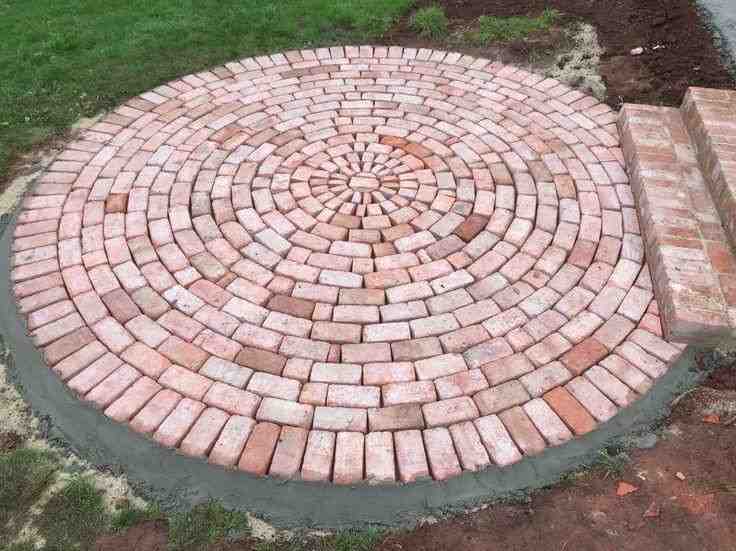
Why Patio and Garden Design Transforms Your Outdoor Space
Patio and garden design is the art of combining hardscaping, plants, color, and layout to create a functional, beautiful outdoor living space. In the modern era, the backyard has evolved from a simple patch of grass into a sophisticated extension of the home—a “staycation” destination that offers respite from the digital world. For homeowners on the North Shore and across Essex County, MA, a well-executed design isn’t just about aesthetics; it’s about maximizing the utility of every square foot during our precious New England summers. The transition from indoor to outdoor living should feel seamless, reflecting the architectural integrity of the house while embracing the natural beauty of the surrounding landscape.
In the past, a patio was often an afterthought—a simple concrete slab where a grill might sit. Today, however, the philosophy of outdoor living has shifted toward creating “outdoor rooms” that serve specific purposes, from al fresco dining to quiet meditation. This evolution requires a deep understanding of how space is used, how light moves across the property, and how different materials interact with the local climate. A professional design ensures that your investment is not only beautiful but also durable enough to withstand the harsh freeze-thaw cycles typical of the Massachusetts coast.
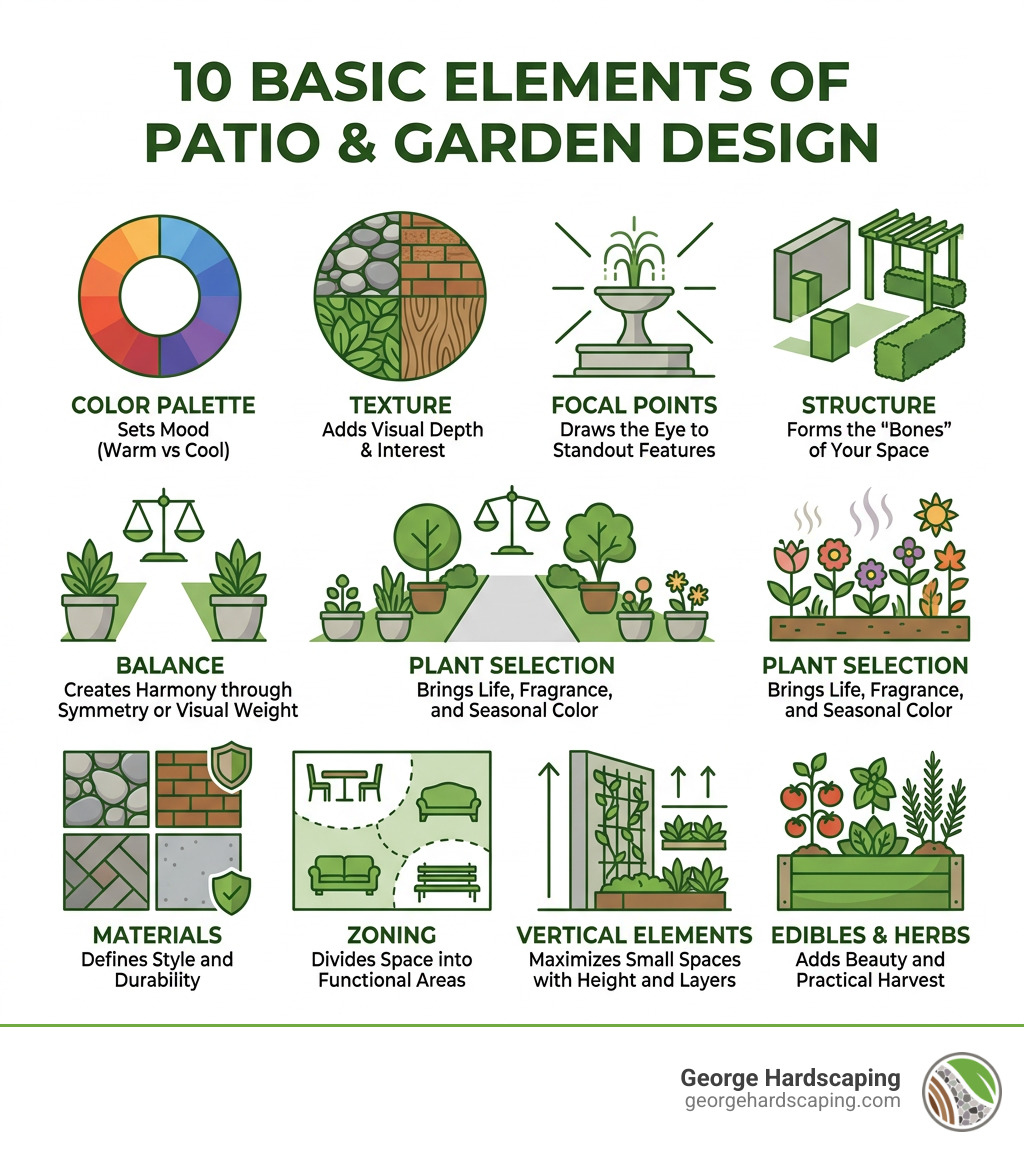
Here’s a quick overview of what great patio and garden design involves:
| Element | What It Does |
|---|---|
| Color palette | Sets mood (warm = energy, cool = calm) |
| Texture | Adds visual depth and interest |
| Focal points | Draws the eye to standout features |
| Structure | Forms the “bones” of your space |
| Balance | Creates harmony through symmetry or visual weight |
| Plant selection | Brings life, fragrance, and seasonal color |
| Materials | Defines style and durability (stone, brick, concrete) |
| Zoning | Divides space into dining, lounging, and retreat areas |
| Vertical elements | Maximizes small spaces with height and layers |
| Edibles and herbs | Adds beauty and practical harvest |
Most homeowners look at a blank patio and see limitations. A bare slab. An awkward corner. Not enough square footage. However, the true potential of a property lies in its ability to be zoned and layered. A well-designed 21 x 27-foot patio can include comfortable seating, a water feature, privacy planting, fragrant blooms, and genuine personality — all at once. It’s not about square footage; it’s about intention and the strategic application of professional custom patio design. By thinking about the flow of traffic and the specific needs of your family, you can turn even a modest backyard into a high-functioning oasis that feels twice its actual size.
Whether you’re starting from scratch or refreshing an existing space, the principles of good design apply equally. From the curve of a stone wall to the warmth of a fire pit glow, every decision either adds to or subtracts from the overall experience. Beyond the personal enjoyment, a professionally designed outdoor space can significantly increase property value, often yielding a high return on investment by expanding the usable living area of the home. This guide walks you through everything: the core design principles, color and texture strategies, small-space solutions, plant selection, hardscape materials, and the features that turn a plain patio into a true outdoor oasis. We will explore how to balance the rugged durability of stone with the delicate softness of perennials to create a space that feels both grounded and alive.
Key patio and garden design vocabulary:
The 10 Fundamental Elements of Patio and Garden Design
Creating a cohesive outdoor space isn’t just about picking out pretty plants or a nice shade of stone; it’s about understanding how different elements interact to form a unified whole. When we approach a new project in Beverly or Marblehead, we look at the ten basic building blocks of landscape architecture. These include viewpoint, line, focal point, structure, balance, repetition, contrast, shape, form, and texture. Mastering these landscape design principles for residential gardens allows us to transform a backyard from a collection of objects into a purposeful retreat. Each of these elements serves as a tool in the designer’s kit, helping to solve problems like awkward slopes, lack of privacy, or poor drainage while simultaneously elevating the aesthetic appeal of the property.
Strategic Layouts for Patio and Garden Design
The most successful patio and garden design begins with the primary viewing angles. We ask our clients: “Where will you look at this space from most often?” Usually, it’s through a kitchen window or from the back door. Aligning the centerline of your garden with these indoor views creates a seamless visual harmony between your home and yard. This concept, known as “axial design,” ensures that the garden feels like a natural extension of the interior architecture. When you stand at your sink or sit at your dining table, the lines of the patio should draw your eye outward, creating a sense of depth and continuity that makes the interior of your home feel larger and more connected to nature.
Lines play a massive role in setting the tone. Straight lines feel formal, organized, and architectural, which is perfect for traditional homes in Salem or Newburyport. They suggest a sense of order and can be used to create a classic, timeless look. On the other hand, curved lines feel organic and casual, following the natural contours of the land and mimicking the soft shapes found in the wild. These lines are used to lead the eye toward focal points—like a stunning specimen tree or an expert custom patio installation—and away from eyesores like trash bins or AC units. By manipulating these lines, a designer can make a short yard feel longer or a narrow yard feel wider, effectively “tricking” the eye into perceiving more space than actually exists.
Visual Weight and Balance in Hardscaping
Balance in a garden isn’t always about perfect symmetry. While symmetrical balance (placing identical shrubs on either side of a gate) offers a classic, formal look, asymmetrical balance is often more dynamic and visually interesting. This involves balancing “visual weight” rather than physical size. For example, a large, airy tree on one side of a patio can be balanced by a smaller, denser cluster of dark-foliaged plants or a heavy stone bench on the other. This creates a sense of equilibrium that feels natural rather than forced, allowing the eye to move comfortably across the landscape without feeling like one side is “heavier” than the other.
When planning durable landscape retaining walls, we consider how the mass of the stone affects the feel of the yard. On sloped North Shore properties, these walls aren’t just functional; they provide the structural weight necessary to ground the design and create level areas for living. By zoning your patio into distinct areas for dining and lounging, you create a sense of organized balance that makes the entire space feel larger and more purposeful. Repetition is another key tool; by repeating certain materials, colors, or plant species throughout the space, you create a rhythmic flow that ties the disparate elements of the garden together into a single, cohesive narrative. This repetition acts as a visual thread, leading the visitor through the space and reinforcing the overall design theme.
Mastering Color and Texture in Your Outdoor Space
Color is perhaps the most powerful tool for setting a mood in any patio and garden design. It can make a space feel expansive or intimate, energetic or serene. Texture, while more subtle, is the secret sauce that prevents a garden from looking flat or disorganized. Every object in your garden has texture, from the smoothness of premium patio surface options to the fuzziness of a lamb’s ear leaf. You can even get an in-depth lesson on using color in garden design to see how professional designers pair hues for maximum impact. Understanding the relationship between light and color is also crucial; a deep purple flower might disappear in a shaded corner but pop brilliantly in the afternoon sun.
Warm vs Cool Palettes for Mood Setting
Warm color palettes—featuring reds, oranges, golds, and yellows—are known to create excitement and even stimulate the appetite. This makes them ideal for front entrances or outdoor dining areas where you want to foster a social, high-energy vibe. Warm colors also have a “shortening” effect, making objects feel closer than they actually are, which can help a large, cavernous yard feel more intimate and welcoming. In the autumn, these colors harmonize beautifully with the changing New England foliage, extending the visual appeal of the garden into the cooler months and providing a sense of warmth even as the temperature drops.
Conversely, cool palettes (blues, purples, and silvery greens) promote relaxation and serenity. These are perfect for reading nooks, meditation corners, or areas around a hammock where the goal is peace and quiet. Neutrals, like whites, greys, and tans, act as the glue that holds these palettes together. In modern patio and garden design, neutrals are often used to create a sleek, sophisticated look that highlights the architectural lines of the hardscaping. A popular strategy is the 60-30-10 rule: 60% dominant color (usually green or neutral stone), 30% secondary color (foliage or secondary stone), and 10% accent color (bright blooms or cushions). This ratio ensures that the space feels balanced and intentional rather than chaotic.
Mixing Fine and Bold Textures for Visual Depth
To create a truly professional look, you must mix fine, medium, and bold textures. This layering creates a sense of depth that makes the garden feel lush and established.
- Fine textures (like ornamental grasses, delicate ferns, or small-leaved boxwoods) act as a soft backdrop, filling in gaps and providing a sense of movement as they sway in the breeze.
- Bold textures (like large-leaved hostas, oversized stone slabs, or broad-leafed evergreens) demand attention and serve as anchors for the eye, providing a sense of stability.
If you have too many bold textures, the space feels overwhelming, crowded, and visually “loud.” Too many fine textures, and it becomes a blurry, indistinct mess that lacks a clear focal point. The trick is to use fine textures to ground bold elements. Pairing a large-leafed plant with a fine-textured grass creates a dynamic contrast that keeps the eye moving and adds a layer of sophistication to the planting beds. This same principle applies to integrated hardscape and landscape services; the rough, rugged texture of a dry-laid stone wall provides a beautiful foil for the soft, delicate blooms of a creeping perennial. By layering these textures, you create a multi-dimensional environment that remains interesting even when plants aren’t in bloom, as the structural contrast of the foliage and stone continues to provide visual value.
Small Space Solutions: Container Gardens and Vertical Design
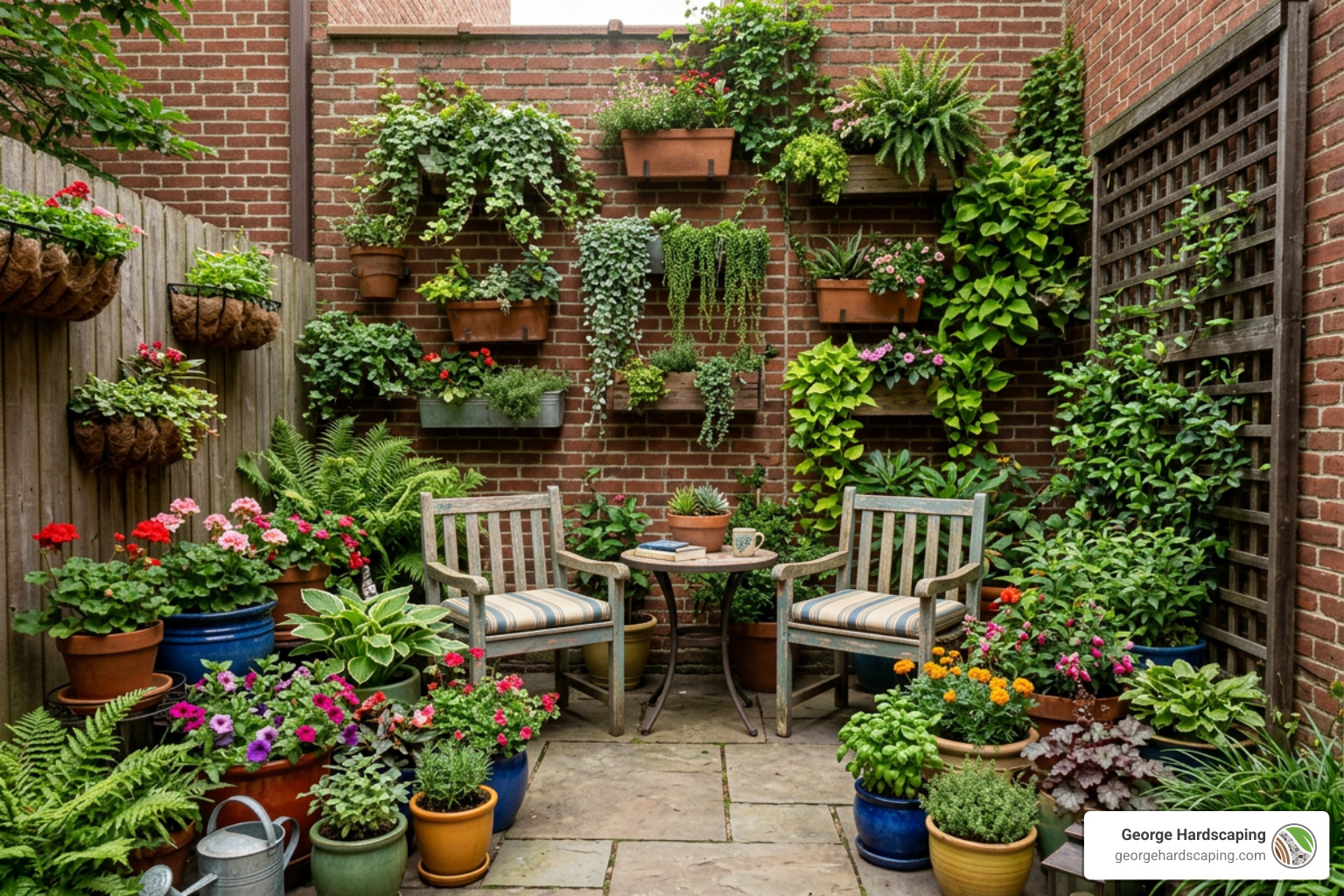
Many of our clients in more urban areas like Lynnfield or Peabody worry that their small patios can’t be beautiful or functional. We always tell them that some of the most charming retreats are the tiniest ones. In small-space patio and garden design, every inch counts, and the constraints of the space often lead to the most creative solutions. The key is to think vertically and use “layered” design strategies to create depth and interest without cluttering the floor. You can learn a lot from seeing how others have succeeded by following these small garden transformation steps. By focusing on high-quality materials and thoughtful plant placement, a small patio can become a jewel-box of a garden.
Maximizing Tiny Patios with Creative Retreats
To make a small patio feel like a true “garden room,” you need to establish a sense of intimacy and enclosure. One of the best ways to do this is by adding a “ceiling.” This doesn’t have to be a solid roof; a pergola, a large patio umbrella, or even the overhanging branches of a small ornamental tree can create that cozy, enclosed feeling that makes humans feel safe and relaxed. This overhead structure also provides opportunities for hanging plants, climbing vines, or integrated lighting, which can make the space usable long after the sun goes down. In a small space, lighting should be subtle and layered, using small LEDs to highlight textures and paths without overwhelming the senses.
Privacy is another priority in compact environments where neighbors may be close by. Instead of a massive, solid wall that might make the space feel claustrophobic and dark, consider a trellis with climbing vines or a row of tall, narrow planters filled with bamboo or upright evergreens. Adding personal touches—like a family heirloom garden ornament, a small water feature, or custom cushions—ensures the space reflects your personality. For those looking for local expertise, our specialized patio design in Beverly, MA focuses on turning these tight corners into high-value retreats by using multi-functional furniture and clever zoning that allows for both relaxation and utility.
Vertical Gardening Techniques for Compact Areas
When floor space is at a premium, the only way to go is up! Vertical gardening is a game-changer for compact patios, allowing you to surround yourself with greenery without sacrificing precious walking space or room for a table. This approach turns walls and fences into living tapestries of color and texture.
- Hanging Planters: Perfect for trailing herbs, strawberries, or cascading flowers like petunias and fuchsia. They draw the eye upward and add a layer of lushness at eye level.
- Grouped Pots: Instead of scattering single pots, which can look cluttered, group them in odd numbers (3, 5, or 7) and varying heights to create a “mini-landscape” effect. This mimics the way plants grow in nature and creates a stronger visual impact.
- Tower of Herbs: A vertical stack of pots or a specialized planter allows you to grow an entire culinary garden in just a few square feet, keeping fresh ingredients within arm’s reach of the grill or kitchen door.
- Wall-Mounted Systems: Transforming a bare fence or house wall into a living green wall adds lushness, provides natural insulation, and can even help dampen city noise without taking up a single inch of floor space.
Our team specializes in comprehensive patio design and installation that integrates these vertical elements directly into the hardscape, ensuring they are both beautiful and structurally sound. By utilizing the vertical plane, you can create a lush, immersive environment even on a balcony or a small city lot, proving that you don’t need a massive estate to enjoy a world-class garden.
Functional Beauty: Edible Patio Gardens and Plant Selection
Why choose between a beautiful garden and a productive one? You can have both. Integrating edibles into your patio and garden design adds fragrance, interesting textures, and the undeniable joy of a home harvest. However, success requires a bit of planning regarding light, water, and soil quality. Most food crops need at least six to eight hours of bright sunlight daily and consistent watering, especially during those 90-degree North Shore summer days when pots can dry out quickly. The “edimental” (edible ornamental) trend is perfect for patios, where plants are chosen for both their aesthetic looks and their culinary taste, creating a garden that feeds both the soul and the body.
Selecting Plants for Your Patio and Garden Design
When selecting plants for a patio, look for varieties that pull double duty. The Little Mischief Rose is a fantastic example—it’s disease-resistant, stays compact, and provides deep pink flowers from spring through fall. It offers the classic beauty of a rose without the high-maintenance requirements of older cultivars, making it perfect for busy homeowners. Pairing roses with edible herbs like lavender or sage creates a classic look that is also highly functional.
For structure, consider upright or columnar plants that provide height without taking up too much horizontal space. Columnar apple trees, for instance, grow straight up like a pillar, allowing you to harvest enough fruit for a pie from a tree that’s only two feet wide. Prolific producers like ‘Sun Gold’ cherry tomatoes or ‘Diamant’ cucumbers are perfect for small spaces because they provide a massive yield in a tiny footprint. Don’t forget fragrance; planting scented geraniums, jasmine, or lavender near your seating area ensures that every breeze brings a pleasant aroma. Even a structural garden retaining wall can be softened with “spiller” plants like creeping rosemary or thyme, which can be harvested for cooking while they beautify the stone and release scent when brushed against.
Productive Vegetable Patios and Herb Windows
You don’t need a farm to grow fresh food. A 2-foot-wide window box can easily host four to six large herb plants or a small crop of salad greens like arugula and spinach. If you have a bit more room, an 18-inch pot is large enough to hold a stunning variety of peppers—try mixing fiery habaneros with purple-leaved peppers for a look that’s as beautiful as it is delicious. This “potager” style of gardening brings the kitchen garden right to the back door, making it easy to snip fresh basil or mint while you entertain guests. It turns the act of cooking into an outdoor experience.
For larger vegetables like pole beans or full-sized tomatoes, you’ll want pots at least 2 feet in diameter to provide enough soil volume for the roots. The secret to a low-maintenance edible patio is proximity to a water source. If you have to haul heavy watering cans across the yard every day, you’re less likely to keep up with the demands of thirsty plants. We often help clients with custom patio design in Boxford, MA by planning the layout around existing spigots or installing integrated drip irrigation systems that take the guesswork out of plant care. Proper drainage is also vital; ensure all containers have adequate holes and are slightly elevated to prevent root rot during heavy New England rainstorms, which can dump inches of water in a single afternoon.
Hardscaping Essentials: Materials and Layout Planning
The hardscape is the foundation of your outdoor oasis. In Essex County, the materials you choose must be able to withstand the intense freeze-thaw cycles of our New England winters while still looking elegant and fitting the character of the neighborhood. Whether you prefer the timeless look of brick or the organic, rugged feel of natural stone, the material should reflect the style of your home and the way you intend to use the space. A patio is an investment in your lifestyle and your property’s value, and choosing the right foundation is the most critical step in the entire design process. A poorly installed patio will shift and crack within a few seasons, while a well-built one will last for decades.
| Material | Best Style Fit | Pros | Cons |
|---|---|---|---|
| Natural Stone | Traditional, Rustic, Coastal | Unique patterns, extremely durable, ages beautifully | Higher initial cost, requires expert installation |
| Brick Pavers | Classic, Colonial, Formal | Timeless appeal, modular (easy to repair) | Can shift if not properly based, limited color range |
| Concrete Pavers | Modern, Transitional, Versatile | Huge variety of shapes/colors, very durable | Can look “manufactured” if low quality |
| Travertine | Mediterranean, Luxury, Poolside | Stays cool underfoot, stunning natural patterns | Can be slippery when wet, more fragile in extreme cold |
Choosing Durable Materials for Style and Climate
For our North Shore projects, we often recommend natural stone pavers like bluestone or granite. These materials are incredibly hard-wearing and only look better as they age, developing a natural patina that manufactured materials simply can’t replicate. Bluestone, in particular, offers a range of colors from deep blues to earthy tans, allowing it to blend perfectly with the coastal New England landscape. If you’re looking for a more budget-friendly option that still offers great style, premium patio surface options include high-quality manufactured pavers that come in an endless array of textures mimicking natural stone or old-world cobblestones, providing durability with a more uniform look.
One technical tip we always share with our clients: sand-set your pavers rather than using mortar whenever possible. In a climate like Massachusetts, the ground shifts significantly between January and July as the frost enters and leaves the soil. Sand-setting allows the patio to “breathe” and move slightly without cracking, unlike rigid concrete slabs which are prone to snapping under pressure. Plus, if you ever need to access underground utilities or repair a small section, you can simply lift the stones and put them back when you’re done. Proper base preparation—including at least 6-8 inches of compacted gravel and a layer of bedding sand—is the difference between a patio that lasts 30 years and one that settles and puddles after just two winters.
Integrating Fire and Water Features for Relaxation
A patio is more than just a place to sit; it’s a place to experience and create memories. Adding a bespoke custom outdoor fire pit or a stone fireplace extends the usability of your space well into the chilly autumn months, allowing you to enjoy the outdoors even as the leaves begin to fall. There’s something primal and deeply relaxing about gathering around a fire that instantly makes a patio feel like a destination. Whether it’s a wood-burning pit for that authentic campfire smell or a gas-powered feature for instant ambiance at the flip of a switch, fire elements are the ultimate focal point for social gatherings.
Water features, like a simple bubbling fountain or a small pond with a waterfall, add the element of sound to your garden. This is particularly useful in more densely populated areas like Swampscott or Peabody, where the white noise of falling water can mask the sound of traffic or neighbors, creating a private sanctuary. Integrating seating walls directly into your design provides permanent, “built-in” spots for guests to sit, reducing the need for bulky furniture and keeping the space feeling open and clean. Lighting is the final touch; low-voltage LED lights integrated into steps, walls, and under the caps of pillars ensure safety and create a magical, high-end atmosphere after dark, turning your garden into a nighttime retreat.
Frequently Asked Questions about Patio and Garden Design
How much sunlight do patio gardens need for success?
Most patio gardens, especially those featuring vegetables and flowering perennials, require six to eight hours of bright, direct sunlight daily. If your patio is mostly shaded by large trees or the house itself, you can still have a beautiful space by focusing on shade-loving plants like hostas, ferns, and certain varieties of hydrangeas. It is important to track the sun’s movement across your patio for a full day during the growing season before deciding on plant placement, as shadows change significantly from May to August.
What are the best pot sizes for patio vegetables?
- Herbs and Salad Greens: Can thrive in shallow window boxes or 6-10 inch pots, as they have relatively shallow root systems.
- Peppers and Eggplants: Need at least an 18-inch diameter pot to allow for root expansion and to provide enough soil to hold moisture during hot days.
- Tomatoes, Beans, and Cucumbers: Require large containers, at least 2 feet in diameter, to accommodate their extensive root systems and provide the necessary weight to prevent the pots from tipping over when the plants are fully grown and staked.
How can I achieve privacy on a small patio without building high walls?
You can create “living walls” using tall, narrow evergreens like ‘Holmstrup’ Arborvitae, or by installing a trellis with fast-growing vines like Clematis or Star Jasmine. Layering plants of different heights also creates a visual screen that feels lush and natural rather than restrictive. Additionally, large outdoor umbrellas, retractable screens, or even strategically placed outdoor curtains can provide temporary privacy when you are entertaining or relaxing.
What is the best way to maintain a stone patio in New England?
Regular maintenance involves sweeping away debris to prevent organic staining from leaves and checking the polymeric sand in the joints every few years to ensure it hasn’t washed away. Avoid using harsh chemicals or rock salt for de-icing, as these can pit the surface of natural stone and damage nearby plants. Instead, use sand for traction during the winter months. A gentle power wash every few years can also help keep the stone looking new.
Can I install a fire pit on an existing patio?
Yes, but it depends on the material and the weight of the feature. A gas fire pit is often easier to retrofit because it is lighter and doesn’t require a chimney. However, a heavy stone wood-burning pit may require additional structural support beneath the pavers to prevent settling over time. Always consult with a professional to ensure proper ventilation, safety clearances from the house, and compliance with local fire codes in your specific town.
Conclusion
At George Hardscaping, we believe that every backyard has the potential to become a sanctuary. From the initial layout and material selection to the final planting of fragrant blooms, every step of patio and garden design is an opportunity to enhance your home’s beauty and your own quality of life. A well-designed space is more than just stone and plants; it is a backdrop for family dinners, quiet mornings with coffee, and evening gatherings with friends. Whether you are in Beverly, Danvers, or anywhere across the North Shore, our commitment to craftsmanship ensures that your outdoor oasis will stand the test of time and the rigors of the New England climate.
Ready to transform your backyard into the retreat you’ve always dreamed of? Contact our patio design and installation experts today to schedule your initial consultation. We offer professional masonry and hardscaping services tailored to the unique needs of Essex County homeowners, ensuring that every project is as unique as the family that lives there. Don’t wait for next summer to start enjoying your outdoor space—request a professional hardscaping estimate now and take the first step toward a more beautiful, functional, and valuable home. Our team is ready to help you navigate the design process from concept to completion.
Average Cost Disclosure: Based on general internet data, the cost of a professional patio installation can range from $3,000 to over $25,000, depending on materials, size, and complexity. These are average ranges and do not reflect the actual project costs for George Hardscaping, which are determined by specific site conditions and custom design choices.