
Commercial Snow Removal Rates Per Square Foot: Top 2024 Guide
Commercial snow removal rates per square foot is a topic of interest that often pops up when winter’s chill begins to set in. For those who need a quick answer: Rates can range from $0.23 to $0.29 per square foot.
Now, let’s dive into why this service is in such high demand, especially in areas prone to heavy snowfall. The need for efficient and reliable snow removal has remained steady, or even increased in recent years. This isn’t just a seasonal task; it’s a critical service that ensures safety and accessibility for homes and businesses alike.
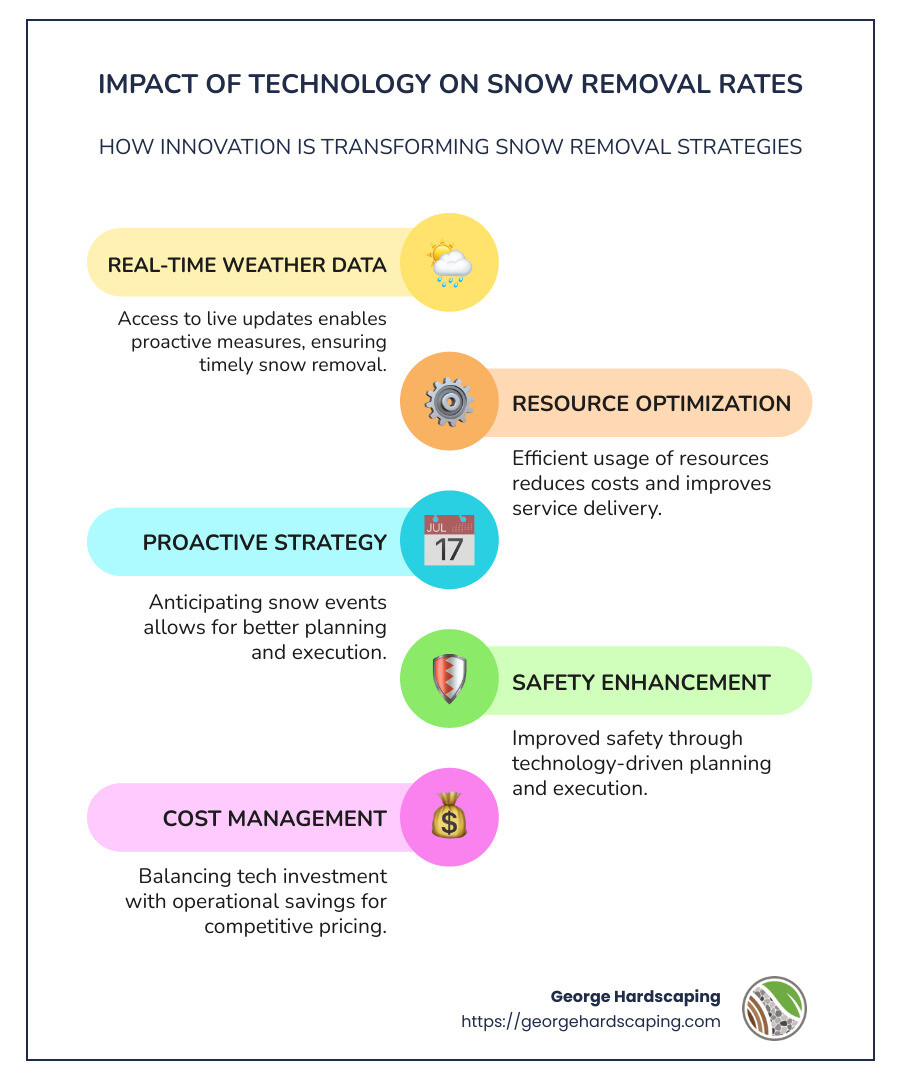
In recent years, technology has transformed how snow removal is managed. Contractors now have access to real-time weather data, letting them adopt a proactive strategy. This tech integration means they can plan better, use resources more efficiently, and ultimately provide a safer environment for everyone. Such innovations have shifted the approach from mere reactionary measures to anticipating and preparing for snow events, revolutionizing the industry.
For homeowners and businesses, understanding how these factors play into pricing models is essential. Knowing why and how rates are set can help in making informed decisions about service contracts and ensure that pathways, driveways, and public spaces remain clear and safe throughout the winter months.
Understanding Commercial Snow Removal Rates Per Square Foot
When it comes to commercial snow removal rates per square foot, several key factors play a significant role in determining the cost. Let’s break these down to understand what influences these rates.
Key Factors Influencing Rates
- Service Scope: The breadth of services offered can significantly affect costs. Basic plowing might be cheaper, but adding services like salting, de-icing, or snow relocation will increase the price. A comprehensive package ensures thorough snow management but comes at a higher cost.
- Equipment Costs: The type and amount of equipment used are crucial. From snow blowers to plow trucks, each comes with its own maintenance, fuel, and depreciation costs. More advanced equipment may allow for quicker and more efficient service, but it also means higher expenses.
- Labor Costs: Labor is often the largest expense in snow removal. The complexity and duration of a snow event dictate the number of workers needed. More severe weather means more hands on deck, which raises costs.
- Overhead Costs: These include insurance, business licenses, and other administrative expenses. Such costs are essential for the business to operate but also add to the overall pricing structure.
- Geographical Influence: Location matters. Areas with frequent heavy snowfall often see higher rates due to increased demand and the challenges of servicing densely populated urban locations.
Pricing Models: Pay-Per-Push vs. Seasonal Contracts
Choosing the right pricing model is crucial for both contractors and clients. Here are two common approaches:
- Pay-Per-Push: This model charges based on each service visit. It’s ideal for regions with unpredictable snowfall, as clients only pay when service is needed. However, this can lead to fluctuating costs throughout the season, making budgeting a challenge.
- Seasonal Contracts: These offer a flat fee for the entire snow season, providing a predictable expense for clients. This model is beneficial in areas with consistent snowfall, ensuring steady income for contractors. It also allows for better resource allocation and planning.
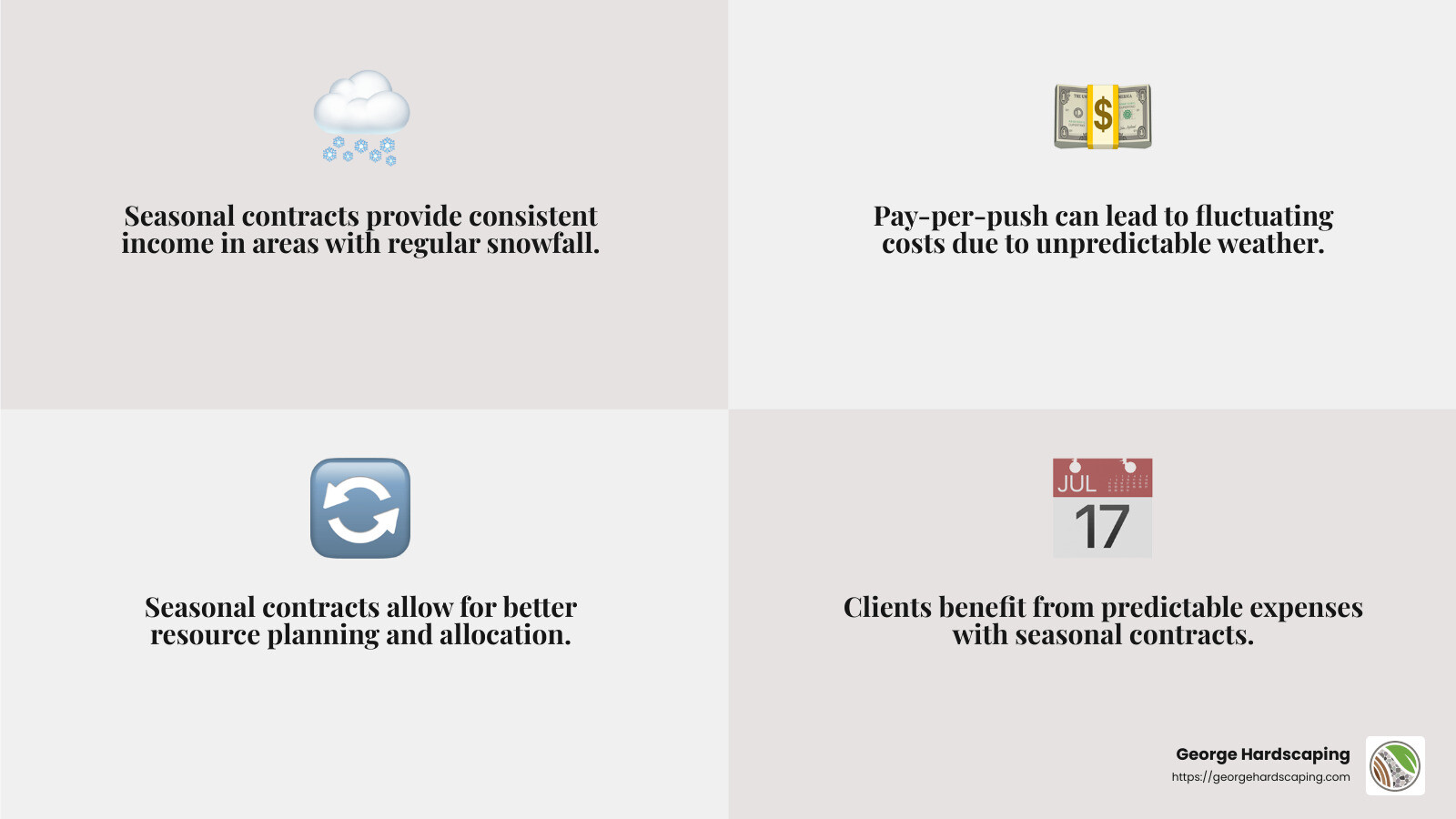
Revenue Predictability: Seasonal contracts offer more predictable revenue streams for contractors, reducing financial uncertainty. On the other hand, the pay-per-push model can be more lucrative during harsh winters but carries the risk of lower income in mild seasons.
Understanding these factors and pricing models helps businesses and property owners make informed decisions. Whether opting for pay-per-push or a seasonal contract, knowing the ins and outs of these models can ensure you receive the best service for your needs.
Next, we’ll explore how technology is changing snow removal, making it more efficient and precise.
Leveraging Technology in Snow Removal
Tools for Accurate Estimation
In snow removal, precision is key. Estimating the right amount of resources for each job can make or break a business. This is where technology steps in, offering tools that improve accuracy and efficiency.
Real-Time Weather Data
Imagine knowing exactly when and how much snow will fall at each of your service locations. With real-time weather data, businesses can do just that. Tools like Frost Solutions’ mini-weather stations provide site-specific forecasts. This allows for timely adjustments in resource allocation, ensuring you don’t over- or under-commit your team and equipment.
GPS Mapping and Square Footage Estimation
Gone are the days of rough estimations and guesswork. GPS mapping technology allows snow removal companies to accurately measure the square footage of areas needing service. This precision is crucial for crafting proposals and determining commercial snow removal rates per square foot. By clearly identifying plowable versus non-plowable areas, such as landscaped sections, businesses can avoid costly overestimations.
Proposal Accuracy
With accurate data from GPS mapping and weather forecasts, companies can create detailed and transparent proposals. Clients appreciate clear expectations and knowing exactly what they are paying for. This builds trust and can lead to long-term relationships. Plus, detailed proposals help ensure that your business remains profitable by aligning costs with the actual scope of work.
Resource Optimization
Using these technological tools optimizes the use of labor and equipment. For instance, precise weather data allows for efficient scheduling, meaning teams are deployed only when necessary. This not only reduces fuel and labor costs but also prevents unnecessary wear and tear on equipment.
Incorporating these technologies into your snow removal business offers a competitive edge. They improve service delivery while keeping operations lean and cost-effective. Next, we’ll dig into how to estimate costs for the upcoming 2024 snow season, ensuring you’re prepared for whatever winter throws your way.
Estimating Costs for 2024
Using Location-Specific Weather Forecasts
Estimating commercial snow removal rates per square foot for 2024 requires a keen understanding of various cost factors, including labor, equipment, and overhead. But what truly sets apart a successful operation is the strategic use of location-specific weather forecasts. Let’s explore how these components come together.
Labor Costs
Labor is one of the most significant expenses in snow removal. The cost is directly tied to the duration and intensity of each snow event. Accurate weather forecasts, like those from Frost Solutions, enable businesses to precisely schedule their workforce. By knowing when and where snow will fall, companies can avoid overstaffing or understaffing, ensuring that labor costs align with actual needs.
Equipment Costs
Equipment costs include expenses related to maintenance, fuel, and depreciation of snow blowers and plow trucks. Real-time weather data helps optimize equipment deployment. For instance, if a forecast predicts minimal snow, heavy-duty plows might not be necessary, saving on fuel and wear and tear. This precise allocation of resources keeps equipment costs in check.
Overhead Costs
Overhead costs, such as insurance and facility expenses, can be managed more effectively with accurate weather insights. Knowing the severity of upcoming snow events allows businesses to plan and budget for potential overhead spikes. For example, a severe storm might require additional insurance coverage or temporary facility expansions.
Frost Solutions and Resource Allocation
Frost Solutions’ mini-weather stations provide hyper-local forecasts, which are crucial for efficient resource allocation. These forecasts allow businesses to preemptively allocate resources where they’re needed most, reducing waste and maximizing efficiency. This not only optimizes labor and equipment usage but also improves client satisfaction by ensuring timely and effective snow removal services.
By leveraging location-specific weather forecasts, snow removal companies can improve their operational efficiency and financial planning. This strategic approach ensures that businesses remain competitive and profitable, regardless of what the winter season brings. Next, we’ll address common questions about commercial snow removal, providing further insights into pricing and service strategies.
Frequently Asked Questions about Commercial Snow Removal
How do you calculate commercial snow plowing?
Calculating commercial snow plowing costs involves several key elements. The most straightforward method is to charge hourly rates, which typically range from $50 to $160 per hour for commercial parking lots. This rate can vary based on factors such as the size of the lot, the complexity of the job, and regional differences. For example, urban areas with frequent heavy snowfall might see higher rates due to increased demand and logistical challenges.
Additionally, some contractors may charge based on the additional inch costs. This means that after a certain amount of snowfall—often around 6 inches—an additional fee is applied for each extra inch of snow. This method helps cover the extra labor and equipment usage required for deeper snow.
What are the average commercial snow removal rates per square foot?
When it comes to commercial snow removal rates per square foot, prices can vary widely. On average, rates range from $0.05 to $0.50 per square foot. This variation depends on several factors, including the frequency and intensity of snowfall in the area, the complexity of the property, and the specific services included in the contract.
For instance, areas with heavy snowfall might see rates on the higher end, especially if the service scope includes additional tasks like salting and de-icing. Conversely, regions with milder winters might experience lower rates due to less demand and simpler service requirements.
How much should you charge per inch of snow?
Charging per inch of snow is a straightforward pricing model that appeals to both contractors and clients. This approach provides transparency and allows clients to budget more effectively. Generally, contractors set a base rate for the first few inches of snow—say, 1 to 3 inches—and then charge an additional fee for each inch beyond that.
Contract terms play a significant role in determining these rates. For example, a zero-tolerance contract, which requires snow to be cleared as soon as it accumulates, often commands higher rates due to the increased frequency of service. The service scope—whether it includes just plowing or additional tasks like snow relocation and sidewalk clearing—also influences pricing.
By considering these factors, snow removal companies can set competitive and fair rates that reflect the true cost of their services, ensuring both profitability and customer satisfaction.
Conclusion
As we reflect on the intricacies of commercial snow removal rates per square foot, it’s clear that strategic planning and competitive pricing are critical for success. At George Hardscaping, we’re committed to providing top-notch snow removal services that balance cost-effectiveness with quality. Our approach combines the latest technology, such as real-time weather data and GPS mapping, to optimize resource allocation and improve service precision.
Strategic Planning for Competitive Pricing
Navigating the snow removal landscape requires a keen understanding of pricing models and cost factors. We focus on tailoring our services to meet the specific needs of our clients, whether through pay-per-push or seasonal contracts. By leveraging location-specific weather forecasts, we ensure our team is always prepared, maximizing efficiency and minimizing costs.
Why Choose George Hardscaping?
Choosing the right snow removal partner can make all the difference in maintaining safe and accessible spaces during winter. At George Hardscaping, we pride ourselves on our craftsmanship and dedication to customer satisfaction. Our comprehensive services, from snow plowing to de-icing, are designed to keep your properties safe and operational, no matter the weather.
For more information on our snow removal services, visit our Snow Plowing Services page.
In conclusion, by integrating strategic planning and competitive pricing, we at George Hardscaping are well-equipped to handle the challenges of the upcoming winter season. Our commitment to quality and efficiency ensures that we remain a trusted partner for all your snow removal needs.
