
What to Know About Stone Patios in Lynnfield, MA
Quick answers for homeowners searching for a stone patio in Lynnfield MA:
| Question | Short Answer |
|---|---|
| Best material for Lynnfield’s climate | Thermal bluestone or dense granite |
| Typical installation time | 3-7 days |
| Average cost range (online data only) | $120-$300+ per sq ft for natural stone |
| Permit required? | Usually not for at-grade patios |
| Drainage requirement | 1/4 inch per foot slope away from foundation |
| Best time to plan | Late winter through spring for summer install |
Note: Cost ranges above are average estimates sourced from publicly available internet data. They are not actual prices for George Hardscaping and are not guaranteed rates.
A stone patio in Lynnfield, MA is one of the most durable and visually rewarding investments a homeowner can make for their property. Whether you’re in Lynnfield, Peabody, Beverly, or anywhere across Essex County, the right stone patio adds functional outdoor living space — and holds up through New England’s demanding freeze-thaw seasons.
But getting it right takes more than picking a pretty stone. Material selection, base preparation, drainage design, and local permitting all play a role in whether your patio lasts 5 years or 50.
This guide covers everything you need to know — from choosing the right stone for Massachusetts winters, to understanding costs, timelines, permits, and what separates a quality installation from one that fails after the first hard frost.
Easy Stone Patio Lynnfield MA word list:
Stone Patio Lynnfield MA: Benefits, Materials, and Climate Performance
Investing in a premium natural stone patio offers far more than just a place to set your grill. For homes in Lynnfield, Woburn, Peabody, and Salem, a professionally crafted hardscape significantly increases overall property value and curb appeal. Unlike temporary wooden decks that rot, warp, and require constant staining, natural stone provides a permanent, low-maintenance outdoor dining and entertaining space that naturally complements classic New England architecture.
The rich, organic textures of natural stone create an inviting transition between your indoor living spaces and the surrounding landscape. Whether you are hosting a summer barbecue or gathering around a fire pit on a crisp autumn evening, a stone patio serves as a long-term hardscape investment that elevates your lifestyle while respecting the visual heritage of Essex County.
Why Natural Stone Works Well in Lynnfield’s Climate
The weather in Massachusetts is notoriously tough on outdoor structures. Between blistering summer humidity and freezing winter blizzards, materials are subjected to intense thermal expansion and contraction. This is why we highly recommend natural stone with a thermal finish.
A thermal finish is achieved by applying a high-temperature flame to the stone’s surface, which causes the surface crystals to pop. This process leaves a beautifully textured, slip-resistant finish that provides excellent traction underfoot—even when wet from pool water or summer rain.
Furthermore, dense stones like premium bluestone and granite have incredibly low water absorption rates. This frost resistance is critical; when water cannot penetrate the stone, it cannot freeze and crack the material from the inside out. When installed over a flexible gravel base, natural stone handles seasonal ground movement beautifully, allowing joints to absorb minor shifts without structural failure. For more inspiration on how to layout these durable materials, explore our Stone Patio Design Ideas.
Best Materials for a Stone Patio Lynnfield MA Project
When selecting the perfect material for your property, several premium options stand out:
- Thermal Bluestone: Renowned for its gorgeous blue, gray, and earthy brown tones, thermal bluestone is a New England classic. Its uniform thickness makes it ideal for clean, modern patios or traditional ashlar patterns.
- Granite: Incredible density and classic elegance make granite virtually indestructible. It is highly resistant to scratching, staining, and severe weather.
- Flagstone & Fieldstone: Perfect for irregular, organic layouts. These materials offer a timeworn, “always-been-there” feel that pairs beautifully with historic-style homes.
- Cobblestone Borders: Excellent for anchoring the edges of your patio or creating transitions to walkways.
While limestone is beautiful, we advise caution using certain softer varieties in Massachusetts due to its susceptibility to acid rain and salt damage. If you are starting to plan your layout, checking out expert Patio Design Lynnfield MA resources can help narrow down your aesthetic goals. You can also check out creative Patio Designs Lynnfield MA layouts for regional inspiration.
Stone Patio Design Factors for Massachusetts Properties
Designing a patio that stands the test of time requires looking closely at the unique characteristics of your backyard. Before excavating a single shovelful of dirt, we analyze:
- Sun and Shade Patterns: A patio placed in constant shade may be prone to moss growth, while a patio in full sun might require integrated umbrella sleeves or a pergola.
- Soil Conditions and Slope: Lynnfield’s clay-heavy or rocky soils require customized base depths to ensure stability. Sloped yards will require grading or retaining walls.
- Trees and Roots: Large oaks or maples can push up stones over time if the patio is built too close to their root zones.
- Functional Zones: We map out dedicated areas for outdoor kitchens, seating zones, and seamless walkway connections to ensure comfortable foot traffic.
To dive deeper into planning these layouts, read through our Custom Patios Ultimate Guide.
Stone Patio vs Pavers vs Concrete: Durability, Maintenance, and Cost
Choosing the right material is a balance of aesthetics, longevity, and budget. The table below outlines how natural stone compares to alternative options:
| Feature | Natural Stone | Concrete Pavers | Poured Concrete |
|---|---|---|---|
| Durability | Exceptionally high; lasts generations | High; resistant to wear | Moderate; prone to cracking |
| Freeze-Thaw Performance | Excellent (flexible joint system) | Excellent (flexible joint system) | Poor (rigid surface cracks easily) |
| Maintenance Needs | Low; occasional sweeping/sealing | Low; joint sanding | Medium; crack sealing required |
| Repairability | Easy; individual stones can be reset | Easy; individual units replaceable | Difficult; requires patching or replacement |
| Appearance | Premium, unique natural variation | Highly uniform, modern styles | Basic, industrial unless stamped |
| Planning Cost Range | Premium | Moderate to High | Budget to Moderate |
Durability and Maintenance in New England Weather
While natural stone is incredibly tough, simple seasonal maintenance keeps it looking pristine. Regular sweeping prevents organic debris from staining the stone. We use high-quality polymeric sand in the joints, which hardens when wet to resist weed growth and ant washouts while remaining flexible enough to handle winter frost heaves.
To protect your investment, we recommend applying a breathable, penetrating sealer every 2 to 3 years. This keeps oil, grease, and leaf tannins from soaking into the stone’s pores. When winter arrives, always use plastic shovels rather than metal-tipped ones to avoid scratching the stone. For melting ice, avoid harsh rock salt (sodium chloride), which can pit and degrade stone surfaces; instead, opt for safer alternatives like calcium magnesium acetate (CMA). For more details on protecting your investment, check out our guide on Patio Installation Lynnfield MA.
Public Online Cost Ranges, Not Company Pricing
To help you budget, it is useful to look at general market trends. According to publicly available internet data, basic concrete paver patios typically range from $60 to $150+ per square foot for planning purposes. For premium natural stone options, industry averages range from $120 to $300+ per square foot.
Please note: These ranges are based on general online data and do not represent the actual pricing of George Hardscaping. Every project is unique.
Your final investment will depend on several critical variables:
- Site Access: Can heavy machinery easily reach the backyard, or does material need to be moved by hand?
- Excavation and Grading: Sloped yards require extra earthmoving and soil stabilization.
- Drainage Upgrades: Installing French drains or catch basins adds to initial costs but protects the patio’s lifespan.
- Integrated Features: Adding features like custom seating walls, steps, or lighting will adjust the overall scope.
For a complete breakdown of hardscape budgeting, read our analysis on The Real Cost Of Installing A Paver Patio In 2025.
When Stone Is Worth the Premium
While concrete pavers and poured concrete are practical options, natural stone is worth the premium for homeowners seeking a true luxury finish. Natural stone does not fade under UV exposure; in fact, its colors often grow richer and more distinguished over time.
Because each stone is uniquely quarried, your patio will be a one-of-a-kind masterpiece. If a single stone ever shifts or settles due to extreme weather, it can be individually lifted, re-leveled, and placed back into position without leaving unsightly patches. This makes natural stone the ultimate choice for high-use pool decks, front entries, and sophisticated outdoor dining rooms on the North Shore.
Installation, Drainage, Permits, and Contractor Selection in Lynnfield
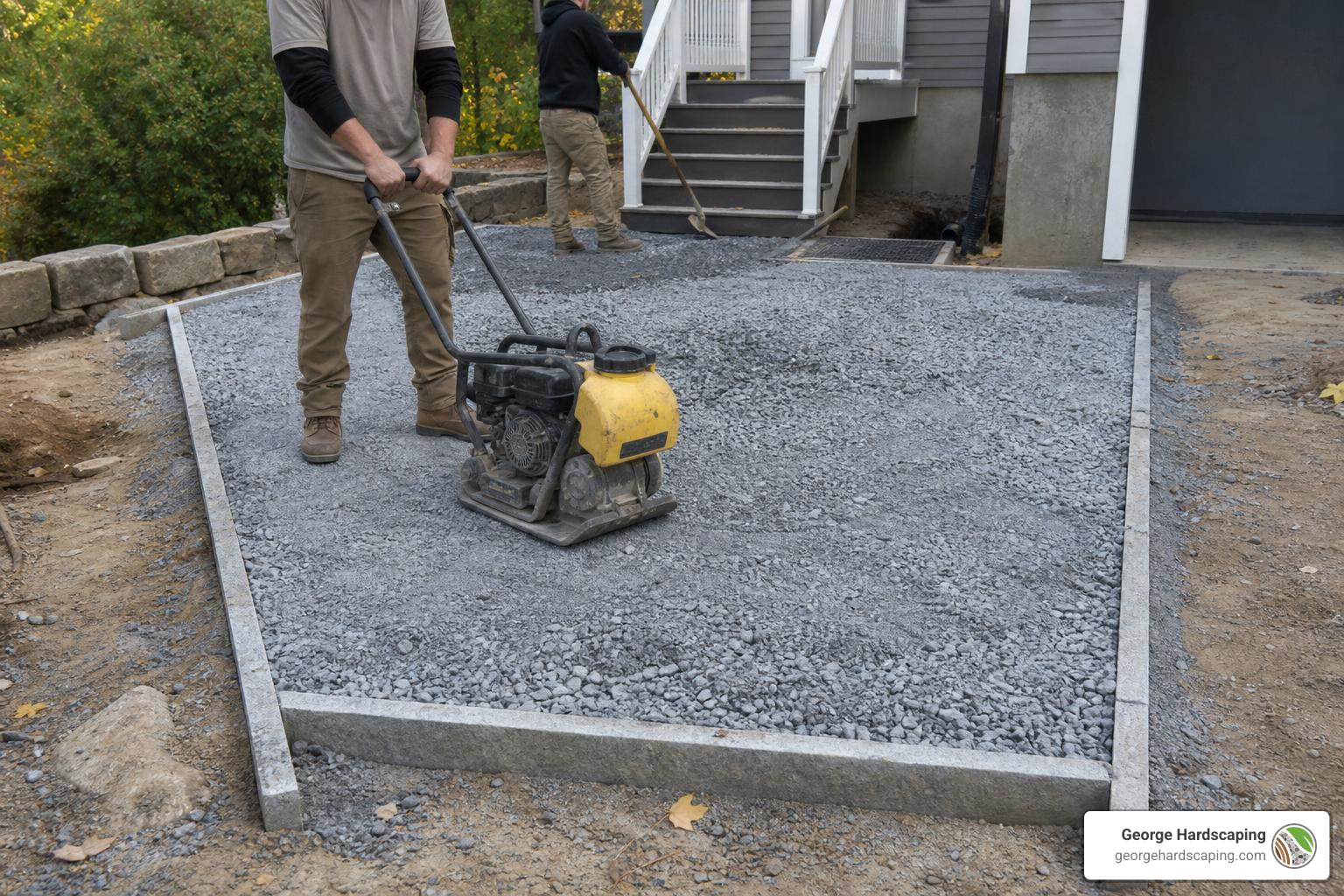
A beautiful patio is only as good as the foundation beneath it. Proper site preparation requires excavating all loam and organic material, which hold water and cause shifting during freeze-thaw cycles. We replace this organic material with a heavily compacted, crushed gravel base to create an uncompromisingly stable foundation.
How Professional Massachusetts Patio Contractors Handle Projects
While DIY projects can be tempting, building a long-lasting stone patio requires heavy machinery, precise grading calculations, and advanced masonry skills. A professional hardscape team manages the entire process seamlessly:
- Initial Consultation: Mapping out your layout, measuring elevations, and discussing material options.
- Site Prep & Excavation: Safely locating underground utilities before digging out the footprint. In Massachusetts, utility notification should be handled through Massachusetts 811 Dig Safe before excavation begins.
- Base Compaction: Laying down geotextile fabric and compacting gravel in thin lifts to ensure maximum density.
- Screeding & Setting: Laying the bedding sand and meticulously setting each stone to ensure a flat, stable surface.
- Finishing Touches: Sweeping in polymeric sand, compacting the stones, and installing sturdy edge restraints.
For the best results, we always advise working with certified professionals. Learn more about our comprehensive approach to Patio Design And Installation.
How Long Stone Patio Installation Usually Takes
For a standard 300-square-foot residential patio, the actual installation typically takes 3 to 7 days of active on-site work. A straightforward, level site can often be completed in 3 to 4 days. However, timelines can shift based on:
- Weather Conditions: Heavy rain can delay excavation and base compaction.
- Site Accessibility: Tight yards in historic areas of Salem or Beverly require smaller equipment, which increases labor time.
- Project Complexity: Incorporating multi-level retaining walls, custom stone steps, or fire pits will naturally extend the construction schedule.
Drainage Standards for a Stone Patio Lynnfield MA Installation
In New England, water is the primary enemy of hardscapes. If water pools on or beneath your patio, winter freeze cycles will quickly cause shifting, cracking, and uneven surfaces.
To prevent this, we design every patio with a minimum slope of 1/4 inch per foot away from your home’s foundation. On properties with heavy clay soils or high water tables, we integrate advanced drainage solutions like French drains, gravel-filled catch basins, and downspout diversions to redirect water safely away from your living spaces. Discover more about our approach by exploring our hardscaping and masonry services.
Do You Need a Permit to Install a Stone Patio in Lynnfield?
In most cases, simple, at-grade stone patios do not require a building permit in Lynnfield. However, permits and official approvals are typically required if your project involves:
- Retaining walls that exceed 4 feet in height.
- New electrical wiring for outdoor lighting or kitchens.
- Running gas lines for a permanent outdoor fireplace or grill.
- Working within designated environmental conservation zones or near wetlands.
We always recommend verifying local zoning bylaws with the Lynnfield Building Department before breaking ground to ensure absolute compliance.
What to Look for in a Stone Patio Contractor
When researching local hardscape professionals, look for these marks of quality:
- Local Experience: A deep understanding of North Shore soil structures and freeze-thaw cycles.
- Comprehensive Portfolio: A proven track record of beautiful, completed stone projects in the area.
- Proper Credentials: Fully licensed and carrying comprehensive liability and workers’ compensation insurance.
- Detailed Proposals: Clear, written estimates detailing excavation depths, base materials, and drainage plans.
To find the right fit for your upcoming project, explore our guide on finding Patio Contractors Near Me.
Design Options for Stone Patios: Fire Pits, Walls, Lighting, and Outdoor Living

Popular Natural Stone Layout Styles
The way your stone is cut and laid sets the entire tone for your outdoor space.
- Ashlar Pattern: Uses pre-cut rectangular and square stones laid in a semi-random grid. It offers a clean, organized look that works beautifully with both modern and traditional colonial homes.
- Irregular Flagstone: Employs natural, organic-shaped stones fitted together like a puzzle. This style is perfect for creating a relaxed, rustic, old-world garden escape.
- Cobblestone Borders: Adding a contrasting border of dark granite or historic cobblestones frames your patio and provides an elegant, finished appearance.
For more layout inspiration, check out our guide on Patio Perfection Inspiring Designs For Your Outdoor Oasis.
Add-On Features That Pair Well With Stone Patios
To transform your patio into a true outdoor living room, consider integrating complementary hardscape features:
- Custom Fire Pits: A stone fire pit serves as a natural gathering point, extending your patio’s usability into the cool spring and autumn months. Learn more about our custom outdoor fire pits.
- Seating and Retaining Walls: Low stone walls provide permanent, maintenance-free seating for guests while helping to define the boundaries of your outdoor room. Discover how we build durable landscape retaining walls.
- Stone Steps & Walkways: Connect your new patio seamlessly to your driveway, back door, or garden path with matching stone steps. Check out our walkways and stairs design ideas.
Year-Round Planning for Massachusetts Outdoor Spaces
A well-designed patio should be functional and safe all year long. When planning your layout, we consider where winter snow will be piled so it doesn’t block key pathways or melt directly onto your patio surface, causing black ice. Integrating low-voltage LED lighting along steps and patio borders ensures safe navigation during dark winter evenings. If you need assistance keeping your property clear during the winter months, explore our professional snow plowing services.
Frequently Asked Questions About Stone Patio Lynnfield MA
What is the best stone for patios in Lynnfield’s climate?
Natural thermal bluestone and premium granite are widely considered the best options for Lynnfield’s climate. Both materials possess exceptional density and low water absorption rates, meaning they will not crack or flake during severe freeze-thaw cycles. Their textured, thermal finishes also provide excellent slip resistance, making them safe for wet poolside areas and high-traffic walkways.
How can a homeowner extend the life of a stone patio?
The best way to extend your patio’s life is to ensure it is built on a deep, compacted gravel foundation with a proper 1/4-inch slope for water runoff. For ongoing care, sweep the surface regularly, keep the joints filled with polymeric sand, seal the stone every 2 to 3 years, and use plastic-bladed shovels and calcium magnesium acetate (CMA) instead of harsh rock salt during the winter.
When should a patio include retaining walls or drainage systems?
You should incorporate retaining walls if your yard has a slope of more than a few inches across the patio’s footprint; walls help level the area and prevent soil erosion. Specialized drainage systems (like French drains or catch basins) should be added if you have heavy clay soil, standing water issues, or roof downspouts that discharge directly near the patio area.
Conclusion
At George Hardscaping, we are proud to bring premium Essex County craftsmanship to homeowners in Lynnfield, Woburn, Peabody, Beverly, and Salem. We specialize in designing and constructing custom stone patios, walkways, retaining walls, steps, and custom firepits that are built to look beautiful and withstand the toughest New England winters. By focusing on meticulous base preparation and drainage-first installation, we ensure your outdoor investment lasts for generations.
Ready to bring your dream backyard to life? Call us today at +781-222-0805 or Request a stone patio estimate online to schedule your consultation. You can also Explore hardscaping services in Lynnfield or View patio design and installation services to see more of our work.
