
Introduction: Your Guide to Timeless Outdoor Living
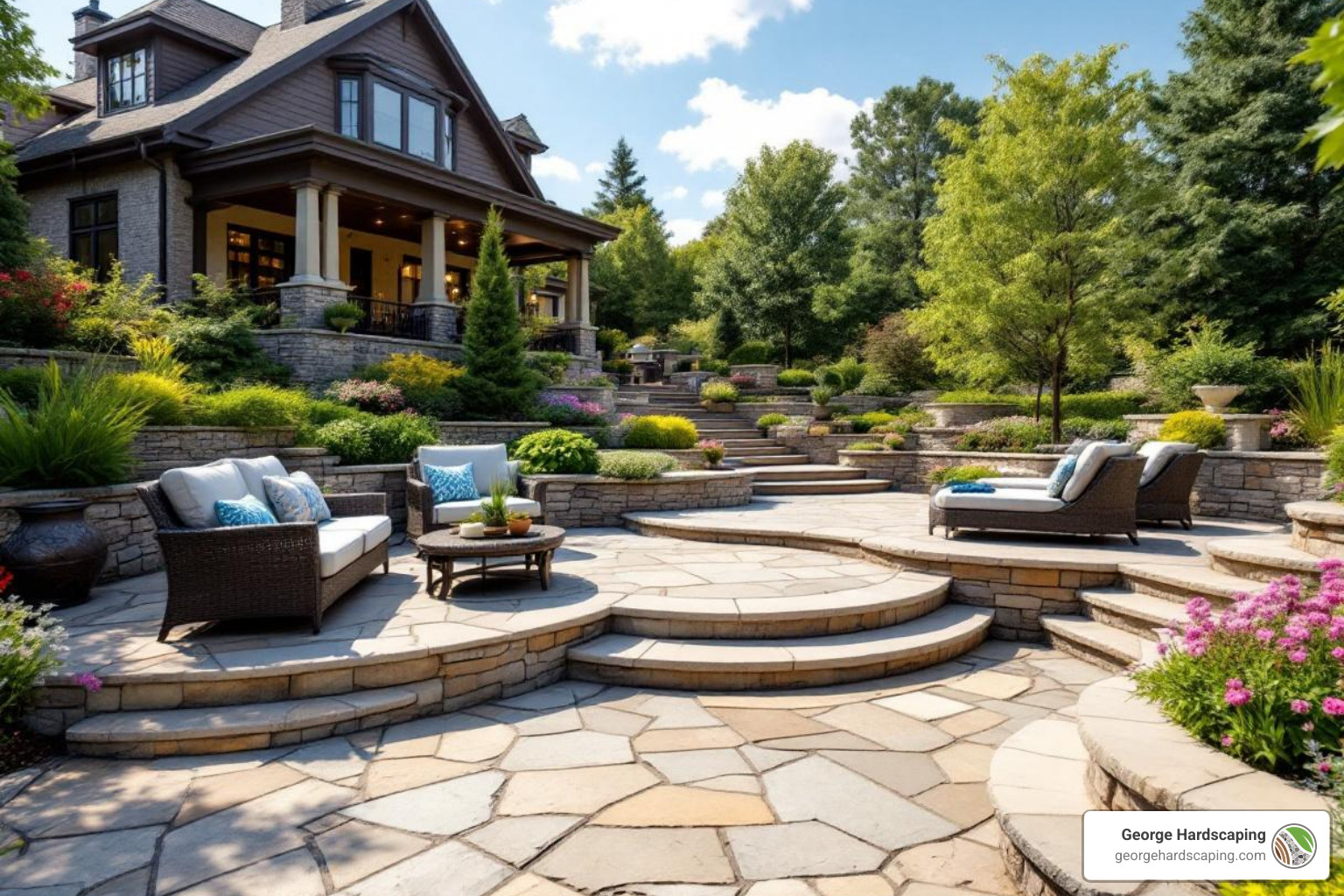
Stone patio design ideas offer endless possibilities for changing your backyard into a beautiful and functional outdoor living space. Whether you envision a rustic flagstone retreat, a sleek modern entertainment area, or a classic bluestone gathering spot, natural stone provides a level of durability and timeless appeal that manufactured materials simply can’t replicate.
Quick Answer: Top Stone Patio Design Ideas
- Rustic Flagstone – Irregular shapes with moss or pea gravel joints for a natural, cottage feel.
- Modern Bluestone – Clean geometric patterns with large-format pavers for contemporary style.
- Classic Brick & Stone – Herringbone or basketweave patterns with cobblestone borders.
- Mediterranean Limestone – Warm earth tones with integrated outdoor kitchen features.
- Circular Fire Pit Patio – Stone pavers arranged in concentric circles around a central fire feature.
- Multi-Level Terraced – Connected stone platforms creating distinct zones for dining and lounging.
- Permeable Paver Design – Eco-friendly stone with wider joints allowing natural drainage.
A stone patio serves as the foundation of any great outdoor living space—the setting for morning coffee, summer barbecues, and quiet evenings by a fire pit. Natural stone stands apart with compressive strengths from 4,000 to over 20,000 PSI, ensuring materials like bluestone and granite withstand decades of use. Unlike uniform manufactured pavers, each piece of natural stone is unique, creating a patio with authentic character that develops a rich patina over time.
The right design not only extends your living area but also increases your home’s value and creates a seamless connection between your interior and the landscape. For homeowners in Essex County, MA, where seasonal weather poses unique challenges, a natural stone patio offers exceptional durability and performance.
This guide will walk you through choosing the right stone, exploring design styles, and integrating features to create your perfect outdoor retreat. Ready to start planning? Explore our professional patio design and installation services to bring your vision to life.
Stone patio design ideas terminology:
Why Natural Stone is the Superior Choice for Your Patio
When choosing materials for your outdoor living space, natural stone stands out as the premier option. Its inherent qualities offer an ideal blend of beauty, resilience, and long-term value, making it a wise investment in your home’s legacy and your family’s enjoyment.
Best Durability and Weather Resistance
Natural stone is exceptionally durable, forged by geological processes over millions of years. Materials like granite, quartzite, and bluestone have impressive compressive strengths, often ranging from 4,000 to over 20,000 PSI. This means they can easily resist damage from heavy foot traffic, hefty patio furniture, and the inevitable bumps and scrapes of outdoor life. For homeowners in Essex County, MA, the most critical factor is resistance to freeze-thaw cycles.
The low porosity and high density of quality natural stone prevent water from penetrating, freezing, expanding, and causing cracks or spalling. Unlike some manufactured pavers that can degrade, delaminate, or fade under harsh UV exposure and seasonal weather, natural stone develops a rich patina, enhancing its character and beauty with age. A properly installed stone patio can last for decades, often looking better over time with minimal but proper care.
Timeless Appeal and Unique Character
The aesthetic of natural stone is unmatched in its timelessness and authenticity. Each paver possesses unique variations in color, texture, and veining, ensuring that no two patios are ever identical. This inherent variety creates a bespoke outdoor space with a depth and soul that mass-produced materials cannot replicate. Over time, the stone acquires a beautiful patina—a soft sheen and subtle color maturation that develops with age, exposure, and use.
On bluestone, this might mean a deepening of its signature blue-gray tones, while on limestone, it can result in a softening of edges and a warmer, more historic appearance. This natural aging process adds a sense of permanence and history to your landscape, making the patio feel like an integral part of your home from the very beginning.
Sustainability and Environmental Benefits
In an era of increasing environmental awareness, natural stone is a responsible and sustainable choice. As a naturally occurring material, it is quarried directly from the earth and requires significantly less energy and water to produce compared to the manufacturing processes for concrete pavers or porcelain tiles. Sourcing stone regionally from quarries in New England or the Northeast can further reduce its transportation-related carbon footprint.
Furthermore, stone patios can be designed as permeable systems. By setting pavers with wider joints filled with specialized gravel, rainwater can drain naturally into the subsoil. This “rainscaping” approach helps manage stormwater runoff, reduces the burden on municipal sewer systems, and recharges local groundwater aquifers. To learn more about these eco-friendly techniques, the Missouri Botanical Garden offers excellent guidance on permeable pavement and sustainable landscaping.
Comfort and Increased Home Value
Natural stone offers tangible benefits in both comfort and property value. It has excellent thermal properties; its natural thermal mass allows it to absorb the sun’s warmth and radiate it back slowly, providing a comfortable surface on cool evenings. Conversely, lighter-colored stones often stay cooler underfoot in direct sun compared to dark asphalt or concrete. Beyond comfort, a professionally installed natural stone patio is a premium feature that significantly increases your home’s curb appeal and perceived market value.
Potential buyers recognize the quality, longevity, and low-maintenance appeal of natural stone, viewing it as a high-end upgrade. This makes it not just an expense, but a sound investment in your property. For expert installation and design in Essex County, MA, you can explore George Hardscaping’s full range of hardscaping and masonry services to see how natural stone can elevate your outdoor living space.
A Curated Gallery of Stone Patio Design Ideas
Your patio is an extension of your home’s personality. Drawing inspiration from diverse styles, this curated collection of stone patio design ideas can help you envision the perfect outdoor retreat for your North Shore home, from the historic streets of Beverly and Marblehead to the spacious properties of Newburyport and Boxford.
Rustic & Natural Stone Patio Design Ideas
For those who cherish a deep connection to nature, rustic designs offer an organic, unpretentious charm that blends seamlessly into the New England landscape.
- Irregular Flagstone Layouts: Using large, irregularly shaped flagstones creates a natural, informal look reminiscent of a woodland path. The art lies in fitting the pieces together like a puzzle, with wider joints filled with moss, durable groundcover like creeping thyme, or pea gravel to evoke a sense of age and softness. This style is perfect for homes in Topsfield or Wenham seeking a relaxed, cottage feel.
- Fieldstone Patios: Locally sourced fieldstone provides a rugged, earthy aesthetic that directly connects to the region’s iconic stone walls. Its varied, rounded shapes and warm tones create patios that feel like a natural extension of the landscape, pairing beautifully with wooded lots in towns like Essex or Georgetown.
- Cottage Style with Moss: Planting low-growing mosses like Irish or Scotch moss, or fragrant herbs like Corsican mint, between stones helps blur the line between hardscape and softscape. This creates a soft, permeable surface with a relaxed, storybook feel, especially effective for shaded backyards or intimate garden courtyards.
- Integration with Wood Decks: Combining a ground-level stone patio with an elevated wood deck creates a dynamic, multi-textured space. This design offers distinct zones for dining and lounging and is a popular, practical solution for sloped backyards in coastal towns like Rockport and Gloucester.
- Weathered Stone for a Lived-in Look: Choosing weathered or reclaimed stone, such as antique granite cobbles or salvaged bluestone, gives a new patio an instant sense of history and character. This makes the space feel established and inviting from day one, as if it has always been part of the home.
- Pea Gravel Accents: Using pea gravel as a wide border, in larger joints, or for an adjacent seating area adds textural contrast and a satisfying crunch underfoot. It is also a cost-effective way to expand a patio’s usable footprint without the expense of fully paving the entire space.

A rustic stone patio becomes the heart of outdoor gatherings, especially with a crackling fire as the centerpiece. George Hardscaping specializes in creating beautiful and functional focal points that withstand New England weather. You can discover custom outdoor firepit solutions that pair perfectly with natural stone patios for cool Massachusetts evenings.
Modern & Contemporary Designs
For homes with sleek lines and minimalist aesthetics, modern stone patio design ideas offer sophistication and a clean, uncluttered look that emphasizes form and material.
- Clean Lines and Geometric Patterns: Modern designs are defined by strong geometric shapes (squares, rectangles) and straight, precise lines. This creates a sense of order and calm, with pavers laid in simple running bond or stacked patterns.
- Large Format Pavers: Oversized stone pavers (e.g., 24″x24″ or 24″x36″) minimize grout lines, contributing to a seamless, expansive feel that complements contemporary architecture. This look is popular in communities like Lynnfield and Peabody for creating an elegant, resort-like atmosphere.
- Refined Materials: Granite and certain types of quartzite are excellent choices for a modern patio, offering consistent textures, strong durability, and a luxurious finish. Finishes like ‘flamed’ or ‘honed’ provide a non-slip yet refined surface.
- Monochromatic Palettes: A limited color palette of cool grays, deep charcoals, or crisp whites creates a tranquil, sophisticated atmosphere. This allows the stone’s natural texture and the interplay of light and shadow to become the primary design elements.
- Concrete Pavers for Modern Flair: While George Hardscaping specializes in natural stone, high-quality modern concrete pavers that emulate stone textures can be incorporated to achieve a specific design aesthetic or meet a particular budget, offering uniformity and a wide range of color options.
For more visual inspiration on stone and stone-look patios, you can browse additional stone patio inspiration from HGTV. To see how these concepts translate into real projects on the North Shore, take a look at George Hardscaping’s own gallery of modern patio projects.
Classic & Traditional Styles
Timeless elegance defines classic stone patio design ideas. These styles draw from historical precedents to create inviting spaces with grace, formality, and enduring appeal.
- Bluestone with Brick or Cobblestone Borders: Bluestone is the quintessential choice for traditional New England homes. Pairing its cool tones with a warm, contrasting brick or rugged cobblestone border adds a defined edge and old-world charm that perfectly complements Colonial and Cape-style homes in towns like Salem and Danvers.
- Herringbone and Basketweave Patterns: These intricate laying patterns, often used with brick or rectangular stone pavers, are hallmarks of traditional design. They add immense visual interest and a sense of detailed craftsmanship, while the interlocking nature of the herringbone pattern also adds structural stability.
- Limestone for Old-World Charm: With its soft, earthy tones of beige, tan, and light gray, limestone is ideal for creating a warm, historic feel. It is particularly well-suited for covered or partially sheltered patios and pairs beautifully with complementary stone retaining walls, imparting a touch of European elegance.
- Symmetrical Layouts: Traditional patios often feature balanced, symmetrical designs that mirror the home’s architecture. This creates a sense of order and harmony, especially when framed by formal planting beds, straight walkways, and classical garden urns.
The George Hardscaping team excels at crafting classic and traditional patios that stand the test of time and suit the historic architecture found across Marblehead, Swampscott, and Manchester-by-the-Sea. You can learn more about their comprehensive patio design and installation services to bring a traditional stone patio vision to life.
Key Design & Planning Considerations
Careful, detailed planning is the foundation of a successful stone patio. Every decision, from the specific type of stone to the flow of the layout, contributes to the final look, functionality, and longevity of your outdoor space, whether you are designing for a compact yard in Newburyport or an expansive property in Boxford.
Choosing the Right Stone for Your Project
Selecting the right natural stone is a balancing act between your desired aesthetic, the functional demands of the space, your long-term maintenance preferences, and your budget. The stone you choose will dictate the patio’s color palette, texture, and overall character.
| Stone Type | Durability | Cost (Material per sq ft)* | Maintenance | Best Use |
|---|---|---|---|---|
| Flagstone | Very Good (resistant to weathering) | $4 – $15+ | Moderate (prone to moss/weed in joints) | Rustic, natural, informal patios, pathways |
| Bluestone | Excellent (dense, non-slip) | $5 – $20+ | Low (sealing recommended) | Formal, traditional, modern patios, pool surrounds, steps |
| Granite | Superior (extremely hard, stain-resistant) | $8 – $30+ | Very Low (highly durable, minimal sealing) | High-traffic areas, modern patios, outdoor kitchens, borders |
| Limestone | Good (softer than granite, can etch) | $4 – $18+ | Moderate (sealing essential, can show wear) | Mediterranean, traditional patios, warm-toned designs, covered areas |
| Travertine | Good (porous, requires sealing) | $5 – $25+ | Moderate (sealing essential, good for barefoot) | Pool decks, warm climates, Mediterranean-style patios |
Please note: These are average material costs based on general internet data and not actual costs for George Hardscaping. Project costs vary based on stone type, quality, location, and installation complexity.
- Color and Texture: Choose a stone color that complements your home’s exterior siding, trim, and roofing to create a cohesive visual palette. Finishes like honed (smooth and matte), thermal (textured and non-slip), and natural cleft (uneven and rustic) dramatically affect both appearance and practicality.
- Climate and Slip Resistance: In New England, dense, low-absorption stones like bluestone, quartzite, and granite perform best in freeze-thaw cycles. A textured, non-slip surface (like thermal or natural cleft) is critical for safety in our wet, icy climate, especially around pools, spas, and main entryways in towns like Gloucester or Rockport. Darker stones may help melt snow faster but can become hot in direct summer sun, a consideration for barefoot areas.
For additional general guidance on selecting materials, you can review expert advice on choosing pavers from Better Homes & Gardens. When you are ready to select specific stones and details for your own project, George Hardscaping can help tailor the options to your property conditions and design goals.
Key Considerations for Your Stone Patio Design Ideas
Once you have a stone in mind, focus on the design specifics that will make the space both beautiful and functional.
- Layout and Shape: Your patio’s shape—be it rectangular, curved, or a free-form organic shape—should complement your yard’s natural contours and your home’s architectural lines. A good layout provides a comfortable and intuitive flow from your home out into the landscape.
- Functional Zones: A well-designed patio often includes distinct “rooms” or zones for dining, lounging, and cooking. Thoughtful placement of each zone improves usability, helps with traffic flow, and makes furniture arrangement easier.
- Scale and Proportion: The patio’s size should be proportionate to your home and yard—not so large it overwhelms the green space, nor so small it feels cramped. Similarly, paver size should feel balanced; large-format pavers can make a small space feel bigger, while smaller units can add intricate detail and charm to a larger area.
- Drainage and Grading: This is arguably the most critical technical aspect of patio design. A patio must be graded to slope away from your home’s foundation (typically a 1/4-inch drop per foot) to prevent water intrusion. Depending on the site, solutions like channel drains or French drains may be needed to manage heavy runoff and protect the patio’s sub-base from erosion.
- Pattern Selection: The laying pattern dramatically alters the look. Popular choices include running bond (classic and simple), random rectangular (organic yet orderly), circular (ideal for creating a focal point around a fire pit), and herringbone (traditional elegance with excellent structural interlock).
- Borders and Inlays: Personalize your patio with creative borders or decorative inlays. Using a contrasting stone color, material (like brick or cobbles), or pattern can define edges, create a visual transition to a walkway, or highlight a central gathering area.
- Architectural Harmony: Ensure the patio style complements your home’s architecture—a formal bluestone and brick patio for a Colonial, for example, or a clean-lined granite design for a contemporary home. The goal is a seamless integration of house and garden.
To make circulation between your patio, driveway, and entrances feel seamless, George Hardscaping also offers expert tips on building walkways and stairs through their dedicated design and installation services.
Maximizing Small Spaces
Even compact courtyards in Newburyport or Marblehead can become stunning, functional retreats with clever design.
- Incorporate Vertical Elements: Use trellises with climbing hydrangeas, privacy screens, or slender evergreen plantings to draw the eye upward, creating a sense of volume and making the area feel larger. This adds greenery while preserving precious floor space.
- Use Built-in Seating: Integrated stone benches or seating walls are a game-changer for small patios. They save significant floor space compared to bulky furniture and can double as retaining walls on sloped sites or as stylish planters.
- Choose Light-Colored Stone: Lighter hues like pale limestone, travertine, or light gray granite reflect more light, making a small space feel more open, airy, and bright, especially in shaded urban backyards.
- Select Multi-functional Features: Opt for elements that serve dual purposes, like a fire pit with a cover that can be used as a coffee table, benches with built-in storage, or a low wall that works as both a boundary and extra seating.
- Add Container Gardens: Potted plants, window boxes, and raised planters provide flexible greenery without requiring large garden beds. This allows you to add color and life while being able to adjust the layout with the seasons.
- Create the Illusion of Space: Laying pavers on a diagonal can visually expand an area’s width and length. Minimizing visual clutter by sticking to a simple color palette and keeping furniture scaled appropriately also helps maintain an open feel.
To create more usable space on sloped properties throughout the North Shore, George Hardscaping can design and install structural and decorative landscape retaining walls that work in harmony with your new patio.
Bringing Your Vision to Life: Installation, Integration, and Investment
Once you have refined your stone patio design ideas, the next steps involve expert installation, thoughtful integration with the surrounding landscape, and a clear understanding of the investment. George Hardscaping brings these critical elements together for homeowners across Essex County, from Ipswich and Rowley to North Reading and Beverly, ensuring a beautiful and lasting result.
Integrating Landscaping and Lighting
A stone patio truly comes alive when it is thoughtfully integrated with complementary landscaping and strategic lighting. These elements transform it from a simple surface into a captivating outdoor room.
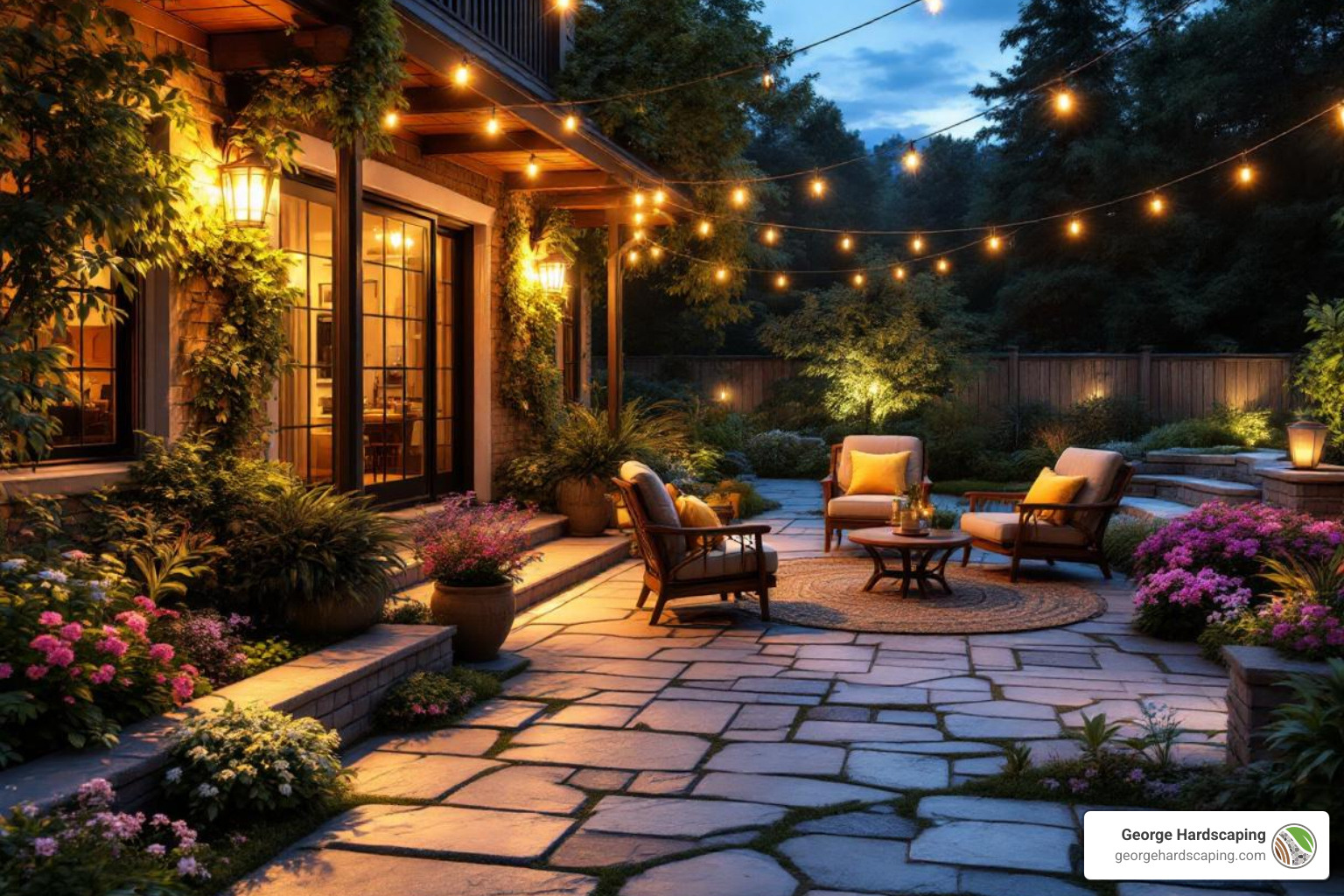
- Soften Edges with Plantings: Use lush garden beds filled with a mix of perennials (like hostas and ferns in shade, or lavender and coneflowers in sun), ornamental grasses, and flowering shrubs to soften the hard lines of the stone. This creates a natural, graceful transition to your lawn or woodland edge.
- Create Atmosphere with Lighting: A well-designed lighting scheme extends the usability of your patio into the evening. Incorporate ambient lighting like overhead string lights for a festive mood; low-voltage path lights for safe navigation; uplighting to highlight specimen trees; and task lighting for outdoor kitchens and dining areas. Modern LED systems are energy-efficient and offer a wide range of color temperatures.
- Add Features for Sensory Interest: A gentle fountain or bubbling urn can add soothing sounds and a dynamic focal point, masking neighborhood noise. A pergola provides essential shade, defines the space architecturally, and supports beautiful climbing plants like wisteria or climbing roses.
- Connect Hardscape Elements: To ensure a cohesive property design, consider how your patio connects to other hardscape elements. The materials, patterns, or borders can be echoed in your walkways, steps, and even the driveway. George Hardscaping offers custom driveway paver installation services that can complement your patio for a unified, high-end look.
Maintenance and Long-Term Care
While exceptionally durable, natural stone requires proper maintenance to preserve its beauty and structural integrity, especially in the demanding Massachusetts climate.
- Regular Cleaning: Sweep your patio regularly to remove leaves, dirt, and debris that can hold moisture and cause stains. A simple rinse with a garden hose is often sufficient for routine cleaning. For a deeper clean, use a pH-neutral stone cleaner and a stiff-bristle (not wire) brush.
- Weed and Moss Control: Address weeds or moss in joints promptly by hand-pulling or using a hardscape-safe weed control product. Using a high-quality polymeric sand in the joints and ensuring a proper base are the best preventative measures against weed growth.
- Sealing for Protection: Depending on the stone’s porosity, a high-quality breathable sealer is often recommended. This type of sealer allows any moisture trapped within the stone to escape while preventing surface stains from oil, wine, and other spills. Reapply every 3-5 years as needed, following manufacturer guidelines.
- Stain Removal: Address spills quickly. For most organic stains, a stiff brush with mild detergent and water is effective. For oil or grease, a specialized stone poultice may be needed to draw the stain out of the pores. Always avoid harsh, acidic chemicals that can etch or damage the stone and harm nearby plantings.
- Winter Care: In areas like Ipswich or Danvers, never use rock salt (sodium chloride) on natural stone surfaces, as it can cause pitting and spalling. Use sand for traction or a de-icer specifically labeled as safe for natural stone, such as one containing calcium magnesium acetate. Use plastic shovels or snow blowers with a raised rubber blade to prevent scratching the surface.
- Fixing Loose Stones: Over many years, individual stones may settle or shift. Minor adjustments can sometimes be a DIY project, but significant settlement often indicates an issue with the underlying base and is best addressed by a professional to prevent further problems.
This Old House offers a useful general step-by-step guide on laying a stone patio that also touches on repair approaches. For homeowners who prefer expert help, George Hardscaping can provide ongoing advice and professional maintenance as part of their broader hardscape construction service.
Understanding the Cost of a Stone Patio
The investment in a stone patio varies widely based on stone type, design complexity, and site conditions. Understanding the major cost drivers will help you plan and budget effectively.
- Material vs. Labor Costs: While the stone itself is a significant cost factor, skilled labor is often the largest component of the budget. For many projects, labor can account for 60-70% of the total cost. This is because proper installation is a multi-step, labor-intensive process.
- Site Preparation: This is a critical and non-negotiable cost. It includes excavation to the proper depth, hauling away soil and debris, grading the area for proper drainage, and thorough compaction of the sub-grade. Challenging site access, extensive tree root removal, or the need to demolish an old patio can increase these costs.
- Base Construction: A proper base, typically consisting of several inches of compacted processed gravel topped with a layer of sand or stone dust, is essential for a long-lasting patio. The cost includes the materials and the labor to install and compact these layers correctly.
- Project Complexity: A simple, rectangular patio will cost less than one with intricate curves, multiple levels, or complex patterns like herringbone. Integrated features like fire pits, outdoor kitchens, and seat walls will also significantly increase both material and labor costs.
- DIY vs. Professional Installation: A DIY approach can save on labor costs but requires significant physical effort, specialized tools (like a plate compactor), and a deep understanding of base construction and drainage. Mistakes in the base preparation are the number one cause of patio failure (settling, pooling water) and can be extremely costly to correct later. Professional installation from an experienced hardscaping contractor ensures expert craftsmanship, proper drainage, and a long-lasting result that protects your investment.
- Long-Term Investment: A well-designed and expertly installed stone patio is a significant upgrade that improves your lifestyle and expands your functional living space. For many homes on the North Shore, a quality stone patio is a compelling selling feature that adds tangible value and provides an excellent return on investment.
If you want a deeper understanding of how hardscape projects are structured, George Hardscaping explains the process in their resource on what is hardscape in construction. This background can help you ask informed questions as you move from ideas to the build phase.
Transform Your Backyard with an Expertly Crafted Stone Patio
A well-designed stone patio is more than a hardscape feature; it’s an extension of your home and a foundation for countless memories. By choosing the right materials, incorporating a thoughtful design, and ensuring proper installation, you create a durable and beautiful outdoor oasis that will stand the test of time.
For homeowners in Essex County, MA, looking to bring these stone patio design ideas to life with unparalleled craftsmanship, the team at George Hardscaping provides expert masonry and hardscaping services.
Ready to transform your outdoor space? Request your free estimate today!
Don’t wait to create the backyard of your dreams—contact our patio design services team and start planning your stone patio project now!
