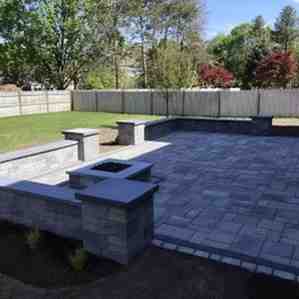
What Key Qualities Define the Best Retaining Wall Blocks?
The best retaining wall blocks are not just attractive. They also need to hold back soil safely for years without shifting, cracking, or trapping water behind the wall.
Here are the qualities that matter most:
Strength and structural stability
- Retaining walls deal with constant lateral pressure from soil.
- High-quality concrete wall blocks are built to handle that load far better than standard decorative brick.
- In cold-weather regions, dense blocks with strong compressive strength are especially important.
Built-in interlocking features
- Many retaining wall blocks use rear lips, pins, tabs, or tongue-and-groove systems.
- These features help keep each course aligned and create the proper setback, which improves stability.
Durability in weather
- Good retaining wall blocks should resist moisture, surface wear, and freeze-thaw damage.
- This is especially important in climates like Essex County, MA, where winter conditions can be tough on weaker materials.
Drainage compatibility
- Even the strongest block can fail if water builds up behind the wall.
- The best systems work well with gravel backfill, drain pipe, and filter fabric so hydrostatic pressure does not become a problem.
Ease of installation
- Blocks designed specifically for retaining walls are usually faster and more reliable to install than traditional clay bricks with mortar.
- That can mean better consistency, fewer installation errors, and lower labor time.
Aesthetic flexibility
- Modern retaining wall blocks come in a wide range of colors, textures, and profiles.
- You can match everything from a rustic garden wall to a clean, contemporary landscape design.
Long-term value
- A retaining wall should last for decades, not just look good on day one.
- Quality materials, proper base preparation, and expert installation all play a role. For more on that, see More info about retaining walls installation.
One important point: when people search for the best bricks for retaining walls, they often really mean engineered retaining wall blocks. Traditional clay bricks can work for low decorative walls, but for most true retaining applications, concrete retaining wall blocks are the smarter and more dependable choice.
When selecting materials for your retaining wall, certain characteristics are paramount to ensure stability, durability, and aesthetic appeal. The best blocks offer a combination of structural support, ease of installation, and resilience against environmental factors, especially crucial in regions like Essex County, MA, which experiences significant weather variations, including heavy snowfall, coastal humidity, and intense freeze-thaw cycles. Choosing the wrong material can lead to bowing, cracking, or total wall failure within just a few seasons.
- Structural Integrity and Compressive Strength: A retaining wall block must withstand the immense pressure exerted by retained soil and water. Blocks manufactured with robust materials, often concrete, that boast a high compressive strength are essential. For superior durability in areas prone to freeze-thaw cycles, blocks with a minimum 5000 PSI compressive strength are highly recommended. This ensures the material can resist the internal pressure of freezing water without spalling or crumbling.
- Interlocking Features: Modern retaining wall blocks are designed with rear lips, tabs, pins, or tongue-and-groove systems. These features ensure proper alignment between courses and prevent individual blocks from shifting under pressure, allowing segmental retaining walls to function as a cohesive unit without mortar. This flexibility is vital in New England, as it allows the wall to move slightly with the ground’s natural expansion and contraction.
- Durability and Weather Resistance: Blocks must be highly resistant to moisture absorption. In Essex County, MA, selecting blocks with low water absorption rates is key to preventing premature deterioration. High-quality concrete blocks are often treated with integral water repellents during manufacturing to enhance their lifespan.
- Aesthetic Versatility: The best blocks come in a wide range of colors, textures, and shapes to complement various landscape designs, whether you prefer a natural stone look, a modern smooth finish, or a textured-cut stone appearance. This allows homeowners to match their retaining walls with existing patios, walkways, and home architecture.
- Ease of Installation: Blocks designed for straightforward stacking, with features like rear alignment tabs or integrated hand-holds, can significantly improve project efficiency. While professional installation is always recommended for structural walls, these features ensure a more precise and stable build.
- Drainage Compatibility: Blocks should allow for effective water management behind the wall. Hydrostatic pressure—the pressure exerted by trapped water—is the leading cause of retaining wall failure. The best systems are designed to work in tandem with clean stone backfill and perforated drainage pipes.
- Material Composition: While traditional clay bricks are beautiful for decorative or low, non-structural applications, concrete blocks are specifically engineered for structural soil retention and are far more suitable for bearing significant loads.
We always emphasize the importance of high-quality materials and solid craftsmanship for durable walls. For more detailed information on ensuring a robust foundation for your outdoor projects, explore our guide on retaining walls installation.
What Are the Top Recommended Retaining Wall Block Types and Their Unique Features?
The market offers a diverse range of retaining wall blocks, each with specific advantages for different project needs. In most cases, when people search for the best bricks for retaining walls, they’re actually looking for the best structural wall blocks that can safely hold back soil, resist weather damage, and still look attractive in the landscape. Understanding the technical differences between these materials is the first step in a successful build.
Segmental Retaining Wall (SRW) Blocks
Segmental Retaining Wall (SRW) blocks are concrete units designed to interlock without mortar, relying on gravity, friction, and a mechanical connection system. They typically feature rear lips, pins, or tongue-and-groove systems that ensure proper setback (the slight backward lean of the wall) and connection between courses. They come in a vast array of textures and colors to match any aesthetic. SRW blocks are highly versatile, suitable for garden walls, terraced landscapes, raised garden beds, and structural walls up to certain heights. Many systems are designed for gravity walls up to 3-4 feet high without requiring specialized engineering.
One of the biggest advantages of SRW blocks is that they are engineered as a system. The block shape, setback, drainage stone, and reinforcement all work together to create a flexible yet incredibly strong structure. For homeowners who want a reliable balance of appearance, performance, and installation efficiency, SRW blocks are often the best overall choice. They are also commonly used alongside broader retaining walls installation plans where grading, drainage, and surrounding hardscape features need to be integrated into one cohesive design. These blocks are manufactured to strict ASTM standards, ensuring consistency in size and strength that natural stone cannot always guarantee.
Large Precast Concrete Blocks
These are heavy-duty, engineered concrete blocks, often weighing hundreds or even thousands of pounds, manufactured off-site and requiring heavy machinery for installation. They offer exceptionally high compressive strength and are available in both solid and hollow core designs. Many feature textures crafted from real natural stone, providing a grand and robust appearance. These blocks are the go-to choice for very tall retaining walls (some systems can support walls up to 50 feet with engineering), commercial projects, and highway embankments.
Because of their weight and engineering potential, large precast blocks are often selected for sites with serious grade changes or load-bearing requirements, such as supporting a driveway or a building foundation. They are less DIY-friendly but extremely effective when installed by professionals who have the equipment to handle their massive scale.
Traditional Clay Bricks
Traditional clay bricks are smaller, oven-fired clay units laid with mortar. They offer a timeless aesthetic that blends beautifully with traditional architecture. They are strong and durable when properly installed, capable of lasting decades. However, installation is labor-intensive, requiring skilled masonry work. A significant drawback in freeze-thaw climates like Massachusetts is their vulnerability to spalling if moisture penetrates the brick or mortar joints and then freezes, causing the face of the brick to pop off.
Clay bricks can be a good choice for low garden edging, decorative landscape walls, or veneer applications where they are applied over a concrete core. But for most practical retaining walls in New England climates, engineered concrete retaining wall systems outperform them in terms of structural longevity and cost-effectiveness.
Natural Stone as a Related Option
Many homeowners also compare blocks to natural stone. Natural stone creates a stunning, premium look and works well for short garden walls, steps, and custom landscape features. However, stone selection and installation technique matter greatly for any wall retaining significant load. Our overview of retaining wall stone options can help clarify when stone may be appropriate. Natural stone requires a high level of craftsmanship to ensure the pieces fit together securely without creating large gaps that could compromise the wall’s integrity.
For technical guidance on segmental wall design and construction standards, the National Concrete Masonry Association provides trusted industry resources that detail the engineering behind these modern systems.
Comparison of Retaining Wall Block Types
| Feature | Segmental Retaining Wall (SRW) Blocks | Large Precast Concrete Blocks | Traditional Clay Bricks |
|---|---|---|---|
| Maximum Height | Up to 3-4 ft (gravity), taller with geogrid | Up to 50 ft with engineering | Up to 3 ft (decorative) |
| Installation Method | Dry-stacked, interlocking | Dry-stacked, heavy machinery | Mortared joints, masonry |
| Typical Cost Range | Moderate ($2-$15 per block) | High (per unit) | Low ($0.50-$2 per brick) |
| Aesthetic | Wide variety (textured, smooth) | Natural stone textures | Classic, traditional |
| Structural Strength | Good for moderate heights | Excellent for heavy-duty | Limited for structural |
| Freeze-Thaw Durability | Good (allows movement) | Excellent (high density) | Fair (vulnerable to spalling) |
| DIY Suitability | Good for low walls | Poor (requires equipment) | Poor (requires masonry skill) |
How Do You Choose the Right Block Based on Wall Height, Function, and Design Aesthetic?
Selecting the appropriate retaining wall block involves balancing structural requirements with your desired visual outcome and practical use. A wall that looks great but fails under the weight of the soil is a liability, while a purely functional wall might not provide the curb appeal you desire.
Wall Height and Structural Needs
The height of your proposed retaining wall is often the primary determinant for block type. For walls under 2 feet, almost any block type can work, including smaller SRW units or traditional clay bricks. For walls between 2-4 feet, concrete blocks are generally recommended with proper drainage and, often, geogrid reinforcement. Most municipalities, including those in Essex County, MA, require permits for walls over 4 feet tall, and engineering is frequently needed. Walls exceeding 4 feet demand engineered solutions, typically involving large precast concrete blocks or specialized SRW systems with geosynthetic reinforcement. Natural stone is not recommended for walls exceeding 3 feet due to stability concerns without extensive engineering.
The taller the wall, the less room there is for error. Soil type, surcharge loads (such as a nearby driveway or shed), groundwater, and slope angle all matter. The International Code Council offers building code resources that explain why taller walls often require design review and permits to ensure public safety and structural longevity.
Functionality and Design
Consider what purpose your retaining wall will serve. For erosion control, you need blocks with excellent interlocking features and robust drainage capabilities. For creating usable space like terraced patios, taller structural blocks are necessary to handle the weight of the new level ground. If the wall is purely decorative, smaller blocks or traditional bricks can be suitable.
Think about the wall as part of a larger outdoor living plan. A retaining wall may define a lawn edge, support a terrace, frame a planting bed, or transition to stairs and walkways. The best result often comes from choosing a wall system that coordinates with surrounding pavers, steps, and planting style. For homeowners looking for inspiration, our inspirational garden retaining wall design ideas can help you evaluate styles that match your landscape. Whether you want a rustic, weathered look or a sleek, contemporary finish, there is a block system that fits.
Climate and Site Conditions
In Essex County, MA, freeze-thaw durability is a major consideration. Concrete retaining wall blocks with good density and low absorption generally perform better than standard clay bricks. Site drainage matters just as much as material choice. A premium block can still fail if water is trapped behind the wall or if the base settles due to poor preparation. Soil with high clay content retains more water and exerts more pressure, requiring more robust block systems and enhanced drainage.
DIY vs. Professional Installation
For small, low walls (under 2-3 feet) that are primarily decorative, lightweight stackable blocks can be a good option for homeowners. For taller walls, complex designs, or challenging soil conditions, professional installation is essential. George Hardscaping specializes in professional retaining wall installations, ensuring structural integrity and compliance with local regulations. Learn more in our step-by-step guide on installing retaining wall blocks.
A professional team can also determine whether your project needs geogrid, drainage pipe, stepped footings, or engineering review, details that dramatically affect long-term performance. Ready to transform your landscape with a robust and beautiful retaining wall? Our team is here to guide you through every step, from material selection to flawless installation. Request a free hardscaping estimate today to get started on your project!
How Much Do Retaining Wall Blocks Typically Cost, and What Factors Affect Pricing?
The cost of retaining wall blocks varies significantly based on material, size, design, and regional availability. Please note that the following are average costs based on internet data in April 2026 and are not actual costs for George Hardscaping. Understanding these costs helps in budgeting for a project that adds value to your home.
Block Material and Type
- Standard Concrete SRW Blocks: Generally the most affordable structural option, ranging from $2 to $8 per block, or roughly $10 to $30 per square foot for materials alone. These are widely available and offer great value for most residential projects.
- Decorative/Textured SRW Blocks: Blocks with unique textures, multi-color blends, or specialized shapes range from $5 to $15 per block or $20 to $40 per square foot. These are ideal for high-visibility areas like front yard landscapes.
- Large Precast Blocks: Significantly more expensive per unit, often starting at $50-$100 per block, but can be cost-effective for very tall walls by reducing labor needs and the amount of geogrid required.
- Traditional Clay Bricks: Individual bricks range from $0.50 to $2 per brick, but labor and mortar costs can make them more expensive overall for retaining wall applications compared to dry-stack systems.
Factors Affecting the Cost
Larger and heavier blocks typically cost more per unit but cover more surface area, which can sometimes reduce labor time. Specialty colors and unique textures come at a premium. Purchasing blocks in bulk often results in a lower price per unit, though delivery fees for heavy masonry can be substantial. Don’t forget to budget for capstones, corner units, and specialized masonry adhesive to finish the top of the wall.
Installation costs are frequently the largest component of a retaining wall project, often accounting for 50-70% of the total budget. For walls exceeding 4 feet, permits and structural engineering designs add to the overall cost. Essential drainage materials like geogrid, filter fabric, and perforated drainage pipe must also be included in your financial planning. You can view current retaining wall block inventory at Home Depot to get a sense of retail pricing. For a comprehensive understanding of the financial aspects, refer to our detailed retaining wall cost guide.
Cost Beyond the Block Price
Homeowners often underestimate the difference between the price of the block and the price of a complete retaining wall system. A wall may require extensive excavation, compacted base aggregate (usually 3/4″ crushed stone), drainage stone, pipe, fabric, geogrid, caps, adhesives, and finish grading. There is also a major distinction between decorative walls and engineered retaining walls. A short landscape wall may be fairly simple, while a structural wall supporting a slope or driveway can involve design review or engineering calculations that ensure the wall won’t collapse under load.
Value and Long-Term Performance
When comparing options, think in terms of lifecycle value. A cheaper material that absorbs water, shifts, or requires repairs may cost more over time than a better block installed correctly from the start. High-quality systems with proper drainage usually provide better longevity and reduced maintenance, protecting your property’s value for decades. Want accurate pricing for your property instead of rough averages? Request a free hardscaping estimate and get expert guidance on the right wall system, drainage needs, and installation scope for your site.
What Installation Best Practices Ensure a Long-Lasting Retaining Wall?
A retaining wall’s longevity depends heavily on proper installation, regardless of the block type chosen. Adhering to best practices is crucial, especially in challenging environments like Essex County, MA, where the ground is constantly shifting due to temperature changes. A wall is only as good as the work that goes into the ground before the first block is even visible.
Proper Excavation and Foundation
Begin by excavating a trench deep enough to bury at least the first course of blocks—this is known as embedment. This provides a stable base and prevents the bottom of the wall from kicking out under pressure. The trench must be perfectly level and wide enough to accommodate the block and a compacted gravel base. Lay a solid foundation of compacted gravel or crushed stone, spread in layers (lifts) and thoroughly compacted using a heavy-duty plate compactor. A common mistake is using soil or sand as a base, which will inevitably settle and cause the wall to lean.
The first course is the most important part of the wall. If it is not level, aligned, and well-supported, every course above it will amplify the problem, leading to a crooked or unstable structure. Professional installers spend significant time on base preparation because that hidden work determines long-term stability. For more project-specific insight, review our overview of professional block retaining wall construction techniques.
Drainage System and Geogrid
Install a perforated drainage pipe behind the first course of blocks, wrapped in filter fabric to prevent clogging from fine soil particles. Backfill the area behind the wall with clean, free-draining gravel (not native soil). Place geotextile filter fabric between the gravel backfill and native soil to prevent migration. Effective drainage is critical, and we have a dedicated comprehensive retaining wall drainage guide with more details. For walls over 2-3 feet, geogrid reinforcement is essential. Geogrid is a high-strength mesh that ties the retaining wall into the soil mass behind it, creating a reinforced structure that can handle much higher loads.
Hydrostatic pressure is one of the most common causes of wall failure. Even very strong blocks can bow or shift if water is trapped behind the wall. The Federal Highway Administration geotechnical guidance offers valuable technical information on wall design and drainage principles, emphasizing that water management is the key to structural success.
Proper Block Placement and Capping
Ensure each block is perfectly level as you lay each course. Utilize the interlocking features of your chosen blocks for proper setback and alignment. Stagger vertical joints between courses (running bond pattern) to distribute load evenly. Backfill behind the wall in 6-inch lifts, compacting each layer thoroughly before adding the next. Finally, install capstones on the top course with high-quality masonry adhesive to protect the blocks from weather exposure and provide a finished look. For detailed step-by-step instructions, our guides on detailed instructions on how to build a retaining wall and installing retaining wall blocks provide comprehensive information.
When Should You Consult a Professional or Engineer for Your Retaining Wall Project?
Alt text: Professional hardscaping team installing a large retaining wall; metadata: professionalretainingwall_install.jpg
While DIY retaining walls are feasible for small, decorative projects, many situations warrant the expertise of a professional hardscaping contractor or a structural engineer. The cost of a professional consultation is often much lower than the cost of repairing a failed wall.
- Wall Height Exceeds 3-4 Feet: Most municipalities, including those across Essex County, MA, require permits and often engineering for walls over 4 feet tall. The risk of failure increases exponentially with height, and the forces involved are too great for standard dry-stacking without reinforcement.
- Complex Terrain or Slopes: Building on steep, unstable slopes or near existing structures requires specialized knowledge. Professionals understand soil mechanics and how to design a wall that integrates safely into challenging landscapes. The USDA Natural Resources Conservation Service provides helpful soil stability and erosion control resources that professionals use to assess site safety.
- Heavy Loads Above the Wall: If the retaining wall will support a driveway, patio, swimming pool, or even a heavy fence, an engineer’s design is critical to ensure the wall can handle the “surcharge” load.
- Drainage Concerns: If your property experiences significant water runoff or has a high water table, a professional can design an effective drainage system to prevent hydrostatic pressure buildup, which is the number one killer of retaining walls.
- Uncertainty About Soil Conditions: An engineer can perform soil tests to determine bearing capacity and stability, which is crucial for designing an appropriate wall foundation.
Professional guidance becomes especially important when the wall protects critical parts of your property. If failure would affect your foundation, driveway, outdoor living space, or a neighboring lot, it is worth getting expert input before construction starts. George Hardscaping offers expert retaining wall design and installation services throughout Essex County, MA. We ensure your project is structurally sound, aesthetically pleasing, and fully compliant with local regulations. Work with an experienced professional retaining wall contractor who can guide the project from concept through construction. For homeowners who want to understand the technical side, our fundamental retaining wall design principles page explains key considerations such as load, drainage, and wall configuration.
Don’t risk expensive repairs or a dangerous wall failure. Contact an experienced team before you build. Request a free hardscaping estimate and get clear guidance on the right retaining wall solution for your property.
Frequently Asked Questions About Best Bricks for Retaining Walls
What is the difference between “bricks” and “blocks” for retaining walls?
While “bricks” typically refer to smaller, oven-fired clay units laid with mortar, “blocks” (specifically concrete retaining wall blocks) are larger, engineered masonry units designed to interlock without mortar for structural soil retention. For most functional retaining walls, concrete blocks are the preferred choice due to their strength, size, and ease of installation, especially for taller applications. Traditional bricks are generally better suited for decorative, non-structural walls or veneers where they are not required to hold back significant soil weight.
Can I use traditional clay bricks for a tall retaining wall?
It is generally not recommended to use traditional clay bricks for tall structural retaining walls (exceeding 3 feet). Clay bricks rely on mortar joints for stability, which can be vulnerable to freeze-thaw cycles and hydrostatic pressure. Over time, the mortar can crack, leading to water infiltration and structural failure. Concrete retaining wall blocks, with their interlocking features and higher compressive strength, are engineered to handle the significant lateral forces of soil retention much more effectively and safely for taller applications.
How do I ensure my retaining wall lasts a long time, especially in harsh climates?
To ensure a long-lasting retaining wall, especially in climates with freeze-thaw cycles like Essex County, MA, prioritize high-quality, high-compressive-strength concrete blocks (minimum 5000 PSI), meticulous installation of a compacted gravel base, and a robust drainage system (perforated pipe, gravel backfill, filter fabric). For walls over 2-3 feet, geogrid reinforcement is crucial. Always consult with a professional hardscaping contractor or engineer for walls exceeding 3-4 feet or in challenging conditions to ensure the design meets local building codes.
Conclusion
Choosing the “best bricks for retaining walls” ultimately means selecting the right masonry units that balance structural integrity, durability, aesthetic appeal, and budget for your specific project. While traditional clay bricks offer undeniable charm for low, decorative applications, modern concrete retaining wall blocks are the undisputed workhorses for functional soil retention. They offer superior strength, remarkable versatility, and exceptional longevity, making them the preferred choice for most structural applications in New England. From segmental retaining wall blocks perfect for defining garden features to large precast units designed for significant structural challenges, understanding the unique qualities and installation best practices is paramount to a successful outcome.
For any retaining wall project, especially those exceeding a few feet in height, the expertise of a professional hardscaping contractor is invaluable. At George Hardscaping, serving communities across Essex County, MA, including Beverly, Boxford, Georgetown, Ipswich, Lynnfield, and Newburyport, we specialize in designing and installing durable, beautiful retaining walls. Our commitment is to enhance both the aesthetics and functionality of your outdoor space, ensuring your investment is sound and long-lasting. We take pride in our craftsmanship and our ability to solve complex drainage and grading issues for our clients.
Ready to transform your landscape with a robust and beautiful retaining wall? Contact George Hardscaping today for a consultation and free estimate!
 Alt text: Beautifully finished retaining wall with integrated steps and landscaping by George Hardscaping; metadata: finishedretainingwall_steps.jpg