
Hardscape Construction Service: Top Guide to Quality in 2024
Why Hardscape Construction Services Matter
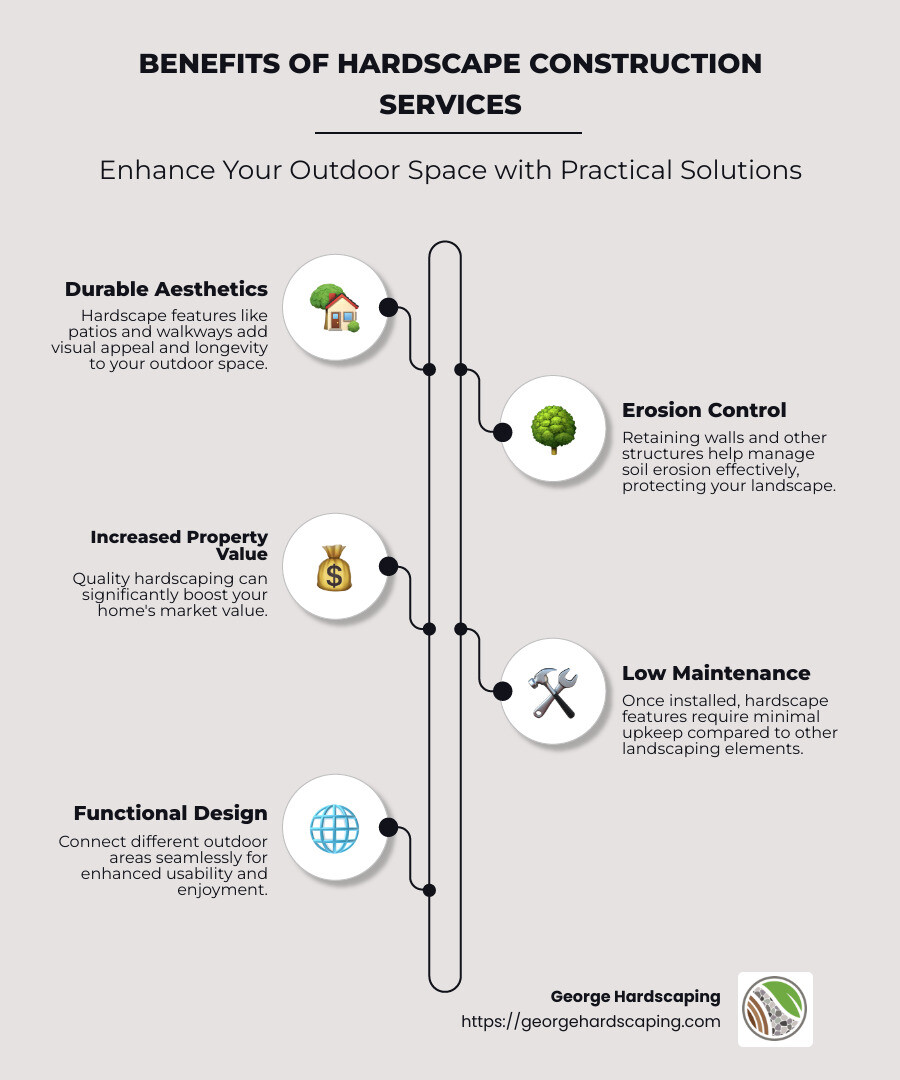
Looking to transform your outdoor space with durable and attractive features? Hardscape construction service is essential for creating those inviting patios, secure walkways, and cozy fire pits. These elements not only improve your home’s aesthetics but also provide practical solutions like managing soil erosion and connecting different outdoor areas seamlessly.
Quick Answer:
– Hardscape construction involves the use of hard materials (stone, concrete) to create permanent outdoor features.
– Common elements include patios, walkways, retaining walls, and fire pits.
– Benefits include increased property value, better erosion control, and lower maintenance costs.
Hardscapes are crucial for any well-rounded landscaping project. They integrate hard materials such as stone, concrete, and brick to create stunning, functional outdoor features. The importance of hardscaping lies not just in its ability to improve visual appeal, but also in its practicality. It reduces maintenance, boosts property value, and offers durable beauty that improves with age.
Understanding Hardscape Construction Services
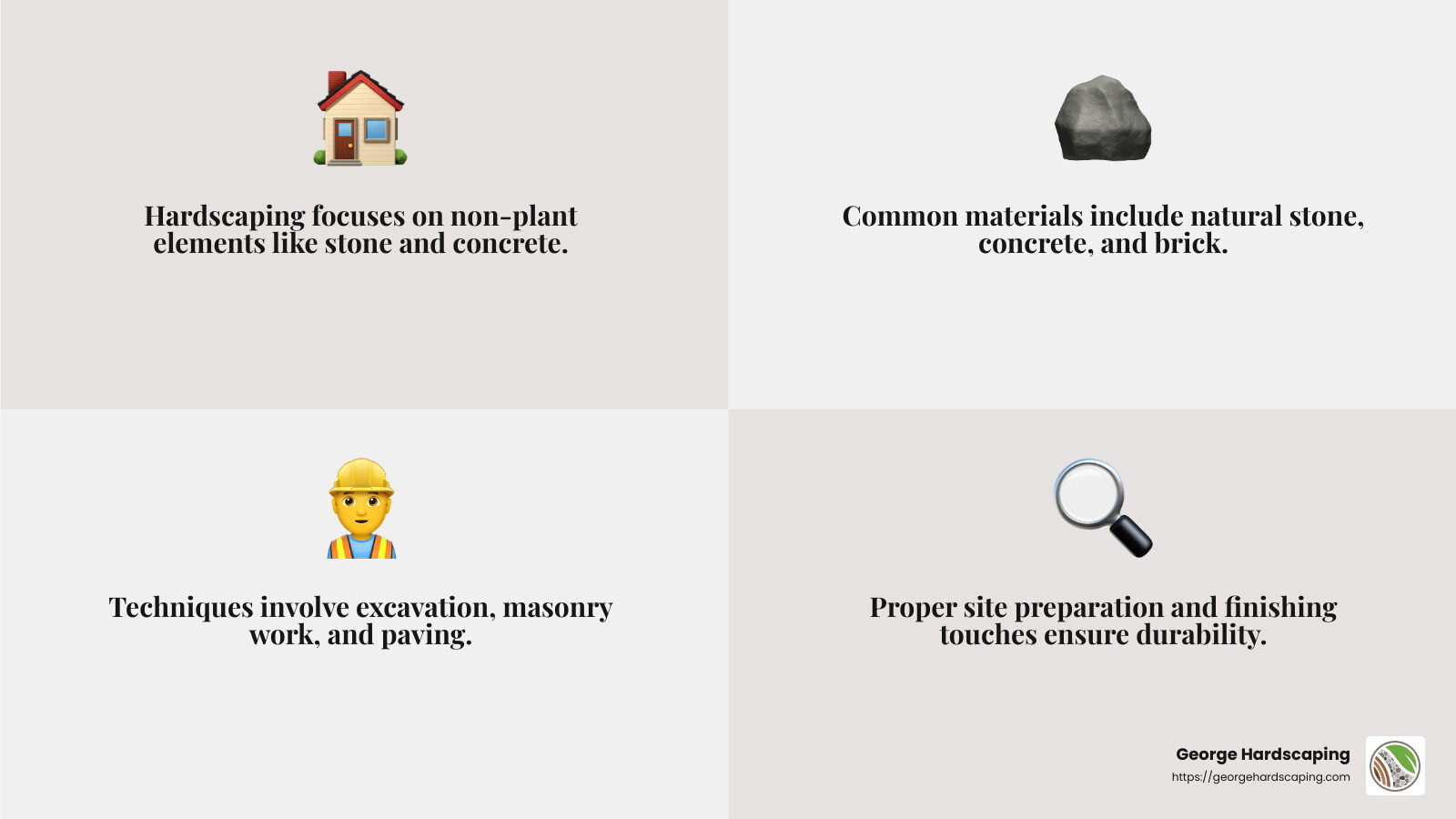
Hardscape construction service involves the design and installation of permanent outdoor features using hard materials like stone, concrete, and brick. These features range from patios and walkways to retaining walls and fire pits, creating both functional and aesthetic benefits for your property.
Definition
Hardscaping is a subset of landscaping that focuses on non-plant elements. These elements are typically made from durable materials and are designed to last for many years. Unlike softscaping, which deals with plants and soil, hardscaping involves the construction of solid structures that can withstand the elements and provide long-term value.
Materials Used
The materials used in hardscape construction are chosen for their durability and aesthetic appeal. Here are some commonly used materials:
- Natural Stone: Offers a timeless look and is ideal for pathways, patios, and retaining walls.
- Concrete: Versatile and cost-effective, concrete can be molded into various shapes and designs.
- Brick: Provides a classic appearance and is often used for walkways and patios.
- Stucco: Used for creating smooth, textured surfaces on walls and other structures.
- Wood: Ideal for decks and pergolas, adding a natural touch to your outdoor space.
Common Techniques
The installation of hardscapes involves several specialized techniques to ensure durability and aesthetic quality. Here are some common methods:
- Excavation and Site Preparation: Before any construction begins, the site must be properly prepared. This includes excavation to create a stable foundation and grading to ensure proper drainage.
- Masonry Work: Skilled masons lay bricks, stones, or concrete to create the desired structure. This process often involves precise cutting and fitting to achieve a seamless look.
- Paving: For patios and walkways, paving techniques are used to lay down materials in a pattern that is both functional and visually appealing.
- Retaining Wall Construction: Retaining walls require careful engineering to ensure they can hold back soil and prevent erosion. This often involves the use of interlocking blocks or reinforced concrete.
- Finishing Touches: Once the main structure is in place, finishing touches like sealing, staining, or adding decorative elements are applied to improve the overall look.
By combining these materials and techniques, hardscape construction service can transform your outdoor space into a beautiful and functional area that meets your needs and improves your property’s value.
Next, we’ll dive into the various types of hardscape features you can incorporate into your landscape, from patios to fire pits.
Types of Hardscape Features
Hardscape features can transform your outdoor space into a functional and beautiful area. Here are some of the most common types of hardscape features you might consider:
Patios
Patios are one of the most popular hardscape features. They provide a versatile outdoor living space for dining, entertaining, or simply relaxing. Patios can be made from various materials, including concrete, natural stone, and brick.
Example: A custom patio installation can turn your backyard into an outdoor oasis. Imagine a spacious stone patio with comfortable seating, a fire pit, and a pergola for shade. This setup not only boosts your home’s curb appeal but also offers a perfect spot for family gatherings.
Walkways
Walkways guide visitors through your landscape, connecting different areas like the garden, patio, and driveway. They can be made from pavers, natural stone, or concrete, and can be designed in various patterns to suit your aesthetic preferences.
Example: A winding stone walkway leading to your front door can make a striking first impression. It adds a touch of elegance and ensures safe passage, even in wet conditions.
Retaining Walls
Retaining walls are essential for properties with varying elevations. They help prevent soil erosion and create level areas for planting or other landscape features. Retaining walls can be built from stone, brick, or concrete blocks, and can also serve as seating areas.
Example: A beautifully constructed retaining wall can transform a sloped backyard into a terraced garden. This not only adds visual interest but also creates usable space for plants and outdoor activities.
Fire Pits
Fire pits are a fantastic addition to any outdoor space. They provide warmth and ambiance, making your backyard a cozy retreat even on cooler nights. Fire pits can be built from various materials, including stone, brick, and metal, and can be customized to fit your style and needs.
Example: Picture a circular stone fire pit surrounded by comfortable seating. This setup invites you to enjoy evenings outside, roasting marshmallows or simply relaxing by the fire.
Each of these hardscape features offers unique benefits and can be custom to fit your specific needs and style preferences. Whether you’re looking to create a cozy outdoor retreat or a functional space for entertaining, incorporating these hardscape elements can significantly improve your property’s appeal and value.
Next, we’ll explore what to expect during the installation process of these hardscape features.
Planning Your Hardscape Project
Planning a hardscape project involves several key steps. Let’s break down the essentials: design considerations, choosing materials, and budgeting.
Design Considerations
Before starting any hardscape construction service, it’s crucial to have a clear design in mind. Here are some important factors to consider:
- Purpose: What do you want to achieve with your hardscape? Are you looking for a space to entertain, a pathway to guide visitors, or a feature to address soil erosion?
- Style: Your hardscape should complement your home’s architecture and landscape. Whether you prefer a modern look with clean lines or a rustic feel with natural materials, your design should reflect your personal taste.
- Functionality: Consider how the space will be used. For example, a patio should be large enough to accommodate furniture and foot traffic, while walkways should provide safe and easy passage.
- Climate: Choose materials and designs that can withstand local weather conditions. For example, in areas with heavy rainfall, you might need materials that offer good drainage and slip resistance.
Choosing Materials
The choice of materials is a critical aspect of any hardscape project. Different materials offer various benefits and aesthetic appeal:
- Natural Stone: Offers a timeless and neat look. It’s durable and comes in a variety of colors and textures.
- Concrete: A versatile and cost-effective option. It can be stamped or stained to mimic other materials like stone or brick.
- Brick: Provides a classic and warm appearance. It’s known for its durability and can be arranged in various patterns.
- Stucco: Often used for walls and privacy screens. It offers a smooth finish and can be painted to match your home.
Example: For a patio, you might choose natural stone for its beauty and durability. For a walkway, pavers could be a practical choice due to their ease of installation and maintenance.
Budgeting
Budgeting is an essential part of planning your hardscape project. Here’s a simple guide to help you manage costs:
- Initial Consultation: Start with a free quote to understand the potential costs. Most companies offer this service to help you plan your budget.
- Material Costs: Different materials come with varying price tags. Natural stone tends to be more expensive than concrete or brick.
- Labor Costs: The complexity of the design and the experience of the contractor will affect labor costs. Make sure to get estimates in writing and compare them.
- Maintenance: Consider the long-term costs of maintaining your hardscape. Some materials require more upkeep than others.
Quote: “Hardscapes are an investment, but they pay off by adding value to your property and by enhancing the overall appearance of your surroundings.”
Example: If you’re planning a large patio with high-end materials like natural stone, your budget will need to account for both the material and the skilled labor required for installation.
By carefully considering design, materials, and budget, you can ensure your hardscape project meets your expectations and improves your outdoor space.
Next, we’ll explore what to expect during the installation process of these hardscape features.
Hardscape Construction Service: What to Expect During Installation
When you’ve planned your hardscape project and are ready to begin, it’s helpful to know what to expect during the installation process. Here are the key steps involved: site preparation, installation process, and timeline.
Site Preparation
1. Assessment and Marking:
Before any physical work starts, the site is assessed to ensure it meets the design specifications. Professionals will mark out the areas for features like patios, walkways, or retaining walls.
2. Clearing and Excavation:
The next step is clearing the site of any vegetation, debris, or existing structures. This involves excavation to the required depth, ensuring a stable base for your hardscape.
3. Base Layer Installation:
A crucial part of site preparation is laying down a base layer, usually consisting of gravel or crushed stone. This layer provides a solid foundation and aids in drainage, preventing future issues like settling or water pooling.
Example: For a patio, a base layer of 4-6 inches of compacted gravel is typically used to ensure stability and longevity.
Installation Process
1. Laying Materials:
Once the site is prepped, the actual installation begins. Materials like pavers, bricks, or stones are laid according to the design plan. Precision is key here to ensure a seamless and visually appealing result.
2. Cutting and Fitting:
Materials may need to be cut to fit the design perfectly. This step requires skilled craftsmanship to ensure clean edges and proper alignment.
3. Securing and Finishing:
After laying the materials, they are secured in place. This might involve filling gaps with sand or mortar, depending on the type of hardscape. The surface is then compacted and leveled to create a smooth finish.
Example: For a walkway, pavers are laid in a pattern and then secured with polymeric sand, which hardens to lock the pavers in place.
Timeline
1. Project Duration:
The timeline for a hardscape construction service varies based on the project’s complexity and size. A simple patio might take a few days, while larger projects like extensive walkways or retaining walls could take several weeks.
2. Weather Considerations:
Weather can impact the timeline. Rain or extreme temperatures might delay certain steps, especially those involving concrete or mortar, which require specific conditions to set properly.
3. Communication:
Throughout the process, regular communication with your contractor is essential. They should provide updates on progress and any potential delays.
Example: A straightforward patio installation might have a timeline like this:
– Day 1-2: Site preparation and excavation
– Day 3-4: Base layer installation
– Day 5-7: Laying and securing materials
– Day 8: Final touches and clean-up
Understanding these steps helps set realistic expectations and ensures a smoother experience during your hardscape installation.
Next, we’ll discuss how to maintain your new hardscape features to keep them looking their best for years to come.
Maintaining Your Hardscape
Once your hardscape is installed, keeping it in top shape is crucial. Proper maintenance ensures durability and preserves its beauty. Here’s how to maintain your hardscape:
Cleaning
Regular Cleaning:
Sweep and Rinse: Regularly sweep away debris and rinse the surface with water. This prevents dirt buildup and keeps your hardscape looking fresh.
Power Washing: For a deeper clean, use a power washer. This is especially effective for removing stains and grime from surfaces like concrete and stone.
Seasonal Cleaning:
Spring and Fall: Perform a thorough cleaning in spring and fall. Remove any moss, algae, or weeds that may have started growing in between pavers or stones.
Example: A patio can benefit from a power wash once a year to remove any stubborn stains and keep the surface looking new.
Repair
Regular Inspections:
Check for Damage: Regularly inspect your hardscape for any signs of damage, such as cracks, loose stones, or uneven surfaces. Early detection can prevent minor issues from becoming major problems.
Common Repairs:
Filling Cracks: Small cracks in concrete or stone can be filled with a sealant to prevent water from seeping in and causing further damage.
Replacing Damaged Pavers: If a paver is cracked or broken, it’s usually easy to replace. Simply remove the damaged piece and fit a new one in its place.
Example: If you notice a loose brick in your walkway, replace it promptly to avoid tripping hazards and further damage.
Long-term Care
Sealing:
Protective Sealant: Applying a protective sealant to your hardscape can help prevent stains and damage from the elements. Sealants are especially useful for surfaces like concrete and stone.
Weed Control:
Preventing Growth: Use a weed barrier fabric under your hardscape during installation to minimize weed growth. For existing installations, regularly apply weed killer or manually remove weeds to keep your hardscape looking neat.
Drainage Maintenance:
Ensure Proper Drainage: Check that your hardscape has proper drainage. This prevents water from pooling, which can cause erosion and damage. Clean out any drainage channels or weep holes regularly.
Example: A retaining wall with proper drainage will last longer and require fewer repairs over time.
Seasonal Care
Winter Preparation:
De-icing: Use de-icing products that are safe for your hardscape materials. Avoid using harsh chemicals that can damage surfaces like concrete or stone.
Snow Removal: Use plastic shovels or snow blowers to remove snow. Metal shovels can scratch and damage the surface.
Spring Refresh:
Inspect and Clean: After winter, inspect your hardscape for any damage caused by freezing and thawing cycles. Clean and repair as needed.
Example: After a harsh winter, inspect your patio for any frost heave and make necessary adjustments to keep it level.
Proper maintenance of your hardscape ensures it remains a beautiful and functional part of your outdoor space for years to come.
Next, we’ll address some frequently asked questions about hardscape construction services.
Frequently Asked Questions about Hardscape Construction Services
What is hardscape in construction?
Hardscape refers to the non-living elements in landscaping. Think of it as the “hard” parts of your outdoor space. This can include patios, walkways, retaining walls, and other structures made from materials like stone, concrete, and brick.
Why is it important?
Hardscaping adds structure and functionality to your yard. It can make your outdoor space more usable and beautiful. Plus, hardscape features are often low-maintenance and durable, making them a long-term investment.
What are examples of hardscapes?
There are many types of hardscapes you can incorporate into your outdoor space. Here are a few common examples:
- Patios: Ideal for outdoor dining and relaxation. They can be made from materials like concrete, stone, or pavers.
- Walkways: These connect different areas of your yard and can be made from materials like brick, stone, or gravel.
- Retaining Walls: These hold back soil and create level areas in sloped yards. They can also add visual interest.
- Fire Pits: Great for gathering and adding warmth to your outdoor space. They can be built from stone, brick, or metal.
- Gazebos and Pergolas: These structures provide shade and a focal point in your yard.
Example: A well-designed patio can extend your living space and provide a perfect spot for family gatherings.
Is a deck considered hardscape?
Yes, a deck is considered a hardscape feature. Like patios, decks add functional outdoor living space. They are usually made from wood or composite materials and can be customized to fit your needs.
Why choose a deck?
Decks are versatile and can be built at different levels to fit the terrain of your yard. They can also be designed with built-in seating, planters, and other features to improve your outdoor experience.
Example: A multi-level deck can create different zones for dining, lounging, and even a hot tub, making your outdoor space more dynamic and enjoyable.
Understanding these basics can help you plan and make the most of your hardscape construction service. Next, we’ll wrap up with a conclusion on the value of hardscaping and George Hardscaping’s commitment to quality.
Conclusion
At George Hardscaping, we believe that a well-designed hardscape can transform your outdoor space into a functional and beautiful extension of your home. With our commitment to quality and years of expertise, we aim to exceed your expectations in every project we undertake.
Enhancing Outdoor Spaces
Our team specializes in creating custom patios, walkways, retaining walls, steps, and fire pits that not only add aesthetic appeal but also increase the functionality of your yard. Imagine enjoying a cozy evening by a custom-built fire pit or hosting a summer barbecue on a beautifully crafted patio. These are the experiences we aim to deliver for our clients.
Commitment to Quality
Quality is at the core of what we do. From the initial design consultation to the final installation, we ensure that every step of the process meets the highest standards. We use only the finest materials, whether it’s stone, brick, or concrete, to ensure that your hardscape stands the test of time. Our skilled craftsmen pay attention to every detail, ensuring that the final product is both durable and stunning.
We understand that a hardscape construction service is a significant investment. That’s why we offer a free consultation to discuss your vision and provide a detailed estimate. Our goal is to bring your outdoor dreams to life, on time and within budget.
For more information or to get started on your next hardscape project, visit our Hardscaping Services page. Let us help you create an outdoor space that you’ll love for years to come.
Thank you for considering George Hardscaping for your hardscape construction needs. We look forward to working with you to improve your outdoor space.
