
Retaining Wall Solutions: Top Excellence 2025
Why Retaining Wall Solutions Are Essential for North Shore Properties
Properties across Essex County and the North Shore face unique challenges with sloped terrain, coastal soil, and seasonal frost cycles. For homeowners dealing with hillside erosion in Marblehead or looking to create usable space on a steep lot in Beverly, the right retaining wall solutions are essential for changing a landscape and protecting an investment.
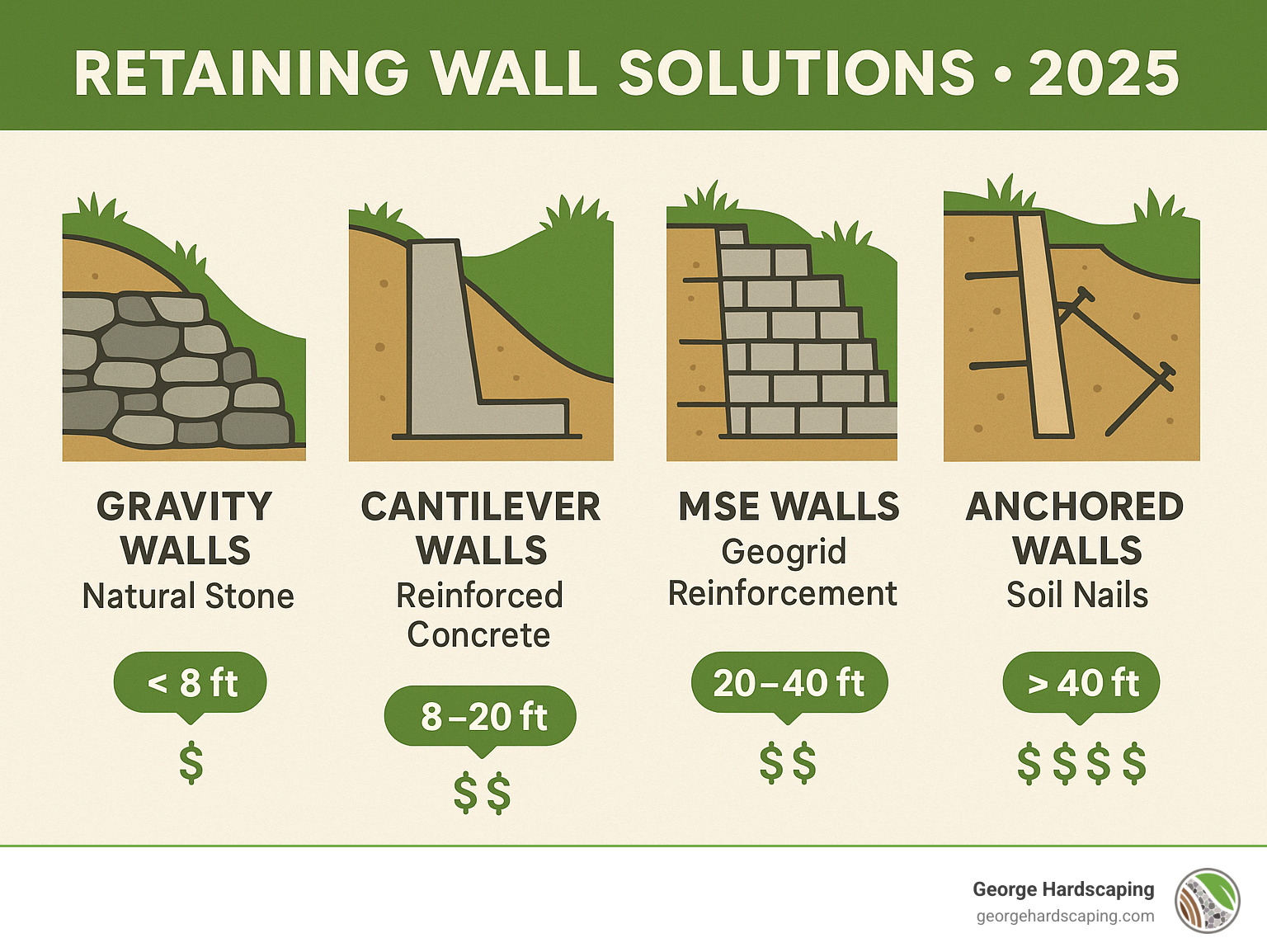
Choosing the correct wall involves understanding the primary types available:
- Gravity Walls: Use their own weight and mass (e.g., natural stone, concrete blocks) to resist soil pressure.
- Cantilever Walls: Employ an L-shaped footing and reinforced concrete for taller applications.
- Advanced Systems: Include Mechanically Stabilized Earth (MSE) and anchored walls for large-scale or challenging projects.
Key selection factors include wall height, soil conditions, available space, budget, drainage needs, and local building codes. Modern technology offers a remarkable variety of options, from traditional granite walls to innovative systems that balance structural integrity with aesthetic appeal. The right choice prevents costly failures and improves property value for decades.
Retaining wall solutions word guide:
Understanding the Fundamentals: Types and Applications
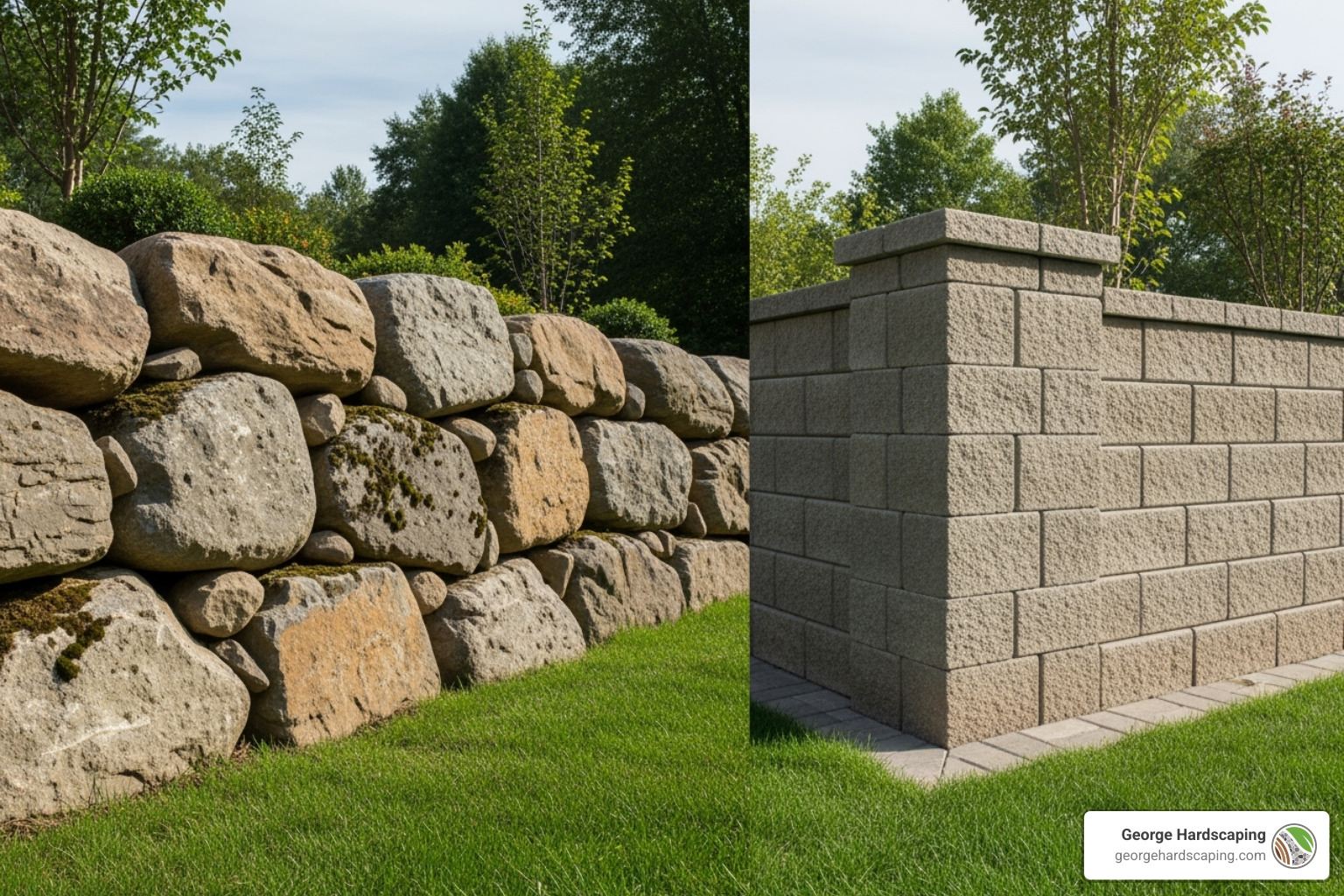
Choosing the right retaining wall solutions means matching the wall type to the job. Some walls rely on sheer mass, while others use advanced engineering. Understanding the fundamental differences is key to selecting a solution that is both effective and beautiful for your North Shore property.
Gravity and Cantilever Retaining Walls
Gravity walls use their own mass to resist soil pressure. They are simple in principle but highly effective. Natural Stone Retaining Walls are a classic example, where the weight and interlocking nature of granite or fieldstone provide immense stability. Poured concrete gravity walls also offer incredible strength and design versatility, though they require substantial foundations and materials.
Cantilever walls use a different engineering approach. Constructed as an upside-down “L” or “T” shape, the horizontal footing uses the weight of the soil above it to provide stability. This allows for taller walls with less material than a comparable gravity wall. The strength comes from steel reinforcement within the concrete, which provides the structural backbone. For more details, see our guides on Gravity Retaining Wall Construction and Cantilever Retaining Wall Construction.
Advanced and Commercial Retaining Wall Solutions
For larger or more complex projects, advanced retaining wall solutions are required.
Mechanically Stabilized Earth (MSE) walls integrate geogrid reinforcement into the backfill soil. This high-strength fabric creates a unified, reinforced soil mass that acts as part of the structure itself. This technology enables Large Retaining Wall Construction on a massive scale, supporting heavy loads like highways.
Anchored walls are used when space is limited or soil is poor. They employ tensioned cables or soil nails that extend deep into the earth behind the wall, providing additional holding power. A deep understanding of Retaining Wall Anchors is crucial for these specialized applications.
Sheet piling involves driving interlocking steel, vinyl, or timber sheets into the ground, creating a continuous barrier ideal for waterfront projects or soft soils.
An exciting innovation is Flex MSE, a vegetated wall system using a bag-and-plate technology. It allows for full vegetation on the wall face, creating a structure that looks like a natural hillside. It uses 97% fewer greenhouse gases than concrete, has a 120-year system life, and can cost 40% less than traditional systems. Learn more about this groundbreaking technology at Flex MSE – An Innovative Flexible Vegetated Wall Solution.
Freestanding Walls vs. Retaining Walls
It’s critical to understand the difference between retaining walls and freestanding walls. Retaining walls are structural, engineered to hold back soil and resist immense pressure. They require proper foundations, drainage, and often professional engineering.
Freestanding walls are decorative. They define spaces, create seating, or border gardens, but they do not bear structural loads. A low stone wall around a flower bed is a freestanding wall. The building codes, costs, and installation methods differ dramatically between the two. Our Garden Retaining Wall Ideas page showcases how these different approaches can create beautiful, functional outdoor spaces.
The Blueprint for Success: Design, Engineering, and Material Selection
| Material Type | Cost Range | Lifespan | Aesthetics | DIY-Friendliness |
|---|---|---|---|---|
| Modular Blocks | $15-45/sq ft | 50-100 years | Good | High |
| Natural Stone | $25-75/sq ft | 100+ years | Excellent | Medium |
| Poured Concrete | $20-60/sq ft | 50-100 years | Fair | Low |
| Timber | $10-30/sq ft | 15-25 years | Good | High |
Average costs based on internet data and not actual costs for George Hardscaping
A successful retaining wall project begins with a solid plan. The decisions made during the design phase determine whether your wall will stand for decades or fail within a few years. Proper engineering and material selection are the foundation for a lasting structure.
Key Considerations for Retaining Wall Design
Every design must account for the powerful forces of nature. The primary force to manage is hydrostatic pressure—the silent enemy of retaining walls. It’s the force exerted by water-saturated soil. In New England, heavy rains and spring thaws can cause water to accumulate behind a wall. Without a path to escape, this water builds immense pressure that can push a wall outward, causing it to bulge, crack, or fail catastrophically. Proper drainage isn’t an option; it’s the most critical component of a wall’s design.
In Essex County, soil type is another critical factor, as it varies from sandy coastal soil, which drains well but offers little cohesive strength, to heavy clay, which expands dramatically when wet and shrinks when dry. A professional assessment is needed to understand the soil’s bearing capacity and lateral pressure characteristics.
You must also account for surcharge loads, which is any additional weight on the soil above the wall. This includes obvious things like a driveway, a swimming pool, or a patio, but also less obvious ones like a steep slope above the wall or even a large pile of snow in the winter. These loads add significant pressure and must be factored into the engineering calculations. Following proper Retaining Wall Design principles is essential.
Furthermore, local building codes are non-negotiable. Most North Shore towns, like Marblehead, Beverly, and Ipswich, require permits and professional engineering for walls over 3-4 feet tall. Failing to comply can result in fines and orders to tear down the wall. Our Retaining Wall Construction Detail resources can help steer these requirements.
Choosing the Most Cost-Effective Materials
Material selection is a balance of upfront cost and long-term value. The cheapest option isn’t always the most cost-effective if it requires premature replacement.
- Modular concrete blocks offer excellent value, consistent dimensions, and engineered interlocking systems, making them suitable for many residential projects and DIY-friendly for walls under 4 feet.
- Poured concrete provides maximum strength for tall or heavily loaded walls. While its raw appearance is plain, it can be faced with a stone veneer for superior aesthetics. It requires extensive formwork and professional installation.
- Pressure-treated timber is the most budget-friendly DIY option but has the shortest lifespan (15-25 years) in the damp New England climate, where it is susceptible to rot and insect damage. It is best for low, non-critical walls.
- Natural stone is the premium choice. North Shore granite and fieldstone offer timeless beauty and a lifespan of over a century. Each stone is unique, requiring skilled masonry to fit them together properly, which is reflected in the cost.
Retaining wall costs can range from $15 to $200 per square foot, depending on materials and complexity. For a detailed analysis, see our guide on How much does a retaining wall cost? and explore Retaining Wall Stone options.
Innovations and Eco-Friendly Retaining Wall Solutions
The industry is moving toward more sustainable retaining wall solutions. Vegetated wall systems like Flex MSE integrate plants into the structure, creating a living wall that blends into the landscape. This system produces 97% fewer greenhouse gases than concrete, has a 120-year life rating, and can be installed for 40% less than traditional systems. You can learn more about this Sustainable vegetated wall system – Flex MSE.
Other eco-friendly options include using recycled content materials in blocks and implementing permeable designs that help manage stormwater runoff. These innovations align with sustainability goals without sacrificing performance, as shown in our Eco-Friendly Retaining Wall solutions.
From Groundbreaking to Finishing Touches: Installation and Best Practices
A superior design is meaningless without proper installation. At George Hardscaping, we adhere to the highest standards to ensure the safety, stability, and longevity of every wall we build, from a small garden wall in Wenham to a large-scale project in Newburyport.
The Critical Role of Drainage and Erosion Control
Proper drainage is the single most important factor in preventing retaining wall failure. Wet soil exerts immense pressure, and trapped water will eventually cause a wall to bulge, crack, or collapse. Our installation best practices always include a comprehensive Retaining Wall Drainage System with these key components:
- Gravel Backfill: A layer of free-draining gravel, at least 12 inches deep, is placed directly behind the wall to allow water to flow down freely.
- Perforated Drain Pipe: A pipe installed at the base of the gravel collects water and channels it away from the wall to a safe discharge point.
- Geotextile Fabric: This permeable fabric wraps the gravel backfill, preventing soil from clogging the drainage system while allowing water to pass through.
- Weep Holes: In some wall types, small holes are integrated into the wall face to provide an additional outlet for water.
DIY Considerations vs. Hiring a Professional
While a DIY approach can be feasible for small, decorative garden walls under two feet high, the risks increase significantly with height and complexity. Consider hiring a professional if your project involves:
- Height: Walls over 2-3 feet tall require engineering and specialized equipment.
- Permits: Most towns require permits and professional plans for walls over a certain height (often 3-4 feet).
- Structural Loads: Any wall supporting a surcharge (like a patio or slope) needs professional design.
- Liability: An improperly built wall is a significant safety and financial risk.
For anything beyond a simple garden border, professional installation ensures the wall is built safely and to code. We offer resources on How to Install Retaining Wall for simple projects and guidance on How to find a contractor to build a retaining wall for when expertise is required.
The Installation Process Step-by-Step
A professional Retaining Wall Construction follows a meticulous process:
- Site Preparation & Excavation: The area is cleared, marked, and excavated for both the wall face and the reinforced zone behind it. This includes calling 811 (Dig Safe) at least 72 hours in advance to locate utilities. The trench for the base must be dug below the frost line (typically 36-48 inches in Massachusetts) to prevent frost heave.
- Compacted Base Foundation: A 6- to 12-inch layer of compacted granular fill (like 3/4-inch crushed stone) is laid in the trench. It’s compacted in 3-inch “lifts” with a heavy-duty plate compactor to create a solid, level footing that won’t settle. This is the foundation of the entire structure.
- First Course Leveling: This is the most critical step. The first row of blocks or stones is set on the prepared base and carefully leveled both side-to-side and front-to-back using a string line and level. If the first course is even slightly off, every subsequent course will be off, compromising the wall’s integrity.
- Stacking & Reinforcement: Subsequent courses are stacked in a running bond pattern for strength. For walls over 3-4 feet, geogrid reinforcement is laid at specified intervals. The grid extends several feet back into the soil, and the weight of the compacted soil on top of it is what gives the wall its immense strength.
- Backfilling and Compaction: The 12-inch drainage zone of clean, crushed stone is placed directly behind the wall. The perforated drain pipe is laid at the bottom, pitched to daylight. The entire drainage aggregate is wrapped in geotextile fabric to prevent soil from clogging it. Backfill is then added in 6-8 inch lifts, with each lift being compacted. Never compact directly on the geogrid or too close to the wall face.
- Capstone Finishing: The wall is finished with capstones, which are secured with a high-strength construction adhesive to prevent shifting and provide a clean, protective top.
Common Installation Mistakes and How to Avoid Them
- Inadequate Foundation: Skipping the compacted gravel base or not digging below the frost line. Solution: Always excavate to the proper depth and use a mechanical compactor to create a solid base.
- Forgetting Drainage: This is the #1 cause of failure. A wall with no gravel backfill or drain pipe is a ticking time bomb. Solution: Install a comprehensive drainage system as described above. It is not optional.
- Improper Backfilling: Using excavated native soil (especially clay) as backfill instead of free-draining gravel. Also, failing to compact the backfill in lifts. Solution: Use the correct materials and compact every 6-8 inches to prevent settlement and voids.
- Ignoring Batter: Most retaining wall systems are designed to have a slight backward lean or “batter.” Building a wall perfectly vertical when it’s designed for a batter can lead to instability. Solution: Follow the manufacturer’s specifications for the correct setback or batter for each course.
Beyond Function: Integrating Walls into Your Landscape
The best retaining wall solutions do more than just hold back soil; they become integral components of beautiful, functional outdoor living spaces. A thoughtfully planned wall can be the backbone of your landscape design, creating level areas for entertaining, defining garden spaces, and adding architectural interest that complements your home.
Enhancing Aesthetics with Creative Designs
Modern retaining walls offer immense design flexibility. Key aesthetic elements include:
- Texture: The surface of a wall dramatically affects its appearance. Options range from the rough, natural look of fieldstone to the clean lines of smooth blocks. Manufacturers offer realistic quarried textures, which you can see in this View Photo Gallery Straight-From-The-Quarry Textures.
- Color: A wide palette is available, from warm earth tones that blend into the landscape to bold contemporary colors that make a statement.
- Shape: While straight walls offer a formal look, curved walls create a softer, more natural flow that can follow the contours of your property.
- Vegetated Systems: For a wall that disappears into the landscape, systems like Flex MSE create living, green walls. These Modern Retaining Wall Designs show how engineering can improve, not dominate, an outdoor space.
Creating Functional Outdoor Living Areas
Retaining walls create opportunities to transform unusable slopes into your favorite outdoor areas. We have helped North Shore homeowners create:
- Terraced Gardens: A steep, unmanageable hillside can become a series of beautiful, accessible planting beds.
- Built-in Planters: Integrating planters directly into the wall structure adds life and color, softening the hardscape.
- Integrated Seating: A popular feature is a Retaining Wall with Seating, which creates natural gathering spots around patios or fire pits.
- Built-in Stairs: Stairs can be built directly into the wall system for a seamless and clean transition between levels.
- Framed Patios: A wall can define the edge of a patio, creating a sense of enclosure and intimacy. Our Patio Retaining Wall Installation projects demonstrate this effect.
- Fire Pit Areas: Walls can provide seating and a backdrop for Custom outdoor firepits, creating a cohesive and purposeful entertainment space.
Frequently Asked Questions about Retaining Walls
Homeowners across Essex County often have the same fundamental questions when considering a retaining wall. Here are direct answers to the most common inquiries.
What is the most durable material for a retaining wall?
The durability of a retaining wall depends as much on the installation quality as the material itself. However, certain materials offer exceptional longevity:
- Poured Concrete & Natural Stone: When properly installed, poured concrete and natural stone like granite can last for over 100 years. The stone itself is nearly indestructible, while concrete forms a monolithic, joint-free structure.
- Engineered Concrete Blocks: High-density blocks are designed to withstand freeze-thaw cycles and can have a lifespan of 50-100 years.
- Flex MSE: This innovative system has a 120-year design life and gets stronger over time as vegetation roots integrate with the structure.
The most durable wall is one that is properly engineered for its specific site, has excellent drainage, and is built by a skilled professional. A poorly installed granite wall will fail much faster than a well-built block wall.
Do I need a permit to build a retaining wall?
In most Massachusetts communities, the answer is yes, a permit is likely required. Permit requirements are typically triggered by:
- Wall Height: Any wall over 3-4 feet tall almost always requires a permit. Some towns have a lower threshold of 2 feet.
- Surcharges: If the wall supports additional weight from a driveway, slope, or structure, a permit is usually necessary regardless of height.
- Proximity to Property Lines: Building near property boundaries often involves specific setback rules and permit requirements.
Many municipalities also require plans stamped by a licensed professional engineer for any structural retaining wall. Always call your local building department in towns like Danvers, Gloucester, or Salem before beginning any work to understand the specific regulations.
How much does a retaining wall cost to build?
The cost of retaining wall solutions varies widely, typically from $20 to over $200 per square foot. These are average costs based on internet data and not actual costs for George Hardscaping. The final price depends on several factors:
- Materials: Timber is the least expensive, while natural stone is a premium material.
- Wall Size: Taller and longer walls require more material, labor, and engineering.
- Site Accessibility: Difficult access for equipment and materials will increase labor costs.
- Soil Conditions: Poor soil or the presence of ledge can add significant costs for excavation and foundation work.
- Engineering & Drainage: These necessary components add to the upfront cost but prevent expensive failures later.
For an accurate price, a site-specific estimate is required. You can learn more on our page about How much for a retaining wall installed? and request a personalized quote.
What kind of maintenance does my retaining wall need?
The level of maintenance depends on the material, but all walls benefit from regular inspection.
- For all walls: Annually inspect for signs of trouble like bulging, cracking, or leaning. Ensure the drainage outlets (weep holes or the end of the drain pipe) are clear of debris, leaves, and grass. Check the area above and below the wall for signs of excessive moisture or erosion.
- Modular Block & Poured Concrete: These are very low-maintenance. An occasional power wash can remove dirt and mildew. Cracks in concrete should be sealed to prevent water intrusion.
- Natural Stone: Mortared stone walls may need repointing every few decades if the mortar begins to crack or crumble. Dry-stack stone walls are virtually maintenance-free.
- Timber Walls: These require the most upkeep. They should be regularly checked for signs of rot, insect damage, or warping. Applying a water sealant every few years can extend their lifespan.
Conclusion
Retaining wall solutions are more than just structural necessities; they are transformative investments that can turn a challenging slope into a beautiful, functional outdoor space for generations of enjoyment. The key to success lies in a holistic approach that balances design, engineering, and installation.
We’ve covered the fundamental wall types, from mass-heavy gravity walls to engineered cantilever and MSE systems. We’ve stressed that proper design—accounting for soil, water pressure, and local codes—is non-negotiable. Material selection offers a balance between cost, longevity, and aesthetics, with options ranging from modular blocks to natural stone and innovative eco-friendly systems.
Above all, quality installation and effective drainage are what ensure a wall’s longevity. A wall without a proper drainage system is a wall destined to fail. These technical elements are the foundation upon which beautiful, functional designs are built, enabling the creation of terraced gardens, integrated seating, and stunning patios.
At George Hardscaping, we specialize in navigating these choices for homeowners throughout Essex County. We understand the unique soil conditions, frost cycles, and building requirements of North Shore communities from Beverly to Newburyport. Our expertise ensures your retaining wall not only solves erosion and slope issues but also adds lasting value and curb appeal to your home.
An investment in a professionally designed and installed retaining wall protects your property and expands your living space. Don’t let a sloped yard limit your property’s potential. The right solution can turn your biggest landscape challenge into your greatest asset.
Ready to explore the possibilities for your property? Request an estimate for your project today, and let’s build something exceptional together.
