
How to install a small retaining wall: 6 Easy Steps
Quick Installation Overview
Learning how to install a small retaining wall begins with careful planning and a solid foundation. This guide will walk you through the entire process, from digging the trench to setting the final capstone, helping you manage a sloped yard or create a beautiful raised garden bed.
Here is the essential process:
- Plan and Mark: Choose your location, call 811 to check for utilities, and stake out the wall’s perimeter.
- Excavate the Trench: Dig a trench 6-8 inches deep and twice the width of your blocks.
- Build the Base: Add and compact 4-6 inches of crushed stone for a stable foundation.
- Set the First Course: Bury the first row of blocks halfway, ensuring they are perfectly level.
- Stack Subsequent Courses: Stagger the joints and check for level with each new course.
- Install Drainage: Place landscape fabric and drainage gravel behind the wall to manage water pressure.
- Add Capstones: Secure the top caps with construction adhesive for a finished look.
A typical 10-16 foot wall can be a weekend project for most DIYers, taking about 8-10 hours. The keys to a long-lasting wall are a perfectly level first course and proper drainage.
Retaining walls are a functional and aesthetic solution for many homeowners in Essex County. They prevent soil erosion, create usable flat space on slopes, and form attractive raised garden beds. For walls under 4 feet tall, a DIY installation with interlocking concrete blocks is a very achievable project.
However, some projects require professional expertise. If your wall will be taller than 4 feet, supports a significant load (like a driveway), or has complex drainage issues, it’s best to consult a professional retaining wall builder. The investment guarantees structural integrity, especially in Massachusetts where freeze-thaw cycles pose a significant challenge.
This guide focuses on the DIY approach for small, gravity-retained walls using interlocking concrete blocks.
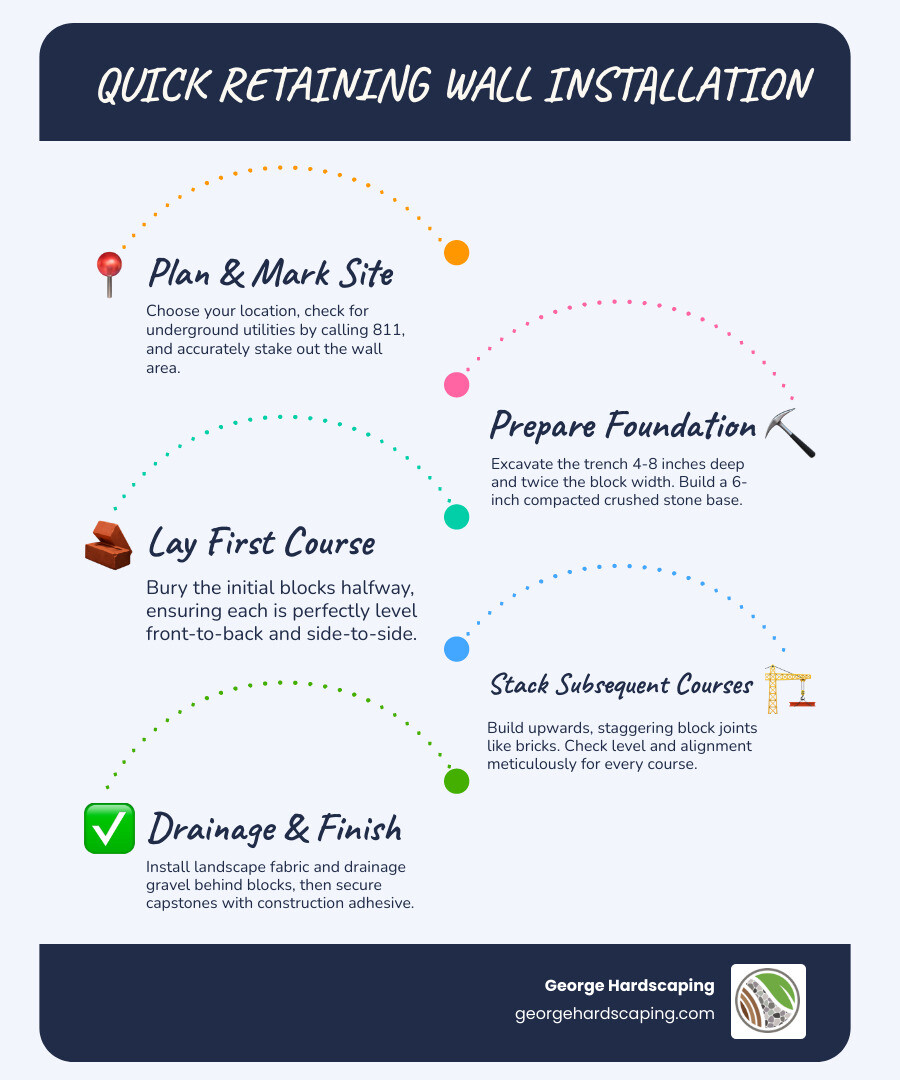
How to install a small retaining wall terms at a glance:
Phase 1: Planning Your Retaining Wall Project
Proper planning is the most critical phase of any retaining wall project. A few hours of preparation can prevent common pitfalls like drainage problems, permit issues, or an unlevel foundation, ensuring your wall doesn’t lean, bulge, or fail after the first heavy rain.
Why Build a Retaining Wall?
Retaining walls are functional problem-solvers that also improve your landscape. Understanding your primary goal will help you build the right wall for your needs.
- Erosion Control: A wall acts as a barrier, holding soil in place and protecting your landscape from washing away during storms.
- Creating Usable Space: Terracing a sloped yard with retaining walls creates flat, functional areas for patios, gardens, or play spaces.
- Raised Garden Beds: Retaining walls create ideal conditions for gardening, with better drainage, warmer soil in the spring, and less bending over. See our garden retaining wall ideas for inspiration.
- Curb Appeal: A well-designed wall adds architectural interest and definition to your property, increasing its value.
- Water Management: When built with proper drainage, a retaining wall can direct water away from your home’s foundation, preventing costly damage. Our page on landscape retaining walls explores more applications.
Choosing the Right Materials for a DIY Wall
For a DIY project, your choice of material can make the difference between a weekend project and a frustrating ordeal.
Interlocking concrete blocks are the best choice for DIYers. These engineered blocks feature lips or pins that lock them together without mortar, making stacking straightforward. They are incredibly durable, designed to withstand Massachusetts’ freeze-thaw cycles, and their interlocking design helps ensure a stable, straight wall. Many systems also allow for gentle curves. Explore different styles on our retaining wall block options page.
Other options like natural stone and treated timber exist, but they require more advanced skills. Natural stone walls are beautiful but demand expert dry-stacking or masonry techniques. Timber walls have a shorter lifespan and require different construction methods. For these complex projects, consider our natural stone retaining walls services.
Designing and Locating Your Wall
Before digging, finalize your wall’s design and location. Use stakes and string for straight sections and a garden hose to lay out curves, then mark the path with spray paint.
A critical rule for DIY projects is to keep the wall height under 3 to 4 feet. Taller walls require professional engineering, permits, and reinforcement (like geogrid) to handle the immense pressure. For taller or more complex structures, our modern retaining wall designs showcase what’s possible with expert help.
To calculate materials, measure your wall’s total length and height. Your supplier can help you determine the number of blocks needed. Always buy 10% extra material to account for cuts, breakage, and future repairs.
Essential Tools & Materials Checklist
Gather everything you need before you start to ensure a smooth workflow.
Tools:
- Shovel (square-nose)
- Tape Measure
- 4-foot Level & Torpedo Level
- String Line & Stakes
- Hand Tamper or Plate Compactor
- Rubber Mallet
- Wheelbarrow
- Safety Glasses & Work Gloves
- Masonry Saw or Chisel (for cuts)
Materials:
- Interlocking Retaining Wall Blocks & Capstones
- Paver Base or Crushed Stone (¾-inch minus)
- Landscape Fabric
- Drainage Gravel (¾-inch clean)
- Perforated Drain Pipe (4-inch)
- Construction Adhesive
Safety and Local Regulations
This step is mandatory and non-negotiable.
Call 811 before you dig. This free service marks underground utility lines (gas, electric, water), preventing a dangerous and costly accident. Visit Call 811 or dial 811 a few days before you plan to start.
Check permit requirements with your local building department. Rules vary by town, even within Essex County. Generally, walls under 3-4 feet may not need a permit, but it’s crucial to verify this. Building without a required permit can lead to fines and a tear-down order.
Know when to hire a professional. If your wall will be over 4 feet tall, support a driveway, sit on a steep slope, or require complex engineering, it’s time to call in an expert. A professional retaining wall builder understands local soil conditions, building codes, and how to construct a wall that will last for decades in New England’s climate.
Phase 2: How to Install a Small Retaining Wall – Step-by-Step
With planning complete, it’s time to build. Precision during these construction steps is key to a wall that is strong, stable, and beautiful for years to come.
Step 1: Site Preparation and Trench Excavation
The stability of your wall depends on a proper excavation.
First, use your stakes and string line or spray paint to finalize the marked layout. Begin digging the trench along this line. The trench depth should be enough to bury half the height of your first block, plus 4-6 inches for the gravel base. For most standard blocks, this means a total depth of 6-8 inches. The trench width should be at least twice the width of a single block to provide a stable footing and working room.
Remove all grass, roots, and organic debris from the trench. If your wall is on a slope, you must dig a “stepped” trench. Instead of a continuous slope, dig level sections that step down, ensuring each part of the wall is built on a level foundation.
Step 2: Creating a Stable, Level Foundation
This is the most critical step in learning how to install a small retaining wall. A poor foundation guarantees a failed wall.
Fill the trench with 4-6 inches of paver base or ¾-inch minus crushed stone. Do not dump it all in at once. Add the material in 2-inch layers (lifts), compacting each layer thoroughly with a hand tamper or plate compactor before adding the next. The base is sufficiently compacted when it feels solid underfoot.
Once compacted, use a straight 2×4 to screed (level) the top surface of the gravel. Use your 4-foot level to ensure the base is perfectly level both front-to-back and side-to-side along the entire length of the trench. Spend extra time here; every course of blocks depends on this foundation being perfect. For more on this, see our retaining wall construction detail page.
Step 3: Laying the Critical First Course
The first course of blocks sets the alignment for the entire wall.
Place your first block on the prepared base, ensuring at least half of its height is buried below the finished grade. This provides crucial stability against soil pressure and frost heave. Use your torpedo level to check that the block is level from front to back and side to side. Use a rubber mallet to gently tap it down or add a small amount of base material underneath to make adjustments.
Lay the next block tightly against the first. Use your 4-foot level across both blocks to ensure they are level with each other. Continue this process for the entire first course, constantly checking for level and using your string line to maintain a straight alignment.
Step 4: Building Subsequent Courses
With a level first course, stacking the remaining blocks is much faster.
Always stagger the joints in a “running bond” pattern, like bricks. Each block should sit over the joint between the two blocks below it. To start a new row, you will often need to cut a block in half with a masonry saw or chisel.
Before placing each new block, sweep the top of the previous course clean of any debris. Even small pebbles can throw off the level. As you place each block, ensure its interlocking lip or pin system engages correctly with the course below. This mechanism automatically creates a slight “batter,” or setback, which increases the wall’s strength. For walls approaching 4 feet, geogrid reinforcement may be needed between courses, though it’s typically not required for smaller DIY walls. Learn more about block retaining wall construction.
Step 5: Installing Drainage and Backfilling
Proper drainage is not optional; it prevents hydrostatic pressure (the force of water-saturated soil) from pushing over your wall.
As you build, place landscape fabric behind the wall, separating the drainage gravel from the soil. After each course is laid, backfill the space directly behind the blocks with at least 12 inches of ¾-inch clean drainage gravel. Also fill any hollow cores in the blocks with this gravel.
For the best protection, especially in a climate like Massachusetts, install a 4-inch perforated drain pipe at the base of the wall, behind the first course. The pipe should be wrapped in a fabric sock, laid on a bed of gravel, and sloped slightly to an outlet where water can drain away safely.
After the drainage zone is established, backfill the remaining space with native soil in 6-inch layers, compacting each layer as you go. A complete overview can be found on our retaining wall drainage system page.
Step 6: Finishing with Capstones
Capstones provide a polished look and protect the wall from water infiltration.
Sweep the top course of blocks clean. Apply a generous bead of construction adhesive rated for masonry along the front and back edges of the blocks.
Set the capstones onto the adhesive, pressing down firmly. Most caps are designed with a 1- to 1.5-inch overhang at the front for a professional finish. You may need to cut caps with a masonry saw to fit corners or curves. Allow the adhesive to cure for 24-48 hours before putting any weight on the wall.
Long-Term Care and Special Considerations
A well-built retaining wall requires minimal maintenance, but a little attention will ensure it lasts for decades. With proper construction and occasional care, your wall can withstand the elements and continue to improve your property for 50 years or more.
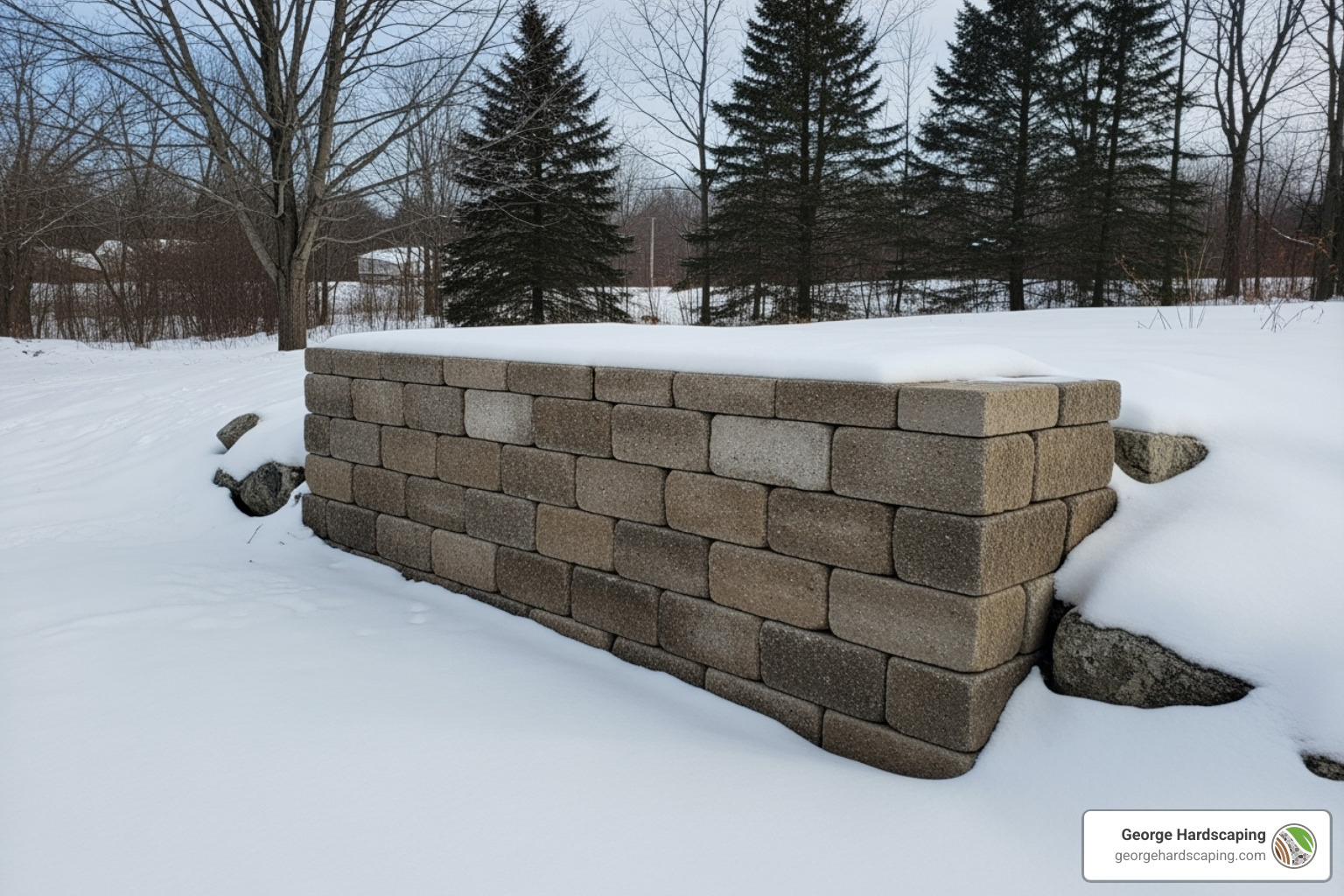
Maintaining Your Retaining Wall
Perform a quick inspection once a year, ideally in the spring or fall.
- Check for Movement: Look for any signs of leaning, bulging, or shifting blocks. Use a level to verify the wall is still plumb.
- Inspect Drainage: Ensure the outlet of your drain pipe is clear of leaves, soil, and debris so water can flow freely.
- Remove Weeds: Pull any weeds growing in the joints before their roots can push blocks apart.
- Clean Efflorescence: If a white, chalky residue (efflorescence) appears, it can usually be removed with a stiff brush and water. This is a natural occurrence and does not harm the wall.
If you notice significant issues like major cracks or leaning, it’s best to address them quickly. For guidance, see our page on repairing a cinder block retaining wall or contact a professional.
How to Install a Small Retaining Wall in Freeze-Thaw Climates
Building in a region like Essex County, MA, requires special attention to the freeze-thaw cycle. When water in the soil freezes, it expands by about 9%, exerting immense pressure on your wall. This “frost heave” can destroy a poorly built structure.
To build a wall that lasts through New England winters, follow these key principles:
- Deeper Foundation: Your compacted gravel base should be robust, at least 6-8 inches deep, to create a stable platform below the most active frost zone.
- Superior Drainage: This is your best defense. A combination of landscape fabric, ample drainage gravel, and a perforated drain pipe is essential to prevent water from collecting behind the wall where it can freeze.
- Bury the First Course: Burying at least half of the first course of blocks provides a strong anchor that resists heaving forces.
These steps are critical for longevity in cold climates. For more technical guidance on building durable landscape structures, the Oregon State University Extension offers excellent research-based information.
Frequently Asked Questions about Small Retaining Walls
Here are answers to some of the most common questions homeowners have when planning a DIY retaining wall project.
How high can I build a retaining wall without a permit?
The general rule of thumb is that walls under 3 to 4 feet in height often do not require a permit. However, this varies significantly by municipality. Some towns in Essex County, MA, have stricter rules, especially for walls near property lines or supporting a load.
Always call your local building department before you start. A quick phone call is the only way to know for sure and can save you from costly fines or a tear-down order. If your project is near the height limit, it’s wise to consult a retaining walls contractor familiar with local codes.
How long does it take to build a small retaining wall?
For a typical 10 to 16-foot-long wall, most DIYers can complete the project in 8 to 10 hours, making it a perfect weekend project. The timeline can be affected by factors like soil conditions (rocky or heavy clay), the complexity of the design, and your experience level. Always check the weather forecast, as rain can halt progress by turning your trench into mud.
What is the most common mistake when building a retaining wall?
The two most common and critical mistakes when learning how to install a small retaining wall are an improper foundation and inadequate drainage.
- Poor Foundation: An unlevel or poorly compacted base is the number one cause of wall failure. Any imperfection in the foundation will be magnified as you stack courses, leading to a leaning or bulging wall that is impossible to fix without starting over.
- Inadequate Drainage: Without a path for water to escape, hydrostatic pressure will build up behind the wall. In a freeze-thaw climate, this pressure is amplified by expanding ice, which can easily crack, bulge, or topple a wall.
Skipping or rushing these two steps is a recipe for failure. Investing the time to build a level base and install a proper drainage system is the best insurance for your wall’s longevity.
Conclusion: Your Next Hardscaping Project
Building a small retaining wall is a rewarding DIY project that adds significant value and functionality to your property. By following the steps in this guide, you can create a durable, attractive feature that solves problems like soil erosion and sloped terrain. The keys to success are a perfectly level foundation and a robust drainage system—get these right, and you’ll build a wall that lasts for decades.
A well-built wall can transform your landscape, creating usable space for a garden in Danvers or adding curb appeal to a home in Salem. It’s an investment in your property’s beauty and stability.
While this guide covers DIY walls under 4 feet, some projects demand professional expertise. For walls that are taller, support heavy loads, or are on difficult terrain, it’s best to hire an experienced team. George Hardscaping provides expert retaining wall installation services across Essex County, MA. We handle complex projects that require engineering and deep construction knowledge to ensure a flawless, long-lasting result.
Our expertise extends beyond retaining walls. We specialize in a full range of hardscaping and masonry services. Let us help you complete your vision with a beautiful new patio, walkway, or custom firepit.
Ready to transform your outdoor space? Whether you’re tackling a DIY project or need a professional team, we’re here to help.
Request an estimate from our team of hardscaping professionals today and let’s bring your vision to life.
