
Patios Design: 7 Stunning Ideas for Envy in 2025
Transform Your Outdoor Space with Patios Design
Patios Design is the art of creating functional, beautiful outdoor living spaces that serve as extensions of your home. Whether you’re looking to build a new patio or revamp an existing one, here are the key elements to consider:
- Materials: Concrete, pavers, brick, flagstone, or gravel
- Layout: Size, shape, and traffic patterns
- Purpose: Dining, lounging, entertaining, or cooking
- Features: Fire pits, outdoor kitchens, shade structures
- Aesthetics: Color schemes, plant integration, lighting
A well-designed patio can increase your home’s value by 8-10%, while providing years of enjoyment and outdoor living possibilities.
The patio is an essential part of the home. Can you imagine living in a house without a backyard where you can drink your morning coffee and relax? Just like interior rooms, patios benefit from thoughtful planning, seasonal refreshes, and personal touches that reflect your lifestyle.
When planning your dream patio, start by defining how you’ll use the space. Will you host large gatherings, intimate dinner parties, or simply create a quiet retreat? Your answer will guide every decision from material selection to furniture arrangement.
“Having the assurance of knowing precisely what your new outdoor living area will look like is important,” notes one design expert. This is why many homeowners are now using 3D visualization tools to plan their perfect patio before breaking ground.
With the right design, your patio becomes more than just a slab of concrete—it transforms into your favorite outdoor room, one that might just make your neighbors a little jealous.
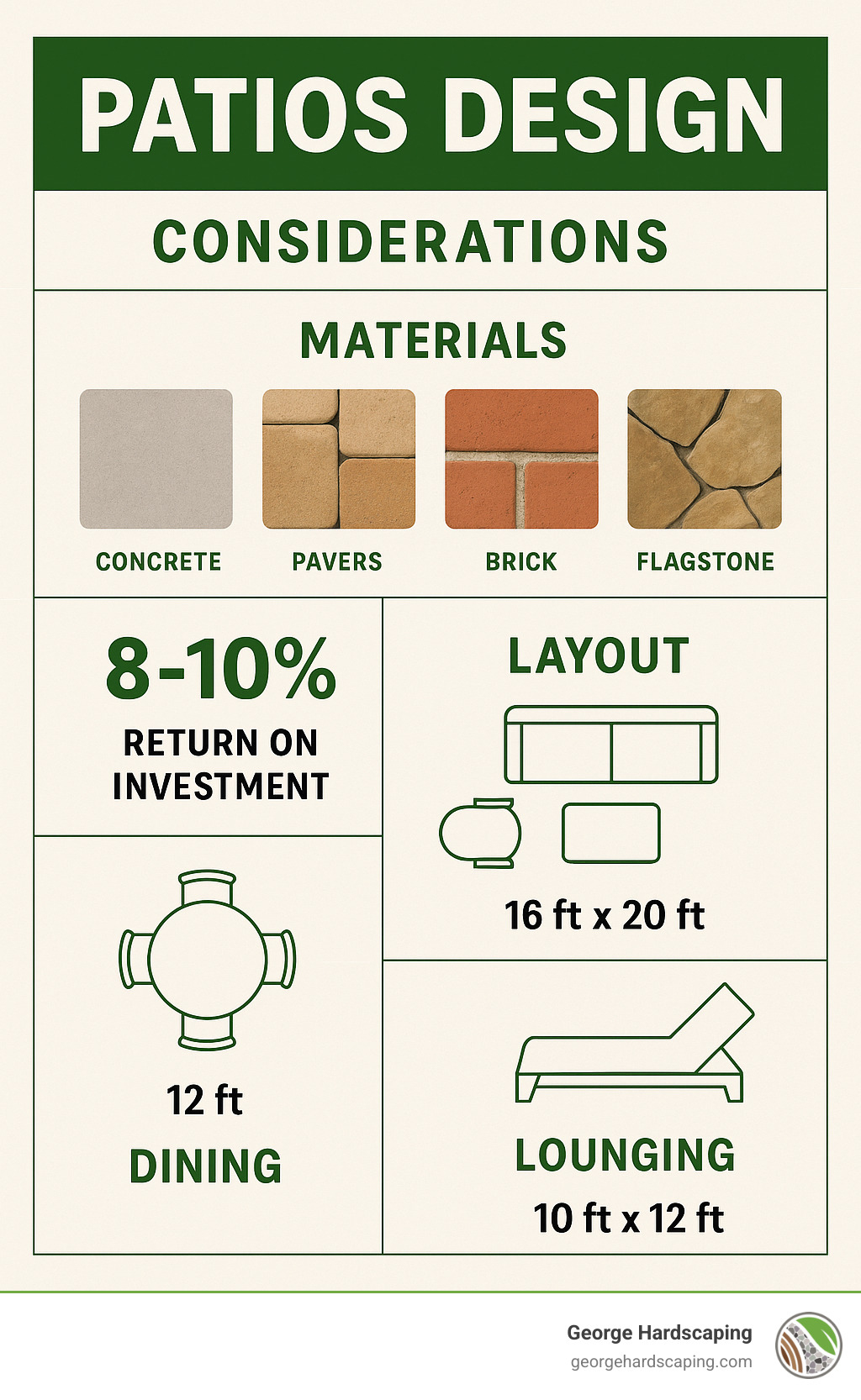
Patios Design Essentials: Materials, Layout & Trends
When it comes to creating the perfect patio, the foundation of your design starts with selecting the right materials. Each option brings its own unique character, durability, and maintenance requirements to your outdoor space.
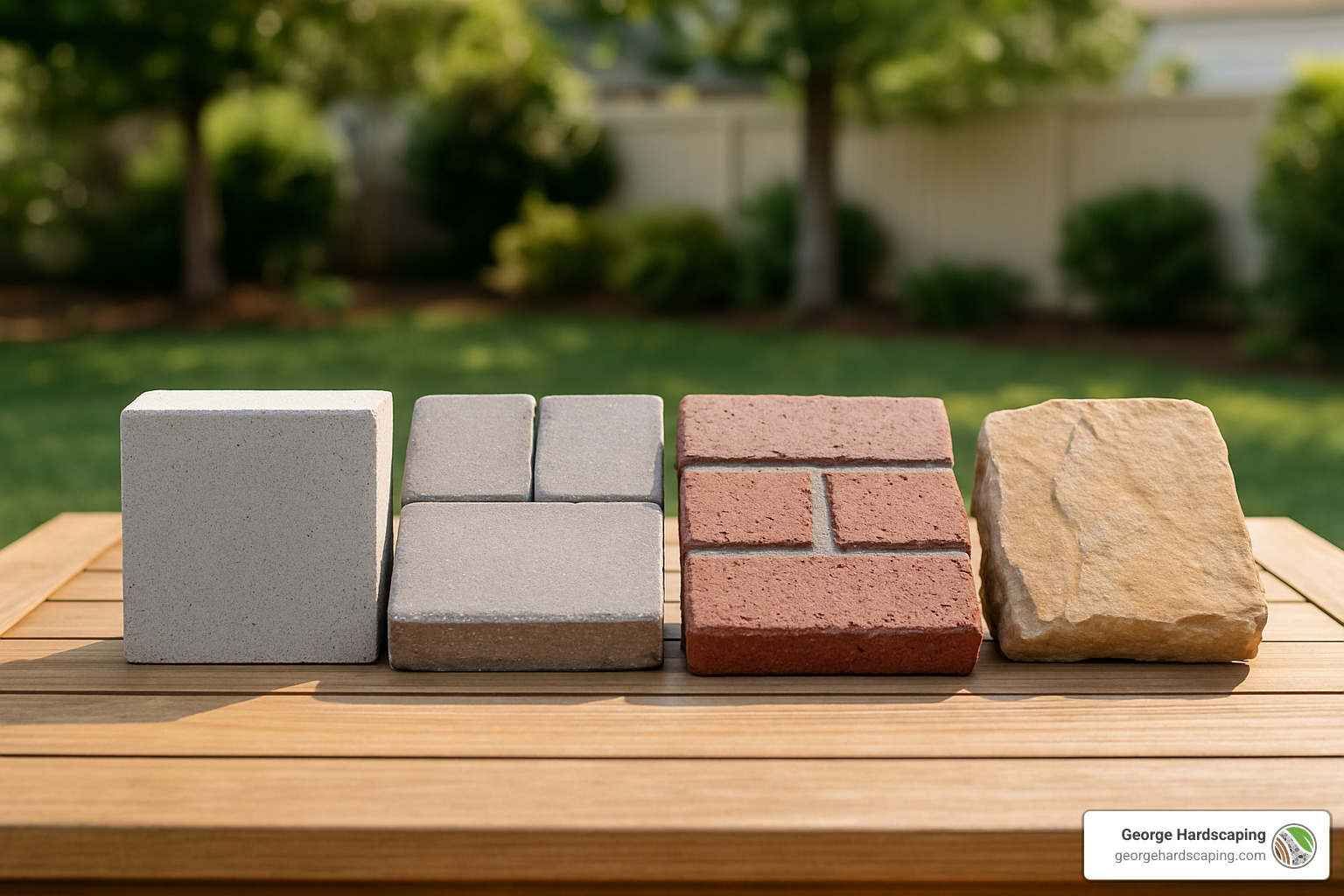
Material Options for Every Style and Budget
I’ve walked countless Essex County homeowners through this decision, and it always comes down to balancing beauty, budget, and practicality.
Concrete is often the most versatile starting point for many of my clients. It’s budget-friendly and incredibly adaptable—you can pour it as a seamless slab or use individual pavers. The magic happens when we add dye, stamping, or texturing to transform this humble material into something that mimics high-end stone.
Brick brings that classic New England charm that many Beverly and Salem homeowners adore. I love suggesting different patterns—herringbone for formal spaces, basket weave for cottage gardens, or running bond for traditional homes. Brick weathers beautifully over time and tells a story with each passing season.
Flagstone creates those jaw-dropping, magazine-worthy patios. Natural stone like bluestone, limestone, or slate brings organic beauty that’s impossible to replicate. Yes, it’s pricier than other options, but as one of my longtime customers recently told me, “My George Hardscaping flagstone patio still looks amazing after 10 years with minimal maintenance.” That’s value you can’t ignore.
Gravel is my go-to recommendation for budget-conscious homeowners or DIY enthusiasts. It’s perfect for casual, rustic settings and offers excellent drainage—a significant plus in our New England climate where proper water management matters. For low-lying areas prone to spring flooding, gravel allows water to percolate rather than pool.
Pavers offer incredible versatility in color, shape, and pattern. They’re easier to repair than poured concrete (just replace the damaged pieces rather than jackhammering an entire section), and today’s manufacturing techniques mean they can complement virtually any home style from colonial to contemporary.
| Material | Durability | Cost | Maintenance |
|---|---|---|---|
| Concrete | High | $6-18/sq ft | Low-Medium |
| Brick | Very High | $10-30/sq ft | Medium |
| Flagstone | Excellent | $15-45/sq ft | Low-Medium |
| Gravel | Medium | $6-10/sq ft | Medium-High |
| Pavers | High | $10-30/sq ft | Low |
Note: Costs are average ranges based on internet data, not specific George Hardscaping pricing.
Want to explore more about creating your perfect outdoor space? Check out our detailed guide on Patio Design and Installation or get inspired by the latest trends in patio surfacing.
What Makes a Great Patios Design
Great Patios Design starts with function, not aesthetics. I always tell my clients to imagine actually living in the space before picking out a single paver.
Think about how you’ll really use your patio. Will you host summer barbecues where people need room to mingle? Or are you creating a quiet morning coffee nook? For dining areas, I recommend allowing at least 3 feet of clearance around tables and chairs so guests can move comfortably without feeling cramped.
Traffic patterns make or break a patio’s usability. Your outdoor space should flow naturally from your home’s exit points to different areas of your yard. Nothing ruins a beautiful design faster than awkward pathways that force people to zigzag around obstacles.
Before finalizing any design, I always have clients measure their furniture (or plan what they’ll purchase) and map out the footprint. There’s nothing more disappointing than completing a gorgeous patio only to find your lounge set doesn’t fit comfortably.
Drainage might not be the sexiest topic, but in Essex County’s climate, it’s non-negotiable. A properly designed patio needs a slight slope (about ¼ inch per foot) away from your home’s foundation. I’ve seen too many beautiful patios turn into mini swimming pools because this fundamental principle was overlooked.
“A well-designed patio becomes your favorite eating spot when decorated thoughtfully,” as one of my landscape designer colleagues with 15 years of experience often says. It’s not just about the hardscape—it’s about creating an atmosphere.
Budget-Friendly Patios Design Upgrades
Not ready for a complete patio overhaul? I’ve helped many North Shore homeowners breathe new life into tired outdoor spaces without breaking the bank.
DIY gravel borders can transform the look of an existing concrete patio. Simply dig a shallow trench around the perimeter, add landscape fabric to prevent weeds, and fill with decorative stone. The contrast adds instant visual interest for less than $100 in most cases.
Upcycled furniture is another game-changer. One Marblehead client was about to trash her weathered metal patio set when I suggested a weekend refurbishment project. “I was planning to throw away my old chairs until I saw what a difference some rust treatment and exterior paint made!” she later told me. A $30 can of quality exterior paint saved her $800 on new furniture.
Solar lighting has come a long way in recent years. Today’s options include string lights, pathway markers, and lanterns that create magical evening ambiance without expensive electrical work. Plus, they’re environmentally friendly—a win-win for your pocket and the planet.
According to internet data, the average cost to build a patio ranges from $6 to $60 per square foot, depending on materials and complexity. Basic gravel patios start at the lower end, while custom natural stone work with special features can reach the higher end. These are general ranges based on national averages, not specific pricing from George Hardscaping.
What makes a patio truly special isn’t always what you spend—it’s how thoughtfully you design the space to reflect your lifestyle and complement your home’s character. Whether you’re working with a modest budget or creating a luxury outdoor retreat, the principles of good Patios Design remain the same: functionality, flow, and personal expression.
Idea #1: Modern Concrete & Paver Mash-Up
For homeowners seeking a contemporary look with maximum durability, a modern concrete and paver combination delivers sleek sophistication with practical benefits.
This design approach pairs the clean lines and smooth surfaces of poured concrete sections with the texture and pattern of carefully selected pavers. The result is a visually interesting patio that breaks up large expanses and creates defined zones for different activities.
“First glance at this style and you think custom…expensive. But don’t be deceived, this patio design is surprisingly attainable,” notes a design professional who specializes in contemporary outdoor spaces.
Key Features:
– Alternating sections of smooth concrete and geometric pavers
– Hidden LED lighting strips embedded between materials
– Minimal, clean-lined furniture in neutral tones
– Architectural plantings in simple containers
One Swampscott homeowner who chose this design shared: “We wanted something low-maintenance but still stylish. Our concrete and paver patio from George Hardscaping has been perfect—it looks modern but still works with our traditional home’s exterior.”
The beauty of this design is its versatility. The concrete sections can be colored or stamped to complement your home’s exterior, while pavers can be selected in contrasting or complementary tones. For homes in Essex County, we often recommend materials that can withstand our New England winters without excessive cracking or heaving.
Patios Design Pro Tip – Seamless Indoor-Outdoor Flow
To maximize the impact of your modern paver and concrete patio, consider these strategies for creating a seamless transition between indoor and outdoor spaces:
- Match levels where possible: Ideally, your patio should be at the same height as your interior floor to create a continuous visual line.
- Consider large sliding or folding doors: These create a wide opening that blurs the boundary between inside and out.
- Coordinate colors and materials: Choose patio materials that complement your interior flooring. If you have warm wood floors inside, consider pavers with similar tones outside.
- Extend interior elements outdoors: Use similar lighting styles, color schemes, and even architectural details to create cohesion.
“When we designed our patio in Gloucester, we made sure the concrete color matched our interior tile. When the sliding doors are open, it really feels like one big space,” reports a satisfied George Hardscaping client.
More info about Patio Pavers Installers
Idea #2: Rustic Flagstone Retreat with Fire Pit
For those who love natural materials and cozy gathering spaces, a rustic flagstone patio centered around a fire pit creates an inviting retreat that feels like it’s been part of the landscape for generations.
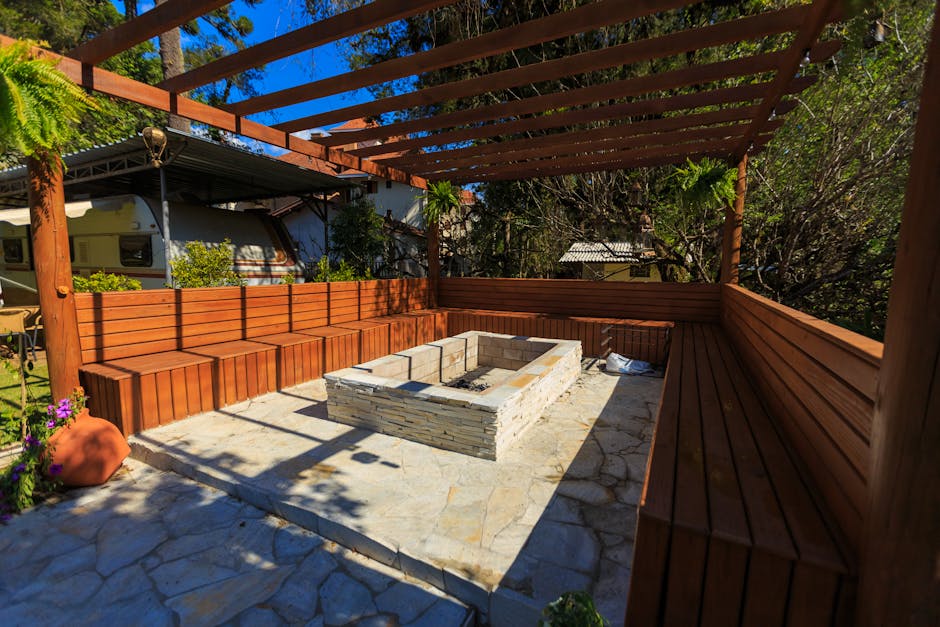
There’s something magical about the way flagstone patios seem to emerge organically from their surroundings. Here in Essex County, where historic homes grace towns like Salem, Newburyport, and Marblehead, these natural stone havens complement centuries-old architecture while providing thoroughly modern outdoor living spaces.
“Those who enjoy meaningful talks next to a fire pit will definitely fall in love with this patio design,” shares Jenny, an Ipswich homeowner whose flagstone retreat has become her family’s favorite spot for everything from summer s’mores to autumn cider sipping.
What makes these patios so special is their perfect blend of rustic charm and practical functionality. The irregular flagstone pieces in varied earth tones create a mix of color that only gets more beautiful as it weathers. At the heart of this design sits a circular stone fire pit that draws everyone in like moths to a flame. Surrounding this focal point, low stone seating walls provide both structure and additional seating for larger gatherings – perfect for those nights when neighbors drop by unexpectedly.
One significant advantage for New England homeowners is that Patios Design featuring flagstone can often use regional stone sources. At George Hardscaping, we frequently source our materials from nearby quarries, which not only helps control costs but also reduces the environmental impact from long-distance transportation.
Here’s a professional secret: When installing flagstone patios, we keep mortar joints under ½ inch wide. This subtle technique makes the surface read more as stone than mortar, enhancing the natural look while creating a more visually cohesive appearance. It’s these small details that lift a good patio to a great one.
As twilight falls, thoughtful lighting transforms these spaces into enchanted evening retreats. Warm uplights can highlight surrounding trees, while low-voltage path lights safely mark approaches. But the true star of the evening show is always the natural flicker of the fire pit, casting dancing shadows and warming conversations as darkness falls.
Native plants and grasses softening the edges complete the picture, helping the patio blend seamlessly with the surrounding landscape. These plantings can be selected to provide year-round interest, from early spring bulbs to late-fall seed heads that catch the first dusting of snow.
“Our flagstone patio with a fire pit has extended our outdoor season by at least two months,” notes a Georgetown client. “We’re out there from early spring well into late fall, especially in the evenings. It’s become our favorite ‘room’ in the house, even though it’s outside!”
Whether you’re roasting marshmallows with the kids or enjoying a glass of wine under the stars, a rustic flagstone retreat creates the perfect backdrop for life’s simple pleasures and meaningful moments.
Idea #3: Mediterranean Tile Courtyard
Close your eyes and imagine yourself lounging on the sun-drenched coast of Spain or Greece. Now open them—you’re still in Essex County, but your Patios Design has transported you to the Mediterranean without the airfare!
A Mediterranean tile courtyard brings the warmth and charm of southern Europe right to your backyard. The rich earth tones of terra cotta tiles create a welcoming foundation that feels both timeless and vibrant—perfect for creating an outdoor space with personality and soul.
“Earthy terra cotta patio tiles perfectly complement Mediterranean-style stucco homes,” explains a design expert specializing in this aesthetic. But don’t worry if your home doesn’t have stucco walls—this versatile style adapts beautifully to many New England homes, particularly those with neutral exteriors that provide a perfect backdrop for this colorful approach.
What makes this style so captivating is the interplay of natural elements: warm tiles underfoot, vibrant cobalt blue accents that echo Mediterranean waters, and the lush greenery of climbing vines creating living walls of texture and shade. At the center, a bubbling fountain becomes both visual focal point and soothing soundtrack for your outdoor retreat.
One of the practical benefits that Essex County homeowners appreciate is how the thermal properties of tile help moderate temperature. The same material that keeps Mediterranean villas cool in summer heat works its magic here too—terra cotta’s natural heat resistance makes this patio style comfortable even on those rare scorching New England afternoons.
“Our Mediterranean courtyard patio from George Hardscaping has become our favorite dining spot from spring through fall,” shares a delighted Danvers homeowner. “The terra cotta tiles feel warm and inviting, and the pergola gives us just enough shade to be comfortable even on hot afternoons.”
Speaking of dining, few patio styles are better suited for alfresco meals. Picture a rustic wooden table beneath a pergola draped with wisteria, friends gathered around sampling tapas and sangria as evening falls. The Mediterranean lifestyle is all about savoring life’s simple pleasures—good food, good company, and beautiful surroundings.
For protection from both sun and occasional showers, a pergola is the perfect companion to this Patios Design. Traditional wooden structures can be painted crisp white for a Greek island feel or left natural for more of a Tuscan aesthetic. Add climbing plants like grapevines or bougainvillea for color and to create the dappled shade that makes outdoor living so pleasant.
“Adding a pergola so the patio can be enjoyed even in rain was one of the best decisions we made,” notes a Beverly client whose Mediterranean courtyard has become the heart of their outdoor entertaining. “It’s transformed our outdoor dining experience.”
The beauty of this style lies in its livable warmth—it’s neat without being stuffy, designed for living rather than just looking pretty. Terra cotta tiles develop a beautiful patina over time, cobalt blue accents provide eye-catching contrast, and the sound of water creates an atmosphere of tranquility that makes everyday moments feel like vacation memories.
More info about Patio Covers Designs
Idea #4: Gravel Zen Lounge
For budget-conscious homeowners or those with small spaces, a gravel zen lounge offers sophisticated style with minimal investment and installation effort.

There’s something quietly magical about the crunch of gravel underfoot as you make your way to a cozy outdoor nook. As one landscape designer who specializes in small-space solutions told me, “A gravel-lined outdoor seating area can be small on space but big on style with the right lighting and fencing.”
This Patios Design approach has captured hearts in coastal communities like Gloucester, Rockport, and Manchester-by-the-Sea, where its casual, beach-inspired aesthetic feels right at home against the natural backdrop of the shoreline.
What makes a gravel zen lounge special? It starts with pea gravel laid over professional-grade landscape fabric, creating a soft, permeable surface that feels both rustic and refined. Add some simple, portable furniture that can be easily rearranged as your needs change. String lights overhead create a magical canopy for evening gatherings, while a privacy fence or tall plantings transform even the most exposed corner into a secluded retreat.
“We installed a gravel patio in a flood-prone corner of our yard in Ipswich, and it’s been perfect,” shares a homeowner who chose this option. “During heavy rains, the water drains right through rather than creating puddles like our old concrete patio did.” This excellent drainage makes gravel patios ideal for areas that see heavy rainfall or occasional flooding—the water simply seeps into the ground rather than pooling or running off.
For DIY enthusiasts, a gravel patio might be the perfect weekend project. The process is straightforward: mark your area, excavate 4-6 inches of soil, install edging (which could be metal, stone, or brick), lay commercial-grade landscape fabric, spread and compact a base layer of crushed stone, and finish with 2-3 inches of pea gravel on top.
One Peabody homeowner beamed when telling us: “We completed our gravel patio over a weekend with help from friends. George Hardscaping provided excellent advice on materials and techniques, and we saved substantially on installation costs by doing it ourselves.”
If you’re considering this style, here’s a pro tip: opt for larger pea gravel (around 3/8 inch) rather than smaller sizes. The larger stones are actually more comfortable to walk on and stay in place better. And don’t skimp on proper edging—it’s essential for keeping your gravel contained and giving the space a polished, intentional look.
Drought-tolerant container plants make perfect companions for a gravel patio, adding greenery without demanding much maintenance. Succulents, ornamental grasses, and Mediterranean herbs like rosemary and lavender thrive in these settings and complement the zen aesthetic.
Whether you’re looking to transform a compact city yard or create a budget-friendly retreat in a larger landscape, the gravel zen lounge delivers style, function, and serenity in equal measure.
More info about Patio Installation Near Me
Idea #5: Multi-Level Entertaining Hub with Pergola & Outdoor Kitchen
Imagine stepping into your backyard and finding not just a patio, but an entire outdoor living complex designed for the art of entertaining. That’s exactly what a multi-level patio delivers—a sophisticated outdoor space where every gathering, from intimate family dinners to lively neighborhood barbecues, feels special.
“Breaking large patios into distinct functional zones using area rugs, levels, and different materials creates a more interesting and usable space,” explains a design professional who specializes in outdoor entertainment areas.
This ambitious Patios Design concept has captured the hearts of homeowners in Boxford, Topsfield, and Wenham, where generous yard spaces provide the perfect canvas for creating expansive outdoor living areas that rival indoor comfort.
The magic of a multi-level design lies in its natural division of space. Rather than one flat expanse, your patio transforms into a series of “outdoor rooms,” each with its own purpose but flowing seamlessly together. Short steps or gentle slopes connect these areas, creating visual interest while subtly defining each zone’s purpose.
Retaining walls do double-duty in this design, not only supporting the different levels but also providing casual seating edges or housing beautiful built-in planters. One North Reading client told us, “The stone retaining walls George Hardscaping built aren’t just functional—they’re gorgeous focal points that guests always comment on.”
The crown jewel of this Patios Design is often the outdoor kitchen. Think beyond the basic grill to create a true cooking space with built-in appliances, durable countertops for food prep, and clever storage solutions that keep everything at your fingertips. Add a bar-height counter with comfortable stools, and you’ve created the perfect spot for guests to chat with the chef while enjoying pre-dinner drinks.
For comfortable all-day use, a pergola provides essential shade over dining or lounging areas. “Our pergola has made our patio usable even on the hottest summer days,” shares a Lynnfield homeowner. “The dappled shade keeps temperatures comfortable without blocking the beautiful sky views.”
A multi-level project requires serious engineering know-how. At George Hardscaping, we build all retaining walls on a minimum 4-inch concrete base, ensuring they’ll stand strong against the weight and pressure of the soil behind them. This attention to structural details means your beautiful space will remain safe and stable for decades.
The behind-the-scenes planning makes all the difference in these complex designs. Gas lines for the grill, water connections for a sink, electrical outlets for appliances and lighting, and proper drainage all need careful consideration during the planning phase.
“Planning the utilities for our outdoor kitchen was the most complex part of our patio project, but George Hardscaping handled everything seamlessly,” notes a Lynnfield homeowner. “Now we have all the conveniences of our indoor kitchen in our beautiful outdoor space.”
Patios Design Power-Add-Ons
Want to take your outdoor entertaining space from impressive to extraordinary? Consider these game-changing additions:
A weatherproof sound system with discreetly placed speakers eliminates the need for portable Bluetooth speakers that never seem to have enough battery life. Music flows throughout your space with no visible wires or equipment.
For those steamy Essex County summer days, a misting system mounted to your pergola can cool the ambient temperature by 10-20 degrees. It’s like air conditioning for your outdoor space, making even August afternoons comfortable for outdoor dining.
Smart controls bring modern convenience to your outdoor oasis. Imagine adjusting your patio lighting, changing the music playlist, and even turning on the grill’s preheat function—all from your smartphone while you finish preparing the salad in your indoor kitchen.
“We added a smart control system to our patio that lets us adjust the lighting, music, and even turn on the grill preheat from our phones,” shares an enthusiastic Rowley client. “It’s the perfect blend of nature and technology.”
The result is a truly livable outdoor space that functions as an extension of your home—not just a place to visit occasionally, but a series of outdoor rooms where you’ll find yourself spending more and more time.
More info about Patio Installation Services
Idea #6: Small-Space Vertical Garden Patio
Limited square footage doesn’t mean you can’t have an impressive outdoor living space. A vertical garden patio maximizes small urban yards, townhouse patios, or condo balconies by growing up instead of out.

“Repurposing a small area with vertical plantings and clever seating can transform even the tiniest outdoor space into a lush retreat,” observes a designer who specializes in small-space solutions.
This innovative Patios Design approach has become a game-changer for homeowners in more densely populated areas like Salem, Peabody, and Swampscott, where outdoor space often comes at a premium. It’s amazing how a few square feet can become a personal oasis with the right approach.
When every inch counts, wall-mounted planters and living walls become your best friends. These vertical elements add lush greenery without sacrificing precious floor space. One Salem townhouse owner shared their experience: “We had just a 10×12 foot concrete pad behind our home, but George Hardscaping transformed it with a beautiful small-scale paver patio and helped us plan our vertical garden walls. Now it feels like an outdoor room, not just a slab of concrete.”
Flexibility is key in small spaces. Modular, multi-functional furniture that can be rearranged gives you options for different occasions. Imagine having a cozy reading nook one day and a dinner party setup the next! Foldable or nesting tables and chairs are particularly valuable, allowing you to tuck them away when not needed or expand when guests arrive.
The vertical herb garden has become a signature element in these compact spaces. “Our vertical herb garden not only looks beautiful but provides fresh herbs for cooking all summer long,” shares a Marblehead condo owner. “The scent of rosemary and basil greets us every time we step onto our patio.” These functional plantings turn bare walls into productive growing spaces that engage all your senses.
Color plays a crucial role in small patios too. Bright accent colors in cushions, planters, or artwork create visual interest and establish a mood. Whether you prefer calming blues and greens or energizing yellows and oranges, these pops of color draw the eye and make the space feel intentionally designed rather than just small.
When planning your vertical garden patio, remember these practical considerations:
First, choose plants that match your specific light conditions—not all vertical spaces receive equal sunlight. Second, plan your watering strategy carefully, as vertical gardens often dry out faster than ground plantings. Third, ensure good airflow between plants to prevent mold issues in these more densely planted arrangements. And finally, always check weight limitations before hanging heavy planters on walls.
Strategic furniture choices can make a tiny patio feel surprisingly functional. Bench seating with hidden storage underneath gives you a place to sit and store cushions or gardening supplies. Wall-mounted fold-down tables provide dining space only when needed. Modular pieces that can be configured in multiple ways adapt to your changing needs without requiring a larger footprint.
With thoughtful design, even the smallest patio can become a verdant retreat that feels spacious and inviting—proof that you don’t need a sprawling yard to create an impressive outdoor living space. As we often tell our clients at George Hardscaping, sometimes the most charming Patios Design solutions come in the smallest packages.
Idea #7: Eco-Cool Shade Sail Oasis
Combine environmental consciousness with contemporary style by creating an eco-friendly patio sheltered by modern shade sails. This design approach emphasizes sustainability while creating a comfortable, visually striking outdoor space.
“Sail fabric creates interesting shadow patterns throughout the day while providing essential UV protection,” notes a designer who specializes in sun-smart outdoor spaces.
This forward-thinking patios design has gained popularity throughout Essex County, particularly in environmentally conscious communities like Ipswich, Essex, and Rockport.
Eco-Friendly Features:
– Triangular or rectangular shade sails in UV-resistant fabrics
– Permeable pavers that allow rainwater to return to the groundwater
– Drought-resistant native plants that require minimal watering
– Decorative rain chains instead of traditional downspouts
– Solar-powered lanterns and path lights
– Furniture made from recycled or sustainably harvested materials
A Gloucester homeowner shared: “Our shade sail patio from George Hardscaping perfectly balances our desire for an environmentally responsible outdoor space with our need for a comfortable place to entertain. The permeable pavers have eliminated the runoff issues we had with our old concrete patio.”
Shade sails offer several advantages over traditional patio covers:
– They create interesting architectural lines and shadows
– They allow air circulation while blocking harmful UV rays
– They’re more affordable than solid structures
– They can be taken down seasonally if desired
– They come in a variety of colors to complement any home exterior
“Adding shade sails transformed our south-facing patio from an unusable hot spot to our favorite summer hangout,” reports a Wenham client. “The temperature difference is remarkable, and they add such a distinctive look to our backyard.”
For maximum sustainability, consider these additional eco-friendly touches:
– Rainwater collection systems that capture runoff for garden irrigation
– Compost bins discreetly integrated into your landscape design
– Solar-powered water features that don’t require electrical hookups
– Reclaimed materials for edging, borders, and decorative elements
“We used reclaimed granite curbing from a local road project as edging for our permeable paver patio,” shares an environmentally conscious homeowner in Manchester-by-the-Sea. “It not only looks great but gave new life to materials that might otherwise have ended up in a landfill.”
With proper installation and material selection, an eco-cool shade sail patio can be both environmentally responsible and stunningly beautiful—a perfect combination for today’s conscious homeowner.
Frequently Asked Questions about Patios Design
How do climate and region affect material choice?
When it comes to selecting materials for your patio in New England, Mother Nature has a big say in what will work best for your space. Our distinct four-season climate creates unique challenges that smart material choices can address.
Freeze-Thaw Cycles are perhaps the biggest concern for Essex County homeowners. When water seeps into materials and then freezes, it expands, potentially causing cracks and damage. Natural stone like granite and bluestone have proven themselves as excellent performers in our climate, withstanding these cycles with minimal wear. Properly installed concrete pavers with a well-prepared base also stand up admirably to our winters. Poured concrete can be more temperamental, often requiring reinforcement and carefully placed expansion joints to prevent cracking.
“Regional geology strongly influences what materials work best and are most cost-effective,” explains a masonry expert. “Here in New England, slate and bluestone are native to the Northeast, making them practical choices for our patios.”
The UV exposure your patio receives should also guide your material selection. Darker pavers and concrete absorb more heat—a disadvantage in sunny spots where they can become uncomfortably hot underfoot, but potentially beneficial in shadier, cooler areas of your yard where some extra warmth might be welcome.
For homeowners in coastal communities like Gloucester, Rockport, and Marblehead, salt air presents another consideration. The salty moisture can be tough on certain materials, making proper sealing and regular maintenance essential protective measures.
A Swampscott homeowner shared this insight: “George Hardscaping recommended bluestone for our oceanfront patio because of its durability in salt air. Five years later, it still looks beautiful with minimal maintenance.”
What’s the average cost to build a patio?
When budgeting for your dream patio, it helps to understand the wide range of potential costs. According to internet data, patio installation typically runs between $6 and $60 per square foot—quite a spread that reflects the enormous variety in materials, design complexity, and labor requirements.
At the budget-friendly end, simple gravel patios might cost $6-15 per square foot. Move up to mid-range options like concrete pavers, and you’re looking at roughly $15-30 per square foot. For high-end custom natural stone work with special features, expect to invest $30-60+ per square foot.
Several key factors influence where your project will fall within this spectrum:
Material selection makes perhaps the biggest difference in your bottom line. Concrete typically represents the most economical choice, while natural stone commands premium prices for its unique beauty and longevity.
Site preparation requirements can significantly impact costs. A flat, easily accessible area requires minimal prep work, while sloped sites needing extensive grading or properties with difficult access may require additional labor and equipment.
Design complexity also plays a major role. Straight lines and simple shapes are more economical than curved edges, multiple levels, or intricate patterns.
“Downloadable patio plans can help homeowners save money by allowing them to solicit multiple contractor bids and estimate costs more easily,” suggests a design professional.
These figures represent average ranges based on national data, not specific pricing from George Hardscaping. For the most accurate estimate custom to your specific project, schedule a consultation to discuss your vision and needs.
Should I DIY or hire a contractor?
The DIY-or-professional decision boils down to an honest assessment of four key factors: your skill level, available tools, permit requirements, and timeline expectations.
Skill level is perhaps the most crucial consideration. While a weekend warrior might successfully tackle a simple gravel patio, working with natural stone or building multi-level spaces requires specialized knowledge and experience. The techniques for proper base preparation, ensuring adequate drainage, and creating level surfaces aren’t always intuitive and can make the difference between a patio that lasts decades and one that deteriorates after a few seasons.
“The simple overview and well thought out schematics can literally make anyone a DIY landscaper; all they need is time and patience,” shares one homeowner who successfully completed a small brick patio project. That said, patience and time aren’t always enough for more complex projects.
Tools and equipment represent another significant consideration. Professional patio installation requires specialized tools—plate compactors, wet saws for cutting stone, laser levels, and more—that can be expensive to purchase for a one-time project. Contractors already have these tools and, importantly, the experience to use them efficiently and safely.
Permit requirements often catch DIYers by surprise. Many communities in Essex County require permits for patio installation, especially for larger projects or those involving retaining walls. Professionals understand local building codes and can steer permitting processes with ease, saving you potential headaches and delays.
Timeline considerations might tip the scales for many homeowners. DIY projects typically progress at a much slower pace, especially if you’re working only on weekends or after work. Professional crews can often complete even substantial patios in a matter of days rather than weeks or months.
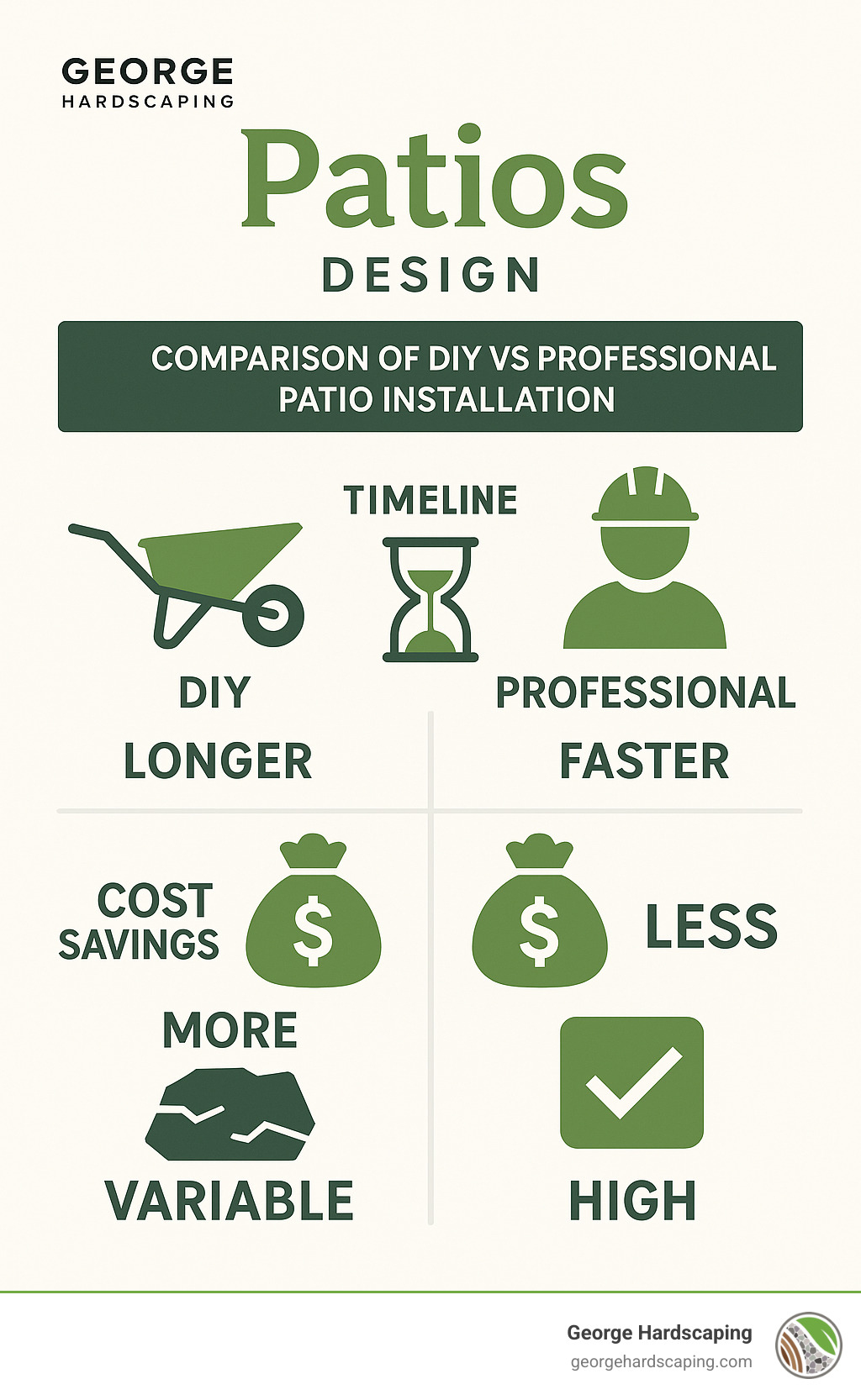
A Boxford homeowner candidly shared this experience: “I started my patio as a DIY project but quickly realized I was in over my head with the slope and drainage issues. George Hardscaping stepped in and saved the day—their expertise was well worth the investment.”
For complex projects involving multiple levels, built-in features, or challenging terrain, professional installation usually proves the wisest choice. The investment in professional expertise often pays dividends in longevity, proper drainage, and overall quality—not to mention the peace of mind that comes with knowing your outdoor space was built right the first time.
Conclusion
There’s something magical about stepping onto a beautifully designed patio—that moment when you realize your backyard has transformed into your favorite “room” in the house. A thoughtfully crafted patios design does more than just fill empty space; it creates a personal retreat that improves your daily life while adding significant value to your property.
Throughout Essex County, we’ve watched homeowners fall in love with their outdoor spaces all over again. From the salty air of Marblehead to the leafy neighborhoods of North Reading, each patio tells a unique story about the family who enjoys it.
“I never realized how much we were missing until we had our patio installed,” shared one Beverly homeowner. “Now it’s where we have morning coffee, family dinners, and evening conversations. It’s become the heart of our home during the warmer months.”
The beauty of patios is their timeless appeal—they never go out of style, only evolving to reflect current trends while maintaining their essential function. A well-executed patio can increase your home’s value by 8-10%, making it not just a lifestyle upgrade but a sound investment. As one local real estate agent told us, “When buyers see a beautiful patio, they’re not just seeing stones and pavers—they’re envisioning their future life in that home.”
Whether you’ve fallen in love with the Mediterranean warmth of terra cotta, the rugged charm of flagstone, or the sleek lines of modern concrete, your perfect outdoor space is within reach. The key is balancing your aesthetic preferences with practical considerations like our New England climate, your maintenance preferences, and how you’ll actually use the space day to day.
At George Hardscaping, we bring more than skilled hands to your project—we bring understanding. We know that your patio isn’t just another landscaping feature; it’s where birthday parties will be celebrated, quiet evenings will be spent, and memories will be made for years to come.
Our team has been changing outdoor spaces throughout Salem, Danvers, Gloucester, and beyond for over a decade. We take pride in creating patios that not only look beautiful on day one but continue to impress and function flawlessly through our challenging seasons year after year.
Ready to bring your patio dreams to life? Let’s create an outdoor space that perfectly balances beauty, function, and durability—one that feels like it was always meant to be part of your home.
More info about patio design & installation services
