
Your Small Backyard is an Opportunity, Not a Limitation
Small backyard patio designs can transform even the tiniest outdoor space into a functional, beautiful retreat. The key is to make intentional choices that result in a cohesive, purposeful space. Here are the most effective approaches:
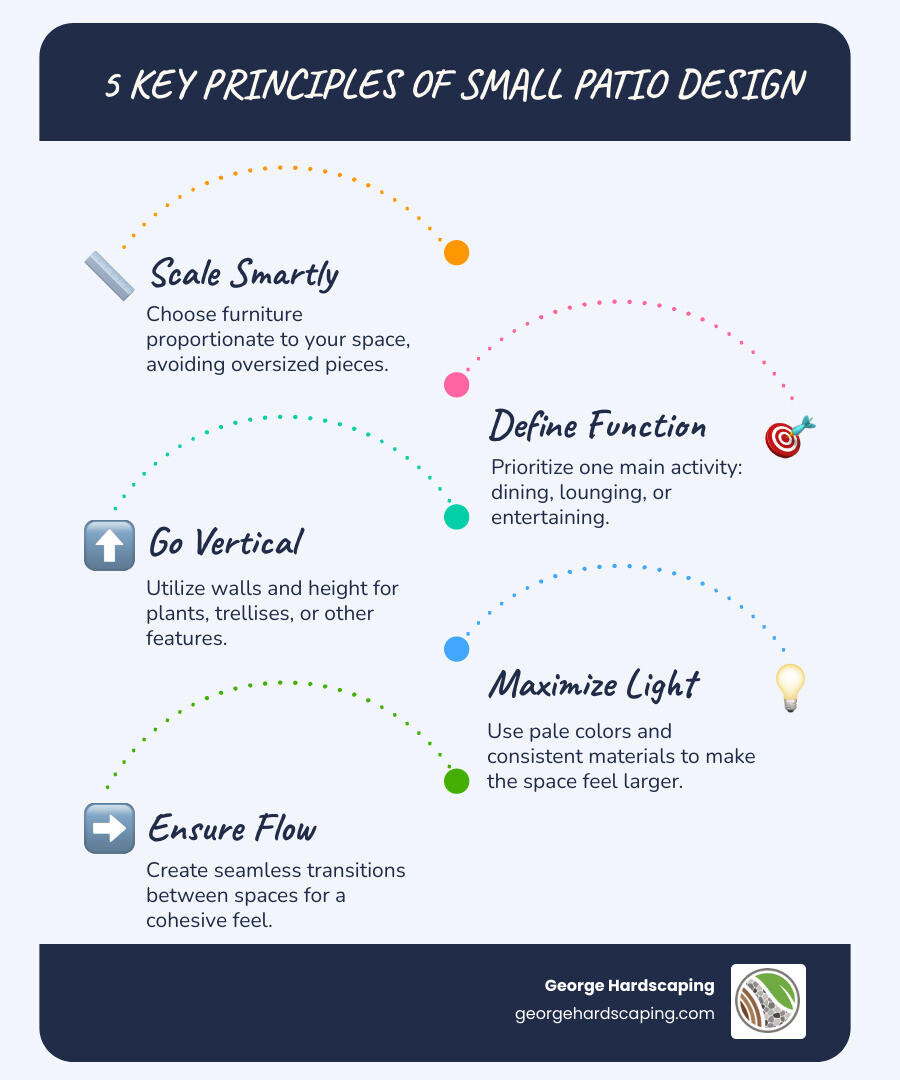
- Plan by capacity: Allocate 25-30 square feet per person for comfortable use.
- Use light colors: White, gray, or light stone pavers create the illusion of more space.
- Think vertically: Wall planters and trellises maximize greenery without sacrificing floor area.
- Choose one focus: Prioritize dining, lounging, or entertaining.
- Create flow: Use consistent flooring to visually expand the area.
- Add a focal point: A small fire pit or fountain draws attention away from the size.
A small backyard is an advantage in patio design because every square foot matters. Many homeowners underestimate their small patios, but the opposite is true. With smart design, a 10’x12′ patio can be as functional and inviting as one twice its size.
The key lies in understanding scale, function, and flow. Light-colored materials make spaces feel larger, built-in seating saves room, and vertical elements add greenery without eating up floor space. Whether you have a narrow side yard or a compact courtyard, this guide will show you how to maximize every inch. You’ll find that small doesn’t mean limited—it means focused and intentional.
If you want to see how designers and architects around the world approach compact outdoor living, resources like the small garden design ideas guide from the Royal Horticultural Society offer excellent visual inspiration that you can adapt to New England backyards.
To get familiar with the basics of professional patio design and installation, you can review George Hardscaping’s dedicated pages:
These resources explain how their team approaches layout, drainage, and materials for Essex County, MA homes.
First Principles: How to Plan a Mighty Patio in a Mini Yard
Before diving into specific ideas, it’s important to cover the groundwork. Smart planning makes the most of every square foot, ensuring your small backyard patio design is both functional and beautiful.
If you’d like a broader primer on small-space outdoor planning, the Better Homes & Gardens small patio ideas guide provides nationally recognized best practices that pair well with the local expertise of George Hardscaping.
How to Determine the Right Patio Size
The right size isn’t just about square footage; it’s about capacity. Plan your patio based on the number of people you want to comfortably accommodate. A good rule of thumb is to allocate 25 to 30 square feet per person. This ensures everyone has room to move and relax without feeling cramped.
For example, a quiet reading nook for two requires a different footprint than a space for family meals. Being realistic about your needs helps tailor the size and layout precisely. Even a 10’x10′ patio can comfortably host four guests.
| Guest Capacity | Recommended Square Footage | Example Dimensions |
|---|---|---|
| 4 Guests | 100-120 sq ft | 10’x10’ or 10’x12’ |
| 5 Guests | 125-150 sq ft | 10’x13’, 10’x15’, or 12’x12’ |
| 6 Guests | 150-180 sq ft | 10’x15’, 12’x15’, or 10’x18’ |
| 7 Guests | 175-210 sq ft | 10’x18’, 12’x15’, or 14’x15’ |
| 8 Guests | 200-240 sq ft | 10’x20’, 12’x18’, or 15’x15’ |
Creating the Illusion of Space
Making a small patio feel larger is a favorite design trick. One of the most effective strategies is using light-colored materials. White, light gray, or beige pavers and furniture reflect more light, creating an airy, expansive feel. Darker colors absorb light, making a space feel smaller.
Another powerful technique is maintaining consistent flooring. If your patio connects to your home, using similar materials for both indoor and outdoor surfaces blurs the lines, creating a seamless transition that visually extends both spaces. This indoor-outdoor flow is a hallmark of sophisticated small backyard patio designs.
Linear shapes like squares and rectangles are often more space-efficient than curves in tight backyards. Choosing low-profile furniture also matters: taller, bulkier pieces can make a patio feel cramped, while sleeker designs with lower backs open up sightlines.
Diagonal or herringbone paver patterns can subtly lead the eye across the longest dimension of your yard, further enhancing the sense of depth. For technical details on paver patterns, material performance, and drainage, organizations like the Interlocking Concrete Pavement Institute share best-practice guidelines used by many professional contractors.
For professional guidance on selecting materials and creating a spacious feel in Essex County, MA, explore George Hardscaping’s patio design and installation services. Their team specializes in maximizing outdoor spaces of all sizes throughout the North Shore.
Defining Your Patio’s Purpose
When space is at a premium, trying to do everything leads to a cluttered, dysfunctional area. The key is to define your patio’s primary purpose. Instead of a “do-it-all” space, focus on one main function:
- An al fresco dining nook: Prioritize a bistro set or compact dining table.
- A relaxing lounge area: Invest in a comfortable sectional or cozy chairs.
- A dedicated grilling station: Focus on a well-placed grill and prep surface.
- An entertainment hub: A fire pit might be your main draw.
Choosing one primary function allows you to select furniture and design elements that truly support that activity. This approach prevents clutter and ensures the space is enjoyable and useful. You can still create different “zones” with elements like an outdoor rug, which can define a seating area without adding physical barriers.
In Essex County, MA, George Hardscaping frequently helps homeowners in communities like Beverly, Danvers, Marblehead, and Newburyport define clear patio purposes and then execute them through custom patio design services that suit their homes and lifestyles.
12 Inspiring Small Backyard Patio Designs to Transform Your Space
Now that we’ve covered the foundational principles, let’s explore some practical ideas to turn your compact outdoor area into a dream retreat. These small backyard patio designs leverage smart choices in furniture, materials, and greenery to create functional and beautiful spaces.
For further visual inspiration, especially for vertical planting and space-saving layouts, the small garden design section on Gardeners’ World offers examples that pair nicely with the hardscaping ideas below.
1. The Smart Seating Solution: Built-Ins and Benches
In small spaces, furniture needs to be efficient. Built-in seating is a game-changer, maximizing seating capacity without consuming precious floor space. A built-in bench along a wall can offer continuous seating and even double as a low retaining wall, defining the patio’s edge with purpose. The material choice is key to integration: a masonry bench built from the same pavers or wall stone as the patio creates a seamless, monolithic look, while a wooden bench can introduce warmth and a contrasting texture.
- L-shaped benches fit snugly into corners, providing ample seating while anchoring the space and creating a natural conversation zone.
- Benches with hidden storage are a fantastic multi-functional option. A hinged lid reveals space for tucking away cushions, gardening tools, or kids’ toys, keeping the patio clutter-free.
- Design for comfort: Consider the ergonomics. A depth of 18-20 inches is comfortable, and topping the bench with custom outdoor cushions adds both comfort and a splash of color.
George Hardscaping can expertly integrate seating with other hardscaping elements, using the same stone or paver materials for a cohesive, high-end look. For expert installation of integrated seating, consider their landscape retaining walls and seating walls services. Custom masonry benches can be designed to suit everything from compact courtyards in Salem to oceanside lots in Gloucester.
2. Go Vertical: A Living Wall Oasis
When horizontal space is limited, go up. Utilizing vertical space is an ingenious way to incorporate greenery, add visual interest, and create privacy without taking up valuable floor area.
- Vertical gardens and wall planters transform blank walls into lush displays of flowers, herbs, or succulents.
- Trellises with climbing vines can quickly cover a wall, adding texture and drawing the eye upward, making the space feel taller.
- Layering lush greens around the perimeter, with taller plants behind smaller ones, creates an illusion of depth.
You can find step-by-step project ideas from sources like the Better Homes & Gardens vertical gardening guide to help you choose plant types and support systems that work in New England’s climate.
3. The Captivating Focal Point: Fire Pits and Water Features
Every well-designed space needs a focal point to anchor the design. On a small patio, a thoughtfully chosen fire pit or water feature creates interest and ambiance without overwhelming the space.
- Small fire pits or fire tables add warmth and a cozy glow. Many fire tables also double as coffee tables.
- Bubbling fountains or small reflecting pools introduce soothing sounds and a sense of serenity, which can also mask urban noise.
- Even a unique sculpture can serve as a focal point, adding personality to your outdoor room.
Adding a feature like this transforms the atmosphere of your patio. For customized options that fit your small space, explore George Hardscaping’s custom outdoor firepit design and construction services, available throughout Essex County.
4. Masterful Materials: Creative Paver and Stone Patterns
The choice of materials profoundly impacts the look and feel of your patio. Creative use of pavers and stone can add visual interest and the illusion of space.
- Mixing materials can be effective. Bordering a primary paver with gravel or a contrasting paver adds definition.
- Intricate paver patterns like herringbone or basketweave add a sophisticated touch. For a less cluttered look, consider large-format pavers, as fewer grout lines can make a small patio feel more expansive.
- George Hardscaping ensures your chosen materials are beautiful, durable, and installed with proper drainage (a slight 1–2% slope for water runoff).
Their team specializes in comprehensive hardscaping and masonry services, including patios, steps, and walkways that respect both the architecture of your home and the unique conditions of the North Shore.
5. The Bistro Vibe: A Charming Dining Nook
For many homeowners, the dream is to enjoy a coffee or dinner outdoors. The bistro vibe is perfect for achieving this in a compact space.
- A bistro table and two chairs are the quintessential space-saving dining solution, ideal for small patios or balconies.
- Consider fold-away furniture for maximum flexibility. It can be easily stored when not in use, freeing up floor space.
- The charm of a bistro setup lies in its simplicity and intimacy. Add a potted plant and some string lights for a romantic corner.
When George Hardscaping designs a bistro-style nook, they often pair compact paver patios with subtle borders or low seating walls, especially in smaller yards in towns like Wenham and Topsfield.
6. Light It Up: Creating Ambiance and Depth
Lighting isn’t just for visibility; it sets the mood and extends your patio’s usability into the evening. Thoughtful lighting can dramatically improve your small backyard patio design.
- String lights strung overhead create a festive, cozy canopy without taking up any floor space.
- Uplighting for plants highlights your vertical garden or potted trees, adding dramatic shadows and depth.
- Path lighting and LED step lights are crucial for safety and can also define the patio’s edges.
George Hardscaping can incorporate low-voltage fixtures into walkways and stairs to create a cohesive, well-lit environment from your back door to your patio.
For general safety and energy efficiency guidance, you can consult resources like the U.S. Department of Energy’s outdoor lighting tips when choosing fixtures and bulb types.
7. The Tiered Terrace: Working with Slopes
If your small backyard has a slope, a tiered terrace design can turn this challenge into a unique advantage.
- Multi-level patios create distinct “outdoor rooms” for different activities, like dining on one level and lounging on another.
- Using steps to add interest is a beautiful way to connect these levels. Steps can be wide and inviting, featuring integrated lighting for safety and ambiance.
- This solution effectively solves grading issues, turning an unusable slope into a series of functional, aesthetically pleasing areas.
On hilly sites in places like Rockport or Manchester-by-the-Sea, George Hardscaping often combines retaining walls, stone steps, and compact patios to create tiered terraces that feel natural and secure.
8. The Minimalist Retreat: Less is More
Sometimes, the best design for a small patio is simplicity. A minimalist approach focuses on clean lines, an uncluttered space, and a few high-quality elements.
- A simple color palette of neutrals (whites, grays, natural wood) creates a serene and expansive feel.
- Resist the urge to fill every corner. Instead, choose one or two well-proportioned statement furniture pieces.
- This approach creates a calm, sophisticated atmosphere, making your small patio feel like a tranquil oasis.
George Hardscaping frequently pairs minimalist layouts with durable, low-maintenance materials—like large-format concrete pavers or natural stone—to keep upkeep simple for busy homeowners in communities such as Peabody, Lynnfield, and North Reading.
9. The Privacy Screen Haven
Creating a sense of seclusion is essential for relaxation. Privacy screens can define your patio as a true outdoor room.
- Lattice screens or horizontal wood slats can block views from neighbors and can also serve as a trellis for climbing plants.
- Tall planters with dense grasses like bamboo offer a natural and movable privacy solution, creating a lush green barrier.
- Strategically placed shrubs can also break sightlines without making the space feel entirely enclosed.
Combining privacy screens with a well-planned hardscape can make even narrow side yards in Salem or Swampscott feel intimate and comfortable. For structural elements like low walls or raised planters, George Hardscaping’s masonry services ensure the backbone of your privacy strategy is built to last.
10. The Indoor-Outdoor Extension
One of the most effective ways to make a small patio feel larger is to blur the boundaries between your indoor and outdoor living spaces, making it feel like a natural extension of your home.
- Large glass doors (like sliding or bi-fold doors) that open onto the patio create a wide entryway, making the patio feel like an extension of your interior. Bi-fold doors are especially effective as they can open an entire wall.
- Using the same or similar flooring materials inside and out improves this effect, making the space feel continuous. Many manufacturers now offer porcelain tiles rated for both interior and exterior use, allowing for a perfect match and eliminating the visual “stop” at the threshold.
- A consistent color palette and furniture style between the adjacent indoor room and the patio makes the transition almost imperceptible. Use outdoor rugs and cushions that echo the interior decor.
George Hardscaping frequently coordinates with homeowners and builders to align indoor flooring levels and material choices with the exterior patio design, ensuring a flawless transition, especially in renovation projects across Beverly, Marblehead, and Newburyport.
11. The Corner Comfort Zone with a Sectional
A well-chosen corner sectional can be one of the most efficient seating solutions for a small patio.
- Corner sectionals fit snugly into a corner, maximizing the seating area along the perimeter and using often-underused space.
- A sectional creates a cozy conversation pit that acts as the anchor for your patio, encouraging lounging.
- When selecting a sectional, opt for one with clean lines and weather-resistant fabrics suitable for the Essex County, MA climate.
A compact paver pad, a corner sectional, and a small fire table can transform an overlooked corner into the favorite gathering spot of your home. George Hardscaping’s patio construction services can be custom to the footprint of your specific furniture plan.
12. The Shade Solution: Pergolas and Sails
Enjoying your patio means being comfortable, and that often requires protection from the sun. Clever shade solutions can provide relief and add design flair.
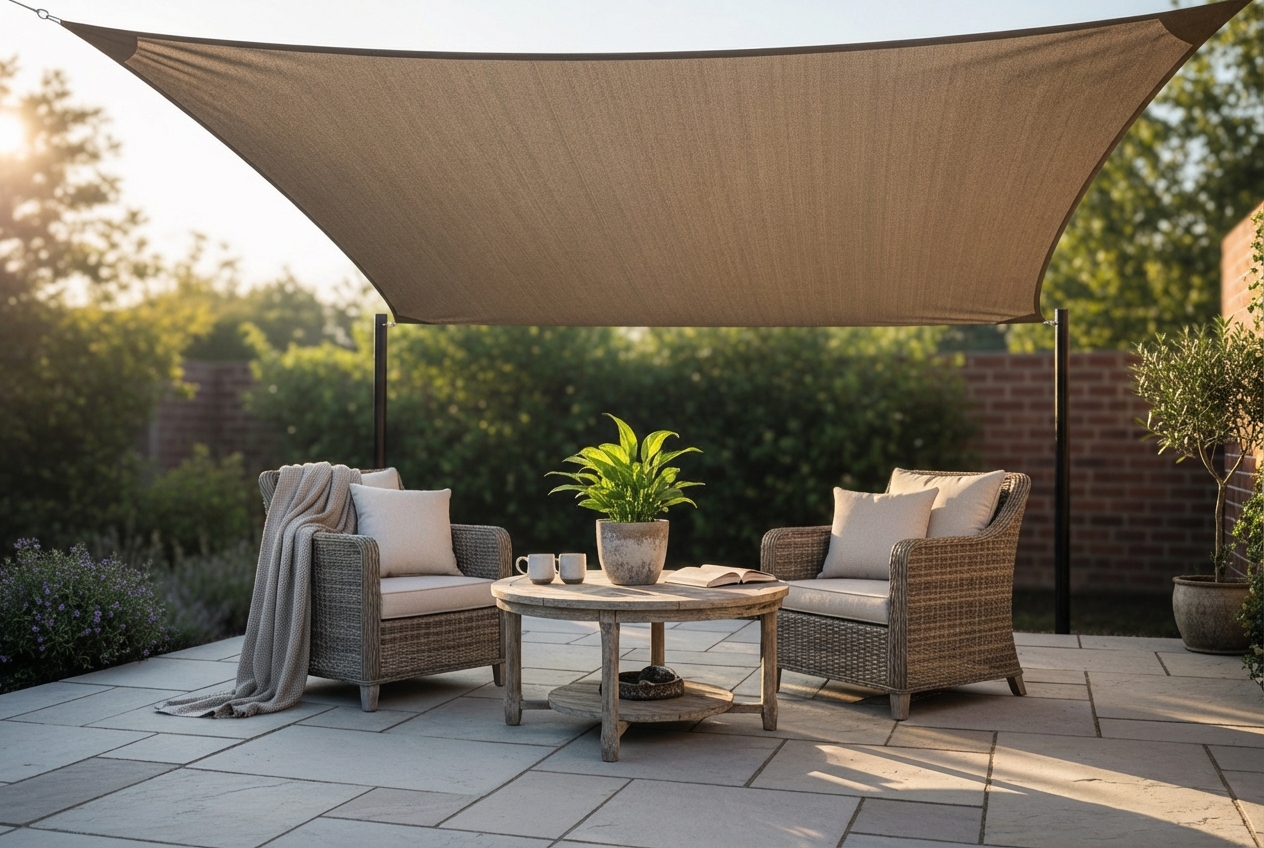
- Shade sails are a flexible and modern option. These tensioned fabric structures can be anchored to walls or poles, adding a contemporary architectural element.
- Compact pergolas offer a more permanent structure. Their open-slat design allows for dappled light and can be improved with climbing vines for natural shade.
- For a simpler solution, a high-quality outdoor umbrella can provide instant shade and a pop of color.
If you’re considering structural shade options, pairing a pergola with a stone or paver base built by George Hardscaping creates a durable, long-lasting outdoor room that can handle New England weather while still feeling airy and light.
Frequently Asked Questions about Small Patio Designs
Designing a small patio can bring up many questions. Here are common inquiries George Hardscaping receives from homeowners in Essex County, MA, along with practical answers.
What is the most budget-friendly material for a small patio?
For cost-effective materials, George Hardscaping often recommends:
- Gravel: This is the most budget-friendly and DIY-friendly option. It’s easy to install, offers excellent drainage, and provides a charming, informal look. It does require a border to keep it contained and furniture can be less stable.
- Decomposed granite: Finer than gravel, this material compacts well to create a stable, natural-looking surface. It’s a step up from gravel in stability but still very affordable.
- Concrete pavers: While more expensive than gravel, concrete pavers are significantly more affordable than natural stone and offer the best long-term value. They offer a vast array of colors, shapes, and textures. Professional installation is recommended for longevity.
If you are comparing surface types, the University of Minnesota Extension guide on patios and paths gives a useful overview of common materials, drainage considerations, and maintenance expectations.
Material costs vary, but long-term value comes from durability and low maintenance. For a precise quote custom to your property, you can request an estimate for your project from George Hardscaping.
Can I have a fire pit on my small patio?
Absolutely. A fire pit can be a fantastic focal point for a small patio, but safety is paramount.
- Check local regulations: Always start by reviewing local fire codes and HOA rules in your Essex County, MA community for restrictions on size, type, and placement.
- Ensure clearance: A general rule is to maintain at least 10 feet of clear space from your home, fences, and any overhanging structures. Never place a fire pit under a covered porch.
- Use a fire-resistant base: The fire pit must be placed on a non-combustible surface like pavers, stone, or concrete.
- Choose your type: For small spaces, gas/propane fire pits are often safest as they produce no embers. Wood-burning pits require a spark screen and more careful management.
- Practice fire safety: Always have a fire extinguisher or garden hose nearby and never leave a fire unattended.
With careful planning, a fire pit can be a wonderful addition to your small patio. George Hardscaping offers custom outdoor firepit solutions designed to work safely with surrounding patios, walkways, and seating.
How do I maintain a small paver patio?
Maintaining a small paver patio is straightforward and ensures its longevity.
- Regular sweeping: Sweep your patio to remove leaves and debris that can cause stains or promote weed growth.
- Weeding: Address weeds or moss in joints promptly with a stiff brush or specialized tool.
- Cleaning: For general cleaning, use mild soap and water. For tougher stains, use a designated paver cleaner. Power wash carefully on a low setting to avoid dislodging joint sand.
- Sealing (recommended): Applying a paver sealant every 3-5 years protects from stains, enhances color, and inhibits weed growth.
- Joint sand replenishment: Over time, replenish the polymeric sand in the joints to maintain stability and deter weeds.
Trade groups such as the Interlocking Concrete Pavement Institute maintenance guide provide additional best practices for keeping paver surfaces in top condition.
If you prefer to have a professional assess or refresh your patio, George Hardscaping can evaluate your existing surface and recommend repairs or upgrades as part of their broader hardscaping and masonry services.
Conclusion: Realize Your Backyard’s Full Potential
As we’ve explored, a small backyard doesn’t mean sacrificing your dream of an inviting outdoor living space. It often sparks more creativity, leading to intentional and beautiful designs. From smart seating and vertical gardens to captivating focal points and clever lighting, the possibilities for small backyard patio designs are extensive.
Thoughtful planning, strategic material choices, and innovative space-saving ideas can transform even the coziest corners into vibrant retreats. The key is to recognize your space’s potential rather than its limitations. When your patio layout, materials, and furniture are all working toward a single clear purpose—dining, lounging, entertaining, or a mix of two that fit comfortably—the result is a space you will use every week, not just on special occasions.
George Hardscaping is dedicated to enhancing the aesthetics and functionality of outdoor spaces throughout Essex County, MA—including Beverly, Boxford, Danvers, Essex, Georgetown, Gloucester, Ipswich, Lynnfield, Manchester-by-the-Sea, Marblehead, Newburyport, North Reading, Peabody, Rockport, Rowley, Salem, Swampscott, Topsfield, and Wenham. Their expertise in patios, walkways, retaining walls, steps, and custom fire pits means they can bring any of these inspiring ideas to life with durable materials and careful craftsmanship suited to New England’s climate.
If you’re ready to turn your tiny yard into a big everyday asset, this is the perfect moment to take the next step.
- Learn more about George Hardscaping’s custom patio design and installation services and start envisioning how your space could look and feel.
- When you have a rough idea of your budget and goals, request an estimate for your project to get a clear, professional plan for moving forward.
Your dream outdoor space is well within reach. With the right design partner and a focus on smart, small-space solutions, your compact patio can become one of the most valuable and enjoyable parts of your home.
