
Why Proper Sump Pump Discharge Matters for Your Home and Property
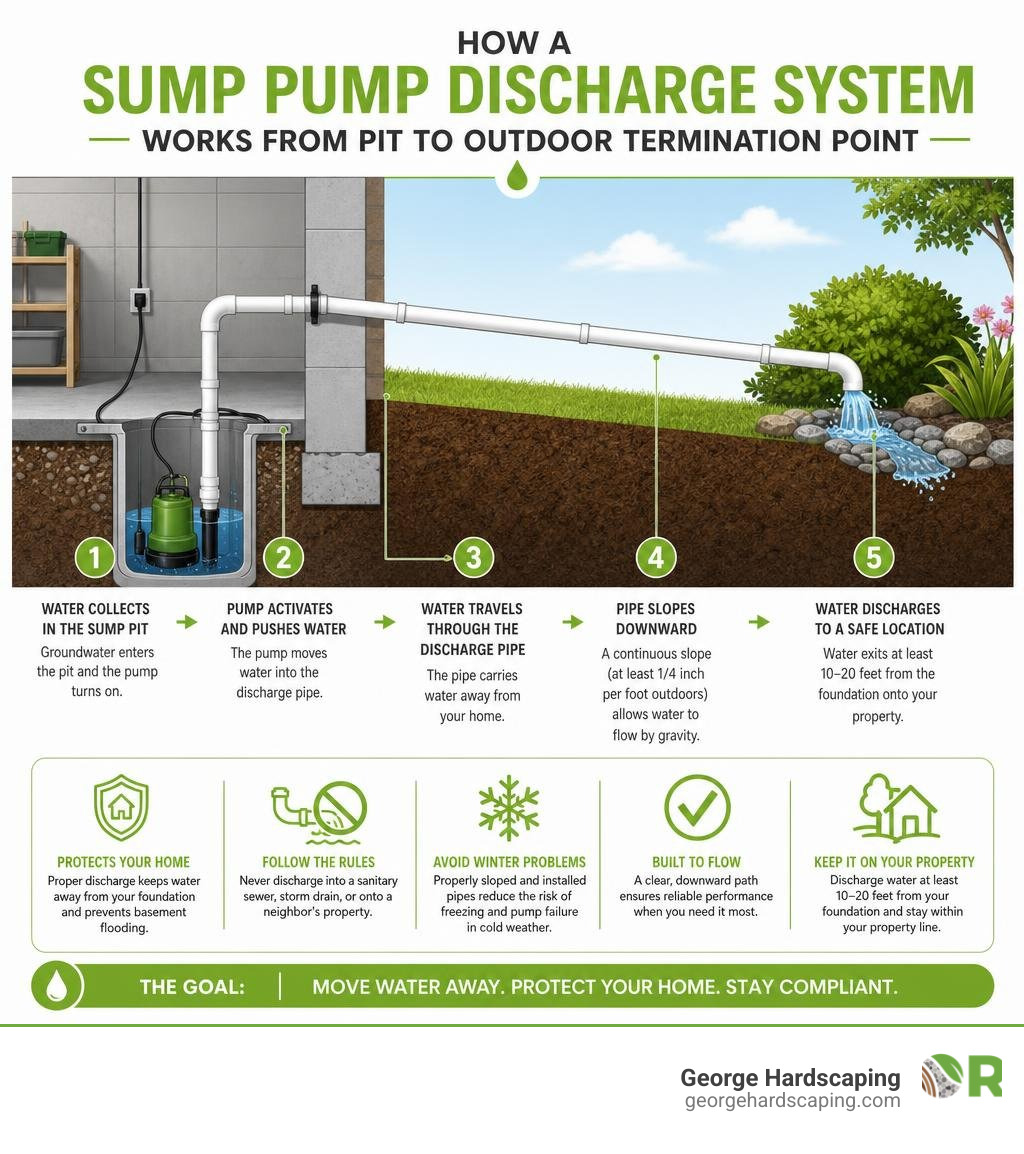
Sump pump discharge is the process of routing collected groundwater out of your basement and safely away from your home’s foundation. Done right, it protects your home. Done wrong, it can flood your basement, damage your foundation, create legal violations, and even harm nearby properties.
Here’s what you need to know at a glance:
- What it is: A discharge line carries water pumped out of your sump pit to a safe outdoor location.
- Where it must go: At least 10–20 feet from your foundation, onto your own property — never into a sanitary sewer, storm drain, or onto a neighboring yard.
- Key legal rule: In most Massachusetts municipalities, discharging into municipal sewer systems is illegal.
- Why slope matters: The pipe must slope continuously downward (at least 1/4 inch per foot outdoors) so water drains by gravity and doesn’t freeze or back up.
- Winter risk: Improperly installed lines freeze in Massachusetts winters, burning out your pump and leaving your basement unprotected.
- When to call a pro: Any time the discharge line interacts with hardscaping, masonry, or your foundation wall.
Nearly 60% of basements experience water leakage, and water damage repairs average over $10,000 according to FEMA guidance. A single incorrectly installed sump pump can dump up to 7,200 gallons of clean groundwater per day into the municipal sewer system — roughly the volume of an average residential swimming pool — straining city infrastructure and potentially triggering a violation notice.
For properties across Gloucester, Essex, Rockport, and Woburn, where heavy seasonal rain and frost depth are real concerns, getting your discharge system right isn’t optional. It’s essential. When water accumulates around your foundation, it exerts immense hydrostatic pressure against your basement walls. Over time, this pressure can cause structural cracking, bowing, and severe water infiltration. A properly designed discharge system relieves this pressure and ensures that once water is pumped out, it stays out.
Quick sump pump discharge definitions and related resources:
Engineering a Reliable Sump Pump Discharge System
Designing an effective sump pump discharge system requires looking at your property as a complete hydrological unit. The primary job of your sump pump is to collect sub-slab groundwater from your foundation’s perimeter drain tile and eject it before it can seep through foundation cracks or cause structural settling.
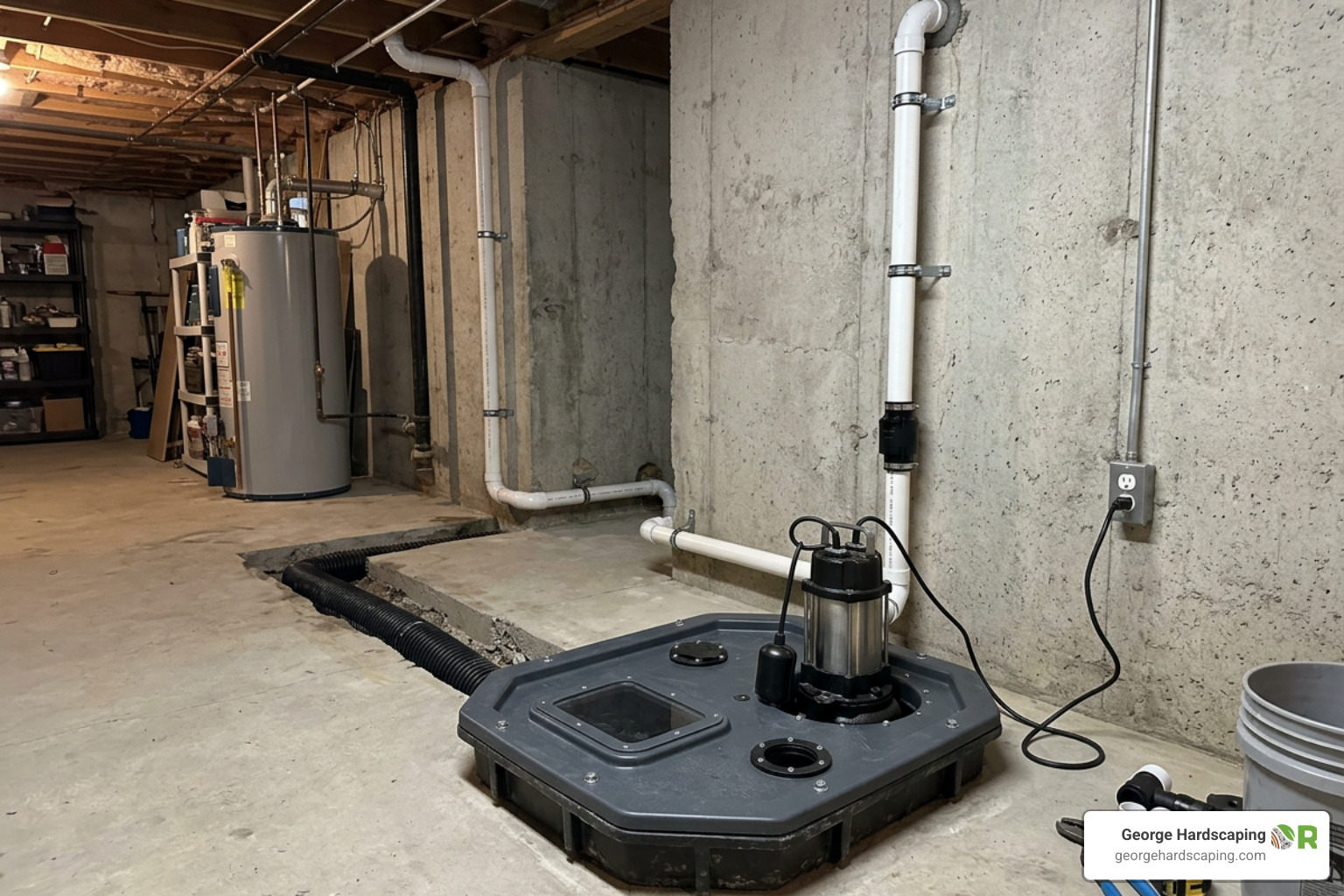
When groundwater levels rise, the water enters your sump pit. Once the float switch is triggered, the pump activates to push this clean water up and out of the basement. It is vital to understand the difference between clear groundwater and wastewater:
- Clear water (groundwater): Rainwater, snowmelt, and rising water tables collected by your drain tiles. This water does not need chemical treatment and belongs back in the natural environment.
- Wastewater (sewage): Water from toilets, showers, and sinks that contains organic waste and chemicals, requiring routing to municipal wastewater treatment facilities.
As detailed in the Sump Pump Discharge Line Installation Guide for Basements, mixing these two water streams by routing clear water into your home’s main sewer line is a major engineering mistake. Infiltration of clear water overloads municipal systems, driving up public utility costs and risking local sewer backups during severe storms.
To prevent these issues, a dedicated, sealed discharge line must be run from the pump through the basement rim joist to the outdoors. Our team at George Hardscaping emphasizes that establishing a robust outdoor exit is the foundation of long-term basement dryness. When we design these systems, we analyze the soil composition, the slope of the yard, and the location of existing hardscape features to ensure the water is directed to an area where it can safely infiltrate back into the ground without recycling back to the foundation. Learn more about protecting your home’s envelope with our guide on no more leaks simple strategies to protect your home from water damage.
Local Massachusetts Codes and Legal Drainage Regulations
In Massachusetts, local building codes and environmental regulations strictly govern where you can direct your sump pump discharge. Municipalities enforce these guidelines to manage stormwater runoff, protect public infrastructure, and reduce winter safety hazards.
Discharging clean groundwater into the sanitary sewer system is illegal in many Massachusetts municipalities. During heavy rainstorms, the sheer volume of water from improperly connected sump pumps can overload municipal sewer mains, increasing the risk of backups and infrastructure strain. This phenomenon, known as Inflow and Infiltration (I&I), costs taxpayers millions of dollars annually in unnecessary water treatment expenses.
Key regulatory requirements for Massachusetts properties include:
- Sewer and Storm Drain Restrictions: You cannot connect your discharge line to an indoor floor drain, laundry sink, or directly into the municipal sanitary sewer.
- Right-of-Way and Street Prohibitions: Discharging water directly onto public streets, sidewalks, or public rights-of-way is prohibited. In winter, this water freezes, creating dangerous ice patches for pedestrians and vehicles. In summer, standing water on paved surfaces promotes slippery algae and mold growth.
- Property Line Setbacks: Most local bylaws require that the discharge point terminate a safe distance away from property lines to prevent flooding adjacent yards.
- Erosion and Flow Control: The discharged water must be managed on your own property, utilizing natural absorption, rain gardens, or underground dry wells.
Failing to comply with these regulations can lead to official violation notices, municipal fines, or civil liability if your runoff damages another property. Homeowners in coastal and high-water-table areas like Gloucester and Rockport must be especially careful, as local conservation commissions often have strict rules regarding runoff management near wetlands and coastal zones. If you are also dealing with damp crawl spaces, read our guide on tackling wet crawl space woes for a dry and healthy home to ensure your entire subterranean drainage strategy is code-compliant.
Professional Design: Materials, Sizing, and Slope Requirements
An effective sump pump discharge line relies on heavy-duty materials, correct pipe sizing, and a continuous downward slope to function properly year-round.
Pipe Sizing and Transitions
A standard residential sump pump commonly features a 1.5-inch discharge outlet. For permanent hardscape-integrated drainage, the system should be designed as a dedicated exterior discharge route rather than a temporary surface hose.
- Indoors: A rigid, schedule 40 1.5-inch PVC pipe is typically run vertically from the pump and through the exterior rim joist.
- Outdoors: Once the pipe exits the structure, the 1.5-inch PVC is commonly transitioned to a larger 4-inch rigid PVC or heavy-duty corrugated polyethylene pipe. Transitioning to a wider pipe diameter reduces friction loss, lowers backpressure on the pump motor, and helps prevent ice blockages during freezing weather.
Slope and Pitch Calculations
Gravity is your best ally in drainage. To ensure the line drains completely and water does not pool inside the pipe, the outdoor line must maintain a continuous downward slope.
- Recommended Slope: A minimum slope of 1/4 inch of drop per foot of horizontal run, or 1 inch of drop for every 4 feet.
- Professional Requirement: Sags, reverse pitches, and poorly supported pipe sections must be avoided because standing water can freeze, clog, or flow back toward the foundation.
Check Valve Installation
A check valve is a critical one-way mechanical valve installed on the vertical portion of the discharge pipe just above the pump. When the pump motor shuts off, the check valve snaps shut, preventing the column of water remaining in the vertical pipe from draining back into the sump pit. Without a functioning check valve, this water flows back into the pit, causing the pump to cycle on and off repeatedly, which leads to premature motor burnout.
Material Selection: Temporary vs. Permanent
Temporary discharge hoses are not appropriate for long-term hardscape and foundation protection. A professionally installed buried system is more durable, safer, and easier to integrate with patios, walkways, retaining walls, and lawn restoration.
| Drainage Feature | Temporary Flexible Hoses | Permanent Rigid PVC Lines |
|---|---|---|
| Common Materials | Thin-walled plastic | Schedule 40 Rigid PVC / HDPE |
| Typical Sizing | Small-diameter temporary hose | 1-1/2 inch transitioning to 4-inch |
| Durability | Prone to kinking, cracking, and UV damage | Highly durable, crush-resistant, buried underground |
| Winter Performance | High risk of freezing solid and cracking | Excellent when buried with proper slope and freeze protection |
| Aesthetics | Unattractive hose running across the lawn | Neatly concealed underground, terminating at a controlled outlet or pop-up emitter |
| Best Use | Short-term emergency routing only | Permanent foundation and hardscape drainage protection |
Because discharge lines often pass through foundation walls, paved areas, masonry features, and finished landscapes, this work should be handled by a qualified professional rather than treated as a DIY project. Proper installation requires specialized trenching equipment, precise leveling tools, and an understanding of soil mechanics to prevent settling and pipe misalignment over time.
Integrating Sump Drainage with Outdoor Hardscaping and Masonry
At George Hardscaping, we believe that outdoor drainage systems should protect your home without sacrificing the beauty of your landscape. Running an unsightly plastic hose across a custom-built patio or finished lawn is not a viable long-term solution. Instead, we integrate sump pump discharge lines directly into our hardscaping and masonry designs.
When we design custom patios, walkways, or retaining walls in Gloucester, Essex, Rockport, or Woburn, we plan the drainage routes before construction begins:
- Subterranean Routing: We bury the discharge line beneath the sub-base of your patio or walkway using rigid Schedule 40 PVC. This prevents the pipe from shifting under the weight of pavers and keeps it completely hidden from view. We ensure that the trench is backfilled and compacted properly so that there is no future settling of the pavers above.
- Retaining Wall Protection: Water is the primary enemy of retaining walls. If a sump line discharges behind a wall, hydrostatic pressure can build up, causing the wall to bow or collapse. We safely route discharge lines through or under retaining walls, integrating them with the wall’s internal drainage system. Learn more in our retaining wall drainage complete guide.
- Dry Wells and French Drains: Instead of letting water pool on your lawn, we can route the discharge line into an underground dry well or a French drain system. This allows the high volume of pumped water to naturally and safely percolate back into the soil. For more information on these systems, see our guides on dry well installation and landscape drainage solutions an essential guide.
By planning these systems in tandem with your hardscape features, we eliminate the risk of water damage to your new investment. A beautiful stone patio is only as good as the drainage system beneath it, and integrating your sump pump’s output into this infrastructure is the smartest way to ensure longevity.
Preventing Frozen Lines and System Failures in Massachusetts Winters
Winter in Massachusetts brings freezing temperatures that present a serious challenge to sump pump systems. If your sump pump discharge line freezes solid, the pump will continue to run against an icy blockage, leading to motor burnout and basement flooding during winter thaws.
To ensure your system remains operational through the coldest months, we utilize several key freeze-protection strategies:
- Burial Below the Frost Line: In Massachusetts, the frost line can extend deep into the ground. Any permanent outdoor discharge lines must be buried deep enough or sloped steeply enough to ensure no standing water remains in the pipe to freeze.
- Air-Gap Freeze Guards: We install a specialized freeze guard, often called an ice guard, at the transition point where the pipe exits your home’s foundation. If the underground pipe freezes, the open-slot design of the freeze guard allows water to escape onto the ground rather than backing up into your basement.
- Transition to Larger Pipes: Transitioning from a 1.5-inch pipe to a 4-inch pipe as soon as the line exits the house reduces the risk of ice blockages, as a larger pipe is much harder to freeze solid.
- Continuous Downward Slope: Ensuring there are no low spots or sags in the pipe line guarantees that gravity drains all water out of the line after every pump cycle.
In addition to these physical design features, regular maintenance before the winter season is crucial. Homeowners should inspect the discharge outlet to clear away fallen leaves, debris, or snow accumulation that could block the flow of water. Implementing these steps prevents winter pump failures. For more comprehensive solutions to seasonal yard pooling, read our guide on permanent fixes for pesky puddles your guide to drainage solutions.
Frequently Asked Questions About Sump Pump Discharge
How Far Should a Sump Pump Discharge Line Extend From the Foundation?
A sump pump discharge line should extend a minimum of 10 to 20 feet away from your home’s foundation. Terminating the line too close to the structure allows the discharged water to seep back down through the loose backfill soil around the foundation, creating a continuous loop where the same water is pumped out, sinks down, and enters the sump pit again. Extending the line ensures the water drains away safely without oversaturating the foundation soil or causing erosion.
Can I Connect My Sump Pump Discharge to a French Drain or Dry Well?
Yes, connecting your discharge line to an underground French drain or a dry well is an excellent way to manage large volumes of water. This subterranean approach keeps the surface cleaner and helps prevent erosion. To ensure proper drainage, the dry well or French drain must be sized correctly based on soil type, expected discharge volume, available infiltration area, and nearby hardscape features. For detailed planning context, view our guide on digging deep for dryness installing your own dry well as a high-level educational resource, not a substitute for professional design and installation.
What Are the Average Costs for Professional Drainage Installation?
The cost of installing a professional, buried sump pump discharge system integrated with hardscaping varies depending on pipe length, trenching depth, soil conditions, excavation access, permitting requirements, and restoration needs.
All prices mentioned here are broad average costs sourced from publicly available internet data and industry averages. They are not the actual prices of George Hardscaping, and they are not quotes, guarantees, or rate commitments. As a conservative planning example, if online industry data suggests a typical baseline drainage scope around $5,000, a wide variability range would be approximately $10,000 to $25,000+ to account for site complexity and project differences. Every property requires a custom assessment. Factors such as navigating existing utility lines, cutting through concrete walkways, or restoring high-end turf can influence the final investment.
Conclusion
A properly engineered sump pump discharge system is essential for protecting your foundation, basement, masonry, and outdoor living spaces from water damage. By using durable materials, maintaining proper slope, and complying with local Massachusetts building codes, you can keep your drainage system functional and protect your landscape year-round.
At George Hardscaping, we specialize in seamless drainage systems integrated with high-quality masonry and hardscaping. Whether you are building a new patio, walkway, or retaining wall in Gloucester, Essex, Rockport, or Woburn, we ensure your drainage lines are completely hidden and fully functional.
Protect your home and elevate your outdoor space today. If you are ready to secure your property against water damage with a professionally designed drainage system, use our quote form to get started: Request a Free Estimate. You can also explore our full range of professional services on our hardscaping and masonry services page to see how we can transform your outdoor living areas while keeping them dry and structurally sound.
