
Why Drainage Problem Solutions Matter for Your Home and Hardscape
Drainage problem solutions are the methods used to stop water from pooling on your property, damaging your foundation, and destroying your landscape investment. If you’re dealing with standing water, soggy soil, or basement moisture after a heavy rain, here are the most effective fixes:
Quick-answer overview:
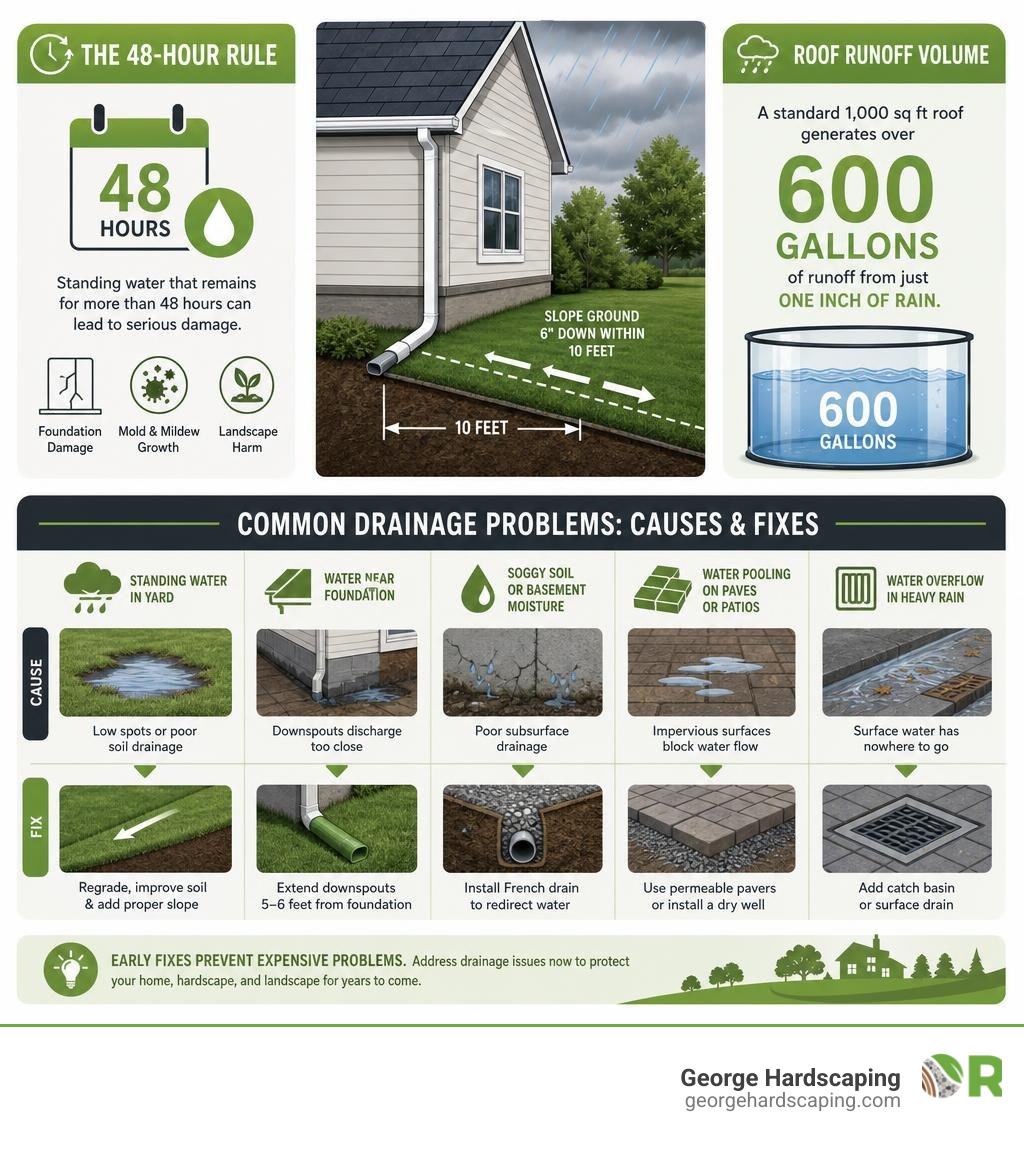
- Regrade your yard — slope the ground 6 inches downward within the first 10 feet from your foundation
- Install a French drain — a perforated pipe in a gravel trench that redirects subsurface water away from problem areas
- Add downspout extensions — direct roof runoff at least 5–6 feet away from your foundation
- Use permeable pavers or dry wells — absorb and filter runoff at the source
- Build a catch basin or surface drain — collect and channel concentrated surface water
- Improve soil structure — aerate compacted soil and add organic matter to improve absorption
- Call a professional — for chronic issues near your foundation or with significant grade changes
Here’s a number worth thinking about: a standard 1,000-square-foot roof generates over 600 gallons of runoff from just one inch of rain. For homeowners in areas like Gloucester and Woburn, where New England storms can be relentless, that volume adds up fast.
When that water has nowhere to go, it doesn’t just sit there. It saturates your soil, builds hydrostatic pressure against your foundation walls, and slowly undermines everything you’ve built — your patio, your walkways, your landscaping, and the structural integrity of your home itself. Without proper intervention, this continuous moisture exposure can lead to severe structural shifting, wood rot, and toxic mold growth that compromises your indoor air quality.
The good news? Most drainage problems are fixable. And catching them early is far less expensive than repairing the damage they leave behind. Foundation repairs in the U.S. average between $5,000 and $15,000 — and that’s before you factor in mold remediation or hardscape reconstruction. (Note: all prices referenced in this article are average costs sourced from publicly available internet data and do not reflect the actual pricing of George Hardscaping.)
This guide walks you through how to diagnose what’s actually happening on your property, which solutions match which problems, and when it’s time to stop guessing and call in a professional. By understanding the mechanics of water movement, you can make informed decisions that protect your property value and ensure your outdoor living spaces remain beautiful, dry, and functional for decades to come.
Key drainage problem solutions vocabulary:
Diagnosing Commercial and Residential Drainage Issues
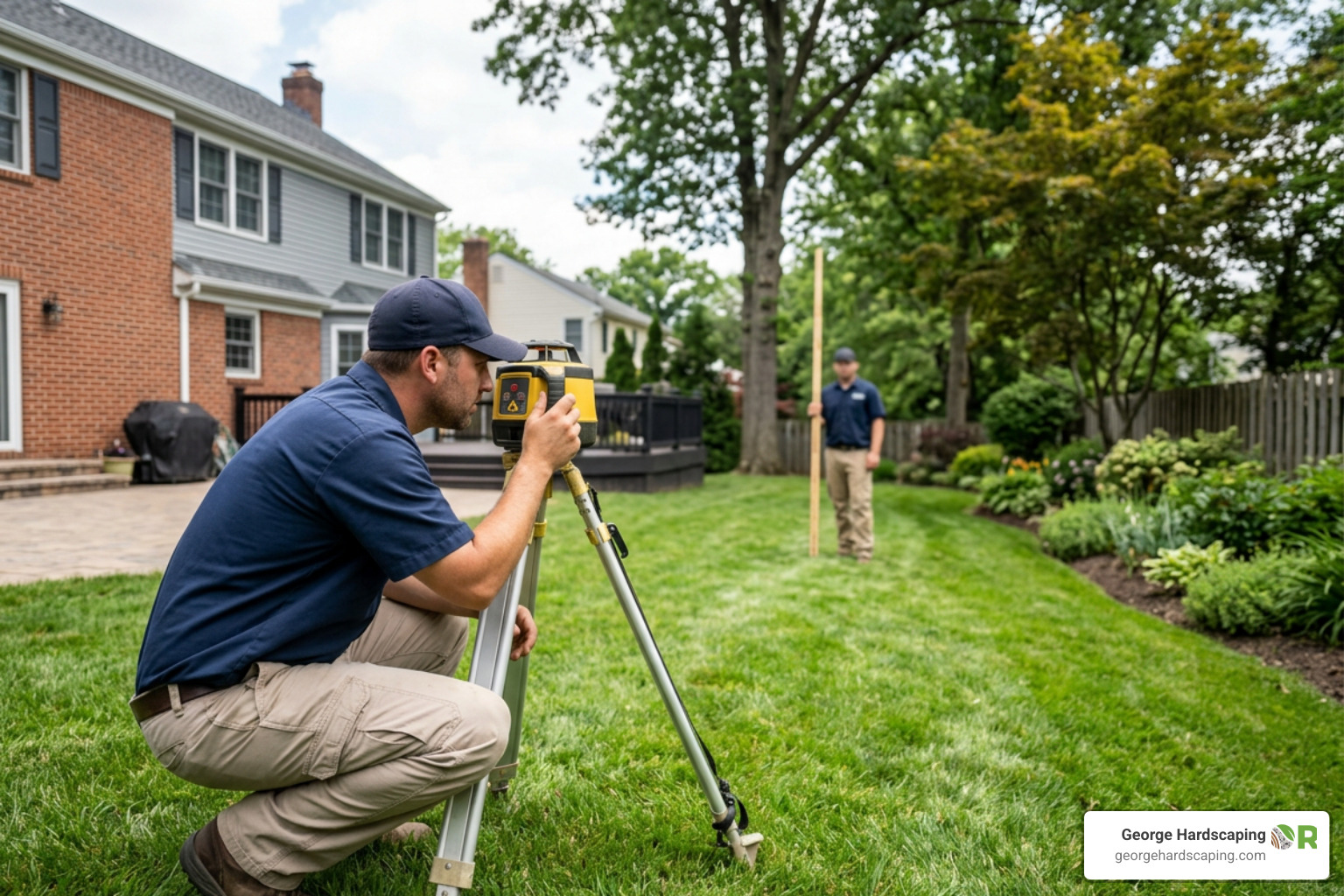
Before we can implement the right drainage problem solutions, we have to play detective. Applying a fix without diagnosing the root cause is a recipe for a soggy, expensive failure. When water pools on your property, it is usually a combined symptom of soil compaction, poor grading, and high hydrostatic pressure.
To help you understand the landscape dynamics of your North Shore property, we recommend starting with three simple diagnostic steps:
1. The 48-Hour Rule
Healthy, well-draining soil should absorb typical storm runoff within 24 hours. If you still have standing water after 48 hours, your soil has reached its absolute absorption limit. This is a clear indicator of severe soil compaction or a high concentration of clay, both of which act as an impermeable barrier. When water sits this long, it starves turf roots of oxygen, invites mosquito breeding, and increases the risk of water migrating toward your home’s basement or crawl space. You can read more about how this moisture behaves in our guide on protecting your home from water damage.
In addition to structural risks, prolonged standing water can ruin your lawn’s root systems, leading to patchy, yellowing grass and creating a breeding ground for fungal diseases. If you notice that certain areas of your yard remain spongy or muddy long after the rain has stopped, it is a strong signal that the subsurface soil layers are completely saturated and unable to process additional moisture.
2. The 10-Foot Board Test (Slope Assessment)
Proper grading is your property’s first line of defense. To check your slope, take a straight 10-foot board and place one end against your home’s foundation and the other extending out into the yard. Place a level on top of the board.
According to the US Residential Drainage Guide 2026 | Expert Solutions, proper grading requires a minimum 2% slope—which translates to a 6-inch drop within those first 10 feet away from your foundation. If the ground is flat, or worse, slopes back toward your house, gravity will continuously funnel thousands of gallons of roof runoff directly against your foundation walls.
This test is particularly crucial for older homes where the soil surrounding the foundation may have settled over several decades. Settling naturally creates a negative slope, drawing water inward rather than shedding it away. Correcting this grade is often the single most effective step in preventing basement flooding.
3. Soil Infiltration Testing
Not all soil is created equal. In communities like Danvers and Beverly, properties often sit on heavy, clay-rich glacial soils that drain incredibly slowly. To test your soil’s natural permeability:
- Dig a hole 12 inches deep and 12 inches wide.
- Fill it completely with water and let it saturate the ground overnight.
- The next day, fill it with water again and measure how quickly the water level drops.
If the water level drops less than 1 inch per hour, you have poorly draining soil (typical of compacted clay). Sandy or loamy soils will easily drain 1 to 6 inches per hour. Knowing this rate helps us determine whether we can rely on simple soil amendments or if we need to engineer a subsurface solution. For instance, highly impermeable clay soils almost always require a dedicated mechanical or gravity-fed drainage system to bypass the slow-draining earth.
Engineering-Grade Drainage Problem Solutions for Massachusetts Properties
Once we know why the water is pooling, we can design a permanent, engineering-grade solution. While some minor grading adjustments can be attempted by ambitious homeowners, managing large volumes of water requires professional expertise to ensure you don’t accidentally redirect the problem onto your neighbor’s property—which is a violation of local Massachusetts building codes.
To design a comprehensive system, we look at three primary strategies outlined in our essential guide to landscape drainage:
- Surface Grading: Creating a positive slope to naturally shed water away from buildings.
- Surface Collection: Utilizing catch basins, channel drains, and swales to capture concentrated runoff from hard surfaces before it pools.
- Subsurface Systems: Installing French drains and dry wells to handle groundwater and deep soil saturation.
For heavy-duty structural features like retaining walls, proper drainage is absolutely critical. Without it, water builds up behind the wall, creating immense pressure that can cause the structure to bow or collapse. You can learn more about how we prevent this in our retaining wall drainage complete guide.
Let’s look closely at the two most reliable subsurface systems we install for homeowners across the North Shore.
Subsurface French Drains as Drainage Problem Solutions
A French drain is the gold standard for intercepting groundwater and dispersing it safely. It works by giving water a path of least resistance.
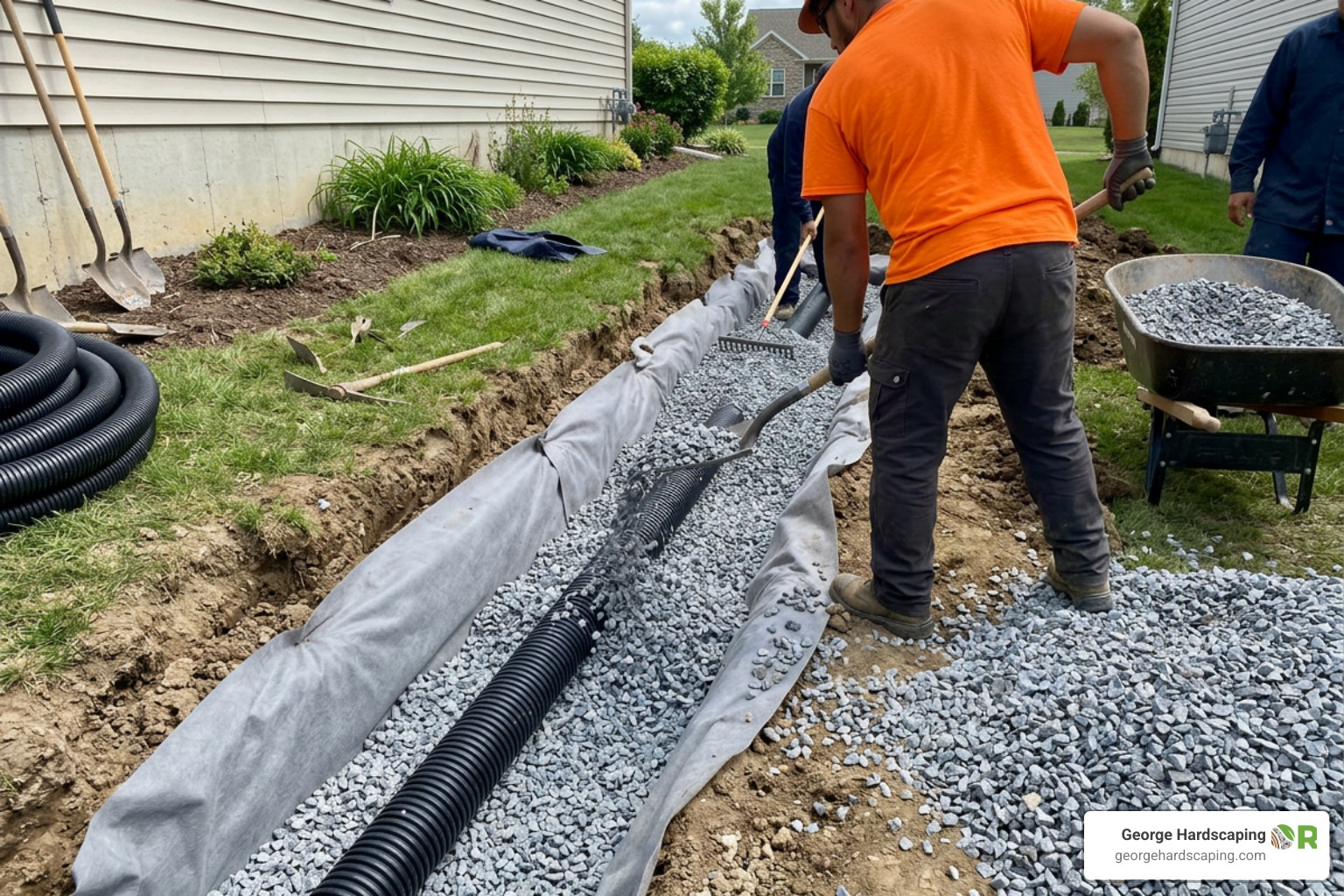
Instead of fighting against heavy clay soil in areas like Gloucester or Woburn, we excavate a trench, line it with a geotextile filter fabric, fill the bottom with clean gravel, and lay a perforated PVC pipe. We then surround the pipe with more gravel and wrap the filter fabric over the top before backfilling with soil and turf.
This setup allows rising groundwater to easily enter the gravel trench, pass through the filter fabric, and enter the perforated pipe, which quickly carries the water away before it can reach the surface or press against your basement walls.
The filter fabric is an absolute necessity, especially in clay-heavy Massachusetts soils. Without it, fine clay particles will wash into the gravel and clog the perforations in the pipe within two to three seasons, rendering the entire system useless.
When properly engineered, a French drain collects water along its entire length and uses gravity to channel it to a safe, legal municipal discharge point or dry well. If you are planning a retaining wall project, integrating a French drain is a key step to ensure its longevity. Discover how we build these in our retaining wall French drain complete guide.
Permeable Hardscaping and Dry Wells as Drainage Problem Solutions
For properties with extensive driveways, patios, or walkways, impervious surfaces are often the primary cause of runoff issues. When rain hits standard concrete or asphalt, 100% of it becomes runoff.
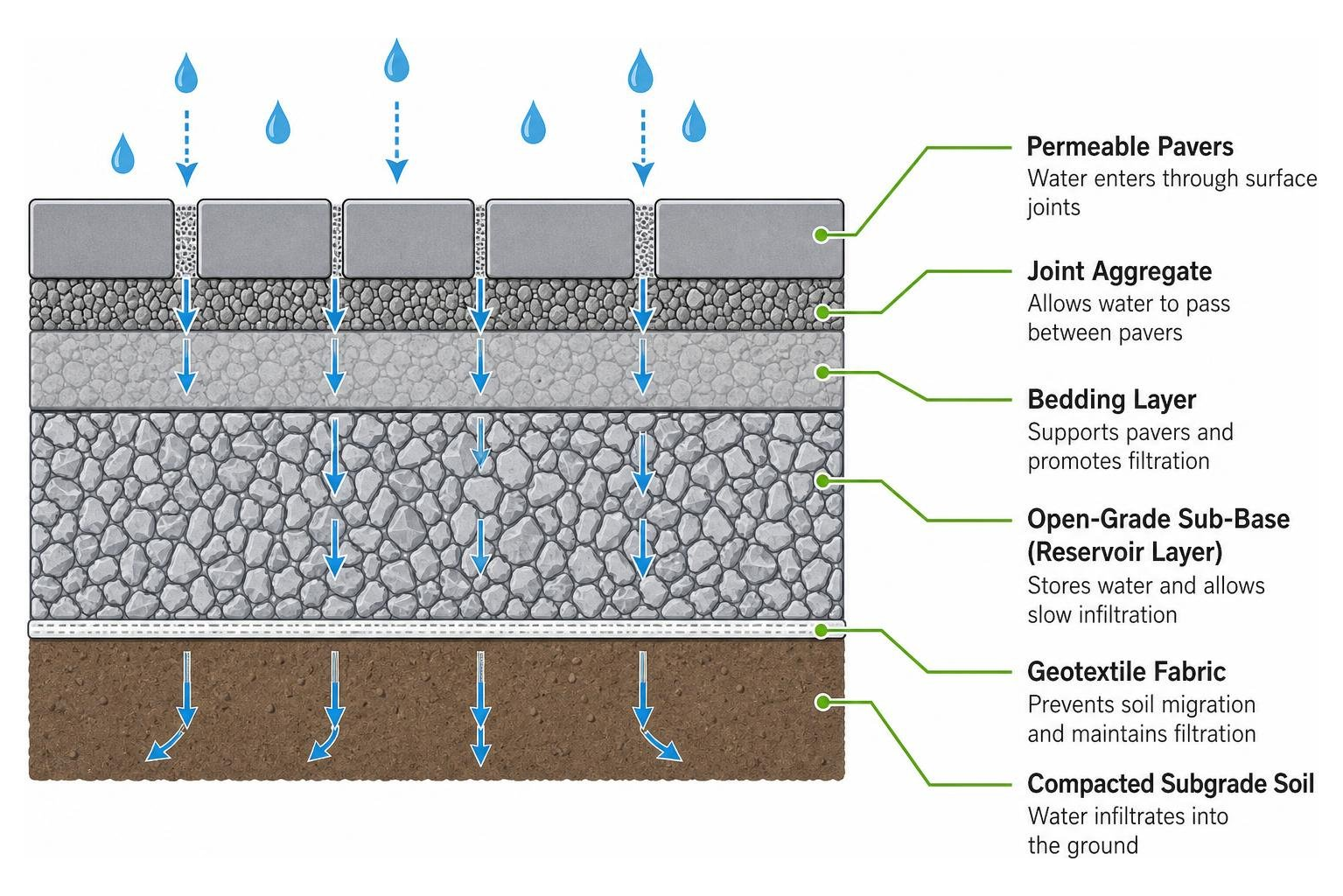
That is why we highly recommend permeable hardscaping. Permeable pavers feature wider joints filled with specialized aggregate, allowing water to flow straight through the surface and into a thick, crushed-stone sub-base where it can slowly infiltrate back into the ground naturally. This not only reduces runoff but also filters out pollutants before they reach local waterways.
For homes in Lynnfield and Danvers that experience heavy roof runoff, we often combine permeable surfaces with a dry well installation. A dry well is an underground plastic well wrapped in filter fabric and surrounded by gravel.
Instead of dumping roof runoff directly onto your lawn via downspouts, we pipe the water underground straight into the dry well. The well stores the water during the peak of the storm and slowly releases it back into the water table over 24 to 48 hours, completely eliminating surface puddles and foundation saturation. This subsurface storage is an incredibly efficient way to manage high volumes of water without sacrificing usable yard space.
Comparing Cost and Effectiveness of Professional Drainage Systems
When deciding on a drainage management plan, it helps to compare your options based on both upfront investment and long-term performance. While DIY projects like adding downspout extensions are cheap and easy, they rarely solve systemic issues like high water tables or poor soil permeability.
To make an informed decision, homeowners must weigh the initial installation costs against the potential long-term savings in structural repairs. A system that seems expensive upfront often pays for itself by preventing foundation cracks, basement flooding, and landscape erosion.
The table below outlines how the most common professional drainage problem solutions compare:
| Solution Type | Primary Purpose | Relative Cost | Effectiveness | Typical Lifespan |
|---|---|---|---|---|
| Surface Regrading | Corrects lawn slope to shed surface water | Moderate | High (for surface water) | Lifetime (if soil doesn’t settle) |
| French Drains | Intercepts and redirects groundwater | Moderate to High | Excellent (for waterlogged lawns) | 20–30 Years (with fabric) |
| Dry Wells | Manages concentrated roof and downspout runoff | Moderate | High (for localized pooling) | 20–30 Years |
| Permeable Pavers | Eliminates runoff from patios and driveways | High | Superior (source control) | 30–50 Years |
Note on Pricing: Based on industry averages and online data, comprehensive engineered drainage systems typically range from $9,200 to $23,000 depending on the complexity of the excavation, soil conditions, and municipal permitting. Please note that these are average costs sourced from publicly available internet data and are not the actual prices of George Hardscaping.
While these professional installations require an upfront investment, they offer an exceptional return on investment (often 50% to 75%) by preventing catastrophic foundation settling, structural rot, and basement mold issues. Protecting your home’s structural integrity is always a wise financial decision that preserves your property’s resale value.
Frequently Asked Questions About Drainage Problem Solutions
How do I know if my property has a severe drainage issue?
The most common signs of a severe drainage issue include water pooling against your foundation walls, water seeping through basement concrete (often leaving a white, powdery residue called efflorescence), horizontal or stair-stepped cracks in your foundation, and musty odors or mold in your basement or crawl space. If you live in Beverly or Gloucester and notice these signs after a typical New England storm, you should address them immediately before structural settling occurs.
What permits are required for major drainage modifications in Massachusetts?
In Massachusetts, you cannot legally alter your property’s grade to shed water directly onto a neighboring property or public roadway. Major modifications often require a grading permit from your local building department.
Furthermore, if your property in Woburn or Lynnfield is located near wetlands, streams, or coastal areas, any excavation work may require approval from your local Conservation Commission to ensure compliance with the Massachusetts Wetlands Protection Act.
How often should professional drainage systems be maintained?
To keep your drainage systems running smoothly, we recommend an annual maintenance routine:
- Fall: Clean out leaves and debris from gutters and catch basins.
- Spring: Flush out French drain pipes and dry well inlets with a garden hose to clear any accumulated silt.
- Regularly: Ensure pop-up emitters and pipe outlets are clear of grass clippings, mulch, and pests.
Conclusion
At the end of the day, water is a powerful force, but it always follows the path of least resistance. By implementing permanent, engineering-grade drainage problem solutions, we can control that path, protecting your home’s foundation and preserving your beautiful outdoor living spaces.
Whether you need a expertly graded patio, a custom retaining wall with integrated drainage, or a complete subsurface French drain system, our team at George Hardscaping is here to help. We serve communities across the North Shore with high-quality, custom masonry designed to stand the test of time and weather.
Don’t let another heavy rainstorm wash away your peace of mind. Let’s protect your property’s structural integrity together.
Ready to dry out your yard for good?
- Browse our Hardscaping and Masonry Services to see how we integrate drainage into beautiful designs.
- Simply Request an Estimate online today to schedule a site assessment!
