
Retaining Wall with Seating: Boost Style 2025
Open up Your Outdoor Potential: The Power of Retaining Walls with Seating
Looking to transform your outdoor space? A retaining wall with seating offers a smart, multi-functional solution. It’s more than just a wall; it’s an integrated feature that adds beauty, functionality, and value to your home.
Here are the key features and benefits of incorporating seating into your retaining wall design:
- Built-in Seating: Provides permanent, comfortable places to sit without needing extra furniture.
- Soil Retention: Effectively holds back soil on sloped properties, preventing erosion and creating level areas.
- Space Optimization: Maximizes usable yard space, especially on uneven terrain.
- Aesthetic Appeal: Improves your landscape with a custom, integrated design that blends seamlessly.
- Defined Outdoor “Rooms”: Creates clear boundaries for patios, fire pit areas, or garden spaces.
- Increased Property Value: Adds a desirable, durable, and attractive element to your home.
- Safety Barrier: Can double as a low safety wall for raised patios or decks.
- Low Maintenance: Generally requires less upkeep than separate, movable outdoor furniture.
Many homeowners in Essex County, MA, and the North Shore face challenges with sloped yards or a desire to make their outdoor areas more inviting. A retaining wall with seating addresses these needs by combining essential structural support with comfortable, built-in functionality. This innovative hardscaping solution turns an ordinary necessity into an extraordinary design element, allowing you to “step up your style” and truly enjoy your property.
Retaining wall with seating basics:
The Dual-Purpose Powerhouse: What is a Retaining Wall with Seating?
Imagine a landscape feature that works double duty, tackling tricky slopes while also offering a comfy spot to relax. That’s the magic of a retaining wall with seating! At its heart, it’s a sturdy structure built to hold back soil and manage changes in ground level. But what makes it a true powerhouse is the clever way it blends in permanent, inviting seating. It’s truly a brilliant way to get more bang for your buck, turning a necessity into a delightful addition to your outdoor living space. These walls are engineered structures designed to counteract the lateral pressure of soil, creating stable, usable land where there was once an unusable slope.
The Structural Role
Every good home starts with a strong foundation, and your landscape is no different! The primary job of any retaining wall is to provide essential structural support. For properties with natural inclines, especially common here in Essex County, MA, these walls are crucial for:
- Holding back soil: They act like a strong guardian, preventing soil from washing away or sliding, especially during those heavy New England downpours. This keeps your landscape stable and protects your home’s foundation.
- Managing slopes and creating level tiers: Many yards, especially across the North Shore, come with their own unique hills and dips. Retaining walls let us carve out flat, usable areas. Think beautiful terraced gardens or perfectly level spots for a patio or play area that might otherwise be impossible.
- Preventing erosion: By keeping soil firmly in place, retaining walls actively fight erosion, preserving your beautiful landscape for years to come.
- Controlling water runoff: A well-designed wall can also help direct water where it needs to go, avoiding puddles and drainage headaches.
Essentially, retaining walls are the unsung heroes of outdoor engineering, laying the groundwork for stunning and stable outdoor spaces. To dive deeper into how these smart structures work, take a look at our insights on Landscape Retaining Walls. And remember, creating these stable, beautiful foundations is what Hardscaping is all about!
The Functional & Aesthetic Benefits
Now, let’s chat about the fun part – the “seating” in a retaining wall with seating. This is where practical needs truly meet beautiful design, offering a host of advantages for your home:
- Permanent Seating Solution: Say goodbye to lugging out heavy chairs or worrying about them blowing away in a storm! Built-in seating is always there, ready for you and your guests. It’s a durable, long-lasting part of your hardscaping.
- Maximizing Patio Space: This is a game-changer, especially for smaller yards or patios. By tucking seating right into the edge of a patio or outdoor “room,” you save precious floor space that separate chairs would gobble up. It’s an incredibly smart use of every square foot.
- Social Gathering Spots: A built-in seating wall just naturally brings people together. It creates a cozy, defined area perfect for friends and family to gather, whether around a crackling fire pit or simply enjoying your garden.
- Framing Features: These walls can gracefully outline special areas, like a comfy fire pit zone, an outdoor kitchen, or a vibrant garden bed. They act as a subtle boundary, helping to define different outdoor “rooms” in your yard. For more ideas on creating inviting spaces, check out our tips on Comfortable Fire Pit Seating.
- Unifying Landscape Design: A retaining wall with seating ties everything together. It creates a seamless flow between the practical structure and a relaxed, inviting atmosphere.
- Increased Curb Appeal & Property Value: A thoughtfully designed and expertly built retaining wall with seating is a highly sought-after feature. It shows off a functional, beautiful, and well-cared-for outdoor space, significantly boosting your home’s value. Studies consistently show that built-in seating is a top trend in outdoor living design!
- Cost-Effectiveness: Think about it – you’re solving a structural need and adding seating all in one go! This clever combination can often be more budget-friendly than building a separate retaining wall and then buying a full set of durable outdoor furniture. You get more for your investment.
These walls aren’t just practical; they’re a statement. They transform a necessary structure into a beautiful, inviting, and highly functional part of your home’s outdoor living experience. It’s truly a prime example of smart outdoor design in action.
Designing for Durability and Delight: Key Considerations
Designing a retaining wall with seating isn’t just about stacking blocks; it’s about creating a harmonious blend of form and function. Think of it as crafting a beautiful, comfortable, and long-lasting piece of outdoor furniture that also happens to hold back the earth! We consider comfort, safety, and how the wall integrates with your overall landscape. It’s all about ensuring that your new outdoor feature is both a joy to use and built to last for years to come. For a deeper dive into the planning process, explore our insights on Retaining Wall Design.
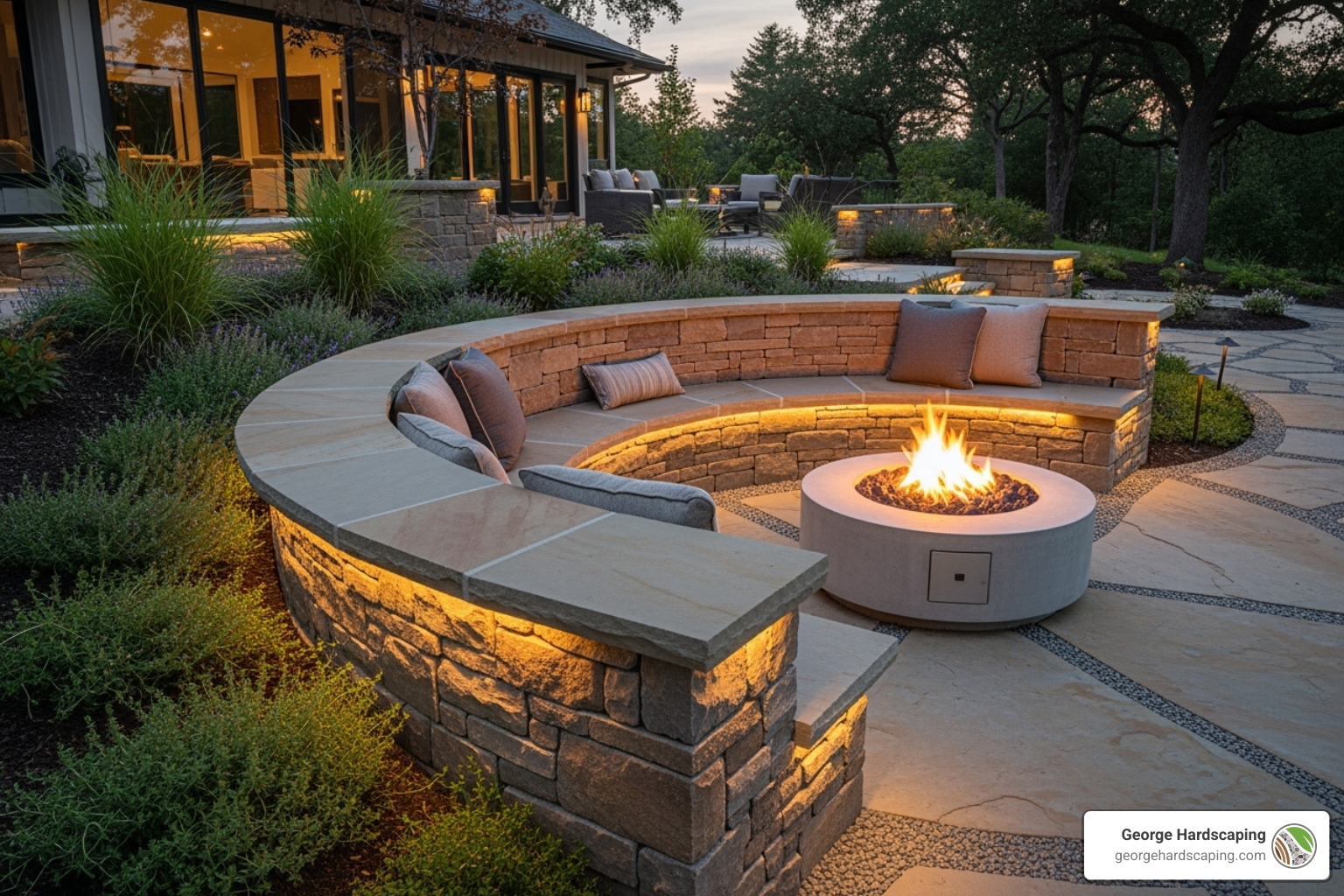
Ergonomics of a Comfortable Retaining Wall with Seating
Comfort is paramount when designing seating. After all, what’s the point of a beautiful seat if no one wants to sit on it? We aim for dimensions that mimic comfortable indoor seating, making sure your outdoor relaxation spot is just as inviting.
For instance, the ideal seat height for most adults is between 18 and 21 inches. This allows for easy sitting down and standing up, no awkward perching here! Equally important is the seat depth, or width of the wall’s top. We recommend at least 12 inches wide to give you enough surface area for a relaxed sit. You can always add cozy cushions for extra plushness, but the base needs to be right.
While not always integrated directly, a low wall behind the seating area can serve as a natural backrest, offering that extra bit of support. And here’s a pro tip: we always recommend capping the top of the wall with a smooth, comfortable material. Rough flagstone or irregular surfaces can be uncomfortable and even snag clothing – not ideal for your favorite summer outfit! Bullnose coping, with its gently rounded edges, is an excellent choice. It softens the seating edge, improves comfort, and won’t snag your finely woven fabrics.
Shape and Form: Straight vs. Curved Walls
The shape of your retaining wall with seating significantly impacts the overall feel and flow of your outdoor space. Do you prefer a sleek, modern look or something more organic and flowing?
Straight walls offer a classic, clean aesthetic. They are excellent for creating formal spaces, defining rectangular patios, or providing a crisp, linear boundary. If your home has a modern or minimalist design, a straight wall can complement it beautifully, providing a very effective visual structure.
On the other hand, curved walls are a favorite among landscape designers for a reason! They create incredible visual interest, promote a natural flow in the landscape, and are inherently inviting. Imagine a gently curved wall around a fire pit – it instantly feels cozy, intimate, and encourages conversation. A curved wall can really soften the edges of a patio or define a distinct area like a garden alcove. When designing a curved sitting wall, we ensure there’s enough room for generous curves and radius edges for that natural, flowing appearance.
The choice between straight and curved often depends on the overall style of your home and landscape, as well as how you plan to use the space. We can help you decide what works best for your Patio Design Installation.
Integrating with Other Hardscape Features
A retaining wall with seating rarely stands alone. Its true beauty often shines when seamlessly integrated with other hardscape elements, creating a truly cohesive and functional outdoor living environment. Think of it as building an entire outdoor room, not just a single piece of furniture!
For example, your seating wall can serve as a natural extension of your patios and walkways, defining their perimeter while providing convenient seating. Imagine strolling along a garden path and finding a perfect spot to pause and enjoy the view. If you have an outdoor kitchen, a seating wall can extend from it, providing handy perching spots for guests to chat while you grill up some delicious food.
Perhaps one of the most popular integrations is around fire pits. A circular or L-shaped seating wall around a fire pit creates an instant gathering space, offering warmth, comfort, and a built-in spot for s’mores nights! For homes with a pool, pool decks can greatly benefit from seating walls. They can frame the deck, offering a place to relax poolside without cluttering the area with separate furniture. They can even act as a low safety barrier for raised pool decks, adding a layer of peace of mind.
And don’t forget planter boxes! Combining seating with integrated planter boxes adds a touch of greenery and color, softening the hardscape and creating a vibrant, living backdrop. These can even function as raised garden beds, making gardening easier and more accessible. Our Hardscape Design Services specialize in bringing all these elements together for a truly unified and functional outdoor space that you’ll love spending time in.
From Foundation to Finish: Materials and Structural Essentials
Choosing the right materials for your retaining wall with seating is a big decision! It affects not only how beautiful your wall looks, but also how long it lasts and how much care it needs over the years. Here in Essex County, MA, we know our weather can be tough – think freezing winters and humid summers. So, picking the right materials is extra important. Beyond just looking good, we always focus on making sure your wall is super strong and built to stand tall for decades. If you’re curious about different types, especially natural stone, you can learn more about Stone Retaining Walls.
Common Materials and Their Characteristics
When it comes to building your retaining wall with seating, there are a few popular choices, each with its own special qualities. We’re talking about materials that are tough enough for our New England climate and beautiful enough to improve your home. Here’s a quick comparison to help you see the differences:
| Material | Aesthetics | Durability & Maintenance | Pros | Cons |
|---|---|---|---|---|
| Concrete Blocks | Available in many colors, textures, and styles; can mimic natural stone or brick. | Very durable, low maintenance, resistant to rot and insects. Can last 50-100 years. | Highly versatile, strong, relatively cost-effective, easy to install for experienced professionals, consistent sizing, good for engineered walls. | Can sometimes look less natural than stone; colors might fade slightly over time if not UV-treated. |
| Natural Stone | Timeless, organic look; unique shapes and colors; blends beautifully with nature. | Extremely durable, can last hundreds of years. Very low maintenance; naturally resistant to weather. | Best beauty, incredible longevity, adds significant property value, blends seamlessly with natural landscapes, unique character. | More expensive than blocks or wood, installation is labor-intensive and requires skilled masons, limited color palette to natural variations. |
| Wood | Rustic, warm, natural appeal; can be stained or painted. | Varies by wood type (treated lumber, railroad ties). Prone to rot, insects, and warping. Requires regular maintenance (sealing, staining). Lifespan typically 15-25 years. | Can be very cost-effective, relatively easy to install for DIY enthusiasts or professionals, readily available, offers a softer look. | Shorter lifespan, requires more maintenance (rot, insect, and moisture protection), can warp or crack over time, less structural integrity for taller walls, not ideal for seating over long periods without cushions due to splintering risk. |
Let’s dive a little deeper into each one:
Concrete Blocks are incredibly popular for a reason! They’re super versatile, coming in many shapes, sizes, and colors, so you can achieve just about any look you want. They’re also known for their impressive strength, making them a reliable choice for holding back soil. Plus, they’re relatively low maintenance.
Then there’s Natural Stone, which offers a truly timeless beauty. Every stone is unique, giving your wall an organic, one-of-a-kind feel that blends seamlessly with the landscape. It’s incredibly durable and known for its amazing longevity, often lasting for generations with very little upkeep. It’s a classic choice that adds a touch of elegance.
Finally, Wood can bring a lovely rustic appeal to your yard. It’s often a more cost-effective option upfront. However, wood has a shorter lifespan compared to stone or concrete blocks. It needs more regular maintenance to protect it from rot, insects, and the elements, especially with our changing seasons here in Massachusetts.
Structural Integrity: Building a Lasting Retaining Wall with Seating
Building a retaining wall with seating isn’t just about picking pretty materials; it’s about making sure it’s built to last. This means paying close attention to its foundation and overall structure. Think of it like building a house – if the foundation isn’t strong, nothing else will be!
First, we start with the foundation. This involves digging a trench, typically about 4 to 6 inches deep, that will serve as the stable base for the wall. Into this trench, we lay a solid gravel base. This gravel layer is crucial because it helps distribute the weight of the wall evenly and, most importantly, allows water to drain away. Without proper drainage, water can build up behind the wall, creating pressure that could cause it to bulge or fail over time. That’s why we also include features like weep holes (small openings in the wall) and use geotextile fabric behind the wall. This fabric acts like a filter, letting water pass through while keeping soil from washing away.
After the wall is built up, we carefully add backfill material behind it. This isn’t just any dirt; it’s usually a permeable material that allows water to drain freely. For taller walls or those holding back a lot of soil, we might also use reinforcement like geogrid. This is a special mesh material laid in layers within the wall to give it extra strength and stability, almost like rebar in concrete.
It’s also really important to know about height restrictions. For most walls over 3 to 4 feet tall, you’ll likely need a permit from your local town. This is for safety reasons, ensuring the wall is built correctly and won’t pose a risk. In many cases, walls of this height also require an engineering review.
This means a professional engineer will design and approve the plans, making sure the wall can handle the pressure it will be under. It’s a key step to ensure your wall is not just beautiful, but also safe and incredibly durable. If you’re planning a project like this, it’s always best to consult with a professional. You can find more tips on how to find a Retaining Wall Contractor who understands these important structural details.
Investing in Your Outdoor Space: The Cost of a Retaining Wall with Seating
A beautiful and functional retaining wall with seating is a significant investment in your property’s value and your enjoyment of it. Understanding the potential costs involved can help you plan your project effectively.
Disclaimer: Please note that the following cost estimates are based on general, publicly available data from across the hardscaping industry and are intended for informational purposes only. These figures are not actual quotes from George Hardscaping and can vary widely based on numerous factors. For a precise quote custom to your specific project, we always recommend a professional, on-site consultation.
Several key factors influence the final price of your seating wall:
- Materials: As shown in the table above, the cost of materials varies significantly. Natural stone is a premium material, while concrete blocks offer a more budget-friendly, yet durable, alternative.
- Wall Size: The height and length of the wall are primary cost drivers. Taller and longer walls require more materials, more labor, and more extensive excavation and backfilling.
- Site Complexity: A steeply sloped yard, difficult access for machinery, or poor soil conditions can increase labor and preparation costs.
- Labor: The cost of skilled labor is a major component. Building a structurally sound and aesthetically pleasing wall, especially with curves or natural stone, requires expertise.
- Permits and Engineering: Walls over a certain height (typically 3-4 feet) often require municipal permits and a structural engineer’s design, which adds to the overall cost.
- Special Features: Integrating curves, corners, steps, lighting, or complex patterns will increase the cost compared to a simple, straight wall.
Based on industry averages, homeowners can expect a wide cost range. A professionally installed retaining wall with seating can range from $50 to over $160 per square face foot. The seating element itself adds another layer of cost, as the capstone material and finishing labor can add $35 to $120+ per linear foot to the project total. While these numbers provide a general idea, only a detailed consultation can determine the true cost for your unique landscape.
DIY vs. Professional Installation: A Critical Decision
With the rise of home improvement shows and online tutorials, tackling a retaining wall with seating as a DIY project can seem tempting. The appeal of saving money on labor and the satisfaction of building something with your own hands is strong. However, this is one project where the risks of going it alone can far outweigh the potential rewards.

The Hidden Risks of DIY
A retaining wall is not just a decorative garden border; it is an engineered structure designed to hold back thousands of pounds of soil and water pressure. An improperly built wall is a serious safety hazard.
- Structural Failure: This is the biggest risk. Without a proper understanding of soil mechanics, drainage, and reinforcement, a DIY wall can bulge, crack, or collapse entirely. This not only wastes your time and money but can also cause significant damage to your property or even pose a danger to people.
- Improper Drainage: Failing to install an adequate gravel base, drainage pipe, and backfill is a common DIY mistake. This traps water behind the wall, creating immense hydrostatic pressure that will inevitably lead to failure.
- Code Violations: Many towns in Essex County have specific building codes for retaining walls, especially those over a certain height. A DIY project might unknowingly violate these codes, leading to fines or orders to tear the wall down.
- Poor Aesthetics: Achieving the clean lines, smooth curves, and level seating surface of a professional installation requires specialized tools and experience. A poorly finished wall can detract from your property’s value.
The Professional Advantage
Hiring a qualified hardscaping contractor provides peace of mind and ensures a beautiful, durable, and safe result. Professionals bring:
- Expertise: They understand the science behind retaining walls and local soil conditions.
- Proper Equipment: They have the necessary tools for excavation, compaction, and precise cutting.
- Insurance and Warranties: A reputable contractor will be fully insured and will often provide a warranty on their workmanship.
- Efficiency: An experienced crew can complete the project far more quickly and with less disruption than a DIYer.
While the upfront cost is higher, a professionally built retaining wall with seating is a lasting investment that improves your home’s safety, beauty, and value for decades to come.
Ensuring Longevity: Maintenance Tips for Your Seating Wall
Once your beautiful new retaining wall with seating is complete, a little routine maintenance will ensure it stays safe, functional, and attractive for many years. The required upkeep depends largely on the material you’ve chosen, but some general best practices apply to all types.
General Maintenance for All Wall Types
- Regular Inspections: At least once a year (spring is a great time), walk the length of your wall. Look for any signs of bulging, leaning, or cracking. Early detection of a problem is key.
- Keep Weep Holes Clear: If your wall has weep holes for drainage, make sure they are free of debris, leaves, and soil buildup. Water needs a clear path to escape from behind the wall.
- Manage Surface Runoff: Ensure the ground above the wall is graded to direct water away from it, not towards it. Avoid placing downspouts or sump pump outlets where they will discharge water directly behind the wall.
- Control Vegetation: Don’t allow large trees or shrubs with aggressive root systems to grow too close to the wall, as their roots can cause damage over time.
Material-Specific Care
- Concrete Block Walls: These are very low-maintenance. You can periodically clean the surface with a stiff brush and water to remove dirt or moss. If you notice a white, powdery substance (efflorescence), it can often be removed with specialized cleaners.
- Natural Stone Walls: Like concrete, natural stone is extremely durable. If your wall uses mortar, inspect the joints annually for any cracks or crumbling, and have them repointed as needed to prevent water infiltration. Otherwise, a simple cleaning is all that’s usually required.
- Wood Walls: Wood requires the most attention. You should plan to clean and re-apply a sealant or stain every 2-3 years to protect it from moisture, UV rays, and rot. Regularly check for any signs of insect damage, splintering, or soft, rotting sections, especially near the ground.
