
Your Guide to the Perfect Pool Deck
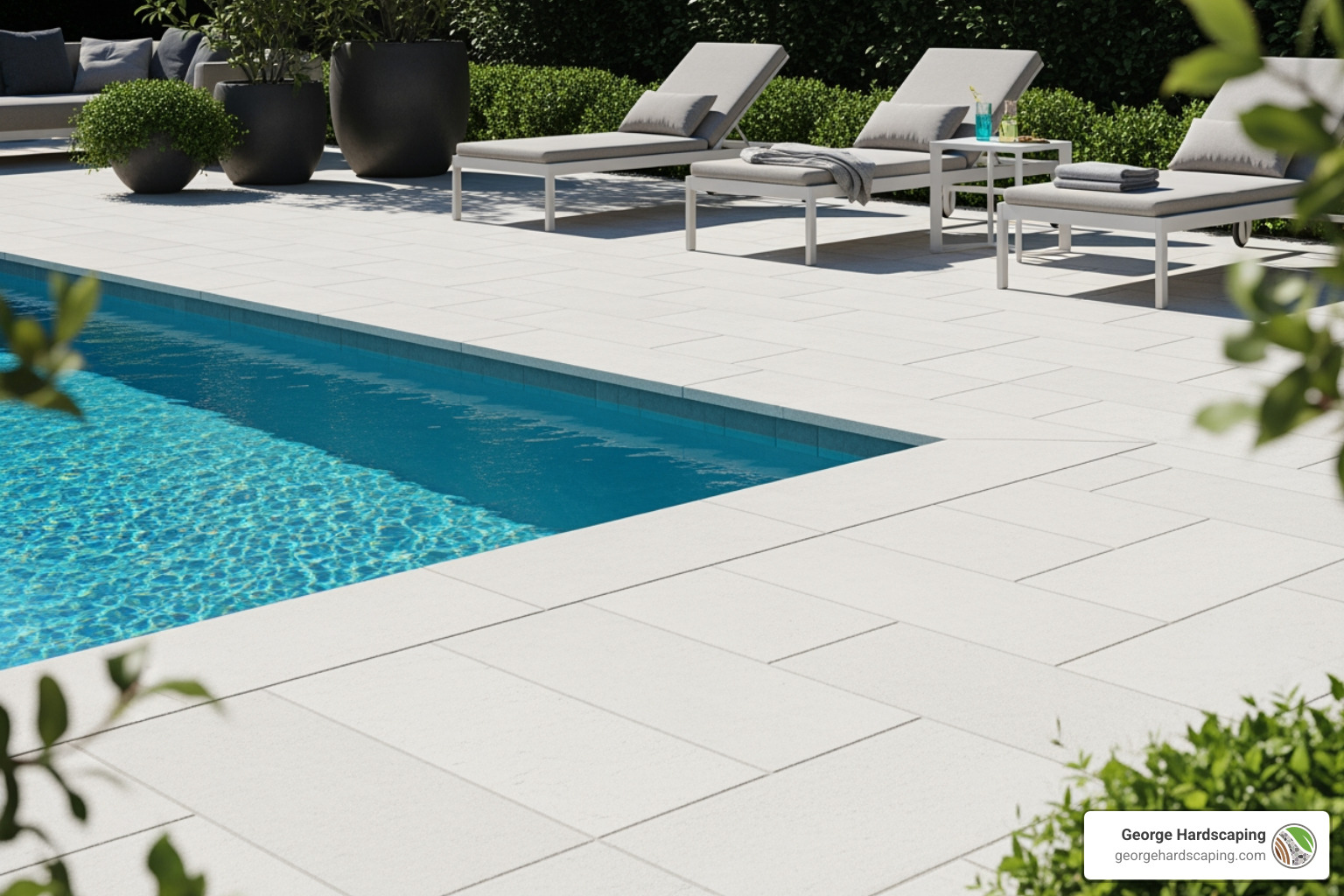
Alt text: Modern pool deck finished in large-format, light-colored porcelain pavers with lounge chairs and clear blue pool water.
Metadata: Image of a luxury pool deck using porcelain pavers; showcases slip resistance, cool-touch light tones, and seamless modern design by a North Shore hardscaper.
Porcelain pavers for pool deck installations are the gold standard for a poolside paradise that combines stunning looks with best durability. When choosing a material, you need something that can withstand constant moisture, harsh UV rays, Essex County’s freeze-thaw cycles, and heavy foot traffic. While traditional materials like natural stone require more ongoing maintenance, porcelain pavers are engineered to perform.
A pool deck is not just a border around your water feature; it’s a high-traffic, high-exposure surface that must stay safe, comfortable, and beautiful in all conditions. That means grip when wet, color that won’t fade, resistance to chlorine and salt, and a surface that won’t harbor mold or mildew. Porcelain pavers deliver on all of these fronts. They are manufactured at extreme temperatures, creating a dense, hard, non-porous surface that resists water, stains, and chemicals from penetrating. The result is a pool deck that stays cleaner and looks newer, longer.
Just as important, porcelain gives you design flexibility. Modern manufacturing allows these pavers to mimic natural materials—think wood, travertine, or poured concrete—with remarkable detail and consistency, without natural stone’s porosity or wood’s maintenance. If you want a refined, cohesive look for your outdoor living space, porcelain provides the aesthetic you want with the durability you need.
In this guide, we share the essentials for Essex County homeowners: how porcelain compares to natural stone and other common deck materials, what to know about installation, design options, costs, and practical considerations. You’ll see why porcelain pavers are the smart choice for Essex County homeowners who value beauty and longevity.
Ready to see what’s possible? Explore our professional pool deck solutions to get inspired, then take the next step and request your free estimate to start planning your project.
Why Choose Porcelain Pavers for Your Pool Deck?
When it comes to creating the ultimate outdoor oasis around your pool, selecting the right material for your deck is paramount. Here at George Hardscaping, we’ve seen how porcelain pavers for pool deck installations can lift a backyard from ordinary to extraordinary. They bring a powerhouse of benefits that make them ideal for a pool surround: superior durability, minimal maintenance, top-tier safety, and incredible aesthetic versatility.
Best Durability and Weather Resistance
A pool deck in Essex County must withstand relentless sun, salt spray along the coast, and harsh freeze-thaw cycles without cracking or fading. Porcelain pavers are engineered for this challenge. Fired at extreme temperatures, porcelain is a dense, vitrified product far stronger and less porous than typical ceramics. Outdoor porcelain pavers are typically manufactured in a 2CM thickness for structural performance, with many products achieving a PEI 5 rating for high-traffic areas.
What does that mean for your pool deck? Exceptional resistance to scratches, stains, and fading. The material is fully UV-resistant, so the look you select is the look you keep—even after summers in places like Marblehead, Gloucester, or Beverly. The vitrified body makes porcelain frost-proof, which is critical for longevity through North Shore winters. Many outdoor porcelain lines also feature high breakage loads—often up to 2,200 pounds—providing robust strength under furniture, foot traffic, and active family use.
To explore all the options that will best suit your pool area—from sizes and textures to edge profiles—dig into our guide on the best pavers for your pool area.
Key Features of Porcelain Pavers for Pool Deck Safety
Safety is non-negotiable around a pool. Porcelain pavers for pool deck installations excel here. Outdoor-rated porcelain features textured, slip-resistant surfaces engineered for wet conditions, with many products carrying R11 or R12 anti-slip ratings. That means dependable traction for bare feet and pool sandals alike in Boxford, Wenham, or anywhere your deck might be soaked.
Porcelain’s non-porous composition—typically under 0.5% water absorption—keeps water and contaminants at the surface instead of soaking in. That translates into fewer slippery biofilms, less mildew growth, and easier cleaning. It also means pool chemicals, saltwater, sunscreen, and oils won’t penetrate or discolor the surface, helping minimize long-term maintenance.
Heat management matters too. While all surfaces warm in the sun, lighter-colored porcelain reflects more heat and stays more comfortable underfoot than darker materials. If your pool deck gets full sun in Salem, Danvers, or Newburyport, choosing a lighter shade can significantly improve day-to-day comfort.
For more on how slip resistance is tested and rated, you can review the recognized tile standards and publications from the TCNA.
The Low-Maintenance Advantage
One of the biggest reasons homeowners choose porcelain pavers for pool deck projects is their nearly zero-maintenance nature. Unlike natural stone, porcelain does not need sealing—ever. The non-porous surface sheds water and dirt at the surface, so a quick rinse and occasional mild soap is usually all that’s required. That means fewer products to buy and fewer seasonal chores.
Because porcelain doesn’t absorb moisture, it is intrinsically resistant to mold, mildew, and moss, even through humid stretches of a North Shore summer. And because it’s colorfast and stain-resistant, you avoid the cycle of sealing, stripping, and re-sealing that often accompanies natural stone care. For busy households in Ipswich, Lynnfield, or North Reading, that means more time enjoying the pool and less time maintaining it.
Want to see the kind of craftsmanship and detailing we bring to every project? Browse real-world installations in our examples of our paver work.
Head-to-Head: Porcelain Pavers vs. Natural Stone for Pool Decks
Choosing between porcelain pavers and natural stone involves balancing aesthetics, performance, and long-term value. While natural stone like travertine has timeless appeal, its inherent properties can be challenging around a pool in our climate. Porcelain pavers are engineered to overcome these limitations, offering a modern solution focused on durability, safety, and easy care.
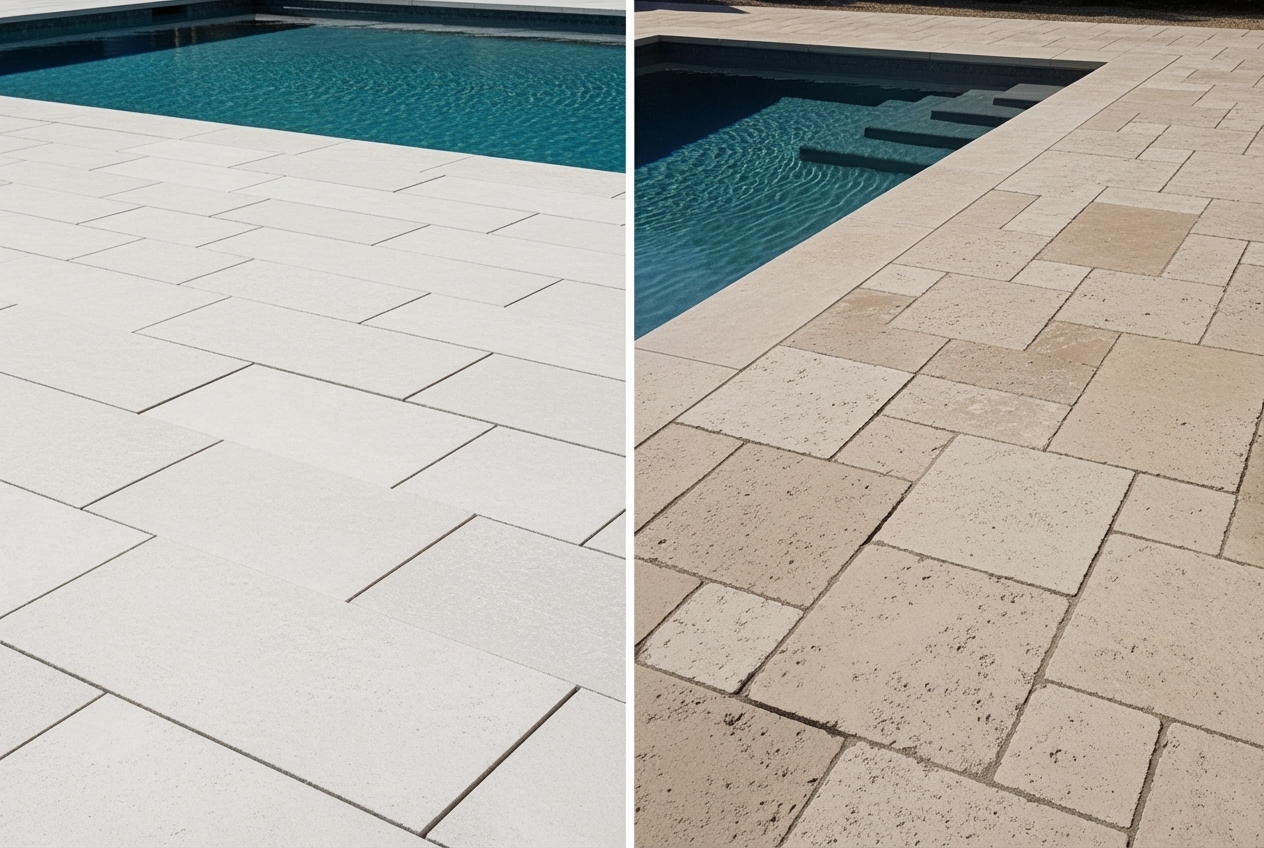
Alt text: Side-by-side comparison showing a sleek porcelain paver pool deck versus a natural stone pool deck for visual material contrast.
Metadata: Split-screen image illustrating aesthetic and performance contrasts between porcelain pavers and natural stone around pools in New England climates.
Porcelain vs. Natural Stone (Travertine, Flagstone)
Here’s how the two materials stack up on the factors that matter most for pool decks:
- Porosity and water absorption: Natural stone is inherently porous, taking on water, dissolved salts, and pool chemicals unless it’s sealed regularly. Porcelain pavers for pool deck applications are vitrified and non-porous, so liquids stay at the surface and wipe away, helping prevent discoloration, efflorescence, and staining from sunscreen and oils. This also reduces opportunities for mold and mildew to take hold within the material.
- Sealing requirements: To maintain stain resistance and reduce water absorption, most natural stones require periodic sealing—often annually in high-exposure zones. Porcelain requires no sealing. Over a 10–15 year period, the avoided maintenance can represent significant savings of time and money.
- Color and pattern: Natural stone’s variation can be beautiful, but batch-to-batch inconsistency can make future expansions or repairs more challenging. Porcelain pavers deliver consistent color and pattern, so the look you select is far easier to replicate later.
- Heat absorption and comfort: Light-toned surfaces feel cooler in the sun, regardless of material. Lighter porcelain colors tend to reflect more heat and can feel cooler than many comparable natural stones in similar shades, especially on bare feet.
- Strength and durability: Both materials are strong, but porcelain’s engineered density, low absorption, and surface hardness deliver reliable strength in freeze-thaw conditions and excellent resistance to pitting, spalling, and abrasion.
Cost Analysis and Long-Term Value
Upfront, certain natural stones may be competitively priced with porcelain, while premium stone options can far exceed porcelain pricing. However, porcelain’s long-term value often proves superior due to the absence of sealing, its stain resistance, and the reduced risk of weather-related damage. In other words, while you may pay similar or slightly more up front for porcelain, you’re buying a deck that retains its looks and performance with far less maintenance.
Average costs for outdoor porcelain pavers can range from $10.75 to $51.42 per square foot. Please note that these are average costs based on internet data and not actual costs for George Hardscaping, which can vary based on project complexity, paver type, and installation method. Total project budgets also depend on sub-base work, drainage solutions, coping selection, and site access.
TABLE: Porcelain Pavers vs. Natural Stone for Pool Decks
| Attribute | Porcelain Pavers | Natural Stone (Travertine, Flagstone) |
|---|---|---|
| Durability | Extremely high (up to 2,200 lbs breakage load) | High, but can be more prone to chipping/pitting |
| Slip Resistance | Excellent (R11/R12 ratings common), textured surface | Varies; some types can be slippery when wet, others naturally grippy |
| Maintenance | Very low; no sealing needed, easy to clean | Moderate to high; requires regular sealing and specialized cleaning |
| Porosity | Non-porous (<0.5% water absorption) | Porous (3-5% or higher water absorption) |
| Stain Resistance | Excellent; impervious to most stains | Moderate; prone to staining if not regularly sealed |
| Fade Resistance | Excellent; UV resistant, colorfast | Varies; some types can fade or change color over time |
| Average Cost | $10.75 – $51.42 per sq. ft. (pavers only) | Varies widely ($5 – $30+ per sq. ft. for materials) |
In short: if you want classic looks with minimal upkeep and reliable performance in coastal New England’s demanding conditions, porcelain offers a compelling balance of beauty, safety, and lifetime value. Natural stone remains a worthy material in many applications, but in a splash zone exposed to salts, chlorinated water, and freeze-thaw cycles, porcelain’s engineered advantages are hard to beat.
Porcelain Pavers vs. Other Common Pool Deck Materials (Brief Overview)
While natural stone is a popular comparison, it helps to consider other common pool deck surfaces so you can see the full picture of why porcelain pavers for pool deck applications are often the superior choice for Essex County homeowners.
- Concrete Pavers: Often budget-friendly and available in many shapes and colors. However, they are more porous than porcelain, can fade under UV exposure, and typically need sealing to resist stains. Freeze-thaw cycles can also accelerate surface wear, and color consistency can vary across production runs.
- Poured Concrete: A continuous slab can be cost-effective and sturdy, but slabs are prone to cracking over time—especially in regions with significant freeze-thaw. Even with control joints, thermal movement, soil conditions, and heavy loads can cause cracks that are difficult to repair discreetly. Poured concrete also tends to heat up and can stain.
- Wood Decking (including composite): Wood’s warmth is appealing, but exposure to water demands frequent maintenance: cleaning, sanding, resealing, or staining. In a pool environment, splinters, algae growth, and UV fade are ongoing concerns. Composites reduce some maintenance, but many products still get hot and may lack the wet-grip texture and structural integrity prized in a pool surround.
In comparison, porcelain pavers for pool deck installations deliver the best overall performance package: non-porous construction for stain resistance, top-tier slip resistance in wet conditions, excellent UV stability, and minimal maintenance. They also offer refined aesthetics that can echo stone, wood, or concrete with greater consistency and durability.
We specialize in porcelain and high-end paver solutions, but if you’re weighing alternatives for context, you can learn more about different options like concrete pool pavers.
Installation Insights: Setting Your Porcelain Pavers
Proper installation is crucial for the longevity and performance of porcelain pavers for pool deck applications. Porcelain’s density and hardness make it exceptionally durable once installed, but that same density means cuts, tolerances, and bedding must be handled with precision. For the best outcome, we recommend professional installation.
A well-built pool deck starts below the surface. Whether you’re setting over a new concrete slab or upgrading an existing patio, success depends on a stable sub-base, correct slope for drainage, and details that anticipate New England’s freeze-thaw. We routinely evaluate soil conditions, address perimeter containment, and plan water management so that your deck stays stable and safe for the long term.
Common Installation Methods
Porcelain pavers offer several installation options depending on site conditions.
- Mortar-set on a Concrete Base: The most robust method for high-traffic pool decks in towns like Rockport or Rowley. After verifying slab integrity and pitch (typically 1/8″–1/4″ per foot for drainage, away from structures), pavers are adhered with appropriate polymer-modified thinset mortars designed for exterior porcelain. Expansion joints are planned per standards, and movement joints are honored through the finish surface. This method yields excellent stability and clean lines around coping and drains.
- Dry-laid on a Sand or Gravel Bed: Over a compacted base, this approach can work for patios and walkways where heavy splashing and standing water are minimal. Around pools, we often still recommend mortar-set for superior stability, but dry-lay can be appropriate in specific scenarios with proper edge restraint, bedding, and drainage.
- Pedestal Systems for Raised Decks: Adjustable pedestals create a level walking surface above waterproof membranes or utility runs—ideal for rooftop or raised decks. They also provide continuous airflow and quick access to infrastructure beneath the pavers.
- Installing Over Existing Concrete: A great option for renovations in Peabody or Swampscott. If the slab is structurally sound and appropriately pitched, we can often install porcelain pavers directly over the surface, saving demolition time and cost. Surface prep, crack isolation membranes (if needed), and appropriate adhesives ensure long-term performance.
Key details we plan for include perimeter restraint, consistent 3–5 mm joints for drainage and thermal movement, exterior-rated grouts or jointing materials, and transitions to doors, drains, and pool coping. Due to the material’s hardness, a wet saw with a high-quality diamond blade is essential for smooth, chip-free cuts.
For a flawless, enduring result, we recommend a professional pool deck installation. If you’re budgeting a remodel or new build, you can also review the typical cost to install pavers around your pool to plan your project with confidence. Prefer to speak with us now? You can go ahead and request your free estimate and we’ll help you design and scope the perfect solution.
Aesthetic Versatility: Design Options for Porcelain Pavers for a Pool Deck
A major benefit of porcelain pavers for pool deck designs is their incredible aesthetic versatility. Modern manufacturing offers a vast range of colors, textures, sizes, and surface finishes to complement any style—from coastal New England to contemporary urban.
Alt text: Collage showing wood-look, stone-look, and concrete-look porcelain pavers for pool decks in various tones and finishes.
Metadata: Image demonstrating porcelain paver styles and textures for pool surrounds, including wood-look, stone-look, and concrete-look options.
- Wood-Look Porcelain: Achieve the warmth and linear elegance of plank decking without splinters, rot, or strict maintenance. Wood-tone porcelain pairs beautifully with coastal homes in Manchester-by-the-Sea or Gloucester and stays stable beside chlorinated or saltwater pools.
- Stone-Look Porcelain: Get the timeless appeal of travertine or bluestone with greater stain resistance and color consistency. Whether you want a honed, tumbled, or lightly textured look, porcelain can replicate the aesthetic with improved performance.
- Concrete-Look Porcelain: For modern, minimalist spaces, concrete-look porcelain provides clean lines and sophisticated grays and charcoals without the cracking or staining that can affect poured concrete slabs.
Beyond looks, porcelain is available in multiple formats—square and rectangular modules, large-format slabs, and coordinating pool copings and stair treads—so you can carry a consistent palette across the whole outdoor living area. Large-format pavers reduce the number of joints and create an expansive, luxe feel. Meanwhile, choosing lighter tones can improve both comfort and a sense of space, especially around smaller pools or shaded yards.
Want a cohesive plan that integrates your pool deck with patios, steps, and garden paths? Explore our end-to-end patio design services to bring your entire outdoor vision together.
Considerations and Potential Drawbacks
While porcelain pavers for pool deck applications are an excellent choice, it’s wise to consider all aspects. The benefits usually outweigh the tradeoffs for Essex County homeowners, but here are a few points to keep in mind—along with how we address them in design and installation.
- Higher Initial Investment: Porcelain pavers can cost more upfront than basic poured concrete or some entry-level concrete pavers due to advanced manufacturing and superior surface performance. Over the life of your deck, reduced maintenance (no sealing), improved stain resistance, and fewer repairs often mean a lower total cost of ownership.
- Professional Installation Recommended: Porcelain’s hardness and thin tolerances call for specialized tools and experienced installers. Clean, chip-free cuts, proper mortar and grout selection (for mortar-set work), correct pitch, and expansion planning all contribute to a deck that remains beautiful and stable for decades.
- Hardness and Customization: The same hardness that resists scratches requires diamond blades and careful methods for intricate inlays or curves. We routinely manage custom details—mitered corners, precise coping transitions, integrated lighting—but they are best handled by pros.
- Heat Absorption in Darker Colors: Dark tones absorb more heat in direct sun. If your deck in Ipswich or Marblehead bakes in the afternoon, we’ll recommend lighter hues or strategic shading to improve barefoot comfort.
- Environmental Considerations: Porcelain production is energy-intensive. However, its long service life and minimal maintenance can mean fewer resealing products and less material replacement over time. When possible, selecting domestically produced products can reduce transportation impacts and support facilities adhering to stricter environmental standards.
If you’re weighing tradeoffs for your specific site—coastal exposure, shade conditions, or existing slabs—we’re happy to provide a custom recommendation based on your goals and budget.
Frequently Asked Questions about Porcelain Pool Decks
Are porcelain pavers slippery when wet?
This is one of the most common questions we hear, and for good reason! Safety around a pool is paramount. Porcelain pavers for pool deck applications are specifically engineered for outdoor use with a textured, anti-slip finish. Many options boast an R11 or even R12 anti-slip rating, which means they provide excellent traction even when wet. This makes them one of the safest options for a pool surround in places like Wenham or Boxford, significantly reducing the risk of slips and falls.
Do porcelain pavers get hot in the sun?
Like almost any paving material, porcelain pavers will absorb some heat when exposed to direct sunlight. However, the color of the paver plays a significant role. Lighter-colored porcelain pavers reflect more sunlight and stay significantly cooler to the touch than darker pavers, natural stone, or concrete. This makes them a very comfortable choice for sun-drenched pool decks, especially during our hot Massachusetts summers. We can help you select colors that will keep your pool deck as cool and comfortable as possible.
How long do porcelain pavers last?
Porcelain pavers for pool deck installations are an investment built to last. Due to their incredible density, vitrified composition, and resistance to staining, fading, and weathering, they have an exceptionally long lifespan. With proper installation by experienced professionals like us, they can last for decades with minimal signs of wear. They routinely outperform most other decking materials in terms of durability and longevity, maintaining their beauty and structural integrity for years to come without the need for frequent repairs or replacement.
What are the latest design trends for porcelain paver pool decks?
Current trends focus on creating seamless, luxurious, and highly functional outdoor living spaces. Large-format pavers (e.g., 24×24, 24×48, or even larger) are extremely popular because they minimize grout lines and create a clean, expansive look. Another major trend is the indoor-outdoor transition, where the same or a similar porcelain tile is used inside the home and continues directly onto the pool deck, blurring the line between interior and exterior spaces.
In terms of aesthetics, hyper-realistic wood-look and stone-look porcelains remain top choices, offering natural beauty without the maintenance. We’re also seeing a rise in sophisticated concrete-look pavers for modern and minimalist designs. Finally, integrating features like LED lighting directly into the paver layout or using contrasting paver colors to create custom borders and patterns are popular ways to add a unique, high-end touch to the project.
Can porcelain pavers be installed over my existing concrete patio?
Often, yes—provided the slab is structurally sound, properly pitched for drainage, and free of major movement or heaving. We can evaluate your existing surface and, when appropriate, install porcelain pavers directly over it using exterior-rated mortars, membranes (if needed), and movement joints. This approach can significantly reduce demolition costs and project timelines.
What thickness should I choose for outdoor porcelain pavers?
Most outdoor-rated porcelain pavers are 2CM thick, engineered for strength and stability. This thickness performs well for pool decks, patios, and walkways. In specialized applications—such as vehicular rated areas or rooftop decks—different assemblies (like pedestal systems or specific base constructions) may be recommended to meet load and drainage requirements.
How do you handle joints and grout for pool decks?
Joint spacing of 3–5 mm is typical for porcelain pavers to facilitate drainage and manage thermal movement. Depending on the installation method, we may specify polymer-modified grouts, exterior-rated jointing materials, or flexible sealants at movement joints. The goal is to balance watertightness, cleanability, and the flexibility needed for outdoor conditions.
Will chlorine or saltwater damage porcelain pavers?
No. Porcelain’s non-porous body and durable surface glaze are highly resistant to pool chemicals, including chlorine, and to saltwater from coastal air or saltwater pools. That’s a key reason porcelain is so well suited to pool environments across the North Shore.
How do I clean and maintain a porcelain pool deck?
Routine maintenance is simple: rinse with a garden hose and, as needed, use mild soap and a soft brush. Because porcelain doesn’t absorb liquids, most spills (sunscreen, beverages, plant tannins) remove easily. Avoid harsh abrasives that could damage any surface texture, and follow the paver manufacturer’s care guidance for best results.
Can you match the pool coping to the deck pavers?
Yes. Many porcelain lines offer matching copings, step treads, and trim pieces so the pool edge visually ties into the deck. This creates a more seamless, high-end look and simplifies future replacements if needed.
Is porcelain suitable for coastal homes?
Absolutely. Porcelain’s resistance to salt, low water absorption, and UV stability make it ideal for coastal towns like Gloucester, Rockport, or Manchester-by-the-Sea. Its performance advantages are particularly valuable in windy, salty, and sunny environments.
Transform Your Poolside with the Perfect Pavers
Choosing the right material for your pool deck affects safety, comfort, budget, and the long-term enjoyment of your outdoor living space. As we’ve explored, porcelain pavers for pool deck installations offer an outstanding combination of benefits that makes them a top choice across Essex County—from Beverly and Danvers to Newburyport and North Reading.
- Durability and weather resistance: Vitrified, dense, and frost-proof to handle New England winters.
- Safety-first performance: Outdoor-rated textures with R11/R12 slip resistance and low water absorption for confident footing.
- True low maintenance: No sealing required, easy to clean, and resistant to stains and fading.
- Design flexibility: From wood-look planks to stone- and concrete-look options, plus matching coping and treads for a cohesive finish.
- Long-term value: Reduced upkeep, fewer repairs, and surfaces that continue to look great season after season.
At George Hardscaping, we bring meticulous planning, proven installation methods, and refined design sensibilities to every pool deck. Whether you’re renovating an existing patio in Peabody, building a new pool in Topsfield, or creating a coastal retreat in Marblehead, our team can help you select materials and details that stand up to local conditions and reflect your style.
Ready to take the next step? Explore our custom professional pool deck installation services to see how we plan and build long-lasting, beautiful decks. Then request your free estimate and let’s bring your poolside vision to life before the next swim season.
Outbound Resources
- To ensure the highest safety standards for your outdoor living areas, review the recognized tile standards and publications from the TCNA.
- For technical background on porcelain, consult the TCNA’s porcelain paver technical information to learn how low absorption and vitrification influence performance.
- For general information on maintaining a healthy and safe swimming environment, refer to the pool safety guidelines from the CDC.
