
Patio and Walkway Contractors: 10 Crucial Tips
Why Finding Quality Patio and Walkway Contractors Matters

Alt text: Experienced patio and walkway contractors installing a paver patio with proper base preparation | Title: Professional patio and walkway installation with quality base and drainage | Source: George Hardscaping | Context: Patio and walkway hardscape construction in Essex County, MA.
Finding the right patio and walkway contractors is the single most important step in transforming your outdoor space into a beautiful, durable, and functional extension of your home. A true professional does far more than place stones: they bring design expertise, material knowledge, and construction best practices that determine how your project looks on day one—and how it performs 5, 10, and 20 years from now.
What separates a top-tier contractor from the rest? Look for a licensed and insured firm with a deep portfolio, strong local references, and proven experience with pavers, natural stone, and concrete. The best teams manage everything—from site assessment, grading, and drainage planning to base preparation, precision installation, and final detailing—and they back their work with a clear warranty. They should also guide you on options that align with your budget and maintenance comfort level, while adhering to relevant industry standards from organizations like the American Concrete Institute (ACI) and ASTM International. For a sense of what that level of quality looks like, explore our gallery and see how our Hardscaping Services bring designs to life.
Homeowners are investing in hardscapes because they boost curb appeal, create purposeful outdoor living areas, and can provide meaningful long-term value. A well-planned patio becomes the family’s favorite room three seasons a year. A properly aligned walkway improves safety, accessibility, and property flow. But longevity depends on craftsmanship. The difference between a surface that lasts decades and one that heaves or settles within a few winters is almost always the quality of the base, compaction, and drainage strategy beneath the surface.
This comprehensive guide walks you through choosing materials, shaping a design that fits your lifestyle, understanding professional installation, and vetting patio and walkway contractors. Along the way, we’ll link to authoritative resources and our core service pages so you can move forward confidently.
Ready to take the first step? Don’t wait for another season to pass. Request your on-site consultation and design plan now: Request a Free Estimate.
If you’re just beginning your research, keep reading—you’ll learn exactly how to make smart decisions that protect your budget and maximize your results.
The Foundation of a Great Outdoor Space: Benefits and Materials
Investing in a new patio or walkway is both a lifestyle upgrade and a strategic improvement to your home. The right layout and materials extend your living space, make your property safer and more accessible, and create an inviting flow from the indoors to the outdoors. Well-designed hardscapes also contribute to perceived home value and marketability. The American Society of Landscape Architects notes that professionally designed landscape and hardscape projects consistently rank among the most desired outdoor features for homeowners seeking functionality and aesthetic appeal. Learn more about broader landscape benefits at the American Society of Landscape Architects (ASLA).
Opening Up Your Property’s Potential
A thoughtfully planned patio or walkway does the following:
- Creates functional outdoor rooms for dining, entertaining, and relaxing.
- Improves curb appeal and unifies architecture with the landscape.
- Enhances safety by replacing uneven ground with stable, non-slip surfaces.
- Directs foot traffic to protect the lawn and garden beds.
- Improves accessibility for children, guests, and older adults.
- Helps manage water using intentional grading and permeable surface options.
Our Custom Patios Design and Patio Design and Installation services integrate these benefits into a cohesive plan tailored to your yard, your home’s architecture, and your budget.
As a general frame of reference, many homeowners experience meaningful returns on outdoor upgrades through improved utility and resale appeal, especially when durable, low-maintenance materials are selected. Ultimately, the best ROI comes from projects that are designed and built right the first time.
A Guide to Patio and Walkway Materials
Choosing the right material for your patio or walkway means balancing aesthetics, durability, maintenance, and cost. Experienced patio and walkway contractors help you compare options based on soil conditions, freeze-thaw cycles, sunlight, drainage needs, and long-term care preferences.
- Interlocking Concrete Pavers: Popular for their durability, design flexibility, and repairability. Because pavers are individual units, the surface can accommodate natural movement from freeze-thaw cycles better than monolithic concrete slabs. If a paver is damaged, it can be individually replaced. Color, texture, and pattern options are extensive, from classic herringbone to contemporary large-format styles. Leading manufacturers offer a wide array of products to suit any aesthetic.
- Natural Stone: Flagstone, bluestone, granite, and slate provide a high-end, timeless look. Every piece is unique, giving patios and walkways organic character. Natural stone can be dry-laid or mortared depending on application and desired look. Upfront cost is typically higher (often $15–45 per sq. ft. installed), but the longevity and aesthetics can make it an excellent long-term investment. These are average costs based on internet data and not actual costs for George Hardscaping.
- Poured and Stamped Concrete: A poured slab is a versatile, budget-friendly option. Stamped concrete can replicate stone, brick, or wood textures at a lower price point (often $12–25 per sq. ft. installed). Proper subgrade preparation, reinforcement, and control joints are essential to manage cracking. These are average costs based on internet data and not actual costs for George Hardscaping.
- Brick: Timeless and classic, brick works beautifully with traditional homes and can be set in sand or mortar. Brick patios and walkways typically range from $10–30 per square foot installed. These are average costs based on internet data and not actual costs for George Hardscaping.
- Permeable Systems: If stormwater management is a concern, permeable pavers are engineered to allow rain to pass through joints into a specially designed aggregate base, reducing runoff and aiding groundwater recharge. The U.S. Environmental Protection Agency provides a helpful overview of permeable pavements at the EPA’s Green Infrastructure page.
Selecting the right surface is only part of the equation. Equally important is how that surface is built. That starts with the right excavation depth, base materials, compaction, edge restraints (in paver systems), and water management plan. We bring these details to every build through our Hardscape Construction Service.
Matching Materials to Your Lifestyle
Consider how you plan to use the space day-to-day:
- Hosting and Dining: Smooth, even surfaces are a must for chairs and tables. Large-format pavers or a smooth concrete finish reduce tripping hazards and simplify furniture placement.
- Low Maintenance: Concrete pavers or dense natural stones are easier to maintain than soft stones or loose gravel. Sealing can further reduce upkeep.
- Heritage Aesthetics: Brick or tumbled pavers complement older homes and historic neighborhoods.
- Water-Sensitive Sites: Permeable pavers and intelligent grading help manage runoff and reduce pooling.
We can help you compare samples and see options in your yard. To start a design that fits your style, see our Patio Design and Installation and Gallery.
Designing Your Dream Patio and Walkway
The design phase translates your vision into a buildable plan that balances form and function. Great design aligns with how you’ll live in the space, your maintenance preferences, and the architecture of your home and neighborhood.
Key Design Considerations for a Flawless Finish
- Layout and Flow: Walkways should follow natural desire lines—how you actually move through the property—connecting doors, driveways, gates, and outdoor living zones. Patios should feel intuitive, with clear paths to the grill, seating, and yard.
- Scale and Proportion: The size of your patio should fit both the house and yard. A common rule of thumb is that outdoor dining areas need at least 10–12 feet in one dimension to comfortably accommodate a table and chairs with circulation space.
- Integration with Landscaping: Hardscapes look their best when paired with thoughtful planting for shade, screening, and seasonality. Consider where you’ll want lighting, irrigation sleeves, and future features, too.
- Focal Points: Use sightlines and features like a fire pit, water bowl, or specimen tree to draw the eye. A simple border detail can elegantly frame the space—see our Patio Border Ideas.
- Accessibility and Safety: Walkways are most comfortable at 3–4 feet wide for two-way passing. Surfaces should be slip-resistant, and transitions between materials should be flush. For stepped terrain, professional Stone Steps Installation enhances safety and beauty.
- Lighting and Nighttime Use: Integrated lighting improves safety and extends usability. Plan wiring and transformer locations during design, even if you phase the fixtures.
For a deeper dive into inclusive design principles, see guidance from the U.S. Access Board regarding the ADA Standards. While residential projects are not bound by all public accessibility rules, the best practices—ample width, smooth transitions, appropriate slopes—improve comfort for everyone.
Our Patio Design and Installation process includes layout options, material boards, and, when helpful, 3D visualizations to confirm scale and details before we break ground.
Popular Design Trends to Inspire Your Project
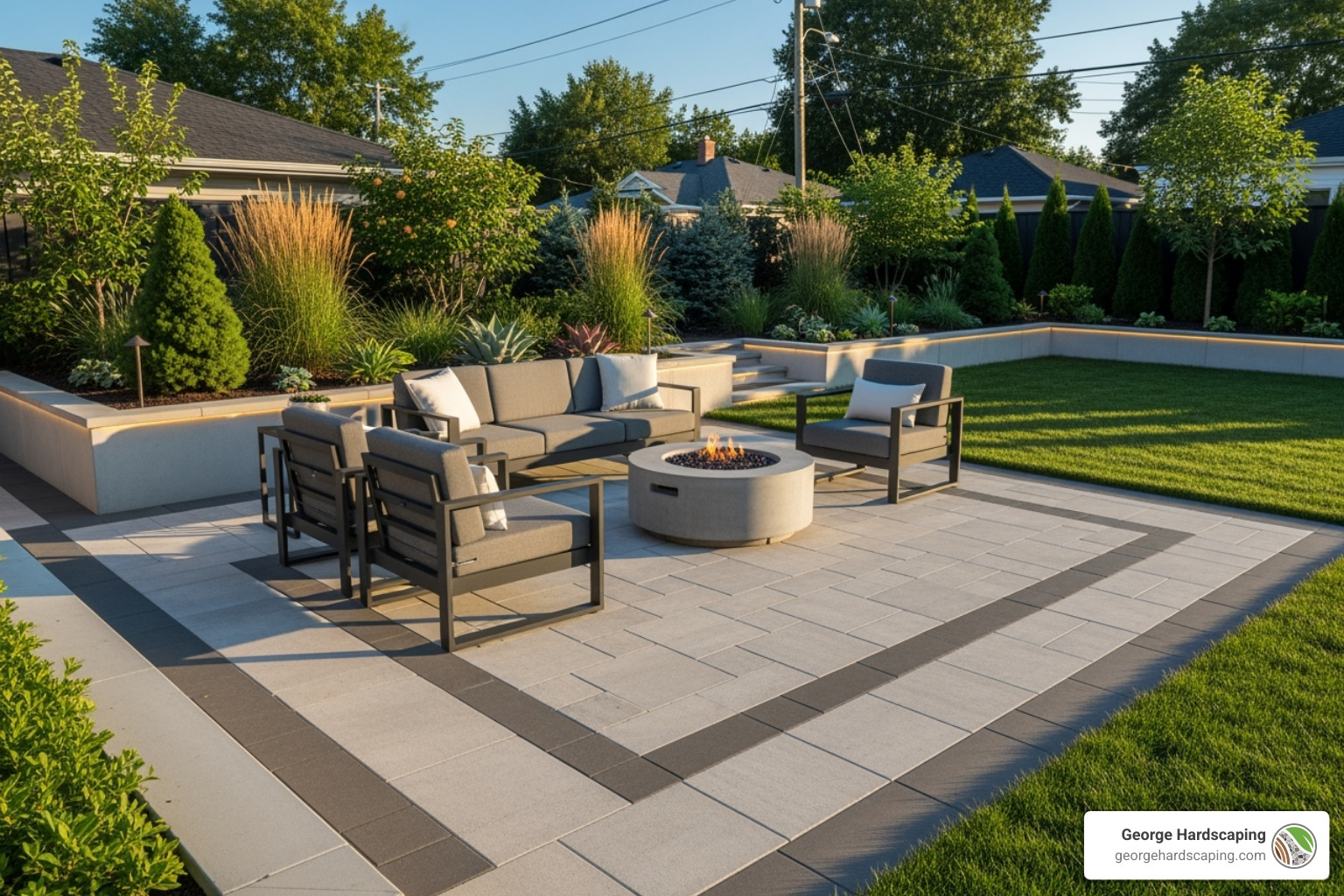
Alt text: Modern backyard featuring a large-format paver patio with a circular fire pit and integrated seating, illustrating current patio and walkway design trends | Title: Modern large-format paver patio with fire feature and integrated seating | Source: George Hardscaping | Context: Contemporary patio design inspiration for Essex County, MA homes.
- Geometric Patterns: Clean lines, rectilinear layouts, and simple geometries convey a contemporary feel that ages gracefully.
- Large-Format Pavers: Bigger units create a sleek look with fewer joints, helping small spaces feel expansive. They pair well with minimalist planting.
- Permeable Surfaces: Eco-conscious homeowners are choosing permeable paver systems to mitigate runoff, complemented by rain gardens and swales for water quality.
- Integrated Features: Seating walls, planters, and outdoor kitchens convert a patio into an outdoor room. See ideas in our Custom Outdoor Firepits and Walkways and Stairs pages.
- Transitional Borders: Contrasting soldier courses, inlays, or banding define spaces and add visual interest without complicating maintenance.
The best designs balance enduring principles with personal touches—colors that complement your home, textures that feel good underfoot, and features that bring people together. Our Hardscaping Services are built around that philosophy.
The Critical Role of Professional Patio and Walkway Contractors
DIY videos can make hardscape installation look simple. In reality, enduring patio and walkway projects require the right equipment, deep technical knowledge, and careful sequencing. Hiring experienced patio and walkway contractors is an investment in craftsmanship, durability, and peace of mind.
Professionals bring the know-how to solve challenges like variable soils, high water tables, freeze-thaw cycles, and tight property lines. Our crews are trained to follow industry standards and safety protocols, protect your property during work, and deliver a clean, detailed finish. When you choose our Hardscaping Services, you’re investing in responsible construction and long-term performance.
The Technical Difference: Why Professional Installation Matters
- Poured Concrete Installation: A durable slab requires accurate subgrade preparation, reinforcement (rebar or wire mesh as specified), appropriate mix selection, proper placement, finishing without overworking the surface, controlled curing, and well-placed control joints to guide inevitable shrinkage cracks. Adhering to best practices, such as those provided by the American Concrete Institute (ACI), greatly reduces the risk of scaling or premature cracking.
- Interlocking Paver Installation: Success with pavers depends on what’s beneath them. Typical steps include excavation to the proper depth (commonly 8–12 inches or more, depending on soil conditions and intended loads), installing a multi-layer base of well-graded, compacted aggregate, screeding a uniform sand setting bed, placing pavers per the chosen pattern, securing the perimeter with edge restraints, and locking the system with polymeric joint sand. Standards like ASTM C936 for concrete pavers and ASTM D448 for aggregate gradation inform material selection and performance.
- Natural Stone and Brick: For stone or brick set in sand, base prep is similar to pavers; for mortared applications, substrate, mortar selection, and expansion joints are crucial to handle movement and moisture.
Why Proper Base Preparation is Non-Negotiable
The base is the unsung hero of every long-lasting hardscape. Insufficient excavation, poor aggregate choice, or inadequate compaction almost always leads to sinking, heaving, or differential settlement—issues that are expensive to fix later. The correct approach layers well-graded aggregate, compacted in lifts with professional plate compactors or rollers, to achieve a dense, stable foundation that resists movement.
Equally important is water management. Patios and walkways should be set with a slight slope—typically 1–2%—away from structures. In wetter areas or where clay soils hold water, subsurface drainage (e.g., French drains or daylighted piping) may be added to protect the hardscape and adjacent foundations. Permeable paver systems pair a specialized open-graded base with underdrains for exceptional stormwater handling.
Our Hardscape Construction Service adheres to best practices from ACI and applicable ASTM standards to create hardscapes that withstand New England’s freeze-thaw cycles.
A Transparent, Professional Build Process
- Site Consultation and Design: We evaluate soils, grades, access, and utilities; discuss your goals; and align on a concept. See our Patio Design and Installation approach.
- Detailed Proposal: You receive an itemized scope, materials, timeline, and warranty terms.
- Pre-Construction: We secure any required permits, schedule material deliveries, and protect your property with tree/plant safeguards and plywood paths when needed.
- Build: Excavation, base installation and compaction, setting bed preparation, installation, edge restraints, joint stabilization, and careful cleanup.
- Final Walkthrough: We review care guidelines and warranty coverage and schedule any follow-up maintenance you request.
Having a clear process minimizes surprises and ensures your project finishes on time and on budget. For technical best practices on segmental paving systems, the Interlocking Concrete Pavement Institute (now part of CMHA) provides numerous resources; see the CMHA knowledge center at the Concrete Masonry & Hardscapes Association.
Your Vetting Checklist: How to Choose the Right Contractor
Selecting the right patio and walkway contractors protects your investment. Thorough vetting reduces risk, clarifies expectations, and ensures your team has the skills and systems to deliver a quality result. The best contractors welcome your questions and answer them transparently.
12 Crucial Questions to Ask Your Patio and Walkway Contractors
- Are you fully licensed and insured? Request proof of liability and workers’ compensation insurance. In Massachusetts, verify home improvement contractor registration at the state site: Massachusetts HIC Registration. This is non-negotiable.
- Can I see a portfolio and local references? Browse a recent, relevant portfolio like our Gallery and speak with clients in nearby towns.
- Who manages the project on-site? Day-to-day oversight ensures quality and clear communication.
- What is your process for base preparation? Ask for specific excavation depths, aggregate types, and compaction methods. Vague answers are a red flag.
- How will you ensure proper drainage? A pro explains slopes, transitions, and any subsurface drainage plan.
- What standards do you follow? Look for alignment with ACI and relevant ASTM specifications.
- What is the estimated timeline and payment schedule? Beware of requests for unusually large upfront payments.
- What does your warranty cover? Expect a written warranty defining coverage and response timelines.
- How are changes handled? There should be a documented change-order process for scope or material adjustments.
- Do you handle permits? Experienced local contractors understand town-by-town requirements across Essex County.
- How do you protect my property? Ask about access routes, covering lawn areas, dust control, and daily cleanup.
- What maintenance do you recommend? Pros provide guidance for cleaning, sealing, and seasonal care and may offer ongoing Masonry Services.
You can also check reputation with trusted third parties like the Better Business Bureau.
Understanding Costs and What to Expect
Every site is unique, but industry averages provide a starting point. Paver patios often range from $2,000 to $7,000, while concrete patios typically fall between $1,500 and $5,000. These are average costs based on internet data and not actual costs for George Hardscaping. Final price depends on:
- Materials: Natural stone usually costs more than concrete pavers; permeable systems involve additional base work.
- Size and Complexity: Curved edges, inlays, multiple elevations, or integrated features like Custom Outdoor Firepits add time and materials.
- Site Conditions: Slopes, poor soils, tree roots, or limited access can impact labor and equipment needs. Steeper yards often require Stone Steps Installation or small retaining elements.
A reputable contractor will visit your site, listen to your goals, and provide a detailed, itemized proposal. The lowest bid is rarely the best value; cutting corners on base, materials, or workmanship almost always leads to higher lifecycle costs.
Strong CTA: Ready to compare options and lock in a build date? Get a detailed, itemized proposal and timeline now: Request Your Free Estimate.
Long-Term Care: Maintaining Your Investment
Your new patio or walkway will look its best for decades with a little routine care. Think of maintenance as preventive protection against stains, weeds, joint loss, and winter damage—small steps that save time and money later.
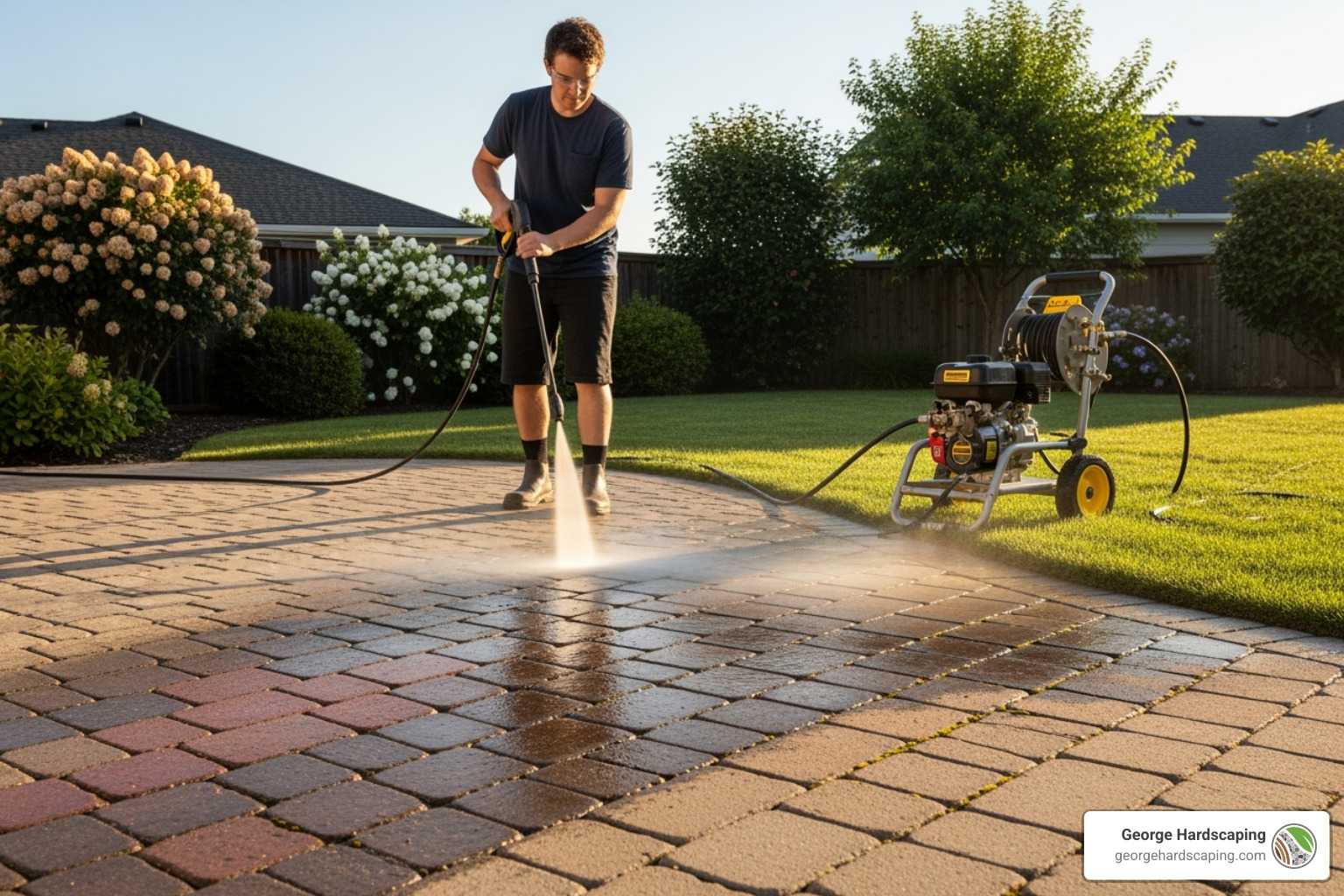
Alt text: Homeowner gently pressure washing a paver walkway to remove debris and refresh joint sand as part of seasonal maintenance | Title: Seasonal maintenance: gentle pressure washing on a paver walkway | Source: George Hardscaping | Context: Routine care to extend patio and walkway lifespan in New England.
Maintenance Tips for Patios and Walkways
- Regular Cleaning: Sweep weekly to keep organic material from staining. Rinse seasonally; use a gentle pressure setting and fan tip to avoid dislodging joint sand.
- Sealing: Quality sealers reduce staining and UV fading. For pavers and concrete, reseal every 2–5 years depending on exposure and traffic. Always follow the sealer manufacturer’s guidance for application and reapplication schedules.
- Weed and Moss Control: Address weeds early in joints or cracks. Improve sun exposure and airflow in moss-prone areas; apply appropriate treatments if needed.
- Joint Sand: For interlocking pavers, inspect joints annually and top up polymeric sand as needed. This stabilizes pavers, improves appearance, and reduces weed growth.
- Minor Repairs: Fix small chips, relevel settled pavers, or fill hairline concrete cracks before they expand. Our Masonry Services can help with repairs and resealing.
- Winter Care: In freeze-thaw climates, use a calcium chloride–based de-icer sparingly; rock salt can damage surfaces. Shovel with a plastic blade or use a snowblower with rubber skids to avoid scratching. ACI provides general cold-weather concrete guidance at the American Concrete Institute.
Seasonal Checklist
- Spring: Deep clean, inspect for winter movement, top off joint sand, and reseal if needed.
- Summer: Spot clean stains quickly and rinse patios after big gatherings to keep surfaces pristine.
- Fall: Clear leaves promptly to avoid tannin stains and prep for winter with a final inspection.
- Winter: Manage snow thoughtfully and avoid harsh de-icers.
Pro Tip: If you’re planning to add features later—a kitchen, fire pit, or lighting—tell us during design so we can sleeve conduits and plan subgrade details now. That saves time and avoids rework. Explore upgrades on our Custom Outdoor Firepits and Walkways and Stairs pages.
Frequently Asked Questions about Patio and Walkway Projects
Homeowners across Essex County tend to ask similar questions. Here are detailed answers to help you plan with confidence.
How long does a typical patio or walkway installation take?
A standard 200–400 sq. ft. patio or a straightforward front walkway is usually installed in 2–5 working days once on site, assuming normal access and weather. More complex projects—multi-level patios, intricate inlays, steps, or integrated features—extend the timeline. Your proposal will include an estimated schedule and any contingencies.
Do I need a permit for a new patio or walkway?
Requirements vary by town. On-grade patios and walkways typically don’t need a permit unless they substantially affect drainage, involve retaining walls over certain heights, or are part of a broader renovation. Our team is familiar with rules in communities from Beverly and Danvers to Ipswich and Salem and can help navigate local requirements.
What is the best material for freeze-thaw climates like New England?
Interlocking concrete pavers are a top-performing choice because the segmented system accommodates minor ground movement without cracking. With proper base prep and edge restraints, pavers handle winters exceptionally well. Well-installed concrete slabs and natural stone can also perform, but pavers provide the most straightforward path to low-maintenance durability.
How deep should the base be?
It depends on soil type, drainage, and intended use. For pedestrian patios and walkways, excavation commonly ranges from 8–12 inches to allow for compacted aggregate and a sand setting bed. High-clay soils or areas with poor drainage may require deeper excavation or additional stabilization.
What standards or best practices should my contractor follow?
Look for alignment with ACI concrete guidance and ASTM standards such as ASTM C936 for concrete pavers and ASTM D448 for aggregate gradations. Segmental paving methods and maintenance best practices are available through the Interlocking Concrete Pavement Institute (now part of CMHA): CMHA Knowledge Resources.
How do you handle drainage so water doesn’t pool or run toward the house?
We design a subtle slope—typically 1–2%—away from structures and ensure transitions align with yard grades. In challenging areas, we may recommend underdrains, small regrading, or permeable systems to manage water.
Can you incorporate steps, seating walls, or a fire feature?
Absolutely. Integrated elements elevate functionality and aesthetics. See our Stone Steps Installation, Walkways and Stairs, and Custom Outdoor Firepits for examples.
What about lighting?
Hardscape lighting enhances safety and ambiance. We can plan conduit paths during construction and coordinate fixture selection and placement so wiring is hidden and maintenance is simple.
How often should I seal my patio or walkway?
It depends on material, exposure, and use. Many paver and concrete installations benefit from sealing every 2–5 years. It is crucial to confirm compatibility with your specific materials and always follow the product manufacturer’s recommendations for the best results. Natural stone may be sealed for stain resistance and color enrichment depending on the species and finish.
Is DIY a good idea for small projects?
DIY can work for very small, low-risk areas if you have the time, tools, and willingness to learn. However, most failures trace back to base prep and drainage missteps. For lasting performance, a professional build is typically the better value.
What does your warranty cover?
We provide a clear, written warranty on workmanship and will walk you through coverage during the proposal phase. Manufacturer warranties may also apply to certain materials.
How can I get a quote and see design options?
Start by browsing our Gallery for ideas, then schedule a site visit. We’ll develop concepts and an itemized proposal so you understand scope, cost, and timeline. When you’re ready, request your appointment here: Request an Estimate.
Conclusion
Your ideal outdoor space is within reach. By choosing durable materials, prioritizing expert installation, and partnering with vetted patio and walkway contractors, you’ll create a patio or walkway that looks great on day one and performs beautifully for decades. The key is quality from the ground up: proper excavation, a well-compacted base, smart drainage, and skilled craftsmanship.
For homeowners in Essex County, MA—from Newburyport and Boxford to Peabody and Salem—George Hardscaping brings local experience, trusted processes, and a portfolio of enduring work. Explore our Hardscaping Services, then dive deeper into Patio Design and Installation, Paver Walkways Installation, and complementary upgrades like Custom Outdoor Firepits and Stone Steps Installation.
Strong CTA: Don’t wait for next season—book your consultation today and lock in your build window. Get started now: Request Your Free Estimate.
Already have a vision? Let’s refine it and bring it to life with a clear plan, timeline, and budget. Your home deserves a hardscape that’s beautiful, functional, and built to last.