
Landscape design landscape construction: Ultimate Guide 2025
From Vision to Reality: A Comprehensive Guide to Landscape Design & Construction
Landscape design landscape construction are the two fundamental pillars that transform a conceptual outdoor dream into a functional, breathtaking reality. For homeowners on the North Shore of Massachusetts, understanding the intricate dance between these two disciplines is the key to unlocking the full potential of their property. It’s about more than just planting flowers; it’s about creating enduring outdoor living areas, dramatically enhancing curb appeal, and providing permanent solutions to common regional challenges like poor drainage, coastal exposure, and difficult sloped terrain.
This guide is designed to be your definitive resource, demystifying the entire process from the first sketch to the final stone set in place. We will explore how a cohesive strategy involving both landscape design and landscape construction can not only create spaces for family gatherings but also significantly increase your property’s value and solve practical issues like soil erosion and water management.
Quick Answer: What You Need to Know
- Landscape Design: This is the strategic planning and creative phase. It involves a thorough site analysis, the creation of detailed blueprints, and the careful selection of materials and plants to define your outdoor space’s layout, function, and aesthetic. It’s the ‘what’ and ‘why’ of your project.
- Landscape Construction: This is the physical building phase where the design is brought to life. Skilled contractors install foundational hardscaping (like patios and retaining walls) and the living softscaping (plants, trees, and lawns).
- Design-Build Approach: An integrated, streamlined method where a single, cohesive team handles both the design and construction. This model vastly improves communication, ensures budget accuracy, and accelerates project timelines by eliminating the friction between separate entities.
- Typical Timeline: Project durations vary based on scope. A simple front walkway might take 2-4 weeks from start to finish, while a comprehensive backyard renovation involving extensive hardscaping and permitting can span 2-6 months, subject to weather and material availability.
- Average Investment: Costs are highly variable. Simple projects like a small walkway can start around $5,000, whereas complete outdoor makeovers with patios, walls, and plantings often range from $50,000 to $100,000 or more, depending on size, complexity, and material choices (these are internet-based averages for context, not official pricing).
In a region like New England, where freeze-thaw cycles and coastal weather systems pose significant challenges, the synergy between design and construction is not just beneficial—it’s essential. Design without a deep understanding of construction can lead to beautiful but unbuildable or unsustainable plans. Conversely, construction without a thoughtful design often results in disjointed, uninspired spaces that fail to meet their potential. For homeowners in the North Shore area, partnering with a specialized contractor like George Hardscaping ensures that the foundational elements of your landscape are not only aesthetically pleasing but are also engineered with precision to endure, turning your vision into a lasting, valuable asset.
The Foundation: Distinguishing Landscape Design from Construction
Many homeowners understandably use the terms landscape design and landscape construction interchangeably, yet they represent two distinct, sequential phases in the transformation of an outdoor space. To draw an analogy, think of building a custom home: the landscape designer is the architect who creates the detailed blueprints, and the landscape construction team is the master builder who executes that plan with precision. Both roles demand unique skill sets, and both are equally vital for a successful, high-quality outcome.
What is Landscape Design? The Art and Science of the Plan
Landscape design is the comprehensive, strategic planning phase where your vision, needs, and desires are translated into a detailed, actionable blueprint. A skilled designer functions as both an artist and a technical problem-solver. The process begins with a deep-dive site analysis, where they meticulously evaluate your property’s unique characteristics. This isn’t just a casual walkthrough; it involves:
- Site Measurement and Surveying: Accurately mapping property lines, existing structures, and topography.
- Environmental Analysis: Charting sun exposure and shade patterns throughout the day and seasons, identifying prevailing wind directions, and assessing soil type and quality.
- Drainage and Grading Assessment: Identifying how water currently moves across the property to plan for effective water management solutions.
- Client Needs Assessment: Conducting in-depth interviews to understand how you and your family want to use the space—for dining, entertaining, children’s play, quiet relaxation, or gardening.
This exhaustive analysis informs the creation of conceptual plans. Modern design processes often include 2D layouts for a bird’s-eye view and immersive 3D renderings that allow you to virtually walk through your new landscape before a single shovel breaks ground. This visualization is crucial for making confident decisions. The final design package specifies everything, from the precise dimensions and material of a paver patio to the selection and placement of plants that will thrive in a specific microclimate on your property. The ultimate goal is to create a harmonious space that balances beauty, functionality, and your personal lifestyle, ensuring structural elements like patios and walls are perfectly positioned for both utility and aesthetic appeal from the very beginning.
What is Landscape Construction? Building the Dream
Once the design is finalized and approved, the project transitions to the landscape construction phase. This is the physical, hands-on process where plans on paper become a tangible reality. A professional landscape contractor or a dedicated construction team takes the lead, managing every aspect of the build from initial site preparation to the final installation and cleanup.
Landscape construction is broadly divided into two main components:
- Hardscaping: This refers to all the permanent, non-living, structural elements that form the backbone of your landscape. It is the domain of skilled craftspeople. This includes foundational features like paver patios, structurally sound stone retaining walls, elegant walkways, custom-built stone steps, and popular gathering spots like outdoor fire pits.
- Softscaping: This encompasses all the living, horticultural elements of the landscape. It includes the trees, shrubs, perennials, grasses, and lawns that soften the hardscape, add color and texture, and bring the entire space to life.
This phase demands a profound knowledge of materials, exacting standards for base preparation (especially in a freeze-thaw climate), and the skilled labor of experienced masonry professionals. The quality of the construction determines the longevity and durability of your investment, ensuring structures are built to last for decades, not just a few seasons.
The Power of Synergy: The Design-Build Approach
The traditional project model involves hiring a landscape architect or designer first, and then separately bidding the completed plans out to several construction contractors. This fragmented approach can be fraught with challenges, often leading to miscommunication, budget overruns, and frustrating delays. The design-build approach elegantly solves these problems by integrating both services under one roof. A single, unified team is responsible for your project from the initial concept all the way through to completion. This offers several powerful advantages:
- Single Point of Accountability: There is no finger-pointing between the designer and the builder if issues arise. One team owns the project’s success from start to finish.
- Streamlined Communication: The design and construction crews collaborate from day one. This ensures the builder’s practical knowledge informs the design, and the designer’s intent is perfectly executed in the field.
- Improved Budget Accuracy and Control: With real-world construction costs guiding the design process from the outset, you receive realistic pricing and avoid the shock of a beautiful design that is thousands of dollars over budget. The team can value-engineer solutions in real-time to meet your financial goals.
- Faster Timelines: The seamless integration allows phases to overlap. For example, materials can be ordered and permits can be filed while the final design details are being polished, significantly shortening the overall project duration.
For North Shore homeowners, this integrated approach means your landscape retaining walls and patio spaces are designed with practical construction realities and local climate challenges in mind, guaranteeing a smoother process and a final product that perfectly matches your expectations and budget. If you’re ready to experience the efficiency and accountability of this method, contact our team to discuss your project vision.
The Blueprint: Essential Elements of a Successful Landscape Design
A truly exceptional outdoor space is never an accident; it is born from a thoughtful, detailed plan. Landscape design serves as this essential blueprint, a strategic document that translates your abstract ideas into a workable, beautiful, and functional reality. It meticulously considers how you will live in the space, how each element relates to the others, and how the entire composition will complement your home’s architecture and the surrounding environment.
Core Principles of Great Landscape Design
Timeless design, whether in architecture, art, or landscaping, adheres to several key principles. A professional designer uses these to create spaces that feel cohesive, inviting, and visually satisfying:
- Unity and Harmony: This principle ensures the landscape feels like a seamless extension of your home, not a separate, disconnected entity. This is achieved by using complementary materials, colors, and architectural styles. For example, using a brick in a walkway that matches the brick on your home’s facade creates instant harmony.
- Balance: This creates a sense of visual equilibrium and stability. It can be symmetrical (formal), where one side of the landscape mirrors the other, often seen in classic garden designs. Or it can be asymmetrical (informal), where different elements with equal but not identical visual weight are used to create a more natural, relaxed feel.
- Proportion and Scale: This refers to the size relationship between different elements in the landscape, and between those elements and the people using the space. A massive pergola over a tiny patio would feel out of scale, while a narrow 2-foot path leading to a grand front door would feel disproportional. Good design makes the space feel comfortable and right-sized.
- Focal Points: A strong design guides the eye and creates interest by establishing clear focal points. This could be a dramatic specimen tree, a bubbling fountain, a piece of sculpture, or a cozy outdoor fire pit that acts as a natural gathering spot.
- Rhythm and Repetition: Using recurring elements, such as a specific plant form, color, or paving material, creates a sense of rhythm and cohesion. This repetition helps guide movement through the space and ties disparate areas of the garden together into a unified whole.
Mastering Hardscape Design for Function and Beauty
Hardscaping forms the durable, functional bones of your landscape. In a demanding climate like New England’s, these structures must be meticulously designed and expertly built to withstand freeze-thaw cycles, heavy snow loads, and seasonal moisture.
- Patios: The quintessential outdoor living room, a patio’s design is paramount. Natural stone like bluestone or granite offers timeless, organic beauty, while high-quality concrete pavers provide immense versatility in color, shape, and pattern. A proper patio installation is sized for its intended use—a small bistro set requires far less space than a full dining table for eight plus a lounge area.
- Walkways and Pathways: These elements guide movement, connect spaces, and significantly impact curb appeal. A professional walkway paving contractor will design paths that are not only practical but also stylish, using curves to create a sense of discovery or straight lines for a more formal approach. The width is also key; a main entry walk should be wide enough for two people to walk comfortably side-by-side (typically 4-5 feet).
- Retaining Walls: In our hilly region, retaining walls are often a necessity. They expertly manage slopes, prevent soil erosion, and create valuable, level areas for patios or lawns. Professionally engineered landscape retaining walls are both a critical structural component and a powerful aesthetic feature, adding texture and definition to the landscape.
- Driveways: Often overlooked, a driveway is a major visual component of your property. An upgrade from cracked asphalt to elegant and durable driveway pavers can dramatically boost curb appeal while providing a long-lasting, resilient surface.
- Steps and Stairs: Safely and elegantly navigating elevation changes is crucial. Custom steps and brick stairs can become a beautiful architectural highlight, seamlessly integrated with retaining walls and patios.
For all these elements, the selection of quality materials and the engagement of expert masonry services are non-negotiable. The long-term performance of any hardscape relies entirely on unseen factors like proper base preparation and integrated drainage systems.
The Role of Softscape and Horticulture in Landscape Design & Construction
If hardscaping is the skeleton, softscaping—the living, breathing plant life—is the muscle and skin that brings the structure to life. It adds color, texture, seasonal interest, and ecological function.
- Plant Selection: A cornerstone of sustainable design is choosing the right plant for the right place. Emphasis is placed on native and climate-adapted plants that thrive in the New England environment with less water, fertilizer, and maintenance. The UMass Amherst Extension program is an excellent resource for this. Planning for four-season interest—from spring blooms and summer foliage to fall color and winter structure—ensures your landscape is captivating year-round.
- Site Conditions: A deep understanding of your property’s specific microclimates—pockets of deep shade, windy corners, dry sunny banks—is essential for plant survival and success.
- Function of Plants: Beyond their beauty, plants serve critical functions. They can be used to create living privacy screens, provide cooling shade, control erosion on slopes, and attract vital pollinators like bees and butterflies, creating a healthier ecosystem.
- Maintenance Planning: A smart design always considers the desired level of long-term upkeep. By planning for the mature size of plants, a designer prevents future problems like overcrowding, which leads to excessive pruning and unhealthy plants.
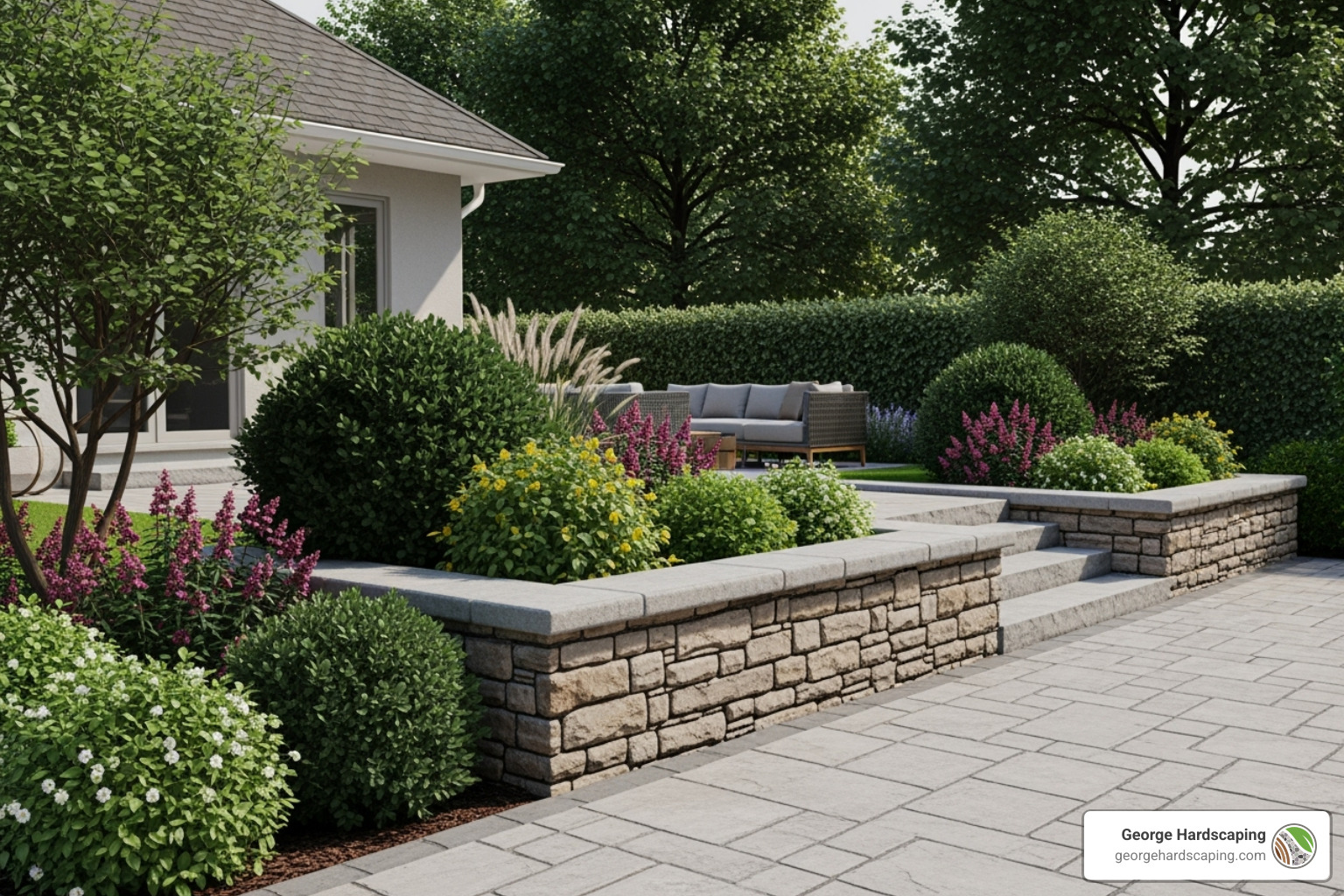
The most successful and enchanting landscapes are created when hardscape and softscape are designed in concert. Plants soften the hard edges of stone walls, and structures provide a solid backdrop that makes plantings pop. This holistic integration of landscape design landscape construction is what elevates an ordinary yard into an extraordinary and enduring outdoor living space.
Bringing the Vision to Life: The Landscape Construction Process
With a finalized design in hand, the project transitions from the drawing board to the field. This is the landscape design landscape construction process in action, where blueprints and 3D renderings are methodically transformed into a physical, functional reality. This transformation is not a chaotic flurry of activity but a carefully orchestrated sequence of stages, with each step building upon the successful completion of the last to ensure a high-quality, durable result.
Key Stages of a Landscape Construction Project
A professionally managed project follows a clear, step-by-step progression. This systematic approach maximizes efficiency, maintains quality control, and keeps the project on schedule and on budget.
- Pre-Construction and Mobilization: This critical initial phase sets the stage for a smooth project. It involves a final on-site plan review with the client, securing all necessary local building permits, ordering and scheduling delivery of long-lead materials, and meticulously planning site access. This includes establishing a construction entrance and implementing measures to protect your home and any existing landscape features that are being preserved.
- Site Preparation, Demolition, and Grading: The physical work commences. This stage involves clearing the project area of any unwanted vegetation or old structures. Excavation is then performed for new features like patios, walls, and drainage systems. This is followed by rough grading, where the land is sculpted to establish the basic contours and slopes defined in the design plan. Crucially, this is when essential drainage systems, the unseen heroes of a durable landscape, are installed to proactively manage water flow.
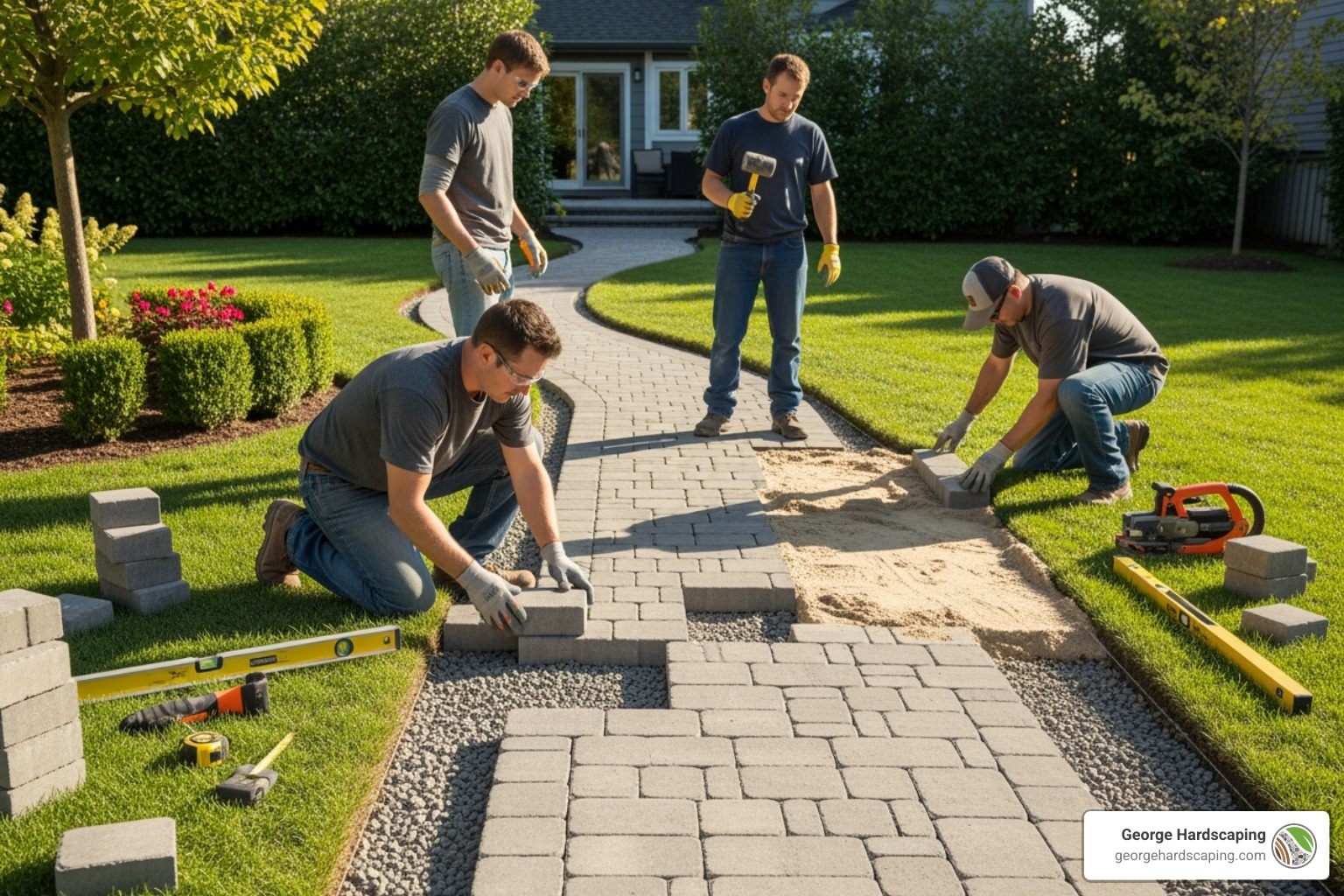
- Hardscape Installation: With the site properly graded, our expert masonry services team begins building the foundational hardscape elements. This is a precise and labor-intensive process. It includes constructing structurally sound landscape retaining walls, meticulously laying the base and pavers for patios, and installing elegant walkways. Each component is installed with an unwavering focus on proper base preparation and engineering principles to ensure stability and longevity against New England’s harsh climate.
- Softscape Installation: Once the hardscape “bones” are in place, the team brings in the living elements. This stage involves amending the native soil with high-quality compost and nutrients to create an optimal growing environment. Trees, shrubs, perennials, and groundcovers are then planted according to the detailed planting plan. Finally, a layer of natural mulch is applied to conserve soil moisture, suppress weed growth, and give the planting beds a clean, finished look.
- Finishing Touches and Site Systems: This stage adds the final layers of functionality and polish. It includes the installation of low-voltage landscape lighting to enhance safety and ambiance, setting up irrigation systems for efficient watering, and performing a thorough final site cleanup. These details transform a well-built project into a truly exceptional one.
- Final Walk-through and Hand-off: We conduct a comprehensive tour of the completed project with you. This is your opportunity to review the work, ask questions, and ensure every detail meets your expectations. We provide detailed instructions on how to care for your new hardscape and plantings to ensure your investment thrives for years to come.
Essential Materials and Techniques in Landscape Design & Construction
The longevity of any landscape, particularly its hardscape components, is directly tied to the quality of the materials used and the installation techniques employed. These must be specifically suited for the challenges of the New England climate.
- Materials: We prioritize durable, high-quality materials that offer both beauty and performance. Natural stone, such as regional bluestone and granite, provides unparalleled elegance and will last a lifetime. For versatility and strength, we use premium concrete pavers from reputable manufacturers. These are used for everything from patios to robust driveway pavers and come in a vast array of styles. When installed correctly, they can last for decades.
- Techniques: A beautiful patio is only as good as its unseen foundation. We adhere to and often exceed industry best practices, such as those set by the Interlocking Concrete Pavement Institute (ICPI). This includes excavating to a proper depth and installing a compacted sub-base of dense-graded crushed stone (typically 6-12 inches deep for pedestrian and vehicular applications) to prevent settling and heaving. This is followed by a sand bedding layer and robust edge restraints to lock the entire system together. For retaining walls, we employ engineering techniques appropriate for their height and the load they bear, always incorporating critical drainage systems to relieve hydrostatic pressure.
Critical Considerations: Drainage, Grading, and Regulations
Several behind-the-scenes factors are absolutely critical to a project’s long-term success and are a hallmark of a professional contractor.
- Drainage and Grading: Properly managing water is arguably the single most important aspect of landscape construction in our region. We meticulously grade all surfaces to direct water away from your home’s foundation and hardscape edges. Where necessary, we design and install subsurface drainage systems like French drains, channel drains, and dry wells to capture and redirect excess water, preventing pooling, erosion, and the destructive force of frost heave.
- Regulations and Safety: We navigate the complexities of local municipal regulations on your behalf, including securing building permits and ensuring compliance with zoning laws and setback requirements in towns across Essex County. Critically, we always contact Dig Safe before any excavation, as required by Massachusetts law, to have all underground utilities located and marked, ensuring the safety of everyone on site.
- Sustainability: We are committed to incorporating sustainable practices. This includes using permeable pavers to reduce stormwater runoff and recharge groundwater, sourcing local materials to reduce the project’s carbon footprint, and designing landscapes that require fewer chemical inputs. These methods align with our commitment to responsible environmental stewardship and create healthier, more resilient outdoor spaces.
Your Project: Planning, Costs, and Finding the Right Team
Embarking on a landscape design landscape construction project is a significant undertaking, both financially and in terms of the transformation to your home. Making well-informed decisions about your budget, project scope, and the professionals you entrust with the work is crucial for achieving a final result that you will love and enjoy for years to come.
How to Choose the Right Landscape Designer and Contractor
Selecting the right partner for your project goes far beyond simply comparing bottom-line prices on a bid. You are looking for a team with a proven track record of expertise, a commitment to quality craftsmanship, and a culture of clear, proactive communication. Look for a contractor who is fully licensed and insured in Massachusetts, and thoroughly review their portfolio to see if their work aligns with your aesthetic goals and project scope.
Before signing any contract, it is imperative to conduct a thorough interview. Be prepared to ask these key questions:
- Are you fully licensed (Construction Supervisor License, Home Improvement Contractor Registration) and insured (General Liability and Workers’ Compensation) in Massachusetts? Can you provide certificates?
- Can you provide a list of references from recent projects similar to mine?
- Who will be the project manager and my main point of contact throughout the construction process?
- How do you handle unforeseen site conditions or client-requested changes during the project? What is your change order process?
- What specific warranties do you offer on materials and workmanship? How long is the warranty period, and what does it cover?
- Are your installers certified by industry organizations like the ICPI for paver installation?
- Can you walk me through your process for site protection, daily cleanup, and communication?
A reputable, professional contractor will welcome these questions and provide clear, confident, and detailed answers. Their communication style and transparency during this initial phase are often an excellent predictor of how they will operate for the duration of your project.
Budgeting for Your Landscape Project
Landscape construction costs can vary dramatically based on a few key factors: project size, the complexity of the design, site accessibility, and, most significantly, material choices. For example, a simple walkway paving project using standard pavers might cost a few thousand dollars. In contrast, a full backyard renovation featuring an expansive natural stone patio installation, multi-tiered retaining walls, an outdoor kitchen, and landscape lighting can be a significant investment of $50,000 to $150,000 or more.
While the upfront cost is a major consideration, it’s essential to view professional landscaping as a long-term investment. It consistently offers a strong return, with studies showing it can increase a property’s resale value by 15-20%. More importantly, it enhances your quality of life by creating functional, beautiful outdoor living spaces for you and your family to enjoy. When soliciting estimates, insist on detailed, itemized quotes that clearly break down the costs for labor, materials, and equipment. Vague, one-line estimates are a red flag. It is also a wise practice to establish a contingency fund of 10-15% of the total project cost to comfortably cover any unexpected challenges or desired additions that may arise during construction.
Current Trends and Sustainable Practices
The landscape industry is continually evolving, with current trends reflecting a desire for outdoor spaces that are more functional, beautiful, and environmentally responsible than ever before.
- Outdoor Living Rooms: The line between indoor and outdoor living continues to blur. Patios are designed as true extensions of the home, complete with comfortable, weather-resistant furniture, designated dining areas, outdoor kitchens, and cozy gathering spots like outdoor fire pits.
- Naturalistic and Native Plantings: There is a strong movement away from rigid, high-maintenance gardens toward more naturalistic designs that feature native plants. These plants are adapted to the local climate, requiring less water and fertilizer, and they provide critical habitat for local wildlife and pollinators.
- Sustainability and Water Management: Sustainable practices are becoming standard for responsible contractors. This includes using permeable pavers to manage stormwater on-site, installing smart irrigation systems that adjust based on weather (like those certified by the EPA’s WaterSense program), creating pollinator-friendly gardens, and installing dark-sky friendly lighting to reduce light pollution. These approaches often align with Integrated Pest Management principles, which focus on creating healthy, resilient ecosystems with minimal chemical intervention.
Finally, a great design includes a plan for the future. Planning for long-term care, including seasonal hardscape maintenance and proper plant care, ensures your significant investment remains beautiful, functional, and valuable for decades to come.
Frequently Asked Questions about Landscape Design & Construction
Over our many years of designing and building landscapes for homeowners across the North Shore, we’ve found that certain questions arise time and again. To help you plan your project with confidence, here are clear, detailed answers to some of the most common inquiries about the landscape design landscape construction process.
How long does a typical landscape construction project take?
The timeline for a landscape project is highly dependent on its scope and complexity, but other external factors also play a significant role. Here’s a breakdown:
- Scale and Complexity: A straightforward walkway paving project might be completed in 1-2 weeks. A mid-size project, like a 500-square-foot patio with a sitting wall, could take 3-5 weeks. A full backyard renovation involving extensive excavation, multiple retaining walls, a large patio, plantings, and lighting could easily span 2-4 months from the start of construction to completion.
- Weather: New England weather is notoriously unpredictable. Consistent rain can halt excavation and base preparation, while extreme heat or cold can affect material installation and plant health, potentially causing delays.
- Material Availability: While standard materials are often readily available, custom-ordered natural stone, specialty pavers, or mature trees may have lead times of several weeks or even months, which must be factored into the schedule.
- Permitting and Inspections: The time required for your local town or city to review plans and issue a building permit can vary from a week to over a month. The project may also require phased inspections (e.g., for footings, drainage) which can influence the daily workflow.
As a professional design-build firm, we provide a detailed project schedule before we begin and maintain open, proactive communication about any factors that may impact the timeline.
Can I phase a large landscape project over time?
Absolutely. Phasing a large, comprehensive project is an excellent and financially savvy strategy to achieve your ultimate vision over several years. It allows you to manage your budget and minimize the disruption to your property at any one time. The absolute key to successful phasing is to begin with a complete master plan for the entire property. This holistic design ensures that each phase builds logically and seamlessly upon the last, avoiding costly rework and creating a cohesive final landscape.
Typically, we recommend a strategic order for the phases:
- Prioritize Foundational and Structural Work: This includes addressing any major drainage or grading issues first. Then, install the primary hardscape structures that other elements will build off of, such as the main patio installation or the most critical landscape retaining walls.
- Add Secondary Hardscapes and Infrastructure: Subsequent phases can add features like an outdoor fire pit, secondary pathways, a driveway upgrade, or the installation of irrigation and lighting infrastructure.
- Complete with Plantings: The final phase is often the installation of the softscape—trees, shrubs, and perennial beds—which is the living layer that ties the entire project together.
How much does a landscape design plan cost?
The cost of a professional landscape design plan is an investment in the success of your project, and it varies based on several key factors:
- Project Complexity and Scale: A simple planting plan for a front foundation bed will naturally cost significantly less than a comprehensive master plan for an entire multi-acre property with significant grade changes, custom structures, and complex drainage requirements.
- Level of Detail and Deliverables: The cost will depend on what is included in the final package. A basic 2D layout plan is the entry-level. A full design package might include that, plus 3D renderings for visualization, detailed construction documents for builders, a complete planting plan with schedules, and specific material and lighting specifications.
- Designer’s Experience and Reputation: Highly experienced and sought-after designers may command higher fees, but their expertise can save you a substantial amount of money in the long run by preventing costly design flaws, creating efficiencies, and avoiding expensive change orders during construction.
Generally, you can expect design fees to range from a few hundred dollars for a very simple concept sketch to several thousand dollars for a detailed, large-scale, multi-component project. It is crucial to view this not as a cost, but as an investment. A well-thought-out plan is the single most important factor in ensuring a successful project that stays on budget, meets your functional goals, and results in a space you will love.
Conclusion: Creating a Landscape That Lasts a Lifetime
Throughout this guide, we have journeyed through the complete process of landscape design landscape construction, from the initial spark of an idea to the final, beautifully built reality. If there is one essential takeaway, it is this: a truly successful and enduring landscape project requires the perfect, harmonious marriage of creative, thoughtful design and expert, quality-driven construction. Design provides the vision, the ‘why’ and the ‘what,’ ensuring the space is functional, beautiful, and tailored to your life. Construction provides the ‘how,’ the technical expertise and uncompromising craftsmanship required to bring that vision to life in a way that will last.
Investing in your outdoor space is a profound investment in your quality of life and your home’s value. It is about creating a functional, beautiful extension of your home—a place to unwind after a long day, to entertain friends and family, and to create lasting memories. A professional project solves practical problems like erosion and poor drainage while adding significant, measurable value to your property.
For homeowners across the North Shore MA area, from the coastal towns of Beverly and Marblehead to the inland communities of Andover and Newburyport, partnering with a specialized, local contractor is the key to success. At George Hardscaping, we are not general landscapers; we are specialists focused on building the foundational hardscape elements that form the enduring heart of any great landscape. Our patios, retaining walls, and walkways are engineered and constructed with meticulous precision. They are built to withstand decades of harsh New England weather, ensuring your outdoor space remains a source of pride, joy, and value for a lifetime.
Ready to transform your outdoor space from ordinary to extraordinary?
Request a complimentary estimate today to begin the conversation and discuss your vision with our experienced team. We’re excited to show you what’s possible.
Looking for inspiration for your North Shore home?
Explore our gallery of completed projects to see the quality, craftsmanship, and attention to detail we bring to every landscape we create.
