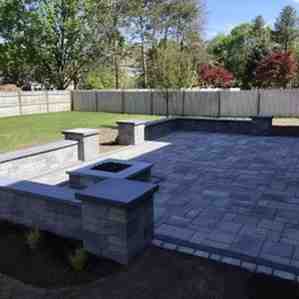
What Does a Paver Patio Actually Cost in 2025?
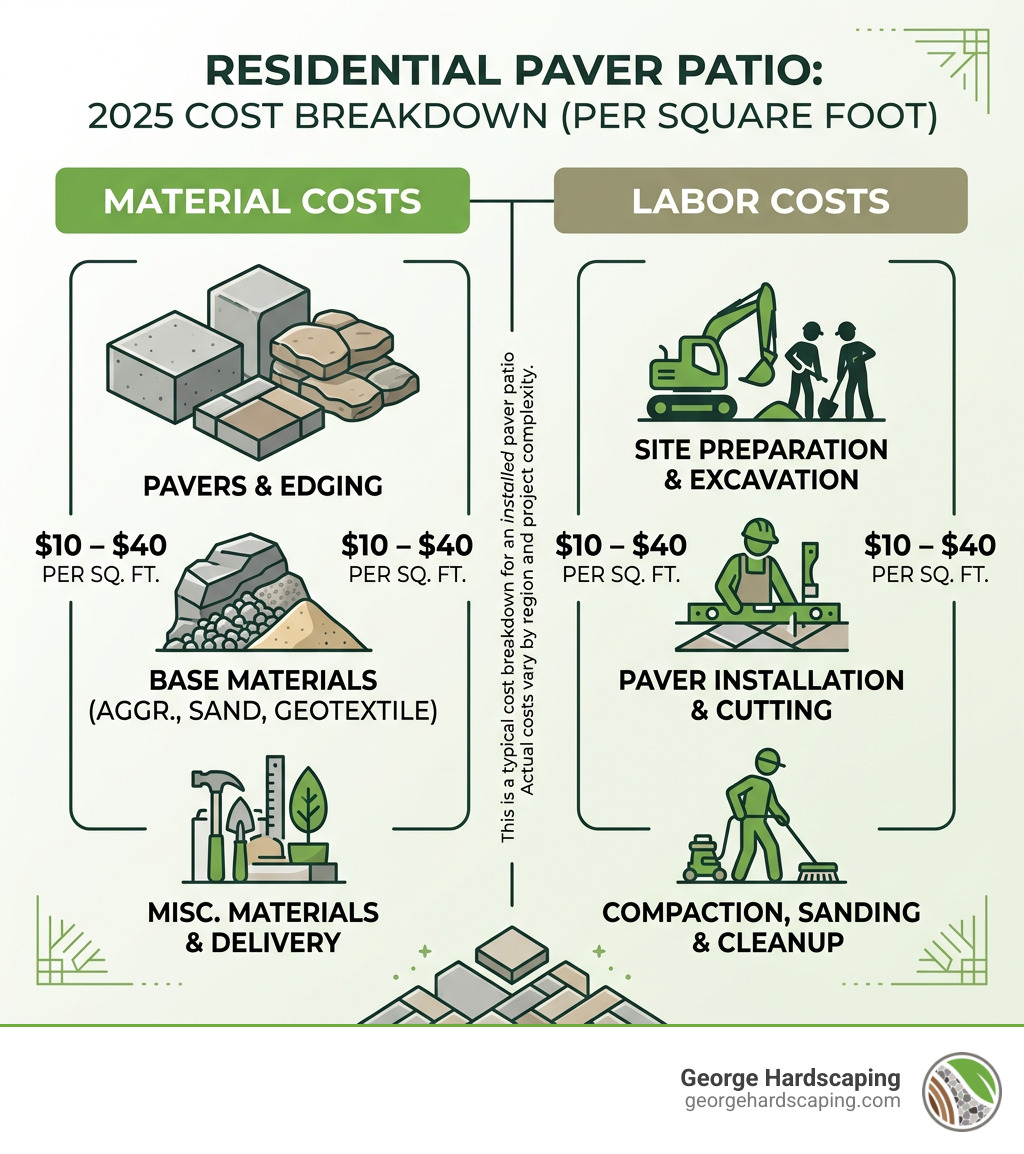
Paver patio cost typically ranges from $10 to $40 per square foot installed, depending on materials, labor, and site conditions. For homeowners in the North Shore and Essex County, understanding these variables is the difference between a successful home improvement project and a budget-breaking surprise. As we move through 2025, the demand for high-quality outdoor living spaces has reached an all-time high, driven by a desire for “staycation” environments that offer both luxury and functionality. This surge in demand, coupled with fluctuating material costs and specialized labor requirements, means that a simple estimate from a few years ago is likely no longer accurate.
Here’s a quick snapshot to answer your question right away:
| Patio Size | Low Estimate | High Estimate |
|---|---|---|
| 10×10 (100 sq ft) | $1,000 | $4,000 |
| 12×12 (144 sq ft) | $1,440 | $5,760 |
| 16×16 (256 sq ft) | $2,560 | $10,240 |
| 20×20 (400 sq ft) | $6,000 | $16,000+ |
| 25×25 (625 sq ft) | $9,375 | $25,000+ |
These are average costs based on national internet data and do not represent actual pricing from George Hardscaping. Your actual cost will vary based on your specific site, materials, and project scope.
So you’ve been getting quotes, browsing Pinterest, and trying to figure out if a paver patio is actually worth it—or if you’re about to overpay. You’re not alone. For most homeowners in Essex County, a paver patio is one of the biggest outdoor investments they’ll make. The price range is wide because the term “paver patio” covers everything from a basic DIY concrete block landing to a multi-level natural stone masterpiece with integrated lighting and drainage systems. In our region, the complexity of the terrain—ranging from rocky coastal ledges to heavy clay soils—plays a massive role in the final invoice.
The difference in cost can easily exceed $10,000 depending on the complexity of the terrain and the quality of the stone selected. This guide breaks down every cost factor so you know exactly what drives the price and where you can spend smarter without cutting corners on the structural integrity of your outdoor living space. We will explore the nuances of material selection, the critical importance of sub-base preparation, and how regional factors in Massachusetts influence the longevity of your investment.
Essential Paver patio cost resources:
- Expert paver patio contractor services
- Professional patio contractor solutions
- Local Stone Patio Installation Specialists
Ready for a real number instead of a broad range? Start with a professional assessment of your yard conditions, access, and drainage. Then request a written, itemized estimate so you can compare quotes fairly (base depth, edge restraint, compaction method, and jointing sand should all be spelled out). A transparent quote is the first step toward a patio that doesn’t just look good on day one, but remains level and beautiful for decades to come.
Understanding the Average Paver Patio Cost per Square Foot
When we look at the national landscape, the Paver patio cost generally falls between $10 and $30 per square foot, but many North Shore and Essex County projects land closer to the higher end because of excavation depth, disposal fees, and skilled labor rates needed to build for freeze-thaw conditions. In Massachusetts, we don’t just lay stone on dirt; we build a structural foundation that can withstand the brutal expansion and contraction of the ground during our harsh winters.
Calculating your total investment starts with a simple square footage measurement, but the price per square foot isn’t a flat rate. A small landing can cost more per square foot because mobilization, delivery, and layout time are nearly the same whether the project is 100 sq ft or 300 sq ft. This is often referred to as the “minimum mobilization fee.” Larger patios can benefit from efficiencies in material delivery and production—but they can also climb fast when you add walls, steps, lighting, or outdoor kitchens. For instance, a 500-square-foot patio might have a lower cost per square foot than a 100-square-foot walkway, simply because the heavy machinery is already on-site and the crew can maintain a steady rhythm of installation.
According to detailed 2025 cost data for outdoor living projects, the complexity of the design plays a massive role. A simple rectangle is far more affordable than a circular patio with intricate borders or a herringbone pattern that requires hundreds of precision cuts. Every cut adds labor time and increases the amount of material waste. In fact, a complex pattern can increase the labor portion of your quote by 20% to 30% due to the meticulous nature of the work. Furthermore, the choice of jointing material—whether standard sand or high-performance polymeric sand—will also influence the final square-foot price.
To validate technical best practices (especially base preparation, edge restraint, and compaction standards), it helps to reference industry bodies like the Interlocking Concrete Pavement Institute (ICPI). While homeowners don’t need to memorize specs, knowing that your installer follows recognized guidelines is one of the simplest ways to protect your investment. ICPI standards ensure that the base thickness is appropriate for the soil type and that the compaction levels reach the necessary density to prevent future settling.
Estimating Paver Patio Cost for Common Sizes
To help you visualize the budget, here are three common sizes we frequently install in towns like Danvers and Peabody.
- The Bistro Patio (12×12 / 144 sq ft): Great for a small bistro set and grill. This size is perfect for tight urban lots or as a secondary seating area. Expect roughly $1,400 to $5,800 depending on paver grade, border detail, and site conditions. If the site requires significant leveling, the price will lean toward the higher end.
- The Dining Patio (16×16 / 256 sq ft): Comfortable for a 6-person dining set with circulation space. This is the “sweet spot” for many suburban families. Costs often range from $3,800 to $10,000. At this size, homeowners often begin to consider adding integrated features like a small fire pit or a seat wall.
- The Entertainment Hub (20×20 / 400 sq ft): Space for dining plus lounge seating or a fire pit. Typical range: $6,000–$16,000+. Patios of this scale often require more sophisticated drainage planning to ensure that the large surface area doesn’t create runoff issues for the rest of the yard.
When planning these spaces, we always account for a “waste factor” (often 10–20%) for cuts, breakage, and future repairs. For high-end results, we recommend professional patio design and installation so patterns, elevations, and drainage are resolved before the first ton of base stone is delivered. A well-designed plan prevents costly mid-project changes and ensures that the final product aligns with your vision for the property.
Material Breakdown: From Concrete Pavers to Natural Stone
Choosing the right material is a balance of aesthetics, durability, and budget. In Massachusetts, we have to consider the freeze-thaw cycle, which can wreak havoc on inferior materials. The Interlocking Concrete Pavement Institute (ICPI) sets the industry standards for these materials, ensuring they can withstand the pressure of heavy use and extreme weather. The material you choose doesn’t just dictate the look; it dictates the installation method and the long-term maintenance requirements of the space.
Concrete Pavers ($8–$16 per sq. ft. installed): These are highly durable and engineered to withstand heavy loads. They are often the most budget-friendly option for homeowners in Boxford or Topsfield looking for a clean, modern look. High-quality concrete pavers are manufactured with a high PSI (pounds per square inch) rating, making them stronger than poured concrete. Modern manufacturing techniques allow for a vast array of colors and textures, some of which are nearly indistinguishable from natural stone. They are also uniform in thickness, which allows for a faster and more consistent installation process.
Brick Pavers ($14–$24 per sq. ft. installed): Authentic clay bricks offer a classic aesthetic that is deeply rooted in New England history. They are slightly more labor-intensive to install because of their smaller size and the need for a very precise base to prevent wobbling. However, their longevity is legendary; many brick paths in New England have lasted for over a century. Unlike concrete pavers, the color of a clay brick is consistent throughout the material, meaning it will never fade even after decades of sun exposure.
Natural Stone ($15–$50 per sq. ft. installed): This category includes everything from irregular flagstone to high-end marble or travertine. The cost varies based on the rarity of the stone and the difficulty of the installation. For instance, the cost to install stone walkways using natural stone is higher because each piece must be hand-selected and fitted like a puzzle, often requiring on-site chiseling. Natural stone offers a unique, organic look that cannot be perfectly replicated by man-made materials, but it requires a skilled mason to ensure the surface remains relatively flat and safe for furniture.
The Premium Appeal of Bluestone and Granite
In Essex County, bluestone is king. It fits the local architecture perfectly and handles our winters with ease. There are three main finishes you’ll encounter, each affecting the Paver patio cost:
- Thermal Finish: Heat-treated for a consistent, slip-resistant surface—ideal for dining areas and family use. This is the most popular choice for modern patios because of its clean lines and predictable texture.
- Natural Cleft: Rugged texture with natural variation—beautiful for a more rustic look, though it may be less furniture-friendly. The uneven surface can cause chairs to wobble, but it provides an unmatched aesthetic for traditional homes.
- Honed Stone: Smooth, modern feel—typically the most expensive due to additional processing. This finish is often used for indoor-outdoor transitions where a seamless look is desired.
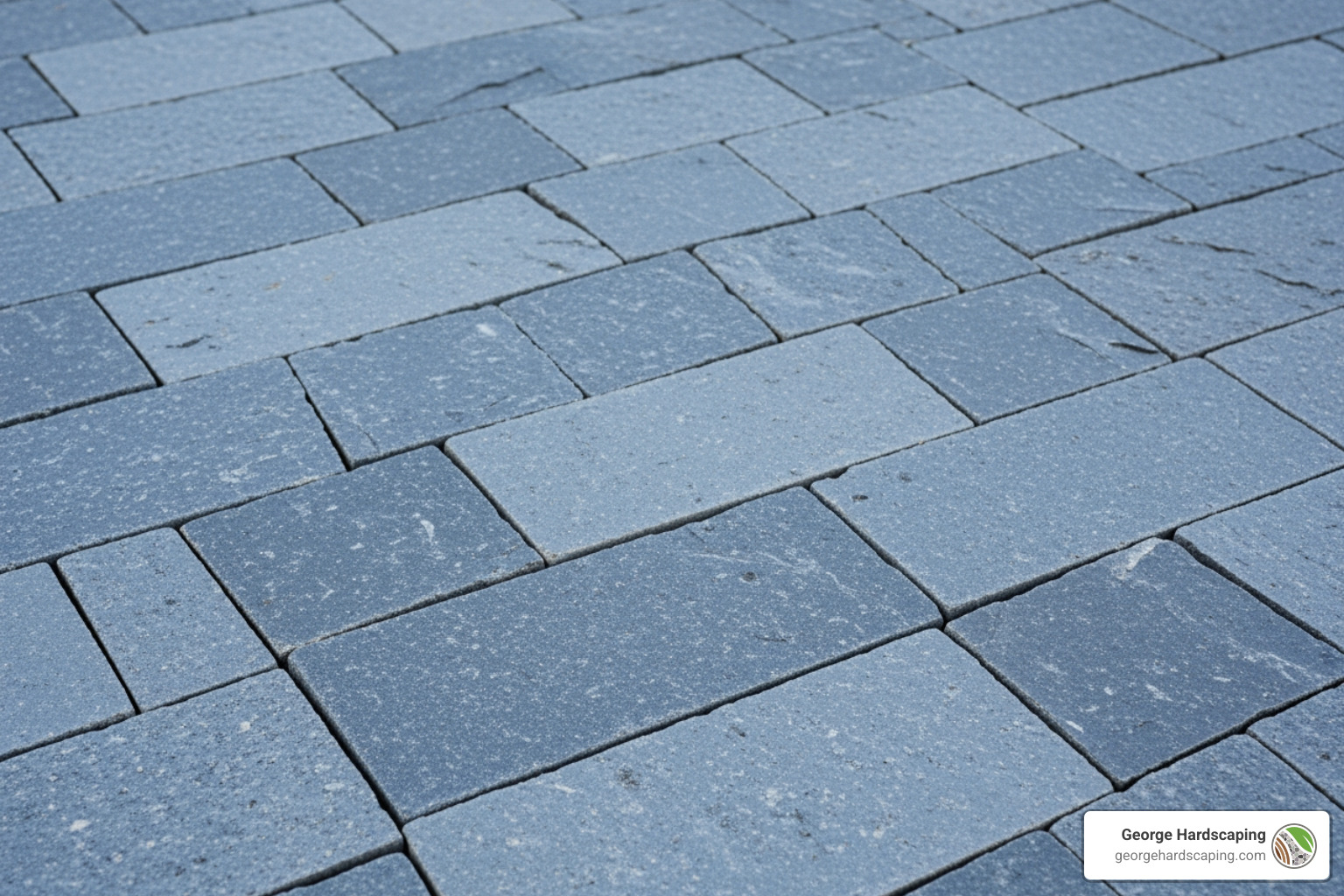
Sourcing these materials locally in New England can sometimes save on shipping, but demand remains high. Understanding the paver price tag expectations for premium materials helps prevent sticker shock when you see the final estimate for a bluestone patio or a granite border package. Granite, while more expensive than bluestone, offers incredible durability and a variety of colors from salt-and-pepper to deep blacks.
Permeable Pavers and Eco-Friendly Drainage
If you live in a town with strict conservation rules, like Manchester-by-the-Sea or Rockport, you might be required to use permeable pavers. These systems allow rainwater to seep through the joints and back into the ground rather than running off into the street or neighboring properties. This is a critical consideration for properties near the ocean or sensitive wetlands.
While the pavers themselves can be similar in price to standard options, the base preparation is more intensive. Instead of a standard sand bed, we use layers of clean, crushed stone to create a reservoir. This is especially relevant when considering the cost of installing pavers around pools, where water management and slip resistance are top priorities. Permeable systems help reduce the load on municipal storm drains and can even help prevent basement flooding in some scenarios.
For homeowners who want to understand stormwater concepts at a higher level (without relying on contractor opinions), the EPA’s educational resources on stormwater runoff and green infrastructure basics are a strong, non-competitive reference point. Investing in a permeable system is not just about compliance; it’s about being a good steward of the local environment while building a patio that will last for generations.
Bottom line: Material matters—but performance in Massachusetts depends even more on what’s underneath the pavers and how water is managed around the patio perimeter. Choosing a high-end stone won’t matter if the base fails after the first winter.
Beyond the Surface: Labor, Site Prep, and Hidden Expenses
The most important part of your patio is the part you never see. Proper site preparation is the difference between a patio that lasts 25–50 years and one that becomes a tripping hazard after just two winters. Across the North Shore, soil conditions can range from heavy clay to sand to shallow, rocky ledge—each of which changes excavation time, base requirements, and drainage strategy. In many cases, the “hidden” work of excavation and base installation accounts for more than half of the total project cost.
Typical Labor Costs and What You’re Paying For
Labor rates for experienced hardscape crews and masons in the North Shore often range from $50 to $100 per hour depending on skill level and project complexity. That labor covers more than just laying stones; it covers the engineering required to ensure the patio doesn’t sink or flood. The labor includes:
- Layout and grade planning: Establishing slope away from the home (typically a 1-inch drop for every 8 feet), setting elevations at door thresholds, and ensuring water doesn’t collect where you walk.
- Excavation: Removing approximately 7–12 inches of soil in many Massachusetts installs. This is physically demanding work that often requires heavy machinery and specialized operators.
- Geotextile fabric: Helping prevent soil and base aggregate from mixing over time. This fabric acts as a stabilizer, ensuring the heavy stone base doesn’t sink into the softer sub-soil.
- Base aggregate installation: Hauling and placing multiple lifts of crushed stone. Each lift must be carefully leveled before compaction.
- Compaction: Using proper equipment and technique to avoid settlement. This is the most critical step in the entire process.
- Bedding and laying: Screeding bedding material, placing pavers/stone, installing edge restraint, and jointing with polymeric sand.
According to the University of Massachusetts Amherst Soil Lab, understanding local soil composition can inform drainage and stability decisions—particularly important if you have clay-heavy soils that hold water. Clay soils expand significantly when frozen, which can lift a patio if the base isn’t deep enough to provide adequate drainage.
One of the most critical steps is compaction. We use heavy-duty plate compactors to ensure the base is rock-solid. As noted in this article on the importance of plate compactors for patio longevity, skipping this step is one of the fastest ways to ruin a patio. Without proper compaction, the pavers can settle unevenly, leading to pooling water, shifting stones, and cracked edges. Professional crews will compact the base in 2-to-3-inch “lifts” to ensure the density is consistent from the bottom to the top.
Site Accessibility, Demolition, and Disposal Fees
Access can be a major cost driver. If our crews have to move every pallet of stone through a narrow gate with wheelbarrows, labor time climbs significantly. If we can bring a skid steer or a mini-excavator into the backyard, productivity improves and costs can be more efficient. Homeowners should consider if fences need to be temporarily removed to allow for equipment access, as this can save thousands in manual labor costs.
If there’s an existing slab or patio to remove first, demolition and disposal typically adds $2 to $6 per square foot. This varies by thickness, reinforcement (like rebar), and local disposal/recycling fees. Always ask whether a quote includes:
- Cutting and breaking old concrete
- Hauling and dump fees (which have risen significantly in recent years)
- Soil export (if excavation generates excess that cannot be used elsewhere on the property)
- Material delivery fees (pavers, base stone, sand)
Slopes, Walls, Steps, and Drainage Add-Ons
Sloped yards in places like Gloucester or Salem often require regrading or a small wall system to create a safe, usable level area. If your project needs grade correction, review typical retaining wall installation costs and plan for that line item early—because a properly built wall is structural work, not a cosmetic upgrade. A retaining wall can turn a useless hillside into a beautiful multi-tiered entertainment space.
Drainage is another hidden expense that can be a bargain or a budget-buster depending on when it’s addressed. If downspouts discharge near the patio, or if the patio sits at the bottom of a slope, the design may require:
- Drainage stone and regrading
- Channel drains (long, thin grates that catch surface water)
- Redirecting downspouts into underground pipes
- Perimeter drains (French drains) to catch subsurface water
Solving water issues upfront is almost always cheaper than repairing a heaved patio later. Water is the primary enemy of any hardscape, and managing it effectively is the hallmark of a professional installation.
Permits and Local Massachusetts Regulations
Many towns require a permit for permanent hardscape work over a certain size. Fees often range from $100 to $500, but the bigger risk is failing an inspection or violating setbacks/impervious surface limits. Some towns have strict “lot coverage” ratios that limit how much of your property can be covered by non-porous surfaces.
Our hardscaping and masonry services include guidance on local code considerations so you’re not surprised mid-project. We handle the communication with local building departments to ensure your project is fully compliant with all local bylaws.
If you’re comparing bids: A lower price that excludes base depth, edge restraint, drainage planning, or permitting assistance can become the most expensive option after the first winter. Always look for the value in the preparation, not just the beauty of the surface.
Regional Pricing Factors: Why New England Patio Costs Differ
Why does a patio in Beverly often cost more than one in the Midwest? It’s largely about climate and standards that prevent frost-related failure. In Massachusetts, we typically excavate deeper—often 10 to 12 inches—to create a thick, well-compacted aggregate base that won’t shift as the ground freezes and thaws. In warmer climates, a thinner base might work; here, that shortcut can lead to settling and uneven joints within a single season. The “frost line” in New England is a serious consideration that dictates how we build everything from fence posts to luxury patios.
Another regional factor is the installation season. We can’t lay pavers in frozen ground, and persistent rain affects compaction and jointing. High demand in spring and summer can also influence scheduling and labor availability. Because our working window is limited to roughly April through November, the schedule fills up fast, and labor rates reflect this seasonal intensity.
When you review the average cost to install pavers, keep in mind you’re paying not only for materials—but for the process that makes pavers perform in New England. For broader regional comparison data (without using a competitor contractor), see this overview from Angi on regional driveway paver cost analysis. This data highlights how labor and material availability in the Northeast consistently rank among the highest in the country.
Adding Value with Custom Outdoor Features
A patio is often the foundation for a full outdoor living space. Many homeowners choose to add features that extend the usability of the space into the cooler months of the year. These additions can significantly impact the overall Paver patio cost, but they also provide the highest return on enjoyment:
- Fire Pits: $800–$3,500 for a basic stone fire pit; gas options cost more due to utility lines. A fire pit creates a natural gathering point and allows you to use your patio well into the autumn.
- Outdoor Kitchens: From a simple grill island (~$4,000) to a full build-out ($25,000+). These are becoming increasingly popular in Essex County as homeowners look to move their entire cooking and dining experience outdoors.
- Seating Walls: Often $25–$60 per linear foot depending on stone and cap selection. These provide permanent seating and help define the “room” of the patio.
- Outdoor Lighting: Commonly $2,000–$5,000 for integrated, low-voltage systems. Lighting is essential for safety and creates a beautiful ambiance after the sun goes down.
We specialize in custom outdoor fire pit design and can walk you through outdoor kitchen installation costs during your consultation so you can prioritize features that fit your budget and lifestyle. Adding these features during the initial construction is always more cost-effective than trying to retrofit them later.
Enhancing Functionality with Steps and Walkways
If your back door is elevated, steps are not optional—they’re a safety and usability requirement. Brick steps often run $25–$40 per square foot, while stone treads (like granite) can be higher but offer unmatched durability. Steps must be built on a solid foundation to prevent them from pulling away from the house over time.
A matching walkway also improves traffic flow and keeps guests off wet grass. Explore typical budgets for brick step installation and paver walkway pricing to plan a cohesive project. A well-designed walkway guides visitors through your landscape and connects different functional areas of your yard.
Design note: In New England, transitions matter. Good step geometry, consistent riser heights, and proper landing size are not just aesthetics—they reduce slip risk in rain, snow, and leaf season. We ensure that all steps meet local building codes for height and depth to ensure maximum safety for your family and guests.
Long-Term Value: Maintenance, Longevity, and ROI
Is a paver patio a good investment? In many cases, yes—especially when the base is built correctly and the layout improves how you use the yard. A professionally installed patio can last 25 to 50 years, often outlasting a wood deck that needs frequent staining and is vulnerable to rot. Unlike wood, pavers do not splinter, warp, or require annual chemical treatments to stay structurally sound. When you factor in the cost of deck maintenance over 20 years, a paver patio often becomes the more economical choice.
For resale value context, the National Association of Realtors’ remodeling research is often referenced in discussions of ROI. While returns vary by market and project scope, paver patios are widely considered a strong quality-of-life and curb-appeal upgrade. In the competitive North Shore real estate market, a beautiful outdoor living space can be the deciding factor for a buyer choosing between two similar homes.
The longevity of the project is tied directly to the quality of the install. For example, paver driveway longevity and costs are higher because driveways are built to handle vehicle loads, but the same principles of deep bases and compaction apply to patios. If you want the most “set it and forget it” patio possible in Massachusetts, building closer to driveway standards is a reliable path. This “over-engineering” ensures that even if you decide to put a heavy hot tub or a large outdoor kitchen on the patio later, the foundation will support it.
Routine Maintenance and Sealing Costs
Maintenance is minimal but not zero. Every 3 to 5 years, many homeowners choose professional cleaning and sealing to protect their investment. Sealing is not strictly necessary for structural integrity, but it offers several benefits:
- Reduce staining: Protects against food, grease, or rust from patio furniture.
- Preserve color: Helps prevent UV exposure from fading the vibrant hues of concrete pavers.
- Stabilize joint sand: Hardens the polymeric sand to discourage weed growth and ant hills.
Sealing typically costs $1.50–$3.50 per square foot. It is a small price to pay to keep the patio looking brand new for decades.
In winter, avoid metal shovels that can chip edges, and be cautious with harsh de-icers. Rock salt can damage the surface of some pavers over time; we recommend using calcium chloride or sand for traction. We also offer snow removal services for hardscapes to help protect your investment during North Shore winters, using equipment that is gentle on stone surfaces.
Pavers vs. Concrete Slabs: A Cost-Benefit Analysis
A poured concrete slab is often cheaper upfront ($6–$12 per sq. ft.), but cracking is common in freeze-thaw climates. Once a slab cracks, the repair is often unsightly and temporary. Repairs can mean patchwork that looks mismatched—or full replacement of the entire slab, which is a massive expense.
Pavers are an interlocking system designed to flex slightly with seasonal movement. If one paver is stained or damaged, it can typically be replaced without tearing out the entire patio. This modularity is a huge advantage in New England. If you’re evaluating larger hardscape areas, the structural advantages discussed in our driveway paver installation guide apply to patios too: base depth, compaction, and edge restraint are what separate long-term performance from ongoing repairs.
Takeaway: The lowest upfront price isn’t always the lowest lifetime cost—especially in Massachusetts where winter exposes installation shortcuts quickly. Investing in a paver system is an investment in peace of mind.
Frequently Asked Questions About Paver Patio Costs
Do pavers increase home resale value?
Yes! Most real estate experts agree that you can recover a significant portion of the project cost upon resale. Beyond the numbers, a well-designed patio increases “curb appeal” and makes your home stand out in a crowded market. Functional outdoor space is essentially adding “usable square footage” to your property without the cost of a full home addition. If you’re looking to maximize this impact, consider how your walkways and stairs design can create a grand entrance that wows potential buyers. A cohesive look from the front curb to the back fence creates a sense of luxury and care.
How many pavers do I need for a 12×12 patio?
For a 144-square-foot patio, you don’t just order 144 square feet of stone. You must account for the cuts required to fit the pattern and any potential breakage during shipping or installation.
- Calculate Area: 12 x 12 = 144 sq. ft.
- Add Waste Factor: Add 10% for standard patterns (14.4 sq. ft.) or 20% for complex patterns like herringbone or circular designs (28.8 sq. ft.).
- Total: You would order approximately 160 to 175 square feet of pavers to ensure you have enough for cuts and replacements. Having a few extra pavers left over is also a good idea for any future repairs.
Is a permit required for paver installation in Massachusetts?
In almost all cases, yes. Each town in Essex County has its own zoning bylaws. Some are concerned with the “impervious surface” ratio—meaning they don’t want too much of your yard covered in stone because it causes drainage issues for neighbors. Others require Conservation Commission approval if you are near wetlands or the coast. As part of our patio design and installation services, we assist with identifying which permits are necessary for your specific address and can help navigate the application process.
How long does the installation take?
A typical 400-square-foot patio takes about 5 to 7 business days from start to finish. This includes excavation, base prep, laying the stone, and finishing the joints with polymeric sand. Weather is the biggest variable; heavy rain can delay the compaction and sanding phases, as the materials must be dry for the polymeric sand to set correctly. We always aim to complete projects efficiently while never rushing the critical base preparation steps.
Can I install a paver patio over an existing concrete slab?
While it is possible (a process called “overlaying”), it is generally not recommended in New England. If the underlying concrete slab cracks or shifts due to frost, those cracks will eventually reflect through to the pavers above. For a long-lasting result, it is almost always better to remove the old concrete and build a proper flexible aggregate base that can move with the seasons without causing surface damage.
Conclusion
At George Hardscaping, we pride ourselves on bringing elite craftsmanship to every backyard in the North Shore. We know that understanding the Paver patio cost is the first step in making your dream backyard a reality. Whether you are in Lynnfield, Ipswich, or Marblehead, our team is dedicated to using the highest quality materials and the most rigorous installation standards to ensure your patio stands the test of time. A patio is more than just stone and sand; it is the stage for your family’s outdoor memories for years to come.
To see what’s possible for your space, explore our gallery of completed projects and note the details that affect pricing—pattern complexity, borders, walls, steps, lighting, and how the patio connects to the rest of the property. Seeing our work in person or through high-resolution photos can help you narrow down the materials and styles that best fit your home’s architecture.
Call to Action (CTA) #1 — Get a Written, Itemized Estimate
Stop guessing and get real numbers for your yard. Request a professional, itemized quote so you can compare bids correctly and understand what’s included (base depth, drainage plan, demolition, edge restraint, and jointing method). Don’t leave your outdoor investment to chance. Contact the experts at George Hardscaping today to schedule your consultation and get a precise, transparent estimate for your project. request a professional hardscaping estimate today.
Call to Action (CTA) #2 — Talk to a Specialist and Lock in Your Project Timeline
If you want your patio installed this season, scheduling matters. Demand peaks quickly in spring and early summer. Want to see what’s possible for your North Shore home? Browse our gallery of luxury patios and walkways to find inspiration for your next hardscape transformation and see why we are the region’s preferred choice! Contact our team through the same estimate request page to reserve a consultation and discuss materials, design options, and timing. request a professional hardscaping estimate now.