
Why Hiring the Right Fire Pit Installation Company Makes All the Difference
In the North Shore of Massachusetts, the transition from a crisp autumn afternoon to a chilly evening happens in the blink of an eye. For homeowners in towns like Danvers, Peabody, and Lynnfield, the backyard isn’t just a patch of grass; it is an extension of the home, a sanctuary for relaxation, and a theater for family memories. A professional fire pit installation company does more than just dig a hole and stack some stones. The right team designs, permits, and builds a safe, lasting fire feature that becomes the heart of your outdoor space—providing warmth, light, and a focal point for social gatherings that can extend well into the New England winter. When you consider the unique climate of Essex County, where the salt air meets the freezing winters, the structural integrity of your outdoor features becomes paramount. A fire pit that looks beautiful in July must also be able to withstand the brutal freeze-thaw cycles of January without cracking or shifting.
Outdoor fire features also come with real responsibility. The National Fire Protection Association’s safety standards outline common-sense clearance and safety practices intended to reduce the risk of accidental fires and property damage. A qualified installer applies those principles to your specific yard—accounting for wind patterns, nearby structures, and the materials underfoot. When you work with expert masonry fire pit construction professionals, you aren’t just buying a product; you are investing in an engineered system designed to withstand the harsh conditions of the Northeast. This involves understanding the soil composition of your specific lot, whether you are dealing with the rocky terrain of Marblehead or the more sandy soils near the coast. Proper excavation and base preparation are the invisible heroes of any long-lasting fire feature, ensuring that your investment remains level and safe for decades to come.
Quick answers for homeowners considering a fire feature:
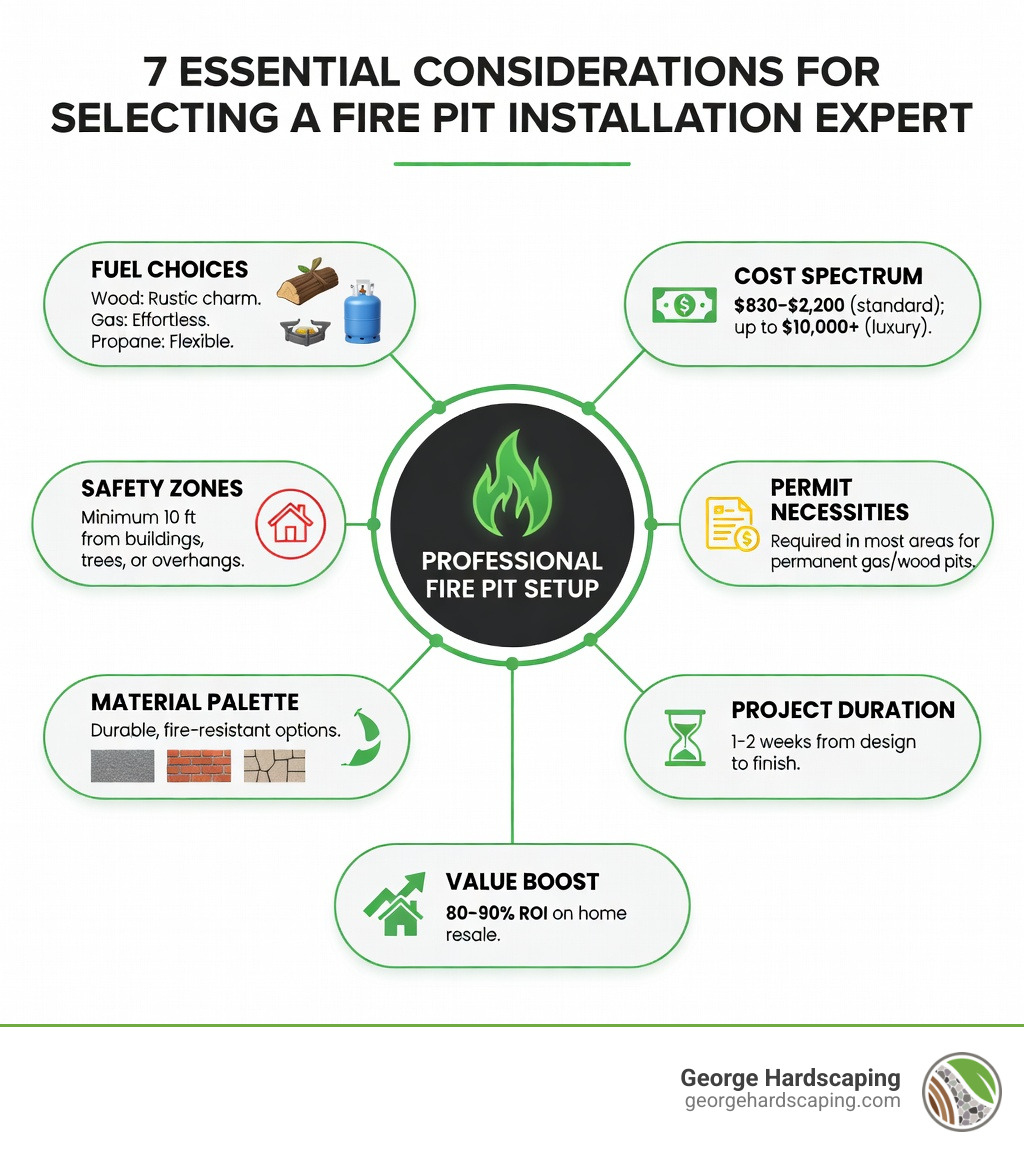
- Average cost: $830 to $2,200 for most residential fire pits (these are average costs based on internet data, not actual George Hardscaping pricing — luxury builds can reach $10,000+)
- Fuel types: Wood-burning, natural gas, propane, or electric
- Best materials: Natural stone, fire-rated brick, concrete pavers, stainless steel inserts
- Safety minimum: Fire pits should be at least 10 feet from any structure or tree
- Permits: Most towns in Essex County require a permit for permanent fire features, especially gas
- Timeline: Most professional installations take 1 to 2 weeks from start to finish
- ROI: Fire pits return an estimated 80–90% of their cost in added home value
A fire pit is one of the most popular backyard upgrades for a reason: it extends your outdoor season, creates a natural gathering spot, and adds tangible value to your property. But a poorly installed fire pit—especially a gas one—can become a serious safety hazard. That’s why choosing the right professional fire pit installation company matters. Beyond aesthetics, a professional team ensures the structural integrity of the unit. For example, a fire pit built without the proper base or drainage can heave over time, crack mortar joints, or shift out of level. If your fire pit is part of a larger outdoor living plan, it should also be designed to integrate cleanly with your hardscape—often meaning it’s built on (or directly adjacent to) a properly engineered patio surface. This integration requires a deep understanding of both masonry and landscape architecture to ensure the flow of the space is natural and inviting.
If you’re comparing companies, focus on three things: (1) demonstrated masonry experience, (2) code- and permit-awareness in your town, and (3) clear documentation of materials and warranties. A true specialist will talk to you about the fire-rated interior, burner pan ventilation (for gas), proper setbacks, and how the feature will be used—large groups, daily use, occasional use, or as a statement centerpiece. They will also consider the aesthetic of your existing home, ensuring that the stone selection and design language complement the architectural style of your property, whether it is a classic New England Colonial or a modern coastal retreat.
CTA (Prominent): If you want a fire feature that’s beautiful, safe, and built to last, schedule a professional fire pit consultation and request a free estimate today.
Simple fire pit installation company glossary:
- Comprehensive outdoor fire pit builders guide
- Professional masonry fire pit construction
- Innovative fire pit design ideas
Exploring Fire Pit Types and Premium Materials
When you begin your journey with a fire pit installation company, the first major decision involves selecting the right fuel source and materials. Your choice will dictate not only the vibe of your Friday nights, but also the long-term maintenance, permitting, and installation requirements. In Essex County, preferences vary widely—from rustic wood fires in more wooded areas to clean, modern gas features closer to the coast. Modern bespoke custom fire pit designs offer far more than a basic block circle. You can choose the height (low and lounge-like vs. raised and formal), the shape (round, square, linear), and the way the fire feature integrates with the rest of your yard—especially when paired with comprehensive patio design and installation services and seating walls. The material choice is not just about looks; it is about thermal performance and how the stone reacts to intense heat over time.
Wood-Burning vs. Gas and Propane Options
This is the most common decision point—and the “right” answer depends on how you plan to use the feature. A traditional wood fire delivers ambiance that’s hard to replicate: the crackling sound, the smell of seasoned oak, and strong radiant heat that can cut through a Massachusetts frost. Wood-burning pits can be more budget-friendly upfront because they typically don’t require trenching a fuel line. That said, they also require ongoing effort: stacking and storing wood, cleaning ash, managing smoke, and ensuring the pit is used only under safe conditions. If you like the authenticity of wood but want a cleaner experience, it’s worth exploring traditional wood-burning fire pit designs that prioritize airflow and firebox performance to reduce smoke issues. Many homeowners find that the ritual of building a fire is part of the appeal, providing a meditative break from a digital-heavy lifestyle.
If you want a fire feature you’ll actually use on weeknights—not just special occasions—gas is often the better fit. With a properly installed ignition system, your fire feature becomes an “on-demand” amenity: start it instantly, control flame height, and shut it down safely. For most homeowners, professional gas fire pit installation also improves predictability: no sparks, minimal smoke, and easier compliance with certain neighborhood expectations. Natural gas is ideal when you want an uninterrupted supply; propane works well when running a line isn’t feasible. Industry adoption supports this shift, as the Hearth, Patio & Barbecue Association (HPBA) highlights continuing growth in gas fire features due to ease of use and cleanliness. Gas fire pits also allow for more creative media options, such as fire glass, lava rocks, or ceramic logs that mimic the look of real wood without the mess.
Selecting Durable Materials: Stone, Brick, and Pavers
The longevity of your fire feature depends heavily on durable fire pit stone selection and correct fire-rated construction methods. Fire pits face extreme conditions: very high interior temperatures and cold exterior temperatures during Massachusetts winters. Using non-fire-rated materials in the firebox can lead to cracking, spalling, or in rare cases, hazardous failures where stones explode due to trapped moisture. We commonly combine aesthetics on the outside with fire-rated performance on the inside during expert masonry fire pit construction:
- Natural stone (granite, fieldstone): Timeless look and excellent durability; ideal for classic New England landscapes. Granite is particularly prized in the North Shore for its local historical significance and incredible resistance to weathering.
- Concrete pavers and segmental wall systems: Great for matching an existing patio surface; consistent sizing helps create crisp lines. These systems are engineered for strength and offer a wide variety of colors and textures.
- Fire-rated brick (firebrick): Essential for the interior liner of a true masonry firebox. Firebrick is designed for high-heat environments; standard brick often fails under repeated high-temperature cycles because it cannot handle the thermal expansion.
- Stainless steel inserts and burner pans: Especially valuable for gas pits, helping protect surrounding masonry and improve airflow. High-quality 304-grade stainless steel is recommended to prevent rust in our coastal environment.
If you want to go deeper into safe component selection, the American National Standards Institute (ANSI) is a key standards body referenced by manufacturers for gas and outdoor heating components. When the pit is integrated into the overall hardscape, it feels intentional, it performs better, and it generally lasts longer because the surrounding drainage and foundations were planned together rather than patched in later. A well-chosen material palette will not only ensure safety but also create a visual harmony that elevates the entire property.
Why You Should Hire a Professional Fire Pit Installation Company
While the “DIY” spirit is strong in New England, a fire pit is one area where professional expertise is non-negotiable. A professional fire pit installation company ensures that your new feature isn’t just beautiful, but also safe and compliant with local laws. Safety compliance is the number one reason to hire custom outdoor fire pit builders. Improperly installed gas lines can lead to leaks, and poorly constructed wood pits can heat up surrounding surfaces to dangerous levels. Professionals understand how to install proper structural footings—often involving a concrete base or compacted gravel—to prevent the pit from shifting or sinking over time due to our region’s freeze-thaw cycles. Without a proper foundation, the weight of the stone can cause the structure to tilt, leading to unsightly gaps and potential structural failure.
Selecting the Right Fire Pit Installation Company for Your Project
Not all local firepit installers are created equal. When researching companies in the North Shore, look for a portfolio that demonstrates a deep understanding of masonry. A true specialist won’t just show you a catalog; they will show you photos of completed projects in towns like Salem, Beverly, and Ipswich. Key factors to verify include:
- Specialization: Do they focus on hardscaping and masonry, or are they a general lawn care company? Specialized custom firepit installer teams have the tools and training for complex stone work. Masonry is an art form that requires years of apprenticeship and practice to master, especially when working with natural stone.
- Licensing and Insurance: Essential for protecting your property during construction. Ensure they carry both general liability and workers’ compensation. This protects you from being held liable for any accidents that might occur on your property during the installation process.
- Communication: A good contractor will provide clear project timelines and explain the “why” behind their design choices. They should be able to articulate why a certain stone was chosen or why the gas line needs to follow a specific path.
- Warranty Protection: Professional companies stand behind their craftsmanship with written warranties on both materials and labor. This gives you peace of mind knowing that if a stone cracks or a burner fails, the company will return to make it right.
How a Fire Pit Installation Company Navigates Local Building Codes
Every town in Essex County has its own set of rules regarding open flames. A professional team acts as your guide through this regulatory maze. For example, the Massachusetts State Building Code has specific requirements for outdoor appliances. Some municipalities require specific setback distances from property lines, while others may mandate a fire marshal inspection for natural gas hookups. We handle the heavy lifting, including utility marking by calling the Dig Safe utility notification center to ensure no underground lines are struck during excavation. This is a critical safety step that prevents damage to water, sewer, or electrical lines.
We also ensure that all gas components meet ANSI standards and hold UL certification, which are critical for both safety and insurance compliance. Failure to pull the correct permits can result in fines or issues when you eventually try to sell your home. Home inspectors are increasingly savvy about outdoor features and will look for permit records. Working with a specialized custom firepit installer ensures that every detail, from the gas valve to the stone cap, is up to code. This professional oversight ensures that your fire pit is a source of joy, not a source of legal or safety headaches. By hiring an expert, you are ensuring that the project is done right the first time, saving you time, money, and stress in the long run.
The Custom Installation Process and Safety Standards
The process of bringing creative backyard fire pit ideas to life is a structured journey. It begins with a thorough site assessment where we analyze wind direction, slope, drainage, and proximity to combustible materials. A professional fire pit installation company takes these conditions into account to ensure your fire pit is functional and safe year-round. When you learn how to build a fire pit properly with a professional team, the stages usually look like this:
- Initial Consultation: We discuss your goals, fuel preferences, budget, and how you plan to use the space. We also evaluate existing grades and access for equipment. This is where we determine if the fire pit will be a standalone feature or part of a larger outdoor living area.
- Concept Design + Budget Range: We propose size, shape, and finishing details, plus optional upgrades like seating walls and integrated lighting. We use 3D rendering tools in some cases to help you visualize the final product in your actual yard.
- Permits + Utility Planning: We coordinate requirements and schedule utility marking through Dig Safe before any excavation. For gas features, this phase includes confirming routing and shutoff placement. We handle the paperwork so you don’t have to.
- Site Prep and Base Construction: This includes excavation, compacted base, and leveling. A stable foundation is critical in freeze-thaw regions to prevent settling and cracking. We follow standards aligned with the International Code Council (ICC) for installation best practices. This often involves multiple layers of crushed stone, each compacted to a specific density.
- Gas Line Trenching (if applicable): Trenching and line installation must follow code requirements. This is a critical safety step that requires precision and testing. We ensure the line is buried at the correct depth and that all connections are pressure-tested for leaks.
- Masonry Assembly: The fire pit is built layer by layer with attention to fire-rated interior components, venting requirements (especially for gas), and consistent geometry. We use high-strength mortars and specialized adhesives designed for high-heat applications.
- Finishing Touches: Caps, coping, decorative stone, fire glass/lava rock, and surrounding detail work to tie the fire pit into adjacent patio lines. This is where the aesthetic vision truly comes to life.
- Final Walkthrough + Safety Briefing: We demonstrate safe operation, shutoff procedures (gas), cleaning and cover recommendations, and a maintenance schedule. We want to make sure you feel completely comfortable using your new feature.
Essential Safety Clearances and Wind Considerations
Safety is governed by clearances, surface choices, and common-sense placement. A fire pit should be at least 10 feet away from the home, fences, sheds, and overhanging branches. Fire features perform best and safest when installed on a stone or paver base rather than directly on lawn or mulch. In coastal and open areas of the North Shore, prevailing winds can push smoke toward the house or neighbors. Placement and height should reduce nuisance smoke and improve comfort. We often recommend slightly taller walls for wood-burning pits in windy areas to help contain sparks and improve the draw of the fire.
For homeowners specifically looking for local expertise, our North Shore fire pit installation services focus on correct siting, durable base preparation, and fire-safe construction details appropriate for Massachusetts conditions. We understand the local microclimates and how they affect outdoor living. Whether you are in a sheltered valley or on a windswept bluff, we design your fire pit to perform optimally. This attention to detail is what separates a professional installation from a generic kit.
CTA (Prominent): Don’t leave your safety to chance. Contact George Hardscaping today to schedule your on-site consultation and get a written proposal.
Maximizing Outdoor Living Space and Home Value
Adding a fire pit is a savvy financial move. Industry data from the National Association of Realtors (NAR) remodeling impact report suggests that fire pits offer a Return on Investment (ROI) of 80–90%. This high return is because fire features are high on the wish list for modern homebuyers, particularly in Massachusetts where we value every extra minute of “patio weather” we can get. A well-designed fire pit transforms an underutilized corner of the yard into a premium destination. By integrating it into a larger hardscaping and masonry services in Massachusetts plan, you create a true “outdoor room.” This concept of the outdoor room is about creating a space that feels as comfortable and functional as your indoor living room, but with the added beauty of nature.
Inspiring backyard fire feature ideas often include built-in seating walls. These walls provide permanent seating for large groups and help define the fire pit area as a distinct zone within your yard. By using high-end custom fire pits, you can create a seamless transition between your back door and your fire area. Adding integrated lighting into the seating walls or the base of the fire pit adds another layer of ambiance and safety after the sun goes down. Low-voltage LED lighting can highlight the texture of the stone and provide enough light for safe movement without ruining the campfire vibe. This holistic approach to design ensures that your fire pit doesn’t look like an afterthought but rather a central component of your landscape.
Beyond the monetary value, a fire pit is a lifestyle investment. It increases the usable square footage of your home by making the backyard a comfortable destination even in the early spring or late autumn. According to this ultimate guide to custom fire pit ideas, homeowners find that they spend significantly more time outdoors once a fire feature is installed, leading to better social connections and relaxation. Imagine hosting a Thanksgiving gathering where guests can step outside to enjoy the crisp air around a warm fire, or a summer evening where the kids can roast marshmallows without leaving the safety of your property. These experiences are what truly make a house a home.
| Feature | Wood-Burning Fire Pit | Gas/Propane Fire Pit |
|---|---|---|
| Average Install Cost | $1,500 – $3,500+ | $2,800 – $7,500+ |
| Estimated ROI | 80% | 85-90% |
| Maintenance Level | High (ash, wood storage) | Low (annual inspection) |
| Operational Effort | High (building fire) | Low (switch/button) |
Note: These are average costs based on internet data and not actual costs for George Hardscaping. For a detailed quote, contact a professional fire pit installation company. The actual cost will depend on the specific materials chosen, the complexity of the site, and any additional features like seating walls or lighting. We provide detailed, transparent estimates so you know exactly what to expect before the first stone is laid.
Conclusion and Frequently Asked Questions
Choosing a fire pit installation company is about more than finding someone to stack bricks. It’s about partnering with craftsmen who understand the unique climate and architectural styles of the North Shore—and who build in a way that holds up to real use. A well-built fire feature is also a long-term investment: it can increase how often you use your yard, improve how your outdoor space functions during shoulder seasons, and make your landscape feel like a true extension of the home. If you’re searching for custom fire pits near me, prioritize companies that can show local projects, explain fire-rated construction, and provide documentation for permits, insurance, and warranties. For broader industry best practices, the National Association of Landscape Professionals (NALP) resources emphasize contractor professionalism and correct installation methods. A professional installation ensures that your fire pit is not only a beautiful addition to your home but also a safe and durable one.
How much does professional fire pit installation cost?
On average, homeowners spend between $830 and $2,200 for a standard professional installation. However, this range can vary widely based on complexity. A simple wood-burning pit on a compacted gravel base may land at the lower end, while a luxury gas fire pit integrated into a large patio with custom stonework can exceed $7,500 to $10,000+. Important cost drivers include fuel type, gas line length, stone type, and whether the fire pit is integrated with a comprehensive patio design and installation project. For a precise quote tailored to your innovative fire pit design ideas, an on-site consultation is the best next step. We take the time to understand your vision and provide a detailed breakdown of all costs involved.
Can I convert my existing wood fire pit to gas?
Yes, in many cases, a wood-burning pit can be converted to a natural gas fire pit solution. This requires a compatible burner system, verified ventilation, and proper line installation with safe shutoff access. A professional assessment is essential to confirm that the existing structure is suitable and can be made code-compliant. This is a common request for homeowners who want the convenience of an instant flame without the cleanup of wood. We can evaluate your current setup and let you know if a conversion is a viable and safe option for your property.
What maintenance is required for a custom fire pit?
Maintenance depends on the type. Wood-burning fire pits require regular ash removal and periodic inspection of firebrick and joints. (See guidance on wood-burning fire pit ownership.) Gas fire pits require an annual inspection of connections, burner ports, and the ignition system to ensure everything is functioning correctly. For all stone features, sealing every few years can help reduce staining and winter moisture intrusion, which is especially important in our coastal climate. Using a fitted cover is also highly recommended to protect the burner cavity from debris, snow, and water, which can extend the life of your components significantly.
Do I need a permit for an outdoor fire pit in Massachusetts?
Often, yes—especially for permanent installations and anything involving gas. Rules vary by town, and a professional installer can help confirm what’s required and handle documentation. Massachusetts references statewide standards through the Massachusetts government building and safety resources, while many installations also align with nationally recognized safety standards. We stay up-to-date on all local regulations in the North Shore to ensure your project is fully compliant. This not only ensures your safety but also protects your property value and avoids potential legal issues.
CTA (Prominent): Ready to add a safe, showpiece fire feature to your backyard? Contact George Hardscaping to book your on-site consultation and get a written proposal today.
