
Backyard walkway design: Ultimate Guide 2025
Why Backyard Walkway Design Transforms Your Outdoor Space
Backyard walkway design is about more than just creating a path from point A to point B; it’s about crafting an experience. A well-designed walkway adds structure, enhances safety, and significantly boosts your home’s curb appeal and overall value. It’s the essential framework that guides guests through your outdoor spaces, protects your delicate lawn from constant foot traffic, and transforms a simple yard into a cohesive, inviting, and functional landscape. Think of it as the circulatory system of your backyard, connecting various living areas and creating a seamless flow.
A great walkway always begins with a thoughtful and comprehensive plan. Before a single stone is laid, consider how you and your family truly use your yard. Where do people naturally walk? What key destinations need better, safer access—the patio, garden beds, a backyard shed, the children’s play area, or a cozy fire pit? The purpose dictates the design. Consider who will use the path most often.
A walkway that needs to accommodate strollers, rolling coolers, or a wheelbarrow benefits from broader widths and gentler transitions. Many homeowners aim for a 36–48 inch clear width for comfortable side-by-side walking on primary routes, while secondary garden paths can be a more intimate 24-30 inches. For robust accessibility guidance, the ADA accessible route guidelines provide helpful professional benchmarks for width, slope, and surface texture.
Your local climate and soil conditions must be a primary driver of your design. Here in Essex County and across the North Shore of Massachusetts, the relentless freeze-thaw cycles of winter can heave and destroy poorly built paths. Heavy spring rains and summer nor’easters will exploit any weakness in the base, edging, or drainage plan, leading to erosion and pooling water. That’s why a professional approach that prioritizes proper base depth, thorough compaction, robust edging, and strategic water management is absolutely non-negotiable for a long-lasting installation.
Ultimately, creating a superior walkway comes down to a few key elements: careful material selection (pavers, natural stone, or gravel) that complements your home, meticulous base preparation with compacted gravel and geotextile fabric, a design that harmonizes with your home’s architecture, and strategic lighting for nighttime safety and ambiance. Investing in quality materials and proven techniques like polymeric sand ensures your walkway will be beautiful and low-maintenance for years to come.
A walkway helps define your landscape, linking outdoor “rooms” and creating rhythm with focal points and plantings. Subtle curves can slow the pace and invite exploration of a garden, while straight runs deliver clarity and a sense of formality. This initial planning phase is a core part of our comprehensive patio design services.
Whether you’re dreaming of a classic brick path reminiscent of Beacon Hill or a natural flagstone trail that feels like a walk in the woods, the right design makes all the difference. An investment in a quality walkway pays off by improving curb appeal and accessibility—major selling points for any home. For homeowners in Essex County and the North Shore of Massachusetts, professional installation by a team like George Hardscaping ensures your walkway withstands our harsh winters, manages drainage effectively, and looks beautiful year-round.
Key planning tips:
- Choose a style that suits your home’s architecture and your personal aesthetic.
- Size the path to its purpose: primary routes are typically wider than secondary garden paths.
- Plan for water movement first—always direct runoff away from your home’s foundation.
- Consider snow removal and de-icing methods when selecting materials and design for year-round maintenance.
- Leave pockets for groundcovers between stones or along edges using zone-appropriate species to soften the look.
Choosing Your Path: A Guide to Walkway Materials
The material you choose for your walkway is the most significant decision you’ll make, as it defines the path’s appearance, durability, long-term cost, and maintenance requirements. Whether you’re planning a budget-friendly DIY project or a high-end professional installation, there’s a perfect material for your backyard. At George Hardscaping, we specialize in hardscaping solutions that last, from versatile pavers to timeless natural stone.
Pavers: The Versatile and Durable Choice
Pavers are the true workhorse of modern backyard walkway design, offering a superb blend of style, function, and near-limitless customization. They are engineered to handle decades of foot traffic and to withstand our challenging New England climate without cracking or shifting when installed correctly.
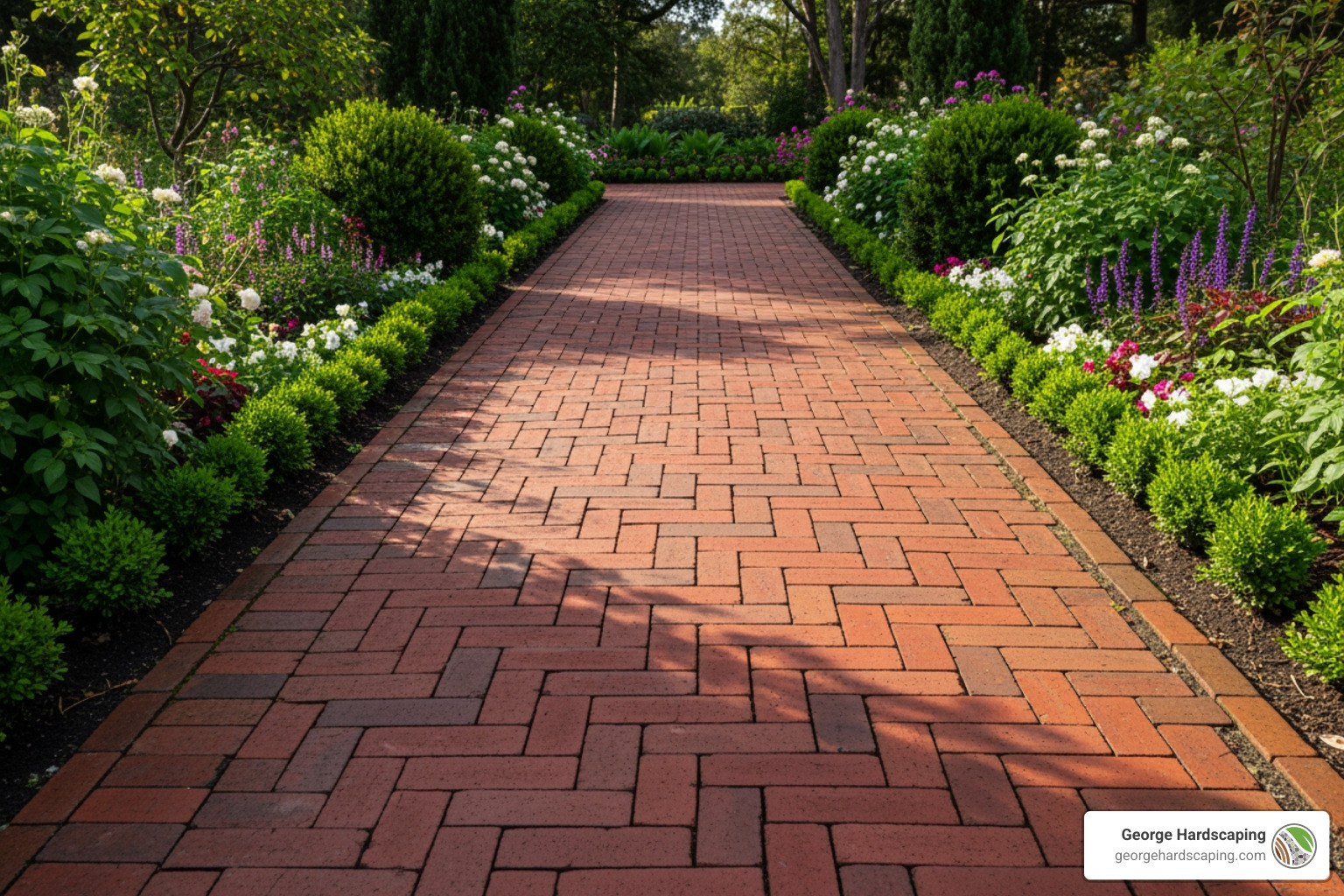
- Brick Pavers: Genuine clay brick pavers bring a timeless, classic charm that is perfect for cottage, Colonial, or traditional-style homes. They age gracefully, developing a beautiful, rich patina over time. Reclaimed brick can offer an even more authentic, historic feel. They can be laid in numerous patterns to create visual interest.
- Concrete Pavers: This is the most versatile and value-driven option on the market. More affordable than natural stone or clay brick, concrete pavers come in a vast array of shapes, sizes, colors, and textures. They can convincingly mimic the look of natural stone, classic cobblestone, or even wood planks. Their uniform size makes for a quick installation, and they are exceptionally low-maintenance and ideal for high-traffic areas. We often use them in projects like our durable concrete pavers for driveway installations.
- Interlocking and Permeable Pavers: Interlocking pavers are designed to fit together like puzzle pieces, creating an exceptionally stable, unified surface that resists shifting. Permeable versions are an environmentally friendly evolution of this technology, designed with larger joints filled with small, clean stone. This system allows rainwater to seep into a specially prepared gravel base below, reducing runoff, recharging groundwater, and helping to prevent erosion and overwhelmed storm drains.
The design flexibility of pavers is a major advantage. You can create stunning patterns like herringbone, basketweave, or running bond to customize your walkway. Our herringbone brick pool deck projects showcase just how sophisticated these patterns can be. Plus, if a single paver ever gets stained or damaged, it can be easily lifted and replaced without having to redo the entire path.
Natural Stone: For Timeless, Organic Beauty
For a walkway that looks as if it were placed by nature itself, natural stone is the ultimate choice. Each piece is entirely unique in its color, texture, and shape, creating a one-of-a-kind path that gains character and beauty with age. It is a premium investment that adds significant value to a property.
- Flagstone: This term refers to flat, irregularly shaped stones that create wonderfully organic, rustic paths, perfect for winding through a garden. Common types include sandstone, slate, and quartzite, each with its own color palette and texture. We love designing artistic flagstone walkways and stairs for clients seeking a refined yet natural look.
- Bluestone: A type of sandstone prized for its distinct blue-gray hue, bluestone offers a sleek, sophisticated aesthetic. It comes in two main finishes: natural cleft (a more rustic, textured surface) and thermal (a smooth, uniform surface ideal for contemporary designs). While it’s a premium material, its beauty and durability make it a worthwhile investment, as seen in our many elegant bluestone walkways.
- Granite: As one of the hardest stones on earth, granite champions durability. It easily withstands heavy traffic and the harshest freeze-thaw cycles without cracking or spalling, making it a quintessential New England material. It’s often used for steps, edging, and cobblestone-style paths.
- Sandstone: Beyond bluestone, other sandstone varieties provide warmth with earthy colors ranging from tan to red. Their naturally slip-resistant texture makes them a safe and beautiful choice.
Natural stone provides a high-end look that increases property value, and we often complement these paths with beautiful, solid natural stone steps on sloped properties.
Loose Stone Materials: Affordable and Attractive Options
For a simple, rustic, and budget-friendly path, loose stone materials are an excellent choice. They are perfect for informal garden paths, secondary walkways, and are accessible for determined DIY enthusiasts.
- Pea Gravel: This is one of the most affordable materials available, with prices often as low as $1 to $3.15 per square foot for the material itself. It consists of small, rounded stones that create a charming, casual feel and a satisfying crunch underfoot. It requires proper, sturdy edging to prevent the stones from migrating into lawns and garden beds.
- Decomposed Granite (DG): This material consists of fine particles of granite that compact to form a firmer, more stable surface than pea gravel. It offers a natural, earthy look and allows water to permeate. For higher traffic areas, stabilized DG, which includes a resin binder, can be used for a durable, almost pavement-like surface. Our decomposed granite walkway installation services ensure it’s properly compacted for maximum longevity.
The Art of Backyard Walkway Design
A great walkway does more than connect two points; it weaves together the different elements of your landscape with intention, personality, and style. The right backyard walkway design acts as a visual guide, drawing the eye through the garden and creating a sense of journey. It can make a space feel larger, more intimate, or more formal, turning your outdoor space into a functional and inviting extension of your home.
Matching Your Walkway to Your Home and Garden Style
A successful walkway design feels like a natural and inevitable part of your home and landscape. The materials, shape, and pattern should all work in harmony with the existing architecture and garden aesthetic.
- Modern/Contemporary: For modern homes, clean lines, minimalist principles, and geometric shapes are key. Large format pavers in neutral tones like gray or charcoal, laid in a simple running bond or stacked pattern, create a polished, uncluttered look. Straight paths with sharp, 90-degree angles mirror the home’s architecture.
- Rustic/Cottage: An organic, informal approach works best here. Meandering paths made of irregular flagstone or reclaimed brick, with fragrant ground cover growing between the stones, create an enchanted, storybook garden feel. The goal is to look as though the path has been there for generations.
- Formal/Traditional: For formal gardens, symmetry, clear geometry, and classic materials convey timeless elegance. Brick pavers laid in precise herringbone or basketweave patterns, or expertly cut bluestone set in a repeating ashlar pattern, bring a sense of order and grandeur.
- Japanese Garden: This style emphasizes naturalism, tranquility, and symbolism. Paths are often asymmetrical and meandering, using natural materials like irregular stepping stones (tobi-ishi), raked gravel, and moss to encourage mindful walking and contemplation.
- Mediterranean: To evoke a sun-drenched Tuscan or Greek Isles feel, use warm-toned materials like travertine pavers, terracotta tiles, or decomposed granite. Paths are often straight and flanked by gravel beds, olive jars, and drought-tolerant plants like lavender and rosemary.
We love creating custom backyard paver walkway ideas that feel perfectly suited to each home’s character, whether it’s for a hidden garden path or as part of our welcoming front yard walkway ideas.
Creative Ideas for a Unique Backyard Walkway Design
Once you’ve chosen a style, you can add personal touches to make your walkway stand out.
- Mixing Materials: Combining materials adds texture, color, and visual interest. Consider using large flagstones as the primary stepping surfaces with dark pea gravel or vibrant Irish moss filling the gaps. For a bold, contemporary look, alternate bands of dark concrete pavers and light-colored river rock.
- Stepping Stone Paths: Informal and often budget-friendly, stepping stone paths create a relaxed, leisurely journey. The stones can be laid directly on soil or nestled into a lawn or groundcover. For a softer feel, plant creeping thyme or Corsican mint between the stones for a pleasant fragrance when stepped on. Our guide on how to install stepping stones provides tips for proper spacing to ensure a comfortable gait.
- Paver Patterns: The pattern of your pavers dramatically affects the final look. Herringbone adds visual movement and is structurally very strong. Basketweave offers charming texture for traditional settings. A running bond pattern creates a clean, streamlined effect, while an ashlar pattern with multiple paver sizes feels more dynamic and random.
We can even create elegant curved paver walkways without cutting using specialized pavers and techniques. For more inspiration, explore our collection of paver stone walkway ideas.
Illuminating Your Path: Walkway Lighting
Proper lighting is not an afterthought; it’s a critical design element that transforms your walkway after sunset, enhancing both safety and ambiance. Walkway lighting extends your outdoor living hours, prevents trips and falls, and creates an enchanting, magical atmosphere in the garden.
- Path Lights: These are the most common fixture type, consisting of a post with a hat that casts a gentle, downward glow. When spaced correctly, they define the walking surface clearly without creating harsh glare or light pollution.
- In-Ground/Well Lights: For a subtle, modern approach, lights can be installed flush with the ground. They illuminate the path from below without any visible hardware, creating a clean look. They can also be used to uplight adjacent trees or architectural features.
- Step Lights: Integrated directly into stair risers, these are essential for safety on any walkway with elevation changes. They clearly define each tread and prevent missteps.
- Lighting Techniques: Beyond basic path lights, consider techniques like uplighting a beautiful specimen tree along the path, silhouetting a sculptural plant against a wall, or washing a stone wall with a soft glow. Following lighting design basics—such as using low-voltage LED systems for energy efficiency, spacing fixtures to create overlapping pools of light, and using warmer color temperatures—ensures a balance of function and beauty.
Ready to bring your walkway vision to life? The team at George Hardscaping specializes in creating durable, beautifully illuminated walkways throughout Essex County. Request your free estimate today and let’s start planning a path you’ll love to use in every season.
From Ground Up: Walkway Installation and Maintenance
A beautiful, long-lasting walkway is built on a solid foundation. Proper installation is the single most important factor in ensuring your path remains level, stable, and weed-free for decades. A shortcut in the base preparation will inevitably lead to sinking, shifting, and costly repairs down the road. Whether you’re a dedicated DIYer or hiring a professional, understanding the fundamentals of construction and maintenance is crucial.
The Foundation: A Step-by-Step Guide to Base Preparation
The longevity of any paver or stone walkway depends entirely on what’s underneath. A properly prepared base is engineered to distribute weight, provide excellent drainage, and prevent the ground movement caused by the freeze-thaw cycles we experience in Essex County.
The professional process involves:
- Excavation: The path is carefully dug out to a depth of 7 to 9 inches for pedestrian walkways. The area is then graded with a slight slope (typically a quarter-inch drop per foot) to direct surface water away from foundations and prevent pooling. The subsoil at the bottom is then compacted.
- Geotextile Fabric: A layer of permeable, non-woven geotextile landscape fabric is laid down. This is a critical step. It separates the gravel base from the soil below, preventing them from mixing over time. This provides stability and acts as a powerful weed barrier while still allowing water to drain through freely.
- Gravel Base: A 4 to 6-inch layer of coarse, angular gravel (often called processed gravel or ¾” dense grade) is added in 2-3 inch “lifts.” Each lift is thoroughly compacted with a heavy-duty plate compactor. The angular shape of the stones is key—they lock together to create a dense, stable support system that won’t shift, unlike rounded pea gravel.
- Sand Bedding: A final, uniform 1-inch layer of coarse concrete sand is spread and screeded perfectly level over the compacted gravel. This is not compacted. Its purpose is to provide a smooth, even bed for setting the pavers or stones, allowing for minute adjustments to ensure a perfect final surface.
This meticulous preparation is the standard for all our patio and walkway installation projects, especially when we install a paver walkway on a slope, where stability is even more critical.
Special Considerations: Slopes and Small Spaces
Not all backyards are flat, open canvases. Slopes and small spaces present unique challenges that, with clever design, can be turned into stunning features.
For sloped terrain, safety and erosion control are paramount. The best solution is often to incorporate steps into the walkway. We specialize in integrating beautiful landscape steps that blend seamlessly with your chosen walkway material. When we build stone steps, we ensure they have consistent riser heights and deep enough treads for safe footing. For significant grade changes, we often combine a walkway and retaining wall to create level terraces and usable garden space.
In small garden spaces, every inch matters. A winding, curved path can trick the eye and make a small space feel larger and more mysterious than a straight path, which can divide the space abruptly. Using light-colored materials can also make the area feel brighter and more expansive. Vertical elements along the path, like a narrow trellis or tall, slender planters, can draw the eye upward, adding dimension without taking up valuable square footage.
Keeping It Clean: A Low-Maintenance Backyard Walkway Design
With the right materials and professional installation techniques, you can create a walkway that requires minimal upkeep.
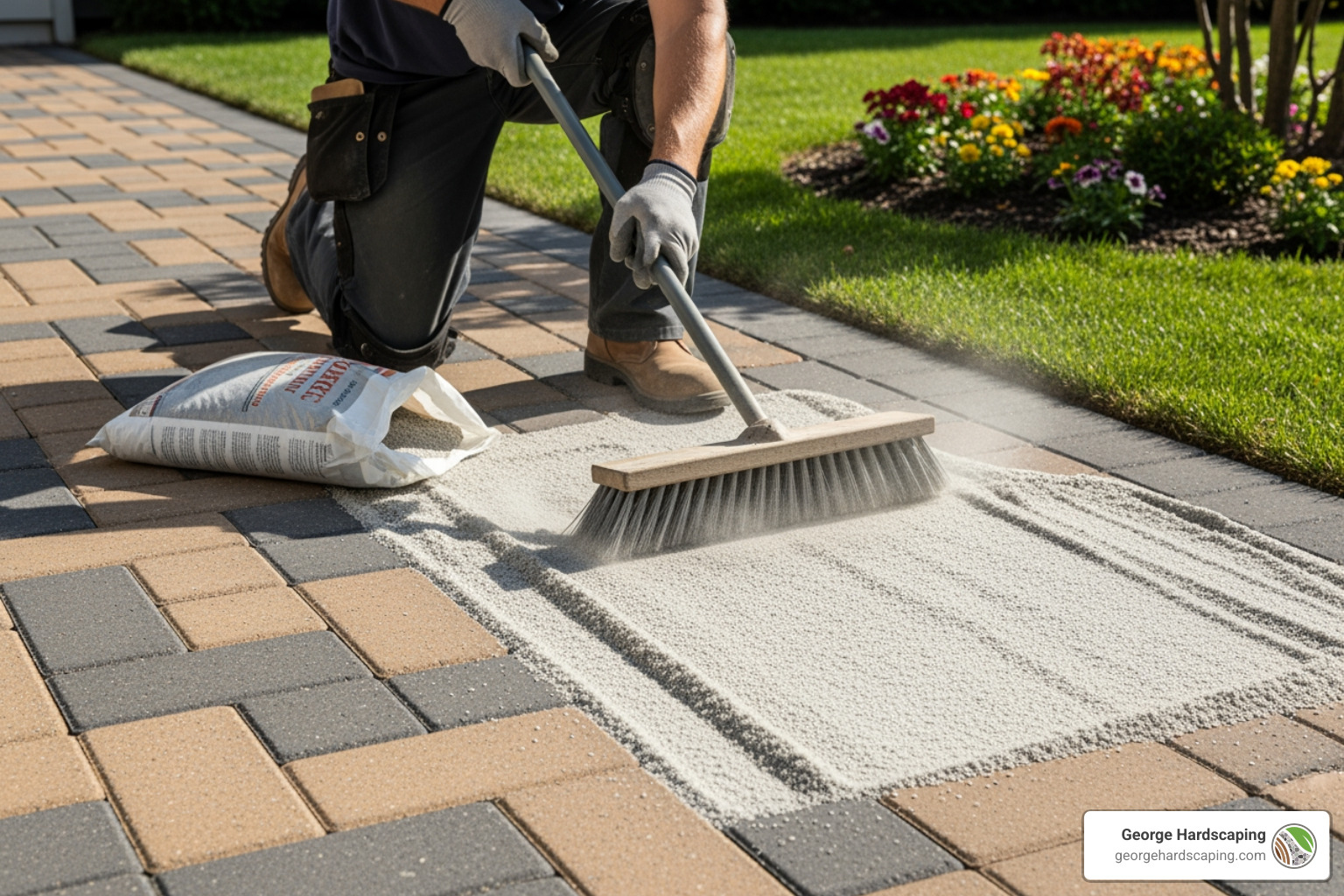
- Weed Prevention: This starts with the geotextile fabric in the base. However, the real secret weapon for paver walkways is polymeric sand. This specialized sand is swept into the joints between pavers and then activated with a light mist of water. It hardens to form a firm, flexible barrier that locks the pavers in place, deters weed growth from seeds that land on top, and prevents ant infestations.
- Sealing: Sealing is optional for most high-density concrete pavers and many natural stones, but it can offer benefits. A good quality sealer can enhance the color of the stones (a “wet look”), make cleaning easier, and provide stain resistance from spills like oil or wine. There are penetrating sealers that offer protection with a natural look and film-forming sealers that create a surface gloss.
- Seasonal Care: The best maintenance is routine. Sweep away leaves and debris to prevent organic matter from building up in the joints. Trim back any encroaching plants or lawn edges. For winter in New England, use plastic shovels or snowblowers with raised augers to avoid scratching the surface. Use de-icers specifically rated as safe for concrete pavers or natural stone, as rock salt (sodium chloride) can cause surface damage over time.
Ready to ensure your walkway is built to last? Professional installation makes all the difference. Request a free estimate from our hardscaping experts and let’s discuss how we can bring your vision to life with expert craftsmanship.
Frequently Asked Questions about Backyard Walkways
What are the most affordable materials for a backyard walkway?
For homeowners planning a backyard walkway design on a tight budget, the most affordable options are loose stone materials. Pea gravel and decomposed granite (DG) offer rustic charm and excellent drainage at a low material cost, often running just $1 to $4 per square foot for the materials alone. However, they require sturdy edging to contain them, which adds to the cost, and they are not ideal for sloped areas or for rolling items like trash bins.
If you prefer a solid surface, concrete pavers are generally the most cost-effective paver material. They are significantly less expensive than natural stone or clay brick and offer incredible design versatility. While a DIY installation can save on labor costs, it’s a physically demanding job that requires renting tools like a plate compactor. A professional installation ensures a solid foundation and proper drainage, preventing costly repairs—a critical consideration in our New England climate.
What is the proper base preparation for installing walkway pavers?
The base is the most critical part of a long-lasting walkway. Without a proper foundation, even the most expensive pavers will sink, shift, and become uneven trip hazards within a few years. The professional standard involves:
- Excavation & Compaction: Digging down 7–9 inches and compacting the native subsoil.
- Geotextile Weed Barrier: Laying down permeable fabric to separate stone from soil and block weeds.
- Gravel Base: Adding and compacting a 4–6 inch layer of angular processed gravel in layers.
- Sand Bedding: Spreading a 1-inch layer of coarse sand to create a perfectly level setting bed.
This meticulous process is standard for all our patio and walkway installations and is the only way to guarantee a walkway that withstands decades of use and harsh weather.
How wide should my backyard walkway be?
The ideal width depends entirely on the path’s function and location:
- Main Routes: For primary paths leading from a driveway to the front door or from a back door to a patio, a width of 42–48 inches is recommended. This allows two people to walk comfortably side-by-side.
- Secondary Paths: For less-traveled garden paths or routes to a side gate, a width of 30–36 inches is usually sufficient and creates a more intimate feel.
- Utility Access: For paths used to move wheelbarrows, lawnmowers, or trash cans, ensure a minimum width of 36 inches to provide adequate clearance.
Do I need permits for a backyard walkway?
In many towns across the North Shore, simple dry-laid walkways (those not set in concrete mortar) that are built at grade often do not require a permit. However, local rules vary significantly. A permit may be required if your project involves a retaining wall over a certain height (often 4 feet), significantly alters the property’s drainage, or increases the lot’s impervious surface coverage beyond a set percentage. We handle all necessary permitting guidance as part of our professional design-build process.
How can I reduce weeds in my paver walkway?
Weed prevention is a multi-step process. First, a professional installation with geotextile fabric at the base prevents weeds from growing up from the soil below. Second, using polymeric sand in the joints is the most effective method. This sand hardens to form a durable barrier that locks pavers together and stops airborne seeds from germinating in the joints. Finally, regular maintenance like sweeping away leaves and debris prevents organic matter from accumulating and creating a new place for weeds to sprout.
How long will a professionally installed walkway last?
With the right materials and a professionally installed base, a walkway is a long-term investment. A concrete paver system with a well-built foundation will routinely perform for 25–50 years or more. Natural stone, being even more durable, can last a lifetime. The ultimate longevity depends on factors like soil conditions, managing tree roots, proper drainage, and how the walkway is maintained, especially during winter snow removal.
Can I just lay pavers directly on dirt or sand?
No, this is the most common and critical mistake in DIY installations. Laying pavers on soil, or even just a thin layer of sand over soil, will result in rapid failure. The soil will shift and settle unevenly, and frost heave in the winter will push pavers up, creating a lumpy, unsafe surface. The multi-layered gravel and sand base is essential to provide a stable, load-bearing foundation that also allows for proper drainage.
What is better: a straight or curved walkway?
This is a core design choice. Straight walkways create a sense of purpose, order, and formality. They are the most direct route and work well with formal architecture and geometric garden designs. Curved walkways create a more relaxed, natural, and informal feeling. They slow the journey, create a sense of mystery by hiding what’s around the bend, and can make a small or narrow space feel wider and more interesting.
How do walkways improve curb appeal and property value?
A well-designed walkway transforms a property by creating a cohesive, intentional, and polished look. This has a direct impact on both curb appeal and property value. According to the National Association of Realtors, projects that improve a home’s curb appeal can significantly boost its value. From a curb appeal perspective, a beautiful walkway provides structure, color, and texture that makes your landscape stand out. This improved curb appeal translates directly to increased property value by improving the safety, accessibility, and usability of your outdoor spaces. In a competitive market like Essex County, where outdoor living is highly valued, a quality walkway is a smart and recoverable investment.
Ready to improve your property’s curb appeal and value? Our team at George Hardscaping designs and builds durable, attractive walkways that connect your outdoor spaces seamlessly. Request a free estimate today and let’s create a path that looks great and performs year after year.
Conclusion: Paving the Way to Your Dream Backyard
A thoughtfully designed and professionally installed backyard walkway is one of the smartest and most rewarding investments you can make in your home. It is far more than just a path; it is a foundational feature that creates an intentional, inviting, and functional outdoor space that is uniquely yours. It guides, connects, and defines your landscape, turning a simple yard into a true extension of your home.
By choosing the right materials to match your home’s character, insisting on proper installation with a robust and correctly engineered base, and adding creative touches like integrated lighting and thoughtful plantings, you can transform an ordinary yard into an extraordinary one. A well-built walkway protects your lawn from wear, defines your garden spaces, improves safety for your family and guests, and genuinely increases your property’s curb appeal and long-term value.
For homeowners across Essex County and the North Shore of Massachusetts—from Beverly to Marblehead, Danvers to Gloucester, and Peabody to Ipswich—the key to a lasting project is finding a team that understands our local climate and challenging soil conditions. At George Hardscaping, we specialize in professional patio and walkway installations that are not only beautiful and functional but are specifically engineered to last for decades in New England.
Your dream backyard is closer than you think. Whether you envision a classic brick path, a winding flagstone trail, or a sleek modern walkway, our team has the expertise and passion to bring your vision to life with unparalleled craftsmanship.
Take the first step today. Request a free estimate from our hardscaping experts and discover how our patio design services, lighting guidance, and climate-smart construction details will make your walkway a standout feature for decades to come.
