
Eco-Friendly Patio Options: 10 Powerful Green Ideas 2025
Why Eco-Friendly Patios Matter
Looking for eco-friendly patio options? Here are the most sustainable choices for your outdoor space:
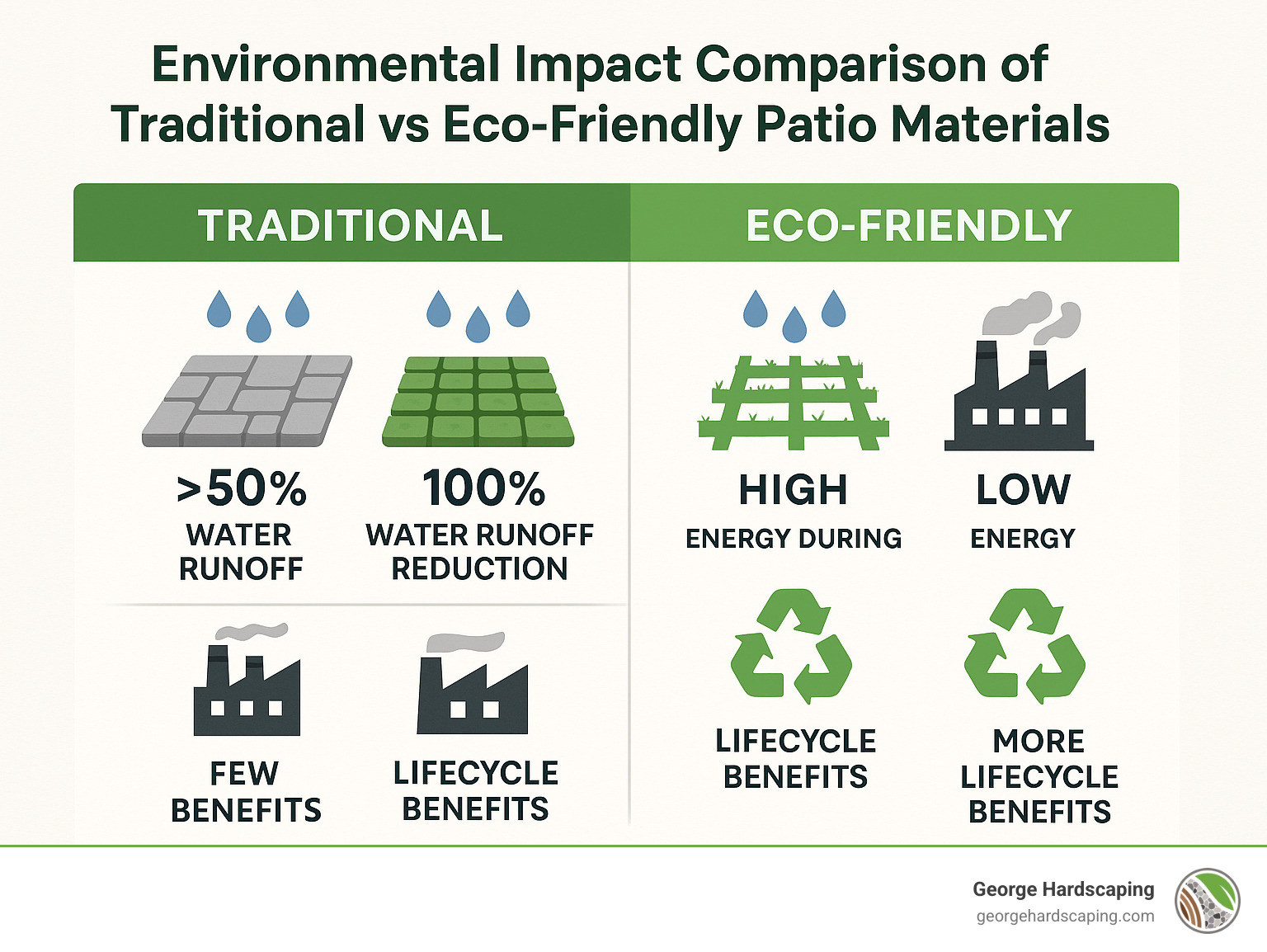
- Permeable pavers – Allow water to filter through, reducing runoff by up to 100%
- Recycled or reclaimed materials – Brick, stone, and wood that divert waste from landfills
- Composite decking – Made from recycled plastics and wood fibers
- Rapidly renewable materials – Bamboo and sustainably harvested wood
- Natural stone – When locally sourced to minimize transportation impact
Creating an outdoor living space that’s both beautiful and environmentally responsible isn’t just a trend—it’s becoming a priority for homeowners everywhere. With 44% of Americans expressing significant concern about environmental issues, eco-friendly patio options are gaining popularity as people look to extend their sustainable practices beyond their home’s interior.
The backyard or patio often serves as an ideal starting point for eco-conscious renovations. Unlike complex indoor projects, sustainable outdoor spaces can be implemented incrementally while delivering immediate environmental benefits and enhancing your property’s value.
An eco-friendly patio does more than just look good—it works with nature rather than against it. By choosing sustainable materials and thoughtful design, your outdoor space can reduce water runoff, support local wildlife, conserve resources, and create a healthier environment for your family to enjoy.
What Makes a Patio Truly Eco-Friendly?
When we talk about eco-friendly patio options, there’s more to consider than just picking green materials. True sustainability comes from thoughtful planning that considers the whole picture—from placement to how it interacts with the natural environment.
At George Hardscaping, we’ve seen how the most successful eco-friendly patios in Essex County combine smart design choices with careful material selection. A truly sustainable outdoor space considers the entire ecosystem of your property.
Your patio’s site positioning makes a tremendous difference in its environmental impact. Working with your land’s natural contours preserves soil structure and reduces the need for excessive grading. Patios that complement the existing landscape not only look more natural but also require fewer resources to build and maintain.
Thinking about carbon footprint means looking at the entire lifecycle of materials—from extraction and manufacturing to transportation and eventual disposal or reuse. Materials with lower embodied energy generally create less environmental harm.
Water-smart designs incorporating permeable systems work with natural water cycles rather than disrupting them. These designs reduce runoff while helping to recharge local groundwater supplies—particularly important in coastal North Shore communities.
Low-impact transport choices matter too. Materials sourced locally not only support our New England economy but significantly reduce transportation emissions. Supporting native biodiversity transforms your patio from a purely human space to one that contributes positively to the local ecosystem.
Patio Placement & Design Choices
The position of your patio plays a surprisingly important role in its environmental performance. For homes in Beverly, Salem, and throughout Essex County, a south-facing patio captures maximum sunlight during our cool New England springs and falls, potentially extending your outdoor season by weeks without energy-intensive heaters.
Creating microclimates through thoughtful design can make your patio comfortable year-round. A pergola with deciduous vines provides cooling shade in summer while allowing warming sunlight through in winter. Strategically placed thermal mass elements—like a stone seating wall—absorb daytime heat and release it slowly in the evening.
Right-Sizing Your Space
When it comes to sustainable patios, we’ve learned that “just enough” is often better than “as much as possible.” By carefully considering how you’ll actually use your outdoor space, you can create a more intimate, functional area while using fewer resources.
Many North Shore homeowners initially request expansive patios but end up primarily using more contained areas. By right-sizing from the beginning, you reduce material usage, decrease impermeable surface area, lower project costs, and often create more inviting spaces that feel proportional to your yard.
We’ve seen families transform modest-sized patios into outdoor living rooms, dining areas, and even productive garden spaces—all through smart design rather than excessive square footage. This approach saves resources while creating spaces that actually get used more frequently because they feel more welcoming and purposeful.
Eco-Friendly Patio Options: Sustainable Surface Solutions
When it comes to selecting materials for your eco-friendly patio, the choices you make have significant environmental implications. Let’s explore the most sustainable surface solutions available for North Shore homeowners.
Permeable & Pervious Systems
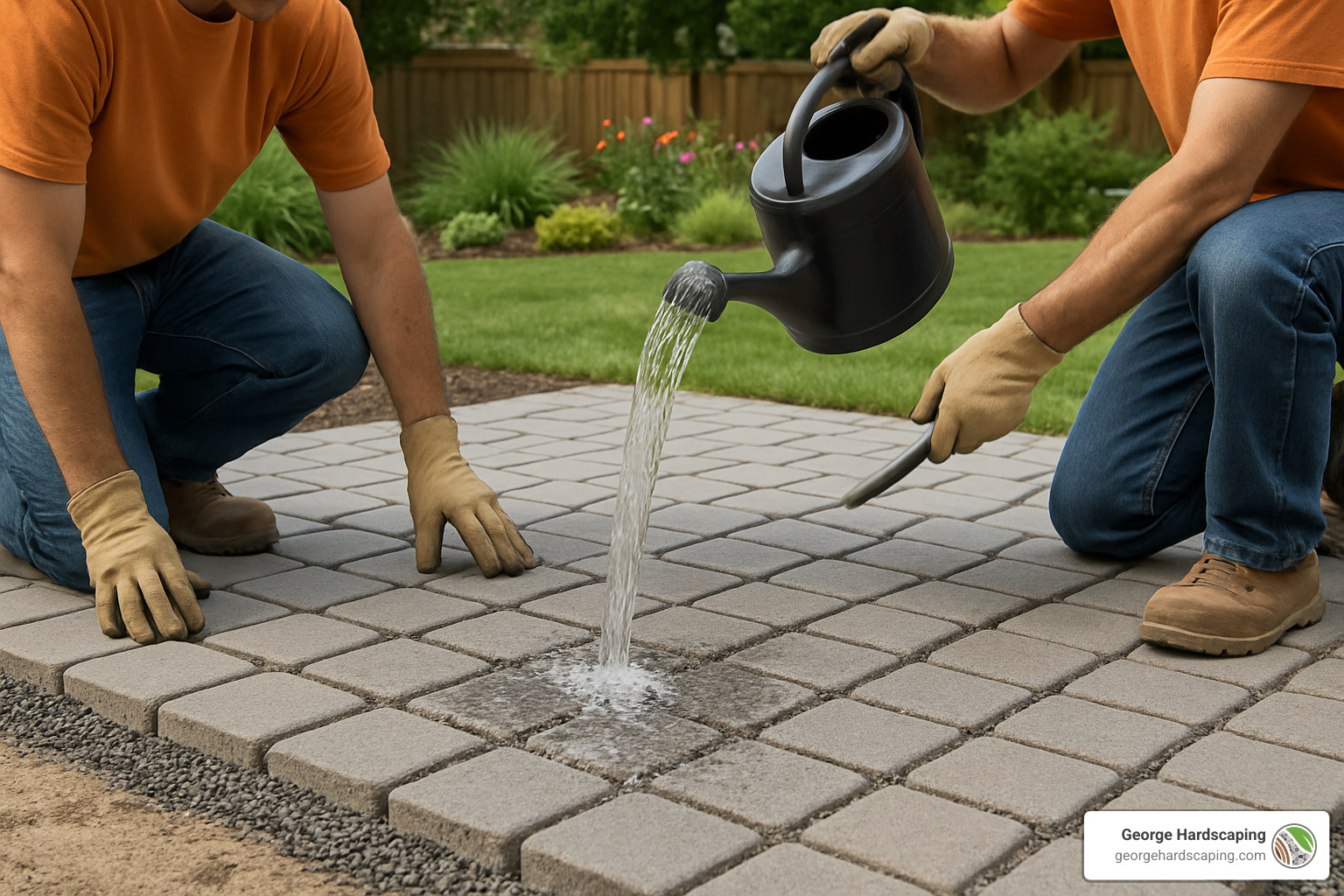
Perhaps the most exciting innovation in eco-friendly patio options is the development of permeable and pervious paving systems. These clever materials allow water to pass through or around them, dramatically reducing stormwater runoff while replenishing groundwater supplies.
Those beautiful permeable pavers you’ve been eyeing? They feature joints filled with small stones that allow water to flow between the pavers rather than racing across them. This smart design can reduce stormwater runoff by up to 100% compared to traditional concrete surfaces.
Pervious concrete takes a different approach – the material itself allows water to pass directly through. By containing little to no sand, this specialized concrete creates a porous structure that filters pollutants while allowing water to seep back into the ground.
For something truly versatile, open-grid systems combine the best of both worlds. These concrete or recycled plastic grids can be filled with gravel or planted with grass, providing structural support for vehicles while maintaining excellent permeability.
Despite what you might think about our tough New England winters, properly installed permeable systems actually perform exceptionally well in freeze-thaw conditions. The improved drainage reduces ice formation, and the flexible joints of permeable pavers handle ground movement better than solid concrete.
Want to learn more? Check out this Stormwater Report on permeable pavers or our guide to Permeable Driveway Pavers.
Reclaimed or Recycled Hardscape
Using reclaimed or recycled materials for your patio isn’t just eco-friendly – it adds character and history to your outdoor space. These materials reduce environmental impact by diverting waste from landfills, eliminating energy needed for new production, and preserving the stories embedded in vintage materials.
Reclaimed brick offers best character with its weathered patina. Many North Shore communities like Salem and Newburyport have buildings dating back centuries, and salvaged brick from renovation projects can find new life in your backyard.
Recycled concrete or “urbanite” can be repurposed into a distinctive, mosaic-like patio surface with unique character. What would have been construction waste becomes an artistic statement in your outdoor space.
Reclaimed stone from old walls, buildings, or previous landscape projects provides exceptional durability with minimal environmental impact.
Composite & Rapid-Renewable Decking
For raised patio areas or projects where a deck-like surface makes more sense, several sustainable options exist that combine beauty with environmental responsibility.
Composite decking blends recycled plastic and wood fibers into durable, low-maintenance boards. These innovative materials can divert hundreds of pounds of plastic waste from landfills for every 500-square-foot deck built.
Bamboo decking uses one of the world’s fastest-growing plants. Bamboo shoots up to 3 feet per day and can be harvested in just 5-7 years (compared to 50+ years for many hardwoods).
For traditionalists, FSC-certified hardwoods come from forests managed according to strict environmental and social standards.
| Material | Environmental Benefits | Durability | Maintenance | Average Cost Range* |
|---|---|---|---|---|
| Recycled Brick | Diverts waste, zero new production | 100+ years | Minimal, occasional repointing | $15-45/sq ft |
| Composite Decking | Diverts plastic waste, no staining needed | 25-30 years | Low, occasional cleaning | $8-70/sq ft |
| Permeable Pavers | 100% stormwater management, filtration | 50+ years | Joint refilling every few years | $15-60/sq ft |
*Cost ranges represent industry averages based on internet data, not George Hardscaping pricing. High-end costs may be 3x or more than average pricing.
Greener Accents: Landscaping, Water & Energy Strategies
A truly sustainable patio isn’t just about the materials underfoot—it’s about how your outdoor space connects with the surrounding environment. By thoughtfully integrating smart landscaping, water conservation, and energy solutions, your eco-friendly patio options become part of a complete ecological system.
Native & Drought-Tolerant Planting
When you incorporate native plants around your patio, you’re creating a bridge between your built environment and the natural world. Native New England plants like Black-eyed Susan, New England Aster, and Butterfly Weed don’t just look beautiful—they’ve evolved alongside local wildlife for thousands of years. These natural partnerships mean your garden can reduce water usage by up to 60% compared to conventional landscaping while providing essential habitat for local pollinators.
For Essex County homeowners, native plants offer practical benefits too. They typically require minimal fertilizer, resist local pests naturally, and thrive in our sometimes challenging climate. A thoughtfully designed pollinator garden near your patio adds both ecological value and sensory enjoyment.
Smart Water Management
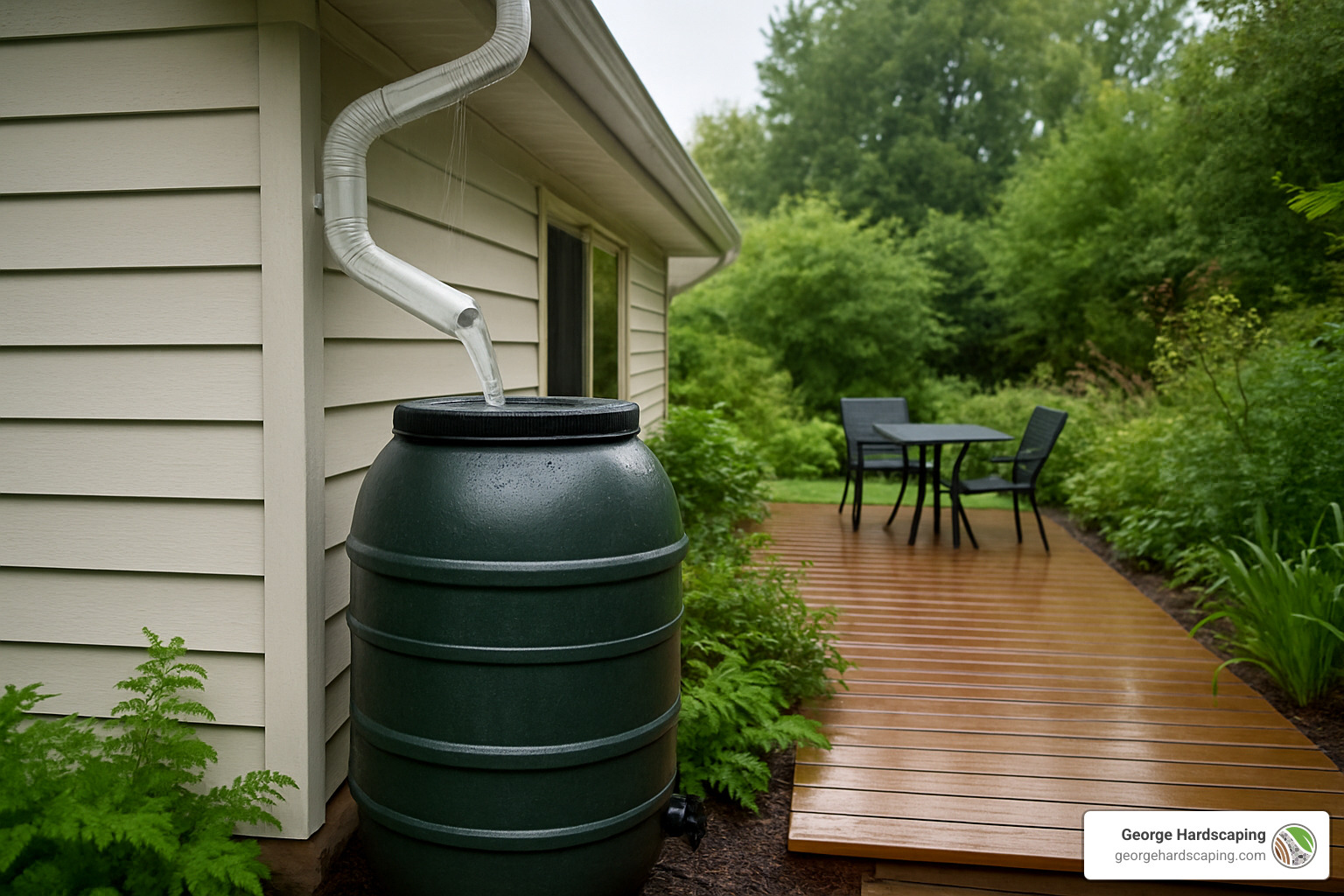
Those summer downpours we experience in Beverly or Marblehead? They’re opportunities to collect free irrigation water. A simple rain barrel connected to your downspout can harvest up to 1,300 gallons during peak summer months—water that would otherwise become runoff. This collected rainwater is actually better for your plants than treated municipal water.
Rain gardens offer another beautiful solution at the edges of patios. These slightly depressed planted areas capture runoff, allowing it to slowly percolate into the ground rather than overwhelming storm drains. The result is a lush, low-maintenance garden feature that practically waters itself while filtering pollutants from runoff.
For targeted irrigation, nothing beats drip systems that deliver water precisely to plant roots. When connected to rainwater harvesting, these systems operate with minimal environmental impact while using up to 70% less water than conventional sprinklers.
Want to learn more about water recycling for your garden? Check out this helpful guide on water recycling for outdoor gardens.
Energy-Efficient Lighting & Power
As twilight falls across your North Shore patio, thoughtful lighting transforms the space into a magical evening retreat. By choosing energy-efficient options, you create this ambiance without unnecessary environmental impact.
Solar-powered lighting has come a long way in recent years. Today’s solar lights offer improved reliability and brightness, with options ranging from practical path lights to whimsical string lights that create instant atmosphere. The best part? They’re powered entirely by renewable energy and require no electrical connections or ongoing electricity costs.
For areas needing more consistent illumination, LED fixtures use up to 75% less energy than traditional bulbs while lasting 25 times longer. Their durability makes them perfect for our New England climate with its extreme temperature variations.
Make your lighting even more efficient with motion sensors and timers that ensure lights operate only when needed. This approach reduces energy consumption while providing security benefits.
For the ultimate in sustainable power, consider pergola-mounted solar panels that generate electricity while providing shade for your outdoor living area. These installations often qualify for federal tax credits and state incentives, potentially offsetting a significant portion of the installation cost while providing years of clean energy.
Furnishings & Décor the Planet Will Love
Completing your eco-friendly patio with sustainable furnishings and décor creates a cohesive outdoor space that reflects your environmental values from ground to tabletop.
Choosing Sustainable Materials
When selecting furniture for your eco-friendly patio options, think beyond just appearance. The most sustainable choices balance beauty, durability, and environmental impact.
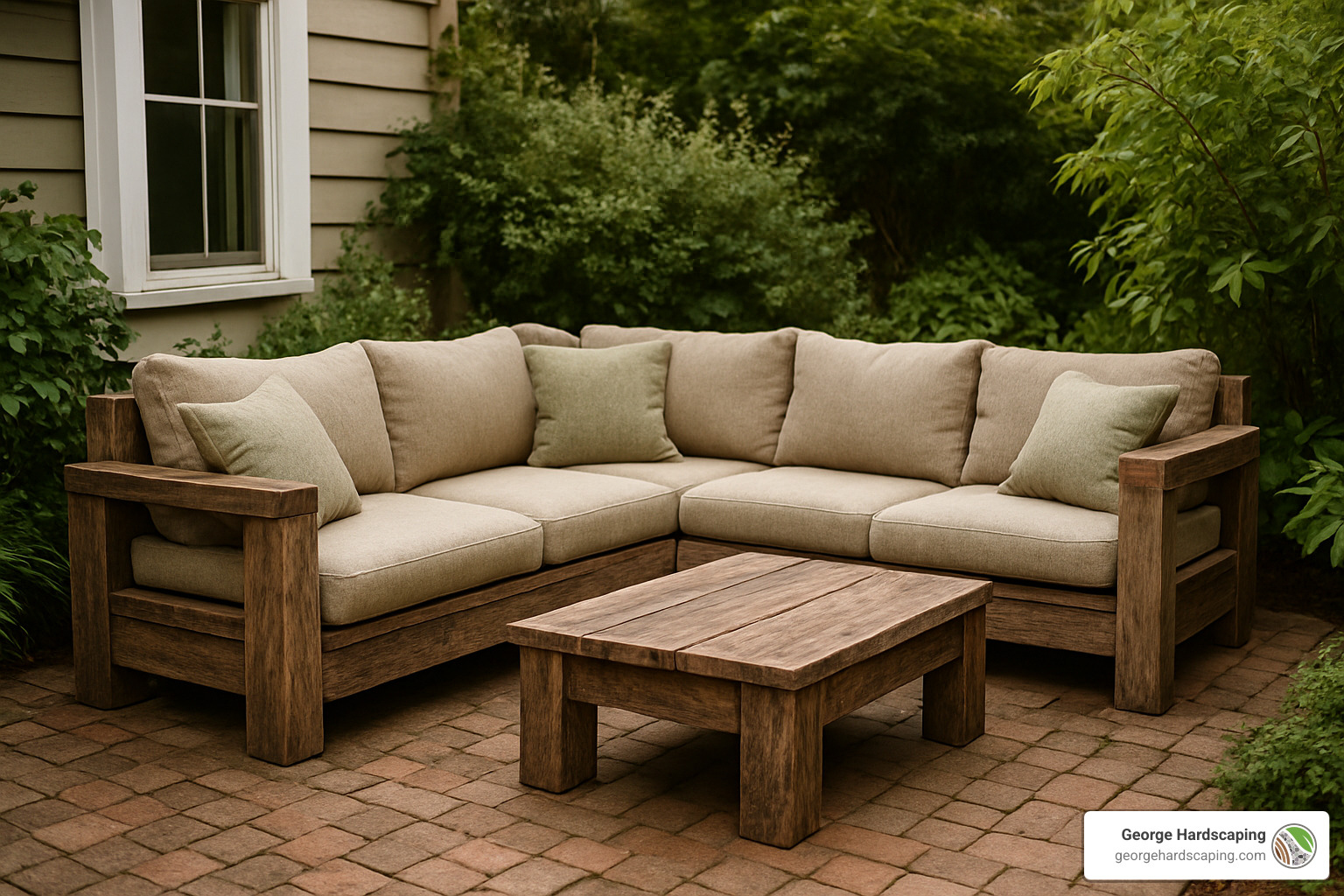
Those weathered wooden benches that caught your eye? They might be crafted from reclaimed wood – timber rescued from old barns, fencing, or industrial buildings. These pieces don’t just prevent waste; they bring character and history to your outdoor space.
If you prefer new construction, look for the FSC certification label, which ensures your furniture comes from responsibly managed forests. Woods like teak, acacia, and eucalyptus from certified sources offer exceptional outdoor durability while supporting sustainable forestry practices.
Have you noticed those colorful, maintenance-free chairs popping up in North Shore backyards? Many are made from recycled HDPE – essentially transformed milk jugs and detergent bottles. These pieces are virtually indestructible in our harsh New England climate, resisting fading, cracking, and moisture damage.
For tables and chair frames, recycled aluminum shines as a lightweight, rust-proof option. It requires a remarkable 95% less energy to produce than virgin aluminum, making it an environmental winner.
When it comes to cushions and pillows, solution-dyed acrylics like Sunbrella fabrics offer exceptional longevity. Their fade resistance means fewer replacements over time, reducing the environmental footprint of your outdoor living space.
Maintenance the Eco Way
Maintaining your patio furnishings sustainably isn’t just good for the planet—it extends their lifespan and keeps them looking beautiful year after year.
Biodegradable solutions like diluted vinegar or castile soap effectively tackle dirt and mildew without harming the plants, soil, or water systems around your patio. Your garden will thank you, and so will local waterways.
In our unpredictable New England climate, seasonal storage makes a world of difference. Even the most weather-resistant materials benefit from protection during harsh winters.
For fabric protection, explore natural alternatives to chemical sprays. Beeswax-based products create effective water resistance without petroleum-derived ingredients.
When maintaining the areas around your patio, consider upgrading to electric tools for tasks like leaf blowing or edge trimming. Today’s battery technology has made cordless options powerful enough for most residential needs, while producing up to 99% less air pollution than gas-powered alternatives.
Building & Maintaining for the Long Haul
When you invest in an eco-friendly patio option, you’re thinking beyond today—you’re creating a space designed to last for generations. At George Hardscaping, we believe sustainability isn’t just about the materials you choose initially, but how your outdoor space performs over decades of enjoyment.
The most sustainable patio is one you’ll never need to replace. That’s why we recommend looking for materials and contractors with recognized environmental credentials. Materials with FSC certification ensure wood products come from responsibly managed forests. Products carrying Cradle to Cradle certification are specifically designed for the circular economy, meaning they can be reused or recycled at the end of their life.
Sourcing locally makes a tremendous difference too. Here in Massachusetts, we’re fortunate to have access to beautiful native stone, quality brick, and other excellent hardscape materials. When materials travel shorter distances, their carbon footprint shrinks dramatically.
When it comes to finishing touches like sealers, the eco-friendly options have improved dramatically in recent years. Water-based sealers and natural oils now provide excellent protection without the harmful VOCs (volatile organic compounds) found in conventional products.
Eco-Friendly Upkeep
The most sustainable patios are those that receive regular, gentle care. A little attention goes a long way toward preventing bigger problems down the road.
Start with annual inspections each spring after winter’s freeze-thaw cycles have ended. Look for loose pavers, eroding joints between stones, or areas where water isn’t draining properly. Small issues caught early are typically simple fixes—but left unattended, they can cascade into major problems requiring extensive repairs.
When it comes to cleaning, nature provides most of what you need. A simple mixture of water, vinegar and mild soap handles most patio cleaning tasks beautifully. For stubborn stains, a paste of baking soda and water applied with a soft brush works wonders without introducing harsh chemicals into your garden ecosystem.
Making prompt repairs is perhaps the most sustainable maintenance practice of all. Replacing individual pavers or repointing small sections of mortar uses minimal materials while preventing the need for complete reconstruction later.
Multi-Functional Spaces & ROI
Smart design creates more value from fewer resources—a fundamental sustainability principle. By incorporating multi-functional elements, your patio can serve several purposes while minimizing its environmental footprint.
Planter-benches brilliantly combine seating and gardening in a single structure. These space-saving elements are particularly valuable in compact yards like those found in historic Salem or Marblehead homes.
Firepit-tables transition seamlessly from daytime dining surface to evening warmth source. This dual functionality extends your outdoor season naturally, reducing the need for energy-intensive heating elements.
Modular furniture adapts to different gathering sizes and activities without requiring multiple specialized pieces. A few versatile components can be reconfigured for intimate dinners or larger celebrations.
Beyond the environmental benefits, eco-friendly patio options offer compelling financial advantages too. Well-designed outdoor living spaces typically return 80% or more of their investment when it comes time to sell your home.
More info about Patio Design & Installation
Frequently Asked Questions about Eco-Friendly Patio Options
How much more do sustainable materials cost?
When clients ask about costs, I always explain that eco-friendly doesn’t necessarily mean budget-breaking. The price difference between conventional and sustainable options varies widely based on your specific choices and project needs.
For permeable pavers, you’ll typically invest about 15-30% more than standard concrete pavers initially. However, this upfront cost often balances out since you may reduce or eliminate the need for separate drainage systems.
Reclaimed materials offer interesting cost dynamics. If you’re willing to source materials yourself, you might actually spend less than buying new. When purchased through architectural salvage dealers, expect to pay up to 50% more—but for truly one-of-a-kind character that new materials simply can’t match.
Composite decking generally costs 15-40% more than pressure-treated wood at installation. The magic happens over time, though. When you factor in decades without staining, sealing, or replacing rotted boards, many Essex County homeowners find composites become the more economical choice over a 10-15 year period.
Remember to think about the full lifecycle of your patio. Many sustainable materials offer significantly longer lifespans and reduced maintenance requirements. This “pay once, enjoy for decades” approach often makes them more economical despite higher upfront costs.
Do permeable pavers work in snowy New England winters?
As someone who’s installed countless permeable paver systems across Essex County, I can confidently say: Yes, they work beautifully in our challenging New England winters—often better than conventional surfaces!
The magic happens because water drains through rather than pooling on the surface. This significantly reduces ice formation, making your patio safer during freeze-thaw cycles. Many of our clients report using far less ice melt and salt on their permeable patios, which is better for both your plants and the environment.
The flexible joints between pavers actually accommodate ground movement better than rigid concrete slabs. This means fewer cracks and upheavals during our notorious freeze-thaw cycles that can wreak havoc on traditional patios.
Can I DIY an eco patio or should I hire a pro?
DIY-friendly eco-friendly projects typically include:
– Small, simple designs on level ground
– Modular systems specifically designed for homeowner installation
– Loose-laid materials like reclaimed brick set in sand
– Raised deck-style patios using composite materials with straightforward connection systems
Projects better left to professionals include those with complex drainage requirements, significant grade changes, or permeable paver systems where proper base preparation makes or breaks long-term performance.
For North Shore homeowners with basic construction skills, I often suggest starting with smaller eco-friendly projects to build confidence. Even if you choose to DIY, consulting with a professional about drainage considerations can save headaches down the road.
A professionally installed patio that lasts 30+ years is ultimately more sustainable than a DIY project that requires premature replacement.
Conclusion
Creating an eco-friendly patio isn’t just about following a trend—it’s about making a thoughtful choice that aligns your outdoor space with your environmental values while enhancing your home’s beauty and value. As we’ve explored throughout this guide, sustainable outdoor living combines smart design with responsible material choices to create spaces that work with nature rather than against it.
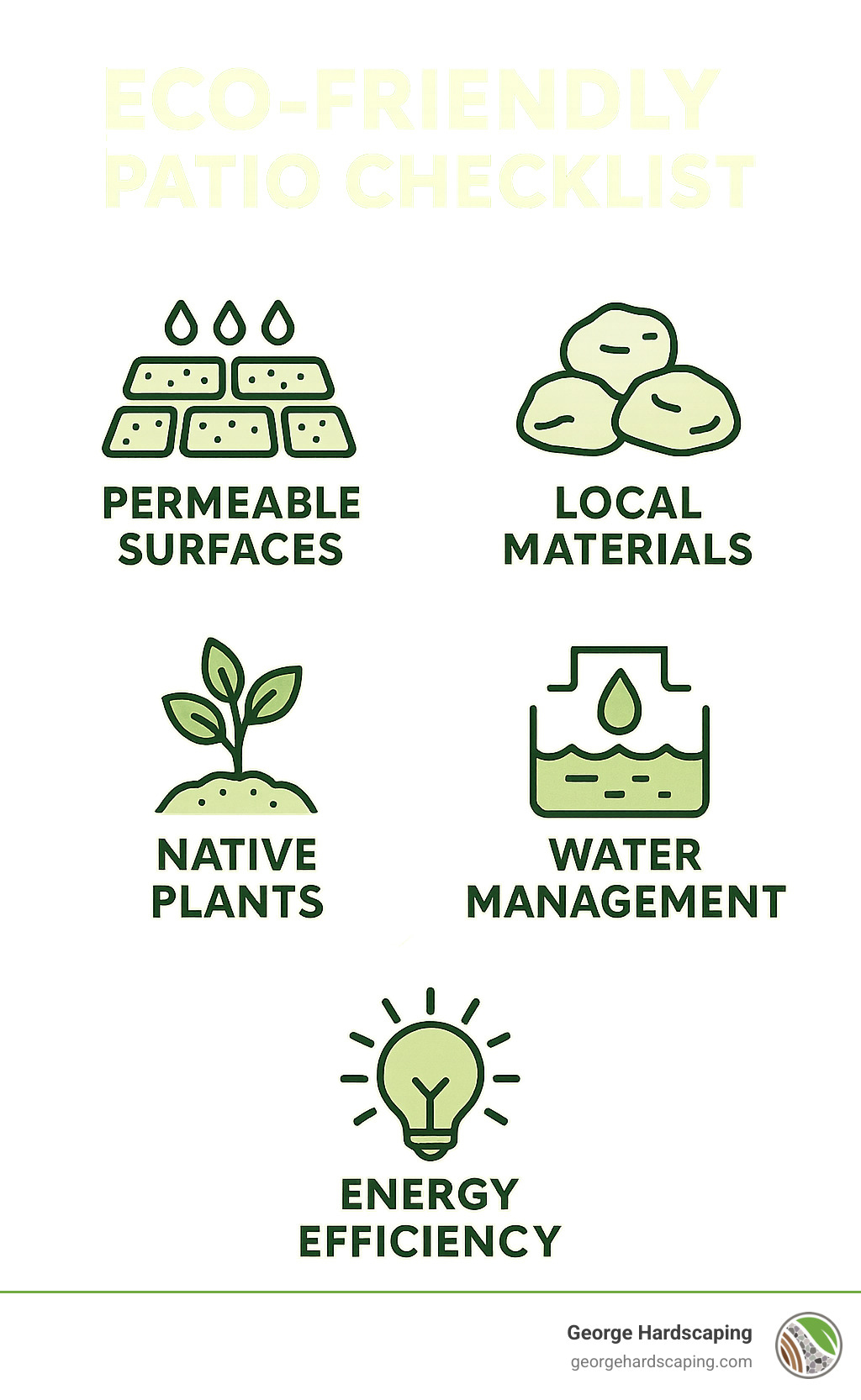
The journey toward a more sustainable patio often begins with small steps. Perhaps you’ll start with permeable pavers that manage rainwater naturally, or maybe you’ll incorporate native plants that support local pollinators. Each choice makes a difference, and together, these decisions create outdoor spaces that truly reflect care for our environment.
What makes an eco-friendly patio truly sustainable is the thoughtful integration of several key elements. When you choose permeable surfaces that work with natural water cycles, you’re helping to replenish groundwater and reduce flooding. By selecting reclaimed or recycled materials, you’re giving new life to resources that might otherwise end up in landfills. Native plantings support local ecosystems while requiring less maintenance and water.
At George Hardscaping, we’ve seen how these principles transform ordinary backyards into extraordinary outdoor retreats. Our team brings extensive experience implementing sustainable hardscaping solutions throughout Essex County—from permeable paver installations in Beverly to reclaimed brick patios in Salem that honor the area’s rich history while looking toward a sustainable future.
We understand the unique challenges of North Shore properties, from coastal considerations in Marblehead to historic preservation concerns in Salem. Our approach balances environmental responsibility with beauty and functionality, creating spaces that you’ll love today and feel good about tomorrow.
Ready to explore sustainable options for your outdoor space? We’d love to help bring your eco-friendly vision to life. Contact George Hardscaping for a consultation where we can discuss your specific needs and how sustainable hardscaping can improve your property while treading lightly on the earth. Learn more about our custom patios and find how sustainability and beauty can go hand in hand in your outdoor living space.
