
How to Bid Commercial Snow Removal: Top 7 Winning Tips
How to bid commercial snow removal is a process that requires careful consideration and strategic planning. It’s a crucial part of a snow removal business aiming to expand into lucrative contracts.
Here’s the quick rundown of what you need to know to start:
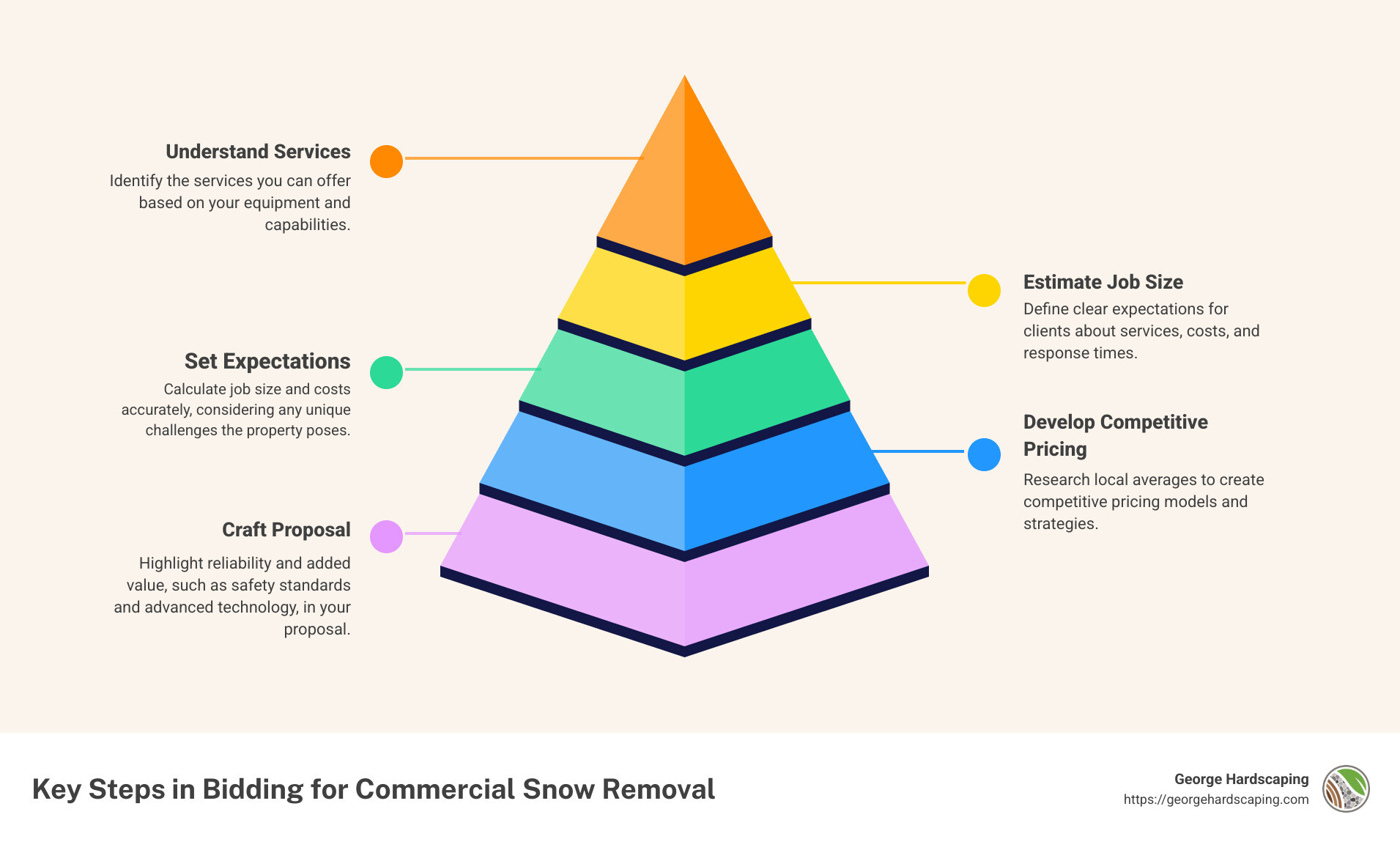
– Understand the scope of services you can offer, considering your equipment and capabilities.
– Accurately estimate the job size, costs, and any unique property challenges.
– Set clear expectations for clients regarding services, costs, and response times.
– Create competitive pricing models and strategies after researching local averages.
– Craft a comprehensive proposal that highlights your reliability and added value, like meeting safety standards and using advanced technology for efficiency.
Securing commercial snow removal contracts is more than just plowing snow. It’s about running a smart business. Contracts with commercial clients, like hospitals or universities, bring stability and potential for growth, especially in regions like Essex County, MA, where snow can be a significant seasonal challenge. Offering well-planned service ensures client satisfaction, meets safety standards, and reduces liabilities. With correct bidding and strategic planning, you can win the big contracts and make sure your business thrives through the winter months.
How to bid commercial snow removal vocabulary:
– commercial snow removal contracts
– commercial snow removal rates per square foot
– how to price commercial snow removal
Understanding Snow Removal Bidding Basics
When you’re getting started with how to bid commercial snow removal, understanding the basics is key to securing those valuable contracts. This involves knowing what services you can offer, evaluating job complexity, and setting clear expectations with your clients.
Identifying Your Snow Removal Services
First things first, you need to know exactly what snow removal services your business can provide. This depends on your equipment and manpower. For example, if you have a plow truck, a salt spreader, and a snowblower, you can offer a full suite of services like plowing, de-icing, and snow blowing.
Consider the types of properties you can handle. Residential properties might be smaller and require less equipment, while commercial or industrial properties could need a more extensive setup. Knowing your limits helps you bid accurately and avoid overcommitting.
Estimating Job Complexity
Understanding the complexity of a snow removal job is crucial for accurate bidding. Start by calculating the size of the property, the amount of snow typically received in the area, and any unique challenges the property might present.
For instance, properties with tight corners or lots of pedestrian areas might require more time and effort. Also, keep an eye on local weather patterns. Knowing the average snowfall and the frequency of heavy storms can help you predict the effort required more accurately.

Setting Clear Expectations
Once you’ve assessed the services you can offer and the complexity of the job, it’s time to set clear expectations with your clients. This involves outlining what specific services you’ll provide, like snow plowing, de-icing, or sidewalk clearing.
Also, discuss trigger points—the specific conditions under which your services will be activated, such as a certain depth of snowfall. Be transparent about your response times and any potential extra fees. This transparency helps build trust and ensures that both parties are on the same page.
By understanding these basics, you’re well-equipped to move on to crafting detailed bids and proposals that can win you those crucial commercial contracts. Next, we’ll dive into the strategies for creating a winning snow removal bid.
How to Bid Commercial Snow Removal
Bidding for commercial snow removal contracts involves a strategic approach to pricing, cost calculation, and submitting competitive bids. Let’s break it down into bite-sized steps.
Pricing Models
When it comes to how to bid commercial snow removal, choosing the right pricing model is crucial. There are several popular models to consider:
- Per-Event Pricing: Charge for each snow event. This is straightforward and aligns costs with actual work done. Ideal for areas with unpredictable snowfall.
- Per-Inch Pricing: Charge based on the amount of snow. This can be beneficial if you’re in a region with variable snow depths.
- Seasonal Contracts: Offer a flat rate for the entire winter season. This provides steady income and is attractive to clients who prefer predictable costs.
Each model has its pros and cons. For instance, per-event pricing offers flexibility, while seasonal contracts provide financial stability. Choose one that aligns with your business goals and the needs of your clients.
Cost Calculation
Accurate cost calculation is the backbone of a successful bid. You need to account for:
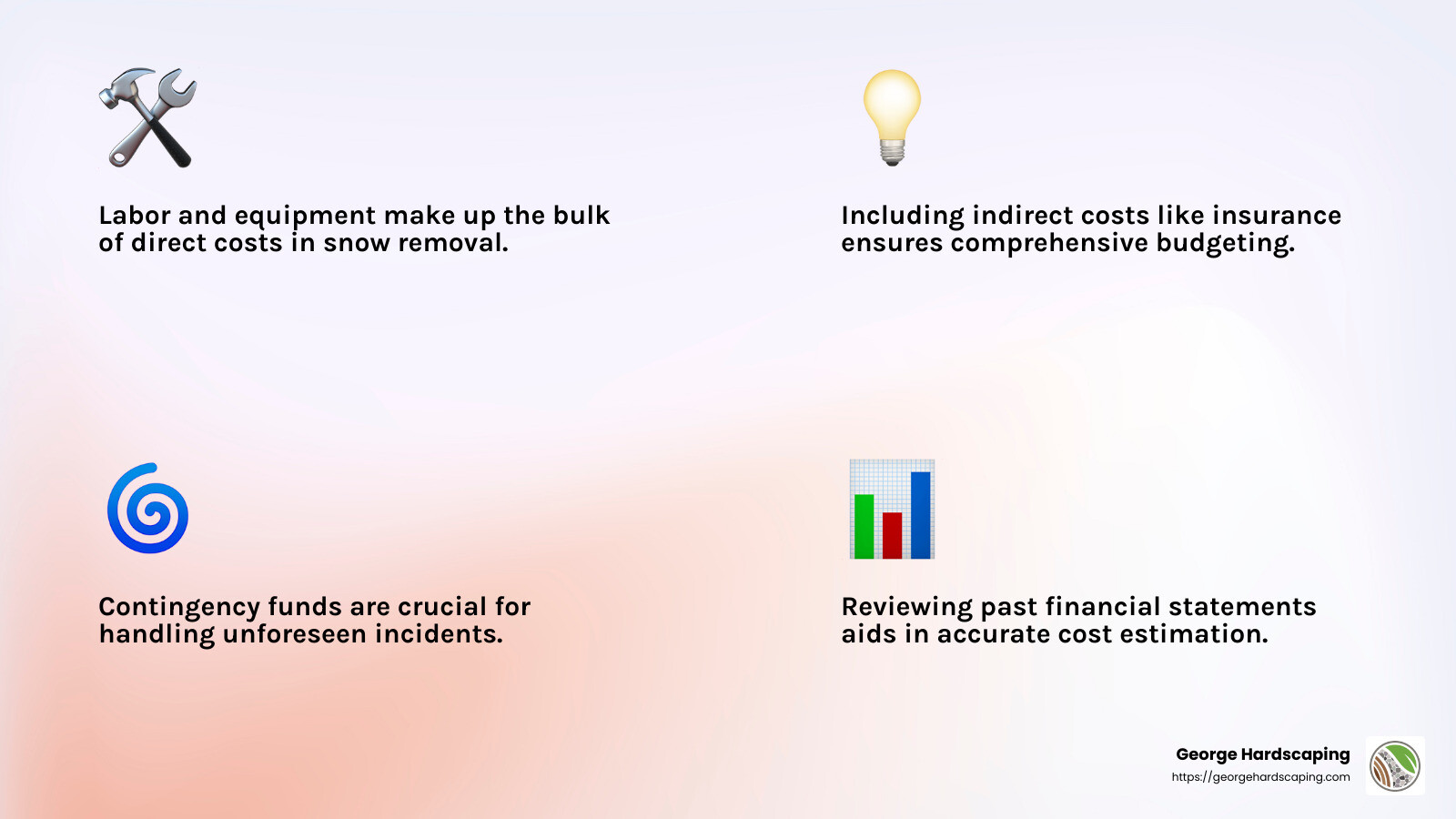
- Direct Costs: This includes labor, fuel, equipment maintenance, and materials like salt or de-icing agents.
- Indirect Costs: Factor in overheads such as insurance, marketing, and administrative expenses.
- Contingency Funds: Always include a buffer for unexpected expenses, like equipment breakdowns or severe weather conditions.
To get a clearer picture, review your financial statements from previous years to understand your cash flow. This will help you determine if you can afford to take on a new contract and still make a profit.
Competitive Bids
To win contracts, your bids need to stand out. Here’s how:
- Research the Competition: Know the average pricing in your area. This helps you position your bid competitively without undercutting your profits.
- Highlight Your Strengths: Showcase what sets you apart. Perhaps it’s your quick response times or your comprehensive service package that includes both plowing and de-icing.
- Provide References and Testimonials: Let your past work speak for you. Positive feedback from satisfied clients can be a powerful tool in winning new contracts.
- Offer Value-Added Services: Consider including additional services like weather updates or 24/7 accessibility. These small extras can make a big difference in a competitive bid.
A successful bid isn’t just about being the cheapest option. It’s about offering the best value for money by balancing cost, service quality, and reliability.
With these strategies, you’re well on your way to crafting bids that not only win contracts but also build long-term relationships with your clients. Next, let’s explore the factors that influence snow removal prices and how you can optimize your operations.
Crafting a Winning Snow Removal Bid
Crafting a winning bid for commercial snow removal is about more than just numbers. It’s about showing value, understanding costs, and using smart pricing strategies.
Costs
First, let’s talk about costs. You need to know your expenses inside out. This includes:
- Direct Costs: These are the obvious ones like labor, fuel, and equipment maintenance. Don’t forget materials like salt and de-icing agents.
- Indirect Costs: These are costs that are not directly tied to a specific job, like insurance, marketing, and administrative expenses. They’re just as important.
- Contingency Funds: Always set aside a little extra for unexpected costs. Equipment might break down or a storm could be more severe than predicted. It’s better to be prepared.
Take a look at past financial records to understand your cash flow. This can help you see if you’re in a position to take on new contracts and still make a profit.
Pricing Strategies
Choosing the right pricing strategy is key to winning bids. Here are some options:
- Per-Event Pricing: Charge for each snow event. This is straightforward and aligns costs with the actual work done. It’s ideal in areas with unpredictable snowfall.
- Per-Inch Pricing: Charge based on the amount of snow. This can be beneficial if you’re in a region with variable snow depths.
- Seasonal Contracts: Offer a flat rate for the entire winter season. This provides steady income and is attractive to clients who prefer predictable costs.
Each model has its own advantages. For example, per-event pricing offers flexibility, while seasonal contracts provide financial stability. Choose one that fits your business goals and your clients’ needs.
Adding Value
Adding value to your bid can set you apart from the competition. Here’s how to do it:
- Highlight Your Strengths: Make sure to showcase what makes your service special. Maybe you have faster response times or offer a full service package that includes plowing, de-icing, and sidewalk clearing.
- Offer Extras: Consider adding services like weather updates or being accessible 24/7 during the snow season. These little extras can make a big difference.
- Provide References and Testimonials: Let your past work speak for itself. Positive feedback from satisfied clients can be a powerful tool in winning new contracts.
A winning bid isn’t just about being the cheapest option. It’s about offering the best value for money by balancing cost, service quality, and reliability.
With these strategies, you’re well on your way to crafting bids that not only win contracts but also build long-term relationships with your clients. Next, let’s explore the factors that influence snow removal prices and how you can optimize your operations.
Factors Influencing Snow Removal Prices
When it comes to how to bid commercial snow removal, understanding the factors that influence pricing is crucial. Let’s break down the key elements: geography, equipment, and manpower.
Geography
Geography plays a big role in snow removal pricing. Different regions experience varying snowfall levels, which directly impact service frequency and cost. For instance, areas close to water bodies or at higher altitudes often see more snow. This means more frequent service and, consequently, higher costs.
In Northern Minnesota, where snow is abundant, consider using historical weather data to predict your seasonal workload. This can help you set prices that reflect the actual effort required to manage snow in your area.
Equipment
Equipment is another major factor. Snow removal requires specialized machinery, which needs regular maintenance and, sometimes, replacement. Depending on your clients’ needs, you might invest in larger or more advanced equipment. This investment will affect your pricing.
For example, a salt spreader or a snowblower can be essential for efficient operations. But remember, these come with maintenance and operational costs. Factor these into your bids to ensure you’re covering your expenses and making a profit.
Manpower
Finally, manpower is a significant cost component. Skilled labor is essential for efficient and safe snow removal. However, hiring experienced operators can be costly. On the other hand, training less experienced workers also incurs costs.
Creating a reliable team is crucial. Upskilling your crew is an investment that pays off in the long run, as it leads to better service and higher client satisfaction. Consider offering competitive pay and benefits to attract and retain top talent.
In summary, when setting snow removal prices, consider the unique geographical challenges of your area, the costs associated with maintaining and operating your equipment, and the expenses related to hiring and training your team. Balancing these factors will help you create competitive and profitable bids.
Next, let’s dive into optimizing your operations to ensure maximum efficiency and profitability.
Optimizing Snow Removal Operations
Once you’ve got your pricing right, it’s time to focus on making your snow removal operations as efficient as possible. Here’s how you can do it:
Leveraging Technology
Technology can be a game-changer for your snow removal business. Using GPS tracking helps manage your fleet in real-time. This means you can see where your trucks are and how they’re performing, leading to better decision-making.
Route optimization software is another tool that can increase efficiency. It helps plan the best routes for your snow plows, saving time and fuel. This not only reduces costs but also allows you to serve more clients in less time.
Additionally, advanced weather forecasting tools can help you prepare for upcoming storms. By knowing when and where snow will fall, you can plan your operations more effectively and keep clients informed.
Effective Route Planning
Good route planning is crucial for efficiency. Focus on servicing clients in specific areas to minimize travel time. This means you can complete more jobs in less time, increasing your profitability.
Creating detailed maps and plans for each client before the season starts can be very helpful. Knowing the layout of each property allows your team to work faster and more effectively when the snow hits.
Preparing for Peak Season
Preparation is key for a successful snow removal season. Start with equipment maintenance and repairs to ensure everything is in top condition. Breakdowns during a storm can be costly and damaging to your reputation.
Stock up on essential materials like salt and sand early. This way, you’re not caught off guard by shortages or price hikes during the season.
Pre-season training for your staff is also important. Make sure everyone knows their roles and responsibilities. This helps the team work smoothly when the pressure is on.
Finally, establish partnerships with subcontractors for overflow work. This ensures you can handle unexpected demand without compromising service quality.
By leveraging technology, planning routes effectively, and preparing thoroughly for peak season, you can optimize your snow removal operations. This will lead to more efficient service, happier clients, and a more profitable business.
Let’s move on to the frequently asked questions about bidding snow removal.
Frequently Asked Questions about Bidding Snow Removal
How to calculate costs for a snow removal job?
Calculating costs for a snow removal job involves several key components:
- Labor: Determine the number of hours required for each job and the hourly wage of your workers. Consider overtime pay during peak snow events.
- Equipment: Factor in the cost of using your trucks, plows, snowblowers, and any other machinery. Include maintenance, fuel, and potential repair costs.
- Materials: Account for consumables like salt and sand. Prices can fluctuate, so it’s wise to include a buffer for unexpected price hikes or shortages.
Additionally, consider overhead expenses and include a buffer for unexpected events or equipment breakdowns. This comprehensive approach ensures you cover all bases and maintain profitability.
Which pricing model is best for snow removal?
Choosing the right pricing model depends on your business needs and client preferences:
- Seasonal Contracts: These offer stability and predictability. Clients pay a fixed amount for the entire season, regardless of the number of snow events. This model is ideal in areas with consistent snowfall.
- Per-Event Pricing: Charge clients each time you provide service. This model can be more profitable in regions with infrequent snowfalls but may lead to unpredictable revenue.
- Per-Inch Pricing: Charge based on the amount of snow removed. This model aligns your revenue with the actual work done but requires precise measurement and tracking.
Each model has its pros and cons. Consider your cash flow, client preferences, and regional weather patterns when choosing the best fit.
What should be included in a snow removal contract?
A well-crafted snow removal contract is essential for managing risks and setting clear expectations:
- Service Definitions: Clearly outline the services provided, such as plowing, de-icing, and snow removal. Specify the areas covered and response times.
- Liability Limitations: Define who is responsible for damages or accidents. This protects you from potential legal issues.
- Indemnification Clauses: Include clauses that protect you from claims arising from your services. This transfers certain risks to the client.
- Force Majeure Provisions: Address unforeseen events like extreme weather that might prevent you from fulfilling the contract.
- Termination Clauses: Specify conditions under which either party can terminate the agreement.
By including these elements, you create a clear and comprehensive contract that protects both you and your clients.
Conclusion
Securing commercial snow removal contracts is a path to long-term success, and at George Hardscaping, we are committed to helping you achieve just that. Understanding how to bid commercial snow removal effectively can set you apart from the competition and establish a reliable client base.
Our approach is simple and clear: we combine quality service with strategic planning. By offering customized solutions and prioritizing safety, we ensure that our clients’ needs are met even during the harshest winters. We believe in transparency and fairness, which is why our contracts are detailed and straightforward, covering everything from service definitions to liability clauses.
At George Hardscaping, we know that the key to success lies in building strong relationships with our clients. By providing exceptional service and maintaining open communication, we foster trust and loyalty. This not only helps us secure contracts but also paves the way for long-term partnerships.
As we continue to serve the North Shore with dedication and expertise, we invite you to learn more about our snow plowing services. Let us help you steer the complexities of commercial snow removal and secure the contracts that will drive your business forward. Together, we can achieve long-term success, one snowstorm at a time.
