
Why a Builders Fire Pit Is One of the Best Upgrades for Your Massachusetts Outdoor Space
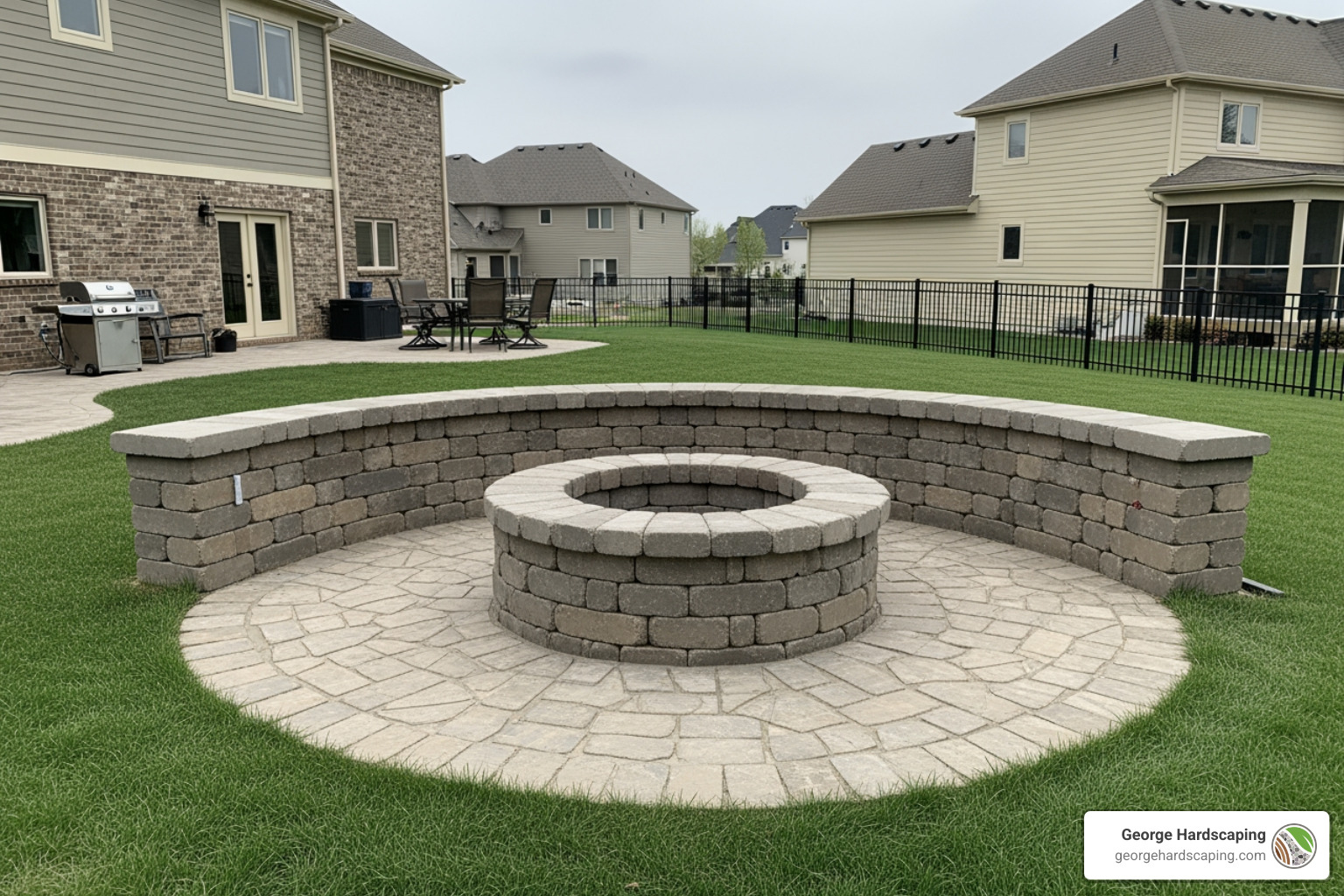
A builders fire pit is a professionally constructed outdoor fire feature — built from materials like natural stone, concrete block, or brick — designed to serve as a permanent focal point in your backyard. Unlike temporary, portable fire bowls that rust, tip over, or degrade after a single season, a builder-grade fire pit is an engineered structure integrated directly into your landscape design.
Quick answer: What is a builders fire pit?
| Feature | Details |
|---|---|
| What it is | A custom-built, permanent outdoor fire feature |
| Common types | Wood-burning, gas (natural gas or propane), fire pit tables, sunken pits |
| Who builds it | Licensed hardscape or masonry contractors |
| Typical cost (MA, industry average) | Ranges from roughly $3,000 to $30,000+ depending on size, materials, and fuel type |
| Key benefits | Extends outdoor season, adds home value, creates a gathering space |
| Permit required? | Usually yes — check with your local fire department |
There’s something timeless about gathering around a fire. It’s one of the oldest human traditions — and it turns out, it also makes your home more valuable and your backyard far more enjoyable.
For homeowners in Essex County and the North Shore of Massachusetts, a custom fire pit does more than look beautiful. It extends the usability of your outdoor space well into the cooler fall and spring months — a real advantage given New England’s unpredictable climate.
When the autumn chill rolls in off the Atlantic, or when spring evenings remain crisp and cool, a professionally built fire feature provides the warmth and light needed to keep your family outdoors. Real estate professionals estimate that high-quality outdoor fire features can increase home value by 5% to 10%, offering an excellent return on investment. But the everyday benefit is simpler: your backyard becomes a welcoming sanctuary where friends and family naturally gather to share stories, roast marshmallows, and relax after a long week.
This comprehensive guide covers everything you need to know to plan your project — from choosing the right fire pit style and materials, to understanding Massachusetts building codes, to knowing what professional installation actually involves.
Important builders fire pit terms to understand as you plan your project:
- If you want to build a fire pit that stands the test of time, proper planning is essential.
- For ultimate convenience, a professional Gas fire pit installation offers instant warmth at the flip of a switch.
- An inground fire pit provides a sleek, low-profile aesthetic that blends seamlessly with your patio surface.
Choosing the Right Builders Fire Pit for Your Massachusetts Home

When you decide to add a permanent fire feature to your yard, you are investing in the long-term design structure of your property. This isn’t like buying a cheap metal bowl from a big-box retail store that will rust out after one harsh New England winter. A true builders fire pit is an engineered element designed to withstand freezing cycles, heavy snow, and high heat.
To get the most out of your investment, you need to consider how the fire feature integrates with your overall property layout. For instance, if you live in Gloucester, MA, your backyard might feature rugged coastal ledges, sandy soils, or steep slopes that require specialized footing and structural retaining walls. On the other hand, a suburban home in Woburn, MA might have a manicured lawn where the fire feature needs to blend seamlessly with an existing paver patio.
To explore how these structures are planned from the ground up, you can find More info on custom fire pits to see how custom shapes, sizes, and positioning can elevate your property’s layout.
Custom Masonry vs. Prefabricated Builders Fire Pit Kits
One of the first decisions you will face is whether to build a fully custom masonry fire pit or use a prefabricated kit.
- Custom Masonry: This option offers unlimited design freedom. Using high-quality stone veneer, natural New England fieldstone, granite, or uniform concrete pavers, masonry professionals construct the unit piece by piece. This allows us to match the exact stone profile of your home’s foundation, chimney, or existing retaining walls. It also ensures unmatched durability, as the core is lined with heavy-duty firebrick and high-temperature refractory mortar that can withstand extreme thermal expansion without cracking.
- Prefabricated Kits: These kits consist of pre-cast concrete blocks that fit together in a predetermined circle or square. While they are faster to assemble, they lack the custom design flexibility, structural integrity, and longevity of a fully mortared masonry unit. Over time, the lack of a reinforced core can cause these kits to shift, crack, or degrade under intense heat.
If you are trying to weigh these options for your property in Beverly, MA or Danvers, MA, our Outdoor Fire Pit Builders Ultimate Guide provides an in-depth breakdown of how custom stonework outperforms basic kits over time.
Key Benefits of Hiring a Professional Builders Fire Pit Contractor
While a weekend DIY project might sound tempting, building a permanent fire feature carries significant risks if done incorrectly. Hiring certified Firepit Installers ensures your project is built to last and complies with all local safety standards.
Here is why professional installation is critical:
- Gas Line Safety: If you choose a gas-burning option, a licensed professional must install, bury, and pressure-test the gas lines to prevent dangerous leaks and ensure proper gas pressure.
- Proper Drainage: Without built-in drainage, rainwater will pool inside your fire pit, leading to rusted burners, clogged gas jets, or cracked masonry when the trapped water freezes and expands during the winter.
- Soil and Foundation Engineering: In towns like Ipswich, MA, clay-heavy soils expand and contract dramatically with temperature changes. Professionals excavate below the frost line, lay a compacted gravel foundation, and install geotextile fabric to prevent the structure from shifting, tilting, or sinking over time.
Gas vs. Wood-Burning Fire Pits: Convenience, Cost, and Ambiance
Choosing your fuel source will dictate how you use your fire pit, how much maintenance it requires, and how it must be constructed. Both options offer unique benefits, and the right choice depends on your lifestyle, aesthetic preferences, and local municipal regulations.
| Feature | Wood-Burning Fire Pits | Gas Fire Pits (Natural Gas or Propane) |
|---|---|---|
| Convenience | Requires gathering, cutting, and storing firewood; manual lighting and extinguishing | Instant on/off switch, remote control, or smartphone ignition options |
| Maintenance | Regular ash removal, soot cleanup, and spark arrestor maintenance | Minimal maintenance; occasional cleaning of burner ports and fire glass |
| Ambiance | Classic crackling sounds, wood smoke scent, and high heat output | Clean, smoke-free flames with customizable media (lava rock, fire glass) |
| Permitting | Subject to strict local open-burning regulations in MA | Often easier to permit in dense residential zones |
| BTU Output | Variable depending on wood type and pile size | Controlled output, typically ranging from 84,000 to 320,000+ BTUs |
The Case for Wood-Burning Fire Pits
For many, nothing compares to the sensory experience of a real wood fire. The crackle of dry oak, the smell of wood smoke, and the intense, natural heat output create an authentic campfire atmosphere. Wood-burning fire pits are also generally less expensive to install initially because they do not require gas line trenching or expensive burner systems. However, they require ongoing effort: you must source, split, and store seasoned firewood, clean out ashes regularly, and carefully monitor the fire until the very last ember is extinguished.
The Case for Gas-Burning Fire Pits
If you appreciate the convenience of stepping outside and starting a fire with the press of a button, searching for Gas Fire Pit Installation Near Me is your best path forward. Gas-burning units eliminate the hassle of smoke blowing into your face, making them highly popular for close-knit neighborhoods in Woburn, MA and coastal patios in Gloucester, MA. They burn cleanly, produce no ash or flying sparks, and can be shut off instantly when you are ready to go inside. You can also customize the look of a gas fire pit with modern fire glass, lava rocks, or realistic ceramic log sets to match your outdoor decor.
Safety Regulations and Building Codes in Massachusetts
Before laying a single stone, you must understand the local bylaws governing outdoor fires in your specific municipality. Massachusetts has some of the strictest fire safety codes in the country, and regulations can vary significantly from town to town. Failing to comply with these rules can result in hefty fines, forced removal of the structure, or denied insurance claims in the event of an accident.
- Beverly, MA: Outdoor burning is highly regulated to protect residential neighborhoods. You can review the official Open Burning Permits and Regulations – Beverly, MA to understand when, where, and under what conditions open flames are permitted.
- Danvers, MA: The local fire department enforces specific rules regarding recreational fire devices, including fuel types and spark arrestors. Homeowners should consult the official [PDF] Fire Pit Regulations | Danvers, MA to ensure their design meets local setback requirements.
- Ipswich, MA: Recreational fires must adhere to strict distance requirements from property lines, structures, and public ways. You can read the official Fire Pit Guidelines | Ipswich, MA – Official Website for detailed clearance rules and safety recommendations.
- Boxford, MA: For those living in heavily wooded areas, check out 5) Recreational Fires | Boxford, MA to learn about seasonal burn bans, wind speed restrictions, and safety precautions.
In general, most Massachusetts municipalities require recreational fire pits to be located at least 15 to 25 feet away from any combustible structures, including houses, wooden decks, vinyl fences, sheds, and overhanging trees. Additionally, wood-burning fire pits must always be supervised by an adult, and a reliable extinguishing source—such as a garden hose or fire extinguisher—must be readily available nearby.
Custom Fire Pit Installation Cost and Professional Process
Building a high-quality builders fire pit requires a systematic, multi-step approach to ensure safety, structural integrity, and long-term durability.
The Professional Installation Process
- Consultation & Design: We assess your backyard layout, soil conditions, wind patterns, and proximity to structures. During this phase, we help you select materials that complement your existing hardscaping, such as our premium Patio Design and Installation Services.
- Permitting: We assist in securing the necessary utility trenching, electrical, and building permits from your local town hall to ensure full compliance with local codes.
- Excavation & Base Prep: We dig down to stable soil (often 8 to 12 inches deep), install a heavy-duty geotextile fabric to prevent soil mixing, and pack down multiple layers of crushed stone aggregate to create a solid, self-draining foundation.
- Utility Rough-In: For gas-burning models, a licensed gas fitter runs a dedicated gas line from your home’s main meter or installs a hidden propane tank enclosure with proper ventilation.
- Masonry Construction: Our skilled masons construct the core using firebrick and heat-resistant mortar, then apply the finish stone, pavers, or concrete veneer.
- Burner & Media Installation: We install high-efficiency brass burners, fill the pit with lava rock or fire glass, and conduct a thorough safety test.
Average Industry Cost Estimates
When planning your budget, it is important to understand the typical market rates for professional installations.
Please note: The price ranges listed below represent broad industry averages compiled from public online data. These figures do not reflect the actual pricing or project estimates of George Hardscaping.
- Basic Wood-Burning Stone Fire Pits: While basic online data suggests a national average starting around $3,000 to $5,000, actual professional installation ranges in high-cost areas like Massachusetts typically run from $6,000 to $25,000 for a structurally engineered stone unit with proper footings, high-quality firebrick lining, and premium capstones.
- Gas Fire Pits with Custom Stone Surrounds: While basic online estimates quote an average of $5,000 to $15,000, a fully custom gas-burning unit with integrated seating walls, utility trenching, and premium stone veneer typically ranges from $10,000 to $75,000 depending on the complexity of the gas line run, material selections, and site accessibility.
Frequently Asked Questions
Do I need a permit for a builders fire pit in Massachusetts?
Yes, in almost all cases. Most municipalities in Essex County require a building permit for permanent structures and a separate gas permit if you are running a natural gas line. Additionally, towns like Beverly, MA, Danvers, MA, and Ipswich, MA require you to follow specific recreational fire guidelines enforced by the local fire department. Always check with your local municipal office before construction begins.
How much does a custom builders fire pit cost to install?
Based on public internet data, a standard wood-burning installation can range from $6,000 to $25,000, while premium gas-burning installations with custom masonry surrounds and seating walls range from $10,000 to $75,000. These wide ranges account for differences in site excavation, material quality, gas line distance, and local permitting fees.
Can a builders fire pit be installed on an existing wood deck?
A traditional wood-burning fire pit should never be installed on a wood or composite deck due to the extreme risk of sparks and heat transfer. However, a professionally engineered gas fire pit can sometimes be installed on a deck if it features a certified non-combustible barrier, proper ventilation, and the deck’s framing has been structurally reinforced by a professional builder to support the heavy weight of the masonry.
What are the best stone materials for a custom fire pit in New England?
For New England’s harsh climate, natural stones like granite, bluestone, and local fieldstone are highly recommended. These materials are incredibly dense, weather-resistant, and aesthetically compatible with the historic New England landscape. Concrete pavers designed specifically for high-heat applications are also an excellent, durable choice.
How do I winterize my gas fire pit?
To protect your gas fire pit during Massachusetts winters, turn off the main gas supply valve. Clean out any leaves, dirt, or debris from the burner pan. Finally, cover the entire structure with a heavy-duty, waterproof, and UV-resistant cover to prevent snow and ice from accumulating inside the burner assembly.
Conclusion
A professionally built fire pit is more than just a place to burn wood or run a gas flame—it is an investment in your home’s usability, style, and long-term value. By working with experienced local masons, you can ensure your fire feature is safe, code-compliant, and built to withstand the harshest New England winters.
At George Hardscaping, we specialize in high-quality masonry and hardscaping across Essex County, including custom patios, walkways, retaining walls, and custom fire features. Whether you want to upgrade your backyard in Peabody, MA, build a coastal retreat in Gloucester, MA, or install a sleek modern fire feature in Woburn, MA, our team is committed to delivering exceptional craftsmanship.
Ready to transform your outdoor space?
- Browse our full range of Hardscaping and Masonry Services to see how we can elevate your property.
- Contact us today at +781-222-0805 to discuss your project.
- Ready for a custom design? Request a Free Estimate online to get started!
