
Stone Steps Contractor: #1 Grand Steps, Stress-Free
The First Step to a Grand Entrance: Why Your Steps Matter
A Stone Steps Contractor is a specialized professional who designs, builds, and repairs outdoor stone staircases and entrance steps using materials like granite, bluestone, flagstone, or fieldstone. These experts ensure proper installation, structural integrity, safety compliance, and aesthetic integration with your property’s landscape.
What to Expect When Hiring a Stone Steps Contractor:
- Initial consultation: site assessment, design discussion, material selection, and a detailed estimate
- Professional installation: excavation, foundation preparation, precise stone placement, code-compliant riser/tread layout, and proper drainage
- Typical timeline: 3–7 days for standard projects, depending on scope and weather
- Average cost range: $2,000–$15,000+ based on materials, size, access, and site conditions (These are average costs based on internet data and not actual costs for George Hardscaping)
- Key credentials: proper licensing, insurance, portfolio of completed work, and local references
Stone steps are more than just a path from point A to point B. They’re a statement piece for your property, blending timeless beauty with essential function. Well-designed steps guide visitors safely to your door, dramatically improve curb appeal, and provide secure access across your landscape’s varying elevations.
Whether you’re envisioning a rustic, natural stone staircase integrated into a garden slope or a formal, sophisticated entrance to your home, the quality of construction is paramount. Poorly installed steps can settle unevenly, crack prematurely, or become slippery hazards. Professional installation ensures your investment lasts for decades, not just years.
For homeowners in Essex County, MA, and the North Shore—where sloped yards, coastal weather, and freeze–thaw cycles are part of daily life—professionally installed stone steps offer both a practical solution and a visual upgrade. The right contractor transforms a simple functional need into an architectural feature that adds measurable value to your home.
This comprehensive guide walks you through everything you need to know about hiring a professional stone steps contractor—from recognizing when you need new or repaired steps to understanding the installation process, choosing the right materials, and maintaining your investment for maximum longevity.
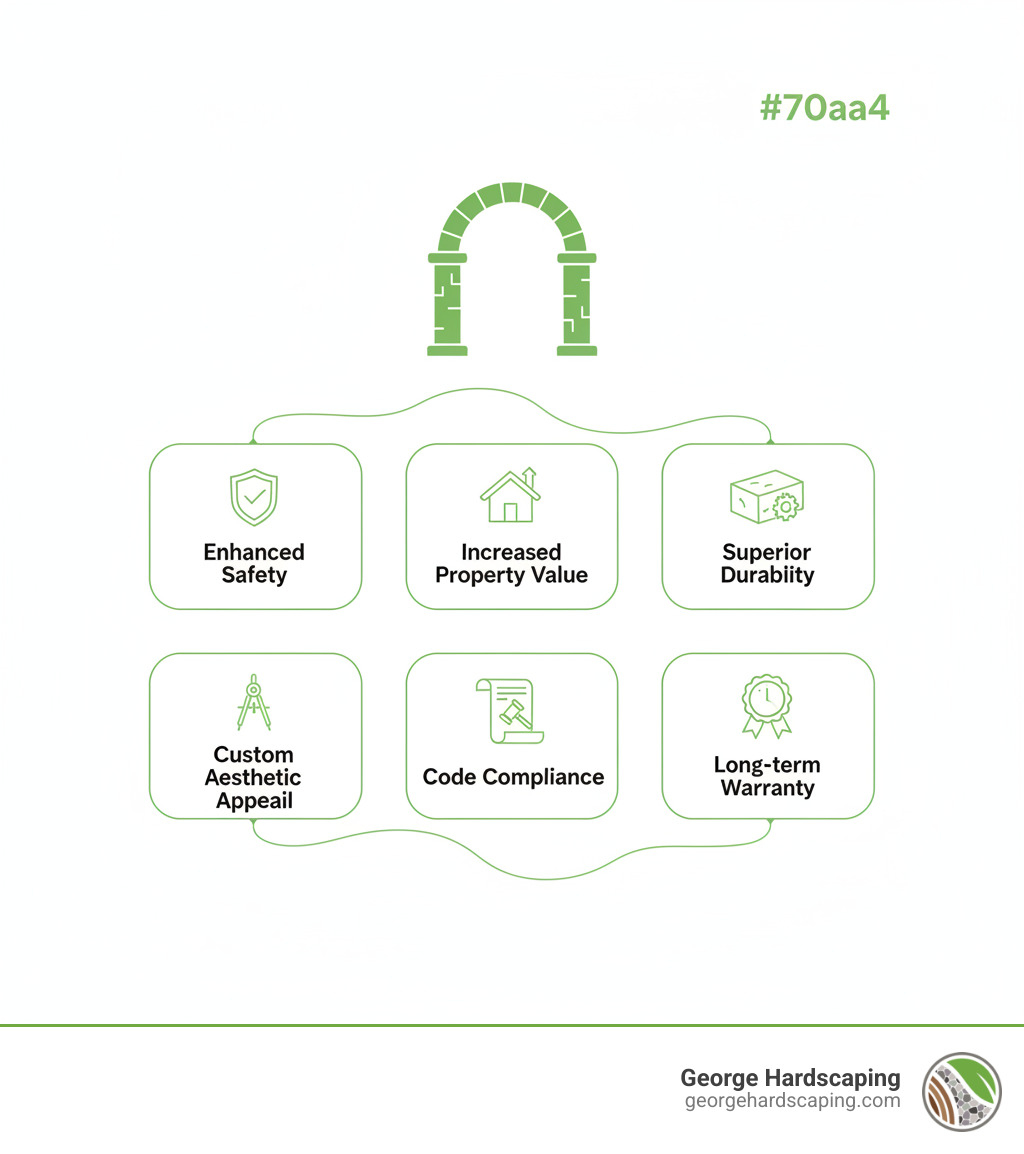
Understanding the Process: From Concept to Completion
- Findy and design: During the initial visit, we assess the grade, soil conditions, drainage, and how the steps should connect to nearby entries, driveways, or patios. We also discuss material options such as granite treads, full-depth bluestone, or natural flagstone and how they align with your home’s architecture.
- Site preparation: The foundation determines longevity. Skilled contractors carefully excavate, install geotextile separation fabric as needed, and place a compacted, well-graded base. In our region, we build below frost depth where necessary to mitigate heaving.
- Drainage and water management: We integrate pitch and drain paths to prevent pooling. Where runoff is an issue, we’ll include French drains or swales to protect treads and joints. The EPA’s stormwater management overview underscores why thoughtful grading is essential for longevity and safety.
- Precision layout and setting: We adhere to consistent riser heights and comfortable tread depths, scribing and setting each stone for a snug, stable fit. This is where craftsmanship meets engineering.
- Finishing touches: Jointing, edging, and transitions to adjacent walkways or landings ensure clean lines, smooth footfall, and a cohesive look across your hardscape.
Why Local Codes and Climate Matter in New England
- Building codes: In Massachusetts, residential projects must align with the Massachusetts Residential Building Code (780 CMR). We plan dimensions and handrail requirements to meet or exceed the International Residential Code stairway standards as adopted locally. Proper code compliance keeps you safe and protects your home’s resale value.
- Freeze–thaw cycles: Water expands when frozen, and our regional swings can be punishing if the base or drainage is poor. Good preparation, quality materials, and correct jointing prevent shifting treads and spalling surfaces. Seasonal performance is non-negotiable in the North Shore climate.
The George Hardscaping Advantage: Integrated Hardscape Expertise
Stone steps are rarely an isolated element. They connect to patios, walks, and outdoor living areas—so the system must perform together. When steps are part of a larger vision, our hardscape team can coordinate complementary features, such as:
- Patios and landings: If your steps terminate at a patio, our hardscape design services ensure the landing and patio elevations, pitches, and materials are coordinated for drainage and comfort.
- Garden paths and walkways: We blend steps into natural or formal walkways so that movement through the property feels effortless. Our approach to landscape steps emphasizes rhythm, sightlines, and safe transitions.
- Repairs and upgrades: If existing steps are shifting or cracking, our masonry repair near me service can stabilize or replace components while improving safety and appearance. When necessary, we recommend full rebuilds to correct structural issues.
Budgeting and Cost Drivers
Every site is unique, but cost typically reflects:
- Material selection: Dense stones like granite often cost more than some sandstones or slates but can bring best durability. Bluestone remains a local favorite for its traction and color range.
- Excavation and access: Tight urban lots, steep grades, or limited equipment access increase labor time. Good access and straightforward layouts help control costs.
- Scope and detailing: Curved runs, complex landings, integrated lighting, or handrail footings add time and precision.
- Subsurface work: Areas with perched water tables or expansive clays may require additional drainage layers, which pays dividends in the long term by preventing settlement and frost heave.
Integrating With Your Landscape
Thoughtful stone steps lead more than just feet; they lead the eye. We coordinate plantings, edge restraint, and adjacent surfaces so your finished entrance or garden path looks intentional and timeless. When we create landscape steps on sloped properties, we often introduce low retaining edges or small garden terraces to soften grade changes and improve curb appeal.
How We Use Internal Expertise and Technology
- Detailed estimates with clear scope: We break out materials, labor, site prep, and disposal to protect your budget and eliminate surprises.
- 3D mockups or reference visuals: For more complex entrances, we may provide visual aids so you can see the concept before we build.
- Proven materials and vendors: Our network gives you access to consistent, high-quality stone options—perfect for bluestone steps or mixed-stone compositions—without sacrificing schedule.
Strong CTA: Ready to upgrade your entrance with safe, beautiful steps that are built to last? Schedule your on-site consultation through our hardscape design services page to get a detailed plan and estimate.
Additional Internal Links for Contextual Reading
- Explore our masonry services to understand how we handle foundations, jointing, and long-term durability across projects.
- Considering a style refresh or safety fix? Browse masonry repair near me to see how we diagnose and correct common stair issues.
- For design inspiration that prioritizes comfort and flow, see how we craft landscape steps across varied grades and garden settings.
External References and Guidance
- Review the Massachusetts Residential Building Code (780 CMR) for stair and handrail guidelines relevant to residential projects.
- Consult the International Residential Code stairway standards to appreciate the safety logic behind tread and riser dimensions.
- Learn more about stormwater best practices from the EPA to understand why drainage details make such a difference to longevity.
By aligning craftsmanship with codes, climate realities, and aesthetic goals, a qualified stone steps contractor delivers a grand entrance that feels effortless and endures for decades.
Why Hire a Professional Stone Steps Contractor?
Tackling stone steps as a DIY project seems tempting, but it’s far more complex than stacking stones. The difference between amateur and professional work becomes clear after just a few New England seasons, when improperly built steps begin to fail. A professional Stone Steps Contractor brings expertise in stone, soils, drainage, and our local climate. They understand how freeze–thaw cycles and clay soils can ruin a project if the base, joints, and water management are subpar. While DIY may seem cheaper initially, the long-term costs of repairs and safety hazards often outweigh the savings.
A skilled hardscaping contractor uses specialized tools, knowledge of building codes, and proven techniques to build steps that improve property value and withstand harsh weather. In Essex County and across the North Shore, the goal is a beautiful addition that complements your landscape and holds up through nor’easters, hot summers, and icy winters.
Telltale Signs You Need New or Repaired Stone Steps
Spotting early indicators can save you money and prevent safety hazards:
- Cracked stones: Hairline cracks invite water; freeze–thaw expansion widens them and causes structural damage. Address cracks quickly.
- Uneven or wobbly treads: Movement or settling indicates a failing foundation—an immediate tripping hazard.
- Mortar deterioration: Crumbling joints weaken the structure and accelerate water infiltration.
- Drainage issues: Puddles, algae, or moss growth signal chronic moisture and likely grading problems.
- Outdated style: Function may be intact, but a mismatched style can drag down curb appeal.
- Safety gaps: Inadequate lighting, missing handrails where required, slippery finishes, or inconsistent riser heights are risks a professional can fix.
If you notice these signs, contacting our masonry repair near me team can prevent small problems from becoming costly replacements.
The Professional Advantage: Engineering, Craft, and Compliance
- Guaranteed safety standards: Professionals follow established building codes for riser height, tread depth, handrails, and drainage. See the International Residential Code stairway standards for an overview of the safety principles behind these requirements.
- Structural integrity: A pro evaluates soil type, water flow, and frost depth to build a foundation that won’t shift or heave with seasonal changes—critical in Essex County.
- Correct site preparation: Excavation, grading, and meticulous compaction of the sub-base are the unsung heroes of durability. Skipping or rushing this step virtually guarantees future failure.
- Material expertise: Craftsmen understand how to select, cut, and orient pieces of granite, bluestone, or slate for stability, beauty, and traction.
- Permit guidance: We steer municipal requirements in the North Shore, aligning with the Massachusetts Residential Building Code (780 CMR) where applicable.
- Access to quality stone: Supplier relationships help you get consistent color lots and high-performing stone—especially important for bluestone steps where uniform texture and thickness matter.
- Efficiency and cost control: Specialized equipment and streamlined workflows save time and reduce errors that cause expensive rework.
How We Protect Your Investment
- Code-aligned design: We plan every riser, tread, and landing with comfort and compliance in mind.
- Drainage strategy: We pitch treads, introduce subdrainage if needed, and direct runoff away from entrances to reduce icing.
- Robust base: We specify well-graded base aggregates and proper compaction. For more on why this matters, the Federal Highway Administration’s guidance on base and subbase materials explains how quality granular layers improve performance.
- Surface traction: We advise finishes like flamed or thermal treatments for added grip in wet or icy conditions.
What to Look for in a Stone Steps Contractor
Choosing the right partner is critical because steps are a permanent safety feature and a focal point of your curb appeal.
- Portfolio of local work: Review past projects and, if possible, visit a site. Look for consistent riser heights, clean joint lines, and stable tread alignment.
- Years of experience with New England climates: Installers accustomed to our soils and freeze–thaw cycles will proactively design for longevity.
- Verified reviews and testimonials: Independent feedback on communication, schedule management, and long-term performance is invaluable. Ask for references you can call.
- Licensing and insurance: Non-negotiable. Confirm general liability and worker’s compensation coverage with current certificates.
- Clear communication: Expect proactive updates, straightforward explanations, and transparent timelines.
- Detailed, written estimates: Insist on clarity about materials, scope, disposal, and payment stages.
Questions to Ask Before You Hire
- How will you handle drainage and pitch across the stair run and landings?
- What base depth and compaction methods will you use for my soil conditions?
- Which stone and finish do you recommend for traction, and why?
- Will any permits or inspections be required for my municipality?
- How do you plan to protect adjacent plantings, walkways, or siding during construction?
- What warranties do you offer on labor and materials?
Helpful External Resources (Non-Competitors)
- Massachusetts Residential Building Code (780 CMR): Learn how state-adopted standards affect stair dimensions and handrails.
- International Residential Code stairway standards: Understand the baseline safety logic for risers, treads, and landings.
- OSHA walking–working surfaces: Review general principles behind safe walking surfaces that influence traction and fall prevention.
Avoiding Common Pitfalls
- Inconsistent risers: Even small variations increase trip risk. Precision layout is essential.
- Insufficient base: A shallow or poorly compacted base leads to rocking treads and settlement.
- Ignoring water: Without a plan for runoff, steps become slippery, joints deteriorate, and frost damage accelerates.
- Wrong finish: Highly polished surfaces look striking but can be slick outdoors; choose textured finishes for safety.
How We Integrate With the Rest of Your Property
Steps interface with paths, patios, and entries. That’s why our hardscape design services coordinate elevations, pitches, and materials across the entire plan. Our masonry services team ensures structural details (like footings and landings) are sized and placed correctly so transitions feel natural and safe.
Project Timelines and What to Expect
- Preconstruction: Design confirmation, material selection, and scheduling.
- Day 1–2: Excavation, base installation, and initial compaction.
- Day 3–4: Setting treads/risers and building landings; continuous checking of pitch and alignment.
- Day 5+: Jointing, cleanup, edge stabilization, and final walkthrough (weather dependent). Larger or curved projects may extend a few more days.
Strong CTA: Talk with our team today to get a code-compliant, long-lasting staircase. Start with a no-obligation site visit through our masonry services page and receive a clear, written proposal.
Designing Your Dream Steps: Materials and Aesthetics
Choosing the design and materials for your stone steps is where function meets artistry. A professional Stone Steps Contractor helps balance beauty, budget, and functionality to create steps that tell your property’s story. The material and style you select will define the look of your entrance or garden path, setting the tone for your entire landscape. Whether you prefer a rugged, natural aesthetic or a sleek, contemporary look, the stone dictates the impression. We encourage exploring Stone Steps design ideas and case studies as part of the concept phase so that material choices align with both durability and style.
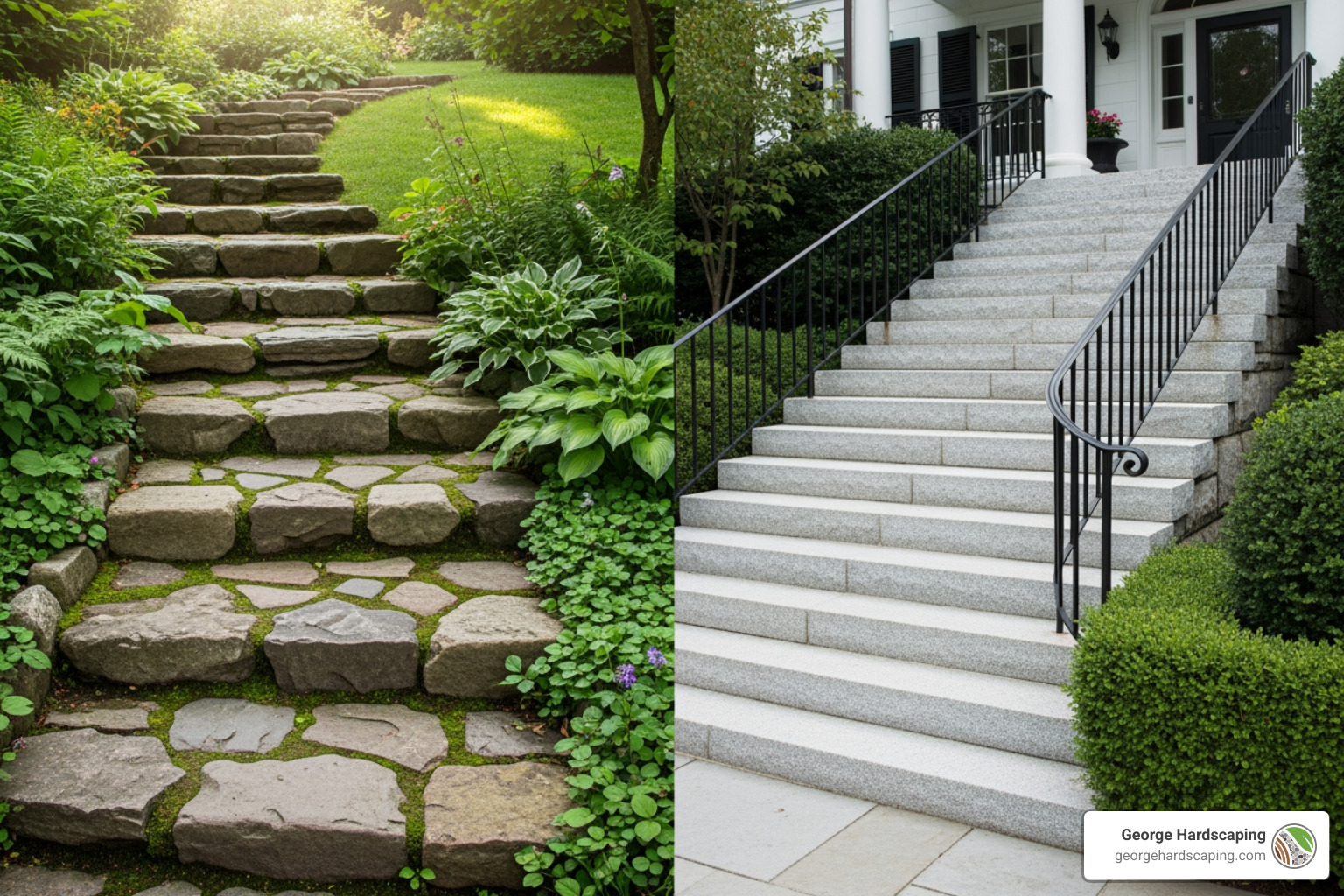
Popular Stone Types for Outdoor Steps
Natural stone is the gold standard for outdoor steps, offering first-rate durability and timeless appeal. Choosing the right type is critical for longevity and safety in New England’s harsh climate.
- Granite: Dense, hard, and highly durable; resists scratches and moisture. Available in varied colors and finishes, from flamed for traction to thermal for refined texture. Ideal for high-traffic entries.
- Bluestone: A North Shore favorite, with blue–gray hues and naturally textured surfaces for excellent traction. Bluestone steps work in both formal and casual designs and weather gracefully.
- Flagstone: Sandstone and similar stones that split into flat, irregular layers. Flagstone is perfect for organic, earthy steps that feel as if they emerged naturally from the site.
- Fieldstone: Naturally rounded, rustic stones that evoke old-world charm. Installation requires skill, but the results look native to the landscape.
- Limestone: Certain dense varieties are suitable for steps and deliver a refined, classic look. Light, neutral tones complement traditional architecture.
- Slate: Fine-grained, darker tones bring a sleek feel to modern or transitional designs; natural cleft textures add slip resistance.
Natural Stone vs. Manufactured Pavers: A Practical Comparison
- Aesthetics: Natural stone provides one-of-a-kind variation, adding depth and character. Manufactured pavers offer uniformity, which can be ideal for contemporary or minimalist settings.
- Durability: Natural stone can last for generations. Top-tier pavers from reputable producers can perform well, but natural stone often weathers more gracefully.
- Cost: Natural stone usually carries a higher initial cost due to material and skilled labor; pavers may be more budget-friendly at install. Over time, stone’s longevity can make it cost-effective.
- Maintenance: Both are relatively low-maintenance. Natural stone may benefit from periodic cleaning and occasional sealing; pavers may need joint sand replenishment.
- Installation complexity: Pavers install faster due to uniform sizing. Natural stone demands more skill to fit irregular shapes. If you’re pursuing artisanal layouts, our hardscape design services are invaluable for planning and execution.
Key Design Factors to Consider With Your Contractor
- Architectural style: Align with your home’s character. Colonial, Cape, modern farmhouse, or contemporary—each pairs well with certain stone colors, textures, and edge treatments.
- Landscape integration: Steps are part of a larger environment. We consider plantings, terraces, and walls so your landscape steps improve the natural flow of your property.
- Slope and grading: Topography determines the number of risers and placement of landings. Proper grading ensures water flows away from the steps, preventing pooling and ice.
- Riser height and tread depth: Comfort and safety depend on consistent riser heights and adequate tread depth. We plan to meet or exceed code for a natural-feeling climb.
- Straight vs. curved: Straight steps convey formality; curved runs feel leisurely and can soften rigid architecture. Curves add complexity but can be stunning.
- Landings and transitions: For longer runs, landings offer rest points and break up grade changes. We ensure smooth, flush transitions to adjacent patios or walks.
- Lighting and safety: Low-voltage step lighting increases safety and evening curb appeal. We plan conduit runs during construction to keep wires hidden and protected.
- Handrails and guards: Where required by code or desired for comfort, we plan footings and anchor points early so handrails look integrated—not tacked on later.
Finishes, Edges, and Textures That Influence Safety and Style
- Surface finishes: Flamed or thermal finishes on granite increase traction; natural cleft bluestone provides texture underfoot; honed or polished finishes are typically avoided outdoors due to slipperiness.
- Edge details: Rock-faced, bullnose, or eased edges change the look and feel of treads. We select edge treatments that complement your stone choice and reduce sharp corners.
- Color strategy: Using complementary tones between steps and adjacent patios or walks defines spaces without clashing. Subtle contrast also helps with visibility.
How We Design for New England Winters
- Base and drainage: We specify compacted, well-graded base layers with defined pitch to shed water. Managing runoff prevents ice hazards and reduces frost-related movement.
- De-icing strategy: We discuss de-icer compatibility; certain products can be harsh on mortar or stone. Many homeowners prefer calcium magnesium acetate or sand for traction, depending on surface and stone type.
- Traction first: We prioritize finishes and textures that remain stable in wet or icy conditions.
Step-by-Step Overview of a Typical Installation
- Site walk and layout: Confirm step count, riser heights, tread depths, and landing sizes. We set string lines and mark excavation limits.
- Excavation and base: Remove organic soils, install geotextile as needed, and place compacted base layers. We confirm elevations and pitch at each phase.
- Stone setting: Place and level each tread, checking rise and run as we go. For natural stone, we scribe and shape pieces for tight, stable fits.
- Jointing and edges: Depending on design, we set tight joints, dry stack, or use mortar joints. Edge restraint and adjacent surface tying ensure long-term stability.
- Finishing and cleanup: We brush, rinse, and fine-tune transitions, then walk you through maintenance and care.
Maintenance Essentials for Longevity
- Seasonal cleaning: Rinse debris and organic matter to reduce staining and slipperiness.
- Joint inspection: Check mortar or dry joints annually; repair early to prevent water intrusion.
- Drainage checks: Confirm water still moves away from treads and landings; clearing leaves in fall helps.
- Winter practices: Use appropriate de-icers for your stone type and avoid metal shovels that can chip edges.
When Repairs Make Sense—and When Replacement Is Wiser
- Localized settling: Small adjustments or re-setting a tread can restore stability if the base is fundamentally sound.
- Systemic failure: Widespread movement, crumbling mortar, or chronic water issues often signal the need for a full rebuild with a corrected base and drainage.
Internal Links to Guide Your Planning
- For the big-picture layout of patios, landings, and stairs, explore our hardscape design services to coordinate elevations, pitches, and lighting.
- See how we approach bluestone steps when traction, color consistency, and classic New England character are top priorities.
- If you’re dealing with shifting or cracking, our masonry repair near me page explains how we diagnose and fix the root causes—not just the symptoms.
- For hillside gardens and transitions between outdoor rooms, review our landscape steps approach to integrate structure and scenery.
Helpful External Resources (Non-Competitors)
- Natural Stone Institute care and maintenance: Learn proper cleaning methods and sealing considerations for natural stone.
- EPA stormwater management overview: Understand why good drainage design protects your investment.
- OSHA walking–working surfaces principles: General guidance on slip, trip, and fall prevention that informs outdoor step safety.
Strong CTA: Transform your entry or garden path with steps that are safe, comfortable, and built for New England. Book your design consult now via our hardscape design services page and get a detailed, code-aligned plan and estimate.
Putting It All Together
A successful stone staircase balances comfort (predictable rises and runs), safety (traction, lighting, drainage), and character (materials and detailing that suit your home). When you hire a dedicated stone steps contractor with deep experience in Essex County and the North Shore, you get a staircase that performs through freeze–thaw cycles, improves curb appeal, and works seamlessly with patios, walks, and gardens.
Our team coordinates design, engineering, and craftsmanship under one roof. From bluestone steps with timeless texture to granite treads that anchor a formal portico, we deliver the right stone and the right details for the way you live. If you’re ready to lift your outdoor space—and keep it beautiful for decades—let’s design your steps the right way from the start.
