
Repairing a cinder block retaining wall: Mastering 2025
Why Understanding Cinder Block Retaining Wall Issues is Critical
Repairing a cinder block retaining wall begins with recognizing warning signs early and addressing root causes before they escalate. Cinder block (CMU) walls are popular throughout Essex County and the North Shore for their durability and cost-effectiveness, yet they face tough environmental realities: aggressive freeze–thaw cycles, seasonal groundwater, clay-heavy soils, and occasional construction shortcuts. Small defects—hairline cracks, weeping joints, or a slight outward bulge—can be the first indicators of significant structural stress. Left untreated, they often lead to bowing, leaning, or partial collapse.
Most problems start small. A hairline crack allows water to infiltrate; when temperatures drop, trapped moisture freezes, expands, and widens the fracture. Over time, this cycle can break block faces, open mortar joints, and push the wall outward. The difference between a minor tune-up and a major rebuild often comes down to early detection and proper drainage.
Understanding which issues are safe for DIY versus those that demand professional engineering and repair is essential. DIY-friendly tasks typically include repointing mortar joints, plugging small cracks, and replacing a single damaged block. Signs of deeper distress—pronounced leaning, bulging, multiple horizontal cracks, failed footing, or recurring water pressure—usually require advanced methods like soil relief, drainage redesign, helical tiebacks, or partial reconstruction.
Budget matters, too. The average cost to rebuild a failing retaining wall can range from $6,000 to $18,000 depending on height, length, site access, soil conditions, and engineering needs. Thoughtful maintenance and targeted repairs can extend a wall’s life and avoid a full rebuild for many years.
To help you make informed decisions, this guide covers: how to diagnose root causes, the tools and materials that actually last in New England weather, step-by-step repair methods for minor issues, when to bring in a professional, and how to protect your investment long-term.
Throughout, we’ll point to smart upgrades—like a properly designed retaining wall drainage system or engineered retaining wall anchors—that dramatically reduce hydrostatic pressure and improve stability.
Repairing a cinder block retaining wall basics:
- https://georgehardscaping.com/helical-anchors-retaining-wall/
- https://georgehardscaping.com/retaining-wall-anchors/
Identifying the Problem: Signs and Causes of Retaining Wall Damage
Before you begin repairing a cinder block retaining wall, diagnose the root cause. Cosmetic patches without solving the underlying issue—most often water pressure—won’t last. Walls rarely fail overnight; they telegraph distress in visible and measurable ways long before serious damage occurs.
What Causes Cinder Block Retaining Walls to Fail?
- Hydrostatic Pressure: By far the most common failure driver. Poor drainage allows water to build up behind the wall. Even a modest water column exerts enormous lateral force, leading to horizontal cracks, outward bulging, and eventual tipping. Installing or rehabbing a retaining wall drainage system often makes the difference between stabilizing and rebuilding.
- Freeze–Thaw Cycles: Cinder blocks and mortar are porous. Water infiltration followed by freezing expansion can spall block faces, open joints, and progressively loosen the structure. This is especially relevant in the North Shore’s winter swings.
- Improper Footing: If the base wasn’t deep enough below frost line, wasn’t level, or was set on poorly compacted subgrade, differential movement stresses the wall. Over time, stair-step cracking often shows up near settled sections.
- Soil Settlement and Expansive Soils: Cohesive or clay-rich soils shrink and swell with moisture changes, putting cyclic stress on the wall. Varying backfill materials can settle unevenly and concentrate loads.
- Tree Roots: Large root systems can jack blocks apart or displace the footing zone. Landscaping too close to the wall increases long-term risk.
For deeper background on masonry behavior and moisture, see the National Park Service preservation brief on masonry maintenance: https://www.nps.gov/tps/how-to-preserve/briefs/1-masonry.htm.
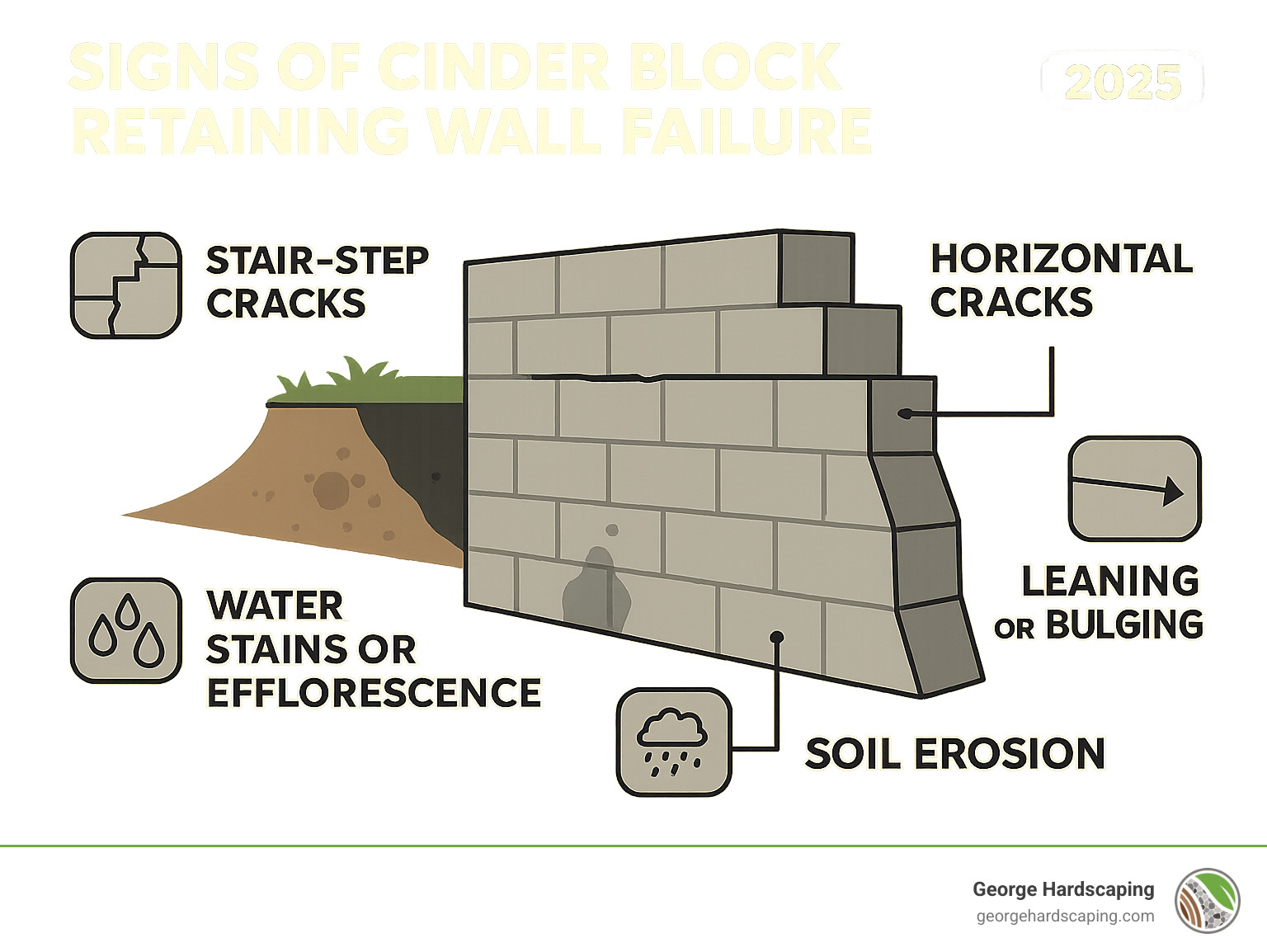
Reading the Warning Signs (and What They Mean)
- Stair-Step Cracks: Diagonal cracking along the mortar joints usually indicates uneven settlement or localized stress. Minor versions may be stabilized with repointing and drainage improvements if the wall is otherwise plumb.
- Horizontal Cracks: Running mid-height through blocks or mortar, they often point to hydrostatic pressure. Persistent horizontal cracks signal an active pressure problem that must be relieved.
- Leaning or Bulging: When the top of the wall is out of plumb, or a panel bulges outward, the wall is likely under more load than it can resist. This is a structural warning that usually warrants professional evaluation.
- Water Seepage and Efflorescence: Damp areas, seeping joints, or white, chalky deposits indicate poor drainage and water migration through the wall. Efflorescence itself is cosmetic but is a red flag for moisture.
- Soil Erosion Behind the Wall: Voids or sinkholes in the backfill suggest water is tunneling through. This destabilizes the backfill wedge, increasing loads on the wall face.
How to Quantify the Problem
- Check Plumb: Hold a 4-foot level vertically against the wall or drop a plumb bob from the cap. Measure how far the wall leans out of plumb at multiple locations. A lean over roughly 1 inch per 4 feet of height is serious and typically requires professional intervention.
- Map Cracks: Photograph and mark crack ends with a pencil. Date each mark. If cracks lengthen or widen over weeks, the problem is active.
- Look for Drainage: Identify whether a perforated drain line and weep holes exist at the base. If no drainage elements are present, hydrostatic pressure is likely. If present, confirm outlets aren’t clogged and that water has a clear discharge path.
- Grade and Surface Water: Observe whether surface runoff flows toward or away from the wall. Redirecting roof leaders and adjusting grading can drastically reduce water load.
If you suspect a structural or footing issue, speak with a qualified contractor. For complex cases, George Hardscaping can assess options including retaining wall anchors and engineered tiebacks. For technical background on segmental and CMU wall best practices, see resources from NCMA: https://ncma.org/resources/.
Gearing Up: Essential Tools and Materials for Repair
Once you understand the cause, gather the right gear before starting. Having everything ready streamlines the repair and improves safety.
Essential Safety Gear
- Safety Glasses and Hearing Protection: Masonry chipping and grinding generate flying debris and noise.
- Heavy-Duty Gloves: Mortar is alkaline and can irritate skin; blocks have rough edges.
- Dust Mask or Respirator: Cutting and grinding masonry creates silica dust; follow OSHA guidance for silica exposure: https://www.osha.gov/silica-crystalline.
- Sturdy Work Boots: Protects toes when handling heavy block and tools.
Tools for the Job
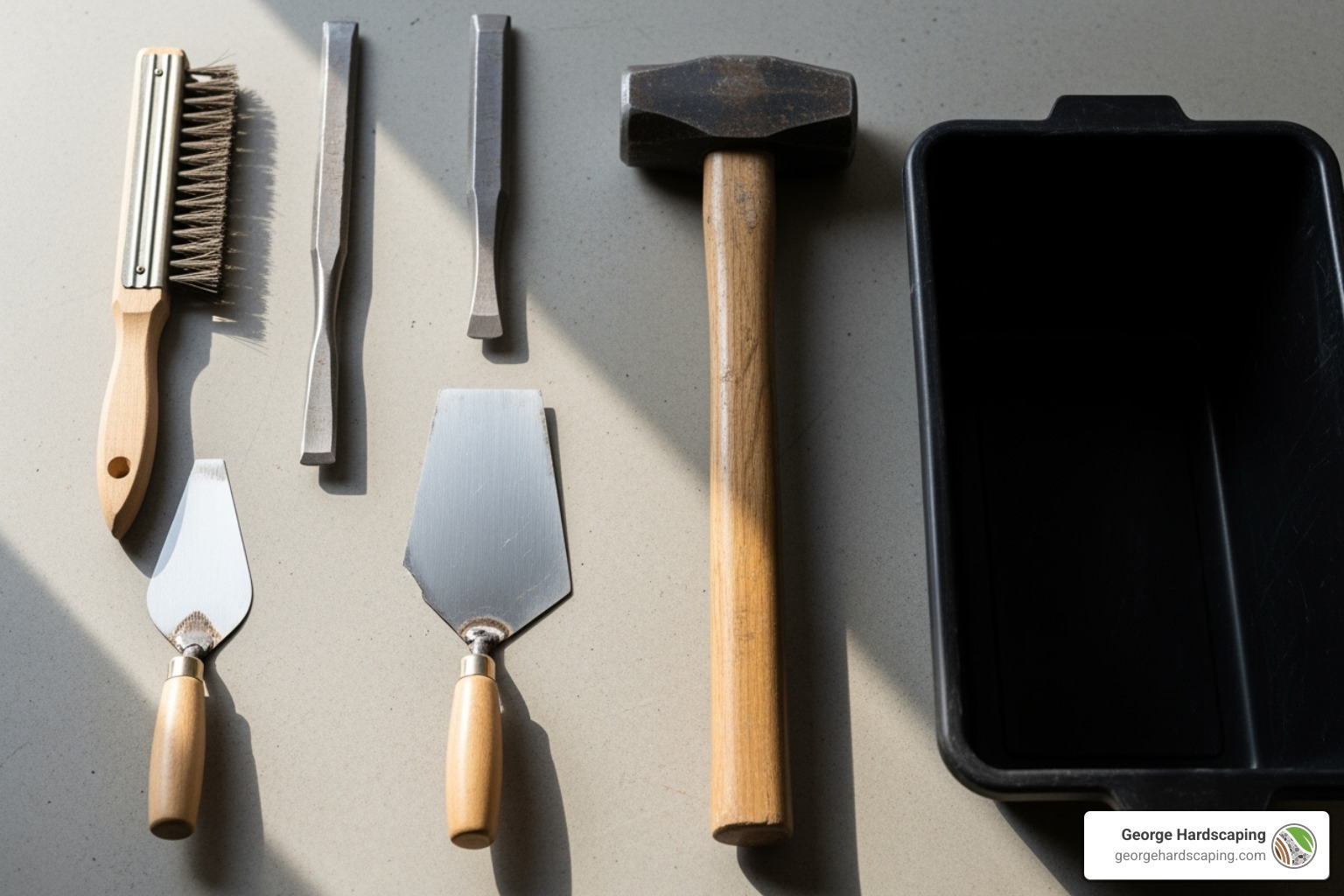
- Wire Brush and Shop Vacuum: Clean joints and cavities thoroughly for good bonding.
- Cold Chisel and Club/Sledge Hammer: For removing deteriorated mortar and breaking out damaged block.
- Pointing Trowel and Masonry Trowel: Precision joint work and buttering block.
- Mixing Tub/Bucket and Paddle: Consistent mortar mixing; a drill with paddle saves time.
- Mortar Bag: Cleaner joint packing and crack filling.
- Levels (Torpedo and 4-foot): Keep repairs plumb and flush with existing courses.
- Rubber Mallet and Wood Block: Adjust block into alignment without chipping.
- Reciprocating Saw or Angle Grinder: Useful for cutting rebar or notching as needed.
Materials for a Lasting Repair
- Type S Mortar: Strong and durable for exterior retaining conditions. Mix to a thick, peanut-butter-like consistency. Dampen adjacent masonry before application to improve bond and reduce premature drying.
- Replacement Cinder Blocks: Match block dimensions and appearance. If in doubt, bring a sample to your supplier. For considerations on block style and performance, review Retaining Wall Block Options.
- Backfill: Use 3/4-inch clear angular crushed stone—not soil, sand, or pea gravel. Angular stone interlocks and drains; rounded pea stone can migrate and trap water.
- Drainage Components: A 4-inch perforated drain line at the base of the wall (daylighted to a safe outlet), wrapped with geotextile fabric to limit silt intrusion, is essential. Verify that the system can actually discharge water, not just collect it.
- Waterproofing/Sealers: After curing, a breathable masonry sealer or foundation-grade waterproofing on the soil side (where accessible) reduces water infiltration and freeze–thaw damage.
Pro Tip: Estimate quantities with a small buffer. Mortar can stiffen quickly in warm, dry conditions—mix in manageable batches so you can place and tool it before it sets. If daytime temperatures are extreme (below 40°F or above 90°F), adjust schedule and curing methods accordingly.
A Step-by-Step Guide to Repairing a Cinder Block Retaining Wall
With tools and materials ready, you can address minor issues and protect the wall from further damage. If you encounter major leaning, bulging, or evidence of footing failure, pause and call a professional. Always dig cautiously and call 811 before excavation to mark utilities: https://call811.com/.
Before you start: Work on dry, stable ground. Lift with your legs. Keep pathways clear. If cutting or grinding masonry, follow dust control best practices.
Step 1: Prepare the Area for Safe, Effective Work
1) Clear and Protect: Remove plants, mulch, and loose debris. Lay down tarps to catch mortar and chips, simplifying cleanup.
2) Stabilize Access: Ensure ladders and scaffold are on even footing. Moisture and mud increase slip hazards—postpone if the soil is saturated.
3) Define Scope: Outline the repair area with chalk. For multi-block removals, proceed top-down in an inverted pyramid to avoid destabilizing adjacent courses.
4) Drainage Recon: Identify weep holes or drainlines at the base. If weep holes are blocked, gently rod them out or flush with a hose. Note whether water drains freely.
Step 2: Patching Minor Cracks in Mortar Joints
Minor cracks confined to mortar joints and not expanding are good candidates for DIY repair.
1) Clean to Sound Material: Use a wire brush and vacuum to remove loose mortar and dust. Undercut the crack edges slightly with a cold chisel so the new mortar keys into a tiny ledge.
2) Pre-Dampen: Mist the crack and adjacent joints so cured masonry doesn’t rob moisture from the new mortar.
3) Mix and Pack Type S Mortar: Aim for peanut-butter consistency. Use a mortar bag or pointing trowel to press mortar deep into the crack, eliminating voids.
4) Tool and Texture: Strike the joint to match existing profiles. Clean smears from block faces with a barely damp sponge before the mortar fully sets.
5) Cure and Protect: Keep the repair shaded and lightly misted for 24–48 hours in hot, dry weather. Avoid freezing conditions during cure.
Step 3: Replacing a Single Damaged Cinder Block
1) Remove Surrounding Mortar: Carefully chisel out the surrounding joints. Work slowly to avoid fracturing neighboring blocks.
2) Break and Extract the Block: Chip from the center outward, removing fragments until the cavity is clear.
3) Address Rebar if Present: If a single vertical bar is in the block core, you may cut it top and bottom with an angle grinder or reciprocating saw for a one-block replacement. Do not remove multiple bars or cut bars in adjacent cells—if you encounter a cage or multiple ties, consult a professional.
4) Clean the Cavity: Brush and vacuum thoroughly. Any dust will weaken the bond.
5) Butter and Set: Apply fresh mortar to the bed (bottom) and head (sides) joints. Slide in the new block, tap to alignment with a rubber mallet and wood block, and verify plumb and flush with a level.
6) Fill Joints: Pack and tool all joints. Clean faces promptly.
7) Cure: Protect from direct sun, wind, and heavy rain for at least 24 hours. In cool weather, extend cure time.
For complex rebuilds locally, review Retaining Wall Construction considerations and engage a pro.
Step 4: Improving Drainage to Reduce Hydrostatic Pressure
If water is the culprit—and it usually is—address drainage while you have access.
- Weep Holes: If your wall lacks weep holes and your local code allows, install small openings at the base at regular intervals (for example, every 4–8 feet) to allow trapped water to escape.
- Perforated Drain Line: Where possible, install a 4-inch perforated pipe at the wall’s heel (soil side) set in 3/4-inch clear stone. Wrap the stone in geotextile to prevent fines from clogging the pipe. Ensure the pipe daylights to a slope or ties into a dry well that actually drains.
- Backfill: Replace saturated or silty backfill with clean angular stone to a thickness of at least 12 inches behind the wall. Cap the top few inches with soil for planting and to keep sunlight off the stone.
Detailed drainage guidance is available here: https://georgehardscaping.com/retaining-wall-drainage-system/.
Step 5: When You Need Anchors or Tiebacks
If a section shows measurable outward movement but the footing is sound, mechanical reinforcement may be an option. Engineered solutions include:
- Helical Tiebacks: Screw-like steel anchors advanced through the wall and into stable soil can counteract lateral loads. These require proper design and torque verification. Learn more: https://georgehardscaping.com/helical-anchors-retaining-wall/ and https://georgehardscaping.com/helical-anchors-retaining-wall-repair/.
- Deadman and Soil Nails: Alternative anchoring strategies for certain soil conditions and site constraints. These approaches must be engineered.
If you’re considering anchors, have the wall evaluated by a contractor familiar with retaining wall anchors and local soils.
Step 6: Finishing, Sealing, and Cleanup
- Sealing: After mortar has fully cured (generally 28 days for full strength, but many sealers can be applied sooner—check the product), apply a breathable masonry sealer to reduce water absorption. Avoid film-forming products that trap moisture.
- Site Reset: Reinstall plants at appropriate distances to avoid root pressure, redirect downspouts away from the wall, and maintain positive surface drainage.
- Documentation: Photograph the repaired areas and note any drainage changes. Keep a simple log to track future movement.
If at any point you see worsening leaning or find widespread horizontal cracking, stop and call a pro. George Hardscaping’s team can assess and provide options ranging from drainage retrofits to engineered anchors and partial rebuilds.
Important: If your wall is over 4 feet high or supports a surcharge (like a driveway, structure, or slope above), building codes may require permits and engineering. For Massachusetts code guidance, see the state Board of Building Regulations and Standards: https://www.mass.gov/orgs/board-of-building-regulations-and-standards.
Ensuring Durability: When to Call a Professional
DIY repairs shine when the issue is localized and the structure is otherwise stable. But experience matters when the wall is tall, supports additional loads, or shows systemic problems. Calling a pro early can prevent a cascading failure.
Long-Term Maintenance for Repaired Walls
- Seal and Re-Seal: Apply a quality, breathable masonry sealer after cure. Reapply per manufacturer intervals, especially in freeze–thaw climates.
- Keep Drains Clear: Inspect weep holes and drain outlets each season and after major storms. If discharge slows, flush lines.
- Manage Landscaping: Plant shrubs and trees with mature root size in mind. Keep large roots away from the wall and footing.
- Control Surface Water: Extend downspouts and reshape grade to send water away from the wall.
Red Flags That Require an Expert
- Height Over ~4 Feet: Tall walls handle high loads and usually require engineering and permits.
- Pronounced Leaning or Bulging: Indicates structural distress with risk of sudden failure.
- Footing Movement: Settlement, rotation, or widespread stair-step cracking across multiple courses.
- Recurring or Widespread Damage: Reappearing cracks or multiple failed areas point to unresolved causes.
- Persistent Water Issues: Pooled water behind the wall, clogged or absent drainage, or saturated backfill.
A professional can evaluate whether helical anchors, soil nails, geogrid reinforcement, partial reconstruction, or drainage redesign will deliver the safest, most cost-effective outcome. For complex retaining wall challenges in Essex County, consult a trusted Retaining Walls Contractor who can integrate drainage, anchoring, and masonry repairs. If reconstruction or new walls are warranted, explore Retaining Wall Installation Services for engineered, code-compliant solutions that fit your site and budget.
For cases where hydrostatic pressure is the primary culprit, learn how professional-grade anchoring can restore stability: https://georgehardscaping.com/helical-anchors-retaining-wall-repair/.
Frequently Asked Questions about Cinder Block Wall Repair
How long will a cinder block wall repair last?
It depends on three factors: whether the root cause (usually water) is resolved, the quality of the repair, and the materials used. If you install or restore proper drainage, use Type S mortar, and allow proper curing, a professional repair can approach the wall’s original service life. Neglect the water issue, and cracks typically return—often worse.
What’s the most common DIY mistake?
Ignoring hydrostatic pressure. Homeowners often repoint or patch without creating a path for water to exit. The next heavy rain rebuilds pressure and the damage reappears. Other pitfalls include using the wrong backfill (soil, sand, or pea gravel that traps water) and setting mortar too wet or too dry, weakening the bond.
Can I use concrete to patch mortar joints?
No. Use masonry mortar. Mortar includes more lime, giving it flexibility to accommodate small movements. Concrete is more rigid and tends to crack or separate when used as a patching material in joints.
How do I know if I need anchors or tiebacks?
If your wall has measurable outward movement, persistent horizontal cracking, or keeps leaning despite drainage improvements—and the footing is otherwise sound—anchoring may be appropriate. These solutions require design and verification. Explore options here: https://georgehardscaping.com/retaining-wall-anchors/ and https://georgehardscaping.com/helical-anchors-retaining-wall/.
Is there a best season for repairs in New England?
Spring through fall works best. Avoid freezing temperatures during placement and early cure. In hot, dry weather, protect fresh mortar from rapid moisture loss (shade, light misting). Always watch the forecast and avoid heavy rain during early cure.
Should I add a parge coat or sealer to the face?
A parge coat can even out appearance but is not a substitute for structural or drainage fixes. After the wall is sound, a breathable, high-quality masonry sealer helps reduce water absorption. Avoid non-breathable coatings that trap moisture.
What backfill should I use behind the wall?
Use 3/4-inch clear angular stone for a minimum of 12 inches behind the wall, wrapped or separated from native soils using geotextile fabric. This creates a drainage zone that relieves water pressure. Do not use soil, sand, or pea gravel.
When should I call a professional?
- The wall is over ~4 feet tall or supports a surcharge (driveway, structure).
- There’s visible leaning or bulging.
- You see widespread horizontal cracking.
- The footing appears to be settling or rotating.
- Drainage problems persist after your efforts.
A site evaluation from a qualified Retaining Walls Contractor will clarify whether you need drainage upgrades, anchoring, partial rebuild, or new construction via Retaining Wall Installation Services.
How long does mortar take to cure?
Mortar sets in hours but gains strength over days and weeks. Protect it from freezing and rapid drying for the first 24–48 hours. Full design strength typically takes 28 days. Follow product-specific guidance.
What does a professional inspection include?
Expect a review of wall geometry (plumb, alignment), crack mapping, footing clues, drainage assessment (weep holes, outlet function), backfill composition, nearby grading and downspout routing, and potential surcharge loads. From there, the pro can recommend targeted repairs, anchoring, or reconstruction.
Where can I learn more about safe work practices?
- Call Before You Dig: https://call811.com/
- Silica Safety (OSHA): https://www.osha.gov/silica-crystalline
- Masonry Care Basics (NPS): https://www.nps.gov/tps/how-to-preserve/briefs/1-masonry.htm
When in doubt, contact George Hardscaping for guidance or a site visit.
Ready to stabilize your wall? Request a no-obligation assessment today: https://georgehardscaping.com/request-estimate/.
Conclusion: Your Next Steps for a Strong and Stable Wall
Repairing a cinder block retaining wall is about combining accurate diagnosis with the right fix: relieve water pressure, restore joints or blocks, and protect the wall from future moisture. Prioritize drainage, use appropriate materials like Type S mortar, and allow proper cure. For taller walls or evidence of structural distress, professional anchoring and reconstruction may be the safest path.
George Hardscaping helps homeowners across Essex County with inspections, drainage retrofits, engineered anchors, and complete rebuilds—custom to New England’s climate and soils. If your wall shows leaning, horizontal cracking, or persistent water problems, take action now.
- Explore professional options: https://georgehardscaping.com/retaining-walls-contractor/
- Learn about installation and reconstruction: https://georgehardscaping.com/retaining-wall-installation-services/
- Get a fast, friendly estimate: https://georgehardscaping.com/request-estimate/
Take the next step today—secure your landscape, protect your property value, and restore peace of mind.
