
How much for a retaining wall installed: Save Smart 2025
Understanding Your Retaining Wall Investment
Determining how much for a retaining wall installed is a key first step for any landscaping project. Costs depend on several factors, but most homeowners can expect to pay between $20-$60 per square foot for professional installation.
Quick Cost Overview:
- Small walls (25 ft x 3 ft): $1,500 – $4,500
- Medium walls (50 ft x 4 ft): $4,000 – $12,000
- Large walls (100 ft x 4 ft): $8,000 – $24,000
- Material costs: $5-$20 per sq ft
- Labor costs: $10-$30 per sq ft
Note: These are average costs based on internet data and not actual costs for George Hardscaping.
Retaining walls are more than just structural; they transform sloped, unusable areas into functional outdoor spaces while preventing costly erosion. For Essex County homeowners, a well-built wall can create level areas for patios, protect foundations from water damage, and boost curb appeal.
However, costs can escalate without careful planning. Factors like excavation, drainage, permits, and site conditions can turn a simple project into a budget-busting one. The good news is that smart planning and strategic choices can save you thousands without sacrificing quality. This guide will show you how to get the retaining wall you need while keeping costs under control.
Simple guide to how much for a retaining wall installed:
How Much for a Retaining Wall Installed: A Cost Breakdown
Knowing how much for a retaining wall installed really costs helps you plan your project without surprises. Nationally, most homeowners spend around $6,300, with projects typically falling between $3,500 and $9,400. Costs can range from $1,200 for a simple garden wall to over $13,700 for complex installations.
In Essex County, we see similar pricing patterns in towns like Beverly, Danvers, and Newburyport. The cost per square foot typically ranges from $20 to $53, averaging around $33. For example, a small 10×3 ft wall with basic blocks might cost $1,200, while a 40×3 ft wall with premium blocks could be around $7,200. The biggest cost drivers are size and material choice. A switch from basic blocks to natural stone can double the investment but may also double your home’s curb appeal and the wall’s lifespan.
For more detailed insights, check out More info about Retaining Wall Construction Cost.
Note: These are average costs based on internet data and not actual costs for George Hardscaping.
| Material | Avg. Cost per Sq. Ft. (Installed) | Lifespan | Best For |
|---|---|---|---|
| Wood (Treated Pine) | $10 – $40 | 10 – 40 years | Budget-friendly, rustic appeal, DIY projects |
| Concrete Blocks | $15 – $60 | 50 – 100 years | Versatility, durability, various aesthetics |
| Poured Concrete | $20 – $45 | Up to 100 years | Maximum durability, modern look, custom shapes |
| Natural Stone | $10 – $85 | 50 – 200 years | High-end aesthetic, natural appeal, longevity |
| Metal (Steel/Corten) | $15 – $150 | 20 – 100 years | Modern, industrial look, strong |
| Gabion (Stone-filled) | $10 – $40 | 10 – 75 years | Erosion control, unique aesthetic, permeable |
| Railroad Ties | $18 – $25 | 20 – 40 years | Rustic, budget-friendly (check local regs) |
Cost Per Square Foot by Material Type
Your material choice balances budget, timeline, and long-term goals.
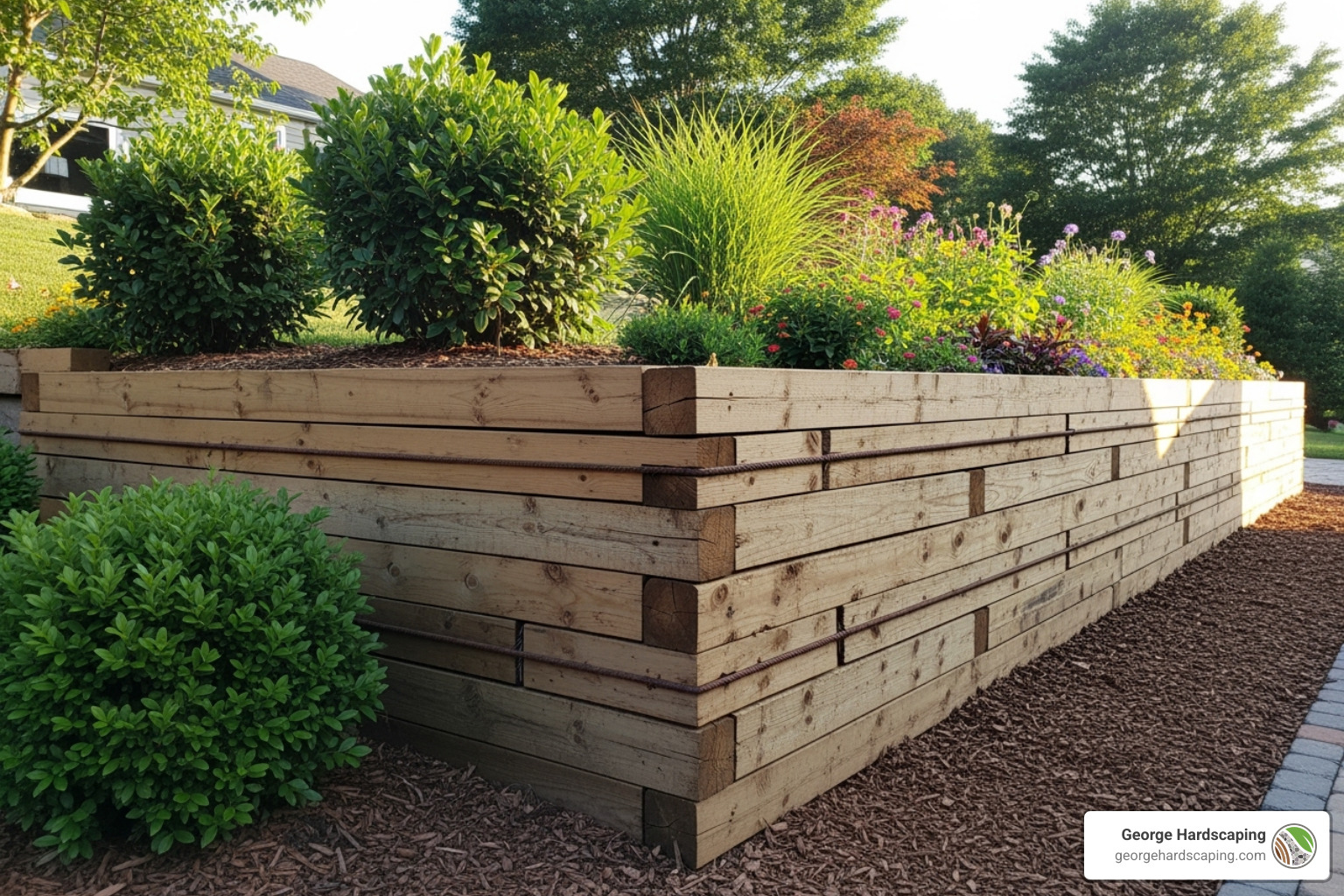
Wood retaining walls are budget-friendly at $10 to $40 per square foot. Pressure-treated lumber offers a rustic look and is a good choice for smaller projects, but its 10-40 year lifespan is shorter than other materials.
Concrete block walls ($15 to $60 per sq. ft.) offer a great balance of affordability and durability. They are versatile, come in many styles, and can last 50-100 years.
Poured concrete walls ($20 to $45 per sq. ft.) provide ultimate strength and a sleek, modern finish. While the upfront cost is higher, they can last up to a century and allow for custom shapes and curves.
Natural stone walls are a premium choice, and our Stone Retaining Walls show why. At $10 to $85 per square foot, they offer timeless beauty and a lifespan of 50-200 years, making them a true heirloom investment.
Metal retaining walls ($15 to $150 per sq. ft.) provide a contemporary flair. Corten steel, with its unique weathering properties, is at the higher end of this range but delivers distinct character and strength for 20-100 years.
How Wall Dimensions Impact Price
While bigger walls cost more, the relationship isn’t always linear.
Cost per linear foot is another way to view pricing, typically ranging from $40 to $300 depending on height and materials. A 50-foot wall often runs between $4,000 and $10,000.
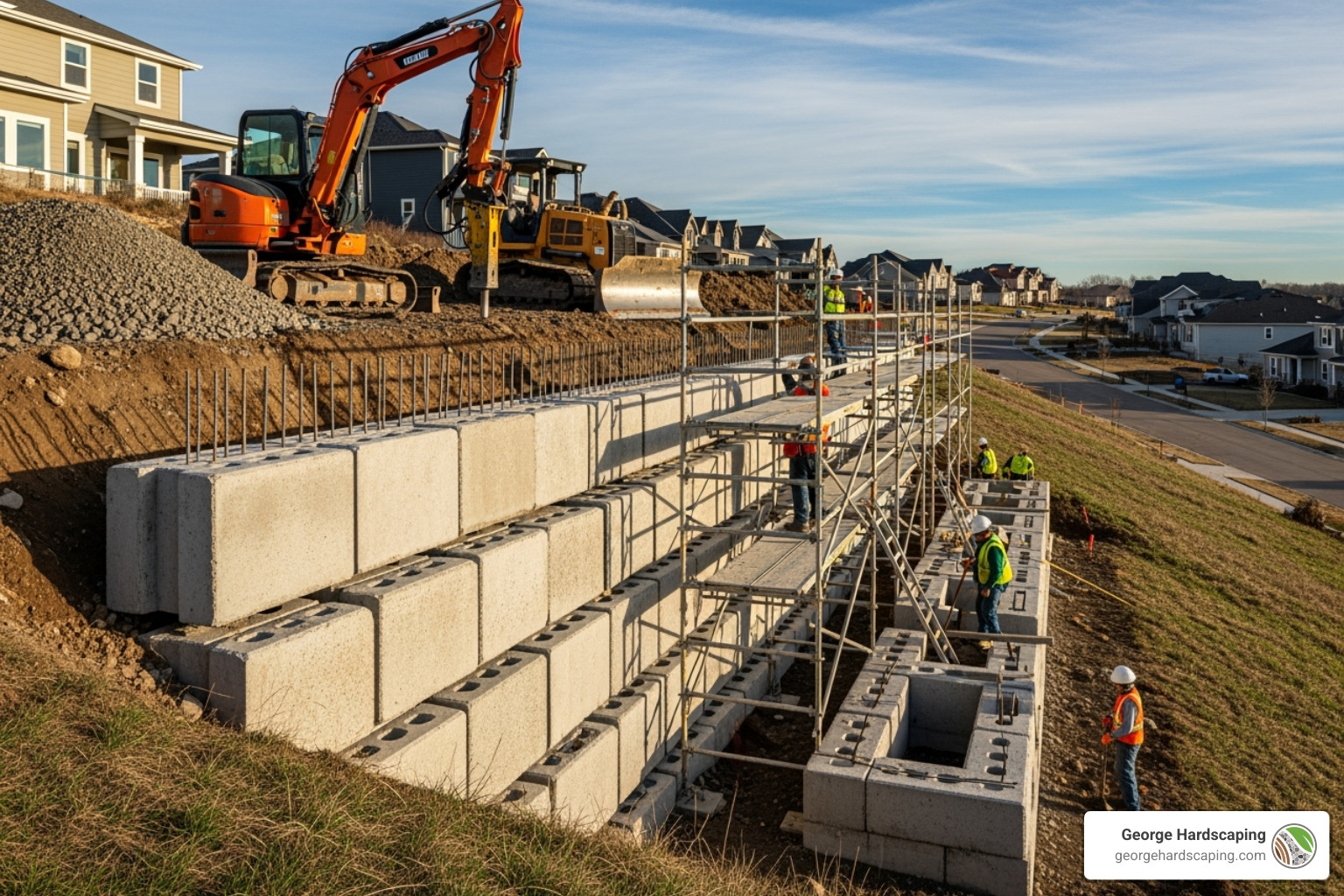
Height considerations are critical. Walls under 3-4 feet are simpler and more affordable, rarely needing permits or complex engineering. Once a wall exceeds this height, costs jump significantly. A 6-8 foot high wall can cost $120 to $400 per linear foot, as taller walls require deeper foundations, stronger materials, and better drainage systems, often with structural engineering oversight.
Length of the wall affects the total cost, but longer projects can sometimes offer a better price per foot as setup costs are spread out. However, longer walls also mean more excavation and materials, so it’s about finding the right balance for your needs and budget.
Key Factors That Drive Up Your Installation Bill
Beyond material and size, several other factors can significantly increase the how much for a retaining wall installed price. Understanding these behind-the-scenes costs is key to smart budgeting.
Material and Design Complexity
The specific look you want can swing the cost. Premium vs. basic materials within the same category (e.g., decorative vs. plain concrete blocks) will affect the price. In terms of design complexity, a straight wall is the most budget-friendly. Custom curves, tiers, or intricate patterns require more labor and material, increasing the cost. For more ideas, see our guide on Retaining Wall Design.
Integrated features like built-in benches, planters, or lighting add functionality and appeal but also increase project complexity and cost. Adding steps and lighting can cost $200 to $500 per fixture. Finally, veneer and finishing options, such as applying a stone veneer to a concrete wall, can add another $10 to $40 per square foot.
Labor and Site Conditions
Labor is a significant part of the budget, often $10 to $30 per square foot. Your property’s conditions can make this labor more intensive.
Site accessibility is a huge factor. If we can’t easily get machinery and materials to the work area, labor time and costs will increase. The soil type also plays a role; clay or rocky soil requires more effort and specialized equipment for excavation.
Most projects require significant excavation and grading, which can cost $50 to $200 per cubic yard. If your site needs extensive land clearing or grading before we start, these costs add up. After construction, the area needs backfilling, usually with gravel for drainage, which adds to material and labor expenses. Because of these variables, we always recommend getting multiple quotes from reputable contractors to understand the fair market rate for your specific project.
Drainage, Permits, and Engineering
These elements are essential for a safe, durable, and compliant wall. Skimping here is a recipe for future problems.
Proper drainage systems are non-negotiable to prevent hydrostatic pressure that can destroy a wall. A French drain, weep holes, and a generous gravel backfill are vital. While this adds to the initial cost, it saves you from expensive repairs.
Permit costs for walls over 4 feet are standard in most Essex County towns. A building permit is typically required for walls taller than 3-4 feet, costing $40 to $450. Skipping this step can lead to fines or demolition orders.
For taller walls or those on complex sites, structural engineer fees are a necessary expense. An engineer’s design is often mandatory for walls over 4 feet, those supporting heavy loads (like a driveway), or on sites with poor soil. Their fees can range from $100 to $220 per hour, but their expertise ensures the wall’s stability and safety. They may also specify reinforcements like steel rebar, adding to the cost. You can find more information on additional engineering for complex projects.
Smart Strategies to Save Money on Your Retaining Wall
Now that you know what drives up costs, let’s discuss smart ways to get the wall you need without overspending.
Choosing Cost-Effective Materials and Designs
Making informed choices on materials and design can lead to significant savings.
- Choose DIY-friendly materials: For small walls under 3 feet, materials like interlocking concrete blocks or treated timber are easier to assemble, which can reduce labor costs if you’re considering a DIY approach.
- Compare material costs: Generally, wood is the most budget-friendly option, while natural stone is at the top of the price scale. Find the right balance of cost, longevity, and aesthetics for your project.
- Simplify the design: A simple, straight wall reduces material waste and labor time compared to complex curves or tiers.
- Reduce wall height: Keeping the wall under 3-4 feet often helps you avoid the need for expensive permits and engineering.
- Use larger blocks: For concrete block walls, larger blocks can be installed faster, potentially lowering labor costs.
DIY vs. Hiring a Professional: How much for a retaining wall installed yourself?
Can you save money by doing it yourself? For a small, simple wall, yes. DIY material costs can be as low as $4 to $20 per square foot, and you’ll save on labor. However, you must factor in tool rental costs and the significant risks involved.
Retaining walls are structural. An improperly built wall can fail, leading to costly repairs and property damage. Walls over 3 feet tall, those holding back significant soil, or sites with tricky drainage are generally not suitable for DIY unless you have construction experience.
When to hire a pro? For any wall over 3-4 feet, or if you’re unsure about soil, drainage, or building codes, we strongly recommend hiring a professional. Their expertise ensures the wall is built safely and correctly. They handle the heavy equipment, complex calculations, and often provide warranties for peace of mind. For guidance, see our article on How to find a contractor to build a retaining wall.
- DIY Tasks (small, low walls): Basic layout, shallow excavation, laying the first course (perfectly level), and simple backfilling.
- Professional Tasks: Deep excavation, foundation design, installing drainage systems, adding reinforcement, navigating site challenges, and obtaining permits.
Finding the Right Contractor and Timing
Choosing the right partner and timing your project can also lead to savings.
Always get multiple quotes to compare not just the price, but the proposed methods and materials. Vet contractors thoroughly by checking licenses, insurance, references, and portfolios. A reputable contractor will stand behind their work with a warranty, protecting your investment.
Finally, consider off-season discounts. Some contractors may offer better pricing during slower periods, such as early spring or mid-summer. It’s always worth asking when you’re gathering quotes if you have flexibility in your schedule.
Frequently Asked Questions about Retaining Wall Costs
Homeowners often have the same questions when planning a retaining wall. Here are answers to the most common ones.
What is the cheapest type of retaining wall to build?
If budget is your primary concern, several options are wallet-friendly. Treated pine and wood sleepers are typically the most affordable at $10 to $40 per square foot installed, but they have a shorter lifespan (10-40 years). Interlocking concrete blocks ($15 to $30 per sq. ft.) offer an excellent balance of cost and durability (50-100 years). Gabion walls (wire cages filled with rocks) cost around $10 to $40 per square foot and are great for erosion control with a unique look.
The “cheapest” wall isn’t always the best value. A wall that fails early will cost more in the long run. The key is balancing initial cost with longevity.
Note: These are average costs based on internet data and not actual costs for George Hardscaping.
How high can a retaining wall be before I need an engineer?
This is crucial for safety and code compliance. The general rule is 3-4 feet; walls exceeding this height typically require a structural engineer’s design and a building permit. However, this threshold varies by municipality. Your local building department in Essex County towns like Danvers or Georgetown will have specific regulations.
Challenging soil conditions or surcharges (extra weight from a driveway or pool) can necessitate an engineer’s involvement even for shorter walls. Always consult a professional if you’re unsure to avoid costly mistakes and ensure safety.
How much for a retaining wall installed with concrete blocks vs. natural stone?
This is a common comparison with a significant price difference.
Concrete block retaining walls typically run $15 to $60 per square foot installed. The blocks themselves are uniform and designed for efficient installation, which keeps labor costs down.
Natural stone retaining walls are a premium option, costing $10 to $85 per square foot installed. The wide range reflects the variety of stone available. The higher cost is largely due to the specialized labor required. Installing natural stone is a time-intensive art form that requires masonry expertise.
From a long-term value perspective, natural stone often wins. Its 50-200 year lifespan and timeless aesthetic can significantly boost property value. Concrete blocks offer their own compelling value with excellent durability (50-100 years), versatility, and a more accessible price point.
Note: These are average costs based on internet data and not actual costs for George Hardscaping.
Conclusion: Building a Lasting Wall Without Breaking the Bank
Understanding how much for a retaining wall installed is the first step to a successful project. We’ve covered the key factors, from materials and size to site conditions and drainage. The main takeaway is that a well-planned, professionally installed retaining wall is a valuable investment in your property.
It solves erosion issues, creates usable space, and boosts your home’s curb appeal and value. While it’s tempting to cut corners, compromising on drainage, structural integrity, or permits can lead to costly failures. When it comes to a foundational structure, quality and professional expertise are priceless.
Here at George Hardscaping, we are a proud local masonry and hardscaping contractor serving Essex County, MA, and the entire North Shore. We are committed to building beautiful, durable outdoor spaces that stand the test of time.
To keep your project on budget, plan carefully, compare detailed quotes, choose materials wisely, and never underestimate the importance of proper site prep and drainage. With smart decisions and the right team, you can have a gorgeous, durable retaining wall without breaking the bank.
Ready to transform your landscape? Let’s talk. Request a professional estimate for your retaining wall project with George Hardscaping today. We’re here to bring your vision to life.
