
Helical Anchors Retaining Wall Repair: Secure 2025
What Are Helical Anchors and Why Do Retaining Walls Need Them?
If you’re looking for a solution to a failing retaining wall, helical anchors retaining wall repair is a proven method for stabilizing these crucial landscape structures. Here’s a quick look at how they work:
- What they are: Helical anchors are large, screw-like steel shafts with spiral plates.
- How they repair: They are driven deep into stable soil behind the failing wall and connected to the wall with a bracket. This creates a strong, permanent tieback that pulls the wall back into place and holds it firm against soil pressure.
- Benefits: This method offers a long-lasting solution with minimal disruption to your landscape.
Retaining walls are vital for protecting property, especially in areas with varied terrain like Essex County, MA. They hold back soil, prevent erosion, and create usable outdoor space. However, forces like soil pressure, poor drainage, and freeze-thaw cycles can cause a retaining wall to bow, lean, or crack, posing safety hazards and risking property damage.
Helical anchors offer a modern, reliable, and less intrusive way to repair and stabilize failing retaining walls. They function like giant screws, anchoring the wall to stable, deep earth. This provides the lateral support needed to counteract soil pressure, restoring stability with minimal disruption to your yard and offering a permanent solution.
Helical anchors retaining wall repair terms to know:
Understanding Retaining Walls and Why They Fail
Retaining walls are essential landscape structures that hold back the lateral pressure of soil, especially on sloped properties. For homeowners in places like Essex County, MA, they create flat, usable areas for gardens and patios, manage water runoff, and support foundations. These walls are built from various materials like concrete, natural stone, timber, masonry blocks, steel, or brick, each with unique strengths and weaknesses.
Even the strongest retaining wall can fail over time due to a combination of factors. The most common culprits are immense soil pressure, which is exacerbated by water saturation (hydrostatic pressure), and poor initial design or construction. A lack of proper drainage, soil erosion, or adding extra weight (surcharge) from a new driveway or patio can also lead to failure. For more on proper construction, see our insights on Retaining Wall Design.
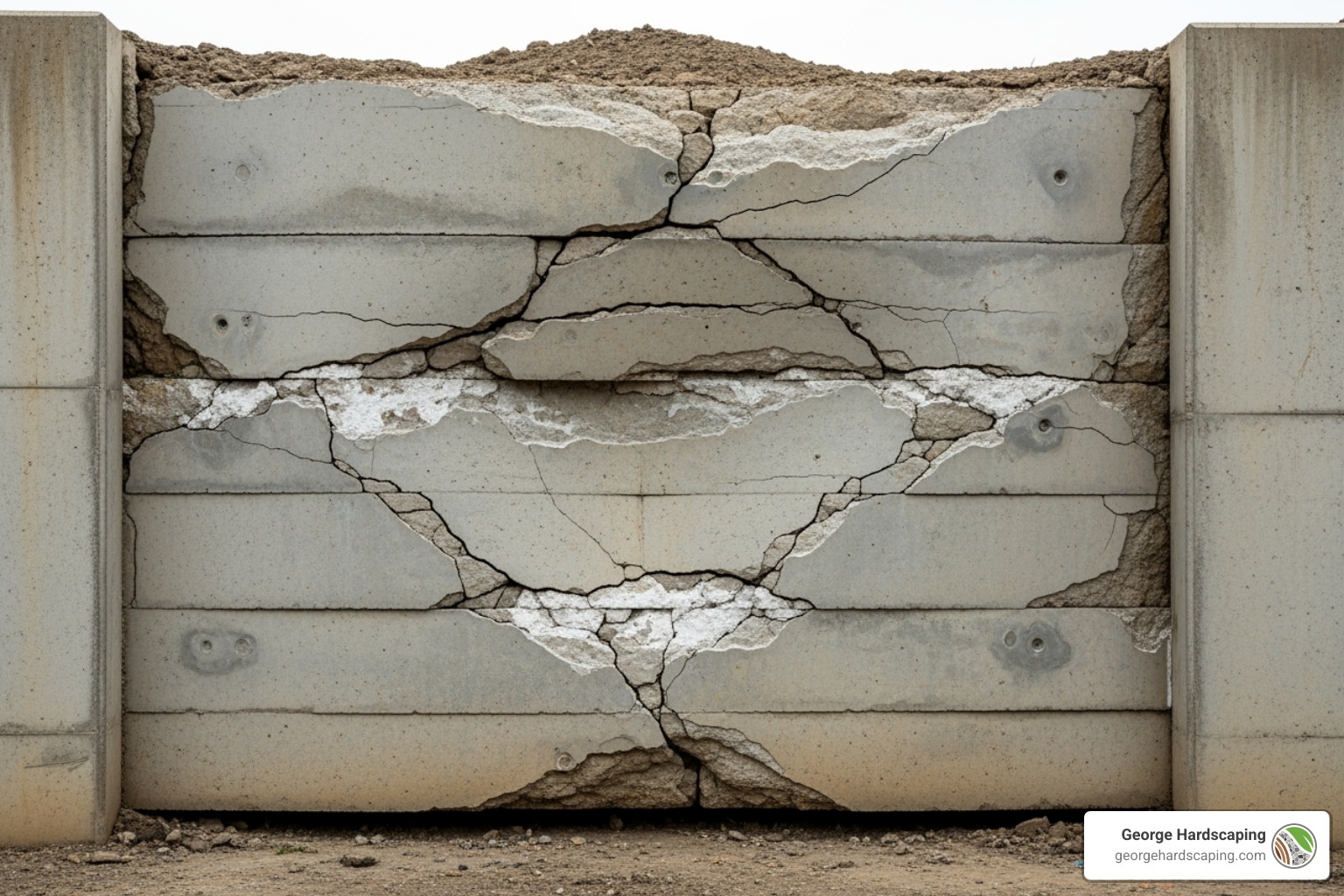
Common Causes of Retaining Wall Failure
Understanding why walls fail is key to preventing and repairing them:
- Poor Drainage: When water gets trapped behind a wall, the saturated soil becomes incredibly heavy, exerting immense hydrostatic pressure. This is worsened by expanding clay soils, which swell significantly when wet.
- Inadequate Construction: A wall may fail if it was built with an undersized footing or lacked sufficient reinforcement (like rebar) to handle the expected loads.
- Incorrect Backfill: Using the wrong backfill material, such as clay instead of draining gravel, prevents water from escaping and increases pressure on the wall.
- Freeze-Thaw Cycles: In climates like ours in Essex County, MA, water seeps into cracks and freezes, expanding and pushing on the wall. This repeated cycle gradually weakens and displaces the structure.
- Material Degradation: Over time, materials break down. Timber walls can experience wood rot, while concrete can crumble and mortar in stone or brick walls can deteriorate.
- Surcharge Loads: Any extra weight placed on the soil above the wall, such as a new patio, driveway, or swimming pool, can add stress the wall wasn’t designed for, leading to failure. This is why helical anchors retaining wall repair is crucial for restoring long-term stability.
Telltale Signs Your Wall Needs Repair
Your retaining wall will often show distress signals before a major failure. Acting on these signs early can save you significant time and money:
- Leaning or Tilting: A wall that is no longer vertical is a clear sign it’s struggling against soil pressure.
- Bowing or Bulging: A rounded or outward curve in the wall’s face is a classic symptom of excessive lateral pressure.
- Horizontal Cracks: Long cracks running sideways indicate the wall is being pushed beyond its structural limits and may be a candidate for helical anchors retaining wall repair.
- Stair-Step Cracks in Masonry: Zigzag cracks following mortar joints suggest uneven settling or lateral movement.
- Separation from Adjacent Structures: Gaps forming where the wall meets a house, patio, or another wall indicate movement.
- Water Pooling at the Base: This points to poor drainage, a leading cause of wall failure.
- Crumbling Concrete or Rotting Wood: Visible deterioration of the wall material itself means its structural integrity is compromised.
If you spot any of these signs, it’s time to contact a professional for an assessment.
The Ultimate Guide to Helical Anchors Retaining Wall Repair
When a retaining wall shows signs of distress, helical anchors retaining wall repair offers a robust, modern, and minimally invasive solution. These tools, also known as helical tiebacks or screw anchors, are favored by engineers for shoring up failing walls. For local expertise, consider looking into Hardscape Repair Near Me.
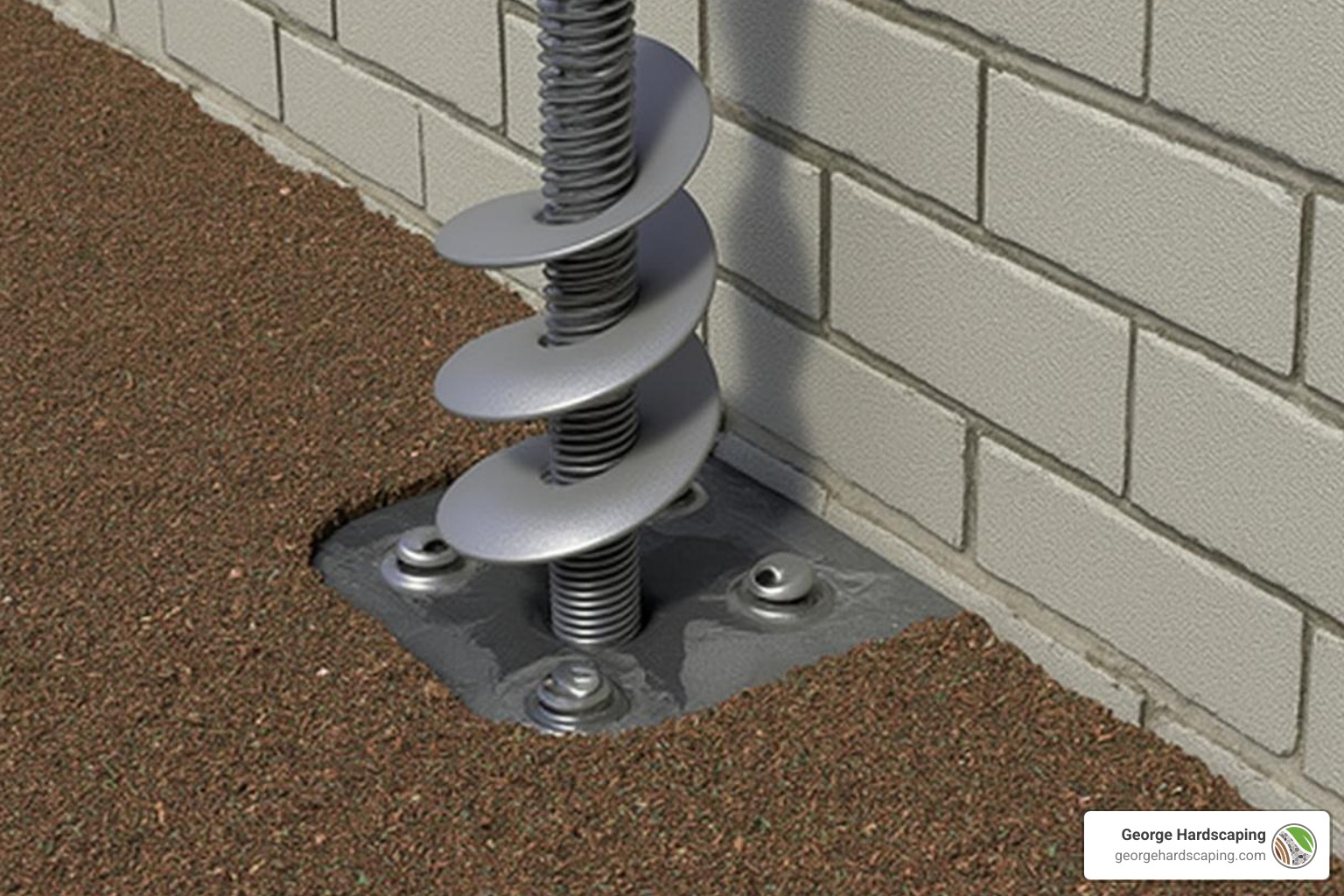
What Are Helical Anchors and How Do They Work?
Helical anchors are essentially heavy-duty steel screws. They consist of a central steel shaft with one or more spiral (helical) plates welded to it. As horizontal tiebacks, they are engineered to counteract the immense lateral forces pushing against a retaining wall.
The primary function of a helical anchor is to transfer the load from the failing wall to stable, deep soil behind it. This is achieved through a few key steps:
- Installation: Using hydraulic equipment, the anchor is screwed into the ground. The helical plates pull the anchor deep into the earth, past the unstable soil near the surface.
- Anchoring: The anchor is driven deep enough to reach strong, inactive soil layers that are unaffected by surface moisture or erosion. This provides a permanent anchor point.
- Load Transfer: A steel wall plate is attached to the anchor rod on the face of the retaining wall. This plate distributes the load and connects the wall to the deeply buried anchor.
- Stabilization: The anchor is tensioned, pulling the wall back toward its original position. This creates the necessary counter-pressure to stabilize the wall against the soil.
One of the key engineering advantages is the anchor’s predictable holding capacity. During installation, the torque (twisting force) is monitored. This provides a direct, real-time measurement of the anchor’s capacity, ensuring reliable and verifiable results. Some helical anchor systems can achieve capacities up to 200,000 pounds per anchor, making them an exceptionally strong and reliable solution.
The Step-by-Step Installation Process
Installing helical anchors is a precise process requiring specialized equipment and expertise. Here is a general overview of the steps involved:
- Site Assessment and Engineering: A structural engineer inspects the wall and soil to determine the cause of failure. They design a repair plan specifying the number, size, location, and angle for each anchor to ensure it reaches stable soil.
- Preparing the Wall: Small holes (typically 3 inches) are drilled through the retaining wall at the designated anchor locations for the anchor rod to pass through.
- Driving the Helical Anchor: Using high-torque hydraulic equipment, the anchor is screwed into the ground behind the wall. Extensions are added until the anchor reaches the specified depth and torque, confirming it is set in stable soil.
- Monitoring Installation Torque: Throughout the installation, the torque is continuously monitored. This quality control check verifies that each anchor has achieved the required holding capacity.
- Attaching the Wall Plate: A heavy-duty steel wall plate is placed over the anchor rod against the face of the wall. For block walls, a steel C-channel may be used to bridge any broken sections.
- Tensioning and Stabilizing the Wall: The anchor rod is secured to the wall plate with nuts and washers. The assembly is then tensioned, pulling the wall back toward a plumb position and providing immediate stabilization. In many cases, this can return the wall to its original alignment.
Installing a single helical tieback can take from 30 minutes to 2 hours. A team can often install 30 to 40 anchors in a day, meaning most helical anchors retaining wall repair projects are completed within a few days with minimal disruption.
Helical Anchors vs. Other Repair Methods: A Comparison
When a retaining wall fails, you have several repair options, but not all are created equal. We believe in solutions that are effective, minimally disruptive, and provide lasting value. Helical anchors retaining wall repair often stands out against traditional methods.
Here’s a quick comparison of common repair choices:
| Feature | Helical Anchors | Deadman Anchors (Plate and Rod) | Full Wall Replacement |
|---|---|---|---|
| Landscape Disruption | Minimal. Small holes, no large-scale excavation. Preservation of existing landscaping. | Moderate to High. Requires significant excavation for the buried “deadman” block. | Very High. Complete removal of existing wall and surrounding landscape. |
| Installation Speed | Fast. Single anchors installed in minutes; projects often completed in days. | Slower. Excavation, concrete pouring, and curing time. | Very Slow. Weeks to months, depending on wall size and complexity. |
| Long-Term Cost | Cost-effective. Permanent solution, avoids future repairs or replacement. | Potentially Higher. Prone to failure if not properly installed or in poor soil. | Highest. Significant material, labor, and landscaping restoration costs. |
| Effectiveness | Highly effective. Predictable, immediate load transfer, reaches stable soil. | Variable. Can fail if block is in active soil or rod hits obstructions. | High. A new, properly engineered wall should be effective, but costly. |
The Advantages of Helical Anchors
Choosing helical anchors retaining wall repair offers significant benefits for homeowners:
- Minimal Site Disturbance: Installation requires only small holes, avoiding the large trenches and massive excavation of other methods. This preserves your lawn, gardens, and patios.
- Quick Installation Time: With no need for large-scale excavation or concrete curing, projects that might take weeks with other methods can often be completed in just a few days.
- Predictable and Immediate Results: The installation torque provides instant verification of the anchor’s holding capacity, meaning the wall is stabilized immediately.
- Versatility: Helical anchors perform well in various soil types, from clay to sand, and can be installed in almost any weather. Their compact equipment is ideal for limited access areas.
- Permanent Solution: When installed correctly into stable soil, galvanized helical anchors provide a long-term, permanent repair that resists corrosion and stands the test of time.
Drawbacks of Traditional Methods
Older repair methods often come with considerable downsides:
- Disruptive Excavation: Methods like “deadman anchors” require digging large trenches, destroying landscaping and creating a major construction zone in your yard.
- Slower Process: Traditional methods often involve pouring concrete or grout and waiting for it to cure, adding days or weeks to the project timeline.
- Potential for Failure: Deadman anchors may be placed in the same unstable soil that caused the initial problem, limiting their effectiveness. Their connecting rods can also be damaged by roots or other obstructions.
- Higher Overall Cost: When you factor in the cost of excavation, debris removal, and extensive landscape restoration, traditional methods can be more expensive in the long run.
- Doesn’t Solve the Root Problem: Some methods simply brace the wall without addressing the underlying soil pressure. Helical anchors counteract this pressure directly by anchoring deep into stable earth, providing a more fundamental fix.
Making the Right Choice: Is Helical Anchor Repair for You?
Deciding on the right repair for your retaining wall is a major decision. While helical anchors retaining wall repair has many advantages, it’s important to understand when it’s the best fit and why professional expertise is essential. For help finding the right professionals, you can refer to How to Find a Contractor to Build a Retaining Wall.
When to Consider Helical Anchors for Retaining Wall Repair
Helical anchors are an excellent solution for many retaining wall issues:
- Bowing or Leaning Walls: They are highly effective at pulling bulging or tilting walls back to plumb and providing long-term stability.
- Significant Cracking: Anchors stabilize the wall, preventing movement that worsens existing cracks.
- Preserving Landscaping: Their minimal excavation requirements are ideal if you want to protect established gardens, trees, or patios.
- Limited Property Access: Compact installation equipment allows work in tight spaces where larger machinery can’t go.
- Avoiding Obstructions: Anchors can be installed at an angle to avoid underground utilities, pools, or decks.
- Needing a Fast, Permanent Solution: If you need a quick, durable repair that will last for decades, helical anchors are a prime choice.
Understanding the Costs of Helical Anchors Retaining Wall Repair
Cost is a key factor in any home repair. The price of helical anchors retaining wall repair varies based on several factors. Please note the prices discussed here are general averages based on internet data, not a quote from George Hardscaping. We recommend a personalized estimate for your project.
On average, a single helical tieback installation can cost from $1,800 to $6,000 or more per tieback. This wide range depends on:
- Project Scope: The wall’s size, height, and the severity of the damage.
- Number of Anchors: The total length of the wall determines how many anchors are needed for proper stabilization.
- Site Conditions: Difficult soil (rocky, unstable) or poor site accessibility can increase labor costs.
- Geographic Location: Labor and material costs vary by region.
While this is an investment, it’s often significantly less than the cost of a full wall replacement, which can run into tens of thousands of dollars. Helical anchors provide a permanent solution that protects your property’s value.
Why Professional Expertise is Non-Negotiable
Helical anchors retaining wall repair is a complex structural job that is not a DIY project. Professional expertise is crucial for several reasons:
- Accurate Diagnosis & Engineering: A professional engineer must correctly identify the cause of failure and design a proper repair plan, specifying the correct number, size, depth, and angle of the anchors.
- Correct Installation: Improper anchor sizing, placement, or installation can lead to an ineffective repair or further damage.
- Specialized Equipment: Installation requires high-torque hydraulic machinery operated by trained and certified technicians.
- Safety: A failing retaining wall is a safety hazard. Professionals ensure the repair process is conducted safely, protecting your family and property.
- Building Codes and Permits: Structural repairs often require permits and must comply with local building codes. A professional contractor will manage this process.
Hiring a qualified professional ensures your retaining wall repair is safe, effective, and built to last.
Frequently Asked Questions about Helical Anchor Repair
It’s natural to have questions when considering a major repair. Here are answers to some common questions we hear about helical anchors retaining wall repair.
How long does a helical anchor repair take?
One of the biggest advantages of this method is speed. A single anchor can often be installed in 30 minutes to 2 hours. Because there is no concrete to cure, a team can install numerous anchors in a single day. Most residential repair projects are completed in just 1 to 3 days, minimizing disruption to your property.
Are helical anchors a permanent solution?
Yes. When properly designed and installed by a professional, helical anchors are considered a permanent solution. The components are typically made of hot-dip galvanized steel to resist corrosion. By anchoring deep into stable soil layers, they address the root cause of wall failure, providing lasting support that can protect your property for decades.
Can helical anchors straighten a badly leaning wall?
In many cases, yes. Helical anchors can often straighten a leaning wall and pull it back toward its original position. After the anchor is set, it is tensioned with a wall plate. This process carefully pulls the wall backward. The degree of correction possible depends on the wall’s condition, the severity of the lean, and soil properties. A professional assessment can determine the expected outcome for your specific wall.
Conclusion: Secure Your Landscape for Years to Come
A leaning or bowing retaining wall is more than an eyesore; it’s a structural concern that can risk your property’s safety. Fortunately, a modern, powerful solution exists. Helical anchors retaining wall repair stands out as an effective, minimally invasive, and fast way to restore stability to your landscape.
By using smart engineering, helical anchors don’t just stop a wall from moving further; they can often pull it back to its original position, securing it for decades. This ensures your outdoor spaces remain beautiful and your property stays protected.
For homeowners in Essex County, MA, and across the North Shore, the stability of our hardscapes is crucial. If you’ve noticed signs of wall failure—a lean, a bulge, or cracks—a professional assessment is the best next step. It’s the only way to know if helical anchors retaining wall repair is the right solution for your property, giving you peace of mind and safeguarding your investment.
Don’t wait for a small problem to become a major one. If your retaining wall needs help, contact a professional Retaining Wall Contractor today for a comprehensive evaluation and a lasting solution.
