
Front Yard Walkway Ideas: 10 Stunning Ways to Boost Curb Appeal
Why Your Front Walkway Is Your Home’s First Impression
Front yard walkway ideas can transform your home’s curb appeal faster than almost any other outdoor improvement. As one landscape expert puts it: “Nothing creates curb appeal faster than a well-designed front path. It’s the first impression your house makes to visitors—and to you every time you come home.”
Top Front Yard Walkway Ideas:
– Brick pavers – Classic, durable, matches traditional homes
– Natural flagstone – Neat, unique patterns, blends with landscaping
– Modern concrete slabs – Clean lines, budget-friendly, contemporary look
– Gravel paths – Low maintenance, versatile, easy to install
– Stepping stones – Charming, allows grass between stones, DIY-friendly
– Herringbone patterns – Most popular paver layout, adds visual interest
– Curved walkways – Creates mystery, softens angular home exteriors
Your front walkway does more than just get you from point A to point B. It sets the tone for your entire property and can boost your home’s value significantly.
Whether you’re dealing with slopes that need steps, sandy soil that shifts, or simply want to upgrade from cracked concrete, the right walkway design solves practical problems while making your Essex County home stand out.
The key is choosing materials and layouts that complement your home’s style, fit your budget, and work with New England’s freeze-thaw cycles.
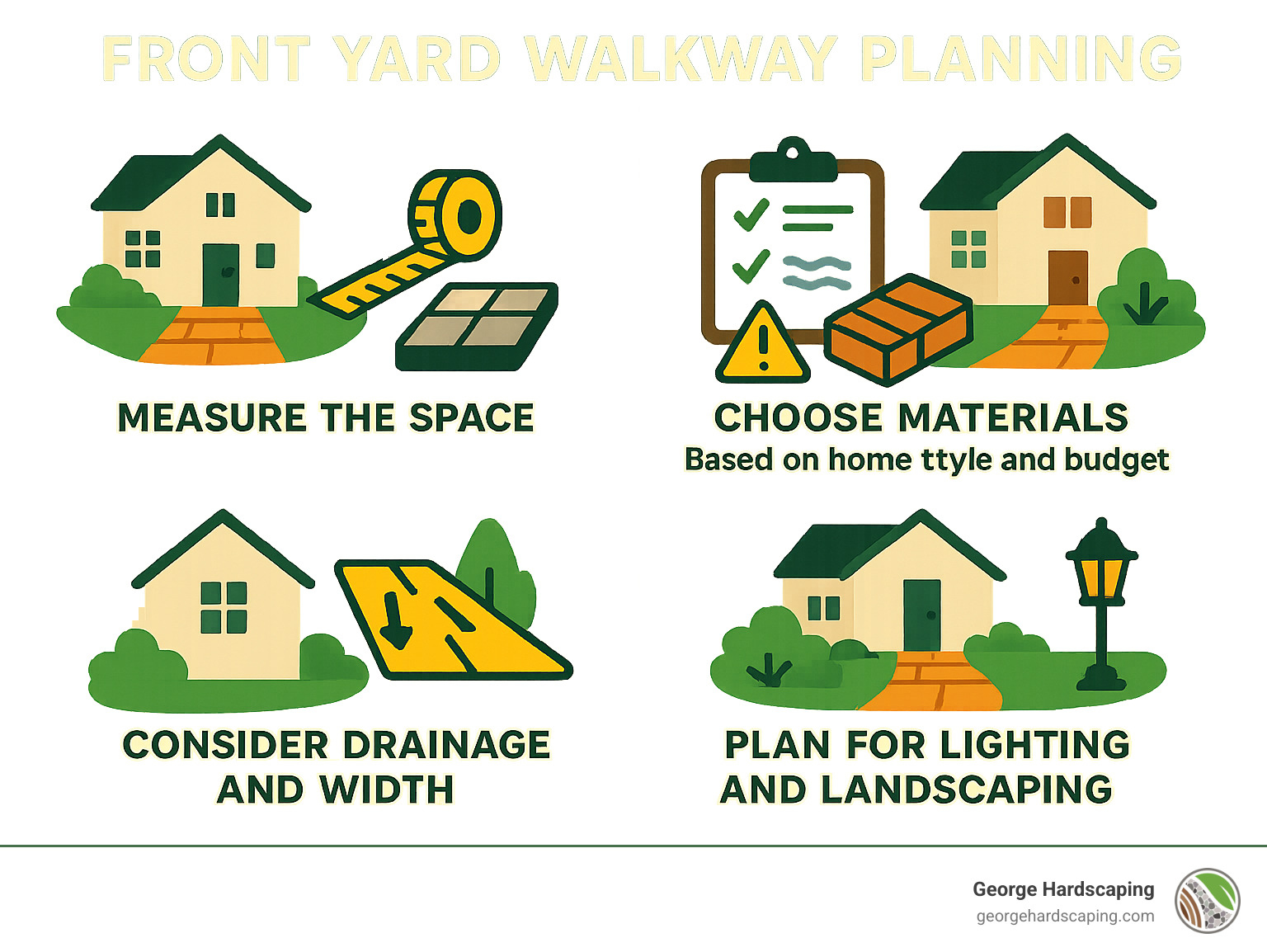
1. Material Magic: Choosing the Best Surface for Your Path
The foundation of all great front yard walkway ideas starts with picking the right material. After twenty years of installing walkways across Essex County, we’ve seen what works (and what doesn’t) in our challenging New England climate.
Brick pavers steal the show for classic charm. These clay beauties age gracefully and complement those gorgeous colonial homes we see throughout Salem and Marblehead. The rich, warm tones develop character over time, and quality brick can easily last 50+ years. Just remember – proper installation is everything. Skimp on the base prep, and you’ll have shifting pavers come spring.
Natural flagstone brings that “wow factor” that stops neighbors in their tracks. Each piece tells its own story with unique colors and textures. Local New England fieldstone feels especially at home here, like it’s always belonged in your landscape. The trade-off? You’ll pay premium prices, and thicker pieces are non-negotiable in our freeze-thaw cycles.
For homeowners wanting style without breaking the bank, concrete pavers hit the sweet spot. Today’s large-format options look surprisingly sophisticated – nothing like the basic gray squares from decades past. They’re engineered to laugh off road salt and ice, which matters when February rolls around.
Gravel walkways deserve serious consideration, especially if you love low-maintenance solutions. River rock, crushed stone, or even decorative colored options create inviting paths that work with any home style.
Permeable pavers represent the future of responsible landscaping. These clever surfaces let rainwater soak through instead of rushing toward storm drains. Many Essex County towns are encouraging (or requiring) permeable surfaces, making this both an environmental and practical choice.
The cost spectrum runs wide – expect anywhere from $8 to $60 per square foot for materials and installation, with natural stone commanding top dollar and basic concrete pavers on the budget-friendly end. These are internet averages and don’t reflect George Hardscaping’s actual pricing.
| Material | Durability | Maintenance | Climate Fit | Cost Range* |
|---|---|---|---|---|
| Brick Pavers | Excellent (50+ years) | Low-Medium | Good with proper base | $15-45/sq ft |
| Natural Stone | Excellent | Medium | Excellent | $25-60/sq ft |
| Concrete Pavers | Very Good | Low | Very Good | $8-30/sq ft |
| Gravel | Good | Very Low | Good | $5-15/sq ft |
| Permeable Pavers | Very Good | Low-Medium | Excellent | $12-40/sq ft |
*Internet averages, not George Hardscaping pricing
Find a Concrete Contractor | More info about Paver Walkways
Pros & Cons at a Glance
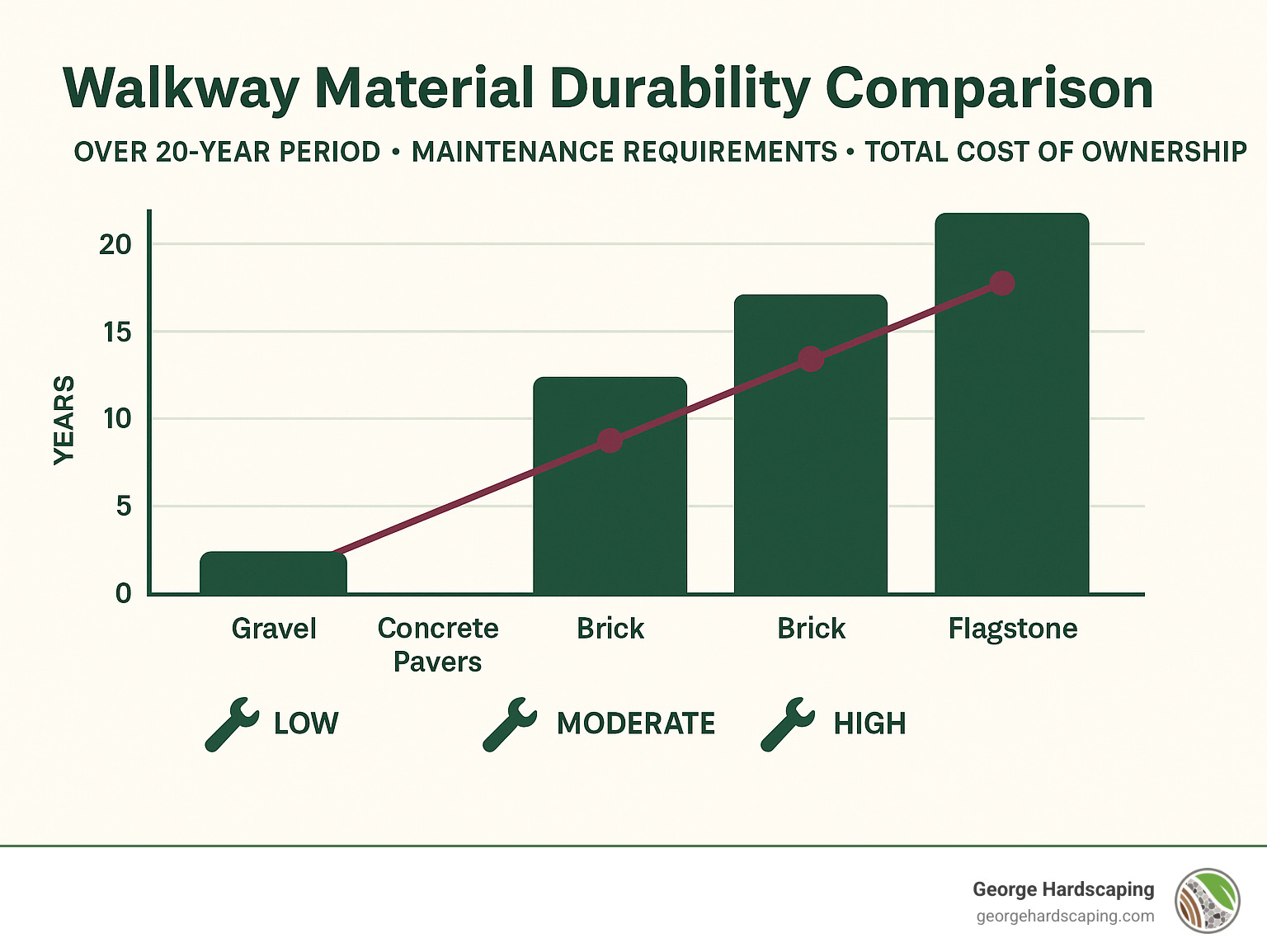
Durability champions include clay brick and natural stone, both capable of outlasting your mortgage. Concrete pavers aren’t far behind, especially newer formulations designed specifically for our tough climate.
Slip-resistance becomes crucial when November ice arrives. Textured surfaces like brushed concrete, natural stone with its inherent grip, and specialty pavers with built-in traction patterns keep you upright during those treacherous months.
Climate compatibility can’t be ignored in Essex County. Materials need to handle dramatic temperature swings without cracking or becoming dangerously slick. Proper drainage prevents ice dams that turn walkways into obstacle courses.
The key is matching your material choice to your lifestyle, budget, and home’s personality. A rushed decision here affects your daily experience for decades to come.
2. Front Yard Walkway Ideas: Patterns, Shapes & Layouts
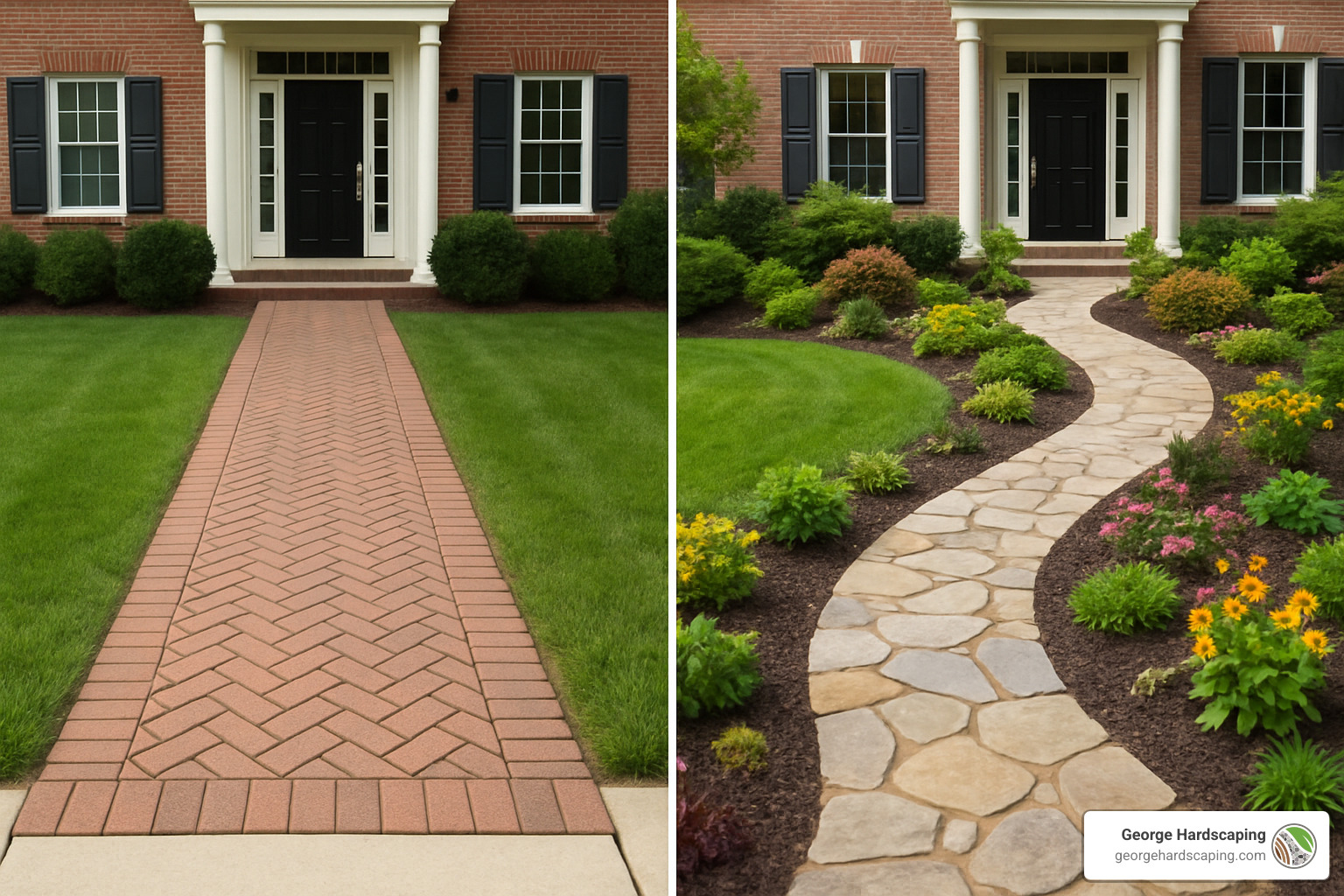
The magic of front yard walkway ideas really comes alive when you consider how different patterns and layouts can completely transform your home’s first impression. After installing hundreds of walkways across Essex County, I’ve seen how the right design choice can make a modest cape cod feel grand or help a large colonial feel more welcoming.
Herringbone patterns consistently rank as our most requested design, and for good reason. This classic zigzag layout works beautifully with both brick and concrete pavers, creating visual movement that draws the eye toward your front door. The interlocking pattern also provides excellent stability – crucial for our freeze-thaw cycles here in New England.
But don’t overlook the charm of stepping stones. These create that cottage-garden feel that many homeowners crave, especially when you let Irish moss or other groundcovers grow between the stones. Just remember to keep gaps under 6 inches to prevent tripping hazards – nobody wants their guests doing an unexpected dance on the way to dinner.
Large-format tiles are having a major moment right now. These oversized pavers create clean, minimalist lines that make small front yards appear more spacious. We’ve installed gorgeous wood-look slabs that give you all the warmth of natural wood without the maintenance headaches of dealing with rot or insect damage.
The curved versus straight debate often comes down to your home’s personality. Straight walkways create that formal, symmetrical approach that colonial and contemporary homes love. But curved paths? They add mystery and encourage people to slow down and actually notice your landscaping efforts. Plus, curves naturally soften those sharp angles that can make some home exteriors feel too rigid.
Lattice cobble patterns filled with gravel create an interesting textural contrast that’s perfect for coastal-style homes. The combination gives you that “lovely beachside pathway” vibe while still being practical for everyday use.
More info about Front Yard Paver Walkway Ideas
Front Yard Walkway Ideas for Every Home Style
Your walkway should feel like a natural extension of your home’s architecture, not an afterthought. Colonial homes shine with classic brick laid in herringbone or running bond patterns. If you can find aged or reclaimed brick, even better – the weathered character adds authenticity that new brick just can’t match.
Modern and contemporary homes call for clean lines and geometric precision. Large-format concrete pavers in monochromatic color schemes create that sleek aesthetic these styles demand. We’ve created stunning entrances using floating concrete slabs with carefully planned spacing – it’s like outdoor minimalist art that you can actually walk on.
Mid-century modern homes deserve something special. Think geometric patterns, mixed materials, and seamless integration with landscape elements. Those floating concrete slabs over gravel we mentioned? They create the perfect retro-modern vibe that complements the era’s design philosophy.
Coastal and Cape Cod styles benefit from materials that echo their seaside heritage. Weathered flagstone, mixed stone materials, or even cobblestone in lighter colors reflect that beachy, weathered-by-time aesthetic that makes these homes so charming.
Working With Slopes & Levels

Not every front yard is perfectly flat – and honestly, that’s often a blessing in disguise. Stone steps integrated into your walkway design can transform a challenging slope into the most interesting feature of your landscape.
When we encounter grade changes, we typically break the walkway into separate segments. This approach simplifies installation while creating natural resting points where people can pause and appreciate your landscaping. It’s much more inviting than a single steep ramp that leaves visitors slightly winded by the time they reach your door.
Drainage considerations become absolutely critical when dealing with slopes. Water wants to flow downhill – shocking, I know – but without proper grading, you’ll end up with pooling water that becomes ice in winter. We always plan for water to flow away from your home and off your walkway surface. It’s not just about longevity; it’s about safety during those icy February mornings.
The key to successful slope management is making steps feel like natural extensions of your walkway rather than clunky afterthoughts. Using matching materials and maintaining proportional sizing creates seamless transitions that look intentional and neat. Natural stone risers work particularly well for softening steep slopes while providing the functional steps you need.
More info about How to Build a Paver Walkway on a Slope
3. Practical Planning: Width, Drainage, Budget & Maintenance
Now for the nitty-gritty details that separate stunning front yard walkway ideas from expensive mistakes. These practical considerations might not be as exciting as choosing between herringbone and basketweave patterns, but they’re what keep your walkway looking gorgeous year after year.
Getting the Width Right: Your main front walkway should never be less than 4 feet wide – anything narrower feels cramped and forces people to walk single file. Most of our clients opt for 5-6 feet wide walkways, which creates that welcoming, grand entrance feeling. Secondary garden paths can get away with 3 feet, but your front door deserves the royal treatment.
For accessibility considerations, ADA guidelines recommend wider paths when possible. This isn’t just about compliance – wider walkways simply feel more welcoming and accommodate everything from delivery packages to wheelchairs with ease.
Drainage: Your Walkway’s Best Friend: Here’s something we see all too often – gorgeous walkways that turn into ice rinks every winter because drainage was an afterthought. Proper grading ensures water flows away from your house and doesn’t pool on the path surface.
The magic happens in the sub-base preparation. A well-compacted gravel base with proper slope prevents settling and water issues. We always slope walkways slightly away from the house – it’s barely noticeable to the eye but makes all the difference for longevity.
Polymeric sand in paver joints provides flexibility during our Essex County freeze-thaw cycles while keeping weeds at bay. It’s one of those small details that pays big dividends over time.
Budget Reality Check: Let’s talk numbers. Based on internet averages, walkway installations typically range from $8-$60 per square foot, though high-end natural stone projects can reach $150+ per square foot. These are average costs based on internet data and not actual costs for George Hardscaping.
Gravel paths start around $8-$25 per square foot and offer excellent value for cottage-style homes. Concrete options run $12-$45 per square foot, while brick pavers typically cost $15-$75 per square foot. Natural stone commands premium pricing at $20-$150+ per square foot, but the wow factor often justifies the investment.
Maintenance: Choose Your Trip: Different materials demand different levels of upkeep. Gravel needs occasional refreshing and edge maintenance. Sealed concrete pavers require resealing every 2-3 years to maintain their appearance and weather resistance.
Natural stone sits in the middle – it’s incredibly durable but may need periodic releveling as the ground settles. The good news? Most eco-friendly permeable pavers are surprisingly low-maintenance once properly installed.
Winter Survival Strategy: Our New England winters aren’t kind to outdoor surfaces. When planning your walkway, consider snow removal logistics. Large gaps between stepping stones can catch shovel edges, making winter maintenance frustrating.
Smooth surfaces become slip hazards, so textured materials or anti-slip treatments are worth considering. Salt and de-icing chemicals can damage some materials, so choose accordingly if you plan to use them.
Environmental Considerations: Permeable pavers and gravel systems help manage stormwater runoff while potentially meeting local environmental regulations. These eco-friendly options allow water to filter through rather than rushing off into storm drains.
This approach can be particularly valuable in areas with strict stormwater management requirements – and it’s simply better for the environment.
Scientific research on storm-water runoff | More info about How Much Does a Paver Walkway Cost?
4. Finishing Touches: Landscaping, Lighting & Wow Factors

Here’s where your walkway transforms from simply functional to absolutely magical. The best front yard walkway ideas aren’t just about the path itself – they’re about creating an experience that welcomes you home every single day.
Edge plantings are your secret weapon for instant charm. The right plants can turn a basic concrete walkway into something that looks like it belongs in a magazine. We love filling spaces between flagstones with Irish moss – it creates this lush, cottage-garden feel that’s surprisingly low-maintenance.
For something even more special, try creeping thyme between pavers. Every time someone walks on it, it releases this wonderful herbal fragrance. Imagine coming home to that welcoming scent every day!
Native grasses deserve special mention here in Essex County. They handle our winters like champs and provide movement and texture year-round. Plus, they’re practically maintenance-free once established.
Don’t overlook the power of color accents and texture play. Contrasting materials create visual depth without breaking your budget. Picture slate stepping stones with brick borders, or decorative river rock filling the joints between pavers.
More info about Walkways & Stairs
Low-Maintenance & Pollinator-Friendly Plantings
Groundcovers are your best friend for easy care. Native options like wild ginger, pachysandra, and vinca minor thrive in our New England climate with minimal fuss. They spread naturally to fill spaces and suppress weeds.
Drought-tolerant plants are having a moment, and for good reason. Sedum varieties offer incredible texture and color while needing almost no water once established. Ornamental grasses sway beautifully in the breeze and look stunning even in winter.
Many of these low-maintenance choices are also pollinator-friendly. Native wildflowers and flowering groundcovers support local bees and butterflies while keeping your walkway colorful throughout the growing season.
Light Up the Night Safely
Walkway lighting is one of those upgrades that pays dividends every single evening. It’s not just about safety (though that’s crucial) – it’s about extending your home’s welcoming appeal into the night hours.
Solar bollards have come a long way in recent years. They’re easy to install since there’s no wiring involved, and modern versions provide surprisingly good illumination. Stagger them on alternating sides of your path to avoid that airport runway look.
For a more sophisticated approach, recessed LEDs built into step risers provide subtle guidance without harsh glare. This technique works beautifully for walkways with integrated steps or level changes.
Smart timers and motion sensors add convenience while saving energy. There’s something satisfying about having your walkway light up automatically as you approach.
The key to great walkway lighting is creating even illumination rather than bright spots that create harsh shadows. Think gentle guidance rather than stadium lighting.
5. DIY vs Hiring a Pro: What’s Right for You?
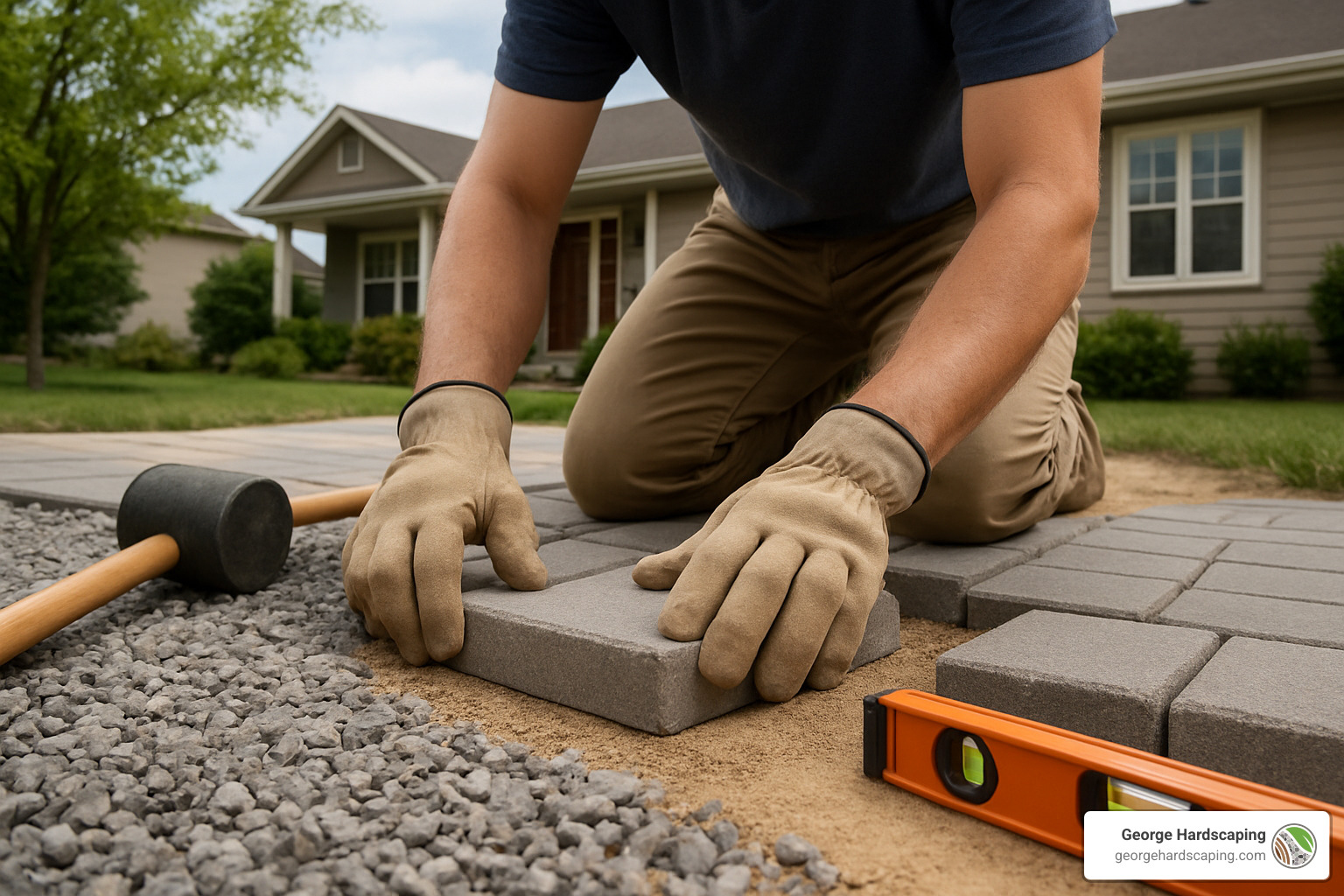
The age-old question: tackle it yourself or call in the cavalry? The answer depends on your skill level, available time, and project complexity.
DIY Success Stories: Simple projects like gravel paths or basic stepping stone installations can absolutely be DIY wins. One homeowner created a beautiful $50 stepping stone and gravel walkway that gets constant compliments. The key was proper planning and realistic expectations.
Essential DIY Tools:
– Sledgehammer (for removal)
– Garden rake and shovel
– Level and measuring tape
– Wheelbarrow
– Plate compactor (rental)
– Rubber mallet
– String line and stakes
Time Investment: Budget significantly more time than you think. What looks like a weekend project often stretches into several weekends, especially if you encounter unexpected challenges like poor drainage or utility lines.
Cost Considerations: While DIY saves on labor, tool rental and material costs add up quickly. Factor in your time value – sometimes professional installation costs less than you’d expect when you account for efficiency and warranties.
More info about Paver Walkway Installer
When to Call in the Experts
Complex Patterns: Herringbone, circular, or intricate geometric patterns require precision and experience. Mistakes are expensive to fix and obvious to everyone who visits.
Heavy Grading: If your project requires significant excavation, drainage systems, or slope modification, professional equipment and expertise become essential.
Integrated Steps: Combining walkways with built-in steps requires structural knowledge and precise calculations for safety and code compliance.
Drainage Issues: Poor drainage can destroy even the most beautiful walkway. Professionals understand proper grading, sub-base preparation, and water management techniques that ensure longevity.
Permit Requirements: Some municipalities require permits for walkway installations, especially those involving grading or drainage modifications. Professionals steer these requirements efficiently.
Warranty Peace of Mind: Professional installations typically come with warranties covering both materials and workmanship. This protection can save thousands if problems arise.
Frequently Asked Questions about Front Yard Walkway Ideas
Let’s tackle the questions we hear most often from Essex County homeowners considering front yard walkway ideas. These come straight from real conversations with neighbors just like you.
How wide should my front yard walkway be?
Here’s the golden rule: your main front walkway should be 4-6 feet wide. Why? Because nothing’s more awkward than having to walk single-file with a guest to your own front door!
Think about it – when someone visits, you want to walk alongside them, chatting comfortably. A 4-foot minimum allows this, while 5-6 feet creates that grand, welcoming feeling that makes your home feel substantial and well-planned.
Secondary garden paths can get away with 3 feet, but don’t shortchange your primary entrance. It’s literally the red carpet to your home, and it should feel like one.
What is the most budget-friendly material that still looks great?
Gravel and crushed stone are your wallet’s best friends here, typically running $8-25 per square foot installed. These are average costs based on internet data and not actual costs for George Hardscaping. Limestone or granite crush creates beautiful, natural-looking paths that complement any home style.
For a step up that still won’t break the bank, concrete pavers offer excellent value at $12-45 per square foot. The trick with budget materials? Don’t skip the finishing touches. Simple edging, thoughtful landscaping, or even just keeping the path well-maintained can make an inexpensive gravel walkway look like a million bucks.
One homeowner we know created a stunning entrance using basic materials but added boxwood edging and solar lights – guests constantly ask who designed it!
How do I stop my walkway from pooling water?
Water pooling is the enemy of every walkway, especially here in New England where it freezes into skating rinks. Proper grading is absolutely crucial – your walkway should slope gently away from your house at about 1/4 inch per foot.
Quality sub-base preparation with compacted gravel creates the foundation that prevents settling and pooling. Think of it as the invisible hero of your walkway – you’ll never see it, but it’s doing all the heavy lifting.
In areas prone to standing water, permeable materials like gravel or special porous pavers can be game-changers. For severe drainage issues, French drains or other professional drainage systems might be necessary.
Timeline Expectations: Most straightforward walkway projects take professionals 2-5 days to complete. More complex installations involving steps, extensive grading, or integrated drainage systems can stretch to 1-2 weeks. DIY enthusiasts should realistically budget 2-3 times longer than their initial estimates – trust us on this one!
Durability Factors: A properly installed walkway should serve your family for 20-50 years, depending on materials and our challenging New England climate. The secret sauce? Quality sub-base preparation and choosing materials that can handle our freeze-thaw cycles.
Eco-Friendly Options: Permeable pavers, gravel systems, and locally-sourced materials reduce your environmental footprint while often providing superior drainage and impressive longevity. It’s a win-win for your conscience and your walkway.
Conclusion
Your front walkway tells your home’s story before anyone even knocks on the door. It’s that first warm greeting that sets expectations and creates lasting impressions. The front yard walkway ideas we’ve explored combine practical function with eye-catching beauty to boost your home’s value and your daily joy.
From the classic charm of brick pavers that complement Salem’s historic homes to sleek concrete slabs that improve Newburyport’s contemporary architecture, the perfect material exists for every style and budget. Natural flagstone brings organic beauty to Marblehead cottages, while permeable pavers solve drainage challenges while protecting our local environment.
The magic happens when you get the details right. Proper width ensures comfortable passage – remember that 4-6 foot rule for main paths. Quality drainage prevents winter ice hazards and extends your walkway’s life. Climate-appropriate materials stand up to our challenging New England freeze-thaw cycles. And thoughtful landscaping and lighting transform a simple path into a welcoming experience.
Whether you tackle a simple gravel path as a weekend DIY project or partner with professionals for complex installations with integrated steps and drainage, the investment pays dividends in curb appeal and daily satisfaction.
At George Hardscaping, we’ve watched countless North Shore homeowners light up when they see their transformed front entrances. From Beverly’s tree-lined streets to Rockport’s coastal charm, from Danvers’ suburban neighborhoods to Ipswich’s historic districts, we understand how the right walkway improves your home’s unique character.
Your perfect walkway is waiting – one that welcomes you home with style, serves your family’s needs, and makes every visitor feel special from the moment they arrive.
More info about Building a Walkway
