
What You Need to Know About Flagstone Walkway Installation
Flagstone walkway installation is the meticulous process of selecting, shaping, and laying large, flat natural stones to create a durable and aesthetically pleasing outdoor path. This project is a perennial favorite among homeowners in Essex County, MA, and across the North Shore because it seamlessly blends the rugged, organic beauty of the New England landscape with the functional necessity of a stable, long-lasting walking surface. Whether you are looking to connect a gravel driveway to a formal front porch or create a meandering, whimsical path through a perennial garden, flagstone offers a level of character, texture, and timelessness that manufactured materials like poured concrete or asphalt simply cannot match.
In the coastal and inland communities of Massachusetts, the landscape is defined by its stone. From the historic stone walls of Ipswich to the rocky shores of Gloucester, natural stone feels at home here. A flagstone path doesn’t just sit on top of the land; it feels as though it has been unearthed from it. This guide is designed to provide you with a comprehensive understanding of the technical requirements, material choices, and professional techniques needed to ensure your walkway remains beautiful and level for decades.
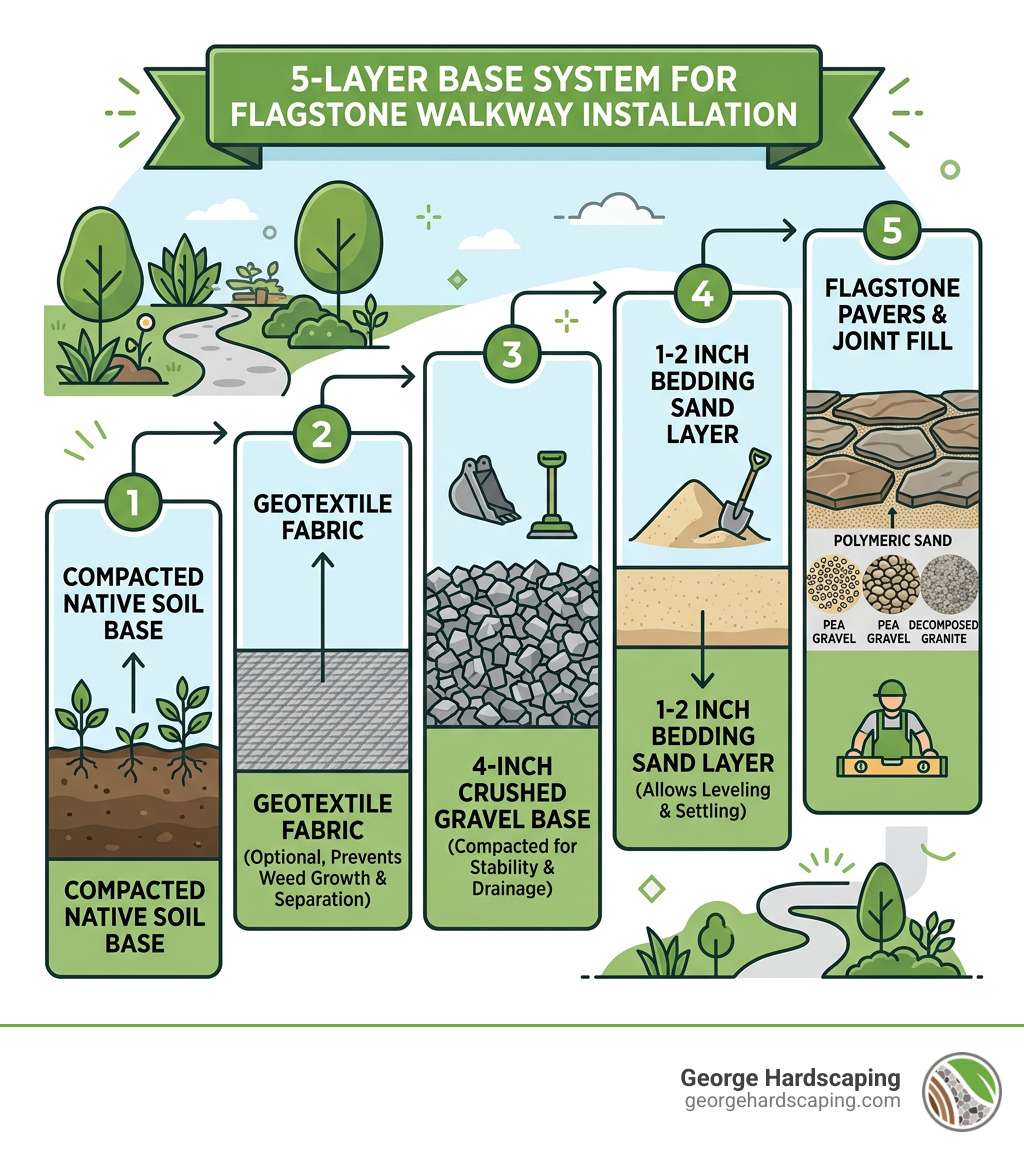
Here’s a quick overview of the core steps involved in a professional-grade installation:
- Plan and mark your path (aim for a minimum 3 feet wide for comfort and accessibility).
- Excavate to a depth of 5-8 inches and compact the native sub-grade soil to prevent future settling.
- Build a structural base with 4 inches of crushed gravel followed by 1-2 inches of leveling sand or stone dust.
- Lay stones using the “largest-first” method, carefully leveling each individual piece to ensure a trip-free surface.
- Fill joints with high-quality polymeric sand, pea gravel, or decomposed granite to lock the entire system in place.
Whether you’re a first-time DIYer looking for a weekend challenge or a homeowner who wants to understand the technical process before hiring a professional team, this guide walks you through every nuanced step. You can also explore our building a walkway service page for professional options tailored to the unique climate and soil conditions of the North Shore.
Few outdoor projects deliver as much visual impact—or as much long-term property value—as a well-built flagstone path. Natural stone has a unique way of grounding a landscape. Unlike manufactured pavers, flagstone features irregular edges, earthy tones, and a natural texture that only improves with age and weathering. It handles the brutal freeze-thaw cycles common in Massachusetts with grace, draining naturally through its joints and resisting the cracking that plagues rigid surfaces.
However, it is vital to understand that flagstone isn’t just “throw-some-rocks-on-dirt” simple. A poorly installed walkway will shift, sink, and become a significant tripping hazard within a single season. The difference between a path that lasts two years and one that lasts twenty comes down almost entirely to base preparation and the physics of soil compaction. This guide covers everything: stone selection, excavation depth, base layers, stone placement, joint filling, and long-term maintenance—written from a professional hardscaping perspective, with real numbers and practical techniques you can actually use to transform your property.
Flagstone walkway installation further reading:
Why Choose Flagstone: Benefits and Comparisons
When we consult with homeowners from Beverly to Newburyport, the first question is usually: “Why should I choose flagstone over concrete or brick?” The answer lies in the unique marriage of aesthetics and physics. Flagstone is a “family name” for various types of flat, quarried stones—most commonly bluestone, sandstone, slate, limestone, and quartzite. Each of these stones has its own geological story, mineral composition, and performance characteristics. According to industry experts, the choice of stone significantly impacts both the durability and the maintenance requirements of your path over its lifespan.
Each type of stone offers a different personality to your landscape. Bluestone is a Northeast classic, primarily quarried in Pennsylvania and New York. It is known for its deep blues, greys, and occasional lilac hues. It is incredibly dense and stands up exceptionally well to heavy foot traffic and the harsh New England winters. Sandstone offers warm tans, ochres, and reds, providing a softer, more Mediterranean or desert feel. Quartzite provides a shimmering, high-end look with incredible hardness and resistance to chemicals. Because these are natural products, no two stones are identical, giving your home a custom, high-end look that manufactured products simply cannot replicate.
From a structural standpoint, flagstone is incredibly resilient. In our North Shore climate, the ground “breathes.” It freezes solid in January and thaws rapidly in April. Rigid structures like poured concrete often crack under this immense pressure because they cannot move with the earth. However, a dry-laid flagstone walkway is flexible. It can shift slightly with the frost and settle back into place without losing its structural integrity or aesthetic appeal. This “living” quality makes it the superior choice for longevity in cold climates where ground heave is a constant threat.
Comparison of Walkway Materials
| Feature | Flagstone | Poured Concrete | Brick Pavers |
|---|---|---|---|
| Longevity | 50+ Years | 15–20 Years | 25–30 Years |
| Maintenance | Low (occasional re-sanding) | High (sealing cracks) | Medium (weed control) |
| Permeability | High (water drains through joints) | None (runoff issues) | Moderate |
| Average Cost | High ($15–$80/sq. ft.) | Low ($8–$15/sq. ft.) | Medium ($10–$25/sq. ft.) |
| Repairability | High (individual stones) | Low (requires patching) | Moderate |
While How Much Do Flagstone Patios Cost? provides a broader perspective on national pricing trends, it is important to remember that flagstone is an investment in curb appeal and long-term property value. It is one of the few landscaping features that actually looks better as it ages, developing a patina that adds to its charm. If you are looking for a complete outdoor transformation, our Patio Design services can help integrate your new walkway into a larger outdoor living space, ensuring a cohesive and professional look across your entire landscape.
Essential Tools and Materials for Flagstone Walkway Installation
Before you head to the stone yard or call for a delivery, you need to know exactly what specifications you’re looking for. For a residential walkway that sees standard foot traffic, your stones should be at least 1.5 to 2 inches thick. If you are working with unstable, sandy, or particularly clay-heavy soil, we often recommend stepping up to 2 to 3-inch thick stones. These thicker slabs provide more weight and stability, making them less likely to shift or crack if the base moves slightly over time. Thinner stones, often sold for “wet-laid” applications (set in concrete), are prone to snapping if used in a dry-laid system.
The “invisible” part of your project—the base for flagstone walkway—is actually the most critical component. You aren’t just buying rocks; you’re building a multi-layered foundation that must withstand thousands of pounds of pressure and decades of extreme weather. For more information on the structural requirements of stone masonry and segmental systems, the National Concrete Masonry Association provides technical resources that are highly applicable to natural stone installations.
The Comprehensive Shopping List
- Flagstone: Order 10-15% extra to account for custom cuts, accidental breakage, and the inevitable waste that comes with “puzzle-fitting” irregular shapes.
- Crushed Stone (3/4-inch minus): This is your primary structural layer. It contains both larger rocks and fine stone dust, which allows it to compact into a rock-hard surface while still maintaining the voids necessary for vertical drainage.
- Leveling Sand or Stone Dust: A 1-2 inch layer that acts as a “bed” for the stones. This layer allows you to seat each stone perfectly, compensating for the irregularities on the underside of natural rock.
- Geotextile Landscape Fabric: This is a heavy-duty, non-woven fabric that prevents your expensive gravel from sinking into the native mud over time. Without it, the soil will eventually swallow your base, leading to a sunken path.
- Polymeric Sand or Joint Filler: This specialized sand contains binders that “lock” the stones together when activated with water, inhibiting weed growth and ant hills.
- Steel or Aluminum Edging: This acts as a hidden frame, keeping the stones and base materials from migrating outward over the years.
Essential Masonry Tools
You cannot complete this project with just a garden trowel and a standard hammer. You’ll need a heavy-duty shovel, a pickaxe for breaking through roots or hardpan, and a high-capacity wheelbarrow for the heavy lifting. A gas-powered plate compactor (which you can rent at most local hardware stores) is absolutely non-negotiable for the base layers. Hand-tamping is simply insufficient for a 4-inch gravel base. For the fine-tuning and artistic fitting, you’ll want a dead-blow rubber mallet, a 4-foot level, and a hammer and masonry chisel. If you have complex curves or want tight, professional joints, an angle grinder equipped with a diamond blade will save you hours of physical labor and frustration. Always prioritize safety by using proper protective equipment, including eye protection and gloves, when cutting or striking stone.
The Step-by-Step Guide to Professional Installation
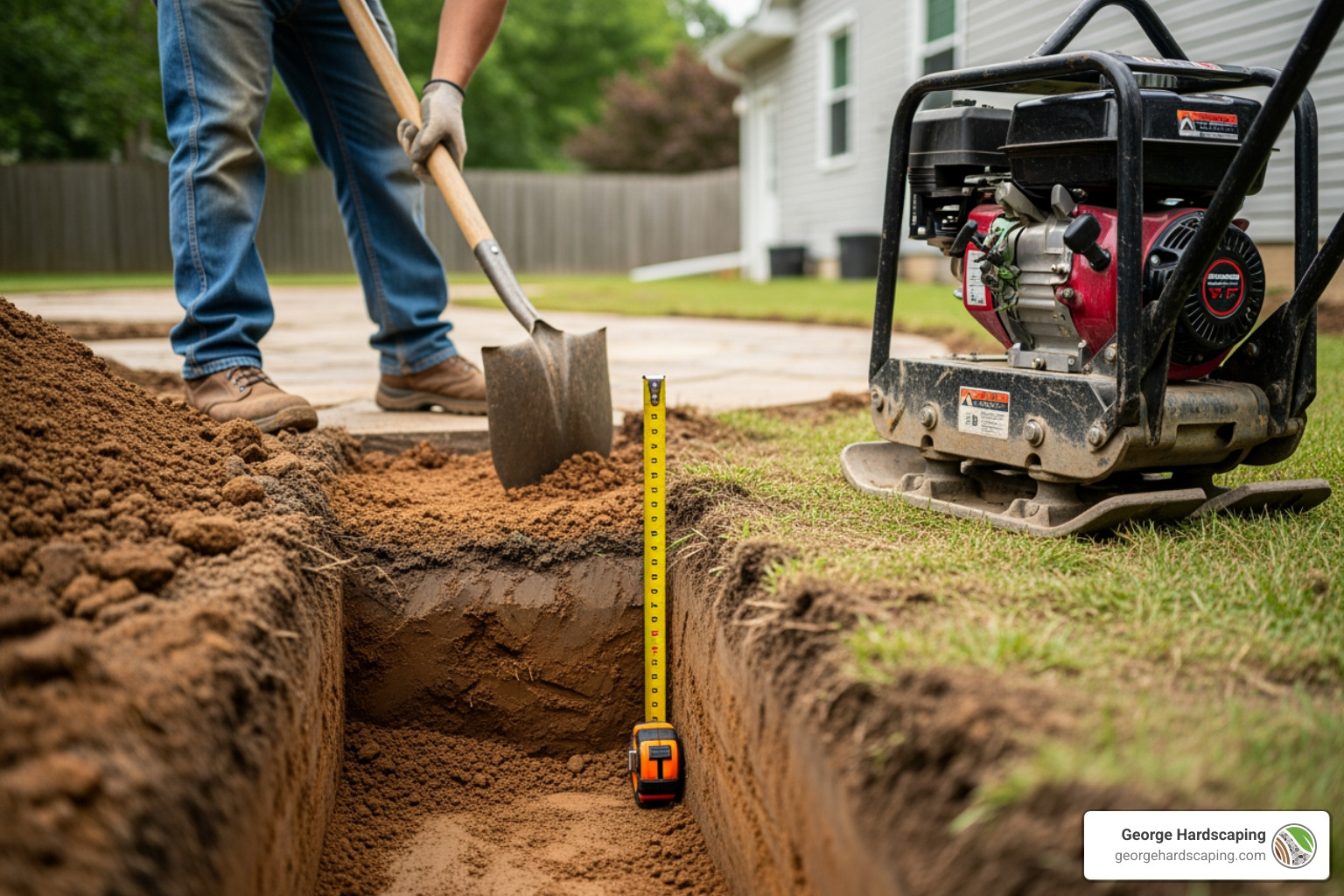
In the world of hardscaping, preparation is 80% of the job. If you rush the digging or the base preparation, your path will look like a roller coaster by the time the first spring thaw arrives. We always start by evaluating the site for drainage. A walkway should never act as a dam; it needs to shed water efficiently. We aim for a slope of 1/4 inch per foot away from your home’s foundation. This ensures that heavy rain doesn’t pool against your siding or basement, which could lead to catastrophic water damage over time.
For a deeper dive into the mechanics of stone paths and the physical labor involved, the How to Build a Stone Path for Your Garden guide offers excellent visual cues and additional tips for managing the heavy materials.
Step 1: Planning and Layout for Flagstone Walkway Installation
Start by visualizing the “flow” of your property. People naturally want to take the shortest path between two points, but a slight, graceful curve can add elegance and a sense of discovery to your garden.
- Width Matters: A minimum of 3 feet is required for a single person to walk comfortably without stepping off the stone. If you want two people to walk side-by-side, aim for 4 to 5 feet.
- The Hose Trick: Use a garden hose or a thick rope to layout the curves. Step back and look at the layout from your porch, driveway, or even a second-story window to ensure the proportions look correct. Once you’re happy, use marking paint to outline the edges, adding 6 inches to each side to allow for the installation of edging and a stable base shoulder.
- Utility Check: Before you strike the ground, call 811 to have your underground utility lines marked. Hitting a gas, water, or electrical line will turn a weekend project into a dangerous and expensive disaster.
Step 2: Excavation and Base Preparation
Now comes the sweat equity. You need to excavate roughly 5 to 8 inches deep. This depth accounts for 4 inches of compacted gravel, 1-2 inches of sand, and the thickness of the stone itself.
- Dig and Level: Remove all sod, roots, and loose topsoil. If you hit heavy clay, you may need to dig slightly deeper and add more gravel to facilitate better drainage.
- Compact the Sub-grade: Use your plate compactor on the bare dirt. If the dirt is soft, your walkway will be soft. You want the ground to feel like concrete before you add the first layer of stone.
- Fabric Layer: Lay down your geotextile fabric. This is the secret to a long-lasting best way to lay flagstone walkway. It keeps the base materials from mixing with the soil while allowing water to pass through.
- Gravel Base: Add your 4 inches of crushed stone in 2-inch “lifts,” compacting each layer thoroughly. Wetting the gravel slightly with a hose will help it reach maximum density.
- Sand Bedding: Spread 1-2 inches of sand. Use a screed board to get it perfectly flat, but do not compact this yet; you need it loose to set the stones.
Step 3: Selecting and Fitting the Stones
This is the artistic part of flagstone walkway installation. We call it the “puzzle-piece method.” Start by laying out your stones on the grass nearby so you can see all your shapes and sizes at once. Place your largest, heaviest “anchor” stones at the entrance, exit, and any corners. These provide the most stability for the entire system. Work from the edges toward the center.
Aim for joint gaps of 1/2 to 1 inch. If a stone doesn’t fit, don’t force it. Use your hammer and chisel to “score” the stone and tap off the excess. Remember to wear your safety glasses—stone shards fly fast. If your project involves elevation changes, you might need to integrate flagstone walkway and stairs to handle the grade safely. This requires a more complex base structure to ensure the steps don’t slide forward over time.
Step 4: Setting and Leveling for a Successful Flagstone Walkway Installation
Every stone is different. Some are thicker on one side than the other. This is why the sand bedding is crucial. Place a stone and check it with your level. Is it too high? Tap it down firmly with the rubber mallet. Is it too low? Lift it up, toss a handful of sand underneath, and reset it.
The Stability Test: Step on the center and the corners of every single stone. If it wobbles even a fraction of an inch, it isn’t set correctly. A wobbling stone will eventually crack or cause someone to trip. This is the most time-consuming part of the job, but it is what separates a professional installation from a DIY mess.
Step 5: Joint Filling and Finishing Touches
Once your stones are set and level, it’s time to “lock” them in. You have a few options for the joints:
- Polymeric Sand: This is our top recommendation for most North Shore projects. It looks like regular sand but contains a binder that turns into a firm, flexible “glue” when misted with water. It stops weeds and ants in their tracks and resists washouts during heavy rain.
- Pea Gravel or Decomposed Granite: Great for a more rustic, permeable look. However, these materials will migrate over time and require occasional topping off.
- Living Joints: If you want a whimsical garden path, you can fill joints with soil and plant creeping thyme or moss. This requires more maintenance but looks stunning in a cottage garden setting.
After filling the joints, install your steel or heavy-duty plastic edging. This acts as a frame, keeping the entire assembly tight and professional. For those who want a truly maintenance-free finish, our flagstone walkway installation service includes professional-grade joint stabilization that lasts for years.
Ready to get started? Contact us today for a professional consultation and a detailed quote on your flagstone project!
Maintenance, Costs, and Troubleshooting
A common question we get in Essex County is about the total cost of the project. Based on current market data, a DIY flagstone walkway installation typically runs between $25 and $28 per square foot for materials and tool rentals. This assumes you already own basic tools like shovels and levels but need to rent the heavy equipment like a plate compactor.
Professional installation offers a wider range of pricing based on complexity. Basic projects may start around $15 to $27 per square foot for labor and materials, but complex designs with custom cuts, steep slopes, or high-end stones like premium Pennsylvania Bluestone can reach $80 or more per square foot. (Please note: these are average costs based on internet data and are not actual quotes for George Hardscaping). Factors that influence cost include site accessibility, the need for retaining walls, and the thickness of the stone selected.
Common Installation Mistakes to Avoid
- Skipping the Compactor: Hand tamping is rarely enough to prevent settling. Always use a gas-powered plate compactor for the sub-grade and the gravel base to ensure a rock-solid foundation.
- Too Much Sand: Never use more than 2 inches of sand. Too much sand creates a “squishy” base that allows stones to shift and tilt under weight, leading to uneven surfaces.
- Ignoring Drainage: If water sits on your stones, it will freeze and pop them out of place. Always maintain that 1/4-inch slope away from structures to protect your foundation.
- Tight Joints: Natural stone needs a little room to breathe and expand. Don’t butt the stones directly against each other; leave at least a 1/2-inch gap for joint filler to allow for thermal expansion.
Long-Term Care and ROI
Maintenance is simple but necessary to protect your investment.
- Annual Cleaning: A gentle pressure wash once a year keeps the colors vibrant and removes organic growth like algae or moss that can make the stone slippery when wet.
- Re-sanding: If you use regular sand, you’ll need to top it off every 2-3 years. Polymeric sand lasts much longer but should be inspected for cracks annually.
- Tree Roots: If a root heaves a stone, don’t cut the root (which could kill the tree). Instead, lift the stone, remove some base material to create a “bridge” over the root, and reset it.
From a real estate perspective, a professional flagstone walkway can offer a significant return on investment. According to the National Association of Realtors, high-quality landscaping and hardscaping projects can recover up to 100% of their cost at the time of home sale by boosting curb appeal and perceived value. A beautiful stone path is often the first thing a potential buyer sees, setting the tone for the rest of the property.
Frequently Asked Questions about Flagstone Walkway Installation
Can I lay flagstone directly on dirt?
Technically, yes, but we strongly advise against it. Dirt is not a stable substrate. It expands when wet and shrinks when dry. Without a gravel base, your stones will sink, tilt, and become covered in weeds within a single season. A proper base is what separates a “path” from a “collection of rocks in the mud.” Furthermore, stones laid on dirt are much more likely to crack during the winter freeze because they lack the drainage provided by a gravel base.
What is the best base for a flagstone walkway?
The gold standard for a long-lasting walkway is a three-layer system: a compacted soil sub-grade, followed by 4-6 inches of compacted crushed stone (3/4-inch minus), and a 1-inch leveling bed of coarse sand or stone dust. This provides both structural support and excellent drainage. For more on historic masonry techniques, Old House Online offers insights into how these systems have evolved over centuries to handle the elements.
How do I prevent weeds from growing between stones?
The most effective method is using polymeric sand. Once activated with water, it hardens to create a barrier that seeds cannot penetrate. Additionally, laying a high-quality geotextile fabric under your gravel base prevents weeds from growing up from the soil below. Keeping the walkway clean of organic debris also prevents “surface weeds” from taking root in the dust that naturally settles in the joints over time.
Is flagstone slippery when wet?
Some types of flagstone, like polished slate or certain types of limestone, can be slippery. However, most natural flagstones have a cleft or textured surface that provides excellent traction even in the rain. If you are concerned about slip resistance, choose a stone with a “natural cleft” finish rather than a honed or polished one. This is especially important for walkways that will be used in the winter.
How long does a flagstone walkway last?
When installed correctly with a proper base, a flagstone walkway can easily last 50 years or more. Unlike concrete, which will eventually crack and require full replacement, individual flagstones can be lifted and reset if the ground shifts, making the system infinitely repairable and sustainable over the long term.
Conclusion
Building a flagstone walkway is a labor of love that requires patience, a bit of an artistic eye, and a significant amount of physical effort. But the result is a timeless, durable feature that enhances your home’s value and provides a beautiful transition through your landscape. By following the professional steps outlined in this guide—from meticulous excavation to the final application of polymeric sand—you can create a path that stands the test of time and the elements.
At George Hardscaping, we take pride in the craftsmanship required for high-quality masonry. Serving the North Shore—including Beverly, Danvers, Ipswich, and Salem—our team specializes in creating outdoor spaces that are as functional as they are beautiful. Whether you need a formal entryway in Lynnfield or a meandering garden path in Boxford, we bring years of expertise to every stone we set.
Don’t settle for a mediocre landscape. Contact us today for a professional consultation on your next hardscaping project. Let us help you turn your vision from dirt to a designer path that you will enjoy for decades to come.
