
Your Backyard, Reimagined
Custom decks and patios are more than just outdoor features; they are transformative extensions of your home that expand your living space, create functional outdoor rooms, and significantly boost your property’s value and curb appeal. A deck is an elevated structure, typically crafted from wood or composite materials, designed to create level space on uneven ground. In contrast, a patio is a ground-level installation of pavers, natural stone, or concrete, seamlessly integrating with your landscape.
Quick Guide to Custom Decks and Patios:
- Decks: Ideal for sloped yards, second-story access, and capturing better views. They promote natural drainage and air circulation.
- Patios: Perfect for flat ground, creating a seamless flow between your home and garden. They generally require less structural maintenance.
- Materials: Decks commonly use pressure-treated wood, cedar, or low-maintenance composites. Patios feature a wide array of pavers, natural stone, or decorative concrete.
- Costs: Project costs vary widely based on materials, size, complexity, and features, typically ranging from $15-$60+ per square foot.
- Popular Features: Enhance your space with outdoor kitchens, fire pits, built-in seating, pergolas, water features, and custom lighting.
- Permits: Almost always required for elevated decks and often for larger patio installations in Massachusetts to ensure safety and code compliance.
Your backyard holds untapped potential. A custom-designed deck or patio is no longer a mere luxury but a strategic investment in your lifestyle and property. It serves as a vibrant gathering place for family and friends, a quiet personal retreat for morning coffee, and a genuine extension of your home’s character. Unlike one-size-fits-all solutions, a custom space is meticulously tailored to your unique needs—whether you envision summer barbecues on a sprawling paver patio with a built-in fire pit or quiet evenings on a cedar deck overlooking your garden.
The benefits are tangible and immediate: custom decks and patios expand your usable square footage, create defined zones for dining, entertaining, and lounging, and solve practical challenges like sloped terrain or poor drainage. They consistently rank among the top home improvements for generating a high return on investment (ROI) at resale. However, the success and longevity of your project hinge on expert planning, the selection of high-quality materials, and flawless professional execution. This guide will walk you through everything you need to know to make informed, confident decisions for your ultimate outdoor living project.
Deck vs. Patio: Which Outdoor Space is Right for You?
Choosing between a deck and a patio is a primary decision when planning an outdoor living space. While both enhance your property, they serve different functions and are suited to specific environments. The right choice—or a dynamic combination of both—depends on your yard’s topography, your lifestyle, your budget, and your aesthetic goals.
Decks are elevated structures, typically built from wood or composite materials and often attached to a home, while patios are ground-level installations laid on a prepared base of stone and sand. This fundamental difference in elevation dictates their suitability for various yards, their installation complexity, and their long-term maintenance needs. When planning a new deck and patio in Essex County, MA, understanding these distinctions is the first step toward a successful and satisfying design.
Understanding Decks: Elevated Outdoor Living
Decks are the quintessential solution for homes on sloped or uneven ground. By being elevated, they create a perfectly level outdoor area where a patio would require extensive and costly grading or the construction of significant retaining walls. This elevation also provides superior views of your landscape and improved air circulation, a welcome benefit on warm New England summer days. Because they can be built off a second story, they also offer a private outdoor space accessible from a primary bedroom or kitchen.
Common deck materials include affordable pressure-treated lumber, beautiful cedar, and high-performance composite decking. Regardless of the surface material, all decks require a robust substructure of concrete footings, posts, beams, and joists, plus safety railings, all built to strict local building codes. This structural complexity is why discerning homeowners in areas like Beverly and Danvers, MA, rely on professional deck builders to ensure a safe, durable, and compliant structure.
Understanding Patios: Grounded in Style
Patios are best suited for flat or gently sloped yards, offering seamless integration with your landscape. They blend naturally with gardens, lawns, and walkways, creating a cohesive and unified outdoor environment. This ground-level nature allows for incredible design flexibility, including organic, flowing shapes and intricate patterns that can elevate your property’s aesthetic from ordinary to extraordinary.
For custom patios, material choices are vast, including versatile concrete pavers, elegant natural stone, and modern poured concrete. These materials are renowned for their durability and generally require less maintenance than wood decking. A professional installation involves meticulous site excavation and preparation of a multi-layered base to ensure a stable, long-lasting surface that can withstand freeze-thaw cycles—a specialty for homeowners in Ipswich and Marblehead, MA.
Lifestyle and Aesthetics: Matching the Space to You
Beyond topography, consider how you live:
- For Families with Young Children: Patios are often preferred as their ground-level nature eliminates falling hazards. The smooth, sturdy surface is perfect for chalk art, riding toys, and general play.
- For the Entertainer: A large, multi-level deck can create a dramatic stage for hosting, with distinct areas for grilling, dining, and conversation. A sprawling patio, on the other hand, can accommodate larger crowds and integrate seamlessly with a pool or lawn for big parties.
- Aesthetic Vision: Decks, with their wood or wood-like appearance, often lend a traditional, rustic, or coastal feel. Patios, with the variety of stone and pavers available, can achieve anything from a formal English garden look to a sleek, contemporary design.
Solving for Your Yard: Special Considerations
The choice between a deck and a patio often comes down to site-specific challenges and creative solutions.
- Slopes: Decks are the most direct way to create usable space on sloped properties. Patios can be built on slopes but require more extensive groundwork, such as terracing with expertly built landscape retaining walls to create level tiers.
- Drainage: Proper drainage is critical for both. Patios must be graded with a precise slope to direct water away from the home’s foundation; permeable pavers are an excellent option to manage runoff sustainably. For decks, water typically drains through the board gaps, but under-deck drainage systems can be installed to create a dry, usable patio space below a second-story deck.
- Yard Size and Hybrid Designs: Patios often work well in small yards as they don’t require space for stairs or railings, maximizing every square foot. In larger yards, a combination of both a deck and a patio creates the ultimate outdoor living experience. Imagine a deck off the kitchen for grilling and dining, with stairs leading down to a spacious patio with a fire pit and comfortable lounge seating. Our patio design and installation expertise helps create these thoughtful, high-performing hybrid spaces built around your lifestyle.
The Building Blocks: Materials for Custom Decks and Patios
The materials you choose for your custom deck or patio are fundamental to its appearance, durability, maintenance requirements, and overall cost. In the demanding New England climate, with its harsh winters and humid summers, selecting weather-resistant options is paramount to protecting your investment. We always guide our clients in towns like Newburyport and Salem, MA, toward materials that offer the best balance of longevity, performance, and aesthetics for their specific needs.
| Material Type | Initial Cost (per sq ft) | Lifespan (Years) | Maintenance Needs | Best For |
|---|---|---|---|---|
| Decking: | ||||
| Pressure-Treated Wood | $15 – $30 | 15 – 25 | Annual cleaning, sealing/staining every 2-3 years | Budget-conscious projects, natural wood look |
| Cedar/Redwood | $25 – $45 | 20 – 30 | Annual cleaning, sealing every 1-2 years to preserve color | High-end rustic or classic aesthetics, natural rot resistance |
| Composite Decking | $30 – $60+ | 25 – 50+ | Occasional cleaning with soap & water | Low-maintenance durability, consistent color, modern look |
| Patio: | ||||
| Concrete Pavers | $15 – $35 | 25 – 50+ | Occasional cleaning, re-sanding joints, optional sealing | Design versatility, easy repairs, excellent durability |
| Natural Stone | $30 – $70+ | 50 – 100+ | Occasional cleaning, sealing recommended | Unmatched luxury, organic beauty, ultimate longevity |
| Poured Concrete | $10 – $25 | 20 – 40 | Sealing every 2-5 years, occasional cleaning | Budget-friendly applications, modern minimalist or stamped finishes |
Decking Materials: Wood vs. Composite
For decks, the primary choice is between the timeless appeal of traditional wood and the engineered performance of modern composite materials.
- Pressure-Treated (PT) Wood: The most affordable decking option, PT lumber is chemically treated to resist rot, decay, and insects. However, it requires diligent maintenance, including annual cleaning and re-staining or sealing every few years to prevent splintering, cracking, and warping in the sun and snow.
- Cedar & Redwood: These beautiful softwoods are prized for their rich natural color, straight grain, and inherent resistance to rot and insects. They are softer and more prone to dents and scratches than other options but offer a classic, rustic look that many homeowners love. To maintain their vibrant color, they require regular sealing; otherwise, they will weather to a silvery gray.
- Composite Decking: A popular low-maintenance choice, composite decking is an engineered product made from a blend of wood fibers and recycled plastics. Leading brands like TimberTech and Trex offer a wide range of products that convincingly mimic the look of real wood without the burdensome upkeep. Modern “capped” composites have a protective outer shell that resists staining, fading, and scratching. While the upfront cost is higher than wood, the long-term value is significant due to minimal maintenance costs and a much longer lifespan. You can explore deck design tools to visualize different material options and colors for your home.
Patio Materials: Pavers, Stone, and Concrete
Patio materials offer a diverse and durable palette for creating stunning, ground-level living spaces.
- Concrete Pavers: Exceptionally versatile and durable, pavers are manufactured in a vast array of shapes, sizes, colors, and textures, allowing for endless design possibilities from classic herringbone to modern running bond patterns. A key advantage is repairability; if a paver is damaged or stained, it can be individually replaced. Our expert patio paver installers ensure a meticulous installation on a robust base that will stand the test of time.
- Natural Stone (Flagstone, Bluestone, Granite): For a truly unique, high-end look, nothing compares to natural stone. Each piece has its own distinct color, texture, and shape, creating an organic and luxurious feel that is impossible to replicate. Materials like Pennsylvania Bluestone offer cool, subtle tones, while granite provides exceptional durability. Natural stone is one of the most durable materials on earth but comes at a higher material and installation cost due to the labor-intensive fitting process.
- Poured Concrete: Often the most budget-friendly option for a large patio, modern concrete is highly customizable. It can be finished with a simple broom texture, stamped with patterns that mimic stone or brick, or stained with integral color for a unique look. While durable, it can be prone to cracking over time due to New England’s freeze-thaw cycles, and repairs can be more complex and visible than with pavers.
Designing Your Dream Space: Planning, Process, and Features
The true magic of custom decks and patios lies in their ability to be perfectly tailored to your home, landscape, and lifestyle. A thoughtful custom design process ensures seamless integration with your home’s architecture, prioritizes functionality and traffic flow, and ultimately creates an intuitive, inviting outdoor retreat that feels like it was always meant to be there.
By strategically defining distinct outdoor “rooms” for dining, lounging, cooking, or recreation, we can transform an ordinary backyard into a multi-functional oasis. A cohesive look and feel are essential, and our professional hardscape design services ensure your new space blends perfectly with your existing home and the natural character of your entire property.
The Custom Design Process from Start to Finish
Our collaborative and transparent process is designed to guide you from a simple idea to a stunning completed project with clarity and confidence:
- Initial Consultation & Discovery: We begin by listening. We discuss your vision, how you imagine using the space, your family’s needs, your aesthetic preferences, and your target budget. This is the foundation for the entire project.
- Comprehensive Site Analysis: Our team conducts a thorough assessment of your property. We take precise measurements, analyze sun and shade patterns throughout the day, identify prevailing winds, note grading and drainage issues, and locate underground utilities. This detailed analysis, whether in Topsfield or Wenham, MA, is crucial for a successful design.
- Conceptual Design & 3D Visualization: We translate our conversation and analysis into initial design concepts. We create 2D layouts for flow and function, and then bring them to life with realistic 3D renderings. This powerful tool allows you to visualize the final project, experience the space virtually, and make informed decisions before construction ever begins.
- Material Selection & Final Plan: With a design direction established, we guide you through selecting the perfect materials for your aesthetic, maintenance preferences, and budget. We provide samples and expert advice to help you choose with confidence. Once materials are selected, we finalize the construction plans and project proposal.
- Professional Construction: Our skilled craftspeople bring the design to life. We manage every aspect of the build, adhering to the highest standards of quality, safety, and craftsmanship. We maintain clear and consistent communication throughout the process, ensuring you are always informed.
- Final Walkthrough & Handover: Upon completion, we conduct a final walkthrough with you to ensure every detail meets your expectations and our high standards. We’ll provide you with care and maintenance information, and then formally hand over an outdoor space you’ll love for years to come.
Planning the Perfect Layout for Your Custom Deck or Patio
A functional layout is the backbone of a great outdoor space. We consider several key factors:
- Size and Scale: The deck or patio must be proportionate to your home and yard. It needs to be large enough for its intended activities—a dining table for six needs more space than a bistro set for two—without overwhelming the landscape.
- Furniture and Use: We design with the end in mind, planning around your specific furniture and activities. We ensure there are clear pathways for traffic and ample space for comfortable use, whether you’re grilling, dining, or lounging.
- Shape and Flow: Custom designs break free from the boring rectangle. We can incorporate graceful curves, multi-level platforms, or interesting angles that complement your home’s architecture and the natural lines of your landscape.
- Access and Sun/Shade: We plan for convenient access from key areas of your home, like the kitchen or living room. We also analyze sun and shade patterns to place seating areas, dining spots, and features like pergolas for optimal comfort throughout the day and seasons.
Elevate Your Oasis: Popular Features and Add-ons
Transform your deck or patio from a simple surface into a luxurious and functional destination with these popular features:
- Outdoor Kitchens: Elevate your entertaining game with a fully functional outdoor kitchen. Go beyond a standalone grill with built-in units, weather-durable countertops, sinks, refrigerators, and dedicated storage. A well-designed cooking station becomes the social hub of any gathering. Learn more about our outdoor kitchens installation services.
- Fire Features: Extend your outdoor season from early spring to late fall with the warmth and ambiance of a fire feature. A custom-built fire pit creates a natural gathering spot for conversation, while a grand outdoor fireplace can serve as a stunning focal point. Explore our custom fire pit ideas or consider the architectural statement of a patio with a fireplace.
- Pergolas and Patio Covers: Add essential shade, architectural definition, and a sense of enclosure with a pergola or other cover. These structures can support climbing plants for a lush, green canopy, be fitted with retractable shades for adjustable sun control, or be designed as solid roofs for all-weather protection. Check out our patio cover designs for inspiration.
- Built-in Seating and Planters: Integrated seating walls, often made from matching stone or composite materials, provide permanent, space-efficient seating while defining the edge of a patio. They create a cohesive, high-end look and can be combined with built-in planters to soften hardscape elements with greenery and seasonal color.
- Low-Voltage Lighting: A thoughtful lighting plan is essential for both ambiance and safety. We use strategically placed low-voltage LED lights to illuminate steps and pathways, uplight trees, wash walls with a soft glow, and create a magical atmosphere that allows you to enjoy your space long after the sun goes down.
- Privacy Screens: Create a secluded, intimate retreat with custom-built privacy screens. These can be constructed from wood, composite, or metal and can feature lattice patterns or horizontal slats for a modern look. Strategic planting of hedges or ornamental grasses can also provide a living privacy screen.
The Practical Side of Building Custom Decks and Patios
Bringing your dream outdoor space to life involves important practical considerations like budgeting, navigating local regulations, and choosing the right builder. Addressing these steps thoughtfully ensures your project is compliant, built to last, and a wise financial investment in your home.
Budgeting for Your Build: Understanding the Costs
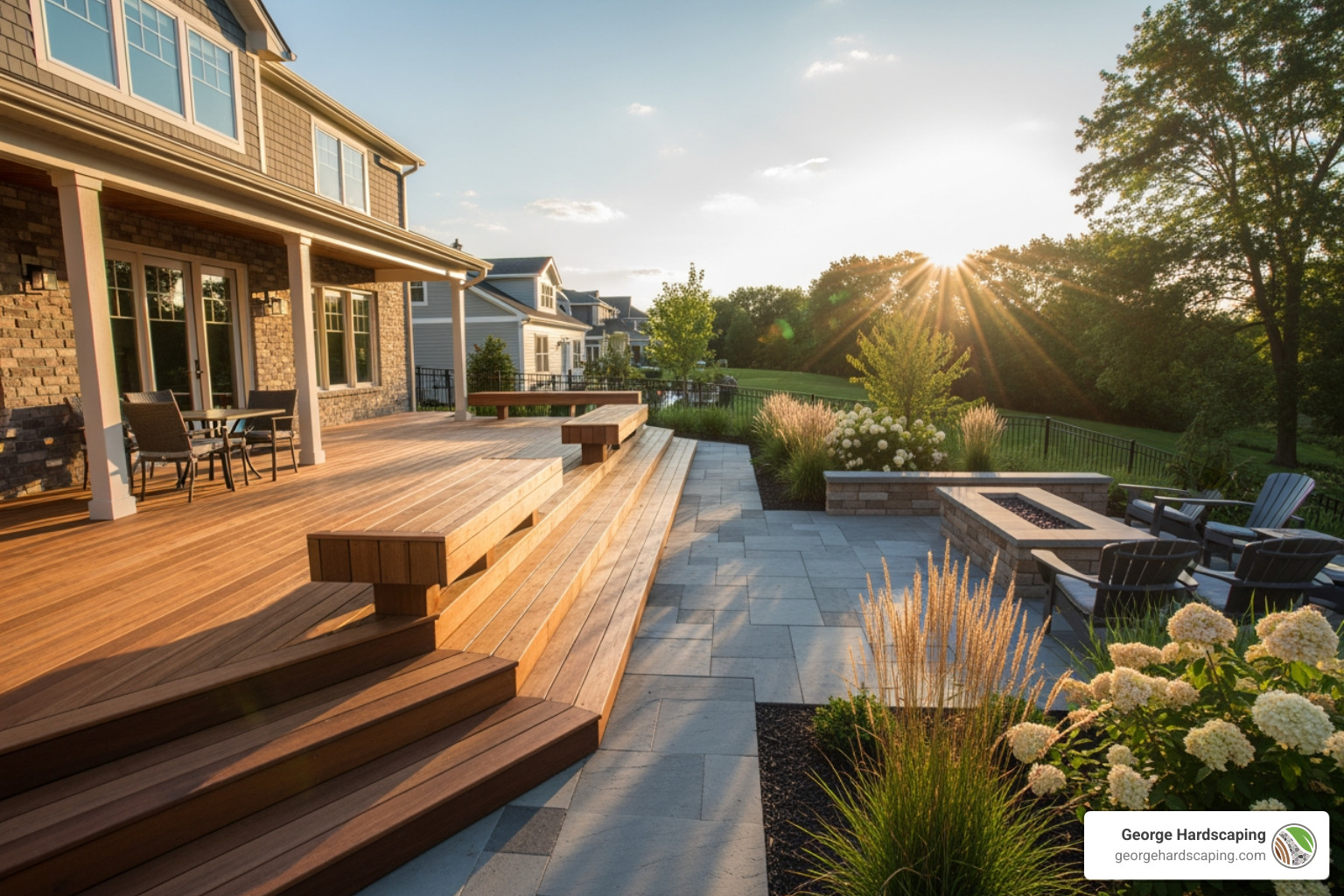
The cost of custom decks and patios varies significantly based on a multitude of factors. While we provide detailed, personalized quotes for our services in Essex County, MA, here is a general overview of what influences the final price:
- Average Cost Range: As a broad guideline, expect professionally installed projects to range from $15 to $60+ per square foot. Simple projects using basic materials will be at the lower end, while complex designs with premium materials and features will be at the upper end. (Note: These are general industry estimates, not a quote from George Hardscaping).
- Key Price Factors:
- Materials: High-end composites or natural stone cost significantly more upfront than pressure-treated wood or basic concrete pavers.
- Size & Complexity: Larger projects, multi-level designs, intricate patterns, and curved shapes require more materials and substantially more skilled labor, increasing costs.
- Site Conditions: A sloped yard requiring extensive grading, retaining walls, or difficult site access for machinery and materials will add to the overall project cost.
- Add-ons & Features: Features like outdoor kitchens, fire pits, pergolas, lighting, and built-in seating are priced in addition to the base square footage cost.
- Demolition & Preparation: The cost to remove an old deck or patio and prepare the site is also a factor.
- Labor: Professional craftsmanship is an investment. The cost of labor reflects the expertise, insurance, and warranty that a reputable builder provides, ensuring the project’s quality and longevity.
It’s always wise to budget an additional 10-15% for a contingency fund. This covers any unforeseen site issues that may arise or allows you to accommodate design changes you decide on during the build.
Navigating the Paperwork: Permits and Regulations
Building in Massachusetts towns like Rockport or Swampscott requires careful navigation of local zoning and building codes. Obtaining the correct permits is a non-negotiable step to ensure your project is safe, legal, and compliant.
- When Permits Are Needed: Permits are generally required for any deck attached to a house, over 30 inches high, or exceeding a certain size. Many towns also require permits for ground-level patios over a specific square footage to ensure proper drainage and setback compliance.
- Code Requirements: All structures must adhere to local codes, which dictate everything from footing depth and railing height to electrical wiring for lighting. Projects must also respect property line setbacks, which define how close you can build to your property’s edge. In historic districts, there may be additional reviews and material restrictions.
- The Contractor’s Role: A reputable, experienced builder is well-versed in local codes and handles the entire permitting process for you. This includes preparing architectural drawings, filling out applications, submitting them to the town, and scheduling all required inspections. This expertise saves you immense time and stress and guarantees compliance. Before hiring, it’s always a good idea to check your builder’s credentials with the Better Business Bureau.
DIY vs. Hiring a Professional for Custom Decks and Patios
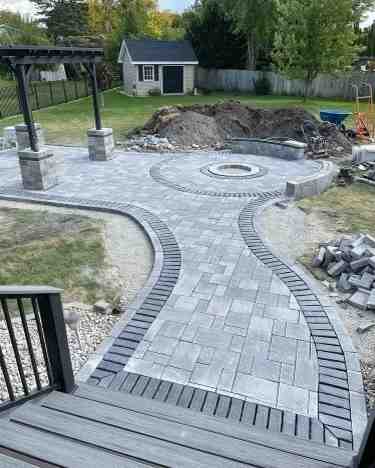
- The DIY Temptation: The primary appeal of a DIY project is saving on labor costs. This might seem feasible for a very simple, small, ground-level paver patio if you have significant construction experience and the right tools. However, the risks are substantial. DIY projects are notoriously time-consuming and fraught with potential for critical errors. Mistakes in base preparation can lead to a sinking, uneven patio. Improperly attaching a deck’s ledger board to your home can cause a catastrophic collapse. Code violations can result in fines and orders to tear down your work. Ultimately, a failed DIY project can cost far more to fix than hiring a professional from the start.
- The Value of a Professional: Hiring a professional like George Hardscaping brings expertise, efficiency, and peace of mind. We have a deep understanding of soil conditions, material performance, and complex building codes. We ensure the project is completed correctly, safely, and to the highest quality standards, protecting your home and your family. Professionals are fully insured, provide warranties on their workmanship, and manage every detail from permitting to final cleanup. For complex hardscaping services that significantly improve your home’s value, hiring a proven expert is the smartest and safest decision.
Don’t leave your dream project and a major home investment to chance. Contact the experts at George Hardscaping to ensure your custom deck or patio is built right, from the ground up.
Frequently Asked Questions about Custom Decks and Patios
Here are answers to some of the most common questions we receive from homeowners planning to build a custom deck or patio in the Essex County area.
How long does it take to build a custom deck or patio?
The timeline for building a custom deck or patio varies significantly based on several key factors:
- Design & Planning: The initial design and material selection phase can take anywhere from one to four weeks, depending on the complexity and decision-making process.
- Permitting: This is often the most variable part of the timeline. Depending on the municipality, obtaining building permits in Essex County, MA, can take several weeks to a few months. This must be factored into the schedule before any work can begin.
- Project Complexity: A simple, ground-level paver patio might take 1-2 weeks to construct. An intricate, multi-level composite deck with an outdoor kitchen and pergola could take 6-12 weeks or longer.
- Material Availability: Lead times for specialty materials can sometimes impact the start date.
- Weather: New England’s unpredictable weather can cause unavoidable delays, especially during excavation, concrete pouring, or in the winter months.
On average, you can expect a typical project to take 2-6 weeks for construction after all permits are secured. We provide a detailed and realistic project timeline during the planning phase.
How do I maintain my new deck or patio?
Proper maintenance is key to preserving your investment’s beauty and longevity, especially with New England’s challenging climate.
- Composite Decks: These are low-maintenance and require only occasional cleaning with soap and water to remove dirt and pollen. Avoid using metal shovels for snow removal.
- Wood Decks: Require annual cleaning to remove mold and mildew. They must be re-sealed or re-stained every 1-3 years to protect the wood from moisture, UV damage, and rot.
- Paver Patios: Involve regular sweeping, spot cleaning for spills, and re-sanding the joints with polymeric sand every few years to prevent weed growth and keep the pavers locked in place.
- Natural Stone & Concrete Patios: Benefit from regular sweeping and periodic power washing (on a low setting). Sealing is highly recommended every 3-5 years to protect against stains and make cleaning easier.
- Winter Care: Clear snow promptly using plastic shovels to avoid scratching surfaces. Avoid using rock salt (sodium chloride) on pavers and concrete, as it can cause surface spalling and deterioration. Calcium chloride or sand are safer alternatives for traction. For more detailed guidance, you can find valuable deck and patio maintenance tips from This Old House.
What is the return on investment (ROI) for a new deck or patio?
A new deck or patio is one of the best home improvement projects for ROI. While figures vary by region and project scope, homeowners can often expect to recoup a significant portion of their investment upon resale. According to industry reports, a new wood deck can recoup over 65% of its cost, while a composite deck can see a return of over 60%. Patios also add significant value. More importantly, the ROI isn’t just financial. The value of having a beautiful, functional space for family enjoyment, entertaining, and relaxation is immeasurable and can dramatically improve your quality of life at home.
How can I make my outdoor living space more eco-friendly?
Sustainability is an increasingly important consideration in landscape design. There are several ways to make your project more environmentally friendly:
- Permeable Pavers: These allow rainwater to percolate through the surface back into the ground, reducing stormwater runoff and recharging groundwater.
- Sustainable Materials: Choose composite decking made from recycled materials. For wood, look for options certified by the Forest Stewardship Council (FSC), which ensures it comes from responsibly managed forests.
- Native Plantings: Incorporate native plants in surrounding garden beds. They are adapted to the local climate, require less water, and support local wildlife and pollinators.
- Efficient Lighting: Use low-voltage LED lighting, which consumes up to 80% less energy than traditional halogen bulbs and has a much longer lifespan.
Can I expand an existing deck or patio?
Yes, expanding an existing deck or patio is often possible, but it requires a careful professional assessment to ensure it’s done safely and seamlessly.
- Feasibility Assessment: A professional must evaluate the condition of the existing structure. For a deck, we inspect the foundation, framing, and ledger board to ensure it can support an extension. For a patio, we check the condition of the base and existing pavers.
- Matching Materials: We strive to match the existing materials and finishes as closely as possible for a cohesive look. However, be aware that older materials may have faded or been discontinued, so a perfect match isn’t always possible.
- Structural Integration: Deck extensions require new footings and framing that are properly integrated with the original structure to meet all current safety codes. This is not a simple add-on.
- Seamless Connections: For patios, proper site preparation is key to ensuring the new section connects seamlessly with the old, preventing cracks, heaving, or uneven surfaces over time. Our team can assess your current setup and recommend the best approach for your patio extension ideas to enhance your outdoor living space.
Your Outdoor Masterpiece Awaits
As we’ve explored, custom decks and patios offer an unparalleled opportunity to transform your backyard from a simple patch of grass into a functional, beautiful, and valuable extension of your home. A thoughtful design tailored to your lifestyle, combined with high-quality materials and professional installation, is the key to unlocking the full potential of your outdoor living dreams. This investment enhances your property’s value while creating cherished spaces for relaxation, connection, and making memories.
For homeowners throughout Essex County, MA—including communities like Georgetown, Manchester-by-the-Sea, and beyond—George Hardscaping specializes in turning your unique vision into a tangible reality. Our unwavering commitment to superior craftsmanship, transparent communication, and customer satisfaction ensures your new outdoor space will be an enduring source of pride and joy for decades to come.
Ready to take the first step toward transforming your backyard? Request a consultation for your custom patio or deck design and installation today and let’s build something extraordinary together.
