
Cost of repairing retaining wall: Smart Guide 2025
Understanding the Investment in Your Landscape’s Integrity
The cost of repairing retaining wall structures can range significantly, with most homeowners paying between $450 for minor fixes and over $10,000 for major structural work. The final price depends heavily on the wall’s material and the severity of the damage.
Quick Cost Overview:
- Minor Repairs: $450 – $2,000 (e.g., filling small cracks, repointing mortar, cleaning stains)
- Moderate Repairs: $2,000 – $5,000 (e.g., replacing a section of blocks, addressing minor drainage issues)
- Major Repairs: $5,000 – $10,000+ (e.g., stabilizing a leaning wall, foundation repair, installing anchors)
- Full Replacement: $6,000 – $14,000+ (e.g., complete demolition and rebuild with proper engineering)
Note: These are national average costs based on internet data and not a direct quote from George Hardscaping.
Your retaining wall is more than a decorative element; it’s a crucial structural feature that protects your property from soil erosion, prevents water damage to your home’s foundation, and preserves the integrity of your entire landscape. When these essential barriers show signs of distress, understanding the potential repair costs is the first step toward making a sound investment in your property’s safety and value.
A failing retaining wall is a serious issue. What might start as a small, cosmetic crack can quickly escalate into a structural emergency, threatening walkways, patios, and even your house. According to research from the American Society of Civil Engineers, proper maintenance and timely repairs can extend a retaining wall’s lifespan by decades. This guide will help you steer the complexities of retaining wall repair, breaking down the factors that influence costs and helping you decide when to repair versus replace, so you can confidently protect your North Shore property.
The importance of addressing retaining wall issues promptly cannot be overstated. In Massachusetts, where freeze-thaw cycles and heavy rainfall are common, walls face unique challenges that can accelerate deterioration. Understanding these regional factors and their impact on repair costs will help you make informed decisions about maintaining your landscape investment.
Signs Your Wall Needs Repair and How They Affect Cost
Your retaining wall is constantly under pressure, and over time, it will show signs of stress. Learning to spot these warning signs early can be the difference between a minor, affordable fix and a major, costly reconstruction. Ignoring them is a gamble that rarely pays off. Here are the key signs your wall needs attention and how they impact the cost of repairing a retaining wall.
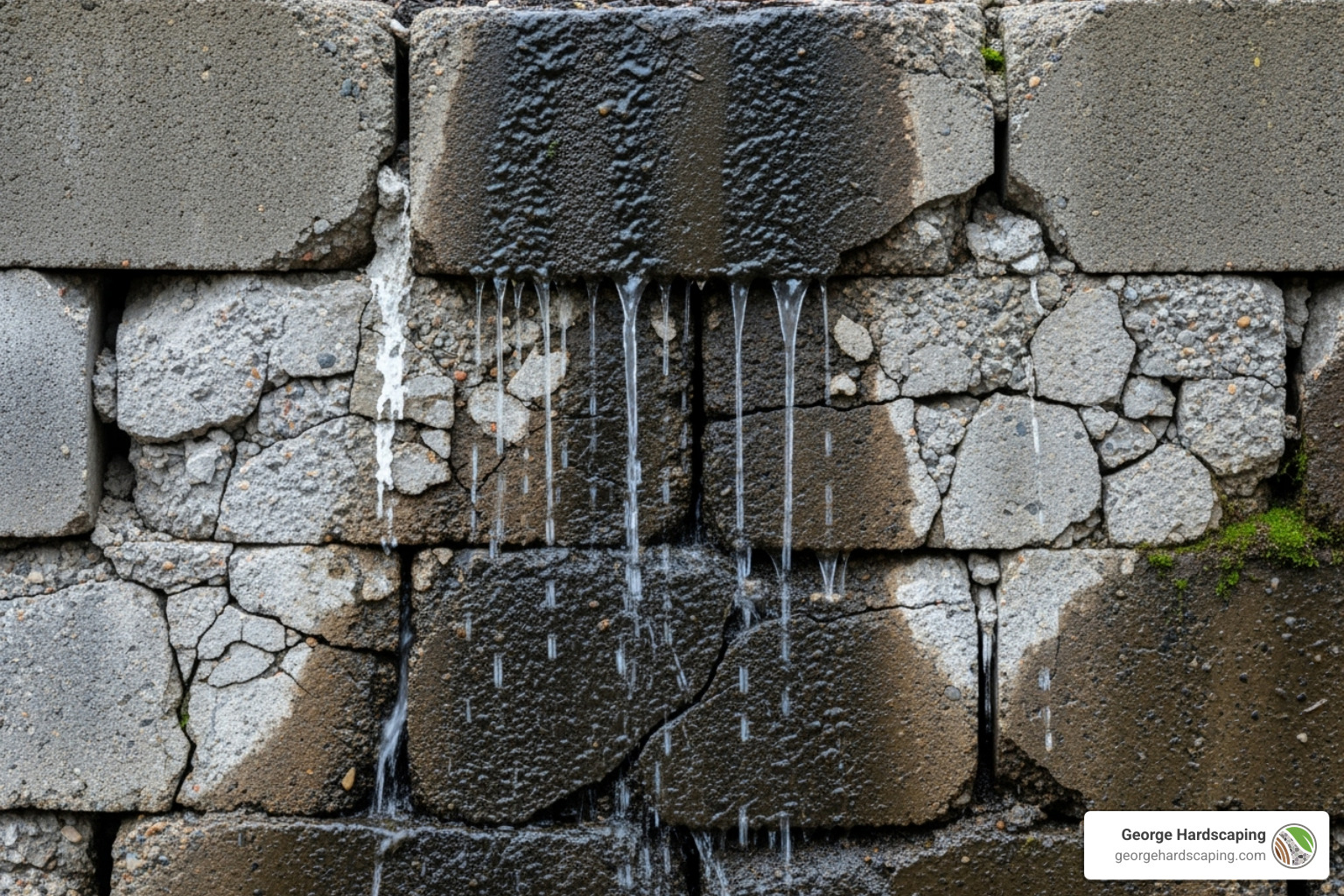
Telltale Signs and Their Cost Implications
- Leaning or Bowing: This is one of the most alarming signs. A wall tilting forward or bulging in the middle indicates that the pressure behind it is winning. This is often caused by failed drainage or an inadequate foundation. A slight lean might be correctable, but a pronounced bow signals a severe structural problem that requires immediate, and often expensive, intervention. Stabilizing a leaning wall with solutions like retaining wall anchors is a major repair, often costing $5,000 to $10,000 or more.
- Cracking and Crumbling: Cracks come in all sizes. Small, hairline cracks may just be from normal settling. However, large, deep cracks that grow over time, or areas where mortar is crumbling away, are clear indicators of stress. Filling superficial cracks is a minor repair, typically in the $450 to $2,000 range. But widespread or structural cracks point to deeper issues that will be far more expensive to resolve. For comprehensive masonry repairs, consider our hardscaping and masonry services to ensure proper restoration.
- Water Seepage or Leaks: Proper drainage is the lifeblood of a retaining wall. If you see water leaking through the face of the wall or constant damp spots, it means the drainage system behind it has failed. This leads to hydrostatic pressure buildup, the number one enemy of retaining walls. Installing a proper drainage system is a major undertaking that can cost $2,000 to $10,000, but it’s essential for the wall’s survival.
- Foundation Shifting: If you notice the base of your wall is uneven, or there are step-like drops along the bottom course, the foundation is likely shifting. Since the foundation supports the entire structure, these repairs are complex, invasive, and costly, often requiring excavation and rebuilding sections of the wall from the ground up.
- Efflorescence: Those stubborn white, chalky stains are more than a cosmetic issue. They are mineral deposits left by water that has evaporated after moving through your wall. While cleaning is simple, efflorescence is a clear sign of moisture problems that must be addressed to prevent long-term structural damage.
- Rotting Wood Timbers: For timber walls, any sign of rot—soft, dark, or crumbling wood—is a serious concern. This is especially common in the damp climate of North Shore Massachusetts. Rot compromises the wall’s structural integrity and usually requires replacing entire sections, not just a single timber.
The key takeaway is that damage severity directly impacts your wallet. During an inspection, experts recommend inspecting walls every 3 to 5 years. This proactive approach helps you catch problems when they are still manageable and affordable to fix.
The Hidden Costs of Delayed Repairs
Postponing necessary repairs doesn’t just risk structural failure; it exponentially increases repair costs. What might cost $1,500 to fix today could balloon to $7,500 or more if left unaddressed for another season. Water damage, in particular, compounds quickly. Once moisture penetrates behind the wall, it can cause frost heaving in winter, accelerate material deterioration, and compromise the entire drainage system.
Moreover, a failing retaining wall can damage adjacent structures. We’ve seen cases where delayed repairs led to damaged patios, cracked driveways, and even foundation issues for nearby buildings. These secondary damages can double or triple your total repair costs, making early intervention not just prudent but economically essential.
Key Factors That Determine Retaining Wall Repair Costs
When you receive an estimate for a retaining wall repair, the final price is a calculation of several interconnected variables. The cost of repairing retaining wall issues is never one-size-fits-all. Here’s a breakdown of the primary factors that will influence your project’s budget.
Material Type and Its Impact on Price
The material your wall is made from is a primary driver of repair costs. Each material has unique properties that affect the price of new materials and the complexity of the labor involved.
- Concrete Blocks: As a modular system, concrete block walls are often the most straightforward and budget-friendly to repair. A skilled mason can typically replace individual cracked or shifted blocks without disturbing the entire structure. The standardized nature of these blocks makes sourcing replacements easier and more affordable.
- Natural Stone: Repairing natural stone walls is an art form. Each stone is unique, so finding a matching replacement can be challenging. The labor is intensive, requiring careful removal and fitting by a true craftsman, which comes at a premium price. Natural stone repairs often require specialized techniques that our professional retaining wall contractors have mastered through years of experience.
- Wood/Timber: Rotting timbers rarely fail alone. When one goes, its neighbors are often compromised as well. Repair usually involves replacing an entire section, which can require significant excavation behind the wall to access. The susceptibility of wood to moisture damage in Massachusetts’ climate makes these repairs particularly urgent.
- Brick: Brick walls fall in the middle of the cost spectrum. Individual bricks can be replaced (a process called “dutchman repair”), and repointing mortar joints is a common fix. The challenge lies in matching the existing brick and mortar color to create a seamless repair.
| Material Type | Average Repair Cost Per Square Foot | Notes |
|---|---|---|
| Concrete Blocks | $15 – $45 | Most cost-effective for localized repairs |
| Natural Stone | $25 – $75 | Requires skilled craftsmanship and matching materials |
| Wood/Timber | $20 – $60 | Often requires section replacement |
| Brick | $18 – $55 | Moderate complexity, good availability of materials |
Note: These are national average costs and not a quote from George Hardscaping.
Labor, Accessibility, and Engineering
- Labor Costs: The expertise of skilled masons and hardscaping professionals is a significant portion of the cost. They aren’t just lifting heavy materials; they are problem-solving to ensure the repair is structurally sound and built to last. Labor typically accounts for 50-70% of the total repair cost, reflecting the specialized knowledge required for proper diagnosis and execution.
- Site Accessibility: How easily can workers and equipment get to your wall? A wall with easy street access is far less costly to repair than one on a steep hill or in a fenced backyard that requires materials to be moved by hand or with specialized equipment. Limited access can increase labor costs by 20-40% due to the additional time and effort required.
- Excavation: Many retaining wall problems originate behind the wall. Fixing them properly requires excavation to address drainage, relieve pressure, or repair the foundation. The volume of soil to be moved and whether it can be reused on-site or must be hauled away impacts the final cost. Excavation typically adds $50-$150 per cubic yard to your project.
- Structural Engineer Fees: For walls over four feet high or those with significant structural issues, an engineer’s assessment is crucial. They diagnose the cause of failure and design a solution that ensures long-term stability. Engineering fees typically range from $500 to $2,500, but this investment prevents much more expensive failures in the future. The International Code Council provides guidelines that engineers follow to ensure safety and compliance.
Wall Size and Project Complexity
- Wall Dimensions: The height and length of the damaged area are direct multipliers for material and labor costs. Taller walls are under greater pressure and often require more sophisticated, engineered repair solutions. Walls over 4 feet typically require additional reinforcement and may need permits, adding to the overall cost.
- Wall Design: Curved and tiered walls are inherently more complex to repair than simple, straight walls. They demand more time and skill for cutting and fitting materials, which translates to higher labor costs. Complex designs can increase repair costs by 15-30% compared to straight walls.
- Backfill and Drainage: These are the unseen heroes of a healthy retaining wall. Installing or upgrading a drainage system with proper backfill (like gravel) is a critical investment. It may add $30-$50 per linear foot to the project cost, but it’s the best way to ensure your repaired wall doesn’t fail again for the same reason.
Regional Factors Affecting Massachusetts Repairs
The North Shore’s unique climate and soil conditions significantly impact repair costs. The freeze-thaw cycles common in Massachusetts can cause additional stress on retaining walls, leading to more frequent repairs. Clay-heavy soils in many areas expand and contract with moisture changes, putting extra pressure on walls. These regional factors often necessitate more robust repair solutions, potentially increasing costs by 10-20% compared to national averages.
Local building codes and permit requirements also affect costs. Many North Shore communities have specific regulations for retaining wall repairs, especially in coastal areas or historic districts. Compliance with these regulations may require additional materials or construction methods that increase the overall project cost.
Breaking Down the Cost of Repairing Retaining Wall: Minor Fixes vs. Major Overhauls
The cost of repairing retaining wall issues depends entirely on the scope of the work. Is it a simple cosmetic touch-up or a full-blown structural emergency? Understanding the difference will help you budget accordingly and recognize the importance of acting fast.
Costs for Minor and Moderate Repairs ($450 – $5,000)
These repairs address problems before they become catastrophic, preserving the wall’s function and appearance at a manageable cost.
- Crack Filling: This is the first line of defense. Professionals use specialized epoxy or mortar to seal small, non-structural cracks, preventing water from getting behind the wall and causing more significant damage. This is a quick fix, typically costing $150 – $400.
- Mortar Repointing: Over time, the mortar between stones or bricks can crumble due to weather and movement. Repointing involves carefully grinding out the old mortar and replacing it with fresh material, strengthening the wall and refreshing its look. This generally costs between $150 and $500 for small areas.
- Efflorescence Removal: This involves cleaning the white, chalky stains that signal moisture issues. While the cleaning itself is inexpensive, a professional will also investigate the source of the moisture, which may lead to minor drainage adjustments costing $220 to $500.
- Replacing a Few Blocks or Timbers: When damage is isolated to a few units, they can often be replaced individually. This is far more cost-effective than a full rebuild, with costs typically ranging from $10 to $85 per square foot depending on the material.
- Sealing and Waterproofing: Applying a protective sealant or membrane to the wall is a proactive measure to prevent water damage. This is especially important for the back of the wall and may require some excavation.
Costs for Major Structural Repairs ($5,000 – $10,000+)
When a wall’s stability is compromised, you enter the field of major repairs. These are complex projects that require engineering, heavy equipment, and specialized expertise.
- Leaning Wall Stabilization: This is a serious intervention for a wall that is tilting. The process involves excavating behind the wall, carefully pushing it back to vertical (plumb), and installing a reinforcement system to hold it there.
- Foundation Repair: Problems with the footing that supports the wall are critical. Repairs can involve pouring new concrete footings, underpinning the existing foundation, or rebuilding sections from the ground up. This work is priced per foot, often between $40 and $90.
- Anchoring and Reinforcement: To secure a failing wall, systems like tie-backs or helical anchors are drilled deep into the stable soil behind it. These anchors provide an essential brace against immense soil pressure, and their installation is a highly specialized job with costs typically calculated per linear foot.
- Full Drainage System Installation: Since poor drainage is the culprit behind most major failures, installing a new system is often part of a major repair. This involves full excavation behind the wall to install gravel, perforated pipes, and weep holes, costing $50 – $80 per square foot but providing a permanent solution.
Note: These are national average costs and not a quote from George Hardscaping.
Repair vs. Replace: Making the Most Cost-Effective Decision
One of the biggest questions homeowners face is whether to fix the existing wall or tear it down and start over. There’s no single right answer; the best choice balances cost, safety, and long-term value. As a rule of thumb, repairing a retaining wall costs 50% to 75% less than building a new one, making it the preferred option when feasible.

When to Repair Your Retaining Wall
Repair is generally the most sensible path if your wall meets these criteria:
- The Wall is Fundamentally Sound: If the wall’s core structure is stable and it isn’t severely leaning or bulging, the problems are likely manageable. Damage like minor cracks, crumbling mortar, or a few broken blocks can be fixed without a complete overhaul.
- The Damage is Superficial or Localized: When the issue is confined to one area and hasn’t compromised the entire wall, a targeted repair is efficient and cost-effective. Our masonry repair services can address these localized issues with precision.
- You Have Budget Constraints: A professional repair can safely extend the life of your wall for several more years, addressing immediate concerns while you budget for a potential future replacement.
- The Wall is Relatively New: A properly built wall that is less than 15 years old should have plenty of life left. Investing in repairs is usually wiser than prematurely replacing it.
When to Replace Your Retaining Wall
Sometimes, patching up a wall is throwing good money after bad. Replacement becomes the necessary and smarter long-term investment in these situations:
- Widespread Structural Failure: If the wall is severely leaning, bulging, or has a failing foundation, it is a safety hazard. Trying to patch a fundamentally unstable structure is not a viable or safe solution.
- You’re Facing Frequent, Recurring Repairs: If you find yourself calling a contractor every year to fix new problems, the cumulative cost of these repairs will eventually exceed the cost of a replacement. It’s time to stop the cycle.
- The Initial Construction was Flawed: Many wall failures are due to poor initial construction, such as inadequate footings, no drainage system, or improper backfill. No amount of repairs can fix these original sins; you need to start over and do it right. When replacement is necessary, our professional retaining wall installation services ensure your new wall is built to the highest standards.
- Materials are at the End of Their Lifespan: An old timber wall made from railroad ties is a classic example. The material itself has reached its expiration date and is no longer structurally sound.
A full replacement is a major project, but it offers peace of mind with modern materials and proper engineering. When budgeting, remember to include demolition and removal costs, which can add $10 to $20 per linear foot.
Cost-Benefit Analysis: Making the Smart Choice
To make an informed decision, consider the 50% rule: if repair costs exceed 50% of replacement costs, replacement is usually the better long-term investment. Factor in not just immediate costs but also:
- Future maintenance requirements: A repaired wall may need more frequent maintenance than a new one
- Property value impact: A new, professionally installed wall can increase property value more than a patched older wall
- Warranty considerations: New installations typically come with warranties that repairs may not offer
- Energy and time savings: Constant repairs mean repeated disruptions to your landscape and lifestyle
According to data from the National Association of Home Builders, properly installed hardscaping features like retaining walls can return 60-80% of their cost in increased property value, making replacement a solid investment when repairs are no longer practical.
Ready to make the right decision for your retaining wall? Contact George Hardscaping for a free consultation and let our experts assess whether repair or replacement is your best option.
Frequently Asked Questions about Retaining Wall Repair
It’s natural to have questions when facing a retaining wall repair. It’s a significant part of your landscape and a notable investment. Here are clear answers to some of the most common questions we hear from homeowners in the North Shore area.
Can I repair a retaining wall myself?
This depends entirely on the type of repair. For minor, cosmetic issues, a DIY approach can work if you’re handy. This includes tasks like patching a small, non-structural crack, cleaning off efflorescence, or resetting a single loose capstone. However, for any structural problems—leaning, bowing, significant cracking, or foundation issues—we strongly advise calling a professional. Retaining walls hold back tons of soil and are under immense pressure. An improper repair can easily fail, leading to a catastrophic collapse that is far more dangerous and expensive to fix than the original problem. A professional can diagnose the root cause and ensure the fix is safe and permanent.
Do I need a permit to repair a retaining wall in Massachusetts?
In Massachusetts, you typically do not need a permit for simple repairs that don’t change the wall’s original height, footprint, or structure. Most towns consider this maintenance. However, the line between “repair” and “reconstruction” can be blurry. If your project involves rebuilding large sections, changing the wall’s height, or requires significant structural work like adding anchors, you may cross into permit territory. Regulations vary by municipality, so it’s always a good idea to check with your local building department in towns like Beverly, Danvers, or Ipswich. A reputable contractor will handle this process for you.
How long should a properly constructed retaining wall last?
The lifespan of a retaining wall depends heavily on its material and, most importantly, the quality of its construction.
- Concrete and Stone Walls: As the champions of longevity, these walls can last 50 to 100 years, with natural stone walls sometimes lasting even longer. Their durability makes them a popular long-term investment.
- Wood Walls: Timber walls have a much shorter lifespan due to their susceptibility to rot and insects. A pressure-treated wood wall typically lasts 10 to 40 years.
The real secret to a long-lasting wall is proper drainage. Water pressure is the primary cause of failure. A wall with an excellent drainage system will far outlast one without, regardless of the material. Regular maintenance, like keeping weep holes clear, also plays a vital role in maximizing its lifespan. At George Hardscaping, we focus on building walls with superior drainage to ensure they stand the test of time.
Secure Your Landscape with Professional Repair
As we’ve seen, the cost of repairing retaining wall issues is a complex topic with many variables. From a minor crack repair to a major structural overhaul, understanding these costs empowers you to make the best decision for your property. However, viewing this work as merely an expense misses the bigger picture. A professional repair is an investment in the safety, beauty, and value of your entire landscape.
A compromised retaining wall is a liability. It can lead to soil erosion that undermines your patio, damages walkways, or even threatens your home’s foundation. The cost of addressing these cascading problems will always be higher than the cost of fixing the wall proactively. Research from the Foundation Repair Association shows that foundation damage caused by failed retaining walls can cost homeowners $10,000 to $30,000 or more to repair.
At George Hardscaping, we have years of experience dealing with the specific challenges that the soil and climate of Essex County and the North Shore pose to retaining walls. Our expert masonry team provides transparent, honest assessments focused on the most effective long-term solution, not just the most expensive one. We don’t just patch symptoms; we diagnose and fix the root cause to ensure our repairs last.
Why Choose Professional Repair Services
Professional retaining wall repair offers numerous advantages over DIY attempts or hiring inexperienced contractors:
- Proper Diagnosis: Experienced professionals can identify underlying issues that may not be immediately visible
- Quality Materials: Access to commercial-grade materials and proper equipment ensures lasting repairs
- Warranty Protection: Professional work typically comes with warranties that protect your investment
- Code Compliance: Professionals ensure all work meets local building codes and regulations
- Insurance Coverage: Licensed contractors carry insurance that protects you from liability
Your landscape is a significant investment. Don’t let a failing retaining wall put it at risk. Whether you need retaining wall anchors to stabilize a leaning wall or complete retaining wall installation for a replacement, George Hardscaping has the expertise and experience to deliver lasting solutions.
Protect your property with the quality craftsmanship and durable solutions that George Hardscaping is known for throughout the North Shore. From Beverly to Ipswich, from Danvers to Marblehead, we’ve been the trusted choice for retaining wall repairs that stand the test of time.
Request your free estimate today and let our experienced team show you what a professional, lasting retaining wall repair looks like. Don’t wait until minor issues become major problems – contact us now to schedule your consultation and take the first step toward securing your landscape investment.
