
Your Backyard’s Next Centerpiece
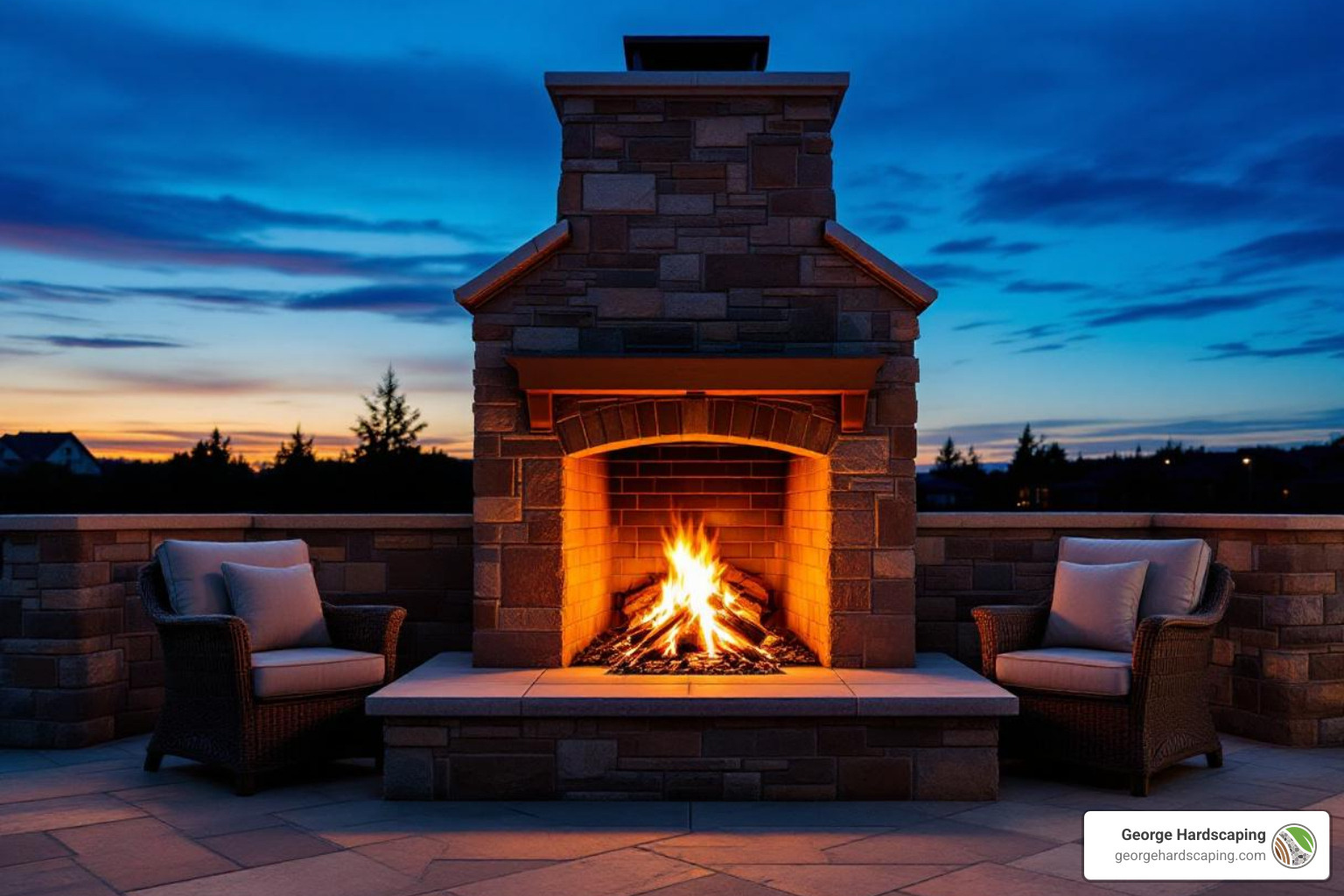
Build an outdoor fireplace with cinder blocks and transform your backyard into a gathering space that rivals any indoor living room. Many stunning stone fireplaces have a hidden secret: a core of inexpensive cinder blocks dressed up with a decorative veneer. This approach provides incredible strength and fire resistance while allowing for a custom finish that matches your home’s style.
This is an advanced DIY project that can take one to two weeks, but the savings are substantial. Material costs for a DIY build typically range from $1,300 to $2,000, a fraction of the $1,500 to $8,000+ you might pay a contractor. The process involves pouring a reinforced concrete foundation, building the base and firebox with cinder blocks, lining the firebox with specialized fire bricks, constructing a chimney, and applying a final veneer.
While not a simple weekend task, building an outdoor fireplace is achievable with careful planning and patience. For homeowners in Essex County and the North Shore who value craftsmanship, the reward is a true focal point for their outdoor living space. Key steps like pouring a proper foundation, using heat-resistant materials in the firebox, and calculating the correct chimney height are critical for safety and longevity.
If you have experience with projects like patio design and installation or building retaining walls, you have transferable skills. However, if this is your first major masonry project, consider working with professionals. George Hardscaping brings decades of experience to custom outdoor fireplace projects, handling everything from permits to final construction to ensure a beautiful, code-compliant result that provides years of reliable use.
Before you dive in, it helps to understand how an outdoor fireplace fits into a larger, cohesive landscape plan. A well-placed fireplace can anchor an entire outdoor room when combined with thoughtful landscape design and durable stone and masonry construction services. By thinking holistically about traffic flow, views, and how you’ll actually use the space, you can avoid costly redesigns later.
Planning and Preparation: The Foundation for Success
Before laying the first block, meticulous planning is paramount. This stage is about safety, compliance, and smart design to ensure your fireplace stands the test of time, especially through harsh New England winters. A well-thought-out plan prevents costly mistakes and ensures the final structure is both safe and beautiful.
Building Codes, Permits, and Site Selection
First, consult your local municipal building department in Essex County, MA. Towns like Beverly, Danvers, or Ipswich have specific codes for outdoor fire structures. These regulations are not suggestions; they are legal requirements. They dictate critical safety parameters, including placement (a minimum distance of 10 to 30 feet from your home and 10 feet from property lines), maximum chimney height, foundation depth, and whether a spark arrestor is mandatory. You will likely need to submit a plan for approval and obtain a building permit before work begins. Be prepared to provide a site plan showing the fireplace location relative to property lines and existing structures.
If you’re unsure where to start with regulations, review the guidance from the International Code Council on residential fireplaces and chimneys and then verify with your local inspectors, as your town may adopt specific amendments. This due diligence is the most important step in the entire project.
Choosing the right spot is about more than aesthetics. Consider these key factors in detail:
- Safety Clearances: Adhere to all local codes regarding distance from your home, sheds, fences, and property lines. This also includes vertical clearance from overhanging trees, patio covers, or utility lines.
- Prevailing Winds: Spend a few days observing the typical wind patterns in your yard. Position the fireplace so that the prevailing wind blows smoke away from your primary seating area, open windows, and your neighbors’ property.
- Overhead Obstructions: Ensure there is completely clear vertical space above the proposed chimney location. Avoid placing it under mature trees that could drop leaves and debris into the flue or pose a fire risk.
- Accessibility: Plan for a clear, practical path for bringing in heavy materials like concrete bags, cinder blocks, and stone during construction. Afterward, you’ll need easy access for carrying firewood.
- Integration: How will the fireplace connect to your existing outdoor spaces? It should feel like a natural extension of your patio or deck. Consider the views from inside your home as well—a well-placed fireplace can provide a beautiful focal point year-round. A professional can help integrate it with your existing patio design services for a seamless flow.
Before any digging, you are legally required to call the official 811 service. This free national service will arrange for local utility companies to visit your property and mark the approximate location of underground water, gas, and electric lines. This prevents a dangerous, expensive, and potentially fatal accident.
Project Design and Material List
Sketch a detailed design of your fireplace, including dimensions for the base, firebox opening, and chimney. A typical DIY fireplace might be 7 feet wide, 2 feet deep, and 8 feet tall, but you can adjust it to fit your space. The firebox opening is crucial for a good draft; a common rule is for the height to be 60-70% of the width, with a depth of at least 20 inches to prevent smoke from spilling out.
Think through how the fireplace will relate to other hardscape elements. For example, if you already have or plan to add a paved seating area through professional patio installation services, verify that the finished height of the hearth and the top of the firebox feel comfortable when seated.
Gathering all your tools and materials beforehand will save time and frustration. Here is a summary of what you’ll need:
- Masonry: Cinder blocks (CMUs) for the main structure, fire bricks for the firebox lining, Type N mortar for the blocks (above grade), Type S mortar (stronger, for foundation blocks), and heat-resistant refractory mortar for the fire bricks.
- Foundation: Bagged concrete mix, all-purpose gravel for the base, and steel rebar or wire mesh for reinforcement.
- Structural Support: Steel lintels (angle iron) to span the firebox and wood storage openings.
- Chimney: A clay flue liner, chimney cap, and a spark arrestor are essential for safety and longevity.
- Finishing: Your choice of veneer (manufactured stone, natural stone, brick, or stucco), metal lath, cement backer board (recommended), and appropriate grout or mortar for the veneer.
- Tools: A shovel, wheelbarrow, level (4-foot and torpedo), trowel, rubber mallet, masonry hammer, jointing tool, concrete mixing tub or mechanical mixer, and an angle grinder with a diamond blade are essential. Always use safety gear like gloves, safety glasses, and a dust mask.
For more in-depth guidance on materials performance, you can reference technical documents from the Portland Cement Association on concrete and masonry.
Constructing a Solid Foundation
A robust foundation is non-negotiable. It prevents the entire structure from settling, shifting, and cracking. This is especially true in New England, where the freeze-thaw cycle can destroy improperly built structures.
- Excavate: After utilities are marked, clear and excavate the site for your foundation pad. The footing must extend below the local frost line (typically 42-48 inches in Essex County) to prevent seasonal ground movement (frost heave) from damaging the masonry. The pad itself should be 6-12 inches wider than the fireplace base on all sides.
- Form and Base: Build a level wooden form (e.g., with 2×6 lumber) for the pad. Ensure it is square by measuring the diagonals. Fill the form with a 4-6 inch layer of compacted all-purpose gravel. This provides a stable base and promotes drainage.
- Reinforce: Place rebar in a grid pattern (e.g., 12 inches on center) and a layer of wire mesh inside the form. Lift them slightly on small bricks or rebar chairs so they become fully embedded in the middle of the concrete, where they provide the most tensile strength.
- Pour and Cure: Mix and pour the concrete, ensuring it fills the form completely and has no air pockets. Use a shovel or stick to consolidate the concrete around the rebar. Level the surface with a screed board and smooth it with a float. Allow the concrete to cure for at least 4-5 days, keeping it moist during this time if conditions are hot and dry, before you start building on it.
If you’re not comfortable handling excavation, reinforcement, and concrete on your own, you can hire experts for just this stage. Many homeowners in the North Shore area rely on professional stone and masonry construction services to complete the structural portions of the work.
Step-by-Step Guide: How to Build an Outdoor Fireplace with Cinder Blocks
With your foundation cured, it’s time for the masonry work. This phase transforms simple blocks into a beautiful, functional fireplace. Work methodically, check for level and plumb with every course, and remember that staggered joints are the key to a strong wall.
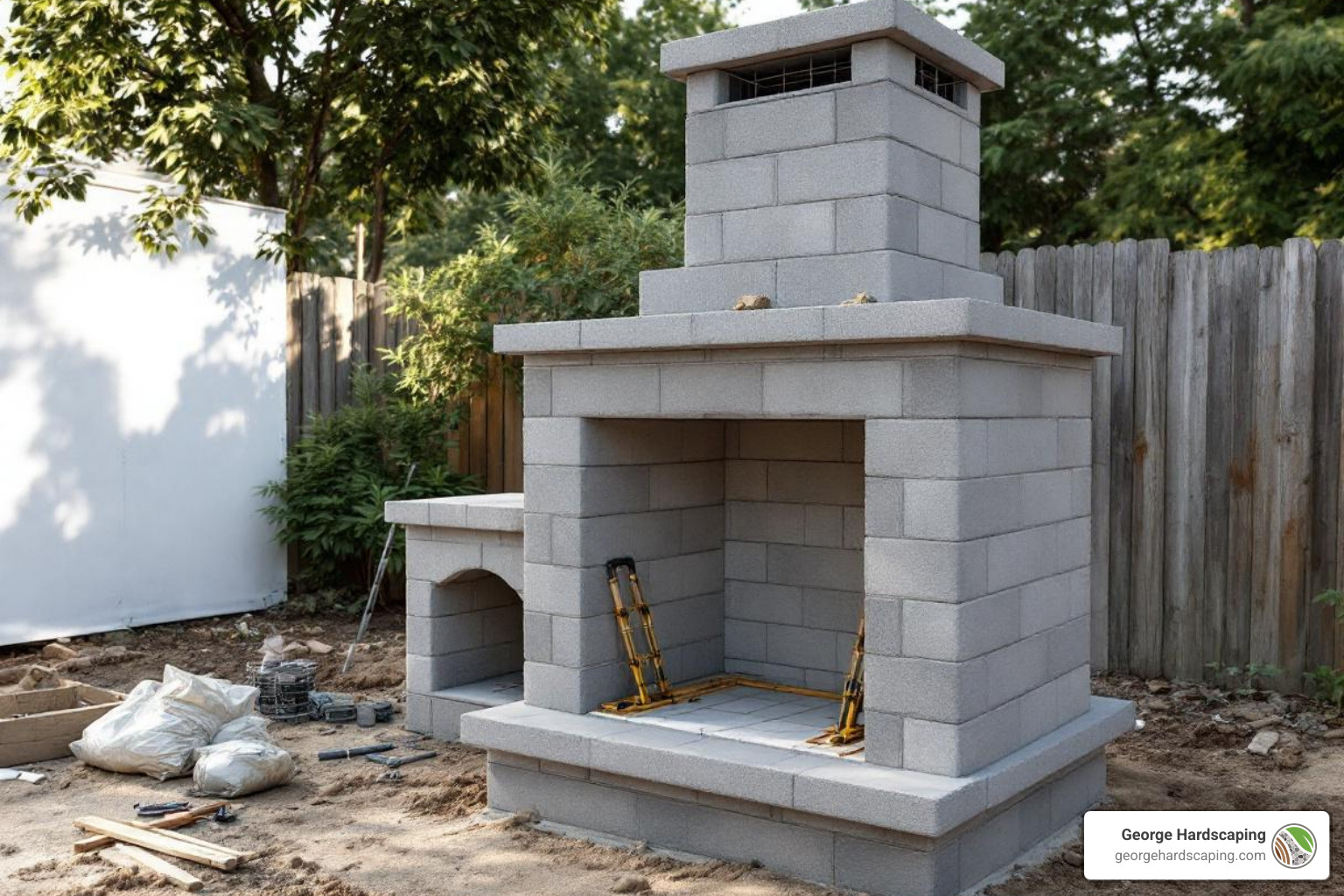
Laying the Cinder Block Base
The base typically includes a U-shaped area for wood storage, which also adds to the structure’s stability.
- First Course: Mix your Type N mortar to a thick, peanut-butter-like consistency that holds its shape on a trowel. Spread a 1/2-inch bed of mortar on the slab and begin laying your first course of 16x8x8 cinder blocks according to your design. This first course is the most critical for ensuring the entire structure is square and level.
- Build Up: Continue laying courses, applying mortar to the top of the previous course and the vertical ends (ears) of each new block. This is called “buttering.” Use a running bond pattern, where vertical joints are staggered, for strength. Constantly use your level to ensure each block is level (front-to-back and side-to-side) and plumb (vertically straight).
- Install Lintel: Once the wood storage opening reaches its desired height, bridge the gap with a plated steel slotted angle bar (lintel). Set it on a generous bed of mortar, ensuring it extends at least 4 inches over the block on each side to distribute the load.
- Lay the Hearth: On top of the base structure, mortar your fire-rated hearthstone in place. This could be a single large slab of bluestone, granite, or precast concrete. It must extend at least 16 inches in front of the firebox opening and 8 inches to the sides to meet safety codes for ember protection.
To keep the base layout square, measure diagonally from corner to corner as you go. Both diagonal measurements should match; if they don’t, gently tap blocks into alignment with a rubber mallet before the mortar sets.
Building the Firebox, Smoke Chamber, and Throat
The firebox is the heart of the fireplace and requires special materials and design. This is not the place to cut corners.
- Line with Fire Bricks: Build the interior walls of the firebox using fire bricks set with high-heat refractory mortar. Do not use standard blocks or mortar here. This is critical for safety, as only these materials can withstand the intense, repeated cycles of heat. The firebox walls are often splayed (angled outward) and the back wall is sloped forward to help radiate more heat out to the seating area.
- Construct the Throat and Smoke Shelf: This is the most technically crucial part of the fireplace. The “throat” is the narrow opening at the top of the firebox. Just behind and above the throat, you must build a “smoke shelf.” This is a horizontal ledge designed to stop cold air downdrafts from pushing smoke back into your face. It works by catching the falling cold air and redirecting it back up the chimney with the rising hot smoke. The smoke shelf is formed by corbeling (stepping back) the masonry at the top of the firebox.
- Form the Smoke Chamber: Above the throat and smoke shelf, you must create a smoke chamber. This is an inverted funnel shape that smoothly transitions smoke from the wide firebox into the narrow chimney flue. Construct it by angling the blocks inward with each course. The interior surfaces must be parged smooth with refractory mortar to ensure an unobstructed path for the smoke. For deeper technical guidance on fireplace proportions and draft behavior, you can consult resources from the Hearth, Patio & Barbecue Association.
- Install Firebox Lintel: Just like the wood box, the top of the firebox opening needs a second, heavier-duty steel lintel to support the massive weight of the chimney structure above.
Constructing the Chimney
The chimney safely exhausts smoke away from your living space. Its height and internal structure are key to a good draft.
- Install a Flue Liner: It is a modern safety standard to install a clay tile or stainless steel flue liner inside the chimney. As you stack the cinder blocks for the chimney, place sections of the flue liner inside, filling the gap between the liner and the blocks with mortar. This creates a smooth, fire-safe channel for smoke and protects the block structure from heat and corrosive byproducts.
- Stack the Flue: Continue stacking cinder blocks in a running bond pattern to form the chimney flue. Keep the flue dimensions consistent and use your level on all four sides to ensure the structure is rising perfectly straight.
- Achieve Proper Height: Your chimney must be tall enough for a proper draft. A general rule is that it should extend at least 2-3 feet higher than any part of the house or other structure within a 10-foot radius. This prevents wind from blowing down the chimney and causing downdrafts.
- Install Cap and Arrestor: Finish the chimney with a pre-fabricated chimney cap to keep out rain, animals, and debris. The cap should include a spark arrestor (a mesh screen) to prevent hot embers from escaping and starting a fire on a roof or dry leaves.
If you’re adding adjacent features such as seat walls or steps leading to the fireplace, coordinate those elements now. A contractor offering comprehensive hardscaping and masonry services can design these elements to match your fireplace dimensions and finish materials.
First Firing and Ongoing Maintenance
After construction, resist the urge to build a roaring fire right away. Mortar and concrete need time to cure and release moisture.
- Curing Period: Follow manufacturer instructions for curing times on both masonry and refractory mortar. This often means waiting at least 7-10 days, and sometimes up to 28 days, before lighting any fire.
- Seasoning Fires: Start with a series of small, low-temperature fires over several days. This process, called “curing” or “seasoning,” slowly drives out any remaining moisture from the masonry. A sudden, large fire can turn trapped moisture into steam, causing the bricks and mortar to crack. Gradually increase the size and intensity of the fires over a week.
- Inspection Routine: At least once a year—ideally before heavy use in fall—inspect your firebox, smoke chamber, and chimney. Look for cracked bricks, deteriorated mortar joints, or loose veneer. Use a flashlight to look up the flue for obstructions or heavy creosote buildup.
- Cleaning: Brush out ash regularly and dispose of it in a fully metal container with a tight-fitting lid, stored away from combustible materials. Never assume ashes are cold.
If you ever notice persistent smoke spillage, unusual odors, or visible cracks in the firebox, consult a professional immediately. Local experts in stone and masonry construction services can diagnose draft issues and repair damage.
Finishing and Customization: Bringing Your Vision to Life
With the structural work done, it’s time to transform the gray cinder block core into a stunning focal point. This phase is about applying the exterior finish and adding decorative touches that make the fireplace uniquely yours. The beauty of a cinder block core is its versatility as a substrate for nearly any finish.
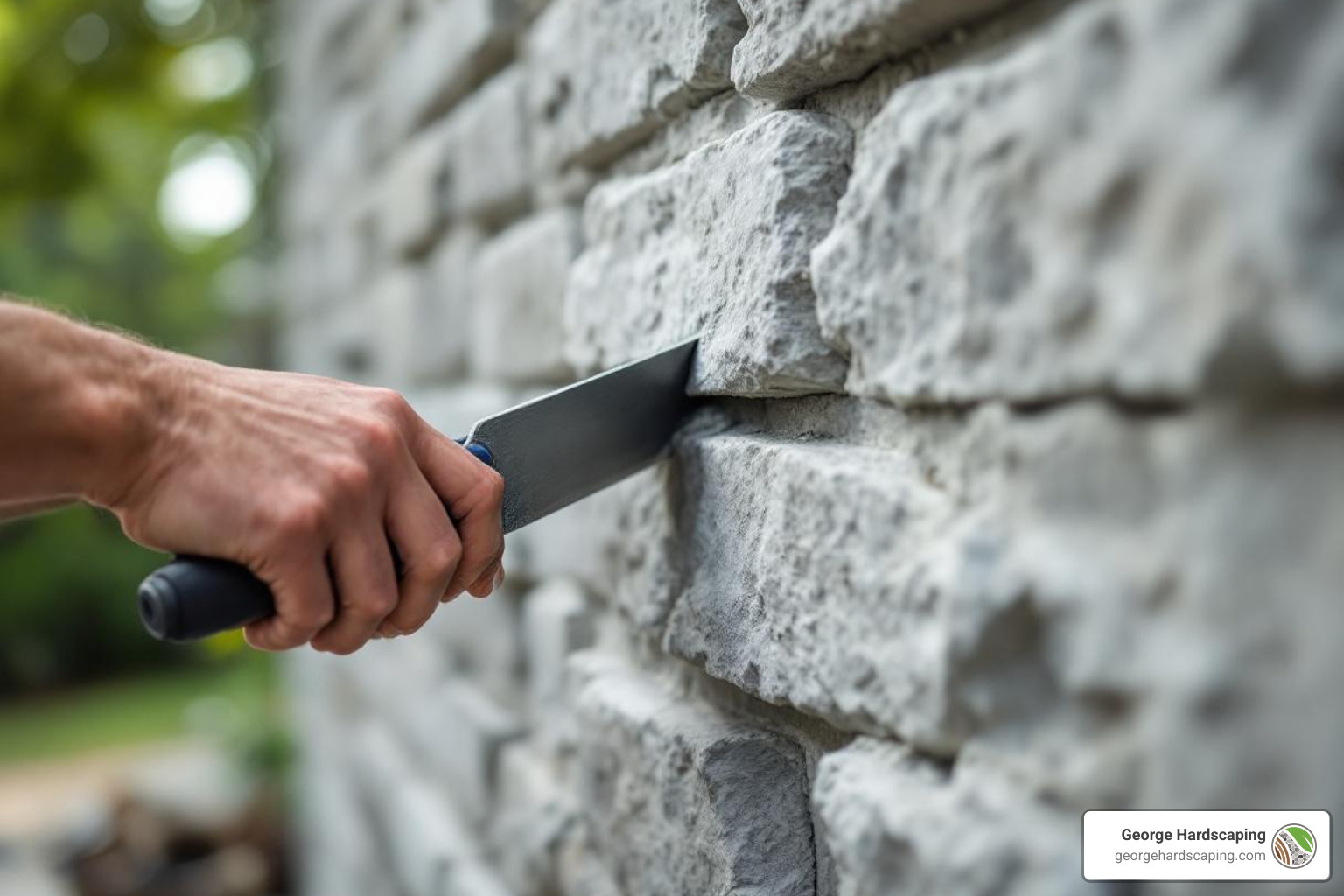
Applying the Exterior Veneer
This is where the fireplace develops its personality. Careful preparation of the surface is key to a long-lasting finish.
- Prepare the Surface: First, ensure the block surface is clean and free of dust or loose mortar. For stone or stucco finishes, it’s highly recommended to first attach a weather-resistant barrier and then a layer of metal lath over the cinder blocks. The lath provides a mechanical grip for the mortar.
- Apply a Scratch Coat: Over the metal lath, apply a 1/2-inch thick layer of mortar, called a scratch coat. While the mortar is still wet, use a plasterer’s rake or a notched trowel to scratch horizontal grooves into the surface. Allow this to cure for 24-48 hours. This scored, rough surface creates a perfect mechanical bond for the veneer.
- Choose Your Finish:
- Manufactured Stone Veneer: A popular, lightweight, and realistic-looking option that’s easier and less expensive to install than natural stone. It comes in a wide variety of styles, from river rock to ledgestone.
- Natural Stone: Offers unparalleled beauty, texture, and durability for a high-end, authentic look. It is heavier and requires more skill to cut and fit properly.
- Brick: A classic, timeless choice that can create a cohesive look if your home has brick accents. Thin brick veneer is lighter and easier to install than full bricks.
- Stucco: Provides a smooth or textured finish for a contemporary or Mediterranean style. It can be tinted to any color, offering great design flexibility.
- Install and Grout: Apply your chosen veneer from the bottom up, pressing each piece into a fresh bed of mortar with a slight wiggling motion to ensure full adhesion. If using stone, mix pieces from several different boxes to ensure a natural blend of colors and shapes. Once the veneer is set (usually after 24 hours), fill the joints with grout using a grout bag. You can then tool the joints to be flush, raked, or even create an overgrout look depending on your preference. A well-chosen finish should feel like an integrated part of your overall patio design and installation.
Veneer work is often where DIYers decide to bring in a pro, particularly when working with irregular natural stone or detailed brick patterns. Skilled hardscaping and masonry services can achieve tight joints, consistent reveals, and clean transitions at corners, mantels, and arches.
Adding Decorative and Functional Elements
These final details improve both the beauty and utility of your fireplace.
- Mantelpiece: Add a mantel from a thick slab of stone, a precast concrete beam, or a reclaimed wood beam. It’s critical to ensure it’s a safe distance from the firebox opening. For combustible materials like wood, NFPA 211 standards (and most local codes) require a minimum of 12 inches of clearance above the opening. Always verify clearances with your local building codes and guidelines from the National Institute of Standards and Technology on fire and materials.
- Built-ins: Incorporate built-in stone benches that flank the fireplace to create a cozy, permanent gathering area. Add enclosed wood storage boxes with hinged lids to keep your firewood dry and neatly tucked away.
- Lighting: Install low-voltage LED hardscape lighting to uplight the stone texture and create a dramatic ambiance after dark. Lights can be integrated into seat walls or placed at the base of the fireplace.
- Hearth: Customize the hearth with unique tile, contrasting stone, or a decorative brick border to make it a standout feature and clearly define the non-combustible zone in front of the fire.
Thoughtful finishing decisions are easiest when you look at your entire property as one unified project. Many homeowners use this phase as an opportunity to refresh nearby walkways, steps, and planting beds through coordinated landscape design. Cohesive materials and color choices between the fireplace, patio, and surrounding landscape create a polished, intentional look.
Designing an Outdoor Room Around Your Fireplace
Think of the fireplace as the anchor for a complete outdoor room, not just a standalone feature.
- Seating Layout: Arrange seating in a conversational semi-circle or U-shape that maintains a comfortable distance from the heat of the fire. Ensure there are clear pathways for traffic.
- Surfacing: Extend or upgrade your patio surface so furniture sits level and stable. If you currently have an undersized or aging slab, consider partnering with professionals for new patio design services.
- Shade and Shelter: In sunnier or windier locations, add a pergola, shade sails, or strategically planted trees and privacy screens to make the space more comfortable throughout the day and across seasons.
- Planting Design: Use layered plantings in raised beds or containers to soften the hard edges of the masonry, add color and texture, and guide views toward the fire as the main focal point.
For visual inspiration and real-world examples of how a cinder block core can be transformed with veneer, lighting, and custom detailing, explore our gallery of completed projects.
Frequently Asked Questions about Cinder Block Fireplaces
Building an outdoor fireplace raises many practical questions. Here are answers to some of the most common inquiries we receive from homeowners in the North Shore area.
How much does it cost to build an outdoor fireplace with cinder blocks?
Cost is a major factor, and it varies significantly between a DIY project and a professional build.
- DIY Costs: If you build it yourself, expect material costs to range from $1,300 to $2,500. This covers the foundation concrete (~$200), blocks and mortar (~$400), firebrick and refractory mortar (~$300), and a mid-range veneer like manufactured stone (~$1,000+). The primary savings come from eliminating labor costs, which can be substantial for a project of this scale.
- Contractor-Built Costs: Hiring a professional can cost anywhere from $4,000 to over $15,000. A basic, smaller fireplace with a simple stucco finish might be on the lower end, while a large, complex structure with natural stone veneer, built-in seating, and wood boxes will be at the higher end. The final price depends on the complexity of the design, size, site access, and material choices. While the initial investment is higher, you get a professionally engineered, code-compliant, and guaranteed result.
To get a sense of how your fireplace budget might fit into a broader backyard improvement plan, it’s helpful to talk with a contractor who offers full outdoor solutions, including patio installation services and complementary hardscaping and masonry services. They can outline phased projects if you prefer to spread costs over time.
Do you need a special type of cinder block for a fireplace?
This is a critical safety distinction. You use two different types of materials for different parts of the fireplace.
- Main Structure: Standard cinder blocks (Concrete Masonry Units or CMUs) are perfect for the base, outer walls, and chimney structure. They are strong, affordable, and fire-resistant enough for the exterior shell that doesn’t see direct flame contact.
- Firebox Interior: The area that directly contains the fire must be lined with fire bricks (also called refractory bricks). These are laid with refractory mortar. Both are specifically engineered to withstand extreme, sustained temperatures (up to 1,800°F and beyond) without cracking, spalling, or failing. Using standard blocks or mortar inside the firebox is a serious safety hazard and will lead to rapid deterioration and structural failure.
For more technical background on why refractory materials are essential, you can refer to information from the Refractories Institute on high-temperature materials. Their resources explain how fire bricks differ from standard masonry in composition and performance.
What is a smoke shelf and why is it important?
A smoke shelf is a horizontal ledge built into the masonry at the back of the fireplace, just above the firebox opening and below the chimney flue. It is one of the most critical design elements for a fireplace that drafts properly. Its primary job is to stop cold air, which is heavier than warm air, from falling down the chimney and pushing smoke out into your seating area. The shelf catches this downdraft and the circulating motion of the hot smoke rising from the fire redirects it back up the chimney. A fireplace built without a properly designed smoke shelf and throat will almost certainly have problems with smoke spillage.
What are the key safety precautions?
Safety should be your top priority throughout the entire project.
- Codes and Permits: Before you start, contact your local building department in towns like Peabody or Salem. They will provide essential requirements for setbacks, chimney height, foundation depth, and materials.
- Safe Clearances: Maintain a safe distance from combustible materials. General guidelines suggest 10–30 feet from your home and at least 10 feet from property lines, fences, and low-hanging trees.
- Call 811 Before Digging: It’s the law. Contact the official 811 service a few days before excavating to have underground utility lines marked.
- Use the Right Materials: Line the firebox with fire bricks and refractory mortar. Install a proper flue liner in the chimney. No exceptions.
- Install a Spark Arrestor: A mesh screen on top of your chimney is non-negotiable. It prevents sparks from escaping and starting a fire.
- Proper Chimney Height: Ensure the chimney is tall enough to create a good draft and carry smoke away, typically 2–3 feet higher than any structure within a 10-foot radius.
- Curing Time: Allow all mortar to fully cure as per the manufacturer’s instructions (often 28 days for full strength) before lighting your first small, gentle fire to season the masonry.
For an additional layer of protection, consider cross-referencing your plan with the U.S. Fire Administration’s outdoor fire safety recommendations so you’re accounting for wind conditions, ember control, and safe ash disposal.
Should I DIY my outdoor fireplace or hire a professional?
The answer depends on your skill level, available time, and tolerance for risk. Ask yourself these questions honestly:
- Experience: Do you have prior experience with masonry, mixing concrete, and reading construction plans? Have you successfully completed other large-scale structural projects?
- Tools & Equipment: Do you own or are you willing to rent and learn how to use a wet saw for cutting stone, a mechanical concrete mixer, and other specialized masonry tools?
- Physicality: Are you prepared for a physically demanding project that involves repeatedly lifting 40-pound blocks, moving tons of material, and working for multiple full weekends?
- Risk: Are you comfortable taking on the liability for a structure that involves fire? If it’s not built to code, your homeowner’s insurance may not cover any related damage.
Hiring a professional is usually the better choice if:
- You answered ‘no’ to most of the questions above.
- Your design requires complex features such as curved walls, integrated seating, or multi-level patios.
- Your site presents challenges such as steep slopes, poor soil, or strict local regulations.
A seasoned contractor offering integrated stone and masonry construction services will not only execute the fireplace build but can also coordinate permitting, drainage, and connection to surrounding patio design services and landscape.
How do I keep my outdoor fireplace looking great over time?
Routine maintenance is straightforward but important for longevity and safety.
- Inspect Annually: Before the start of the burning season, thoroughly inspect the entire structure. Look for cracks in the veneer, deteriorated mortar joints (especially in the firebox), and any signs of settling.
- Clean the Firebox: Remove ash regularly. A layer of 1-2 inches of ash can actually help insulate the firebox floor, but excessive buildup should be removed. Check for spalling (surface flaking) on fire bricks, which indicates moisture damage or heat stress.
- Check the Chimney: Use a flashlight to look up the flue for obstructions like bird nests or heavy creosote buildup. Check that the chimney cap and spark arrestor are secure and undamaged.
- Minor Repairs: Small cracks in the exterior mortar joints can be repaired with a matching mortar mix in a process called tuckpointing. For any cracks inside the firebox or significant structural cracks, it’s best to call a professional.
- Protect Surfaces: Depending on your veneer, a breathable masonry sealer may help resist staining and water penetration—always follow manufacturer recommendations.
You can also schedule periodic professional checkups, particularly if your fireplace sees heavy seasonal use. Many homeowners bundle this with other outdoor upgrades or repairs when working with a trusted provider of landscape design and installation and masonry services.
Conclusion: Enjoy Your Handcrafted Outdoor Oasis
Building an outdoor fireplace with cinder blocks is a significant undertaking that demands patience, precision, and a commitment to safety. From pouring the foundation to laying the final stone, the process is a rewarding journey. The value of a project like this goes beyond the financial savings; it’s about the immense sense of accomplishment in creating a beautiful, functional centerpiece for your home with your own hands.
While the DIY route is rewarding, the complexity and safety factors can be daunting. Navigating local building codes in towns like Georgetown or Rowley and ensuring the structural integrity of a tall chimney requires skill and experience.
For a professionally guaranteed result that is both beautiful and built to last, consider the expert team at George Hardscaping. We have been enhancing outdoor spaces across Essex County and the North Shore for years, specializing in custom hardscaping features that stand the test of time.
If you’re ready to move beyond sketches and inspiration photos, this is the moment to take action. Schedule a consultation to discuss custom stone and masonry construction services custom to your property, your budget, and the way you actually live outside. Our team can handle everything from engineering and permitting to the final stone veneer and lighting details.
Perhaps you’re also envisioning a new entertaining space around your fireplace—a spacious patio, dining area, or outdoor kitchen. By partnering with George Hardscaping for integrated patio design services and complete landscape design, you can create a unified outdoor living environment instead of a single standalone feature.
Ready to transform your backyard into the ultimate outdoor haven? Request a detailed estimate for your custom outdoor fireplace today, and let our experienced team guide you from initial concept to a finished space you’ll be proud to share.
Request an estimate for your custom outdoor fireplace today!
If you’re still gathering ideas, take the next step by exploring our gallery of completed projects and making notes on styles, finishes, and layouts you love. Then, when you’re ready, reach out—your new outdoor fireplace and backyard retreat are only a conversation away.
