
Asphalt Paving: Top 6 Powerful Benefits in 2025
Mastering the Basics: Asphalt Paving
Asphalt paving is an essential choice for creating durable and cost-effective surfaces. Whether you’re paving a driveway, parking lot, or road, it’s crucial to understand its benefits. Here’s what you need to know, summed up quickly:
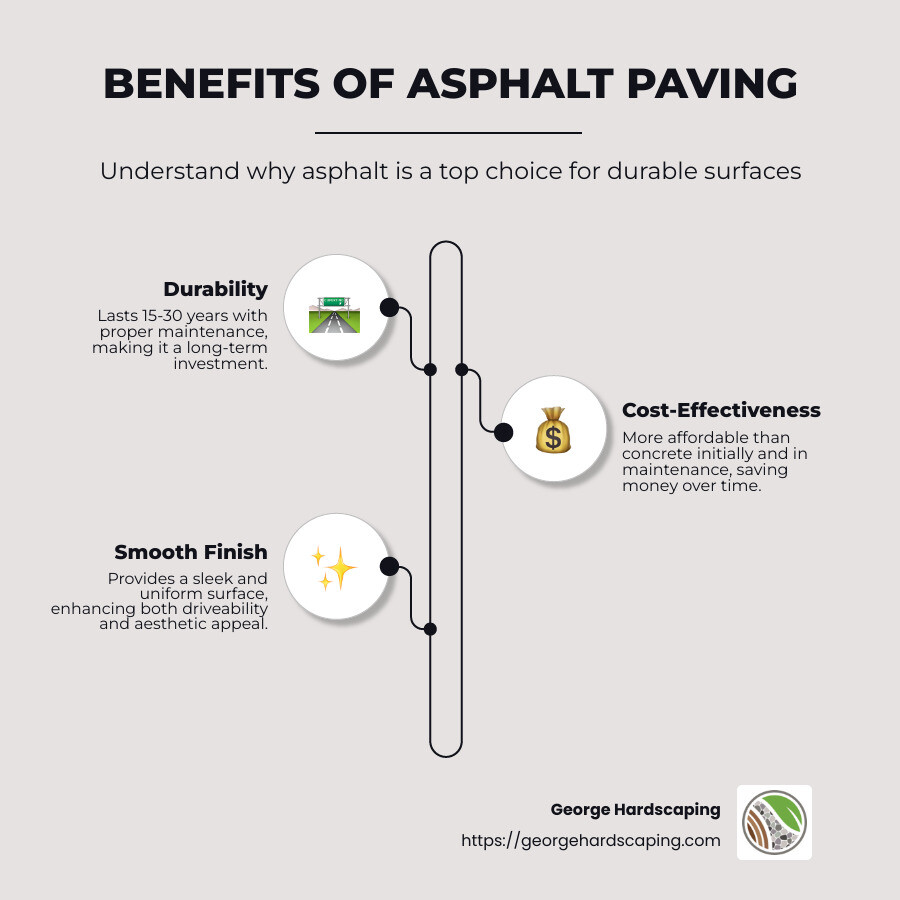
- Durability: Asphalt is highly durable, often lasting 15 to 30 years with proper maintenance.
- Cost-Effectiveness: It’s generally more affordable than concrete, both initially and with maintenance.
- Smooth Finish: Offers a sleek, uniform surface that improves driveability and aesthetic appeal.
For residents of Essex County, MA, and the North Shore, investing in asphalt paving can dramatically boost property value and curb appeal. George Hardscaping provides expert services ensuring precision and quality in every project, making sure your paving stands up against weather and daily use.
Asphalt paving vocab explained:
– Stone patio installation
– Stone retaining walls
– Stone veneer installation
What is Asphalt Paving?
Asphalt paving is a popular method for creating smooth, durable surfaces. It’s used for roads, driveways, and parking lots. But what exactly goes into this mix?
Composition
The key components of asphalt paving are bitumen and aggregates. These materials work together to form a strong, flexible surface.
- Bitumen: This is a sticky, black liquid or semi-solid form of petroleum. It acts like glue, holding everything together. Bitumen is crucial for the flexibility of asphalt, allowing it to expand and contract with temperature changes.
- Aggregates: These are small rocks, sand, and gravel. They give the pavement strength and stability. The size and type of aggregates can vary depending on the specific needs of the project.
How It Works
When these materials are combined, they create a mix that can be heated and poured onto a surface. Once it cools, it hardens into a durable layer. The process is quick, which means less disruption during installation.
Why It Matters
Understanding the composition of asphalt paving helps in choosing the right mix for your project. Different projects might need different types of asphalt, depending on factors like climate and traffic load.
For example, hot mix asphalt (HMA) is commonly used for high-traffic roads because of its durability. On the other hand, cold mix asphalt is often used for pothole repairs due to its ability to stay soft in colder temperatures.
By knowing what goes into asphalt paving, you can make informed decisions that ensure long-lasting results for your paved surfaces.
Benefits of Asphalt Paving
When it comes to asphalt paving, there are several reasons why it’s a popular choice for roads, driveways, and parking lots. Let’s explore the key benefits:
Driveability
Asphalt paving offers a smooth and quiet ride. Thanks to its open-graded and fine-graded surfaces, asphalt absorbs road noise, making it the “quiet” pavement option. This feature is especially appreciated in residential areas where noise reduction is a priority.
Appearance
A well-paved asphalt surface looks clean and professional. Its dark color provides a sleek appearance and improves the overall curb appeal of a property. The smooth surface also makes it easier to maintain, as dirt and debris can be quickly swept away.
Budget-Friendly
One of the standout benefits of asphalt paving is its cost-effectiveness. It’s generally cheaper to install than concrete, making it an attractive option for budget-conscious projects. The materials needed for asphalt are readily available and can be quickly turned into a durable surface. Plus, asphalt’s quick installation time means less labor cost and minimal disruption.
Environmental Benefits
Asphalt is not only budget-friendly but also environmentally friendly. It’s the most recycled product in America. Companies like Wolf Paving recycle 100% of the asphalt removed from job sites, along with concrete and asphalt shingles. Using recycled asphalt mix, which is stronger and more rut-resistant, is better for both the environment and the product itself.
Porous asphalt, in particular, offers significant environmental advantages. It allows water to pass through into a specially prepared gravel base, which helps filter the water back into the ground. This natural water management process reduces runoff and decreases the risk of flooding, making it an EPA best practice paving option.
Conclusion
The benefits of asphalt paving are clear: it improves driveability, looks great, is cost-effective, and is environmentally friendly. Whether you’re paving a new driveway or resurfacing a road, asphalt is a smart choice for a variety of projects.
Types of Asphalt Mixes
When it comes to asphalt paving, understanding the different types of asphalt mixes is crucial for selecting the right one for your project. Let’s explore the three main types: hot mix asphalt, warm mix asphalt, and cold mix asphalt.
Hot Mix Asphalt (HMA)
Hot Mix Asphalt is the most commonly used type of asphalt mix. It’s produced by heating the mixture to temperatures between 300 and 350 degrees Fahrenheit. This high temperature makes it easier to spread and compact, resulting in a strong and durable surface. HMA is ideal for high-traffic areas like highways and interstates due to its robustness.
HMA is further classified into three categories: dense-graded mixes, stone matrix asphalt, and open-grade mixes. Dense-graded mixes are divided into fine-graded and coarse-graded, with fine-graded mixes containing more sand and small stones. These mixes are perfect for paving high-traffic roadways, providing a smooth and long-lasting surface.
Warm Mix Asphalt (WMA)
Warm Mix Asphalt is produced at lower temperatures, typically between 200 and 250 degrees Fahrenheit. This results in less energy consumption and reduced emissions during production. WMA is easier to work with in cooler temperatures and can be transported over longer distances without cooling too quickly. It requires more binding materials to maintain its workability at lower temperatures, which can slightly increase its cost. However, the environmental benefits and reduced energy usage make it a popular choice for sustainable paving projects.
Cold Mix Asphalt
Cold Mix Asphalt is crafted at ambient temperatures and is mainly used for temporary repairs, such as patching potholes. It stays soft in cold temperatures and effectively repels water, making it suitable for quick fixes in adverse weather conditions. The manufacturing process is simple and allows for the mix to be produced at almost any temperature, which is why it’s a go-to solution for emergency repairs.
Each type of asphalt mix has its own advantages and ideal use cases. Choosing the right mix depends on the specific needs of your project, including the climate, traffic load, and environmental considerations. Understanding these differences helps ensure that your asphalt paving project is both effective and efficient.
Factors Influencing Asphalt Paving Costs
When planning an asphalt paving project, several factors can affect the overall cost. Understanding these elements can help you budget more effectively and avoid unexpected expenses.
Project Size
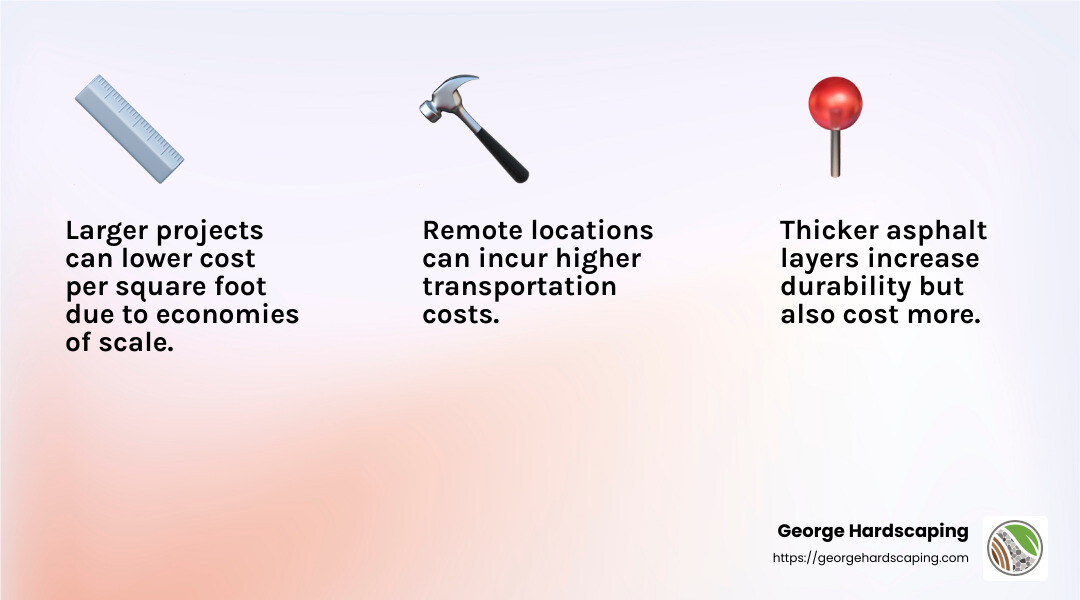
The size of your project is a major cost driver. Larger areas require more materials and labor, but benefit from economies of scale. This means the cost per square foot may decrease as the project size increases. For instance, paving a large commercial parking lot might be cheaper per square foot than a small residential driveway.
Asphalt Thickness
The thickness of the asphalt layer is crucial for durability and performance, especially in high-traffic areas. Residential driveways usually have a thinner layer than commercial lots, which need to withstand heavier loads. Thicker asphalt layers cost more due to increased material use, but they also last longer and reduce maintenance needs.
Location
Your project’s location can significantly impact costs. Regional differences in material and labor costs are common. Additionally, remote or hard-to-reach sites might incur extra transportation or equipment costs. For example, a project in a dense urban area might be more expensive than one in a nearby suburb.
Preparation Work
Proper site preparation is essential for a successful asphalt paving project. This includes grading, leveling, and base layer installation. If existing pavement needs removal or the terrain is challenging, preparation costs can rise. Investing in thorough preparation ensures a long-lasting and quality pavement.
Asphalt Mix Type
The type of asphalt mix you choose also affects the cost. Hot Mix Asphalt (HMA) is common for its durability but can be pricier than Cold Mix Asphalt, which is used for temporary fixes. Consider the specific needs of your project, such as climate and traffic, when selecting a mix.
Labor and Equipment
Labor costs are a significant portion of the paving budget. Hiring experienced contractors is crucial for a quality outcome. The type of equipment used can further influence costs. Specialized machinery or intensive labor requirements increase expenses. It’s essential to choose a contractor who can efficiently manage the scope and complexity of your project.
By understanding these factors, you can make informed decisions and manage your asphalt paving project budget more effectively. This knowledge helps ensure that you get the best value and quality for your investment.
In the next section, we’ll address some common questions about asphalt paving, including cost comparisons with other materials and the expected lifespan of asphalt surfaces.
Frequently Asked Questions about Asphalt Paving
Is asphalt paving cheaper than concrete?
Yes, asphalt paving is generally cheaper than concrete. The initial installation costs for asphalt range from $7 to $13 per square foot, whereas concrete can cost between $10 to $70 per square foot, depending on customization.
Asphalt is especially cost-effective for larger projects due to economies of scale. While concrete offers more aesthetic options, like coloring and stamping, asphalt is straightforward and quick to install, saving both time and money.
How long does asphalt paving last?
The lifespan of asphalt paving can vary, but typically, it lasts between 15 to 30 years. The longevity depends on factors like the thickness of the asphalt layer, the amount of traffic, and regular maintenance.
Performing routine maintenance, such as sealing every three to five years, can extend the life of an asphalt surface. Proper site preparation and choosing the right asphalt mix for the climate and use can also help maximize durability.
What is the difference between paving and asphalt?
Paving is a broad term that refers to the process of laying down a hard surface, which can be made of various materials like asphalt, concrete, or pavers. Asphalt paving, specifically, uses a mix of bitumen and aggregates to create a smooth and durable surface.
The composition of asphalt includes a binding agent called bitumen, which holds together aggregates like sand, gravel, or crushed stone. This blend makes asphalt flexible and ideal for roads and driveways. In contrast, concrete paving uses cement as the binder, resulting in a more rigid but often more durable surface.
Understanding these differences can help you choose the right material for your project, balancing cost, durability, and appearance.
Conclusion
As we wrap up our discussion on asphalt paving, it’s clear that this material offers a multitude of benefits, from cost-effectiveness to environmental friendliness. At George Hardscaping, we pride ourselves on delivering top-notch quality and craftsmanship to the North Shore of Massachusetts.
Located across Essex County—including towns like Beverly, Gloucester, and Salem—we specialize in enhancing outdoor spaces with precision and care. Our commitment to quality ensures that every project, whether it’s a driveway, walkway, or patio, meets the highest standards.
Choosing asphalt paving with us means choosing a durable, budget-friendly option that doesn’t compromise on appearance or functionality. Our expert team is dedicated to crafting surfaces that stand the test of time, while adding value and beauty to your property.
For more details on our services and how we can transform your outdoor space, explore our hardscaping services. We look forward to helping you pave the way to success!
