
How to build outdoor fireplace with bricks: 1 Stunning DIY
The Heart of Your Backyard Oasis
Learning how to build an outdoor fireplace with bricks is a transformative project that elevates your backyard from a simple patch of grass into the ultimate gathering spot and a true extension of your home. Imagine crisp autumn evenings spent around a crackling fire, the warmth pushing back the chill as you share stories and laughter with loved ones under the stars. Picture summer nights, where the gentle glow of the embers provides the perfect ambiance for quiet conversation.
This isn’t just a structure; it’s the heart of your backyard oasis, a magnetic centerpiece that draws people together. Beyond the undeniable ambiance, a well-built outdoor fireplace is a sound financial investment, with studies suggesting it can boost your property value by as much as 12 percent by creating a highly desirable, functional outdoor living room.
Quick Answer: How to Build an Outdoor Fireplace with Bricks
- Plan and Permit: The crucial first step. Research local building codes, secure all necessary permits, and select a safe location at least 10-25 feet from any structures, trees, or overhead lines.
- Build Foundation: A solid base is non-negotiable. Excavate 8-12 inches deep (or below your local frost line), pour a steel-reinforced concrete slab, and allow it to cure properly for a minimum of 48-72 hours.
- Construct Firebox: This is the high-heat core. Use specialized fire bricks and high-temperature refractory mortar to build the heat-resistant interior where the fire will burn.
- Lay Exterior Walls: Build the visible structure around the firebox using standard common or face bricks and Type S mortar, typically in a classic running bond pattern for strength and aesthetics.
- Build Smoke Chamber: This critical component funnels smoke efficiently. Corbel (angle) the bricks inward above the firebox to smoothly transition the space from the large firebox opening to the smaller chimney flue.
- Install Chimney: Stack ceramic flue liners to create a safe, smooth path for smoke. Build the exterior chimney stack around the liner, extending it to a safe height and finishing with a protective chimney cap and spark arrestor.
- Finish and Cure: Add personal touches like a mantel or hearth. Most importantly, allow the entire structure to cure for a full 30 days before introducing small, initial fires to temper the masonry.
An outdoor fireplace is far more than a simple heat source; it’s a powerful architectural statement that defines your outdoor living space. While a professional installation can be a significant investment, often costing between $3,000 and $15,000, a dedicated DIYer can tackle the project for approximately $1,300 to $2,000 in materials.
This hands-on approach not only offers substantial savings but also grants you complete creative freedom over the final design. This comprehensive guide will walk you through every critical step, from pouring a bulletproof foundation to applying the final finishing touches, ensuring your handcrafted fireplace stands as a proud and durable centerpiece for decades to come.
Planning Your Build: Safety, Codes, and Design
Intelligent, thorough planning is the bedrock of a successful and safe outdoor fireplace project. Before a single bag of mortar is mixed, it’s absolutely critical to navigate the complex web of safety requirements, local building regulations, and design considerations. This foundational phase doesn’t just set you up for a smoother build; it ensures your finished fireplace is safe, legal, and perfectly integrated into your landscape.
Essential Safety Precautions and Local Regulations
When dealing with the combined forces of fire and thousands of pounds of masonry, safety is paramount. There is zero room for cutting corners or making assumptions.
- Location and Clearances: Position your fireplace a minimum of 10 feet away from your house, combustible fences, sheds, and deck railings. A 25-foot clearance is even better and often required for structures of a certain size. This distance accounts for radiant heat and the potential for stray embers. Equally important is looking up: check for overhead obstructions like low-hanging tree branches, power lines, or the eaves of your roof.
- Underground Utilities: Before you even think about digging, you must call 811. This free, federally mandated service coordinates with local utility companies to mark the approximate location of underground water, gas, and electrical lines. Hitting a utility line is not just a project-ending mistake; it’s a dangerous, expensive, and potentially fatal accident. This is required by law in every state.
- Building Permits: The vast majority of municipalities require a building permit for a permanent structure like a masonry fireplace. The permitting process involves submitting your design plans to your local building department for review. They will verify that your plans comply with safety standards, such as those found in the International Residential Code (IRC), which dictates footing depth, chimney height, material specifications, and required clearances. Attempting to build without a permit can result in hefty fines, a stop-work order, or even a court order to demolish the structure.
- HOA and Neighborhood Rules: If you live in a community with a homeowners association (HOA), you must review their covenants. They may have specific restrictions on the size, style, materials, or location of outdoor structures to maintain a uniform aesthetic.
- Frost Line Depth: Your foundation must extend below your region’s frost line. The frost line is the depth to which the ground freezes in winter. Water in the soil expands when it freezes, and if this happens beneath your foundation, the upward pressure (known as “frost heave”) can lift, tilt, and crack your entire fireplace. You can check your local frost line depth to prevent heave online or confirm it with your building department.
- Prevailing Winds: Spend some time in your yard observing the typical wind patterns. You want to orient the fireplace opening so that smoke is directed away from your primary seating area, open windows, and your neighbors’ property.
- Fire Safety Equipment: Your local fire code likely requires readily accessible fire suppression equipment. Plan to keep a fire extinguisher (Class A), a charged garden hose, or a bucket of sand nearby whenever the fireplace is in use.
Choosing Your Fireplace Design and Location
With the non-negotiable safety and legal aspects addressed, you can move on to the creative phase of design. Brick is a wonderfully versatile material that can be adapted to suit nearly any architectural style, from rustic to contemporary.
- Architectural Style: Traditional designs evoke a timeless, classic feel with features like a gracefully arched firebox opening, a substantial hearth, and decorative corbelling. For a more rugged, informal look, you might draw inspiration from a wood burning fire pit and incorporate natural stone accents. Modern designs often emphasize clean lines, minimalist forms, and geometric shapes. They might feature a long, linear firebox and incorporate a mix of materials like brick, smooth-finished concrete, and stainless steel.
- Placement and Integration: A freestanding fireplace can serve as a dramatic focal point in a large yard, creating a destination and anchoring an entire outdoor room. An attached design, built against a retaining wall or as part of a larger structure, can help define the edge of a patio and fireplaces area. Consider how the fireplace will integrate with your overall landscape plan. Use it to create sight lines, improve traffic flow, and complement existing features like your backyard fire pit ideas.
- Functionality and Features: Is this fireplace purely for ambiance, or do you envision cooking over the flames? You can incorporate features like a removable grill grate for cooking or even design a more complex structure with a built-in pizza oven. Integrated wood storage, in the form of built-in cubbies or “wood boxes,” is both a practical and aesthetically pleasing feature that adds mass and visual interest.
- Scale and Proportion: The size of your fireplace must be proportional to your yard and patio. A massive, towering structure can easily overwhelm a small, intimate patio, while a diminutive fireplace can get lost and feel insignificant in a sprawling backyard. Before you finalize your plans, use stakes and string to outline the fireplace’s footprint in your chosen location. This simple step helps you visualize the scale and ensure it feels right in the space.
Gathering Your Arsenal: Materials and Tools
With a detailed plan approved and in hand, it’s time to transition from designer to quartermaster. Assembling all the necessary materials and tools for your how to build outdoor fireplace with bricks project before you begin is a critical step. A well-organized job site prevents momentum-killing trips to the hardware store and ensures a smoother, more efficient, and more enjoyable construction process.
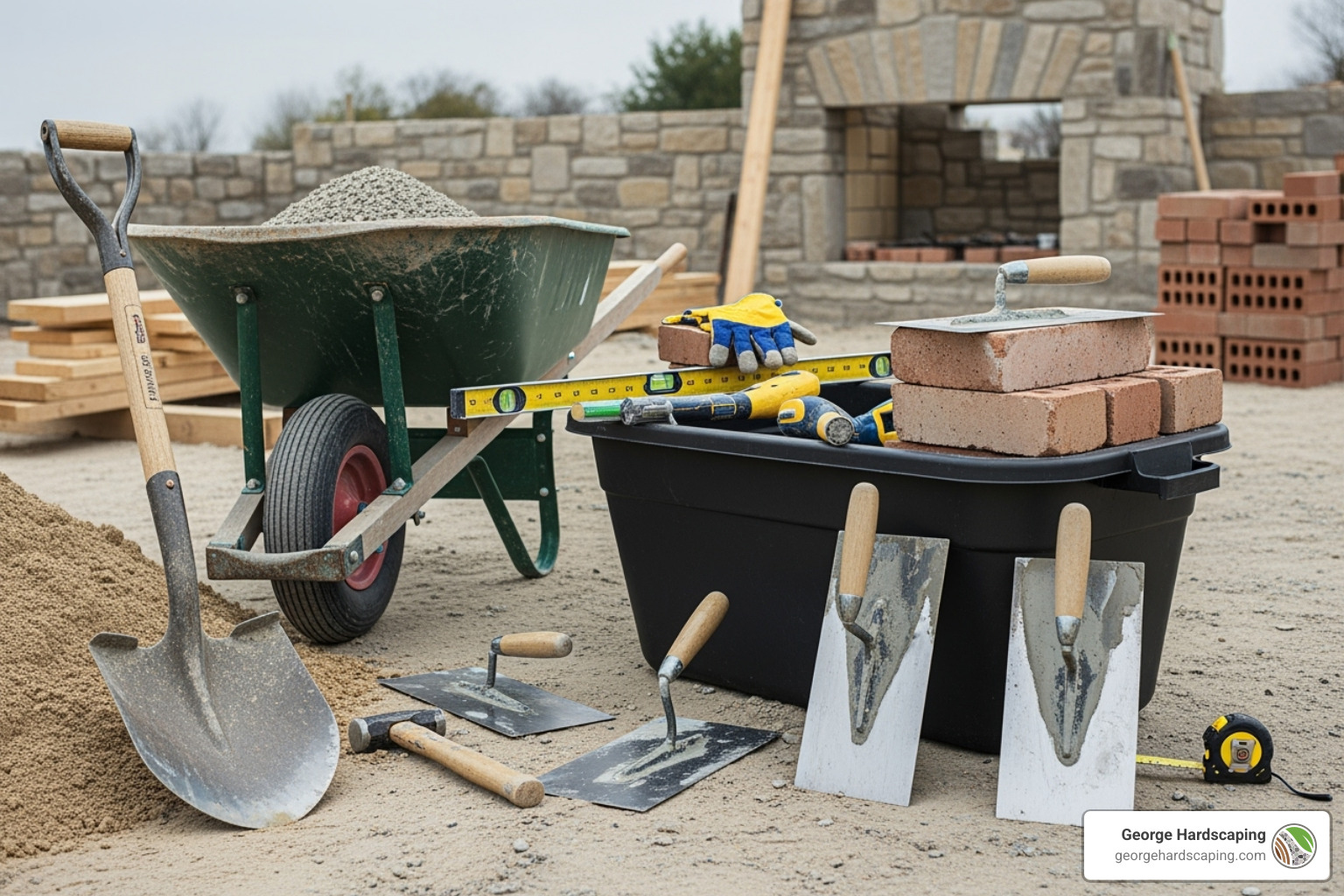
Essential Materials for a Durable Fireplace
For a structure that must endure the dual stresses of intense internal heat and harsh external weather, choosing high-quality materials is non-negotiable. This is where you invest in longevity.
- Fire Bricks (Refractory Bricks): These are the most important component. Specially manufactured with clays like fireclay and kaolin, they are kilned at extreme temperatures to withstand the thermal shock of a roaring fire up to 1,800°F and beyond. They are used exclusively for the firebox interior (the floor and walls that contact the fire).
- Common or Face Bricks: These form the exterior “skin” of the fireplace and define its aesthetic. Face bricks are higher quality and have a more uniform color and texture, while common bricks can offer a more rustic look. Choose a color and style that complements your home and landscape.
- Refractory Mortar: This is a high-temperature, cement-like product specifically designed to be used with fire bricks. It’s a pre-mixed, air-drying cement that can withstand the same high temperatures as the fire bricks. Standard mortar would rapidly degrade, crack, and fail under the heat of a fire, leading to a structural collapse.
- Type S Mortar Mix: This is the standard for laying the exterior common bricks. Type S mortar has a high compressive strength (at least 1800 psi) and superior bond strength, making it ideal for outdoor structures at or below grade. Its durability is essential for withstanding freeze-thaw cycles and supporting the heavy masonry load. Our professional masonry services rely on these high-grade materials for all structural applications.
- Foundation Materials: You will need bags of ready-mix concrete (a 4000 psi mix is recommended), all-purpose gravel or 3/4″ crushed stone for the sub-base, and steel reinforcement in the form of a rebar grid or wire mesh.
- Structural Components: A steel lintel (typically a 3×3 or 4×4 piece of angle iron, 1/4″ thick) is required to span the firebox opening and support the heavy masonry above it. Ceramic flue liners (e.g., 13″x13″) are stacked to form a continuous, smooth, and safe channel for smoke to exit. A chimney cap with a spark arrestor is the final piece, preventing rain from entering the flue and stopping hot embers from escaping and landing on your roof or yard.
For a standard DIY build, the total material cost typically averages between $1,300 and $2,000. This includes approximately $200 for the concrete foundation, $75 for the gravel base, and $700-$1,200 for the fireplace components (bricks, mortar, flue, etc.), with the remainder for framing lumber and finishing materials. This represents a massive saving compared to professional installation, which can range from $3,000 to $15,000 or more.
The Right Tools for the Masonry Job
Having the right tools not only makes the work more professional but also safer and more enjoyable. Many of the larger, more specialized items can be rented from a local tool supply shop if you don’t own them.
- Digging & Mixing: Heavy-duty shovel, wheelbarrow, large concrete mixing tub or a rented power concrete mixer, mortar hoe.
- Laying & Leveling: Mason’s trowel (10-12 inch), pointing trowel, 4-foot level, torpedo level, framing square, mason’s line and line blocks, story pole (a DIY measuring stick for consistent course heights), and a rubber mallet for tapping bricks into place.
- Cutting: A brick hammer and brick set chisel for rough cuts and splitting blocks. For clean, precise, and numerous cuts, a rented wet saw with a diamond blade is essential and well worth the cost.
- Finishing & Safety: Safety glasses (non-negotiable), heavy-duty work gloves, a jointing tool (e.g., concave or V-shaped) for finishing the mortar joints, a measuring tape, chalk line, stiff-bristled brush, and a soft-bristled brush and sponge for final cleanup.
How to Build an Outdoor Fireplace with Bricks: The Step-by-Step Construction Process
This is where your meticulous planning and carefully gathered materials transform into a lasting, physical structure. Building an outdoor fireplace is a marathon, not a sprint. It demands patience, precision, and a methodical approach. By taking your time, constantly checking your work for level and plumb, and trusting the process, you can achieve a professional-quality outcome for your outdoor project.
Step 1: The First Step in How to Build an Outdoor Fireplace with Bricks: The Foundation
A typical outdoor fireplace can weigh between 5,000 and 20,000 pounds. A robust, steel-reinforced concrete foundation isn’t just recommended; it’s absolutely mandatory for long-term stability and safety.
- Excavate: Mark the foundation’s footprint on the ground using stakes and string. The slab should be at least 6 inches wider than the fireplace base on all sides. Dig down to a depth of 12 inches, or deeper if required to get below your local frost line. Ensure the bottom of the trench is level and compacted, removing all roots, large rocks, and loose soil.
- Build Formwork: Construct a sturdy wooden frame around the perimeter of the excavation using 2×4 or 2×6 lumber. Screw the corners together and brace the form from the outside with stakes driven into the ground. Use a level to ensure the top of the form is perfectly level in all directions. To confirm it’s square, measure the diagonals; they should be identical.
- Add Gravel Base: Fill the bottom of the form with a 4- to 6-inch layer of all-purpose gravel or crushed stone. Spread it evenly and compact it thoroughly with a hand tamper. This base provides drainage and prevents the concrete from settling.
- Place Reinforcement: Lay a grid of #3 or #4 rebar over the gravel, spaced about 12-18 inches apart and tied together at the intersections with wire. Use small brick pieces or plastic “chairs” to elevate the rebar grid so it sits in the middle of the concrete’s thickness, not at the bottom. This is where the slab gets its tensile strength.
- Pour Concrete: Mix your concrete according to the manufacturer’s instructions to a consistent, workable slump (not too wet, not too dry). Pour it into the form, using a shovel or hoe to push it into all corners. Overfill the form slightly.
- Screed and Finish: Lay a straight 2×4 across the top of the forms and, using a back-and-forth sawing motion, pull it toward you to screed off the excess concrete and create a flat surface. Once the water sheen disappears, use a magnesium float to smooth the surface.
- Cure: The concrete must cure to gain strength. For the first 3-5 days, keep the surface damp by misting it with water or covering it with plastic sheeting. You must wait at least 48-72 hours before you can begin laying bricks. This initial curing is essential for the strength demanded by professional stone masonry services.
Step 2: Building the Firebox – The Heart of Your Fireplace
The firebox contains the intense heat and must be constructed entirely from specialized refractory materials.
- Mark the Footprint: On the cured concrete slab, use a chalk line and square to precisely draw the outline of your firebox walls.
- Lay the Firebox Floor: Using high-temperature refractory mortar, lay a solid floor of fire bricks. Apply a thin, full bed of mortar and “butter” the edge of each brick before setting it. Keep the mortar joints very thin (1/8 to 1/4 inch) and ensure the entire floor is perfectly level.
- Build the Walls: Construct the three walls of the firebox with fire bricks and refractory mortar. For better heat radiation out into your seating area, the side walls should be splayed (angled slightly outward from back to front). The back wall is often built vertically or with a slight forward slope. Use your level constantly to ensure the walls are plumb (perfectly vertical).
- Install the Lintel: Place a heavy-duty steel lintel across the top of the firebox opening. This is a critical structural element. The lintel must have at least 4 to 6 inches of bearing on the masonry on each side to safely support the immense weight of the chimney above. This is a key safety feature for any custom firepit.
Step 3: Laying Bricks for the Base and Walls
Now you’ll build the visible exterior of the fireplace using your chosen common or face bricks and standard Type S mortar.
- Mix Mortar: Prepare your Type S mortar to a smooth, peanut-butter-like consistency. Mix only as much as you can use in about 30-45 minutes, as it will begin to harden.
- Lay the First Course: Start at the corners. Spread a 1-inch bed of mortar on the foundation and firmly press the first course of bricks into it, leaving a consistent 3/8-inch joint between them. This first course is the most important; use your level and square to ensure it is perfect.
- Build Up the Walls: Continue laying courses, typically in a running bond pattern where each brick overlaps the joint below it by half. Use a mason’s line stretched between the corners to keep your courses perfectly straight and level. Constantly check your work with a level, both horizontally on the courses and vertically on the faces of the walls.
- Tool the Joints: When the mortar has set to a “thumbprint hard” consistency (you can press your thumb into it and it leaves a print but doesn’t stick), use a jointer tool to compress and smooth the joints. This creates a clean, professional look and makes the joints more weather-resistant.
Step 4: Constructing the Smoke Chamber and Chimney
This engineered system is designed to draw smoke up and out efficiently. Its proportions are crucial for a fireplace that drafts properly and doesn’t spill smoke into your patio area.
- Form the Smoke Chamber: Directly above the firebox and lintel, you must create a funnel-shaped transition called the smoke chamber. This is done by corbelling the bricks—angling each course inward over the one below it by about 1/2 to 3/4 of an inch. The goal is to smoothly narrow the opening down to the dimensions of your flue liner. A key component here is the smoke shelf, a horizontal surface behind the start of the chamber that helps prevent downdrafts.
- Install the Flue Liner: Set the first section of your square ceramic flue liner onto the top of the smoke chamber, securing it with refractory mortar. As you build the chimney, stack subsequent flue sections, mortaring the joints between them to create a continuous, gas-tight channel for smoke.
- Build the Chimney Stack: Continue laying the exterior bricks around the flue liner. It is critical to leave a 1-inch air gap between the outside of the ceramic flue liner and the inside of the brick chimney stack. This gap allows for differential thermal expansion—the flue will get much hotter than the surrounding brick, and this space prevents it from cracking the chimney structure.
- Achieve Proper Height and Add Cap: The chimney must be tall enough to create a proper draft. A general rule, often called the “2-10 rule,” is that the chimney should extend at least 2 feet higher than any part of the structure within a 10-foot radius. For more specific guidance, consult the National Fire Protection Association (NFPA) 211 Standard. Finish by mortaring a concrete or stone cap on top, then install a chimney cap with a built-in spark arrestor to keep out rain, animals, and debris while preventing hot embers from escaping.
Finishing Touches and Ensuring Longevity
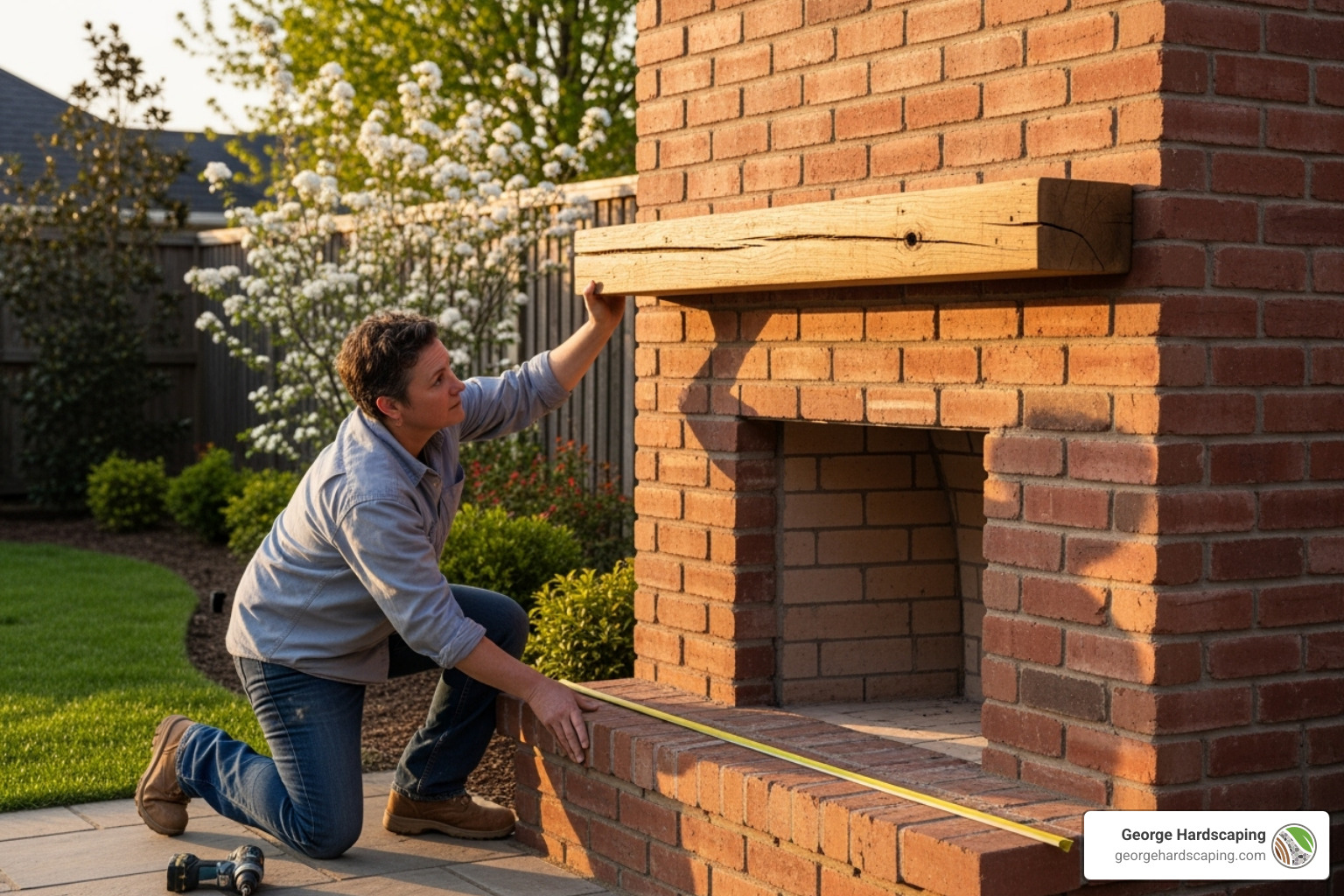
With the heavy construction complete, your project is standing tall, but it’s the finishing touches that will elevate your how to build outdoor fireplace with bricks project from a functional structure to a stunning, personalized centerpiece. Just as important, proper curing and ongoing maintenance from this point forward will ensure it serves your family with warmth and beauty for generations.
Enhancing Appearance with Design Elements
These details infuse personality and add functionality, transforming the fireplace into a feature that is uniquely yours.
- Add a Mantel: A mantel provides a classic focal point and a shelf for seasonal decor. A thick, reclaimed wooden beam offers rustic charm, while a single slab of natural stone or a pre-cast concrete mantel lends a more polished or modern look. If using a combustible wood mantel, you must adhere to strict safety codes regarding its distance from the firebox opening (typically at least 12 inches).
- Build a Raised Hearth: Extending the fireplace base forward and capping it with stone or brick creates a raised hearth. This feature not only enhances the visual weight and presence of the fireplace but also provides convenient, informal seating close to the warmth of the fire.
- Incorporate Wood Storage: Designing built-in cubbies (often called wood boxes) on one or both sides of the firebox is both practical and aesthetically pleasing. These recesses keep a ready supply of firewood neat, dry, and accessible while adding architectural interest and mass to the overall design.
- Seal or Paint: To protect your investment, consider applying a high-quality, breathable masonry sealer. Unlike a paint or film-forming sealer, a penetrating silane/siloxane sealer soaks into the brick and allows moisture vapor to escape, preventing spalling (flaking) caused by trapped water freezing. For a different aesthetic, you can apply a limewash or a German schmear for an aged, old-world look, or use specialized masonry paint to match your home’s color scheme. These final details are what create truly custom fire pits that reflect your personal style.
Key Considerations for How to Build an Outdoor Fireplace with Bricks That Lasts
Proper care, starting immediately after construction, is essential for the long-term health and durability of your masonry fireplace.
- Curing is Absolutely Critical: This is arguably the most important step for long-term durability, and it requires patience. You must wait at least 30 days for the standard and refractory mortars to fully cure and develop their design strength. Rushing this step can lead to catastrophic failure.
- Temper the Masonry: Your first fires must be small and short. This process, called tempering, gradually introduces heat to the new masonry, driving out any remaining residual moisture slowly and preventing thermal shock that can crack the fire bricks and mortar. Start with a small kindling fire for 30-60 minutes, let the fireplace cool completely, and repeat this process 3-5 times over a week, gradually increasing the fire’s size and duration.
- Protect it in Winter: In climates with freezing temperatures, protecting your fireplace from moisture is key. Cover it with a custom-fit waterproof cover or a heavy-duty tarp during the off-season. This prevents water from seeping into tiny, invisible cracks in the mortar, freezing, expanding, and causing significant damage (spalling).
- Perform Annual Inspections: Each spring, before its first use, give your fireplace a thorough inspection. Look for any cracks in the bricks or crumbling, receding mortar joints, particularly on the cap and upper chimney areas exposed to the most weather.
- Make Minor Repairs Promptly: If you find damaged mortar joints, it’s crucial to make repairs early. The repair process, known as repointing or tuckpointing, is straightforward. The same techniques used for how to repoint brick steps apply here. Carefully scrape or grind out the old, damaged mortar and pack fresh Type S mortar into the joint to keep the structure sound and watertight.
- Clean Regularly: Remove cooled ashes from the firebox after every few uses to maintain airflow and prevent corrosion. At least once a year, inspect the flue and chimney cap for soot buildup (creosote), animal nests, or other debris that could create a fire hazard or block the draft.
DIY vs. Professional Installation: Making the Right Choice
One of the most significant decisions you’ll face is whether to build your own outdoor fireplace or to hire a professional mason. The right choice hinges on a realistic assessment of your budget, available time, personal skill set, and the complexity of your desired design. Answering the question of how to build outdoor fireplace with bricks yourself requires an honest look at the full scope of this demanding but rewarding undertaking.
The Advantages of a DIY Outdoor Fireplace Build
For the handy homeowner with time, determination, and a willingness to learn, a DIY build offers several compelling benefits:
- Significant Cost Savings: This is the primary motivator for most. With material costs typically falling between $1,300 and $2,000, you can save thousands, if not tens of thousands, of dollars compared to a professional installation, which often starts around $3,000 for a basic model and can easily exceed $15,000 for more complex designs.
- Complete Creative Control: As the designer and builder, you have the final say on every single detail. From the specific type and color of brick to the bonding pattern, the mantel material, and the hearth size, the final product will be a perfect reflection of your personal vision.
- Immense Sense of Accomplishment: There is a unique and profound satisfaction that comes from building a permanent, beautiful, and functional feature with your own two hands. It’s a legacy project that you and your family can take pride in for many years to come.
- Valuable Skill Development: Throughout this project, you will learn and master fundamental masonry skills—properly mixing mortar, laying bricks to a line, keeping courses level and plumb, and finishing joints. These are valuable skills that can be applied to many future home improvement projects.
When to Call an Outdoor Fireplace Builder
While the rewards of DIY are great, there are many situations where hiring a professional is the wiser, safer, and more efficient choice:
- Complex or Ambitious Designs: If your vision includes intricate brickwork like arches or herringbone patterns, a combination of materials like stone and brick, a built-in pizza oven, or other advanced architectural elements, the expertise of a seasoned mason is invaluable to execute it correctly.
- Severe Time Constraints: A DIY fireplace is not a weekend project. For a novice, it can easily consume several consecutive weekends or more. If you have a tight deadline for a specific event or simply a busy schedule, a professional crew can complete the job in a fraction of the time.
- Structural and Safety Guarantees: Professional masons have a deep understanding of local building codes, soil mechanics, and structural load-bearing requirements. They carry liability insurance and worker’s compensation, and they typically guarantee their work. This provides invaluable peace of mind that the structure is 100% safe, compliant, and built to last.
- Physical Demands of the Work: Do not underestimate the labor involved. Masonry is physically strenuous, involving repetitive heavy lifting of bricks and mortar bags, bending, and kneeling for long periods. If you have physical limitations or simply prefer to avoid the intense manual labor, hiring a pro is the best option.
If you’re leaning towards a professional build, it’s crucial to partner with experienced outdoor fire pit builders who can bring your vision to life flawlessly and safely. Contact George Hardscaping today for a professional, no-obligation consultation and let our team of expert masons design and build the stunning outdoor fireplace of your dreams.
Conclusion: Enjoy Your Handcrafted Masterpiece
There is a unique and deeply satisfying magic in gathering around a fire you built, in a fireplace you crafted with your own hands, brick by brick. The journey of learning how to build outdoor fireplace with bricks is about far more than just construction; it’s about creating a lasting legacy of warmth, community, and togetherness for your family and friends.
The gentle crackle of logs and the radiant glow of the flames will now serve as the backdrop for countless future memories—from lively summer parties to quiet, contemplative autumn evenings. You have not only added significant tangible value and stunning beauty to your home, but you have also forged a cherished gathering place that will draw people in for years to come. Every single brick you laid, every joint you tooled, stands as a testament to your patience, hard work, and dedication. The satisfaction of looking at the finished structure and saying, “I built that,” is a reward that will never fade.
Your new fireplace will stand as a durable and beautiful centerpiece in your yard, weathering the seasons and hosting celebrations for decades. The skills, knowledge, and confidence you’ve gained through this process are invaluable assets that will serve you well in any future projects you decide to tackle.
If you’re in the North Shore, MA area and this project has inspired you to further enhance your outdoor living space, the expert team at George Hardscaping is ready to help you take the next step. We specialize in creating stunning, high-quality hardscapes, from elegant patios and walkways to breathtaking custom outdoor fire pits. We bring the same unwavering commitment to craftsmanship and detail to every project, ensuring your vision is brought to life with the highest level of professional care.
Contact us today for a complimentary consultation and let’s continue the transformation of your backyard into the complete, functional, and beautiful oasis you’ve always dreamed of.
