
Eco-Friendly Retaining Wall: Ultimate 2025 Guide
Embracing Green: The Eco-Friendly Retaining Wall Explained
An eco-friendly retaining wall is more than just a structure; it’s a commitment to thoughtful landscaping. These walls integrate sustainable materials and construction methods to minimize environmental impact while providing essential support and aesthetic appeal.
Here’s what defines an eco-friendly retaining wall:
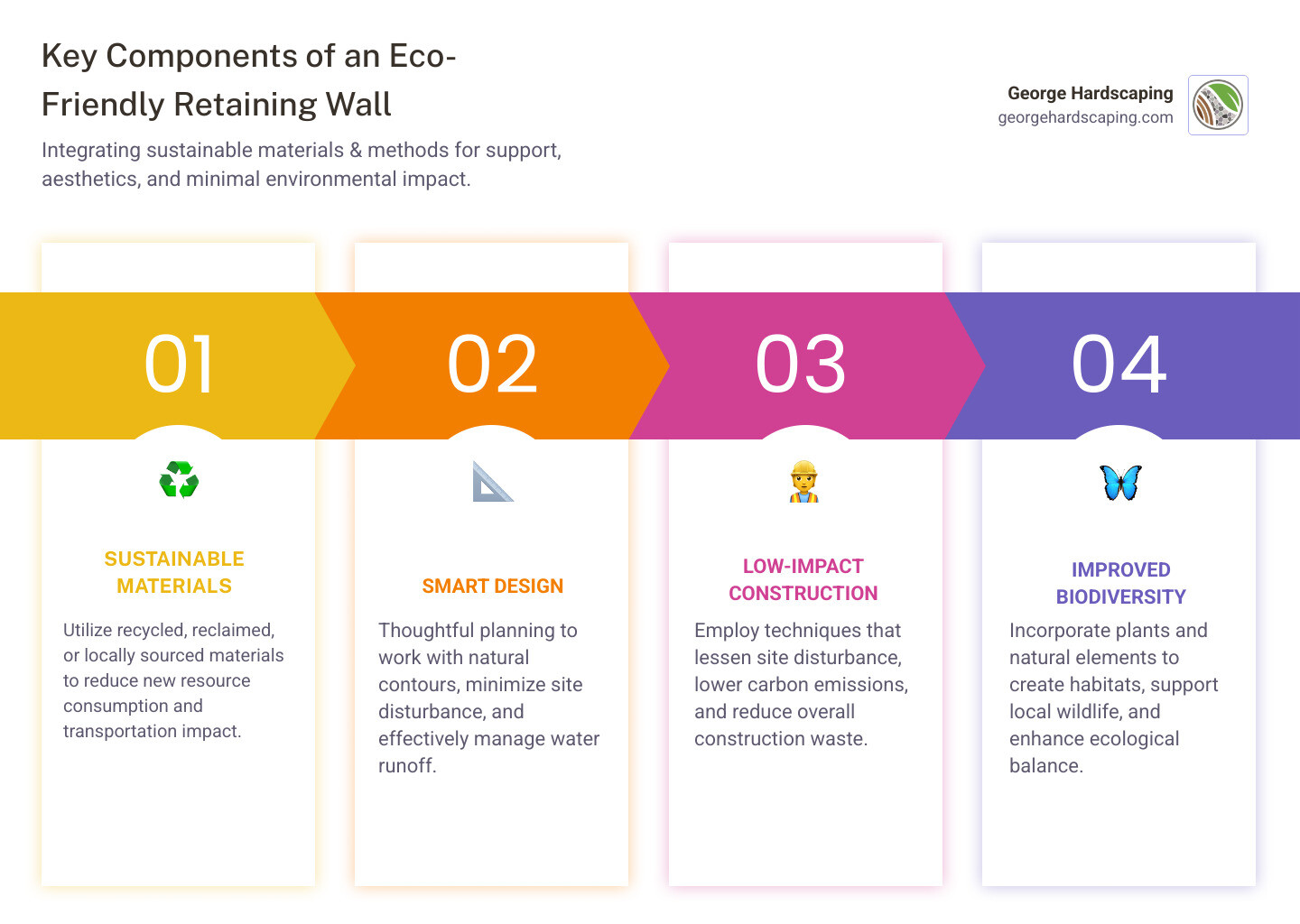
- Sustainable Materials: They use recycled, reclaimed, or locally sourced natural materials, which cuts down on new resource consumption and transportation emissions.
- Reduced Environmental Impact: Construction techniques are chosen to lessen site disturbance, lower the project’s carbon footprint, and manage water runoff effectively.
- Long-Term Value: These walls are often more durable and require less maintenance, saving resources and money over their lifespan.
- Improved Aesthetics & Biodiversity: Many eco-friendly options blend seamlessly with nature, often incorporating plants that support local wildlife and improve the landscape’s beauty.
For homeowners in Essex County, MA, dealing with sloped properties or looking to improve their outdoor spaces, choosing an eco-friendly option offers both beauty and peace of mind. It’s about building a structure that benefits your property and the planet.
Basic eco-friendly retaining wall terms:
The Foundation of Green Building: Sustainable Retaining Wall Materials
This section explores the core components that make a retaining wall truly sustainable, focusing on material selection that minimizes environmental impact while maximizing durability and aesthetic appeal.
Natural and Locally Sourced Options
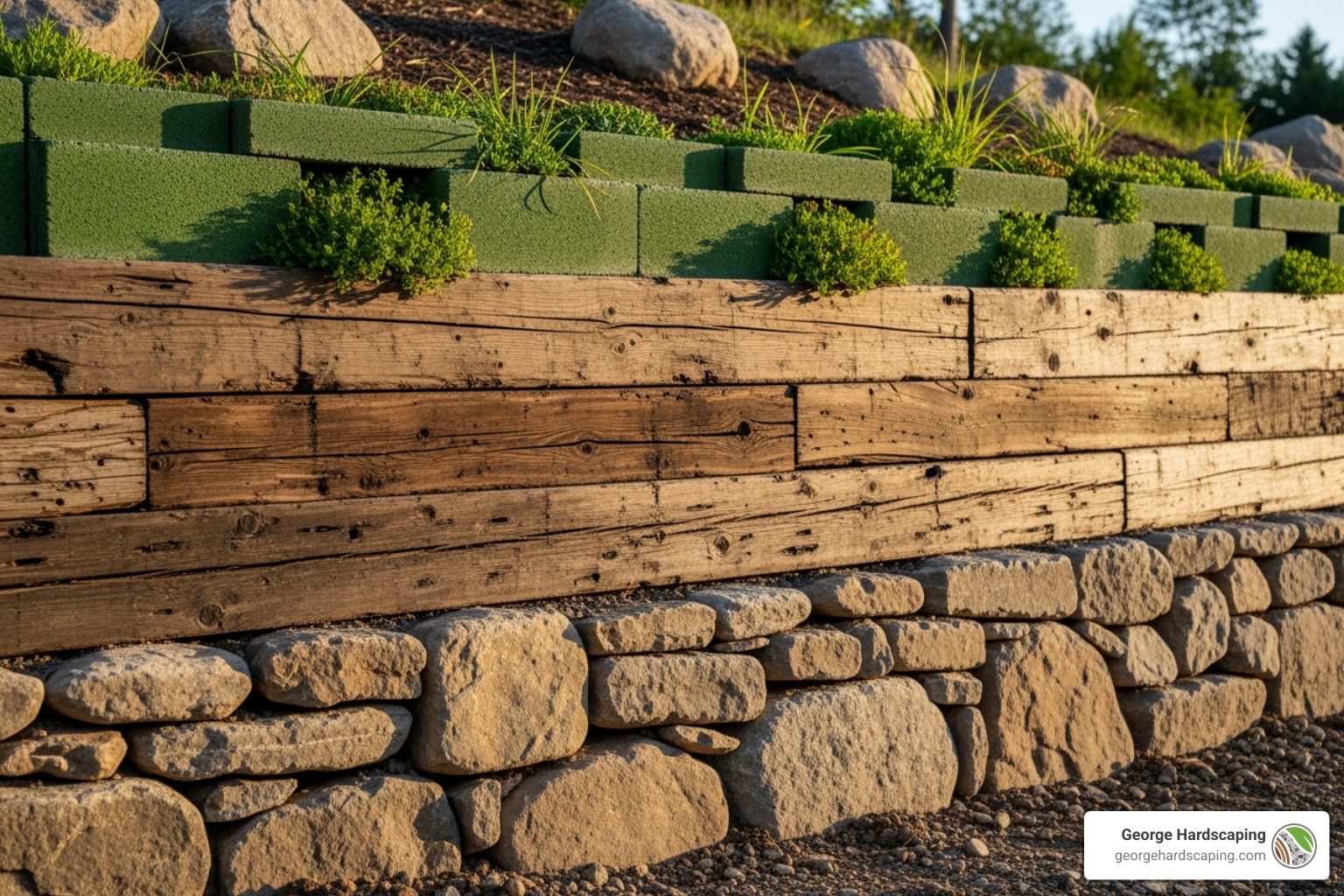
Using what’s close to home is a cornerstone of green building. Natural stone is a fantastic choice for an eco-friendly retaining wall. Materials like fieldstone or granite from local New England quarries offer incredible strength and a timeless beauty that blends perfectly with our landscape.
Sourcing locally reduces ’embodied energy’—the energy used to manufacture and transport materials. Fewer trucks on the road means lower carbon emissions. Natural stone is also exceptionally durable and requires minimal processing compared to man-made materials. Another great option is gabion walls, which are wire cages filled with local rocks, eliminating the need for concrete. Choosing these natural, local resources is a smart move for a strong wall and a healthier planet.
You can explore the possibilities of natural stone with our Boulder Retaining Wall Construction services.
Reclaimed and Recycled Materials
Giving old materials a new purpose is another key strategy for an eco-friendly retaining wall. This approach cleverly reduces waste and adds unique character to your project.
Using reclaimed wood or salvaged timber saves new trees and often provides a weathered look that new wood can’t replicate. When considering treated wood like old railroad ties, it’s important to be aware of the preservatives used. You can find more Information on creosote from the EPA to ensure materials are safe for residential use.
Recycled plastic lumber is a rising star in sustainable building. Made from recycled plastics, these walls are incredibly tough, resisting rot, mold, and insects, often lasting much longer than traditional wood.
Finally, recycled concrete aggregate is an excellent choice. Manufacturing new concrete is energy-intensive, so reusing concrete from old structures reduces demand for new materials. It can be used as a sturdy backfill or mixed into new concrete, lowering your project’s carbon footprint.
Key Material Choices for an Eco-Friendly Retaining Wall
Some of the most exciting sustainable options are living walls and vegetated systems, which use plants as a structural component to hold soil and manage water. These systems often use recycled materials themselves and blend naturally into the landscape.
Systems using cellular confinement (geocells) or geobags are designed to be filled with on-site soil and planted. As the plant roots grow, they interlock with the structure and soil, creating a strong, living network that gets tougher over time. These systems are excellent for controlling erosion, stabilizing slopes, and reducing rainwater runoff. Many are engineered to last for decades, with some designed for a 120-year lifespan, all while boasting a significantly lower carbon footprint than traditional concrete walls.
Another smart choice is plantable interlocking blocks. Manufacturers like Allan Block and Terraforce offer concrete blocks with hollow centers or special shapes that allow you to plant directly into the wall. This integrates the strength of concrete with the natural beauty and erosion-control benefits of vegetation. These systems create a living, breathing wall that is both durable and permeable, allowing water to pass through and reducing hydrostatic pressure.
These forward-thinking options help restore nature by creating habitats for plants and beneficial insects, boosting local biodiversity. They are a perfect fit for any garden lover, as seen in our Garden Retaining Wall services. You’ll see similar eco-friendly principles in systems like Permeable Driveway Pavers, where smart design meets environmental benefit.
Designing for Durability and a Lighter Environmental Footprint
A truly successful eco-friendly retaining wall isn’t just about materials; it’s also rooted in smart design and construction. This thoughtful process ensures your wall is strong, beautiful, and leaves a lighter footprint on the planet.
Smart Site Planning and Retaining Wall Design
Before any digging begins, smart site planning is essential. We conduct a thorough site assessment to understand the landscape, soil, and natural water flow. Instead of forcing a rigid structure onto your property, we work with its natural contours.
For a sloped yard, we might suggest terracing—building several smaller, shorter walls up the slope. This looks more natural and significantly reduces the pressure on each wall. This approach requires less excavation, minimizes site disruption, and allows us to preserve existing trees and vegetation. Their root systems are nature’s own engineers, helping to stabilize soil and making our Landscape Retaining Walls both robust and harmonious.
The Crucial Role of Drainage
Water buildup behind a retaining wall creates immense hydrostatic pressure, which is the leading cause of wall failure. Proper drainage is therefore vital for the longevity of any wall, especially an eco-friendly retaining wall.
We design our walls to manage water effectively, often using permeable backfill like gravel to allow water to pass through freely. We also incorporate French drains and perforated pipes to collect and guide excess water away safely. This not only protects your wall but also helps manage stormwater runoff, reducing erosion and potential flooding on your property. It’s a critical, often unseen, step in every project, from Gravity Retaining Wall Construction to all other walls we build.
Low-Impact Construction Techniques
Our commitment to an eco-friendly retaining wall extends through the entire construction process. We focus on minimizing our environmental footprint from start to finish.
This includes minimizing soil disturbance by carefully planning excavation. We also opt for smaller, more efficient equipment whenever possible to reduce fuel consumption and emissions. A key aspect of modern green construction is reusing on-site soil. Many innovative vegetated systems are designed to be filled with material already on your property. This dramatically cuts down on the need to import new fill and haul away excavated soil. For a large wall, this can reduce the number of truck trips from over 40 to fewer than five, significantly shrinking the project’s carbon footprint.
Finally, we implement robust erosion control measures like silt fences during construction to prevent soil runoff and protect nearby waterways. Every detail, from our precise Retaining Wall Construction Detail to the machinery we use, is carefully considered to ensure your project has the lightest possible touch on the environment.
Comparing Your Options: An Eco-Friendly Retaining Wall vs. Traditional Methods
Understanding the real differences between an eco-friendly retaining wall and conventional methods—in terms of cost, performance, and environmental impact—is key to making a choice you’ll be happy with for years to come.
Cost Analysis: Upfront vs. Long-Term Value
Thinking about the cost of a retaining wall is like buying a car; you have to consider the long-term value, not just the sticker price. While the initial cost for an eco-friendly retaining wall can sometimes be higher depending on the materials, the long-term savings often make it a very smart investment.
- Initial Investment: For some large-scale projects, certain green systems can have a lower initial cost than traditional methods like gabion walls, thanks to reduced labor and material transport needs.
- Material and Labor Costs: Eco-friendly choices often leverage recycled, local, or even on-site soil, which can reduce both material costs and the labor involved in hauling and placing heavy, manufactured blocks.
- Long-Term Savings: This is where eco-friendly walls truly shine. Natural stone is incredibly low-maintenance. Vegetated systems get stronger over time as their roots bind the soil, meaning fewer repairs. This durability translates directly into long-term savings.
While we can share average costs (for a general retaining wall project, the national average might range from around $1,677 to $6,765, often ranging from around $100 to $350 per linear foot), these are general estimates based on internet data and not the actual costs for George Hardscaping. Every project is unique, and we always provide a clear, custom quote. For more detailed information, check out our Retaining Wall Construction Cost guide.
Durability and Lifespan
It’s a myth that “eco-friendly” means “less tough.” When it comes to an eco-friendly retaining wall, many systems are designed to last for decades, if not centuries.
- Natural Stone: Walls built from granite or fieldstone are legendary for their longevity and can last for centuries, gaining character with age.
- Vegetated Systems: Living walls like those using Flex MSE are engineered to last over 120 years. The secret is the plants; as their roots grow, they create a strong, binding matrix that makes the wall more resilient. Other systems like Webwall also boast a life expectancy of over 50 years once vegetated.
- Recycled Materials: Recycled plastic lumber is incredibly durable, as it resists rot, mold, and insects, often outlasting traditional timber. Sustainable concrete products from brands like Allan Block and Terraforce are also built to withstand weathering over time.
In comparison, a traditional treated timber wall has a limited lifespan due to rot and pests, while rigid concrete walls can crack over time from ground movement. Our Concrete Retaining Wall Construction always focuses on maximizing durability, regardless of the material.
Aesthetics and Environmental Impact
Beyond its structural function, an eco-friendly retaining wall offers immense benefits for your property’s appearance and the planet.
- Natural Integration: Eco-friendly walls blend into the landscape. Vegetated walls become living tapestries that change with the seasons, offering a soft, organic beauty that manufactured blocks cannot replicate. Natural stone provides a timeless feel that perfectly complements the New England aesthetic.
- Promoting Biodiversity: Your wall can become a small sanctuary. Living walls create habitats for local plants, beneficial insects like bees and butterflies, and other wildlife, supporting local pollination and ecological health. This aligns with our holistic approach to Hardscaping And Landscaping.
- Carbon Footprint Reduction: By choosing recycled or local materials and reusing on-site soil, we drastically reduce the carbon emissions associated with your project.
- Water Management: Many eco-friendly systems are permeable, allowing rainwater to soak into the ground. This helps replenish groundwater, reduces stormwater runoff, and naturally filters pollutants.
Challenges and Practical Tips for Your Project
While the benefits are clear, building a sustainable retaining wall has unique considerations. Here’s how to steer potential challenges and ensure a successful outcome.
Overcoming Potential Limitations
Building an eco-friendly retaining wall can present a few unique puzzles. Sourcing the perfect sustainable material can sometimes be a challenge, as some specialized products may not be available locally. However, we are adept at tracking down the ideal options for your project.
Additionally, many of these systems require specialized installation skills, especially engineered vegetated walls. These are not typical DIY projects, and professional expertise is needed to ensure long-term stability. Our team’s experience ensures your wall is built correctly from the ground up.
Finally, local building codes and permits are always a factor. While a small garden wall under four feet might not need a permit, taller structures typically require official approval. We’ll help you steer these requirements for any project, including Large Retaining Wall Construction, to ensure full compliance.
Your Eco-Friendly Retaining Wall Checklist
To ensure your project is a success, follow this simple checklist:
- Assess your site and goals: Understand your property’s needs, from erosion control to creating a new patio space.
- Research sustainable materials: Explore options like natural stone, reclaimed materials, or vegetated systems to find what best fits your aesthetic and values.
- Create a smart design: Plan a design that works with your landscape, incorporates proper drainage, and minimizes excavation.
- Check local building codes: We can help you determine if permits are needed for your wall’s height and location in towns like Beverly, Danvers, or Ipswich.
- Hire an experienced hardscaping contractor: Partner with professionals who understand eco-friendly practices and have a proven track record.
Maintaining Your Green Investment
A little regular care will ensure your eco-friendly retaining wall lasts for decades.
- Regular Inspection: Periodically check for any signs of settling, bulging, or erosion to catch small issues early.
- Vegetation Management: For living walls, keep plants healthy. Trim overgrowth and replant any bare spots to ensure continuous root coverage and stability.
- Clear Drainage Systems: Keep drainage paths free of leaves and debris to prevent water pressure from building up behind the wall.
With consistent maintenance, your wall will perform beautifully for years to come. Our Hardscaping Services include support to help you keep your green investment in top shape.
Frequently Asked Questions about Eco-Friendly Retaining Walls
Curious about making the green choice for your landscape? Here are answers to some common questions about eco-friendly retaining walls.
What is the most durable eco-friendly retaining wall material?
While proper installation is crucial for any wall, some eco-friendly materials offer exceptional durability. Natural stone, such as locally sourced granite or fieldstone, can last for centuries. Additionally, innovative vegetated systems are engineered for impressive longevity, with some rated for over 120 years. These living walls grow stronger over time as plant roots create a binding matrix in the soil, forming a resilient, adaptable structure.
Are green retaining walls more expensive?
Not necessarily. While some premium materials like natural stone can have a higher upfront cost, many eco-friendly retaining wall solutions are cost-competitive with traditional methods. Systems that use on-site soil for fill can dramatically cut down on expenses for material import and waste disposal. Furthermore, their superior durability and low maintenance needs often result in a lower total cost of ownership over their long lifespan, making them a smart financial investment.
How do living walls help the environment?
Living walls are environmental powerhouses. They act like natural sponges, absorbing rainwater to reduce stormwater runoff and prevent erosion. The vegetation filters pollutants from the air and water, contributing to a healthier local ecosystem. They also boost biodiversity by creating habitats for pollinators like bees and butterflies. Finally, like all plants, the vegetation on a living wall absorbs carbon dioxide, helping to combat climate change right in your backyard.
Conclusion
Investing in an eco-friendly retaining wall is more than a home improvement project; it’s a statement about building smarter and living in harmony with our environment. By using sustainable materials, smart design, and low-impact construction, these systems offer superior durability, aesthetics, and environmental benefits. From reducing your carbon footprint to promoting biodiversity, the long-term advantages are clear.
For homeowners in Essex County, MA—including towns like Peabody, Salem, Gloucester, and Ipswich—the expert team at George Hardscaping is ready to help. We are committed to quality craftsmanship, ensuring your eco-friendly retaining wall is a beautiful, functional, and sustainable asset for generations to come.
Consult with our retaining wall experts today and let’s build something beautiful and green together.
