
What is Hardscape in Construction: Top Benefits 2024
What is hardscape in construction? Hardscape in construction refers to the non-living components that shape and structure an outdoor space. These elements include materials like bricks, concrete, stone, wood, and man-made structures such as patios, decks, and retaining walls. Hardscapes are crucial for defining areas, providing durability, and enhancing the functionality of a landscape design.
Creating a perfect outdoor retreat involves more than just planting lush greenery; it’s about blending those living elements with well-crafted hardscapes. Hardscapes not only add structure but also improve drainage, ease navigation, and provide foundations for outdoor living spaces like kitchens and seating areas. All these features together transform your yard into a functional and beautiful extension of your home.
Whether you aim to solve soil erosion or improve the aesthetic of your property, understanding the essentials of hardscape construction can open up a world of possibilities for your outdoor space.
Know your what is hardscape in construction terms:
– hardscape construction service
– hardscaping contractor
What is Hardscape in Construction?
Hardscape in construction involves the non-living elements that form the backbone of your outdoor space. These elements are crafted from durable materials like brick, concrete, stone, and wood. Each material offers unique benefits and aesthetics, making them essential for a well-rounded landscape design.
Types of Hardscape Materials
Brick is a classic choice, known for its timeless appeal and durability. It’s perfect for creating charming patios and walkways.
Concrete is versatile and cost-effective. It can be molded into various shapes and sizes, making it ideal for patios, driveways, and retaining walls.
Pavers come in various shapes, sizes, and colors. They offer flexibility in design and are excellent for creating intricate patterns in walkways and patios.
Stone provides a natural and neat look. It’s often used for pathways, walls, and decorative elements in gardens.
Wood adds warmth and a natural touch to outdoor spaces. It’s commonly used in decks and pergolas, providing both structure and beauty.
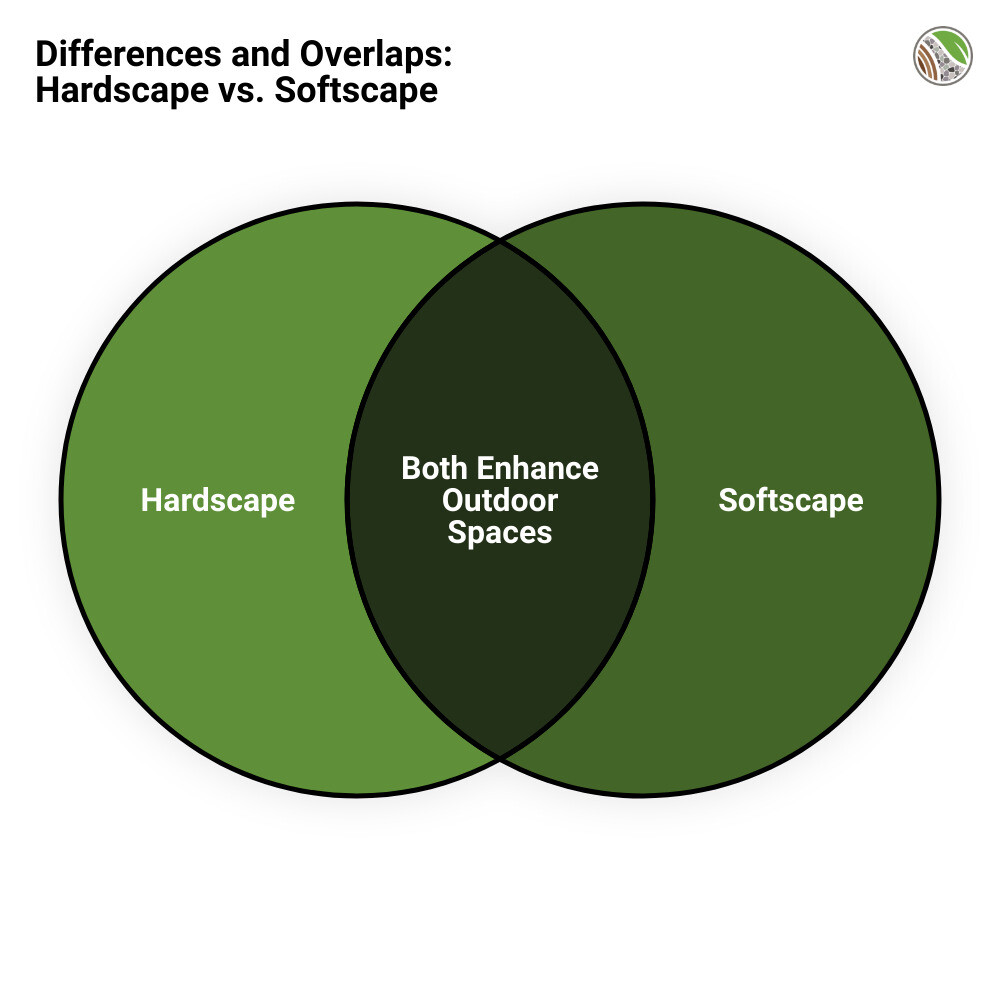
Hardscape vs. Softscape
Understanding the difference between hardscape and softscape is key to effective landscape design. Hardscape refers to the non-living elements like stone pathways and concrete patios, which provide structure and function. Softscape, on the other hand, involves the living elements such as plants and flowers, which add color and aesthetics.
- Structure vs. Aesthetics: Hardscapes offer the foundation and organization of your outdoor space, while softscapes bring life and beauty.
- Durability vs. Maintenance: Hardscape components are low maintenance and long-lasting, whereas softscape elements require ongoing care and attention.
Blending both hardscape and softscape elements can transform your yard into a cohesive and inviting environment. By strategically using these components, you can create a landscape that not only looks beautiful but also serves practical purposes, like improving drainage and defining outdoor living areas.
Benefits of Hardscaping
When it comes to enhancing your outdoor spaces, hardscaping plays a vital role. It not only boosts the functionality of your yard but also significantly improves its aesthetics. Let’s explore the benefits and see how hardscaping can transform your property.
Enhancing Outdoor Spaces
Hardscaping elements like patios, walkways, retaining walls, and custom firepits can redefine your outdoor experience. Imagine having a beautifully designed patio where you can host gatherings or enjoy quiet evenings. Walkways guide you through your garden, adding both beauty and practicality.
- Patios: Extend your living space outdoors. They provide a perfect spot for dining, relaxing, or entertaining guests.
- Walkways: Create safe and attractive paths that connect different areas of your yard. They can also help keep your lawn intact by directing foot traffic.
- Retaining Walls: These are not just for aesthetics; they also help prevent soil erosion and manage water drainage effectively.
- Custom Firepits: Add warmth and ambiance to your outdoor space, making it usable year-round.
Improving Property Value
Investing in hardscaping can also improve your property’s curb appeal and return on investment (ROI). A well-designed outdoor space increases the overall value of your home, making it more appealing to potential buyers.
- Curb Appeal: A beautifully hardscaped yard creates a stunning first impression. Features like stone pathways and neat patios can make your home stand out in the neighborhood.
- ROI: Hardscaping is a long-term investment. Features such as outdoor kitchens and decks are highly sought after and can significantly boost your property’s market value.
- Outdoor Amenities: Adding amenities like outdoor kitchens or seating areas can transform your yard into a functional and enjoyable space, increasing its utility and desirability.
Incorporating hardscaping into your landscape design not only lifts the beauty of your property but also makes it more functional and valuable. By carefully selecting and installing these elements, you can create an outdoor space that meets your needs and improves your lifestyle.
Hardscape Design Tips
Designing a hardscape that complements your home and landscape requires thoughtful planning. Here are some key tips to help you create a seamless and visually appealing outdoor space.
Creating Seamless Transitions
Matching House Exterior
To achieve a cohesive look, match your hardscaping materials with your house exterior. If your home features stone elements, consider using similar stone in your outdoor design. This creates a harmonious flow between your indoor and outdoor spaces.
Focal Points and Visual Appeal
Create focal points to draw attention and add interest to your yard. A beautifully designed patio or a striking firepit can serve as a centerpiece. Balance these with areas for the eyes to rest, using landscaping elements like shrubs or flower beds.
Drainage Considerations
Proper drainage is crucial in hardscape design. Use retaining walls and strategically placed stone steps to manage water flow. This prevents flooding and ensures your landscape remains healthy. Identify areas with drainage issues and address them with your design.
Indoor to Outdoor Flow
Design your hardscape to extend the indoor living space outdoors. This can be achieved by using similar materials and color palettes. Aligning the patio with your interior flooring creates a seamless transition, enhancing the overall flow of your home.
Material Consistency
Consistency in materials improves the visual appeal of your outdoor space. Choose durable materials like brick, concrete, or stone that complement each other. This not only looks good but also ensures longevity and durability.
Maintenance and Longevity
Protective Seal
Applying a protective seal to your hardscape surfaces is essential. It prevents damage from weather and extends the life of your materials. A fresh coat of sealant can also revive the look of your hardscaping, keeping it attractive over time.
Cleaning
Regular cleaning is vital for maintaining the beauty of your hardscape. Remove mold and mildew to prevent stains and ensure safety. Be cautious with cleaning tools—avoid wire brushes that might scratch surfaces. Pressure washing is effective but should be used carefully, especially on delicate materials.
Weather Resistance
Hardscaping must withstand the elements. Plan for natural expansion and contraction by settling materials below the frost line. This prevents damage and ensures your hardscape remains intact through changing seasons.
By following these design tips, you can create a hardscape that is both beautiful and functional, enhancing your outdoor living experience.
Frequently Asked Questions about Hardscape Construction
What is an example of hardscape?
Hardscape elements are the backbone of any well-designed outdoor space. They include patios, retaining walls, and fire pits—all of which add both function and beauty to your yard.
- Patios: These are often made from materials like concrete, brick, or stone, providing a durable and attractive space for outdoor gatherings.
- Retaining Walls: These structures help manage soil erosion and can create new levels in your yard, making them both practical and visually appealing.
- Fire Pits: A popular choice for creating a cozy atmosphere, fire pits can be constructed using a variety of materials, such as stone or brick, to suit your aesthetic preferences.
What are the types of hardscape?
Hardscape materials vary widely, offering different textures, colors, and durability. Here are some common types:
- Brick: Known for its classic look and durability, brick is perfect for creating charming patios and walkways.
- Concrete: A versatile option, concrete can be molded into various shapes and finishes, making it ideal for patios and driveways.
- Stone: Offers a natural appearance and is available in many forms, such as flagstone or slate, perfect for creating neat pathways or patios.
- Wood: Although less common, wood can be used to create decks or fences, adding a warm, natural touch to your landscape.
What’s the difference between landscaping and hardscaping?
Understanding the distinction between landscaping and hardscaping is key to designing a balanced outdoor space.
- Landscaping involves living elements like plants, shrubs, and trees. It’s all about aesthetics, adding color, and enhancing the natural beauty of your yard.
- Hardscaping, on the other hand, consists of non-living elements such as stone, brick, and concrete. It provides structure and functionality, creating areas for walking, sitting, and entertaining.
While landscaping focuses on the visual appeal and soft textures, hardscaping offers the backbone and durability needed to define your outdoor space. Together, they create a harmonious balance that improves your property’s overall look and feel.
Conclusion
At George Hardscaping, we believe that quality craftsmanship is the cornerstone of creating beautiful and functional outdoor spaces. Based in Essex County, MA, we specialize in changing ordinary yards into extraordinary havens with our expert hardscaping services.
Our team is passionate about using hardscape construction to improve both the aesthetics and functionality of your property. From patios and walkways to retaining walls and custom firepits, we offer a range of services designed to meet the unique needs of each client. Our commitment to quality ensures that every project not only looks stunning but also stands the test of time.
Serving the North Shore of Massachusetts, we take pride in our ability to create outdoor spaces that are as durable as they are beautiful. Whether you’re looking to add curb appeal to your home or create a cozy outdoor retreat, our skilled craftsmen are here to bring your vision to life.
For those considering an upgrade to their outdoor space, hardscaping is more than just construction—it’s an investment in your home’s future. By choosing George Hardscaping, you’re choosing a partner dedicated to excellence.
Explore our services and start your journey to a better outdoor living area today. Learn more about our hardscaping services and contact us to schedule your consultation. Let us help you build the perfect outdoor space that you’ll enjoy for years to come.
