
How Do I Choose Reputable Paver Installers Near Me in Massachusetts?
Selecting the right hardscaping professional in Massachusetts requires looking beyond a basic online search. Because our coastal and inland environments experience extreme weather shifts, a standard masonry approach is not enough. You need an installer who understands how local soils behave when the temperature drops.
When searching for Paver Installation Near Me or Pavers Installation Near Me, you should prioritize contractors who demonstrate deep expertise in New England’s challenging freeze-thaw cycles. During a typical winter, water seeps into the ground, freezes, expands by roughly 9%, and pushes upward against any hardscape structure. If your installer does not account for this with proper excavation, aggregate base depths, and drainage, your beautiful new driveway or walkway will warp, sink, and crack within just a few seasons.
To find a reputable contractor, look at how they handle projects in nearby communities. Whether you are planning a project in Woburn or researching options in Ipswich, you will find that top-rated local professionals emphasize structural preparation over quick cosmetics. The focus is always on the quality of the invisible base layers.
Always ask prospective contractors for physical addresses of completed projects in towns like Gloucester, Danvers, Salem, and Ipswich. Viewing an installation that has already survived three or four Massachusetts winters will tell you everything you need to know about the contractor’s workmanship.
Vetting Licensing and Insurance
Before signing any contract, you must verify that the hardscaper holds a valid Massachusetts Home Improvement Contractor (HIC) registration. This registration is a legal requirement for residential work in the Commonwealth and provides you with essential consumer protections.
Additionally, ask for proof of:
- General Liability Insurance: This should be a minimum of $1,000,000 to protect your home, underground utilities, and property from accidental damage during heavy excavation.
- Workers’ Compensation Insurance: This is non-negotiable. If a crew member is injured on your property in Danvers or Woburn and the contractor does not carry workers’ comp, you could be held legally and financially liable.
A reputable contractor will have their insurance broker email these certificates directly to you. If a company hesitates or offers excuses, it is a major red flag.
Reviewing Portfolios and Local Case Studies
When looking through a contractor’s portfolio, look past the overall beauty of the photos and focus on the technical details:
- Joint Lines: Are the lines perfectly straight, or do they snake and wiggle? Straight lines indicate precise hand-laying and a stable edge restraint.
- Leveling and Transitions: Look at how the pavers meet existing features like steps, garage aprons, or retaining walls. The transitions should be flush and seamless, with no tripping hazards.
- Grading and Runoff: Ask the contractor to explain how they managed water runoff in their portfolio photos. A professional portfolio should show clear evidence of pitch (sloping away from home foundations) or integrated drainage systems like trench drains.
What Types of Pavers Are Best for Driveways Versus Walkways?
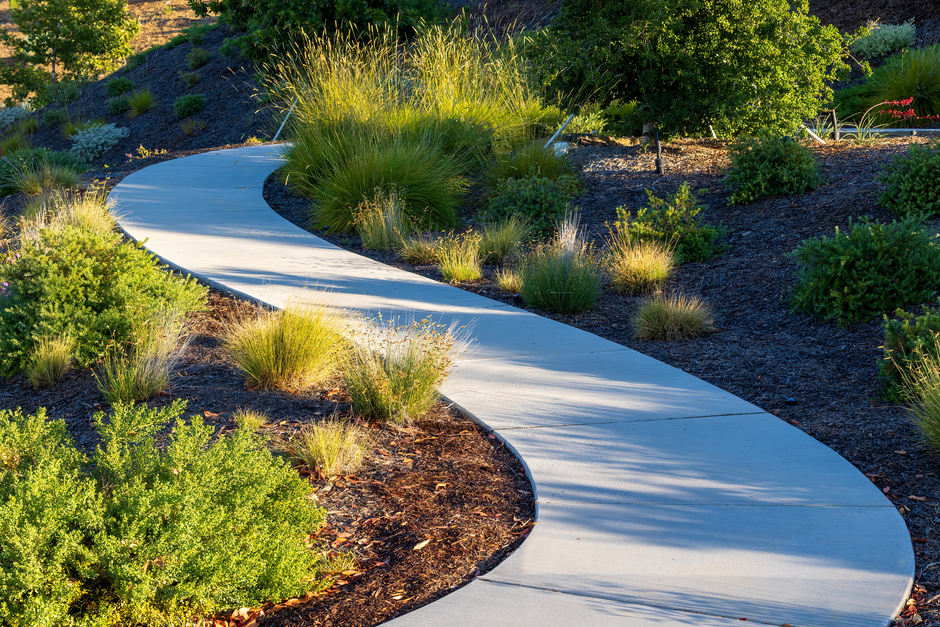
Choosing the right material for your hardscape project is not just an aesthetic decision; it is an engineering requirement. Driveways and walkways serve entirely different purposes and must withstand vastly different load-bearing demands.
For driveways, the primary concern is vehicular weight and tire torque. Standard poured concrete driveways typically have a compressive strength of 3,000 to 4,000 PSI (pounds per square inch). While this sounds strong, poured concrete is rigid. When heavy SUVs, delivery trucks, or snowplows traverse it, the ground underneath flexes, causing the rigid concrete to crack.
In contrast, interlocking concrete pavers boast a compressive strength of 12,000 to 15,000 PSI. Because they are individual units resting on a flexible bed of sand and crushed stone, they distribute heavy loads evenly. If the ground shifts, the pavers adjust individually without cracking. This extreme durability is why concrete pavers are the standard choice for high-load municipal applications like fire stations and airport tarmacs.
For walkways, the focus shifts to pedestrian safety, slip resistance, and architectural harmony. Walkways do not need to support multi-ton vehicles, allowing you to choose from a wider variety of materials, including natural stone, travertine, and historic clay brick.
When sourcing materials on the North Shore, we highly recommend utilizing premium regional suppliers. For instance, finding high-quality stone and concrete options through Landcare Stone in Georgetown, MA or selecting Ideal concrete pavers in Ipswich, MA ensures that your materials are rated to withstand our local climate.
To help guide your design process, you can explore various Driveway Pavers Ideas that blend functionality with classic New England style.
| Feature / Specification | Driveway Pavers | Walkway Pavers |
|---|---|---|
| Minimum Compressive Strength | 12,000 – 15,000 PSI | 4,000 – 8,000 PSI |
| Recommended Thickness | 80mm (3⅛ inches) | 60mm (2⅜ inches) |
| Best Material Types | Interlocking Concrete, Thick Clay Brick | Natural Flagstone, Travertine, Clay, Concrete |
| Base Material Depth | 8 to 12 inches of compacted gravel | 4 to 6 inches of compacted gravel |
| Primary Design Focus | Load distribution, oil & salt resistance | Slip resistance, pedestrian comfort, aesthetics |
Driveway Paver Requirements
To ensure your driveway does not rut or shift under the weight of daily traffic, it must meet these strict criteria:
- Thickness: Driveway pavers must be at least 80mm (3⅛ inches) thick. Thinner 60mm pavers are designed for pedestrian use and can crack under heavy vehicular loads.
- Interlocking Patterns: Patterns like herringbone (either 45 or 90 degrees) are highly recommended for driveways. This layout locks the pavers together, preventing them from shifting forward or backward when vehicles accelerate or brake.
- Chemical Resistance: Driveway materials must resist damage from motor oil, gasoline, and deicing salts. High-quality concrete pavers are manufactured with specialized sealants and aggregates that prevent these chemicals from degrading the surface.
Walkway Paver Options
Walkways allow for more creative freedom, but they must still be practical and safe:
- Natural Stone Flagstone: Materials like bluestone or granite offer a timeless, organic look that complements historic homes in Gloucester and Salem.
- Travertine Pavers: Excellent for patios and walkways, travertine remains cool underfoot during hot summer days and offers a highly slip-resistant surface.
- Clay Brick: Perfect for achieving a classic, colonial aesthetic. Modern clay pavers are fired at extremely high temperatures to prevent water absorption and subsequent freeze-thaw damage.
- Slip Resistance: Always select pavers with a textured, slip-resistant surface to ensure safe walking conditions during wet spring rains and icy winter storms.
How Much Does a Professional Paver Driveway or Walkway Installation Cost?
When planning a hardscaping budget, it is important to understand the financial landscape of professional installation.
Important Pricing Disclaimer: All prices and cost ranges mentioned in this section are average estimates sourced from publicly available online industry data. They are intended for general planning purposes only and do not represent the actual pricing, rates, or guarantees of George Hardscaping. Every property has unique grading, accessibility, and material requirements that dictate the final project cost.
To find the right professionals for your budget, you may want to research local Paver Patio Contractors to compare estimates and design approaches. You can also look at general paving guides and industry resources to understand how different materials and site conditions impact pricing in areas like Gloucester, Woburn, and Ipswich.
The total cost of your installation is driven by several key factors:
- Site Accessibility: Can heavy machinery (excavators, skid steers) easily access the work area, or will crews have to move materials by hand?
- Excavation Depth: Driveways require much deeper excavation and more aggregate base material than walkways, which significantly increases labor and disposal costs.
- Material Selection: Premium natural stones (like imported travertine or thermal-top bluestone) cost substantially more than standard concrete pavers.
- Design Complexity: Curved pathways, custom borders, integrated steps, and intricate laying patterns require meticulous hand-cutting and extra labor.
Average Cost Ranges for Walkways
According to general online industry data, the national average cost to install a basic paver walkway is approximately $15 to $20 per square foot. However, to account for the high cost of premium materials, professional labor, and the rigorous site preparation required for New England’s climate, a realistic and wide pricing range is necessary.
Based on these factors, the estimated cost range for a professionally installed walkway spans from $30 to $40 per square foot on the low end (which is twice the national average baseline) to $100 to $150+ per square foot on the high end (which is five to seven times the average baseline).
Walkways that incorporate complex curves, custom stone steps, or premium natural flagstone will naturally fall on the higher end of this spectrum due to the intensive craftsmanship required.
Average Cost Ranges for Driveways
Because driveways must support immense vehicular weight, they require a much deeper foundation. While a walkway might require 4 to 6 inches of compacted aggregate base, a driveway requires 8 to 12 inches of compacted stone. This extra excavation, soil disposal, and base material increase the baseline costs.
While general internet data lists the average driveway installation cost at roughly $20 to $25 per square foot, a realistic range that reflects professional-grade engineering and regional material costs spans from $50 to $60 per square foot on the low end (2x the average baseline) to $125 to $175+ per square foot on the high end (5x to 7x the average baseline).
Investing in a proper, deep-base installation ensures that your driveway will not develop ruts, tire tracks, or sunken areas over time.
What Is the Professional Installation Process for Paver Systems?
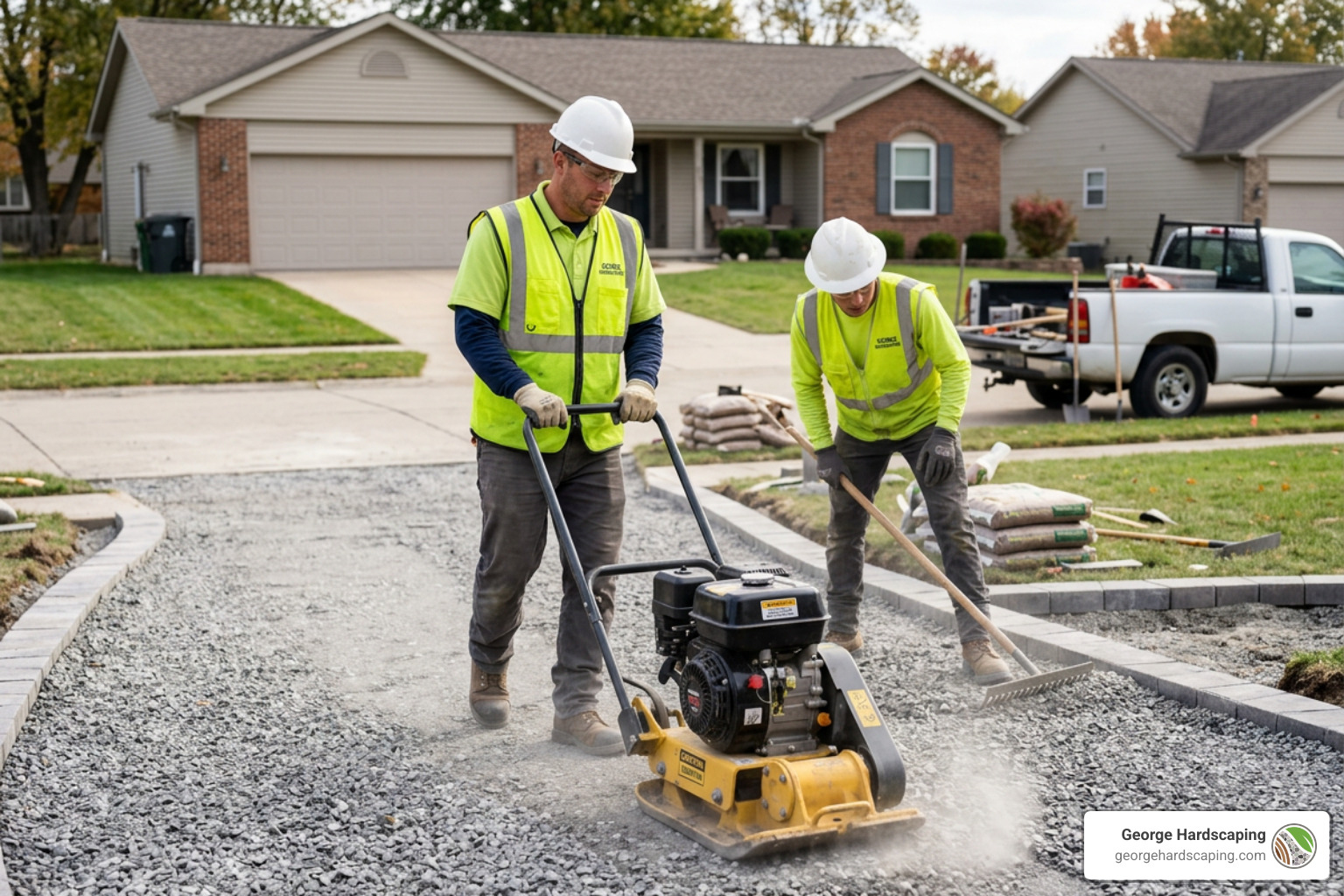
While some homeowners consider tackling a walkway as a weekend DIY project, we strongly discourage DIY installation for both driveways and walkways. The physical labor, specialized machinery, and precise engineering required to build a lasting paver system are immense.
Without commercial-grade compaction equipment and precise transit levels, DIY projects almost always suffer from shifting, uneven surfaces, and poor drainage. To understand the complexity involved, you can read our high-level guide on How to Create a Paver Walkway Like a Pro, which highlights the meticulous steps required for a successful build.
A professional installation follows a strict, multi-step process:
- Step 1: Underground Utility Marking & Excavation: Before any shovel touches the dirt, we call 811 to mark all underground gas, water, electric, and cable lines. We then excavate the area to the precise depth required (typically 6 to 8 inches for walkways, and 12 to 14 inches for driveways).
- Step 2: Slope and Pitch Grading: We establish a precise slope using laser levels. To protect your home’s foundation, all hardscape surfaces must pitch away from the house at a minimum slope of 1/4 inch per linear foot.
- Step 3: Geotextile Fabric & Base Installation: We lay down a commercial-grade geotextile fabric to separate the subgrade soil from our aggregate base. We then import a high-quality, crushed gravel aggregate, spreading it in thin, 2-to-3-inch layers (lifts).
- Step 4: Bedding Sand Layer: We apply a highly precise, 1-inch layer of washed concrete sand. This sand is screeded using pipes to create a perfectly flat, uncompacted bed for the pavers to rest on.
- Step 5: Paver Laying and Pattern Alignment: Our craftsmen hand-lay the pavers in the chosen pattern, working outward from a straight baseline. We use specialized stone cutters to make precise cuts around curves and borders.
- Step 6: Heavy-Duty Edge Restraints: We install professional-grade plastic or concrete edge restraints along the entire perimeter. These restraints are spiked deep into the aggregate base to prevent the pavers from spreading outward over time.
- Step 7: Polymeric Sand and Final Compaction: We sweep polymeric jointing sand across the surface, filling all the joints. We then run a plate compactor over the pavers to lock them into the bedding sand. Finally, we mist the surface with water, activating the polymers in the sand to create an elastic, weed-resistant, and sweep-resistant bond.
The Critical Role of Base Compaction
The single most common cause of paver failure is inadequate base compaction. If the aggregate base is not compacted correctly, the weight of vehicles or foot traffic will cause the stones to settle over time, creating unsightly dips and dangerous tripping hazards.
Professionals do not rely on hand tamps. We use heavy, commercial-grade vibratory plate compactors. Each 2-to-3-inch layer of aggregate is compacted multiple times, with moisture added to achieve maximum density. This process creates a solid, interlocking stone foundation that behaves like a monolithic slab but retains its flexible properties.
Designing for New England Drainage
In Massachusetts, managing water is just as important as managing weight. If water pools on or beneath your driveway, it will freeze during the winter, lifting the pavers and destroying the foundation.
Our professional installation process integrates advanced drainage design:
- Surface Pitching: Directing surface runoff safely toward lawns, rain gardens, or municipal storm drains.
- Permeable Pavers: Utilizing specialized permeable pavers that allow rainwater to filter directly through the joints and back into the ground, reducing runoff and preventing ice patches from forming on the surface.
- Trench Drains: Installing heavy-duty trench drains with decorative grates at the base of sloped driveways or in front of garage doors to capture and redirect heavy water flows.
Why Is George Hardscaping the Most Recommended Installer in Essex County?
At George Hardscaping, we have built our reputation on a simple foundation: uncompromising quality, meticulous craftsmanship, and exceptional customer service. As local specialists based in Essex County, MA, we do not believe in cutting corners. We treat every driveway, walkway, and patio as a permanent addition to your home’s legacy.
We proudly serve the entire North Shore region, including Gloucester, Beverly, Danvers, Ipswich, Salem, and Rowley. Our deep understanding of local soil conditions, coastal weather patterns, and historic architectural styles allows us to design and build hardscapes that harmonize with your property while standing up to the elements.
Beyond driveways and walkways, we offer a comprehensive suite of hardscaping and masonry services to elevate your entire outdoor living experience:
- Custom Patios: Designing elegant, functional outdoor living rooms tailored to your lifestyle.
- Retaining Walls: Building structurally sound, beautiful walls to manage slopes and prevent erosion.
- Steps and Brick Stairs: Crafting safe, durable entryways that make a powerful first impression.
- Custom Firepits: Creating cozy gathering spaces for cool New England evenings.
To ensure your investment remains safe and beautiful year-round, we also offer professional, seasonal snow plowing services to keep your new driveway and walkways clear of heavy snow and ice without damaging the paver surface.
If you are ready to transform your property, you can learn more about our specialized services by visiting our dedicated pages for Paver Walkway Installer, Paver Driveway Installation, Paver Walkways Beverly MA, or Paver Walkways Salem MA.
Our Commitment to Quality Materials
We believe that a hardscape is only as good as the materials used to build it. That is why we partner with the industry’s leading manufacturers and local quarries to source only the highest-grade concrete pavers, clay bricks, and natural stones.
Whether we are installing a classic brick walkway in historic Salem or a modern, permeable paver driveway in coastal Gloucester, we tailor our material selections to match your home’s unique architecture and your specific durability needs. We never use sub-par aggregates or cheap edge restraints; every component of our system is chosen for its long-term performance.
Contact George Hardscaping Today
Are you ready to discuss your upcoming driveway or walkway project? Our team of experienced hardscape designers and craftsmen is here to help you bring your vision to life.
- Phone: Call us directly at +781-222-0805 to speak with a local specialist.
- Online: Visit our Request a Free Estimate page to schedule a comprehensive, on-site professional evaluation.
What Are the Frequently Asked Questions About Paver Installations?
As of June 2026, here are the most common questions homeowners ask us when planning a new paver driveway or walkway project in Massachusetts:
How long does a paver driveway or walkway installation take?
Most residential paver installations are completed in 3 to 7 days.
The exact timeline depends on:
- Project Size: A standard 50-foot walkway may take 3 days, while a large, circular driveway can take a full week or more.
- Excavation Complexity: Properties with heavy clay, large rocks, or steep slopes require more excavation time.
- Weather Conditions: While we can work through light rain, heavy downpours can delay excavation and sand-screeding phases.
We work efficiently and maintain a clean, organized job site to minimize disruption to your daily routine.
What maintenance is required for paver driveways and walkways?
One of the greatest benefits of a professionally installed paver system is its low maintenance requirements:
- Routine Cleaning: Occasional sweeping and washing with a standard garden hose will keep the surface free of dirt and debris.
- Weed Prevention: The polymeric sand we use naturally resists weed growth. If a weed does take root in surface organic matter, simply pull it out or apply a mild, eco-friendly weed killer.
- Joint Sand Top-offs: Every 3 to 5 years, you may need to sweep a small amount of new polymeric sand into the joints to replace any sand that has worn away.
- Professional Sealing: While not strictly required, applying a high-quality, breathable sealer every 3 to 5 years will enhance the pavers’ natural colors, protect them from oil stains, and extend their lifespan.
What warranties or guarantees do reputable paver installers offer?
A reputable hardscaping contractor should stand behind their work with robust warranties:
- Workmanship Warranty: We offer a comprehensive 2-year to 5-year workmanship warranty that covers any shifting, settling, or structural issues resulting from our installation process.
- Manufacturer Product Warranty: Premium paver manufacturers (such as Belgard, Techo-Bloc, or Unilock) typically offer a lifetime transferable warranty on the structural integrity of the concrete pavers themselves. If a paver cracks or breaks under normal use, the manufacturer will replace the material at no cost.
How Do You Get Started on Your New Paver Project?
Investing in a professionally designed and installed paver driveway or walkway is one of the most effective ways to boost your home’s curb appeal, improve its functionality, and significantly increase its resale value. Unlike poured concrete or asphalt, which inevitably crack and degrade over time, a high-quality paver system is a permanent asset that will last for decades with minimal maintenance.
To get started on your outdoor transformation:
- Define Your Goals: Consider how you use the space, your aesthetic preferences, and your target budget.
- Gather Inspiration: Look at local homes in Ipswich, Beverly, and Gloucester to see what styles and colors complement our regional architecture.
- Consult the Professionals: Work with an experienced, licensed, and insured team that understands the unique engineering demands of New England hardscaping.
Do not settle for temporary fixes or cut-rate installations that will fail after the first winter. Trust the local experts who build to a higher standard.
Schedule Your Free Consultation Today
Ready to elevate your home’s curb appeal with a durable, beautiful new driveway or walkway? Contact George Hardscaping today at +781-222-0805 to speak directly with our design specialists, or visit our Request an Estimate page to book your comprehensive, on-site professional evaluation. Let us help you build an outdoor space you will love for a lifetime.
