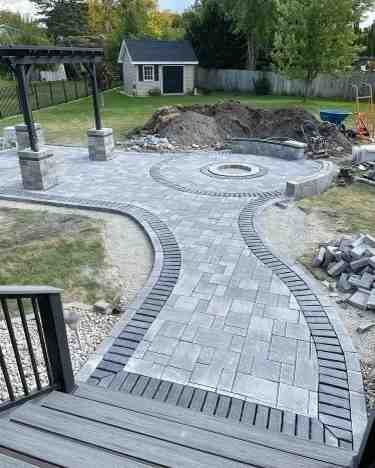
Introduction: Paving the Way to a Stunning Landscape
If you want to build a stone walkway, the basic process involves planning your path, excavating 5-10 inches, installing a stable base of gravel and sand, laying your stones, and filling the gaps. It’s a project that offers immense satisfaction, and most homeowners can complete a simple, beautiful path in a single weekend, transforming their property’s look and feel.
Here’s what you need to know:
- Stone Options: Flagstone, bluestone, granite, slate, or limestone
- Base Layers: Landscape fabric, a 4-6 inch crushed gravel base, and a 1-2 inch leveling sand bed
- Typical Cost: DIY materials typically run $2.50-$3.50 per square foot, while professional installation can range from $500-$3,000+ depending on the project’s scope.
- Time Investment: 10-20 hours for a basic walkway.
- Skill Level: Beginner-friendly with the right guidance.
A stone walkway does more than just provide a path; it transforms a muddy side yard into an inviting passage, guides visitors through your garden with purpose, and adds a rustic, timeless charm that makes a house feel like a home. Unlike uniform concrete or asphalt, natural stone paths blend seamlessly with the landscape, offering unique character and texture that evolves with the seasons. While materials like concrete pavers have their place, they can’t replicate the one-of-a-kind beauty of natural stone, where each piece has its own shape, color, and history. The best part? You don’t need specialized skills or a massive budget. With basic tools and a free weekend, you can create a functional path that looks professionally installed and will last for generations.
Homeowners in Essex County and the North Shore particularly love stone walkways for their incredible resilience. They are perfectly suited to handle New England’s demanding freeze-thaw cycles, which can crack and destroy poured concrete. The natural, slightly uneven surface of stone provides excellent traction when wet or frosty, a crucial safety feature. Furthermore, a well-executed stone walkway is a significant investment, increasing property values with its unique, high-quality appearance that signals craftsmanship and attention to detail.
The absolute key to a walkway that outlasts your mortgage is proper preparation. Rushing the foundation is a recipe for disaster, leading to years of fighting shifting stones, stubborn weeds, and pooling water. This guide is designed to walk you through every step of the process, from choosing the right stone for our local climate to applying the finishing touches that make your project shine.
For homeowners who’d rather skip the heavy lifting and guarantee a perfect result, George Hardscaping specializes in walkway and stair installation throughout Essex County. Our team handles everything from design and excavation to the final stone placement, ensuring your path is built to last through harsh New England winters.
Phase 1: Planning Your Perfect Path
Before lifting a shovel, a solid plan is your most valuable tool. This initial phase sets the stage for a successful and long-lasting stone walkway, helping you avoid costly mistakes and ensuring the final result meets your vision. A well-thought-out plan saves time, money, and physical effort down the line.
The first step when you build a stone walkway is to define its purpose and location. Will it be a high-traffic route from the driveway to your front door, a meandering garden path for quiet strolls, or a decorative element leading to a cozy patio design? As experts advise, it’s crucial to consider the function of your path, as this choice informs the stone type, width, and foundation robustness. A primary walkway needs to be wider and built on a more substantial base than a secondary garden path.
Choosing the Right Stone
The type of stone you select is paramount, influencing the walkway’s aesthetic, durability, and safety. We recommend choosing stones that are flat, wide enough to step on comfortably (at least 12 inches across), and have a natural, unpolished surface for good traction. Polished or very smooth stones become dangerously slippery when wet or icy. For a sturdy walkway that won’t crack underfoot, stones should be at least 1.5 to 3 inches thick.
Here are popular choices suitable for the climate and style of Essex County:
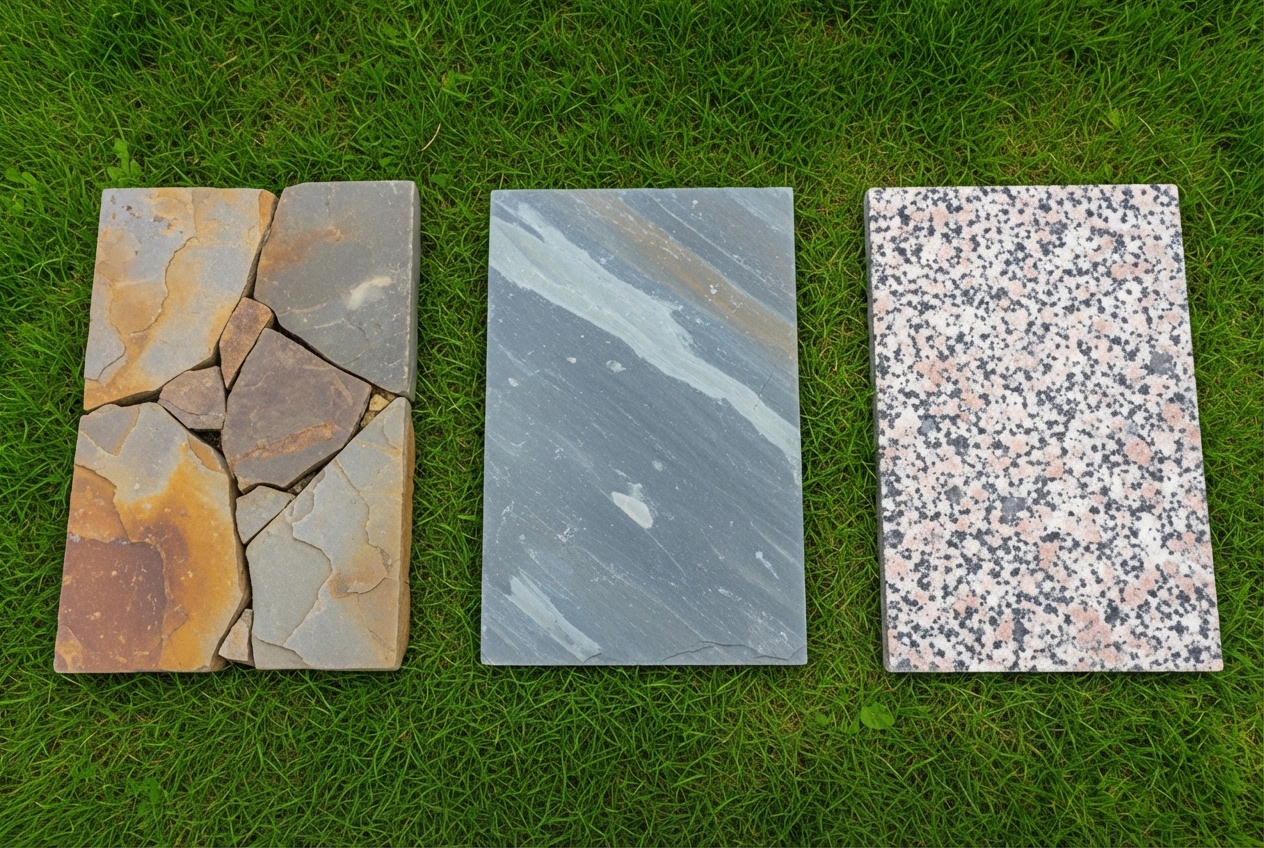
- Flagstone: A top choice for its large, flat, and irregular shapes that create a natural, rustic look. Flagstone is a general term for sedimentary rock like sandstone, slate, or limestone cut into flat slabs. It’s durable, versatile, and its varied shapes make for a fun, puzzle-like installation.
- Bluestone: A type of dense, fine-grained sandstone prized for its strength, beautiful blue-gray hues, and exceptional durability. It handles New England’s freeze-thaw cycles extremely well, making it a premium, long-lasting option.
- Granite: An igneous rock that is extremely hard and durable. Often available as reclaimed cobblestones or cut pavers, granite offers a rugged, timeless appearance and comes in various colors. Its density makes it nearly impervious to weather and wear.
- Slate: Known for its fine-grained, layered structure, slate provides a sophisticated and neat look with a smooth but naturally slip-resistant surface. It splits into thin, flat sheets easily but can be more brittle than granite or bluestone.
- Limestone: This sedimentary rock offers warm, earthy tones from beige to gray. It’s durable yet generally softer than granite, making it easier to cut and shape for tighter fits. It provides a classic, old-world feel.
Here’s a quick comparison to help you decide:
| Stone Type | Cost (Material/sq ft) | Durability | Texture | Slip-Resistance | DIY Friendliness |
|---|---|---|---|---|---|
| Flagstone | $5-$15 | Excellent | Natural | Good | Good (Irregular shapes are forgiving) |
| Bluestone | Higher | Excellent | Natural | Very Good | Moderate (Heavier, may need cutting) |
| Granite | High | Superior | Rough | Excellent | Difficult (Very heavy and hard to cut) |
| Slate | Moderate | Good | Smooth | Good | Moderate (Can be brittle) |
| Limestone | Moderate | Good | Natural | Good | Good (Softer and easier to shape) |
Next, plan the path’s dimensions. For a comfortable single-file path, 30-36 inches is sufficient. If you expect two people to walk side-by-side, aim for 48 inches. The shape is a matter of taste: a curved path adds visual interest and a sense of discovery, while a straight path offers a formal, direct route. Finally, calculate your material needs by measuring the path’s length and width to find the total square footage. It’s wise to purchase about 10-15% extra stone to account for cuts, breakage, and selection.
Gathering Your Tools and Materials
Having the right tools and materials on hand before you start will make the process much smoother. For any sizable walkway, we strongly recommend renting a plate compactor. While a hand tamper works for small areas, a plate compactor saves your back, provides far superior compaction, and is the key to achieving a professional-grade, long-lasting base that won’t settle.
Essential Materials:
- Stone of your choice: Flagstone, bluestone, granite, etc. (1.5″-3″ thick)
- Crushed stone or gravel (¾ inch minus): This forms the robust 4- to 6-inch base layer. “Minus” means it includes smaller particles and dust, which helps it lock together tightly when compacted.
- Leveling sand (paver sand): A coarse, washed sand used for the 1- to 2-inch bedding layer directly under the stones.
- Landscape fabric: A high-quality, non-woven geotextile fabric is crucial for weed suppression and separating the base from the native soil.
- Edging material (optional but recommended): Heavy-duty plastic, steel, aluminum, or stone edging contains the walkway materials and creates a clean, defined line.
- Joint filler: Polymeric sand, stone dust, or decorative gravel for filling the gaps.
Basic Tools You’ll Need:
- Shovel (round point for digging, square for moving material)
- Wheelbarrow (a contractor-grade one will handle the weight better)
- Hand tamper or Plate Compactor (rent for best results)
- 4-foot Carpenter’s Level
- Rubber Mallet
- Measuring Tape
- Utility Knife
- Straight 2×4 Board (8-10 feet long for screeding)
- Stakes and String
- Garden Hose (for laying out curves)
- Safety Glasses, Gloves, and Steel-Toed Boots
- Masonry Hammer and Chisel or Angle Grinder with Diamond Blade (optional, for shaping stones)
While many of these are basic gardening tools, items like a wheelbarrow and plate compactor are essential for making the heavy work manageable and achieving a durable result.
The Step-by-Step Process to Build a Stone Walkway
With your planning complete and materials on site, it’s time to get to work. Building a stone walkway is a rewarding project that will dramatically improve your outdoor living space for years to come. Follow these steps methodically for a professional-quality result.
1. Planning and Laying Out the Path
First, transfer your design from paper to the ground. This visual step is crucial for making final adjustments before you break ground.
- Marking the Path: Use stakes and string to outline straight sections. For graceful curves, a flexible garden hose is the perfect tool. Lay it out and adjust until you’re happy with the flow. Step back and view the layout from different angles, including from inside your home. Does the path flow naturally? Is it wide enough for its intended use? For instance, if it’s a main path to your front entrance, ensure it can comfortably accommodate two people or a person with groceries.
- Utility Check: Before any digging, this is a non-negotiable safety step. In our area, you must contact your local utility locating service (like Dig Safe in Massachusetts) by calling 811 at least a few days in advance. They will mark the location of any underground gas, water, or electrical lines, preventing a dangerous and costly accident.
2. Excavation
This is where the physical work begins. Proper excavation is the backbone of a stable, long-lasting walkway. Don’t rush this stage.
- Remove Sod and Vegetation: Using a sharp, flat spade or a rented sod cutter, remove all grass, weeds, and organic debris from your marked path. The goal is to get down to the bare soil.
- Digging Depth: The total excavation depth depends on your stone thickness and base layers. Generally, you’ll need to dig down 7 to 10 inches. This accounts for 2-inch thick stones, a 4- to 6-inch compacted gravel base, and a 1- to 2-inch sand bed. For areas with poor, clay-heavy soil or in our New England climate, always err on the deeper side (9-10 inches) to create a more robust frost-proof base.
- Create a Level Trench with a Slope: Ensure the bottom of your trench is smooth and tamp it down with your hand tamper. For proper drainage, you must create a slight slope of about 1/4 inch per foot (a 1-2% grade), directing water away from structures like your house foundation or retaining walls. Use your level on a straight 2×4 to check this as you go.
- Managing the Dirt: A 50-foot by 3-foot walkway excavated to 8 inches deep will generate over 3 cubic yards of soil. Plan ahead for where this soil will go. You can use it to build up low spots in your yard, create a berm, or you may need to arrange for its removal.
3. Building a Solid Foundation
This is the most critical step. A well-built foundation prevents shifting, settling, and weed growth, ensuring your hard work lasts for decades.
- Landscape Fabric: Lay a continuous layer of high-quality, non-woven geotextile fabric over the entire excavated and tamped area. This acts as a separator, preventing your gravel base from sinking into the subsoil while still allowing water to drain through. Overlap any seams by at least 12 inches.
- Gravel Base Layer: Spread a 4- to 6-inch layer of crushed gravel (¾ inch minus). This layer provides the primary structural support and drainage for the entire walkway.
- Compacting the Gravel in Lifts: This step is mandatory for a stable path. Do not simply dump all the gravel in at once. Spread the gravel in 2-inch layers (or “lifts”). Thoroughly moisten and compact each lift with a plate compactor before adding the next. This process forces the stones and dust to lock together, creating a dense, monolithic base that resists settlement and frost heave.
- Sand Setting Bed: Spread a 1- to 2-inch layer of coarse leveling sand (paver sand) over the compacted gravel. This layer is not for structure; its purpose is to provide a soft bed to easily set and level each individual stone.
- Screeding the Sand: Use a long, straight 2×4 board to “screed” or level the sand. Rest the board on parallel guides (like pipes or the walkway edging) and pull it across the sand in a sawing motion to create a perfectly flat and smooth surface.
4. Laying the Stones
Now for the creative part—arranging your stones into a beautiful, functional surface.
- The Jigsaw Puzzle Approach: Start at one end of your path, ideally against a fixed edge like a foundation or step. Begin laying out your largest stones first, then fill in the gaps with smaller pieces. Mix sizes and shapes for an organic, natural look.
- Pro-Tip: Dry-Fit Your Layout: Before setting stones in the sand, lay out a 5-10 foot section on the grass next to your path. This allows you to arrange the puzzle and find the best fit without disturbing your carefully screeded sand bed.
- Setting Stones Level: Place each stone onto the sand bed with its best side up. Press it down firmly and give it a slight wiggle to embed it. Use a rubber mallet to gently tap the stone until it is level with its neighbors. Use your carpenter’s level frequently, checking each stone individually and across adjacent stones to ensure a smooth, trip-free surface. If a stone is too low, lift it and add more sand; if it’s too high, scoop some sand out.
- Checking for Stability: After setting each stone, try to rock it with your foot. A rocking stone is a future tripping hazard and indicates it’s not fully supported. Add or remove sand underneath until it is completely stable.
- Consistent Spacing: Aim for consistent gaps between stones, typically around 1/2 to 1 inch. If you plan to plant ground cover, you can leave wider 1- to 2-inch gaps.
The process is straightforward but physically demanding. If you’d rather have a team of experts handle the heavy lifting and guarantee a flawless result, George Hardscaping is here to help. We specialize in creating stunning, durable walkways built to withstand New England’s toughest weather. Ready to get started? Request your free project estimate today and let us build the path you’ve been dreaming of.
Phase 3: Finishing Touches and Creative Designs
With your stones laid, it’s time for the final touches that secure the walkway and lift its aesthetic appeal. This phase is where your stone walkway truly becomes a masterpiece.
Joint Filler Options
Filling the gaps between your stones is crucial for stability, weed prevention, and a finished look.
- Polymeric Sand: A popular choice that binds and hardens when moistened. It creates a durable, flexible joint that effectively resists erosion, weed growth, and insects, resulting in a low-maintenance finish.
- Sand or Stone Dust: These traditional fillers are affordable and easy to install. They can be swept into joints and lightly misted to settle, providing a classic, natural look. However, they may wash out over time and require occasional replenishment.
- Pea Gravel or Decorative Rock: For a more informal or permeable walkway, small decorative rocks can be used to fill the joints. This option adds texture and visual interest.
Sweep your chosen filler into the crevices until all gaps are full. Then, use a leaf blower to remove excess from the stone surfaces before lightly misting with water to set the material (especially important for polymeric sand).
Creative and Functional Improvements
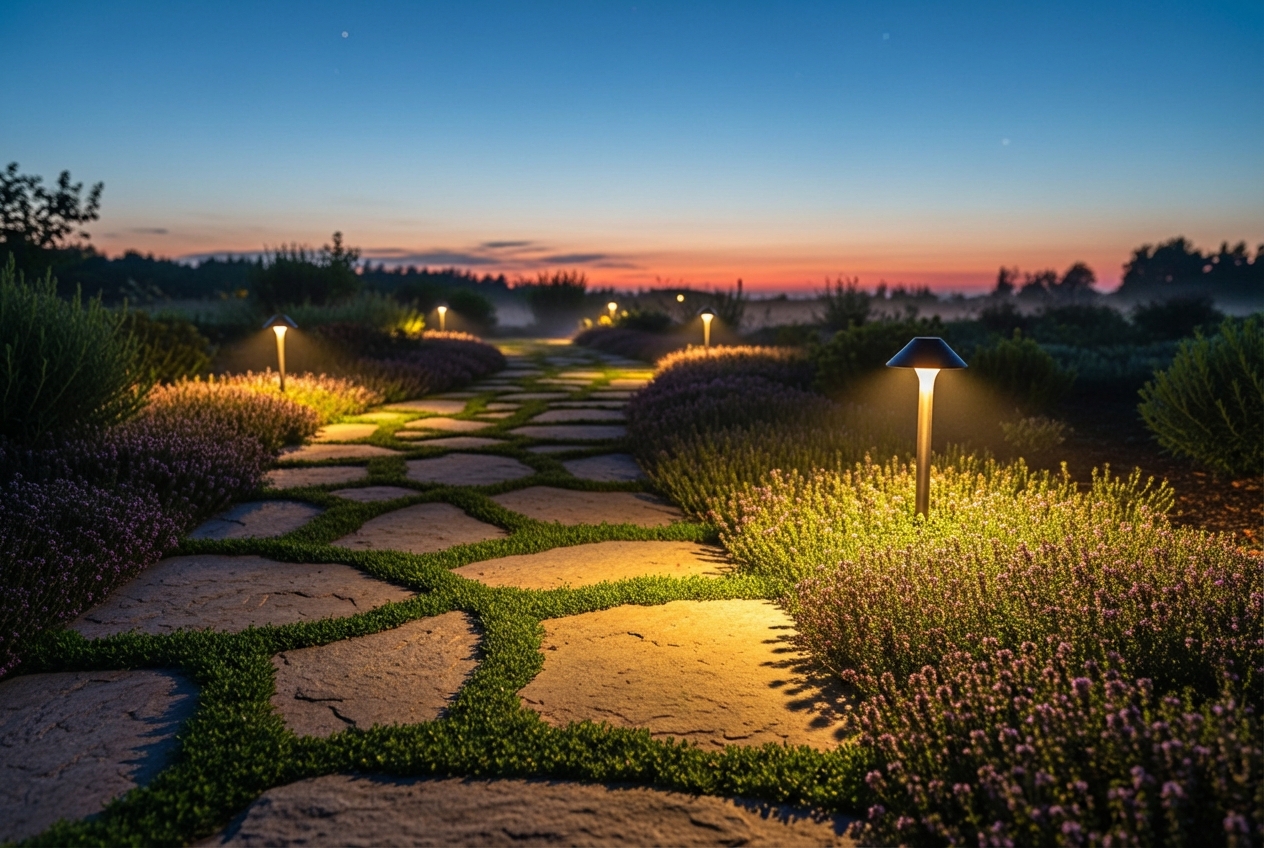
- Planting Between Stones: For an enchanting, natural look, plant low-growing, “steppable” ground covers in wider gaps. Creeping thyme, sedum, and bugleweed are excellent choices that soften the hardscape and integrate it into your garden.
- Installing Edging: While not always necessary, edging provides a clean, defined border and helps contain the base materials. Options include flexible plastic, wood timbers, or a complementary stone or brick border.
- Walkway Lighting: Extend the usability and charm of your walkway into the evening. Low-voltage or solar-powered pathway lights provide safety and ambiance, highlighting the texture of your stones after dark.
- Creative Designs: Don’t be afraid to get creative. Mix large and small stones for an organic mosaic, or arrange uniform pavers in a classic pattern like herringbone or running bond.
For a deeper dive into design possibilities, we invite you to explore our gallery for inspiration. You might even find ideas for complementing your new path with custom outdoor firepits for those cool New England evenings.
Common Mistakes, Maintenance, and FAQs
Even with careful planning, it’s helpful to know what pitfalls to avoid. Understanding common mistakes and proper maintenance will ensure your stone walkway remains beautiful and functional for decades, protecting your investment of time and money.
Common Mistakes to Avoid When You Build a Stone Walkway
Avoiding these frequent errors is the difference between a professional-looking path and a constant source of frustration.
- Improper Foundation Preparation: This is the number one mistake. Laying stones directly on soil or skimping on the depth and compaction of the base layers is a guaranteed failure.
- Consequence: The path will become a lumpy, uneven mess within a year. Stones will sink, creating tripping hazards and puddles. Weeds will grow relentlessly through the joints.
- Inadequate Depth: Not digging deep enough to accommodate the full thickness of the stone, sand, and gravel layers.
- Consequence: The finished walkway will sit too high above the surrounding grade, looking awkward and creating a mowing and tripping hazard. It can also impede proper drainage away from your home.
- Forgetting to Compact Layers: Skipping the compaction of the native soil and, most critically, each 2-inch lift of gravel.
- Consequence: The base will settle unevenly over time, especially after rain or frost cycles. Your perfectly level stones will shift, tilt, and become unstable.
- Poor Drainage Slope: Failing to build in a slight slope (about 1/4 inch per foot) away from structures.
- Consequence: Water will pool on your walkway, leading to moss growth and icy patches in winter. Worse, it can direct water toward your home’s foundation, potentially causing serious moisture problems.
- Using Unstable Stones: Selecting stones that are too thin (under 1.5 inches) or failing to ensure each one is perfectly stable during installation.
- Consequence: Thin stones can crack underfoot. A stone that rocks even slightly when you install it will only get worse, becoming a wobbly and dangerous tripping hazard.
- Skipping Landscape Fabric: Believing that a deep gravel base alone will stop weeds.
- Consequence: Weeds will eventually grow up from the soil below. More importantly, the subsoil will mix with your gravel base over time (a process called migration), compromising its structural integrity and drainage capacity.
Walkway Maintenance
Once your walkway is complete, a little routine care will keep it pristine and safe.
- Regular Sweeping: Use a stiff-bristled broom to sweep your walkway regularly. This removes leaves, dirt, and debris that can stain the stone and provide a place for weed seeds to germinate in the joints.
- Weed Control: Pull any persistent weeds that appear in the joints as soon as you see them. Getting them before they establish deep roots makes the job much easier.
- Topping Up Joint Filler: Over time, loose fillers like sand or stone dust can wash out from heavy rain. Periodically inspect the joints and sweep fresh filler into any low spots to maintain stability.
- How to Re-level a Sunken Stone: If a stone settles or begins to rock, the fix is straightforward. Use a pry bar or a couple of large screwdrivers to carefully lift the stone out. Add or remove leveling sand as needed to create a firm bed. Reset the stone, tap it level with your rubber mallet until it’s stable, and then sweep joint filler back into the surrounding gaps.
- How to Clean Natural Stone Safely: For general cleaning, a simple scrub with a stiff brush and plain water is often enough. For tougher stains, use a pH-neutral cleaner specifically designed for natural stone. Never use acidic cleaners (like vinegar) or high-pressure power washers, as they can etch, discolor, or damage the stone surface and blast out the joint filler.
- Seasonal Care for New England:
- Spring: After the last frost, inspect the walkway for any stones that may have shifted due to frost heave. Re-level them as needed and top up any joint filler that has settled or washed away.
- Fall: Keep the path clear of fallen leaves. Wet leaves can cause staining, especially on lighter-colored stones, and create a slippery hazard.
- Winter: Avoid using rock salt (sodium chloride) or other harsh de-icing chemicals. These can cause pitting and deterioration of natural stone. Instead, use sand for traction on icy surfaces. When shoveling, use a plastic shovel to avoid scratching the stone.
What tools do I need to build a stone walkway?
To successfully build a stone walkway, you’ll need a combination of basic and specialized tools. Essential items include:
- Digging & Transport: A round-point shovel for digging, a square-point shovel for moving materials, and a sturdy wheelbarrow.
- Compaction: A hand tamper for small jobs or tight corners, and a rented plate compactor for the main base. The compactor is crucial for a large area to ensure a dense, stable foundation.
- Leveling & Setting: A 4-foot carpenter’s level, a rubber mallet, and a long, straight 2×4 board for screeding the sand.
- Layout & Cutting: A measuring tape, stakes and string, a garden hose for curves, and a utility knife for cutting landscape fabric.
- Safety Gear: Always wear safety glasses, heavy-duty gloves, and steel-toed boots to protect against injury.
- Shaping (Optional): A masonry hammer and chisel can be used to knock off small pieces to improve a fit. For more precise cuts, an angle grinder with a diamond blade is effective but requires extra safety precautions.
How deep should I dig for a stone walkway?
The excavation depth is critical for stability, especially in climates with freeze-thaw cycles like Essex County. The rule is to dig deep enough to accommodate your stone thickness plus all base layers.
- Total Depth: We recommend excavating a trench between 7 to 10 inches deep.
- Calculation: Your depth is the sum of your layers. For example: 2-inch thick stones + a 1-inch sand bed + a 4- to 6-inch gravel base = 7 to 9 inches total depth.
- Climate & Soil Considerations: In New England, a robust base is essential to resist frost heave, which can push stones out of place. For this reason, a deeper, well-compacted gravel base of at least 6 inches is highly recommended. If your native soil is heavy clay, which holds water and is more susceptible to frost heave, excavating to the deeper end of the range (9-10 inches) provides better insulation and drainage, ensuring a longer-lasting path.
Conclusion: Enjoy Your New Handcrafted Walkway
Building a stone walkway is more than just a home improvement project; it’s an investment in your property’s aesthetic and functional appeal. From the rustic charm it adds to your garden to the durable, slip-resistant path it provides, the benefits are numerous and long-lasting. You’ll not only improve your outdoor living space but also enjoy the immense satisfaction of having created something beautiful and enduring with your own hands.
We hope this extensive guide has empowered you with the knowledge and confidence to build a stone walkway that perfectly complements your home and landscape here in Essex County or the North Shore. Careful planning, proper preparation of the base, and attention to detail during stone placement are the keys to a successful and long-lasting result.
For homeowners in Essex County, MA, who prefer a professional touch, George Hardscaping offers expert walkway and stair installation. Our team of skilled masons and hardscaping specialists can bring your vision to life, ensuring your path is not only beautiful but also built to withstand the unique challenges of our New England climate. From designing flowing walkways and steps to crafting stunning custom outdoor firepits, we are dedicated to enhancing your outdoor living experience.
Ready to transform your landscape without the heavy lifting? Request a free estimate from our team today and let us help you create the outdoor space of your dreams.