
Why Stone Steps Design Ideas Matter for Your Outdoor Space
Stone steps do far more than bridge elevation changes. The right stone steps design can establish a grand front entry, solve tricky slopes, and seamlessly connect outdoor living areas. With thoughtful planning and material selection, stone steps become a focal point that adds architectural character, everyday convenience, and long-term value.
Quick Answer: Top Stone Steps Design Ideas
- Grand Entrance Steps – Wide, stately granite or bluestone with generous landings for formal façades.
- Patio Transition Steps – Matching treads that connect indoor thresholds to outdoor rooms for a cohesive flow.
- Natural Slope Steps – Irregular fieldstone or boulder steps that trace the land’s contours.
- Modern Minimalist Steps – Clean-lined, geometric bluestone or cut granite for contemporary homes.
- Garden Pathway Steps – Flagstone steppers nestled into planting beds for a casual, organic look.
- Terraced Landings – Short runs broken by planted landings for safer, visually lighter stairways.
- Integrated Retaining Wall Steps – Steps built into walls to stabilize grades and create layered gardens.
- Low-Rise Universal Steps – Slight risers and deep treads for comfort and accessibility across ages.
Stone’s natural texture provides reliable traction, and its durability makes it ideal for New England’s freeze-thaw cycles. Compared to wood or plain concrete, natural stone offers unmatched character, color variation, and longevity. Whether you’re pairing steps with a new outdoor living area through our patio design services, tying in structural elements via landscape retaining walls, or rethinking your approach with walkways and stairs installation services, the choices you make now will impact safety, comfort, and curb appeal for decades.
For foundational design principles that professionals rely on—like scale, rhythm, and material harmony—the American Society of Landscape Architects offers a valuable overview of design thinking in residential landscapes.
Ready to get started with a design tailored to your property? Request a personalized estimate today and see how expertly crafted stone steps can elevate your home.
Why Choose Natural Stone for Your Steps? The Best Benefits
For outdoor stairs, natural stone offers a top-tier balance of beauty, toughness, and timeless appeal. It’s an investment that pays back every season—especially in coastal and inland North Shore climates where moisture, ice, and salt can punish lesser materials.
Timeless Aesthetics and Elevated Curb Appeal
No manufactured product can replicate the depth, veining, and unique texture of natural stone. Granite conveys formality and permanence; bluestone offers a refined, classic look; flagstone and fieldstone add rustic authenticity. Natural stone bridges architectural eras—from historic homes in Ipswich to sleek modern builds in Marblehead—making it a style-safe choice that reads well at resale. Explore our gallery of stone step projects to see how material and layout transform entries and slopes.
Superior Durability and Longevity
Unlike wood that can rot or composite that can fade, natural stone withstands heavy traffic and harsh weather with minimal wear. It resists UV degradation, holds its color, and tolerates New England’s freeze-thaw cycles when installed on a proper base. While the upfront cost can be higher than poured concrete, the lifecycle value is compelling—fewer repairs, less maintenance, and enduring beauty. For technical guidance on stone performance and selection, the Natural Stone Institute provides reliable resources on durability and best practices for homeowners.
Safety, Comfort, and Functionality
The texture inherent in many stones—especially natural cleft bluestone, split-faced granite, and fieldstone—improves traction in wet or icy conditions. When paired with appropriate riser/tread dimensions and lighting, stone steps support safe daily use year-round. This is particularly valuable on shaded sites prone to dew or frost and in towns like Danvers and Beverly, where snow and freeze-thaw cycles are routine.
Sustainability and Low Maintenance
Natural stone is a durable, low-maintenance, and often locally quarried material with a long service life. Basic care—sweeping debris, occasionally rinsing with water, and managing joints—goes a long way. Optional sealing can increase stain resistance (especially on lighter stones) without obscuring natural color. Compared with manufactured pavers or poured concrete, the embodied longevity of stone contributes to a lower long-term environmental footprint. For homeowners who favor lasting materials over short-lived finishes, stone is an ideal fit.
If you’re weighing options across entries, patios, and slopes, our masonry services and walkways and stairs installation services ensure each step is code-aware, comfortable, and visually cohesive with your overall hardscape.
A Guide to Popular Stone Materials for Outdoor Steps
The stone you choose influences appearance, comfort underfoot, and long-term performance. In Essex County, MA, freeze-thaw cycles and coastal exposure call for dense, durable stones, thoughtful finishes, and skilled installation.
| Stone Type | Durability | Appearance/Style | Cost | Slip Resistance |
|---|---|---|---|---|
| Granite | Excellent | Formal, refined, speckled; wide color range | High | Good (thermal finish offers secure grip) |
| Bluestone | Very Good | Classic blue-gray; consistent tone; subtle texture | Medium–High | Good–Excellent (natural cleft or thermal) |
| Flagstone (Sandstone/Slate Varieties) | Good–Very Good | Rustic, irregular shapes; warm, earthy palette | Medium | Excellent (naturally rough texture) |
| Fieldstone | Good | Organic, weathered look; varied sizes and colors | Medium–Low | Excellent (rugged surface) |
| Limestone (Dense Varieties) | Good–Very Good | Light neutrals, understated elegance | Medium–High | Good (finish-dependent) |
| Quartzite | Excellent | Hard, sparkly grain; cool grays and silvers | High | Very Good (flamed/cleft surfaces) |
Granite Steps: Strength, Permanence, and Prestige
A New England favorite, granite is one of the hardest, most abrasion-resistant stones available. Its strength makes it ideal for deeply projecting treads, long runs, and high-traffic entries. Finishes range from polished (sleek but less grippy) to thermal/flamed (lightly textured and more slip-resistant). For enduring front steps that read as part of the architecture, granite is difficult to beat. Our masonry services include precise setting and jointing that keep granite stairways level and safe through decades of freeze-thaw.
Bluestone Steps: Classic, Versatile, and Sophisticated
Bluestone’s blue-gray hues and workability make it versatile across traditional and modern landscapes. Two common finishes offer different looks:
- Natural Cleft: A layered, gently uneven surface with strong slip resistance and a rustic feel.
- Thermal (Flamed): A uniform, micro-textured face for a clean, contemporary expression with dependable traction.
Use sawn bluestone treads atop stone cheek walls for a tailored aesthetic, or full-depth bluestone slabs for a monolithic feel. As a patio-to-step transition, bluestone delivers consistency and elegance. Pair steps with our patio design services to maintain a unified color story from doorway to yard.
Flagstone Steps: Rustic Charm and Natural Beauty
Flagstone—often sandstone or slate—provides an irregular, hand-hewn look that blends into plantings and woodland edges. Its rough, organic texture offers excellent grip. With careful selection and setting, flagstone steps can feel like they’ve always belonged on a slope. Because flagstone can vary in hardness, selecting dense, frost-resistant varieties and using the right base are key to long-term performance.
Fieldstone Steps: The Authentic, “Found” Look
Fieldstone steps evoke time and place—perfect for meandering paths and informal gardens. Large, weathered stones can be set as individual treads or combined with boulders and low walls to create sculptural, terraced runs. Fieldstone’s strength lies in its natural irregularity; the artistry is in fitting each piece to achieve level treads and comfortable rises.
Limestone and Quartzite: Specialty Choices
- Limestone (dense, exterior-rated types): Offers a refined, pale palette suited to modern or coastal aesthetics. Surface finish and proper sealing influence stain resistance and grip. Choose exterior-rated, frost-resistant formats.
- Quartzite: Very hard and abrasion-resistant with distinctive crystalline sparkle. When flamed or naturally cleft, quartzite offers strong traction and refined visual interest.
Thickness, Tread Formats, and Edges
- Tread Thickness: Full-depth stone treads are commonly 2–3 inches thick for patio transitions and 6–7 inches or more for monolithic step blocks on slopes. Thicker treads resist movement and feel more substantial.
- Tread Depth: 12–18 inches is typical. Deeper treads (14–16 inches) are comfortable and inviting on garden stairways.
- Edge Treatments: Rock-faced (hand-chiseled), thermal, or eased edges change the visual weight and safety at the nosing. Rock-faced granite edges create a timeless, rugged look; eased edges suit contemporary designs.
Performance in Freeze-Thaw Climates
Proper base preparation and drainage are as important as the stone itself. Even the hardest stone can shift if water sits under treads and freezes. To understand the mechanics of frost heave and why a granular base and proper drainage are critical, the University of Minnesota Extension offers a clear guide to frost heaving in soils.
Looking to compare aesthetics and performance across options? Visit our gallery of stone step projects to see how materials, finishes, and edge treatments affect the final look.
Inspiring Stone Steps Design Ideas for Every Landscape
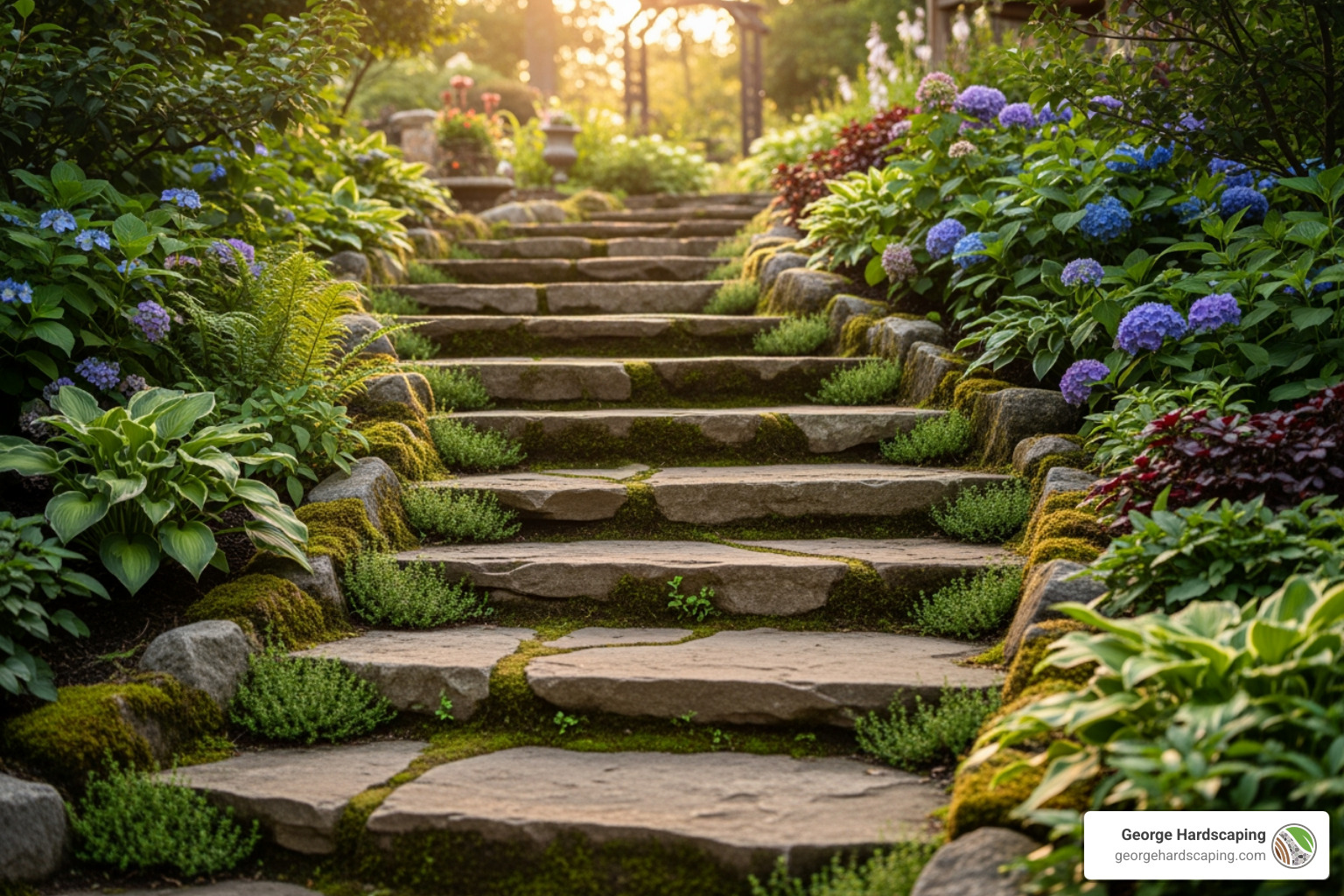
The adaptability of stone steps design ideas means you can dial in exactly the look and function your site needs—from grand entries to woodland paths. In Essex County, MA, we tailor step systems to respect views, grades, and architecture while meeting safety and comfort goals.
Grand Entrances: Creating a Welcoming First Impression
For stately front façades, wide, formal steps make a dramatic arrival sequence. Cut granite or bluestone treads, consistent risers, and symmetrical cheek walls align with traditional architecture. Incorporate a generous landing to set the front door as a focal point and allow people space to pause. Tie steps into walkways and stairs installation services (https://georgehardscaping.com/walkways-stairs/) for a unified approach from curb to threshold.
Seamless Patio Transitions: Blending Indoor and Outdoor Living
When steps match or complement the patio surface, the whole space feels larger and more cohesive. Align tread depths with furniture zones and door swings, pitch treads slightly for drainage, and consider a low first riser at the door for a smooth threshold transition. Our patio design services (https://georgehardscaping.com/patio-design-installation/) prioritize these functional details so steps enhance how you use the space, not just how it looks.
Rustic and Meandering: Natural Slope Steps
On sloped sites, irregular fieldstone or large stone blocks can create comfortable, meandering runs that follow the land. Breaking long climbs into short flights with planted landings reduces visual bulk and makes ascents easier. Integrate with landscape retaining walls (https://georgehardscaping.com/landscape-retaining-walls/) to manage grade, route water, and create layered garden terraces.
Modern and Minimalist: Sleek Stone Steps Design Ideas
Contemporary homes benefit from clean lines and reduced material palettes. Use precisely cut bluestone or granite with consistent joints. Consider “floating” tread effects where risers are visually minimized, or cantilevered treads set into masonry sidewalls. Neutral plantings and subtle lighting keep the focus on geometry and material quality.
Terraced Landings and Plant-Integrated Stairways
Alternating runs and landings not only increase safety—they add rhythm and opportunities for seasonal interest. Landings can host container gardens, built-in planters, or a small bench. Low groundcover spilling across stone soften edges, while taller perennials frame views. These moments turn circulation into an experience.
Coastal and Poolside Considerations
In salt-exposed areas, choose dense, salt-tolerant stones (granite excels) and detail joints to shed water. For pool areas, prioritize slip resistance with thermal or natural cleft finishes and avoid highly polished surfaces. A light-colored stone can also keep treads cooler in summer sun.
Universal Design and Everyday Comfort
Small design choices make steps friendlier for all ages: deeper treads (14–16 inches), modest risers (5–6.5 inches), and clear handrail routes where runs are longer or steeper. Well-placed landings create rest points and offer design relief on long ascents.
Nighttime Safety and Ambience
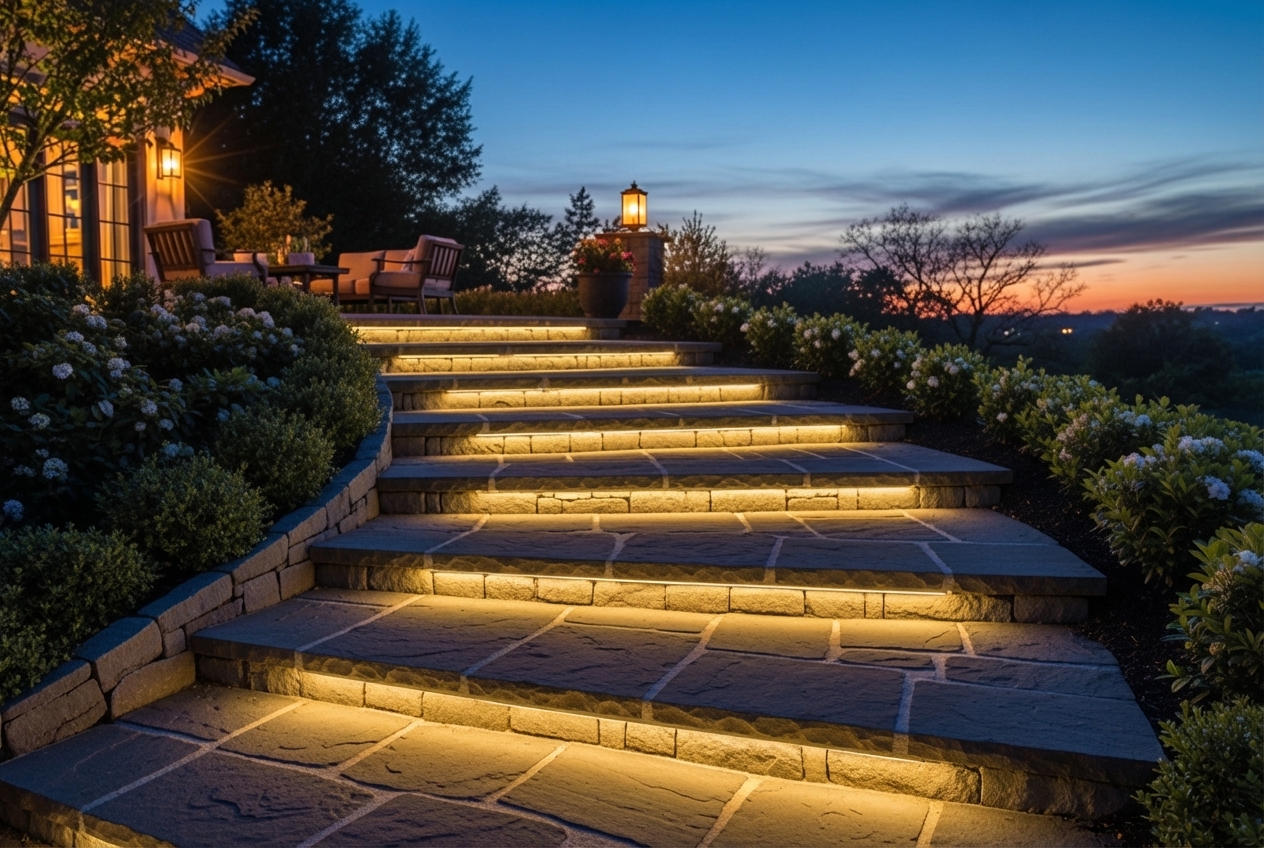
Whether you prefer under-tread lighting or low bollards, illumination improves safety and extends enjoyment. Keep light levels subtle—just enough to delineate edges and textures—so nighttime views remain calm and welcoming.
Considering a new entry, hillside connection, or patio transition? Request your personalized estimate (https://georgehardscaping.com/request-estimate/) and let us align material, layout, and lighting to your home and lifestyle.
Key Design and Installation Considerations
Successful stone steps look effortless because the hidden work—layout, base preparation, drainage, and finishing—was done meticulously. The following considerations guide durable, comfortable, and code-aware installations in Massachusetts.
Integration with Your Hardscape
Steps should feel like part of a bigger composition. Match or thoughtfully contrast materials with patios and walks, align joints where practical, and maintain consistent riser heights across runs. For cohesive outdoor rooms, we integrate steps with patios through our patio design services and stabilize grades with landscape retaining walls. Custom outdoor firepit solutions can be sited near landings to invite lingering.
Comfortable Dimensions and Layout
A time-tested rule of thumb is 2R + T = 24–27 inches, where R is riser height and T is tread depth. Typical risers are 4–8 inches; treads 12–18 inches. Aim for consistent risers throughout any single run; even small variations are noticeable underfoot. Include landings on long runs for resting and to break up the climb visually. For technical diagrams and stair planning basics, Allan Block’s Stair Design Guidelines are an excellent resource.
Base Preparation and Drainage
- Subgrade: Excavate to undisturbed soil, then place a geotextile to separate soil from the granular base where appropriate.
- Base: Use compacted, angular aggregate (e.g., 3/4-inch crushed stone) in 4–8 inch lifts, compacting each lift for uniform support.
- Bedding: A thin layer of stone dust or coarse sand can help level treads; avoid thick, compressible bedding that can settle unevenly.
- Drainage: Pitch treads slightly forward (about 1–2%) to shed water. Direct water away from risers and walls with swales, drains, or weep outlets.
Frost-Heave Strategy
Frost-susceptible soils expand when water freezes. The best defense is to keep water away from the subgrade and use non-frost-susceptible, well-compacted granular base. The University of Minnesota Extension provides an accessible discussion of frost heaving in soils that explains frost mechanics and mitigation strategies.
Surface Finishes and Edges for Safety
Choose finishes that balance aesthetics with slip resistance. Natural cleft and thermal (flamed) surfaces offer better grip than honed or polished faces in exterior settings. Eased or rock-faced edges reduce chipping and soften the profile of nosings.
Lighting for Safety and Ambience
- Under-tread/under-cap lighting gently washes each riser.
- Low path lights along plantings provide guidance without glare.
- Consider 2700–3000K warm white for a welcoming tone; shield sources to minimize light spill.
The U.S. Department of Energy offers helpful guidance on outdoor LED lighting best practices for creating energy-efficient illumination.
Codes, Handrails, and Practical Details
While many residential landscapes are not governed as strictly as interior stairs, adhering to sensible proportions and local code guidance improves safety and comfort. Massachusetts follows the state building code (780 CMR) based on model codes; your municipality may have amendments. It is wise to review the Massachusetts State Building Code overview and consult your local building department, as a permit or handrails may be required for your specific project.
Finishing Touches and Transitions
- Joints: Tight, consistent joints improve appearance and limit weed intrusion.
- Sealers: Optional; choose breathable, exterior-rated products suited to your stone type.
- Planting: Use groundcovers to soften edges and stabilize adjacent soils; avoid species that encroach over treads.
From concept to final sweep, our masonry services execute these details so your steps feel comfortable, look beautiful, and last.
Frequently Asked Questions about Stone Step Design
How much do stone steps cost?
Costs vary with stone type, project size, access, and complexity. A small, straight set with standard treads might start around the low thousands, whereas a multi-flight, curved staircase with landings, lighting, and integrated walls can reach well into five figures. Premium materials (cut granite, thick monolithic slabs), difficult site access, and extensive base work increase labor and material costs. We provide transparent, line-item estimates tailored to your site and goals.
How do you maintain stone steps?
- Routine Cleaning: Sweep debris and rinse with water. A stiff nylon brush and mild detergent lift stubborn dirt.
- Weed Control: Remove weeds from joints promptly; consider polymeric sand or well-packed stone dust in joints where appropriate.
- Sealing (Optional): Breathable, exterior-rated sealers can reduce staining on light stones. Reapply per product guidance.
- Winter Care: Use calcium magnesium acetate or magnesium chloride instead of rock salt to reduce stone and vegetation damage. For more on the environmental impact of chlorides in de-icers, the U.S. EPA provides a detailed overview on chloride pollution and management.
Can I build stone steps myself?
Small, single-step transitions may be approachable for experienced DIYers. However, multi-step runs on slopes require careful subgrade preparation, heavy lifting, precise layout, and drainage planning—best handled by professionals. Improper bases lead to settling, misaligned risers, and safety issues. Hiring a pro ensures long-term stability and comfort.
Do I need a permit or handrails?
Requirements vary by municipality and project scope. Some towns require permits for substantial grade changes, wall integrations, or when steps meet specific height or safety thresholds. Handrails may be recommended or required for longer runs or steeper slopes. Consult your local building department; reviewing the Massachusetts State Building Code overview is a good starting point to understand local requirements.
What’s the best stone for our climate?
Dense, durable stones with textured finishes perform best in New England. Granite and bluestone are standouts for front entries and heavy-use areas. For rustic garden paths and slopes, flagstone and fieldstone offer excellent traction and a natural look when installed on competent bases with good drainage.
How long does installation take?
Simple step replacements may be completed in a few days, while multi-flight projects with landings, walls, and lighting can span one to three weeks depending on access, weather, and scope. Lead times vary seasonally; booking early ensures favorable scheduling.
Will stone steps be slippery?
Choose appropriate finishes—natural cleft, flamed/thermal, or lightly textured edges—to improve grip. Keep surfaces clean of algae and wet leaves. In shaded or north-facing settings, lighting and thoughtful planting that allows airflow help steps dry more quickly.
How do stone steps tie into the rest of my landscape?
We often coordinate step materials with patios, walks, and walls for a cohesive palette. Explore our patio design services, integrate grade changes with landscape retaining walls, and finish circulation routes through walkways and stairs installation services. Our gallery of stone step projects shows how these elements work together.
Do you offer lighting, railings, and related upgrades?
Yes. We install low-voltage lighting tailored to your steps and can coordinate railings with qualified fabricators or carpenters. Integrating these elements early in design avoids rework and ensures clean conduit pathways and power supply locations.
What’s the maintenance outlook compared to concrete or wood?
Stone typically outlasts wood (which can rot or require frequent refinishing) and avoids many of the cracking and spalling issues of poured concrete in freeze-thaw conditions. With a proper base and drainage, stone steps deliver decades of service with minimal upkeep.
Have more questions or a unique site challenge? Request a personalized estimate and we’ll propose options that balance budget, aesthetics, and performance.
Conclusion: Elevate Your Landscape with Expertly Crafted Stone Steps
Stone steps design ideas blend practicality and beauty—creating safer routes, resolving grade changes, and elevating curb appeal. With durable materials, proper dimensions, and professional installation, your stairs become a lasting asset.
Whether you envision a grand granite front entry, a naturalistic fieldstone climb through gardens, or a crisp bluestone transition off the patio, George Hardscaping delivers cohesive design, precise installation, and materials selected for New England conditions. Explore our patio design services (https://georgehardscaping.com/patio-design-installation/), integrate grade changes with landscape retaining walls (https://georgehardscaping.com/landscape-retaining-walls/), and see inspiration in our gallery of stone step projects (https://georgehardscaping.com/gallery/).
Ready to turn concepts into an enduring feature you’ll enjoy year-round? Request your personalized estimate now (https://georgehardscaping.com/request-estimate/) and let’s build steps that look beautiful, feel comfortable, and last for decades.
