
stone front steps ideas: 10 Stunning Ways to Boost Curb Appeal
Stepping Up Your Curb Appeal
Walking up to your front door should feel like an experience, not just a journey. Your entrance steps aren’t merely functional—they’re the handshake your home offers to everyone who visits. When considering stone front steps ideas, you’re really investing in that crucial first impression that sets the tone for your entire property.
The perfect stone steps can transform an ordinary entrance into something truly special. Most homeowners find themselves drawn to several popular options:
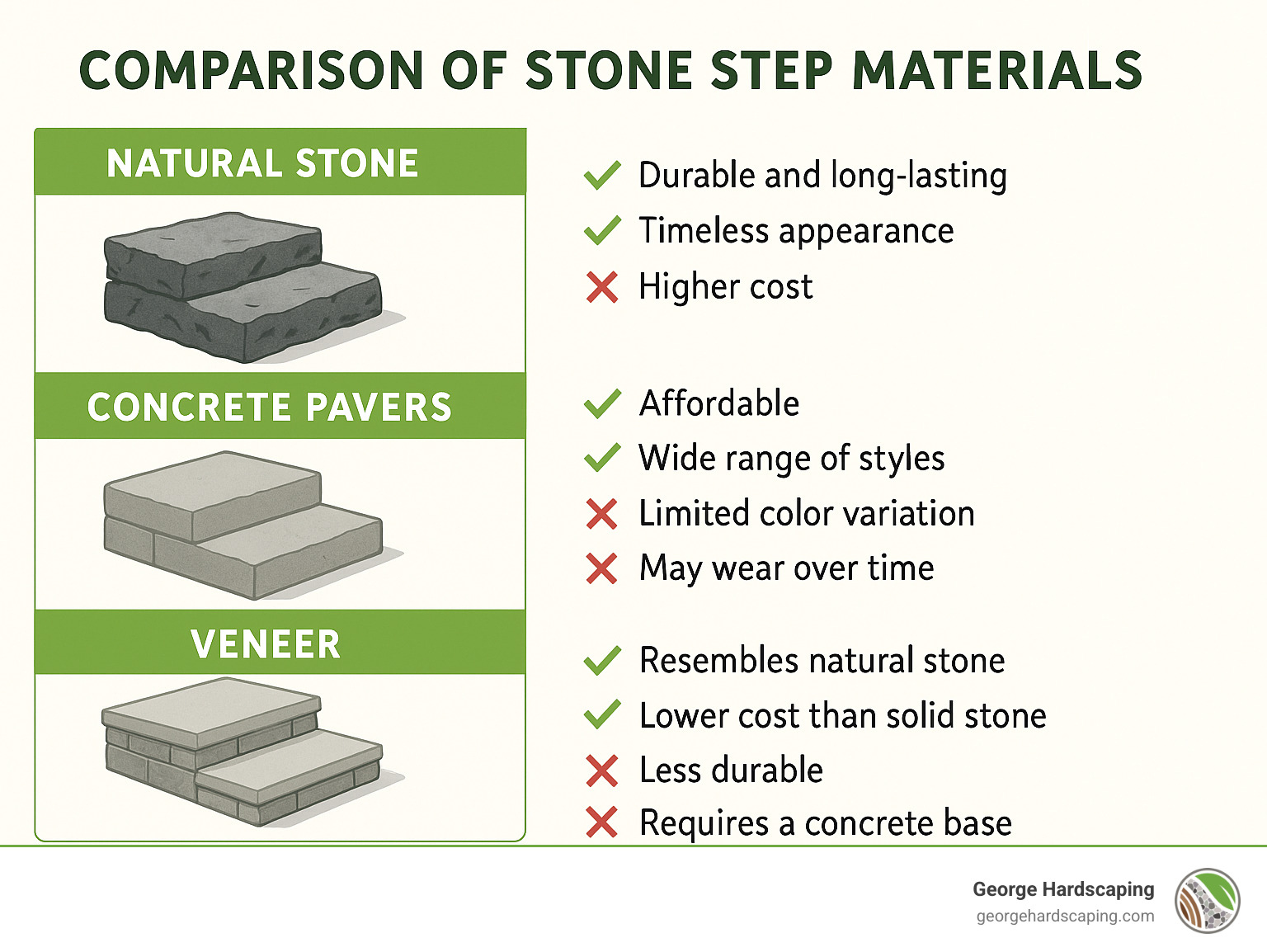
Natural Stone steps like bluestone, granite, and limestone offer best durability and timeless appeal. While they represent a premium investment at $150-$600 per step, they typically last generations with minimal maintenance. There’s something undeniably authentic about natural stone that manufactured alternatives struggle to replicate.
Concrete Pavers provide an excellent middle ground, delivering the appearance of natural stone with improved freeze-thaw resistance and more predictable installation costs. At $80-$300 per step, they’re becoming increasingly popular for their balance of aesthetics and practicality.
For homeowners working with existing concrete steps, Stone Veneer offers a cost-effective upgrade ($100-$400 per step) that adds the beauty of stone without full reconstruction. This thin stone layer can dramatically transform tired concrete steps into something that looks custom-built.
Mixed Materials create visual interest by combining elements like stone treads with brick risers or decorative borders. As one client shared, “The contrast between materials makes my entrance feel intentionally designed rather than just functional.”
For evening safety and dramatic effect, Integrated Lighting with embedded LEDs along step edges or risers adds both practicality and wow-factor, though it does increase project costs by $40-$200 per step.
Unlike wooden steps that inevitably rot or plain concrete that develops unsightly cracks, properly installed stone steps can remain beautiful for 30+ years with minimal maintenance. They provide that touch of craftsmanship that lifts your entire property’s appearance. As one Essex County homeowner told us, “They’re proper old-style craftsmanship that gave me confidence throughout the project.”
Whether you’re replacing deteriorating concrete, upgrading from weather-worn wooden steps, or designing a completely new entryway, stone steps deliver the perfect blend of beauty and functionality. Beyond the immediate aesthetic improvement, they typically increase property values by up to 7% while providing slip-resistant, weather-hardy access that stands the test of time.
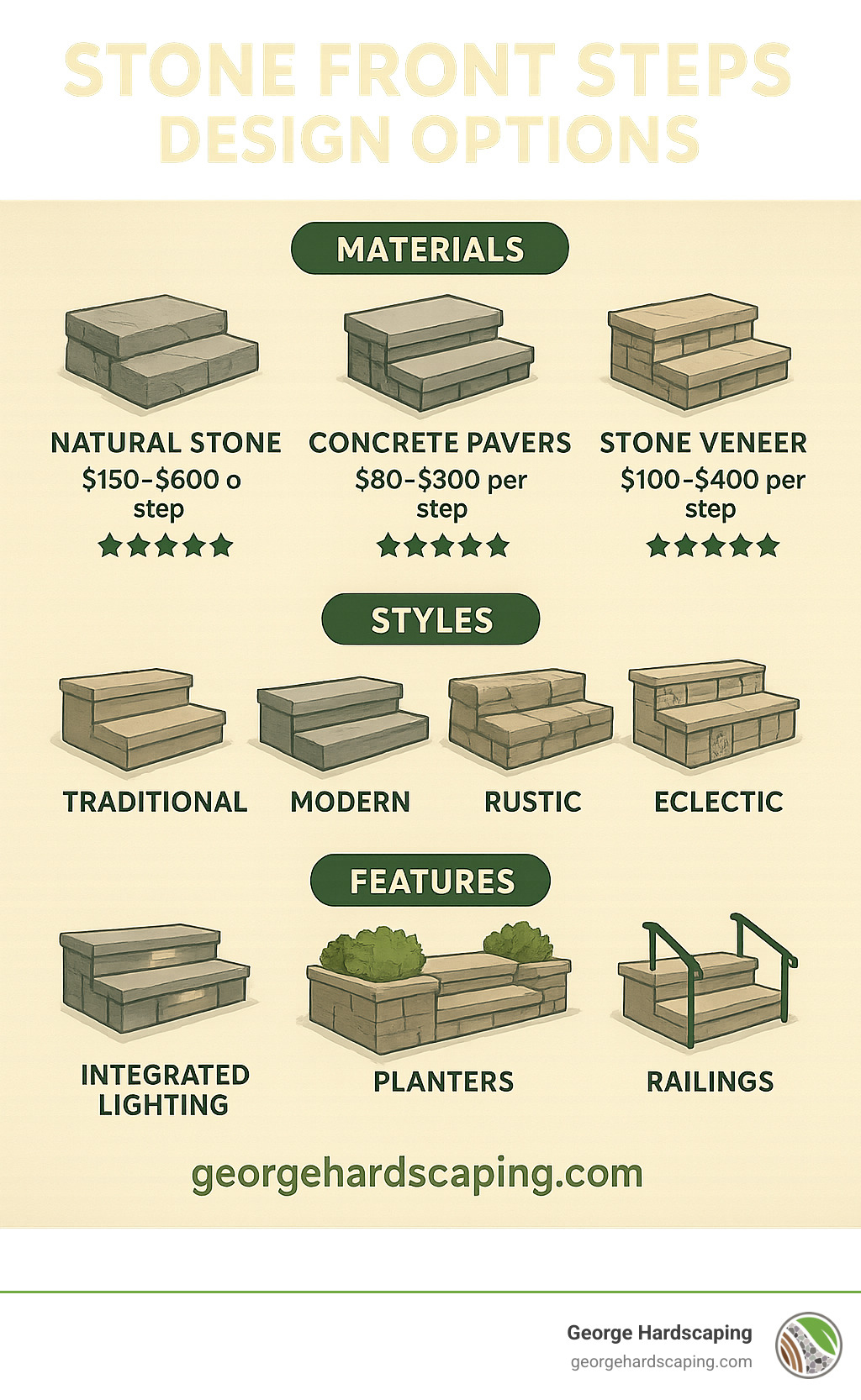
When exploring stone front steps ideas, you might encounter various terms in your research. You’ll find inspiration by looking into granite steps design ideas, natural stone steps ideas, and outdoor stone stairs ideas.
The right stone steps don’t just connect your home to the outside world—they bridge the gap between mere functionality and true craftsmanship, creating an entrance that welcomes you home every day with style and substance.
1. Natural Bluestone Charm
There’s something magical about the way bluestone front steps transform a home’s entrance. With their distinctive earthy tones—ranging from deep blue-grays to subtle purples and rustic browns—bluestone steps create that perfect first impression that feels both neat and warmly inviting.
For those of us in New England, especially along the North Shore, bluestone isn’t just beautiful—it’s practical. These natural stone steps stand up to our harsh winters and unpredictable freeze-thaw cycles with remarkable resilience. The natural cleft surface provides excellent grip even on those rainy Massachusetts mornings, keeping your family safe while looking stunning.
“Most of our clients are amazed at how bluestone steps seem to get more beautiful with age,” our team often shares with homeowners in Essex County. “Instead of deteriorating, they develop this gorgeous patina over the years that adds depth and character.”
Bluestone steps typically come in substantial 6-inch thicknesses and lengths of 4 to 6 feet. For front entrances, we often recommend wider treads between 14 and 20 inches—this creates a more generous, welcoming approach that makes your entrance feel more substantial and inviting.
Many homeowners in historic areas like Marblehead and Salem choose stone front steps ideas centered around bluestone specifically because they complement traditional architecture so beautifully. Pair them with classic white-painted railings and black iron hardware for a timeless New England look that will never go out of style.
The versatility of bluestone means it works equally well with both traditional Colonial homes and more contemporary designs. Its natural texture adds warmth to modern architecture while its clean lines can bring subtle sophistication to more rustic properties.
More info about Bluestone Steps
2. Sculpted Granite Showstopper
There’s something truly magnificent about granite front steps that makes passersby stop and take notice. If you’re looking for stone front steps ideas that combine unparalleled durability with head-turning elegance, granite deserves your serious consideration.
Granite stands as nature’s hardest commonly-used stone for entryways, laughing in the face of harsh New England winters, resisting stains that would mark lesser materials, and shrugging off decades of foot traffic with ease.
“Vermont Woodbury Grey Granite captures the hearts of many of our clients,” shares our design team. “Its consistent light gray backdrop with subtle sparkling flecks creates a refined statement that works beautifully whether your home is a colonial classic or contemporary masterpiece.”
The thermal finish is where granite truly shines for front entryways. This specialized process uses controlled flame to slightly texture the surface, creating excellent slip resistance without sacrificing that premium look. Unlike some materials that can become dangerously slick when wet, thermally-finished granite provides sure footing in all seasons.
Those crisp, precise edges possible with granite communicate quality craftsmanship from the moment someone approaches your home. In upscale communities like Manchester-by-the-Sea and Gloucester, we’ve transformed ordinary entrances into architectural statements with granite steps that command attention.
Yes, granite represents a premium investment—with average internet estimates showing costs typically starting around $400-$800 per step—but its remarkable longevity makes it surprisingly cost-effective when viewed over decades. Many granite installations from the early 1900s still maintain their beauty and structural integrity today, a testament to this material’s extraordinary staying power.
For homeowners who value both sleek aesthetics and generational durability, granite steps deliver an entrance that will likely outlast your mortgage—and possibly even the next owner’s too.
3. Flagstone & Plantable Gaps
There’s something undeniably magical about stone front steps ideas that blur the line between hardscape and landscape. Flagstone steps with plantable gaps achieve exactly this effect, creating an entrance that feels as if it grew organically from your garden.
Flagstone’s natural charm comes from its irregular shapes and varied coloration. Unlike the precision of granite or bluestone, flagstone accepts imperfection. These asymmetrical pieces fit together like a natural puzzle, leaving small pockets where life can take root.
“The first time I saw green sprigs popping up between my new flagstone steps, I knew we’d made the right choice,” shares a Hamilton homeowner whose cottage-style entrance we completed. “It’s like the house is giving a little nod to the garden.”
The beauty of this approach lies in how the steps evolve over time. What begins as clean stone gradually becomes home to moss, creeping thyme, or tiny sedums that spill over edges and soften corners. These living accents change with the seasons, offering spring blooms, summer greenery, and even winter interest with evergreen varieties.
We’re particularly thoughtful about plant selection when designing these gaps. The ideal candidates are low-growing, drought-tolerant varieties that can handle occasional foot traffic nearby without becoming trip hazards. For clients in Rockport and Manchester, we often recommend woolly thyme or Irish moss that stay compact while adding texture.
Proper drainage is essential with plantable gaps. We carefully engineer the base layers to ensure water moves through rather than pooling, which protects both the stone and the plants during freeze-thaw cycles. This thoughtful approach ensures your steps remain stable while still supporting those charming green accents.
This style works beautifully for cottages, craftsman bungalows, and farmhouse-style homes throughout Essex County. The informal, slightly whimsical quality of flagstone with plantings creates a welcoming transition that invites visitors to slow down and notice the details.
While particularly suited to side entrances and garden paths, this stone front steps idea can also create a stunning main entrance when paired with the right architectural style. The natural edges and living elements bring a warmth and character that manufactured materials simply can’t match.
More info about Flagstone Walkway and Stairs
4. Limestone with LED Risers
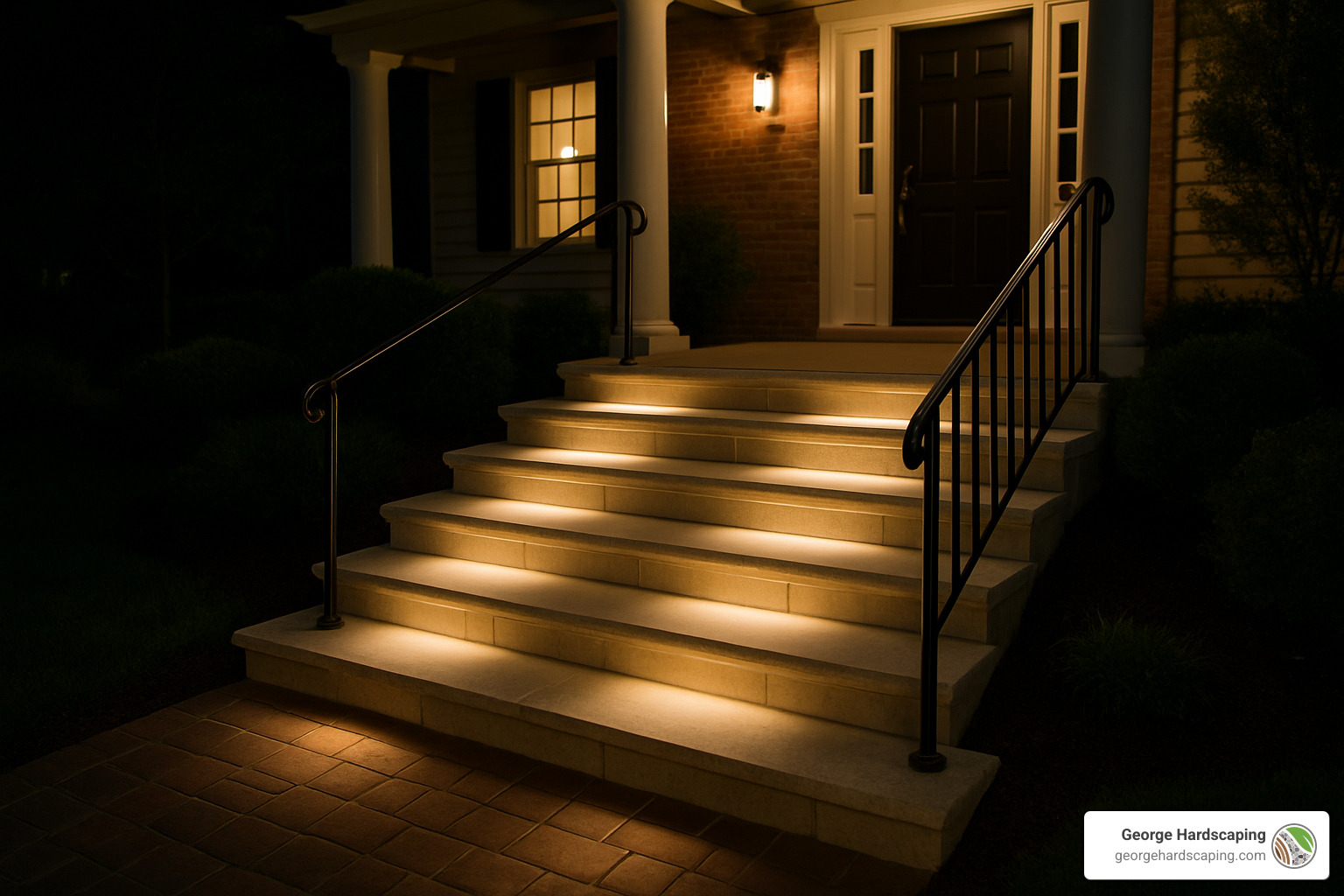
There’s something magical about coming home to an entrance that glows with welcoming light. Limestone steps with integrated LED lighting create exactly this enchanting effect, changing your home’s entrance from merely functional to absolutely unforgettable.
Limestone brings a distinct elegance with its pale palette—ranging from soft creams to gentle grays—that complements virtually any home exterior. Its fine-grained, uniform texture creates a more refined appearance than some other natural stones, making it particularly stunning for homes with classical architectural elements. We’ve installed these sophisticated steps for many homeowners in Newburyport and Salem, where Federal and Colonial homes benefit from limestone’s timeless appeal.
“I wanted something distinctive but not flashy,” shared one of our Hamilton clients. “The limestone has this quiet elegance during the day, but when those LEDs kick on at dusk—that’s when visitors really take notice.”
The real change happens when the sun sets. Hidden LED lighting installed within the risers creates a dramatic effect that’s both beautiful and practical. Safety becomes a stylish feature as each step transition is clearly illuminated, preventing those awkward stumbles that can happen on dark evenings. The energy-efficient LEDs consume minimal electricity while providing years of reliable illumination without frequent bulb changes.
Many of our clients connect these lights to their smart home systems, allowing the steps to automatically illuminate at sunset or when motion is detected. Some even program color-changing LEDs for special occasions—blue for Patriots games or orange for Halloween.
When planning limestone steps with LED integration, our team carefully considers waterproofing details and proper placement to ensure the electrical components remain protected from New England’s sometimes harsh elements. The slight additional investment for this lighting pays dividends in both safety and curb appeal.
For homes with existing limestone steps, we can often retrofit LED lighting without disturbing the stonework, bringing modern convenience to traditional designs. The pale limestone actually improves the lighting effect, creating a softer glow than darker stone varieties would produce.
Stone front steps ideas like these limestone and LED combinations offer that perfect balance of classic materials and modern technology—creating an entrance that honors traditional craftsmanship while embracing contemporary convenience.
More info about Walkways & Stairs
5. Concrete Paver Chisel-Look Steps
For homeowners who love the look of natural stone but need to keep an eye on the budget, concrete paver steps with a chiseled finish offer a brilliant compromise. Modern manufacturing has come a long way, creating remarkably convincing stone lookalikes that handle our tough New England winters like champions.
Techo-Bloc’s Röcka steps are a perfect example of this innovation. With their deeply textured surface, they capture the essence of hand-cut stone while being engineered specifically to withstand our brutal freeze-thaw cycles—something every Essex County homeowner knows is non-negotiable for outdoor installations.
“What really delights our clients is the ‘double-take’ factor,” says our installation team leader. “Visitors walk up to these steps and can’t believe they’re not natural stone. After a season of weathering, even the most discerning eye would struggle to spot the difference.”
These manufactured stone steps shine in several important ways. Their consistency means you’ll get uniform colors and textures without the sometimes unpredictable variations of natural stone. Their modularity creates precise dimensions that make installation smoother and more predictable. The durability factor is impressive—they’re specifically engineered to resist cracking, spalling, and damage from salt. And perhaps most appealingly, they’re often budget-friendly, typically costing 20-40% less than natural stone alternatives.
The Röcka steps work beautifully in contemporary settings where clean lines are prized, but they also blend seamlessly with more traditional architecture when you want a consistent, polished appearance. We’ve installed dozens of these entrances in newer developments around Danvers and Peabody, where homeowners appreciate the perfect balance of traditional good looks with modern performance.
For homes with larger front entrances, these pavers allow for creative designs that might be cost-prohibitive with natural stone. Multi-level approaches with integrated landings become much more accessible when using these engineered products.
Learn more about Techo-Bloc Röcka steps
6. Wood-Look Borealis Faux Steps
There’s something undeniably inviting about wooden steps leading to a front door. They speak of craftsmanship, warmth, and tradition. But anyone who’s owned wooden steps knows the reality: constant maintenance, rotting boards, and eventual replacement. That’s where wood-look concrete steps come into the picture, offering a brilliant compromise.
Techo-Bloc’s Borealis steps have revolutionized this category with their remarkably convincing wood-grain texture. The faux-bois (fake wood) finish captures all the character and charm of weathered timber while eliminating every drawback of the real thing.
“Most of our clients can’t believe these aren’t actual wooden steps when they first see them,” says our installation manager. “We’ve had people literally get down on their hands and knees to touch them before they’re convinced.”
The rustic-farmhouse aesthetic these steps create works beautifully throughout Essex County. In towns like Rowley and Georgetown, where colonial architecture meets rural charm, these steps provide the perfect transition between landscape and home. The warm texture feels established and welcoming rather than cold or formal.
Stone front steps ideas like these offer substantial advantages over genuine wood. They’ll never rot or warp, even after decades of harsh New England winters. You won’t spend spring weekends sanding and sealing them. They provide excellent slip resistance even in wet conditions, and insects simply can’t damage them.
For homes with natural wood siding or those aiming for a farmhouse aesthetic, Borealis steps create a seamless visual connection. They can be paired with traditional white railings for a classic look or left open for a more contemporary feel. Either way, they provide the perfect balance of rustic charm and modern durability.
Perhaps most importantly, these steps age gracefully. Unlike wood that deteriorates, or some concrete products that look artificial as they weather, these steps maintain their character while developing a subtle patina that only improves their wood-like appearance over time.
7. Mixed Brick & Stone Contrast
There’s something undeniably charming about the marriage of brick and stone in front steps. This classic combination creates a rich mix of textures and colors that feels both sophisticated and inviting. When we install these mixed-material steps for homeowners in places like Salem or Newburyport, the result often becomes the most commented-on feature of their home’s exterior.
The most popular arrangement we create features substantial stone treads paired with brick risers or decorative brick borders. This thoughtful contrast creates a pleasing visual rhythm as you ascend toward the entrance, with each material highlighting the beauty of the other.
“The brick and stone combination allowed us to tie in both elements from our home’s exterior,” shared a delighted homeowner in historic Salem. “The granite steps echo our window lintels, while the brick risers complement our chimney and garden walls.”
This approach isn’t just beautiful—it’s historically authentic for many architectural styles throughout Essex County. Colonial, Federal, and Victorian homes particularly benefit from this mixed-material approach, which often mirrors the original construction techniques used when these homes were built.
What makes this stone front steps idea so versatile is how it can be customized to your home’s specific character. For a stately Federalist home in Marblehead, we might use clean-lined granite treads with traditional red brick risers in a running bond pattern. For a more playful Victorian in Beverly, perhaps bluestone treads with antique brick arranged in a herringbone pattern adds just the right touch of personality.
The color possibilities are equally exciting. From the warm reds and oranges of traditional brick to the cooler tones of bluestone or granite, these combinations can either harmonize with your home’s exterior or create an intentional, eye-catching contrast.
For heritage properties, we often recommend using reclaimed brick, which brings its own weathered patina and historical authenticity to the project. These aged materials tell a story from the moment they’re installed, rather than waiting years to develop character.
8. Floating Cantilevered Slabs
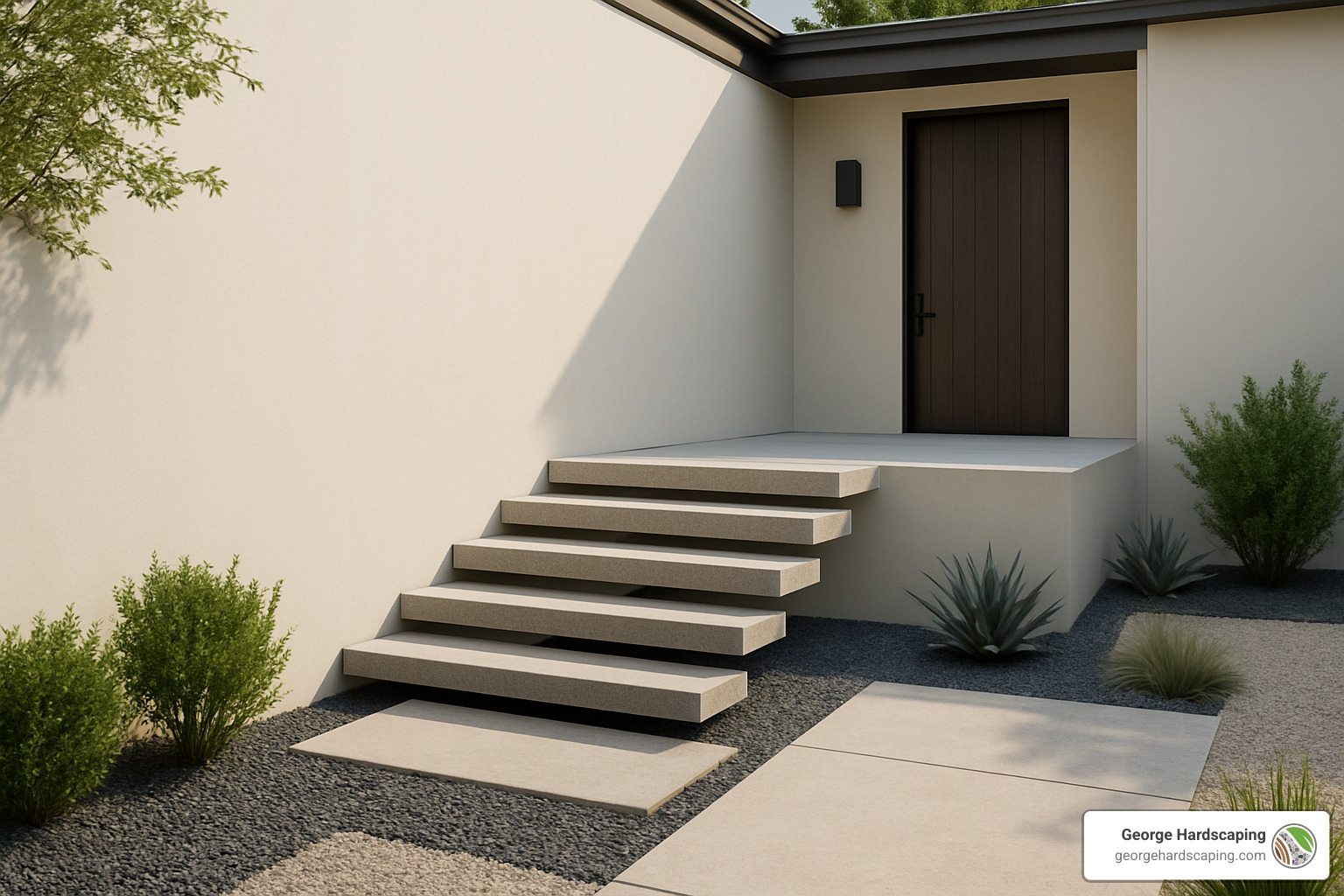
There’s something almost magical about steps that seem to float in mid-air. For homeowners with modern sensibilities, cantilevered stone steps create an entrance that’s both breathtaking and conversation-starting. These architectural showpieces appear to defy gravity, projecting outward with no visible support.
“The first time visitors approach our new floating steps, they always pause and do a double-take,” laughs Mark, a Swampscott homeowner whose mid-century modern home received this dramatic upgrade last year. “They create this wonderful sense of lightness and movement that conventional steps simply can’t match.”
The secret to these gravity-defying treads isn’t magic—it’s engineering. Hidden steel reinforcement embedded within a supporting wall allows substantial stone slabs to project outward while safely supporting full weight loads. Most commonly crafted from either solid granite or high-performance concrete, these steps require precision installation to ensure both safety and longevity.
Stone front steps ideas like these floating treads work particularly beautifully with contemporary and minimalist home designs. The clean horizontal lines complement modern architecture, while the open space beneath each step creates interesting shadow play throughout the day. This openness also offers a practical winter bonus—snow has nowhere to accumulate on risers, making clearing your entrance easier.
This airy approach comes with considerations beyond aesthetics. Safety remains paramount, which is why we typically incorporate subtle lighting beneath each tread and ensure proper depth and non-slip finishes. The investment is substantial—floating steps typically cost 30-50% more than conventional stone steps—but for homeowners seeking to make a distinctive architectural statement, the visual impact justifies the expense.
“What I love most is how the steps transformed our entire facade,” adds Mark. “What was once a forgettable entrance is now the defining feature of our home’s exterior. It’s like living in an architectural magazine.”
For the right property, these modern stone marvels create an entrance experience that feels both contemporary and timeless—a perfect balance of form and function that lifts your home’s curb appeal to gallery-worthy status.
9. Curved Fieldstone Garden Entry
There’s something magical about a curved stone pathway that winds its way to your front door. Unlike rigid, straight steps that rush you from point A to point B, curved fieldstone steps invite you to slow down and enjoy the journey home.
Fieldstone steps bring a piece of New England’s natural history right to your doorstep. These native boulders, scattered across Essex County by ancient glaciers, create entrances with character and story that manufactured materials simply can’t match.
“We wanted our home to feel like it belongs here,” shares Mary from North Reading, whose winding fieldstone entrance we completed last fall. “The steps follow the natural slope of our yard, with little planted nooks along the way. It’s like walking through a garden rather than up a staircase.”
The beauty of curved fieldstone steps lies in their organic integration with your landscape. Rather than imposing a rigid structure on your yard, these steps work with the natural contours of your property. The irregular shapes and varied colors of fieldstone create a rustic, timeless quality that improves with age.
Natural aesthetics shine through with fieldstone’s varied textures and colors ranging from soft grays to warm browns, often with touches of lichen adding character. These steps look particularly stunning when bordered by native plantings that soften the edges and create a seamless transition between hardscape and landscape.
Garden integration happens naturally with curved steps, as the winding path creates protected planting pockets on either side. These spaces are perfect for showcasing seasonal color or fragrant herbs that release their scent as visitors brush past.
The curved approach also serves practical purposes beyond beauty. It can help manage steeper grades more comfortably by extending the run of the steps across a wider area. This creates a more gradual ascent that’s easier to steer for everyone from children to grandparents.
While the organic appearance might suggest a casual installation process, curved fieldstone steps actually require exceptional craftsmanship. Each irregular stone must be carefully selected and placed to ensure stable footing, consistent riser heights, and proper drainage—all while maintaining that natural, “always been there” appearance.
For homes with woodland settings or cottage gardens throughout Beverly, Ipswich, and other North Shore communities, curved fieldstone steps create an entrance that feels like a natural extension of the landscape—the perfect welcome home.
10. Integrated Retaining-Wall Steps
When your property has a challenging slope, integrated retaining wall steps offer the perfect solution that combines beauty and function. This clever design approach transforms problematic grades into stunning multi-level landscapes that add character and usability to your home’s entrance.
“Our sloped front yard went from a liability to our favorite feature,” shares a Lynnfield homeowner. “The integrated retaining walls and steps not only solved our erosion problems but created these beautiful terraced garden spaces we never had before.”
What makes this approach so effective is how it works with your land’s natural contours rather than fighting against them. For contemporary homes, products like Techo-Bloc’s Raffinato wall system provide clean, sleek lines with a sophisticated finish. The uniform blocks create a cohesive look that flows seamlessly from one level to the next, perfect for modern architectural styles.
For homes with more traditional character, natural stone walls with matching steps create a timeless appearance that feels like it’s been part of the landscape for generations. The varied textures and colors of natural stone blend beautifully with plantings and create a sense of permanence.
Multi-level landscape solutions like these are particularly valuable in the hilly areas of Beverly, Gloucester, and Rockport, where significant grade changes come with the territory. Instead of seeing these slopes as obstacles, they become opportunities to create visual interest and expand your usable outdoor space.
Slope solutions with integrated steps also address practical concerns like drainage control, directing water away from your home’s foundation and preventing erosion during heavy rains. Properly designed retaining walls include drainage systems behind them that manage water flow invisibly while maintaining the beautiful appearance.
Cohesive design is another major benefit – the consistent materials and construction create a unified look that ties your entire front landscape together. Rather than having disconnected elements, your entrance tells a cohesive story from street to door.
The terraced spaces created between walls and steps provide perfect spots for landscaping, allowing you to incorporate colorful perennials, ornamental grasses, or even small specimen trees that highlight the journey to your front door.
When planning integrated retaining wall steps, consider proper engineering and local building codes. Walls over a certain height typically require permits and sometimes structural engineering to ensure long-term stability and safety.
Learn more about Techo-Bloc Raffinato walls
Landscape Steps designed in this integrated fashion transform challenging slopes into your property’s most distinctive feature – proving that with the right stone front steps ideas, landscape obstacles become your home’s greatest assets.
Stone Front Steps Ideas: Installation & Planning Essentials
Behind every beautiful stone entrance lies careful planning and proper installation techniques. The magic of stunning stone front steps ideas comes to life only when built on a solid foundation—both literally and figuratively.
Your steps’ foundation is absolutely critical—all stone installations require proper base preparation extending below the frost line, which typically reaches about 4 feet deep here in Essex County. Many homeowners don’t realize this invisible element is the most common reason steps fail prematurely.
“I can’t stress enough how important proper drainage is,” explains our lead installer at George Hardscaping. “We incorporate drainage stone beneath every installation and carefully direct water away from the foundation. Without this attention to detail, the freeze-thaw cycles we experience in Massachusetts will eventually cause even the most beautiful stone steps to shift, crack, and fail.”
When planning your stone steps, building codes aren’t just bureaucratic red tape—they’re essential safety guidelines. Most local codes require risers between 7-7¾ inches maximum height and treads with at least 10-11 inches of depth. These measurements ensure comfortable, safe stepping patterns that feel natural as you climb.
For entrances with more than three steps or those rising over 30 inches, railings aren’t just a design element—they’re typically required by code. These railings provide crucial support, especially for elderly visitors or during icy winter conditions.
The relationship between your tread depth and riser height creates what professionals call the “tread-riser ratio.” This mathematical relationship directly affects how comfortable your steps feel when climbing them. A commonly used formula suggests that the riser height plus the tread depth should equal about 17-18 inches for optimal comfort.
Stone Front Steps Ideas for Different Climates
The North Shore’s unique climate presents specific challenges for stone steps. From punishing freeze-thaw cycles to coastal salt exposure, choosing the right materials for your specific microclimate ensures your investment will stand the test of time.
For coastal properties in Marblehead, Swampscott, and Gloucester, salt tolerance becomes particularly important. Granite and bluestone generally perform better in these salt-exposed environments, while limestone—though beautiful—can be more susceptible to salt damage over time.
All stone materials are affected to some degree by our freeze-thaw cycles, but engineered concrete pavers are specifically designed to resist this stress. Among natural stones, granite typically performs best in this climate, followed by bluestone and then limestone.
Your stone’s sealing needs will vary based on both the material and its exposure conditions. Granite might need resealing only every 3-5 years, while bluestone benefits from treatment every 2-3 years. More porous limestone may require attention every 1-2 years, and concrete pavers typically need reapplication every 2-3 years.
“We actually adjust our installation techniques based on specific site conditions,” shares our project manager. “A north-facing entrance that stays shaded and damp requires different drainage considerations than a south-facing entrance bathed in full sun. These aren’t one-size-fits-all projects.”
Stone Front Steps Ideas That Complement Your Facade
The most successful stone steps feel like they’ve always been there—a natural extension of your home rather than an afterthought. Creating this seamless connection requires thoughtful consideration of your home’s architectural style, materials, and color palette.
Interestingly, perfect color matching isn’t always the goal. Complementary colors often create more visual interest than exact matches. Red brick homes often pair beautifully with bluestone or granite steps, creating a traditional yet neat contrast. White clapboard homes work well with almost any stone, but particularly shine with blue-gray tones that create a crisp, classic New England look. Yellow or cream-colored homes harmonize wonderfully with warm-toned stones like buff limestone, creating a sunlit, welcoming entrance.
The texture of your chosen stone is equally important as its color. Your stone’s finish should relate to your home’s overall feel—smooth, honed stone generally complements more formal or contemporary homes, while textured, natural-cleft finishes improve more rustic or traditional styles.
“One thing we always do is bring actual material samples to view against the home’s exterior in different lighting conditions,” notes our design consultant. “The way stone looks in a showroom or on a website can be quite different from how it appears against your specific siding and in your property’s unique light. Morning sun versus afternoon light can completely transform how a stone looks.”
Creating thoughtful contrast with your front door can draw attention to this important focal point. A deep blue door pops beautifully against light gray granite steps, while a classic red door creates a timeless look paired with bluestone. These carefully considered relationships between your steps, facade, and door create a cohesive first impression that welcomes visitors while boosting your home’s curb appeal.
Budget, DIY vs Pro & ROI
Let’s talk dollars and cents – after all, beautiful stone front steps ideas need to fit your budget reality. Based on internet data (not actual George Hardscaping pricing), you’re looking at approximately $50-$250 per step for average materials, though premium natural stone can reach $750 per step depending on the material quality and complexity.
Professional installation typically adds labor costs ranging from $40-$120 per hour based on internet averages. Most entrance projects require between 20-60 hours of skilled labor, depending on complexity and site conditions. These figures reflect internet averages, not George Hardscaping’s actual pricing.
“I initially balked at the cost difference between basic concrete and natural stone,” shares a Danvers homeowner. “But five years later, my bluestone steps still look brand new while my neighbor’s concrete is already showing wear. Sometimes the premium option is actually the better value.”
Material quality makes all the difference in both appearance and longevity. That gorgeous limestone might cost twice as much as basic concrete pavers, but when it’s still looking beautiful 30 years from now, the investment often makes financial sense spread across decades of use.
For the handy homeowner, DIY installation might seem tempting, especially with modular systems designed for easier installation. However, proper stone step installation requires specialized equipment including diamond blade wet saws, plate compactors, masonry hammers, chisels, and precision leveling tools. The learning curve is steep, and mistakes can be both costly and dangerous.
“My brother-in-law convinced me we could handle our front steps ourselves,” laughs a Hamilton resident. “Three weekends, two arguments, and one emergency trip to the rental center later, we called the professionals. Some things are worth paying for, and steps that don’t wobble or crack apart definitely top that list.”
From a return-on-investment perspective, quality stone front steps deliver excellent value. Real estate professionals consistently note that well-executed front entrances can boost property values by approximately 7% when part of comprehensive curb appeal improvements. Beyond mere dollars, there’s the daily joy of coming home to an entrance that makes you smile every time you approach your front door.
How to Lay Stone Steps on Slope
Care & Maintenance
Taking care of your stone steps doesn’t need to be complicated, but a little attention goes a long way toward preserving their beauty and function. Think of maintenance as the relationship you build with your steps over time—a little care now prevents bigger headaches later.
Annual sealing is one of the most important gifts you can give your stone steps, especially for more porous materials like limestone and certain varieties of bluestone. This simple process creates an invisible shield against moisture, stains, and the freeze-thaw cycles that can be so damaging in our Essex County winters. Mark your calendar for a late summer sealing session when the weather is dry and warm.
“I always tell homeowners to think of sealing as sunscreen for your stone,” says our maintenance specialist with a smile. “You wouldn’t go to the beach without protection, and your steps deserve the same consideration.” This preventative measure takes just a couple of hours once a year but can extend your steps’ life by decades.
When it comes to cleaning, gentleness wins the day. Harsh chemicals might seem more effective at first glance, but they can strip away both protective sealants and the natural patina that makes stone so appealing. Instead, choose cleaners specifically formulated for natural stone—they’ll remove dirt without causing damage.
Snow removal becomes particularly important for those of us experiencing New England winters. Use plastic snow shovels rather than metal ones to prevent scratching. Avoid standard rock salt whenever possible, as it can etch into natural stone surfaces; instead, try sand or calcium magnesium acetate for traction and ice melting. Clear snow promptly to prevent the damaging cycle of freezing and thawing. And please, never use metal ice chippers directly on your beautiful stone surfaces—your future self will thank you!
Perhaps the most overlooked aspect of stone step maintenance is joint inspection. Take a few minutes each spring to examine the mortar joints between stones. Small cracks might seem insignificant, but they provide entry points for water that can undermine your entire structure over time. Catching and repairing these issues early prevents more extensive repairs later.
With these simple care practices, your stone front steps ideas will continue to make a stunning first impression for decades to come. They’ll welcome countless visitors, witness family milestones, and stand as a testament to the enduring value of quality materials and craftsmanship—the kind of investment that truly pays dividends in both enjoyment and home value.
Common Mistakes & How to Avoid Them
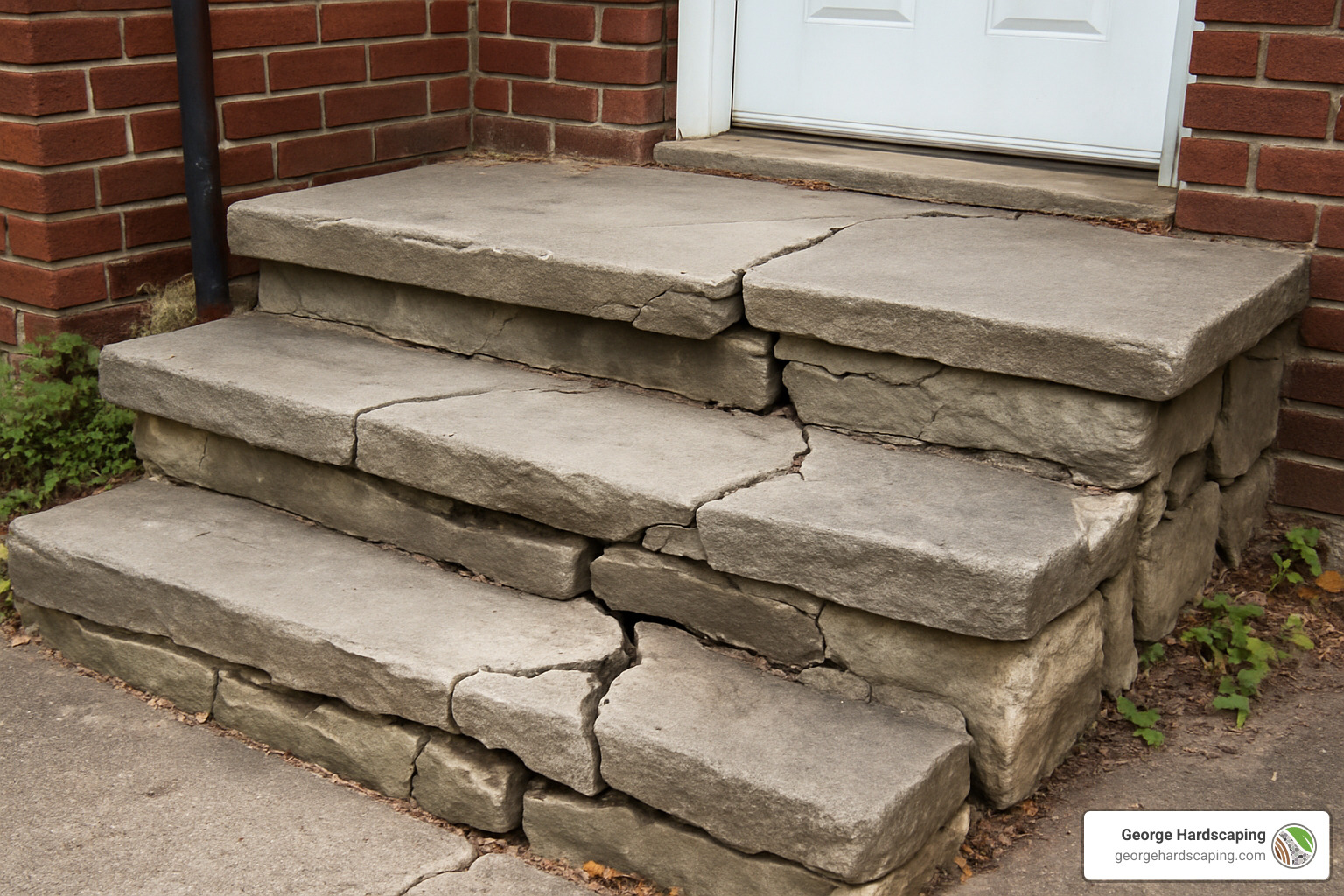
Even the most beautiful stone front steps ideas can lead to disappointment when common installation mistakes creep in. I’ve seen many homeowners face frustration when their dream entrance begins to fail prematurely – often because of issues that could have been easily avoided during planning or installation.
Water is your stone steps’ greatest enemy. Poor drainage tops our list of common blunders, and it’s one I see repeatedly throughout Essex County. Without proper water management, even expertly installed stone steps will eventually shift, crack, and deteriorate. A properly designed entrance should include a slight pitch (about ¼ inch per foot) to shed water away from the steps, substantial drainage stone beneath the structure, and appropriate grading that directs water away from your home’s foundation.
“Last spring, we replaced a beautiful but failing bluestone entrance that was only five years old,” our restoration specialist tells me. “The previous contractor had skipped proper drainage. The homeowners had spent thousands on premium stone, but without addressing water management, it was doomed from the start.”
Safety concerns should always be paramount when designing steps. Uneven risers create serious trip hazards, especially for elderly visitors or children. Most building codes require risers to be within ⅜ inch of each other in height – a precision that demands careful planning and execution. When we retrofit older homes in places like Salem or Marblehead, achieving this consistency often requires completely rebuilding rather than attempting to patch existing structures.
New England winters bring another challenge: ice. Slick surfaces become genuinely dangerous during our freeze-thaw cycles. Always choose slip-resistant finishes for your stone steps – thermal or flamed finishes for granite, natural cleft for bluestone, and textured surfaces for concrete pavers. These options maintain their grip even in challenging weather conditions.
Aesthetics matter too. I’ve seen beautiful stone work that somehow still looks wrong because of mismatched materials that clash with the home’s architecture. Your steps should feel like they belong with your house, not like an afterthought. Choose materials that complement your home’s existing elements – considering both color and texture – for a cohesive, thoughtful appearance.
The invisible parts of your steps matter as much as what you can see. Under-sized footings simply cannot support the substantial weight of stone steps, leading to settling and structural failure. Proper footings should extend below the frost line (typically 4 feet deep in our region) and be appropriately sized for the load they’ll bear. This underground work represents a significant portion of any quality installation.
After sunset, inadequate lighting creates unnecessary hazards. I’ve visited many beautiful homes where the owners invested in stunning stone steps but neglected to consider how people would steer them after dark. Incorporate step lights, path lights, or overhead lighting to ensure safe passage at night – this is both a practical safety consideration and an opportunity to highlight your beautiful stonework.
“We’ve been called to repair many DIY or poorly installed professional steps,” our restoration specialist notes with a sigh. “Unfortunately, fixing these issues often costs more than doing the job right the first time. It’s like that old saying about measuring twice and cutting once – except with stone steps, the stakes are much higher.”
Taking time to plan properly and work with experienced professionals can help you avoid these common pitfalls, ensuring your stone entrance remains beautiful, functional, and safe for decades to come.
Frequently Asked Questions about Stone Front Steps
How long do stone front steps last?
One of the most remarkable things about stone steps is their incredible longevity. With proper installation and regular maintenance, you can expect your stone steps to welcome family and friends for 30+ years – and often much longer. Throughout Essex County, you’ll find historic properties with original stone steps that have stood for over a century, silently testifying to stone’s extraordinary durability.
“The oldest steps we’ve restored were granite steps from the 1870s,” our historic restoration specialist told me recently. “After repointing the joints and making minor repairs, they’re ready for another century of service. That’s the kind of investment that spans generations.”
The specific lifespan varies by material choice. Those gorgeous granite steps might serve your family for 100+ years, while some softer stones might need attention after 30-40 years in our harsh New England climate. Material quality makes all the difference – premium stone properly installed is truly an investment in your home’s future.
What is the best non-slip finish?
Safety should never take a backseat to beauty, especially in our region where winter ice and summer rain create slippery conditions. The good news is you don’t have to choose between safety and aesthetics – the right finish provides both.
For granite steps, a thermal or flamed finish creates just enough texture for excellent slip resistance without feeling rough underfoot. The process uses heat to slightly expand the surface crystals, creating subtle grip that works even when wet.
If you’re considering limestone or certain bluestone varieties, a bush-hammered texture provides dependable traction while maintaining a refined appearance. The slight dimpling catches your shoe soles just enough to prevent slipping.
Natural cleft finishes on bluestone offer beautiful natural variations that not only add character but provide secure footing in all weather conditions. This option feels authentically rustic while serving the practical purpose of keeping your family safe.
For manufactured options, textured pavers with engineered grip patterns provide consistent traction that’s especially valuable for homes with elderly residents or young children.
“We always recommend thinking about how steps will perform in all seasons,” our design consultant emphasizes. “What feels perfectly fine during a sunny July afternoon might become treacherously slick after a January freezing rain.”
Can stone steps be added over existing concrete?
Yes! If your concrete steps are structurally sound but aesthetically disappointing, stone veneer or thin overlays can transform them without the mess and expense of complete demolition. This approach often saves homeowners 30-40% compared to starting from scratch.
Before proceeding with this stone front steps idea, we always conduct a thorough structural assessment. The existing concrete must be:
- Free from major cracks or significant settling
- Properly sized to accommodate the additional stone thickness (usually 1-2 inches)
- Not showing extensive spalling or deterioration that would compromise the bond
Modern bonding agents create remarkably strong connections between the concrete substrate and stone veneer. The technique has advanced significantly in recent years, making this a reliable option for many homes.
“We transformed a 1970s split-level in Danvers last year using this exact approach,” shares our renovation specialist. “The homeowners were amazed at how this relatively simple upgrade completely changed their home’s character. The neighbors thought they’d invested in all-new steps, but we’d actually preserved the existing structure beneath.”
This approach works particularly well when you’re happy with the basic configuration of your steps but want to upgrade their appearance. The result looks like solid stone but leverages your existing investment in the concrete structure beneath.
Conclusion
When it comes to making a lasting impression, few home improvements pack the punch of thoughtfully designed stone front steps. From the timeless elegance of bluestone treads to the dramatic flair of floating granite slabs, stone front steps ideas offer something for every architectural style and personal preference.
The entrance to your home tells a story. It whispers to visitors about who you are and welcomes family members home after long days. The perfect stone steps create that magical transition where landscape meets architecture—the moment where outdoors becomes in, where nature meets human comfort.
I’ve seen countless homes transformed by the simple addition of quality stone steps. That crumbling concrete eyesore becomes an neat bluestone entrance that looks like it’s always belonged. The boring builder-grade steps evolve into a character-filled fieldstone pathway that winds through carefully planned gardens. The once-dangerous wooden steps are replaced by solid granite that will outlast generations.
The beauty of stone isn’t just skin deep. While wood rots and concrete cracks, properly installed stone steps shrug off decades of New England winters with minimal maintenance. They stand strong through freezing rain, summer heat, and everything in between. When your grandchildren visit someday, these same steps will welcome them—perhaps with just a bit more character and patina than they have today.
Beyond durability, stone steps offer that rare combination of beauty and function. They ground your home visually, connecting it to the earth while elevating its appearance. Real estate professionals consistently note that quality stone work is one of those improvements that pays for itself, both in daily enjoyment and eventual resale value.
Whether you’ve been inspired by the LED-illuminated limestone that creates nighttime drama or the plantable flagstone gaps that soften the hardscape with touches of green, the perfect stone step solution awaits. The only limit is imagination—and perhaps budget, though even there, options exist for every price point.
At George Hardscaping, we’ve seen how the right stone steps can transform not just the look of a home, but how people feel when they approach it. There’s something deeply satisfying about creating entrances that will welcome families home for decades to come, entrances that improve with age rather than deteriorate.
Ready to rock your home’s entrance with stone steps that make a statement? The path to a more beautiful, valuable, and welcoming home begins with that first step—a stone one, of course.
More info about Walkways & Stairs
