
Small Patio Installation: 5 Flawless Steps
Why Small Patio Installation is the Perfect DIY Project
Small patio installation is one of the most rewarding DIY projects for your backyard. Whether you want a cozy dining nook, a peaceful reading spot, or an entertainment area, a well-designed small patio transforms underused outdoor space into a functional retreat that boosts your home’s value and quality of life.
Quick Answer: What You Need to Know About Small Patio Installation
- Timeline: 2–3 days for a typical 10×10 foot patio
- Skill Level: Intermediate (achievable for most capable homeowners)
- Average DIY Cost: $600–$3,000 for materials and tool rentals
- Average Professional Cost: $2,500–$11,000 (based on internet data, not George Hardscaping pricing)
- Key Steps: Plan layout → Excavate 6–8 inches → Build gravel and sand base → Lay pavers → Fill joints and secure edges
- Essential Materials: Pavers or bricks, gravel base, leveling sand, edge restraints, polymeric sand
The beauty of a small patio project is its manageable scope and big impact. You don’t need years of construction experience or a massive budget to create professional-looking results. With proper planning and the right materials, you can build a durable outdoor space that will last for decades.
Small patios are more affordable, require less maintenance, and can often be completed in a single weekend. For North Shore homeowners with compact yards, a small patio maximizes every square foot. The limited footprint also means you can invest in higher-quality materials, like premium pavers or natural stone, that might be cost-prohibitive for a larger area.
This guide walks you through every phase of small patio installation, from planning and material selection to the final touches. You’ll learn how to prepare your site, avoid common mistakes, and add design elements that make your patio feel like a custom outdoor room. For homeowners in Essex County and the North Shore, understanding the process helps you make informed decisions—whether you DIY or work with a professional hardscaping contractor like George Hardscaping.
Planning Your Perfect Small Patio
A successful small patio installation begins with meticulous planning. This crucial first step ensures your vision aligns with the realities of your space and budget, setting the stage for a smooth project.
Why Choose a Small Patio?
Small patios offer distinct advantages, making them a popular choice for homeowners, especially in areas like Essex County where outdoor space can be a premium.
First, a small patio maximizes usable living space in compact yards. It transforms an unused patch of lawn into a dedicated area for relaxation or dining, acting as a functional extension of your home. Second, small patios mean low-maintenance outdoor living. Less square footage translates to less cleaning and upkeep, a huge benefit for busy homeowners. Finally, small patios allow for smart design principles. You can create intimate zones, use vertical space with planters, and select multi-functional features like storage benches that make every inch count. For inspiration, see how designers make the most of limited areas in Living Large on Small Patios from HGTV.
For expert help in planning your ideal space, explore our patio design services.
Choosing the Right Materials for a Small Footprint
The material you choose for your small patio installation dictates its look, durability, and cost. For smaller areas, you can consider a wider range of options, even splurging on higher-end materials.
- Pavers: Incredibly versatile and durable, concrete pavers come in countless styles and can mimic natural stone or brick. Their interlocking nature helps prevent cracking, making them a long-lasting choice. For a 10×10 foot area, DIY material costs are around $1,000 to $3,000, while professional installation can range from $2,500 to $11,000.
- Brick: For a classic, timeless look, brick is an excellent, cost-effective choice. It’s easy to install, making it great for DIYers. A DIY 10×10 foot brick patio can cost just $600 to $800 for materials.
- Natural Stone: Materials like bluestone or granite offer unparalleled character and a luxurious feel. However, natural stone is generally higher in cost and requires more skill to install due to natural variations in size and thickness.
- Gravel: While not typically used for a full patio surface by professionals, gravel is a budget-friendly option for paths, borders, or as an accent within a paver design. It provides excellent drainage and is easy to install.
Consider long-term durability and maintenance, not just initial cost. For a clearer comparison, here’s a table outlining these popular materials:
| Material | Average DIY Material Cost (10×10 ft) | Durability | DIY-Friendliness | Aesthetic |
|---|---|---|---|---|
| Pavers | $1,000 – $3,000 | Excellent | Moderate | Versatile, modern to traditional, wide colors |
| Brick | $600 – $800 | Good | High | Classic, rustic, warm, traditional |
| Natural Stone | $1,000 – $3,000+ (materials only) | Excellent | Moderate to Low | Organic, luxurious, unique, earthy |
| Gravel | Very Low | Moderate | High | Natural, permeable, rustic |
To find the best fit for your project, learn about various patio surface options available.
Key Design Considerations for a Small Patio Installation
Thoughtful design can transform a simple slab into a captivating outdoor living area.
- Layout and Shape: A simple square or rectangle is often best for easy furniture placement. However, a circular patio can create a charming focal point. Consider how the shape will flow with your yard and home’s architecture.
- Integration with Landscape: A well-integrated patio feels like a natural extension of your home. Consider how it connects to garden beds, trees, or an existing walkway.
- Drainage: This is non-negotiable. Ensure a gentle slope of at least 1/4-inch per foot away from your home’s foundation to prevent water damage. Neglecting drainage can lead to shifting pavers and costly structural issues.
- Paver Patterns: The pattern adds visual interest and can make a small patio feel larger. Popular choices include:
- Basketweave: A classic, woven look popular for brick patios.
- Herringbone: A strong, stable zigzag pattern great for high-traffic areas.
- Running Bond: A simple, linear pattern with a clean, modern look.
- Pinwheel: A unique pattern creating a central square surrounded by four rectangular pavers.
Remember to call 811 a few days before you dig to locate any underground utilities. For more insights, explore our guide on patio design.
The Complete Guide to Small Patio Installation
Now it’s time to bring your vision to life. A typical 10×10 foot patio installation takes 2 to 3 days for an intermediate DIYer. Always prioritize safety by wearing gloves, eye protection, and sturdy footwear.
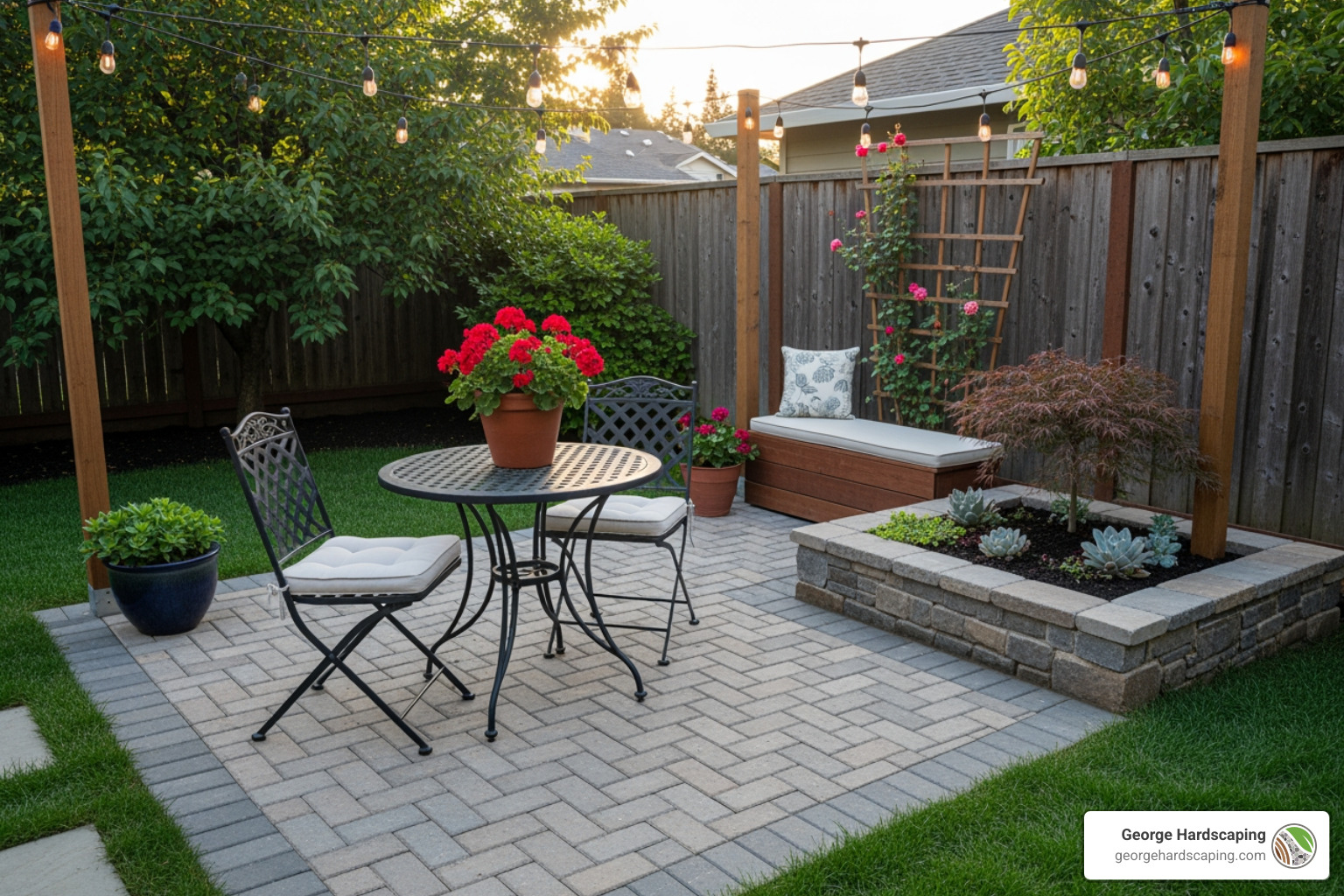
Image metadata: Process diagram of a small patio installation showing compacted gravel base, screeded sand layer, and paver placement to illustrate a durable build sequence.
Step 1: Gathering Your Tools and Materials
Having everything ready beforehand is crucial for an efficient project.
Essential Tools:
- Shovel and Rake
- Tamper (Hand or Plate Compactor)
- Level (4-foot and Line Level)
- Rubber Mallet
- Mason’s Line and Stakes
- Wheelbarrow
- Tape Measure
- Utility Knife
- Broom
- Garden Hose with Spray Nozzle
- Safety Gear (gloves, eye/ear protection, dust mask)
- Optional: Circular saw with a diamond blade or a wet saw for cuts
Materials:
- Pavers or Bricks
- Gravel Base (4- to 6-inch layer)
- Leveling Sand (1-inch layer)
- Edge Restraints
- Polymeric Sand
- Landscape Fabric
For projects over 50 sq ft, renting a plate compactor is highly recommended and typically costs around $75 per day.
Step 2: Site Preparation and Excavation
This step is the literal foundation of your project. Proper prep ensures a stable, long-lasting patio.
- Mark the Layout: Use stakes and mason’s line to mark the patio perimeter. For square or rectangular layouts, ensure the diagonals are equal.
- Determine Depth and Slope: Plan to excavate 6 to 8 inches deep to accommodate the paver height, 1 inch of sand, and a 4-6 inch gravel base. Crucially, factor in a 1/4-inch per foot slope away from your home for drainage.
- Excavate the Area: Dig out the marked area to your calculated depth, removing all grass, topsoil, and large rocks while maintaining the slope.
- Tamp the Soil Foundation: Thoroughly compact the exposed soil with a tamper. A solid sub-base is critical to prevent future settling.
Safety Note: Before digging, call 811. This free service locates underground utilities, preventing dangerous accidents.
Step 3: Building a Solid Foundation
A strong base is paramount to preventing shifting and drainage issues.
- Install Landscape Fabric: Lay landscape fabric over the compacted soil, overlapping seams by 6-12 inches. This acts as a weed barrier and separates the soil from your gravel base.
- Add a Gravel Base: Spread a 4- to 6-inch layer of compactible gravel. Add and compact the gravel in 2-3 inch lifts for maximum density and stability. This base provides drainage and distributes the load evenly.
- Top with a Leveling Sand Layer: Spread a 1-inch layer of coarse leveling sand over the compacted gravel. Use two parallel pipes or screed boards and a straight 2×4 to drag across and level the sand, creating a smooth, consistent bed for the pavers.
Step 4: Laying the Pavers
This is the most satisfying part, as your patio takes shape. Patience and precision are key.
- Start from a Corner: Begin laying pavers from a fixed point, like a corner against the house, to maintain straight lines.
- Set Pavers Tightly: Place each paver onto the sand bed, tapping it gently with a rubber mallet to set it. Leave a small, consistent gap (1/8 to 1/4 inch) for jointing sand. Avoid sliding pavers, which disturbs the sand.
- Check for Level Frequently: Use a 4-foot level to regularly check for a consistent surface and proper slope, making minor adjustments as you go.
- Cut Pavers as Needed: Use a wet saw or circular saw with a diamond blade to cut pavers for edges or around obstacles. Always wear proper safety gear when cutting.
For more on professional techniques, visit our patio and walkway installation page.
Step 5: Finishing Touches for a Lasting Patio
These final steps lock everything in place for a durable, weed-resistant finish.
- Install Edge Restraints: Secure plastic or metal edge restraints around the patio perimeter with spikes to prevent pavers from shifting over time.
- Sweep Polymeric Sand into Joints: Spread polymeric sand over the dry patio surface and use a stiff broom to sweep it into all the joints until they are full.
- Compact and Re-sand: Run a plate compactor over the pavers to settle the sand into the joints. Sweep more sand into any low spots and repeat.
- Activate Polymeric Sand: Use a leaf blower to remove all excess sand from the paver surfaces. Lightly mist the patio with a garden hose to activate the sand, being careful not to wash it out of the joints. Allow it to cure per the manufacturer’s instructions (typically 24 hours).
- Backfill Edges: Backfill the areas outside the edge restraints with soil or sod for a clean, finished look.
Budgeting and Costs for Your Project
Understanding the financial aspect of your small patio installation is key. While DIY offers savings, it’s important to have a clear picture of all costs. The following figures are average costs based on internet data, not official George Hardscaping pricing.
DIY vs. Professional Costs
The choice between DIY and hiring a pro often comes down to budget, time, and skill.
- DIY Cost Range: For a 10×10 foot patio, a DIY project typically costs $600 to $3,000. This covers materials and tool rentals. A simple brick patio might be on the lower end ($600-$800), while a paver patio could be $1,000 to $3,000.
- Professional Installation: Hiring a professional for a small patio can range from $2,500 to $11,000. This accounts for material choice, design complexity, site conditions, and labor. Professionals bring expertise, specialized equipment, and guaranteed quality.
Material Cost Breakdown:
- Pavers or Bricks: The largest material expense, varying by type, size, and color.
- Base Materials: Gravel and leveling sand are typically priced by the cubic yard or bag.
- Ancillary Materials: Costs include edge restraints, polymeric sand, and landscape fabric.
- Tool Rentals & Delivery: Budget for a plate compactor (~$75/day) and delivery fees for bulk materials ($40-$100).
Budget-Friendly Ideas for a Small Patio Installation
A beautiful patio doesn’t have to break the bank. Here are smart ways to stay on budget:
- Use Reclaimed Materials: Reclaimed bricks or pavers can significantly reduce costs. Check local salvage yards or online marketplaces.
- Opt for Simple Patterns: Straightforward patterns like running bond or basketweave require fewer cuts, reducing material waste and saving time.
- Do the Labor Yourself: The most significant saving in a DIY project is eliminating labor expenses, which can save you thousands.
For more creative ways to improve your outdoor space affordably, explore these budget-friendly ideas for small outdoor spaces from HGTV.
DIY vs. Hiring a Professional
Deciding whether to DIY or hire a pro depends on several factors:
- DIY is Great for:
- Simple, straightforward designs on level ground.
- Homeowners with moderate DIY skills and physical ability.
- Projects where budget is the top priority.
- Those with 2-3 full days to dedicate to the project.
- Professional Help is Recommended for:
- Complex layouts, multi-level designs, or steep slopes.
- Yards with existing or potential drainage challenges.
- Homeowners with time constraints.
- Projects requiring guaranteed results and longevity.
- Installations using specialized materials like large format natural stone.
For guaranteed results in Essex County, trust a certified hardscaping contractor like George Hardscaping.
Maximizing Functionality and Style
Once your small patio installation is complete, the fun begins: decorating and furnishing to make it a functional and stylish extension of your home. Even with limited space, you can create an inviting oasis.

Image metadata: Nighttime view of a compact patio with string lights, a bistro set, and vertical planters; demonstrates practical styling ideas for a small patio installation.
- Furniture: The key is choosing pieces that are appropriately scaled and multi-functional.
- Bistro Sets: A classic choice for small dining or coffee areas.
- Compact Sectionals: A small corner sectional can maximize seating in a square or rectangular space.
- Fold-Away Seating: Chairs and tables that fold up are perfect for flexible-use patios.
- Storage Furniture: Benches or ottomans with built-in storage keep your space tidy.
- Lighting: Thoughtful lighting transforms the ambiance of your patio after dusk.
- String Lights: Easily add a warm, festive glow.
- Solar Path Lights: Illuminate edges or pathways leading to your patio.
- Recessed LEDs: For a permanent and subtle option, embed small lights into pavers or surrounding landscape.
- Vertical Gardening: When floor space is limited, look up! Vertical gardening adds greenery without occupying square footage.
- Wall Planters: Mount planters directly onto a fence or exterior wall.
- Trellises: Use trellises with climbing plants like ivy or flowering vines.
- Focal Points: Even a small patio benefits from a captivating focal point.
- Small Fire Pit: A compact fire pit creates a cozy gathering spot. Always check local regulations and follow fire pit safety guidelines from the U.S. Fire Administration.
- Water Feature: A small, self-contained water feature adds soothing sounds.
- Decorative Elements: A colorful outdoor rug or unique statue can define the space.
For more inspiration, check out these small patio decorating ideas from HGTV. If you’re considering adding a custom fire feature, explore our services for custom outdoor firepits.
Frequently Asked Questions about Small Patios
We often get questions from homeowners in Essex County and the North Shore about small patio installation. Here are some of the most common ones:
Is it cheaper to build a brick or paver patio?
Generally, a DIY brick or paver patio is more affordable than poured concrete. For a 10×10 foot area, a DIY brick patio is often the most cost-effective option, with material costs between $600 to $800. A DIY paver patio for the same size typically ranges from $1,000 to $3,000 for materials. Brick is often considered easier for a first-time DIYer, which contributes to its lower overall project cost.
Do I need a permit to build a small patio?
For most simple, on-grade patios (built directly on the ground), a permit is typically not required. However, this can vary by municipality in Massachusetts. It is always best to check with your local building department in towns like Peabody, Beverly, or Ipswich before starting. If you live in a community with a Homeowners Association (HOA), be sure to review their specific regulations as well.
How do you ensure proper drainage on a small patio?
Proper drainage is critical for any patio’s longevity. The two primary methods are:
- Slope the Patio: The surface must be sloped away from your home’s foundation at a minimum rate of 1/4 inch per foot. This allows rainwater to run off naturally.
- Well-Compacted Gravel Base: A 4- to 6-inch deep, compacted gravel base provides a stable foundation and acts as a permeable layer. This allows water that seeps through the joints to drain into the ground below, preventing pressure buildup.
Transform Your Backyard with a Custom Patio
A small patio installation is an achievable DIY project that adds immense value and enjoyment to your home. By carefully planning, preparing a solid base, and choosing the right materials, you can create a durable and beautiful outdoor oasis that will last for years.
However, we understand that not everyone has the time or tools for a major DIY project. For those in Essex County and the North Shore seeking professional expertise and guaranteed quality, George Hardscaping is here to help. We specialize in everything from custom patios and patio design and installation to comprehensive hardscaping services. Our team is committed to enhancing the aesthetics and functionality of your outdoor spaces.
Ready to create the patio of your dreams? Contact the experts at George Hardscaping for a free request estimate and let us bring your vision to life.
Want professional results with guaranteed quality and longevity? Explore our patio design services and let George Hardscaping transform your outdoor space.
