
Why Repairing Your Stone Steps Matters

You should repair broken stone steps to restore safety, improve curb appeal, and prevent further damage to your home’s entryway. A wobbly tread or crumbling edge is more than an eyesore; it’s a tripping hazard that can lead to injury and liability. Addressing issues promptly, whether it’s a single loose stone or multiple cracks, is key to preserving your home’s value and safety.
Many minor repairs are manageable for a skilled DIYer. However, for more extensive damage, professional help is recommended. While costs vary, professional repairs for moderate damage often range from $500 to $2,000. Complex projects involving structural issues will cost more. Note: These are industry averages and not a quote from George Hardscaping.
This guide will walk you through assessing the damage, gathering the right tools, and executing lasting repairs. We’ll help you determine when to tackle the job yourself and when to call in experts like George Hardscaping’s dedicated masonry repair services for a professional solution.
Beyond safety and appearance, well-maintained stone steps contribute to drainage control, accessibility, and long-term structural health around your entryway. As the National Park Service preservation briefs on masonry explain, timely maintenance of stone and mortar dramatically extends the lifespan of masonry structures.
Stone steps are often part of a larger landscape: walkways, entry landings, and even adjacent patios or retaining walls. When you plan a repair, consider how the steps fit into the overall layout. If you’re already investing in a repair, it can be the perfect time to upgrade surrounding surfaces with complementary walkways and stairs design and installation or to coordinate with future patio design services so everything works together functionally and visually.
Whether your goal is a quick safety fix, a historically appropriate restoration, or a full hardscape upgrade that ties together steps, walks, and patios, thoughtful planning at the start will yield better results, lower long-term costs, and greater day-to-day comfort.
First Steps: How to Assess Damage and Prepare for Repair
A successful repair broken stone steps project begins with a thorough assessment. Understanding the root cause of the damage is essential for a lasting fix and helps determine whether a DIY approach is feasible.
Identifying Common Causes of Broken Stone Steps
Before you can fix the problem, you need to know what caused it. In a climate like Essex County, MA, several factors are often at play:
- Freeze-Thaw Cycles: Water seeps into pores and cracks, freezes, expands, and breaks apart stone and mortar.
- Water Infiltration & Poor Drainage: Persistent water from rain, sprinklers, or poor grading can erode the base beneath the steps.
- Foundation and Soil Settlement: The ground can shift over time, causing steps to sink, heave, or pull away from the house foundation.
- De-icing Salt Damage: Chemicals in de-icing salts are corrosive to natural stone and mortar. Sand is a safer alternative for winter traction.
- Poor Initial Installation: An inadequate base, improper mortar mix, or a flawed design can lead to premature failure.
- Heavy Loads and Impact: Moving furniture or dropping heavy objects on treads can crack or chip stones.
- Age and Natural Weathering: Even well-built steps slowly wear down from repeated wetting, drying, UV exposure, and daily foot traffic.
A Homeowner’s Guide to Damage Assessment
Put on your detective hat and inspect your steps carefully. Following a systematic process is key to understanding the full scope of the damage and ensuring your repair addresses the root cause.
- Visual Inspection: Look for obvious cracks, crumbling edges, missing pieces, and discoloration.
- The Wobble Test: Carefully step on each stone tread. Any movement indicates a loose stone that needs to be reset.
- Tap for Hollow Sounds: Use a rubber mallet to gently tap each stone. A hollow sound suggests the mortar bond has failed underneath.
- Check for Level and Slope: Use a level to check each step. They should be level side-to-side with a slight downward slope (about 1/8 inch per foot) away from the house for proper drainage.
- Examine Mortar Joints: Look for crumbling, cracked, or missing mortar between the stones.
- Inspect the Surroundings: Look where the steps meet walkways, patios, or retaining walls. If you see widespread cracking or settlement in these areas too, you may need a broader solution—such as rebuilding the base or redesigning drainage with help from professional walkway and stair construction services.
- Look for Water Patterns: After a rain, observe where water collects or runs. Pooled water on treads or gutters that dump near the steps signal drainage issues that must be corrected.
DIY vs. Calling a Professional: Knowing Your Limits
Your assessment will help you decide whether to proceed with a DIY repair or call for professional help.
Good for DIY:
- Resetting one or two loose stones where the base is still solid.
- Filling minor chips or hairline cracks.
- Repointing (tuckpointing) crumbling mortar joints between stable stones.
- Replacing a single small tread if you are comfortable using basic masonry tools.
Call a Professional Mason When:
- Entire sections are sinking or heaving. This points to a serious foundation or base failure that requires excavation and rebuilding.
- Steps are pulling away from the house foundation. This is a critical structural problem.
- There are major structural cracks (wide, deep, or spanning multiple stones).
- Widespread damage indicates a systemic issue that patchwork repairs won’t solve.
- Drainage problems are undermining the stairs.
- You’re unsure or uncomfortable. Masonry requires precision for a safe, durable, and attractive result.
For complex projects or when structural integrity is a concern, our team at George Hardscaping specializes in professional masonry repair services throughout Essex County, MA. We have the expertise to diagnose and fix even the most challenging stone step issues, and we can seamlessly tie your repaired steps into nearby features like custom patio design and installation for a cohesive outdoor space.
Gearing Up: Essential Tools and Materials for Stone Step Repair
Having the right tools and materials is crucial when you repair broken stone steps. It ensures efficiency, safety, and a long-lasting repair.
The Mason’s Toolkit: Must-Have Tools for the Job
Always start with personal protective equipment (PPE): safety glasses, a dust mask, hearing protection, and heavy-duty work gloves. If you will be cutting stone or grinding mortar, a respirator rated for silica dust is strongly recommended; resources from OSHA on crystalline silica safety explain why dust control is so important.
- For Demolition & Cleaning: Hammer, cold chisel, wire brush, and a shop vacuum. An angle grinder with a diamond blade is useful for cutting stone and old mortar.
- For Mixing & Application: Sturdy buckets, a pointing trowel, and a margin trowel.
- For Setting & Finishing: A 2-foot or 4-foot level, a rubber mallet for tapping stones, and a concrete edging tool for shaping.
- For Layout & Measurement: Tape measure, straightedge, and layout string if you’re rebuilding several steps.
- Miscellaneous: Drop cloths, paintbrush (for bonding agent), sponge, and duct tape.
For more on masonry safety and tool usage, always consult the manufacturer’s instructions for your equipment. Many of the safety principles for working with concrete also apply to stone repair.
Choosing the Right Repair Materials
The longevity of your repair depends on using the correct materials for the job.
- Mortar:
- Polymer-Modified Mortar: Excellent for resetting stones and filling larger gaps. The polymers add strength, flexibility, and water resistance.
- Type N Mortar: A good general-purpose mortar for many repair applications.
- Type S Mortar: Stronger and better for load-bearing or below-grade conditions.
- Epoxy: A two-part epoxy for natural stone is ideal for filling hairline cracks or reattaching small chips. It can be mixed with stone dust for color matching.
- Adhesives & Fillers:
- Concrete Bonding Adhesive: A liquid primer painted on old surfaces to help new mortar stick.
- Backer Rod: A foam rope used to fill deep cracks before adding mortar or epoxy.
- Polymeric Sand: Used for filling joints in sand-set (mortarless) stone steps.
- Drainage and Base Materials: Crushed stone (often 3/4-inch minus) and compactable gravel are essential if you must rebuild the base below your steps.
How to Match New Stone for a Seamless Repair
If you need to replace a stone entirely, achieving a good match is key.
- Sourcing: Take a piece of the old stone to a local stone supplier. They can help identify the type (e.g., flagstone, granite, bluestone) and find a suitable replacement.
- Matching: Look for a stone with similar color tones, texture, and the exact same thickness to ensure a level, safe surface.
- Think About the Big Picture: If your steps connect to a front walk or backyard entertainment area, consider using a complementary stone that also works for future patio construction projects.
When to Upgrade Instead of Just Repair
Sometimes the tools and materials required for a major repair begin to approach what you’d need for a complete replacement or redesign. If your stone steps are outdated, too steep, or poorly aligned with your front walk or driveway, it may be more cost-effective long-term to rebuild them as part of a broader upgrade.
In those cases, a professional contractor can help you explore options like expanding landings, integrating low-voltage lighting, or creating a more comfortable stair layout that ties neatly into new walkways and stairs installations.
The Ultimate Guide to How to Repair Broken Stone Steps
With your tools and materials ready, it’s time to tackle the most common stone step repairs. This section provides step-by-step instructions for a durable and professional-looking finish.
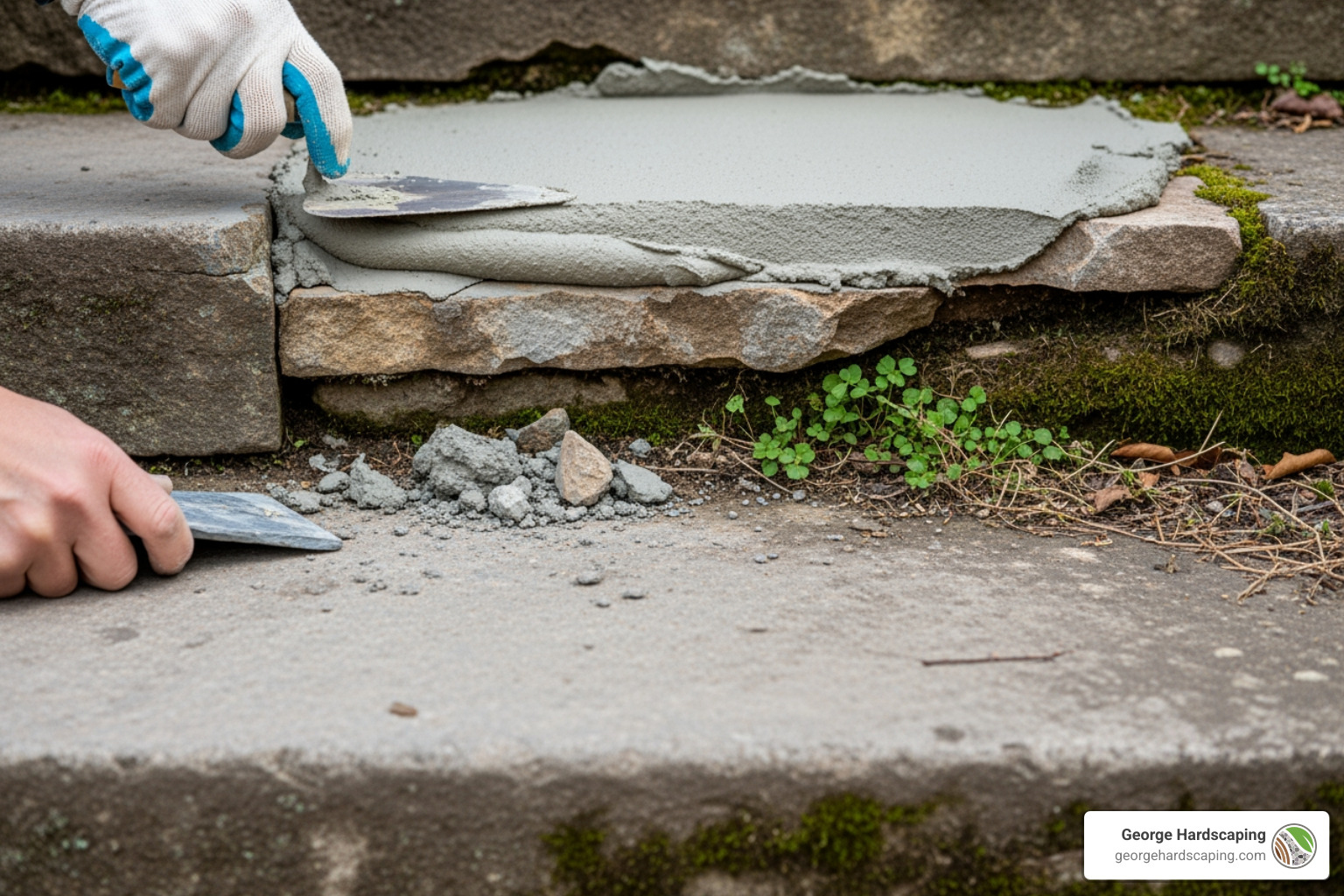
Step-by-Step: How to Re-secure a Loose Stone Step
A wobbly stone is a major safety hazard. Follow these steps to make it stable again.
- Remove the Stone: Carefully pry the loose stone up. If it’s stuck, gently chisel away the surrounding mortar first.
- Clean All Surfaces: Use a chisel and wire brush to remove all old, crumbling mortar from the base and the underside of the stone. A shop vacuum is perfect for removing all dust and debris. A clean surface is essential for a strong bond.
- Prepare Mortar: Mix a polymer-modified mortar to a stiff, workable consistency—it should hold its shape on a trowel.
- Apply Mortar: For the strongest bond, brush a concrete bonding adhesive onto the dry base and the underside of the stone. Let it get tacky. Then, apply a full bed of fresh mortar (about 1-inch thick) to the base.
- Set and Level: Carefully place the stone onto the mortar bed. Use a level to ensure it’s level side-to-side and has a slight downward slope for drainage. Gently tap it into place with a rubber mallet until it’s flush with the adjacent stones.
- Finish the Joints: Pack fresh mortar into the joints around the stone. Use a pointing trowel to tool the joints into a concave shape that sheds water. Clean any excess mortar off the stone’s surface with a damp sponge before it dries.
- Allow Proper Curing: Protect the repaired area from foot traffic, direct sun, and heavy rain for at least 24–48 hours so the mortar can cure properly.
For expert installation and repair of stone features, explore our walkways and stairs services.
Patching and Filling: How to repair broken stone steps with chips and cracks
Small imperfections can worsen over time if not addressed.
For Hairline Cracks:
- Clean: Use a wire brush to thoroughly clean the crack.
- Apply Epoxy: Mix a two-part stone epoxy, adding stone dust for color matching if desired.
- Fill and Scrape: Press the epoxy into the crack, slightly overfilling it. Before it cures, scrape the excess off with a razor blade so it’s flush with the surface.
For Larger Chips:
- Prepare: Chisel away any loose material to create a solid, clean area for the patch.
- Apply Bonding Agent: Brush a concrete bonding adhesive onto the prepared area.
- Patch: Mix a stiff, polymer-modified mortar and press it firmly into the chipped area. Overfill it slightly.
- Shape: Use a trowel to shape the patch to match the step’s profile. You can dab it with a sponge to mimic the stone’s texture.
- Cure: Cover the patch with plastic for 24-48 hours to keep it moist, allowing it to cure slowly and gain maximum strength.
If you’re repairing historic stonework, the National Park Service guidance on masonry patching emphasizes compatibility between original and new materials to avoid future damage.
Replacing a Completely Broken Stone
When a stone is shattered, replacement is the only option.
- Remove the Old Stone: Carefully chisel away all surrounding mortar and remove the broken pieces. Clean the entire cavity with a wire brush and shop vacuum.
- Evaluate the Base: Before you set the new stone, check the base for voids, soft spots, or saturated soil. If needed, remove loose material and rebuild the base with compacted gravel and a thin leveling layer of mortar.
- Cut the Replacement: Measure the opening and cut your new stone to size using an angle grinder or wet saw with a diamond blade. Always wear safety gear.
- Dry Fit: Place the new stone in the opening without mortar to ensure a perfect fit. Make adjustments as needed.
- Set the Stone: Following the same steps as re-securing a loose stone, apply bonding agent and a full mortar bed.
- Level and Finish: Lower the stone into place, tap it level with a rubber mallet, and tool the joints for a clean, water-shedding finish.
- Blend the Appearance: Lightly brush or sponge the joints before they fully set to match the texture of the surrounding masonry.
When Steps Connect to Other Hardscapes
Often, stone steps connect directly to patios, driveways, or garden paths. If you see cracking or settlement where these surfaces meet, it may indicate that the overall layout or base preparation needs attention.
In such cases, it can be wise to treat the project more broadly—stabilizing transitions, improving drainage, and planning for future enhancements like a new backyard patio design or upgraded front walkway and stair installation. Addressing everything as a coordinated system will usually produce a longer‑lasting and more visually appealing result.
If you’re unsure whether a spot repair is enough, or you’re considering a larger redesign, this is an ideal time to reach out for a professional assessment. Schedule a consultation with George Hardscaping today to get a clear, written plan for repairing or rebuilding your stone steps and surrounding hardscapes.
Ensuring a Lasting Fix: Best Practices and Aftercare
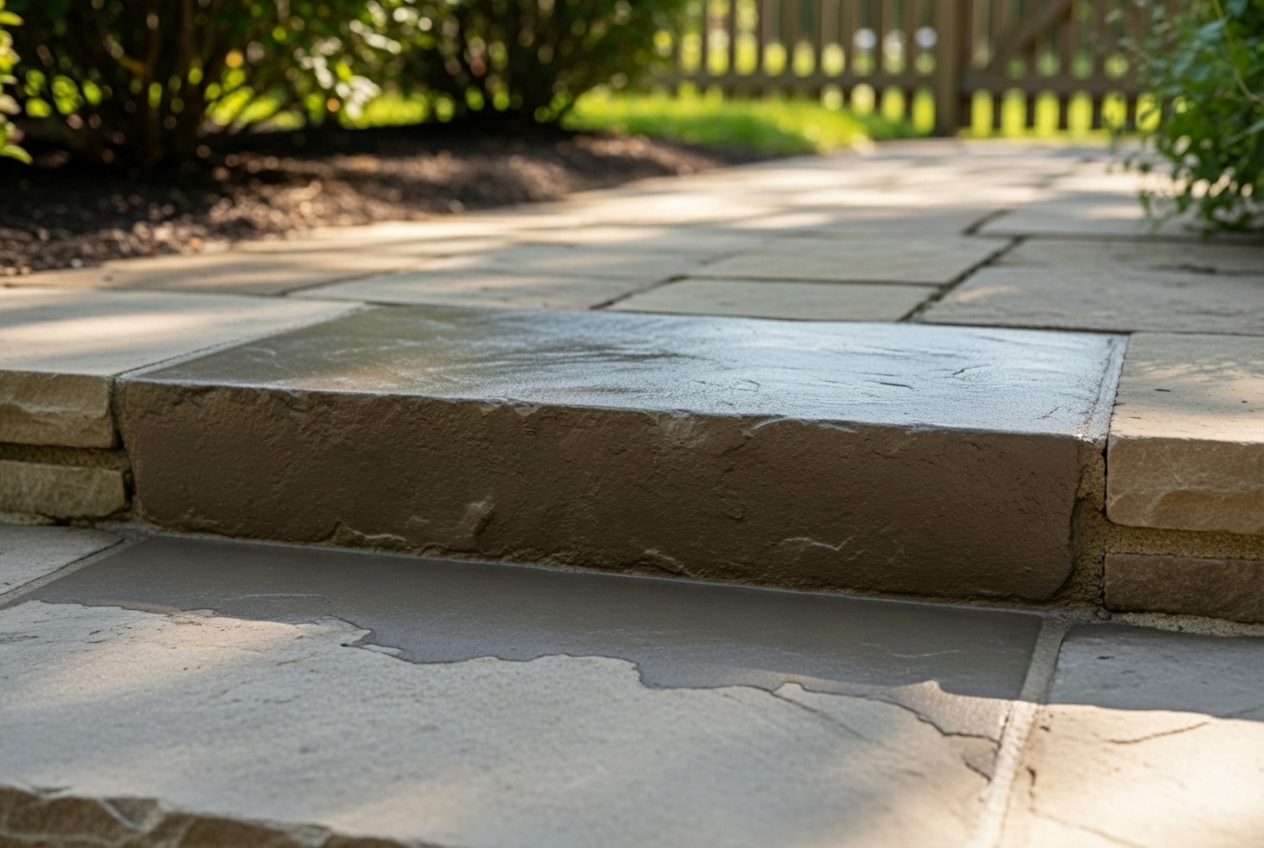
A quality repair job doesn’t end when the mortar is placed. Following best practices for curing and maintenance will ensure your repair broken stone steps project stands the test of time.
Best Practices for a Durable and Safe Repair
- Proper Mortar Mix: Use a stiff, workable mortar. Too much water weakens the final product and leads to cracking.
- Full Mortar Bed: Ensure the stone is fully supported by mortar with no hollow spots underneath.
- Correct Drainage: Every step must have a slight downward slope (about 1/8 inch per foot) away from your house to prevent water from pooling.
- Tool Joints Properly: A concave joint profile is best, as it effectively sheds water away from the seam.
- Compact the Base: If you rebuild any portion of the base, compact each lift of gravel thoroughly.
- Integrate with Adjacent Surfaces: Where steps meet walks or patios, maintain consistent slopes and flush transitions to reduce trip hazards.
- Protect During Curing: Mortar cures, it doesn’t just dry. For the first 24-48 hours, protect new mortar from sun, wind, and rain. Keep it damp by covering it with plastic or misting it periodically.
Weather-Wise Repairs: Working with Stone in Different Conditions
The weather in Essex County, MA, can be challenging for masonry work.
- Cold Weather (Below 40°F): Use cold-weather mortar additives and protect the repair from freezing for at least 72 hours with insulation blankets.
- Hot Weather (Above 90°F): Mortar can dry too quickly, causing weak bonds and cracks. Work in the shade, mist the area with water, and cover the repair.
- Wet Conditions: Avoid major repairs during heavy rain. Excess moisture can wash out fresh mortar.
- Ideal Range: The best temperature for masonry work is between 40°F and 90°F.
Long-Term Maintenance to Protect Your Investment
- Seal the Stone: After the repair has fully cured (wait at least 30 days), apply a high-quality penetrating sealer for natural stone. Reapply every 2-3 years.
- Clean Regularly: Sweep off debris and wash steps annually with a pH-neutral stone cleaner.
- Avoid Harsh Chemicals: Never use de-icing salts, which corrode stone and mortar. Use sand or kitty litter for winter traction.
- Address Minor Issues Promptly: Fixing a small crack or chip early prevents it from becoming a major problem.
- Monitor Drainage: After big storms or snowmelt, check that water is flowing away from your steps.
If your repaired steps lead directly to an outdoor living space, consider coordinating their maintenance with the rest of your hardscape. Re-sealing at the same time you maintain your stone patio surface or front walkway and stair system keeps everything looking consistent.
When Maintenance Is No Longer Enough
Even with excellent care, there comes a point where ongoing patching is less efficient than a thoughtful rebuild or redesign. If you find yourself repairing the same areas every year, or if your steps no longer meet your household’s needs for accessibility and safety, it may be time to plan a more comprehensive upgrade.
In those situations, a professional hardscaping contractor can evaluate your entire entry sequence and recommend a cohesive set of improvements that balance aesthetics, safety, and budget.
Frequently Asked Questions about Stone Step Repair
Here are answers to some common questions we receive about how to repair broken stone steps.
How long can I expect a repaired stone step to last?
The longevity of a repaired stone step depends on several factors: the quality of materials used, the skill of the workmanship, the severity of the original damage, and ongoing environmental conditions. A well-executed professional repair, using appropriate materials and techniques (like those we employ at George Hardscaping), can last for many years, often decades. DIY fixes, while cost-effective for minor issues, may have a shorter lifespan if not done carefully. Regular maintenance, including sealing and prompt attention to new minor damage, will significantly extend the life of any repair.
Can I repair stone steps without removing the stones entirely?
Yes, for many issues. You can repair steps in place when:
- Filling hairline cracks with a color-matched stone epoxy.
- Patching small chips with a polymer-modified mortar.
- Tuckpointing, which is the process of removing old, crumbling mortar from the joints and repacking them with new mortar, can be done without disturbing stable stones.
However, if a stone is wobbly or the base has failed, it must be removed to properly rebuild the foundation for a lasting repair.
What are the signs that my stone steps need professional repair?
While DIY is great for minor fixes, call a professional mason if you see these red flags, as they often indicate serious structural problems:
- Sinking or Heaving: Entire sections of the steps are uneven.
- Separation from the House: A gap has formed between the steps and your home’s foundation.
- Major Structural Cracks: Cracks are wide (over 1 inch), deep, or run through multiple stones.
- Widespread Damage: Multiple stones are loose, broken, or crumbling, suggesting a systemic failure.
If you’re facing any of these issues, it’s time to consult an expert.
How do stone step repairs interact with patios and walkways?
Stone steps rarely exist on their own; they usually connect to a front walk, driveway, or backyard living space. When one element moves or settles, it can put stress on the others. If you repair a set of failing steps without addressing a poorly supported walkway or patio beside it, you’ll often see new cracks form within a few seasons.
For that reason, many homeowners choose to tackle several related projects at once. Combining step repairs with a refreshed front walkway and stair design or a new outdoor patio installation can solve underlying base and drainage issues and give your property a cohesive, updated look.
Is it worth hiring a professional instead of doing it myself?
DIY stone step repair can be rewarding if you’re comfortable with tools, patient, and dealing with limited damage. However, professional masons bring specialized skills: understanding of load paths, experience with different stone types, and the ability to evaluate drainage and soil conditions. They also have access to better tools and commercial‑grade materials.
If your steps are a main entry point, are part of a more complex hardscape, or show structural issues, professional help is usually the safer and more economical choice over the long term.
To get clear answers about your specific situation, contact George Hardscaping today to request a detailed, no‑obligation estimate for repairing or rebuilding your stone steps, walkways, or patio.
Conclusion: Restore Your Home’s Safety and Beauty
Your stone steps are a key feature of your home’s curb appeal and a critical component of its safety. Learning how to repair broken stone steps is a valuable skill that protects your investment and keeps your entryway welcoming. From assessing the damage to applying the final sealer, a careful, methodical approach is the key to a lasting and beautiful result.
While many minor repairs are within reach for a dedicated DIYer, safety comes first. For extensive damage, complex structural issues, or simply for the peace of mind that comes with guaranteed quality, the professional masons at George Hardscaping are ready to help. We are proud to serve communities throughout Essex County, MA, including:
- Beverly, Boxford, Danvers, Essex, Georgetown
- Gloucester, Ipswich, Lynnfield, Manchester-by-the-Sea
- Marblehead, Newburyport, North Reading, Peabody
- Rockport, Rowley, Salem, Swampscott, Topsfield, and Wenham.
Our team can do more than fix isolated problems. We can evaluate how your steps work with the rest of your property, recommend durable materials suited to New England’s climate, and design upgrades that connect your stairs, walkways and stair systems, and patio spaces into a single, functional whole.
Don’t let crumbling steps compromise your home’s safety or charm. Request a free estimate for your hardscaping and masonry needs today and discover the difference that expert planning and craftsmanship can make. Whether you need a careful repair, a complete rebuild, or a brand‑new outdoor living area, George Hardscaping is here to guide you every step of the way.
