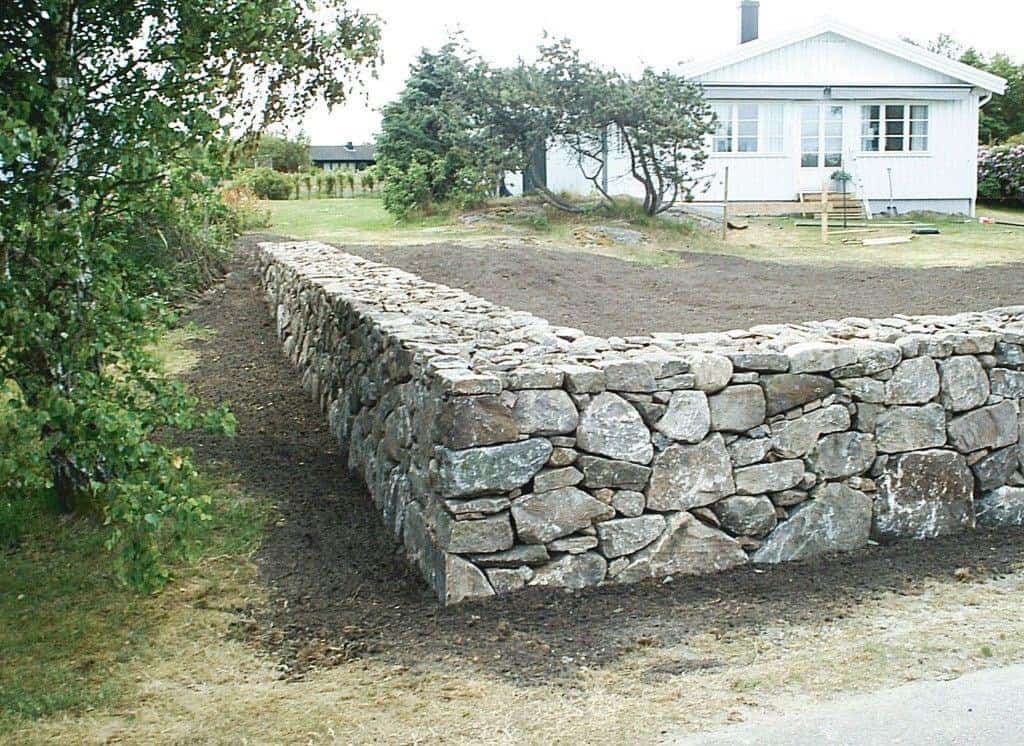
Retaining Wall Design: Top 10 Stunning Ideas for 2024
Introduction
Retaining wall design is a crucial aspect of landscape architecture, offering both practical and aesthetic benefits. Whether you’re aiming to prevent soil erosion, manage water runoff, or beautify your outdoor space, understanding the basics of retaining walls is essential.
Here’s a quick overview:
– Function: Retaining walls hold back soil to prevent erosion and create level areas in sloped landscapes.
– Importance: Proper design ensures structural stability and longevity, preventing costly repairs.
– Aesthetics: These walls can enhance the visual appeal of your property, seamlessly blending with your garden layout.
Retaining walls, when thoughtfully designed, turn unworkable inclines into usable outdoor spaces. They can be built from various materials like concrete, stone, or brick, each providing a unique look to complement your landscape. These structures are not only functional but also add significant value to your home by improving curb appeal and usability.
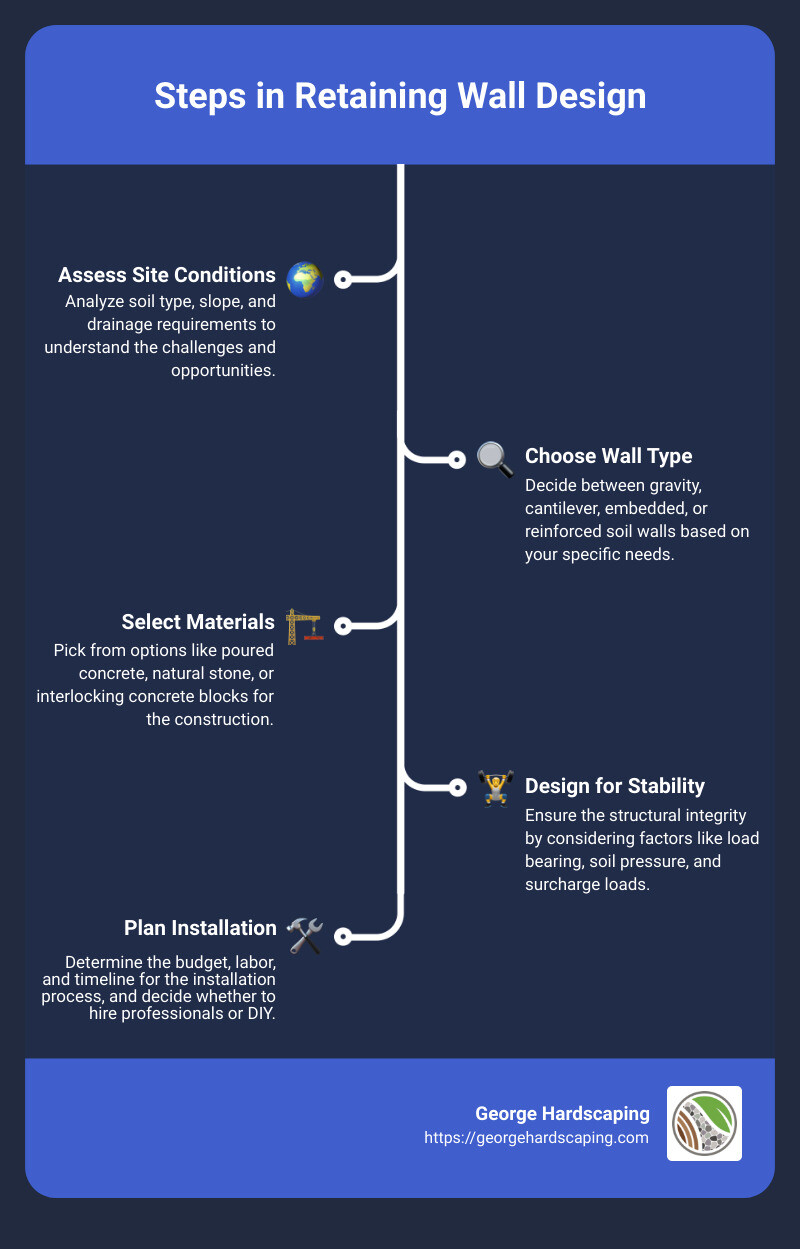
Understanding Retaining Wall Design
Retaining wall design is crucial for creating functional and visually appealing outdoor spaces. Let’s dive into the different types, materials, and structural considerations involved in designing these essential structures.
Types of Retaining Walls
Retaining walls come in several types, each suited to different needs and site conditions:
- Gravity Walls: These rely on their own weight to hold back soil. They are typically made from heavy materials like stone or concrete. Ideal for short walls, they are straightforward to construct.
- Cantilever Walls: These use a slab or footing to support the wall’s weight and the pressure from the retained soil. They are more complex but efficient for taller walls.
- Embedded Walls: These are partially buried in the ground for additional support. Sheet piling and secant piling are common examples. They are often used in deep excavations.
- Reinforced Soil Walls: These combine soil and reinforcement materials like geogrids to create a stable structure. They are flexible and can be used in various terrains.
Popular Materials for Retaining Walls
Choosing the right material is key to the wall’s durability and aesthetic appeal:
- Poured Concrete: Offers a sleek, modern look. It is strong and can be molded into various shapes but requires professional installation.
- Natural Stone: Provides a timeless, rustic appearance. It is durable but can be more expensive and labor-intensive to install.
- Pressure-Treated Pine: A cost-effective option for shorter walls. It is easy to work with but may not last as long as stone or concrete.
- Interlocking Concrete Block: These blocks are designed to fit together without mortar, making them ideal for DIY projects. They are versatile and available in various colors and textures.
Structural Considerations in Design
Several factors ensure the structural integrity of a retaining wall:
- Stability: The wall must be stable enough to hold back the soil. This involves checking for potential failure modes like sliding, overturning, and bearing capacity failure.
- Load Bearing: The wall should support both the soil’s weight and any additional loads, such as vehicles or buildings nearby.
- Soil Pressure: Understanding the soil type and its pressure is critical. This includes calculating active and passive earth pressures to design a wall that can withstand these forces.
- Surcharge Loads: Additional loads from structures or traffic above the wall must be considered. These can significantly increase the pressure on the wall.
Key Design Formulas
Designing a retaining wall involves several formulas to ensure stability:
- Earth Retaining Formula: Calculates the pressure exerted by the soil on the wall.
- Stability Checks: Ensure the wall can resist sliding, overturning, and bearing capacity failures.
- Moment Calculations: Determine the bending moments to ensure the wall’s structural components can handle the stress.
Analyzing Site Conditions
Before building, analyze the site conditions:
- Soil Type: Different soils exert different pressures. Knowing the type helps in designing a suitable wall.
- Slope Analysis: The slope of the land affects the wall’s design. Steeper slopes require more robust designs.
- Drainage Requirements: Proper drainage prevents water buildup behind the wall, which can cause failure. Incorporating drainage solutions like weep holes or drainage pipes is crucial.
Understanding these elements ensures your retaining wall is both functional and durable, turning challenging landscapes into beautiful, usable spaces.
The Basic Principles of Retaining Wall Design
Understanding the basic principles behind retaining wall design is crucial for ensuring both functionality and durability. Let’s dive into the key concepts and formulas that form the backbone of this process.
Key Design Formulas
Design Strength
Design strength is the capacity of the retaining wall to resist various forces without failing. This includes the strength of materials used, such as concrete or stone, and the overall stability of the structure. Ensuring the right design strength is essential to prevent collapse and maintain safety.
Cantilever Mechanics
Cantilever retaining walls are the most common type. They use a slab to anchor the wall and leverage the weight of the retained soil. The wall acts as a beam, balancing the forces from the soil and surcharge loads. Understanding cantilever mechanics helps in designing walls that can efficiently manage these forces.
Flexure and Shear
Flexure refers to the bending of the wall under load, while shear is the sliding force that can cause the wall to fail. Both are critical considerations:
- Flexure: The wall must be strong enough to bend without breaking.
- Shear: Proper reinforcement, like rebar, helps resist shear forces.
Earth Retaining Formula
The earth retaining formula calculates the lateral earth pressure exerted by the soil. For example, using Rankine’s theory, we can determine the active and passive pressures:
- Active Pressure: ( Pa = \frac{1}{2} \gamma Ka H^2 )
- Passive Pressure: ( Pp = \frac{1}{2} \gamma Kp H^2 )
Where ( \gamma ) is the unit weight of the soil, ( H ) is the height, and ( Ka ) and ( Kp ) are the coefficients of active and passive earth pressure, respectively.
Stability Checks
Stability checks ensure the wall won’t tip over or slide. Key checks include:
- Overturning: Ensuring the wall’s weight and design can counteract the earth pressure.
- Sliding: Calculating the frictional resistance at the base to prevent sliding.
Moment Calculations
Moments are the rotational forces acting on the wall. Calculating moments helps in designing the wall to resist these forces. The moment about the base can be calculated using:
- Moment: ( M = Pa \times \frac{H}{3} )
Where ( Pa ) is the total active pressure and ( H ) is the height of the wall.
Analyzing Site Conditions
Soil Type
Different soil types exert different pressures on the retaining wall. For instance, clay exerts more pressure than sandy soil. Knowing the soil type helps in selecting the right design and materials.
Slope Analysis
The slope of the land affects the wall’s design. Steeper slopes require more robust designs to handle the increased pressure and potential for sliding.
Drainage Requirements
Proper drainage is vital to prevent water buildup behind the wall, which can cause hydrostatic pressure and lead to failure. Incorporating drainage solutions like weep holes or drainage pipes is crucial.
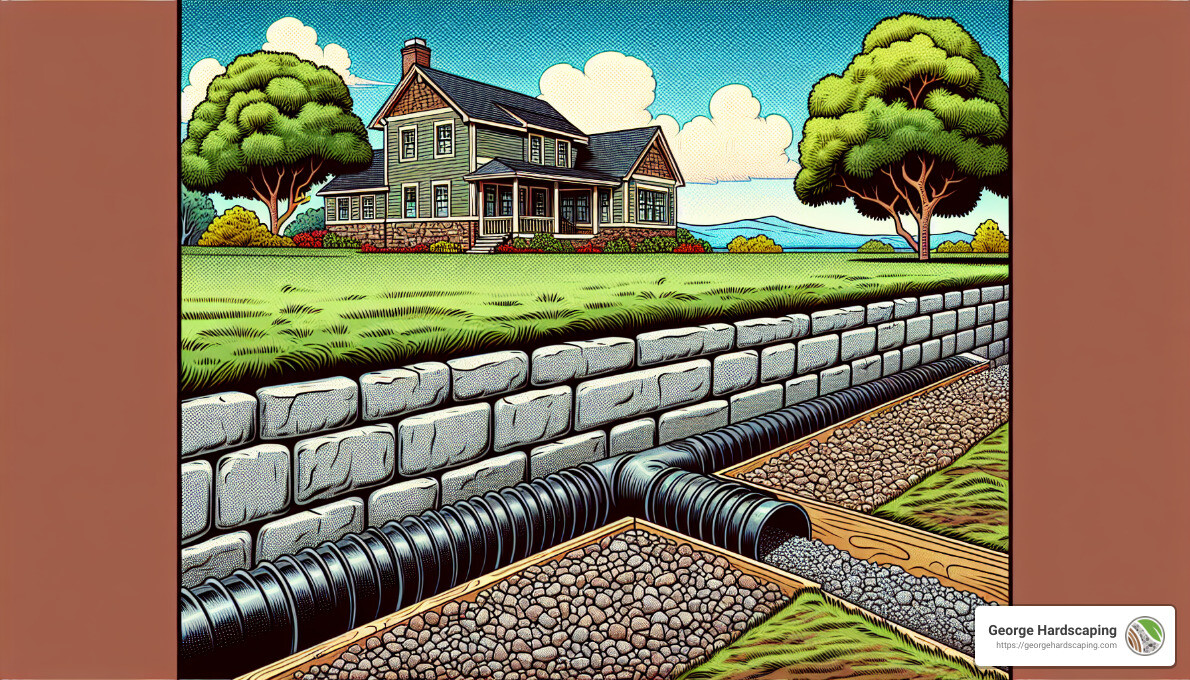
Understanding these basic principles and formulas ensures your retaining wall is both functional and durable, turning challenging landscapes into beautiful, usable spaces.
Next, we’ll explore the cost and installation of retaining walls, diving into budgeting, material costs, and labor estimates.
Cost and Installation of Retaining Walls
Cheapest Retaining Wall Options
Budgeting for a retaining wall starts with understanding the different options available. Some materials are more affordable than others, yet still effective.
Poured concrete is one of the cheapest options, costing around $20 to $25 per square foot. It offers durability and a sleek look. Pressure-treated pine is another budget-friendly material, though it may not last as long as stone or concrete.
For those looking to save even more, DIY potential is significant with materials like interlocking concrete blocks. These can be installed without specialized skills, reducing labor costs.
Hiring Professionals vs. DIY
When it comes to labor estimates, costs can vary widely. Hiring professionals ensures a high-quality build but comes at a price. Labor costs can range from $50 to $75 per hour, depending on your location and the complexity of the project.
DIY projects can save you money, but they require time and effort. If you have basic construction skills, building a simple retaining wall with interlocking blocks or timber might be feasible. However, for more complex projects involving large walls or challenging terrain, hiring a professional is advisable.
Cost Comparison
Here’s a quick cost comparison to help you decide:
| Material | Cost Per Square Foot | DIY Potential | Professional Labor Cost |
|---|---|---|---|
| Poured Concrete | $20 – $25 | Low | $50 – $75/hr |
| Pressure-Treated Pine | $15 – $20 | Medium | $45 – $70/hr |
| Interlocking Blocks | $15 – $30 | High | $50 – $75/hr |
| Natural Stone | $25 – $40 | Low | $60 – $90/hr |
When to hire a professional? If your wall is over four feet tall, involves complex designs, or must handle significant loads, it’s best to hire a pro. They can ensure structural stability and proper drainage, preventing costly repairs down the line.
Next, we’ll explore aesthetic enhancements and practical tips to make your retaining wall not just functional, but a beautiful part of your landscape.
Aesthetic Enhancements and Practical Tips
Integrating Retaining Walls into Landscapes
Visual Appeal
Retaining walls are more than just functional structures; they can be stunning features in your landscape. Incorporate materials like natural stone or interlocking concrete blocks for a timeless look. Adding flower beds or ornamental plants can soften the industrial feel of concrete walls, making your yard more inviting.
“Adding ornamental plants to the finished wall also embraces its natural surroundings,” says Mauricio Lobeira, a Monterrey-based architect.
Functionality
A well-designed retaining wall can transform unusable slopes into functional spaces. Consider adding steps to your wall for easy access between different levels of your yard. This not only enhances functionality but also adds a visual break to the wall, making it more interesting.
Longevity
Choosing durable materials like concrete or natural stone ensures that your retaining wall will last for years. Even though wood is a cost-effective option, it has a shorter lifespan. To extend its longevity, opt for pressure-treated wood and use a wood preservative.
Maintenance and Upkeep
Inspection Tips
Regular inspection is key to maintaining the integrity of your retaining wall. Look for signs of cracking, bulging, or water seepage. Early detection of issues can prevent costly repairs.
Common Issues
Common problems include erosion at the base, water pooling, and cracks in the wall. These issues often arise from poor drainage or soil pressure. Make sure your wall has proper drainage systems to avoid these problems.
Repair Solutions
For minor cracks, use a concrete patching compound. If you notice bulging or significant displacement, it might be time to consult a professional. Waterproofing your wall can also add years to its life, preventing water damage and structural issues.
Garden Enhancement
Retaining walls can double as garden beds, adding both beauty and functionality to your landscape. Use them to create raised garden beds that are easier to maintain and offer better drainage for plants.
Erosion Control
One of the primary functions of a retaining wall is to prevent soil erosion. By holding back soil, these walls protect your landscape from the damaging effects of erosion, which can lead to sinkholes and loss of fertile soil.
Functional Spaces
Transform your yard into a series of functional spaces with the help of retaining walls. Create seating areas, outdoor kitchens, or even fire pits. These additions can make your outdoor space more enjoyable and increase your home’s value.
Up next, we’ll showcase some of the custom retaining wall designs by George Hardscaping, highlighting the unique material choices and innovative project ideas that can inspire your next landscaping project.
Retaining Wall Design Ideas by George Hardscaping
Custom Designs
At George Hardscaping, we believe that every yard has its own story to tell. That’s why we focus on custom retaining wall designs that fit your unique needs. Whether you need a wall to prevent soil erosion or to create a cozy seating area, we tailor each project to blend seamlessly with your landscape.
One of our favorite projects involved a yard with a steep slope that made it difficult for the homeowners to use the space. We designed a multi-tiered retaining wall that not only stabilized the slope but also created multiple levels for gardening, seating, and even a small waterfall.
Material Choices
Choosing the right materials is crucial for both the durability and look of your retaining wall. Here are some popular options we offer:
- Poured Concrete: This is a versatile and durable option that can be molded into various shapes and sizes. It’s perfect for modern designs and can be stained or textured to match your home’s aesthetic.
- Natural Stone: If you’re looking for a more rustic or natural look, natural stone is the way to go. It’s durable and each stone has its own unique texture and color.
- Pressure-Treated Pine: This is a cost-effective option that works well for smaller walls or garden beds. It’s treated to resist rot and insects.
- Interlocking Concrete Block: These blocks are designed specifically for retaining walls and are easy to install. They come in various sizes and colors, allowing for creative designs.
Project Showcase
Garden Enhancement
One of our standout projects involved transforming a plain backyard into a lush garden oasis. We used interlocking concrete blocks to create raised garden beds and added a small retaining wall to separate the garden from the lawn. The wall not only added visual interest but also helped with drainage, keeping the garden beds from becoming waterlogged.

Erosion Control
In another project, we worked on a property with severe erosion issues. We built a series of retaining walls using natural stone, which not only controlled the erosion but also added a natural beauty to the landscape. The homeowners were thrilled with the results and the added functionality of their yard.
Functional Spaces
We also excel in creating functional spaces. One of our clients wanted an outdoor kitchen and seating area but had a sloped yard. We designed a retaining wall that leveled the area and created a perfect spot for their dream outdoor kitchen. The wall was built using poured concrete with a stone veneer to match the aesthetic of their home.
In the next section, we’ll dive into maintenance and upkeep tips to ensure your retaining wall stays beautiful and functional for years to come.
Conclusion
Designing and building a retaining wall is a significant project that can transform your outdoor space. Whether you’re looking to prevent erosion, create functional areas, or enhance the aesthetics of your yard, a well-designed retaining wall can make a big difference. Let’s wrap up with some essential tips on project planning, choosing the right contractor, and enhancing your outdoor spaces.
Project Planning
Planning is crucial for any successful retaining wall project. Begin by assessing your needs and goals. Do you want to create a garden terrace, a seating area, or simply prevent soil erosion? Understanding your objectives will guide your design choices.
Next, consider the following steps:
- Site Analysis: Evaluate the soil type, slope, and drainage requirements. This will influence the design and materials needed.
- Budgeting: Determine your budget. Include costs for materials, labor, and any additional features like lighting or seating.
- Permits: Check local regulations to see if you need permits for your retaining wall. This is especially important for walls over a certain height.
- Material Selection: Choose materials that fit your budget and aesthetic preferences. Options include natural stone, poured concrete, and pressure-treated wood.
Choosing the Right Contractor
Hiring a professional contractor can make a huge difference in the quality and longevity of your retaining wall. Here are some tips to help you choose the right one:
- Experience: Look for contractors with experience in retaining wall construction. Check their portfolio and ask for references.
- Reputation: Read reviews and testimonials. A good reputation is a strong indicator of reliable service.
- Quotes: Get multiple quotes to compare prices and services. Ensure the quotes include all aspects of the project, from excavation to finishing touches.
- Communication: Choose a contractor who communicates clearly and listens to your needs. Good communication is key to a successful project.
Enhancing Outdoor Spaces
A retaining wall can do more than just hold back soil. It can enhance your outdoor space in various ways:
- Garden Enhancement: Use retaining walls to create raised garden beds. This not only adds visual interest but also makes gardening easier.
- Seating Areas: Incorporate built-in seating into your retaining wall design for a cozy and functional outdoor space.
- Lighting: Add lighting to your retaining wall for safety and ambiance. Consider LED strip lights or spotlights to highlight the wall’s texture and design.
- Water Features: Integrate a water feature, like a fountain or waterfall, into your retaining wall for a dynamic and soothing element.
For more inspiration and to see how we can help you with your retaining wall project, visit our Landscape Retaining Walls page.
In the next section, we’ll dive into maintenance and upkeep tips to ensure your retaining wall stays beautiful and functional for years to come.