
Retaining Wall Construction Detail: Top 5 Essential Techniques
Introduction
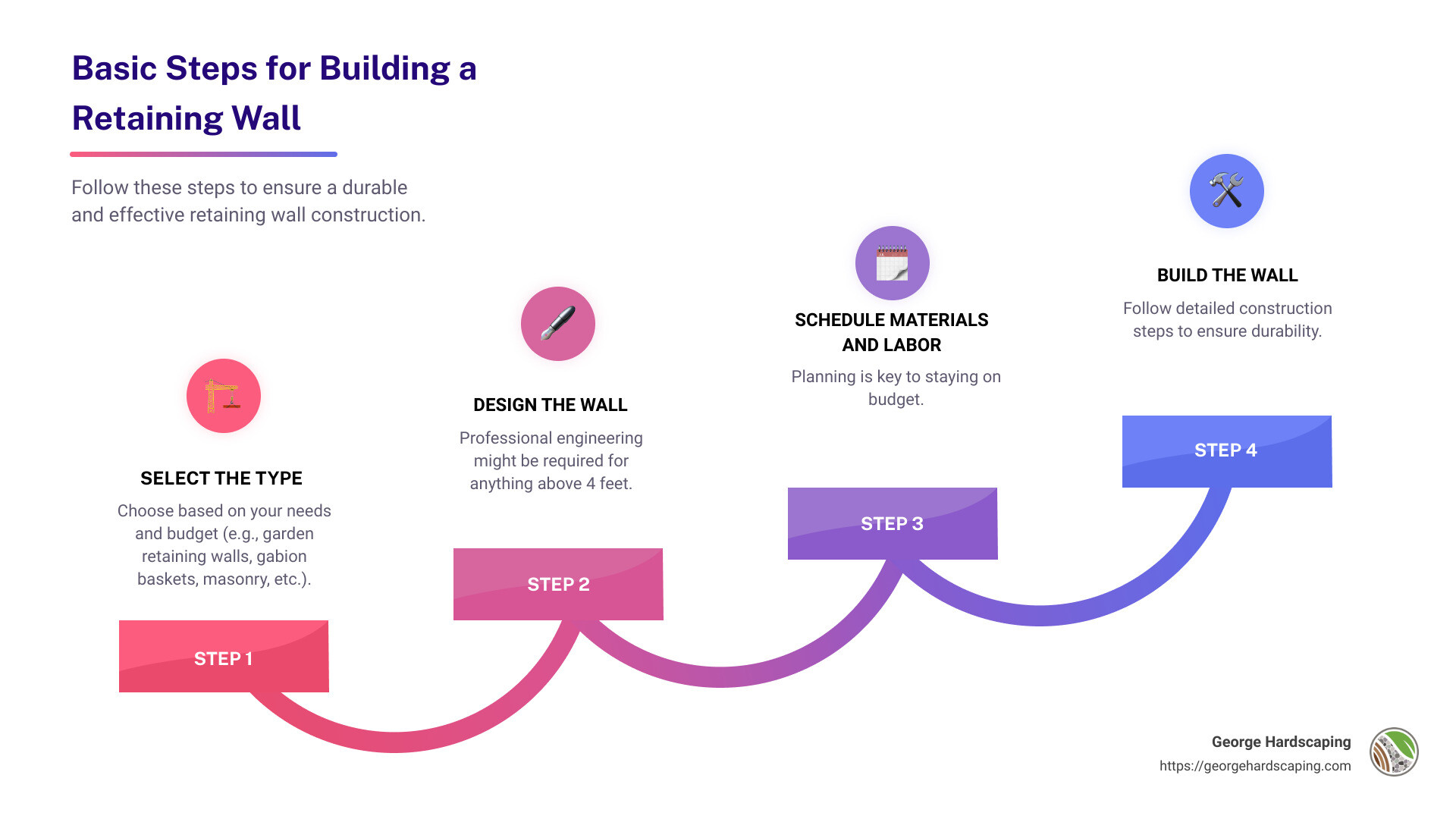
Retaining wall construction detail is crucial for anyone looking to manage soil erosion, enhance landscape beauty, or address tricky slopes in their yard. It serves multiple purposes, from transforming steep slopes into terraced backdrops to creating sturdy barriers against soil movement. To help you get started, here are the basic steps involved in retaining wall construction:
- Select the type: Choose based on your needs and budget (e.g., garden retaining walls, gabion baskets, masonry, etc.).
- Design the wall: Professional engineering might be required for anything above 4 feet.
- Schedule materials and labor: Planning is key to staying on budget.
- Build the wall: Follow detailed construction steps to ensure durability.
Importance
Properly constructed retaining walls don’t just add aesthetic appeal—they also prevent erosion, manage water runoff, and create usable outdoor space. As noted on George Hardscaping, materials such as rock, concrete, and brick are durable and low-maintenance options that can significantly boost your home’s value.
Basics
Retaining walls must be designed to handle the soil pressure. Missteps in any stage—from selecting materials to leveling the ground—can lead to collapse, costing time and money. This is why careful planning, sometimes with the help of professionals, is critical for taller walls.
Types of Retaining Walls
Retaining walls come in various designs, each suited for specific needs and conditions. Let’s explore the primary types: Gravity, Cantilever, Sheet Pile, and Anchored retaining walls.
Gravity Retaining Walls
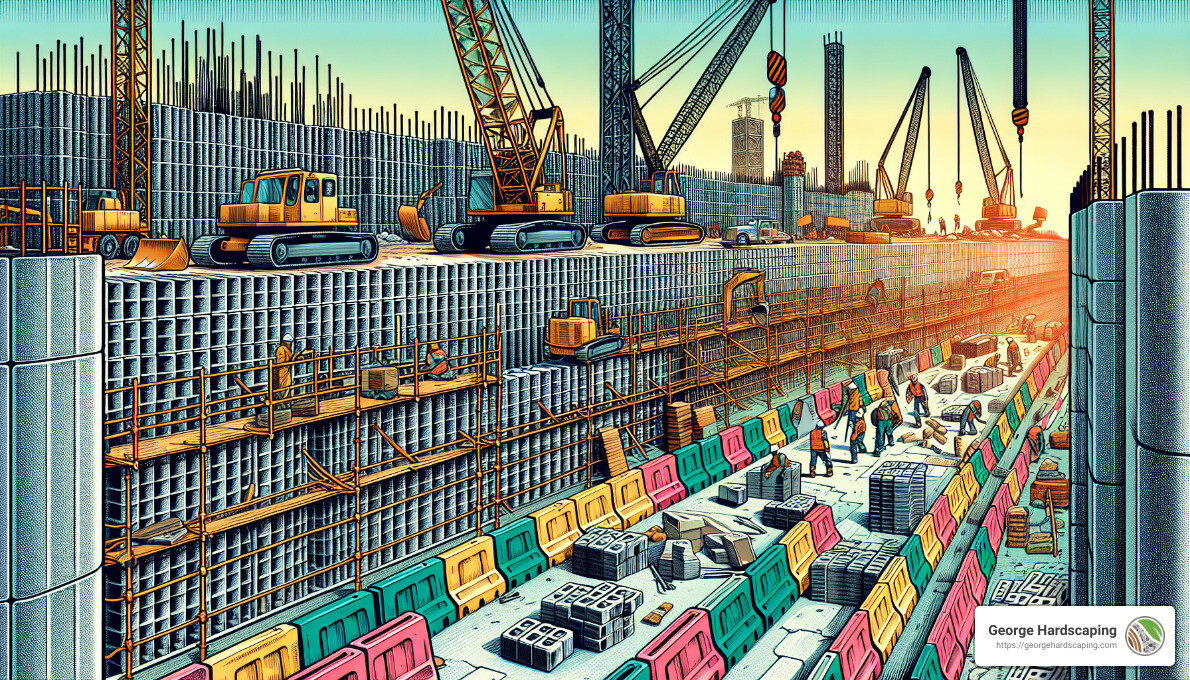
Gravity retaining walls rely on their own weight to hold back soil. They are typically made from heavy materials like concrete, stone, or brick. These walls are best for shorter heights due to their reliance on mass for stability.
A popular choice for DIY enthusiasts, gravity walls often use interlocking blocks which come in various colors and textures. This makes them both functional and aesthetically pleasing.
Cantilever Retaining Walls
Cantilever walls are more complex and are typically composed of a thin stem and a base slab. The wall’s stability comes from the weight of the soil on the base slab. This design allows for taller walls without the need for excessive material.
The footing and stem wall are crucial components here. The footing extends into the soil to provide stability, while the stem wall rises to hold back the soil. Proper reinforcement, often with steel bars, is necessary to prevent bending and ensure durability.
Sheet Pile Retaining Walls
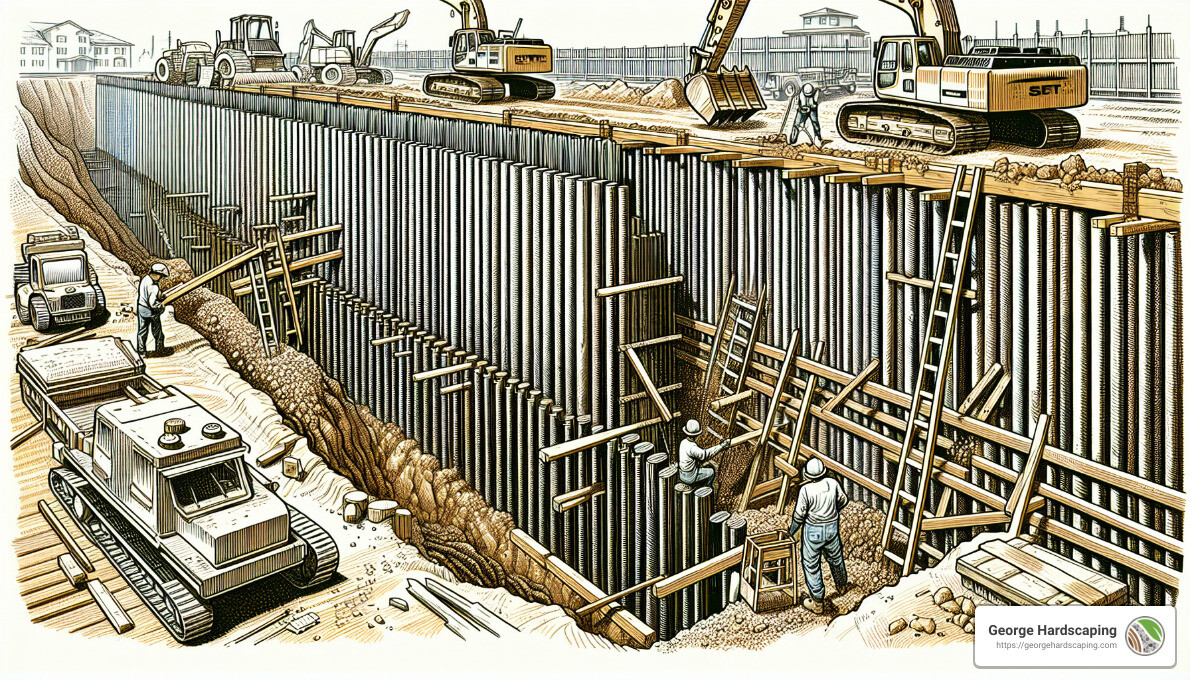
Sheet pile walls use thin steel sheets driven deep into the ground. These walls are ideal for soft soils and tight spaces. However, they are not suitable for areas with high soil pressure due to their limited strength.
Anchored Retaining Walls
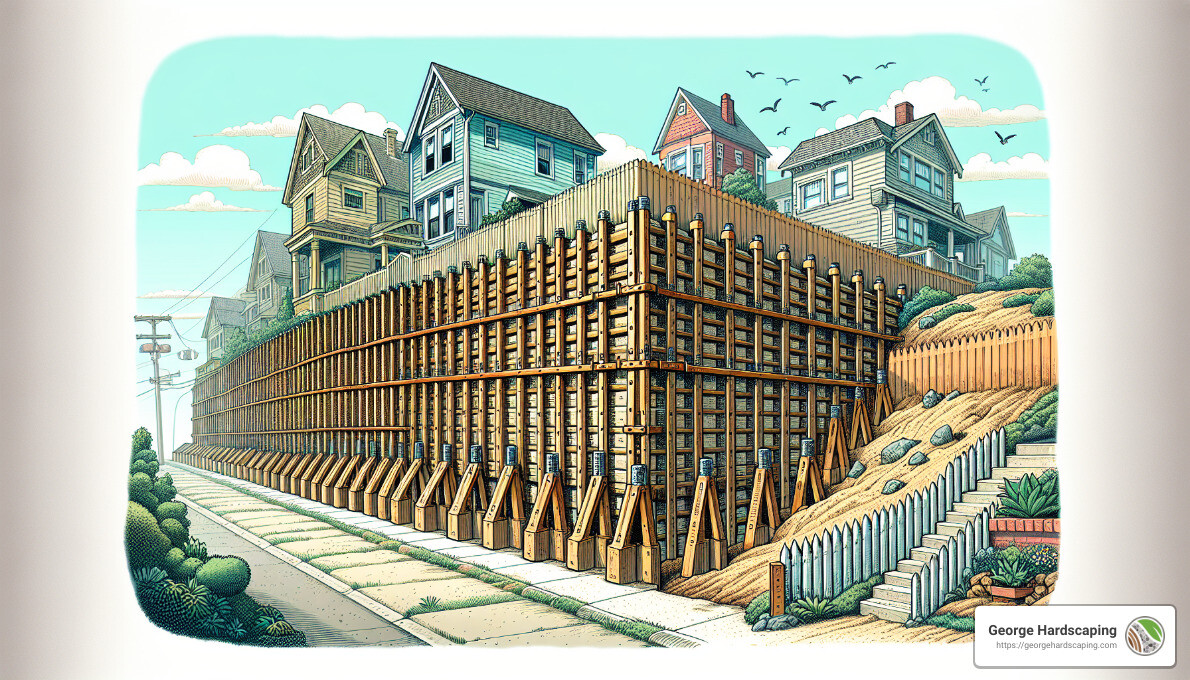
Anchored walls use cables or rods driven deep into the soil and anchored by concrete or another material. These anchors provide additional support, making it possible to build higher walls without the risk of overturning or sliding.
Anchored walls are versatile and can be combined with other types of retaining walls for added stability. This makes them an excellent choice for challenging terrains and heavy loads.
In the next section, we’ll dive into the construction details of gravity retaining walls, including base material, leveling, and compaction.
Retaining Wall Construction Detail
Gravity Retaining Wall Construction
Materials: Gravity retaining walls rely on their weight to hold back soil. These walls can be made from concrete blocks, poured concrete, rocks, or boulders.
Design Considerations: The height of the wall, soil type, and water drainage are crucial. Shorter walls are typically used, as taller walls need more robust designs.
Local Permits: Always check with local authorities before construction. Some areas require permits to ensure your wall won’t disrupt water flow or affect neighboring properties.
Base Material, Leveling, Compaction:
1. Base Material: Start with a trench filled with crushed rock. This creates a stable foundation.
2. Leveling: Use a carpenter’s level to ensure the base layer is perfectly flat.
3. Compaction: Compact the base material to prevent shifting.
Cantilever Retaining Wall Design
Footings, Stem Wall, Reinforcement:
1. Footings: These walls have a concrete base (footing) extending into the soil. The size depends on the wall’s height and load.
2. Stem Wall: The vertical part (stem) rises from the footing. It’s typically made from reinforced concrete.
3. Reinforcement: Steel rebar is used to strengthen the wall against bending and cracking.
Advanced Techniques in Retaining Wall Construction
Geogrid Reinforcement: Geogrids are synthetic mesh-like materials placed between soil layers. They enhance soil stability and are often used with interlocking block walls.
Mechanically Stabilized Earth (MSE): This technique uses layers of geogrid and select backfill material to create a strong, flexible retaining wall. The facing units (blocks) are primarily aesthetic.
Piled Walls: Piled retaining walls use deep-driven piles (concrete or metal) to support the wall. These walls are ideal for large excavations and areas with high lateral pressures. They offer minimal disturbance to surrounding structures.
Next, let’s explore key considerations in retaining wall design, including the height of the water table, soil type, and subsoil water movement.
Key Considerations in Retaining Wall Design
When it comes to retaining wall construction, several key factors must be taken into account to ensure stability and longevity. Let’s delve into some critical engineering and safety factors, as well as material selection for durability and aesthetics.
Engineering and Safety Factors
Height of Water Table: The water table’s height directly affects soil stability. A high water table can lead to increased hydrostatic pressure behind the wall, which needs to be managed to prevent failure. Proper drainage solutions, like weep holes and perforated pipes, are essential.
Soil Type: Different soils have varying load-bearing capacities and drainage properties. For instance, clay retains water and can exert more pressure on the wall, while sandy soil drains better but may require stabilization. Conducting a soil analysis helps in choosing the right construction method and materials.
Subsoil Water Movement: Subsurface water flow can erode the foundation and destabilize the wall. Installing drainage systems and using filter fabric can mitigate these risks by redirecting water away from the wall structure.
Overturning and Sliding: These are two primary failure modes for retaining walls. Overturning occurs when the wall tips over due to excessive pressure. Sliding happens when the wall moves horizontally. Both can be countered by proper design, including adequate footing depth and reinforcement.
Foundation Pressure: The foundation must be strong enough to bear the weight of the wall and the retained soil. This involves calculating the bearing capacity of the soil and designing footings that distribute the load evenly.
Water Uplift: Water can accumulate below the wall, creating upward pressure that can lift and destabilize it. Drainage layers and proper grading can help manage this issue.
Material Selection for Durability and Aesthetics
Choosing the right materials is crucial for both the performance and appearance of your retaining wall.
Concrete Blocks: These are popular for their durability and ease of installation. Concrete blocks come in various colors and textures, making them versatile for aesthetic purposes. They are also strong enough to handle significant soil pressure.
Poured Concrete: This option provides a seamless and robust wall. Poured concrete can be customized with different finishes and is highly durable. However, it requires more expertise to install correctly.
Treated Timbers: While not as durable as concrete, treated timbers are cost-effective and quicker to install. They offer a rustic look but have a shorter lifespan and may not be suitable for high-pressure applications.
Selecting the right material depends on your specific needs, including the height of the wall, soil conditions, and desired aesthetics.
Next, we’ll discuss common challenges and solutions in retaining wall construction, including drainage issues, soil pressure, and wall alignment.
Common Challenges and Solutions in Retaining Wall Construction
Building a retaining wall comes with its own set of challenges. Let’s dive into some common issues and their solutions.
Addressing Hydrostatic Pressure
Hydrostatic pressure is the force exerted by water behind the wall. If not managed, it can lead to wall failure.
Drainage Issues: Proper drainage is crucial. Without it, water builds up behind the wall, increasing pressure and causing damage.
Weep Holes: These small openings allow water to escape from behind the wall. Always include them in your design.
Perforated Pipes: Lay these pipes along the base of the wall to direct water away effectively. Cover with gravel and filter fabric to prevent clogging.
Filter Fabric: This material keeps sediment from entering the drainage system, extending the wall’s lifespan.
Preventing Wall Failure
Several factors can lead to retaining wall failure. Here’s how to avoid them.
Soil Pressure: Heavy, waterlogged soil can exert immense pressure on the wall.
Proper Backfill Material: Use gravel or crushed stone for backfill. These materials allow water to drain quickly, reducing pressure.
Adequate Footing Depth: Footings should be deep enough to prevent shifting. In colder climates, they need to be below the frost line to avoid movement from freezing and thawing.
Correct Reinforcement: Reinforcement like geogrid can add strength. For taller walls, engineered solutions are often necessary.
Wall Alignment: Misalignment can compromise the wall’s stability.
Leveling: Ensure each layer of blocks is level. Use a carpenter’s level to check as you go.
Compaction: Compact the soil and backfill in layers to prevent settling. Use a plate compactor for best results.
Following these guidelines will help you build a strong, durable retaining wall. Next, we’ll dive into frequently asked questions about retaining wall construction.
Frequently Asked Questions about Retaining Wall Construction
What is the basic rule of retaining wall design?
The basic rule of retaining wall design is ensuring stability. This includes:
- Overturning Resistance: The wall must resist the forces trying to tip it over.
- Sliding Resistance: The wall should stay in place and not slide forward.
- Adequate Foundation: The base should support the wall’s weight and the pressure from the retained soil.
- Proper Drainage: Prevent water buildup behind the wall to reduce pressure.
These principles ensure the wall can handle the weight of the soil and any additional loads.
How is a retaining wall constructed?
Building a retaining wall involves several steps:
- Planning and Permits: Check local regulations and obtain necessary permits.
- Excavation: Dig a trench for the wall’s base.
- Base Material: Add a layer of gravel or crushed rock for drainage and stability.
- Leveling: Ensure the base is level using a carpenter’s level.
- First Course: Place the first row of blocks or materials. This row must be perfectly level.
- Building Up: Continue adding rows, ensuring each layer is level and properly aligned.
- Backfilling: Add soil behind the wall in layers, compacting each layer to prevent settling.
- Drainage: Install drainage solutions like weep holes or perforated pipes to prevent water buildup.
Following these steps ensures a strong, durable wall.
What are the 4 types of retaining walls?
There are several types of retaining walls, but four common ones are:
- Gravity Retaining Walls: These rely on their weight to hold back soil. They are typically made from heavy materials like concrete or stone.
- Cantilever Retaining Walls: These have a vertical stem and a horizontal base (or footing). They use less material than gravity walls but require careful engineering.
- Sheet Pile Walls: Made from steel, wood, or vinyl, these are driven into the ground. They are ideal for tight spaces and soft soils.
- Anchored Retaining Walls: These use cables or rods anchored into the soil behind the wall. They provide extra support for taller walls.
Each type has its own benefits and is chosen based on the specific needs of the project.
Next, we’ll explore more about George Hardscaping’s commitment to craftsmanship and enhancing outdoor spaces.
Conclusion
At George Hardscaping, we take pride in our expertise and commitment to crafting beautiful and durable retaining walls. Our goal is to enhance outdoor spaces by providing customized solutions that not only meet but exceed our clients’ expectations.
Enhancing Outdoor Spaces
Retaining walls are more than just functional structures; they can transform your yard into a stunning, usable space. Whether you’re looking to create a terrace, prevent soil erosion, or add a decorative element to your landscape, our team is here to help. We use high-quality materials like rock, concrete, stone, and brick to ensure your retaining wall stands the test of time. Plus, our designs can be tailored to fit seamlessly with your existing landscape, adding both beauty and value to your property.
Commitment to Craftsmanship
Our team of experienced professionals is dedicated to delivering top-notch craftsmanship on every project. From the initial design to the final installation, we pay close attention to every detail to ensure your retaining wall is built to last. We understand the importance of proper construction techniques, such as using the right base material, ensuring adequate drainage, and selecting the best materials for durability and aesthetics.
We also stay updated with the latest advancements in retaining wall construction, including geogrid reinforcement and mechanically stabilized earth techniques. This allows us to offer innovative solutions for even the most challenging projects.
For more information about our services or to get started on your retaining wall project, visit our Landscape Retaining Walls page.
By choosing George Hardscaping, you’re investing in a team that values quality, durability, and customer satisfaction. Let’s work together to create an outdoor space you’ll love for years to come.
