
Retaining Wall Construction: Top 5 Key Steps for Success
Retaining Wall Construction is a brilliant way to boost your home’s curb appeal while also handling soil erosion on sloped yards. These walls aren’t just functional; they add a unique charm to your landscape. If you’re from Essex County, MA, you know the importance of keeping your property stylish and intact.
Here’s a quick answer if you’re just looking for a basic understanding:
- A retaining wall keeps soil from sliding.
- It’s perfect for hilly terrains to prevent erosion.
- It also acts as a beautiful landscape feature that adds value.
Aren’t retaining walls a win-win?
They give your garden some striking depth and organization. Think of them as the backbone of a tiered garden or a stylish vegetable patch. Built with durable materials like rock, stone, or concrete, retaining walls manage stormwater runoff, preventing potential damage to your landscape. They stand firm against harsh weather, keeping your yard safe and visually appealing in every season.
Get ready to create a functional and beautiful yard with George Hardscaping, dedicated to crafting top-quality outdoor features across the North Shore. Whether you’re in Salem’s historical charm or Rockport’s coastal vibes, beautifying your space is just a retaining wall away.
Retaining Wall Construction terms to learn:
– Garden retaining wall ideas
– Modern retaining wall designs
– Natural stone retaining walls
Choosing the Right Materials
When it comes to Retaining Wall Construction, selecting the right materials is crucial for both functionality and aesthetics. Let’s explore the different types of retaining walls and the materials that make them stand out.
Types of Retaining Walls
1. Gravity Walls
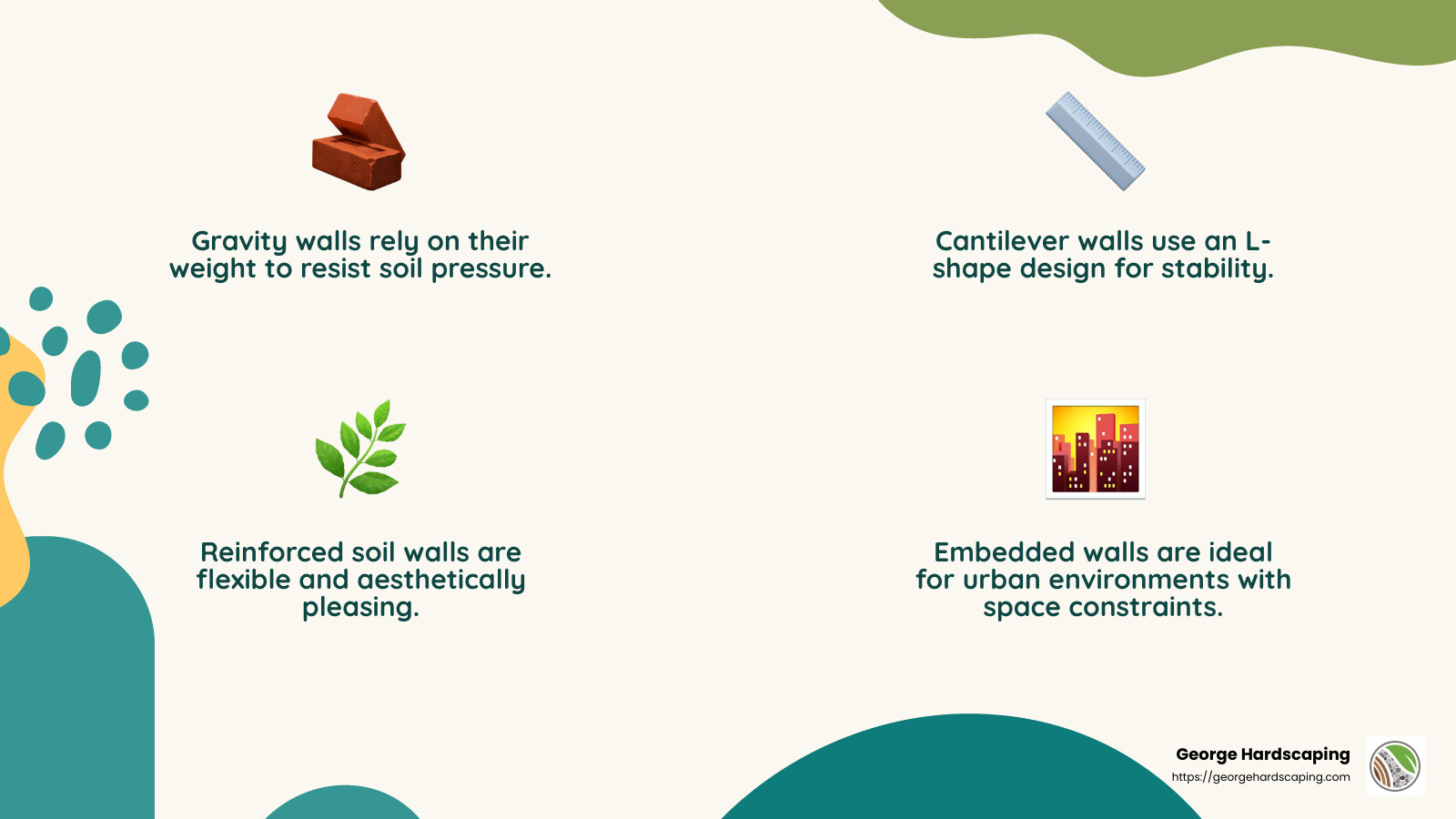
Gravity walls rely on their own weight to hold back soil. They’re usually built with heavy materials like concrete blocks, stone, or bricks. The sheer mass of these walls resists the lateral pressure of the soil. They are straightforward to construct and are perfect for small to medium-sized projects.
2. Cantilever Walls
Cantilever walls are like an “L” shape, where the base extends under the soil. This design uses leverage to hold back the earth. Typically made from reinforced concrete, these walls are ideal for larger projects because they can support significant loads without needing to be overly bulky.
3. Reinforced Soil Walls
These walls use layers of soil reinforced with materials like geogrids or steel strips. They are flexible and can be built to accommodate a variety of shapes and sizes. Reinforced soil walls are excellent for projects where aesthetics and space efficiency are important.
4. Embedded Walls
Embedded walls, often known as sheet pile walls or bored pile walls, are driven deep into the ground. They are ideal for situations where space is limited, such as urban environments or near existing structures. Made from steel, concrete, or wood, these walls are strong and durable.
Concrete Blocks and Interlocking Blocks
Concrete blocks are a popular choice for their durability and versatility. They come in various shapes and sizes, allowing for creative designs. Interlocking blocks take this a step further by providing a secure fit that doesn’t require mortar. This feature makes them easy to work with, even for DIY enthusiasts.
Drainage Systems
Proper drainage is essential in retaining wall construction to prevent water buildup, which can lead to wall failure. A well-designed drainage system includes:
- Drainage Pipes: These are placed at the base of the wall to direct water away from the structure.
- Gravel Backfill: This material allows water to flow freely to the drainage pipes, reducing hydrostatic pressure.
- Weep Holes: Small openings in the wall that let trapped water escape.
Choosing the right materials and wall type is the first step in building a retaining wall that not only looks great but stands the test of time. Whether you’re tackling a small garden project or a larger landscape overhaul, understanding these options will set you on the path to success.
Now that we’ve covered the types of walls and materials, let’s dive into the step-by-step process of Retaining Wall Construction.
Retaining Wall Construction: Step-by-Step Guide
Building a retaining wall can transform your landscape, adding both beauty and function. Here’s a simple guide to help you through the process, from preparing the site to ensuring proper drainage.
Preparing the Site
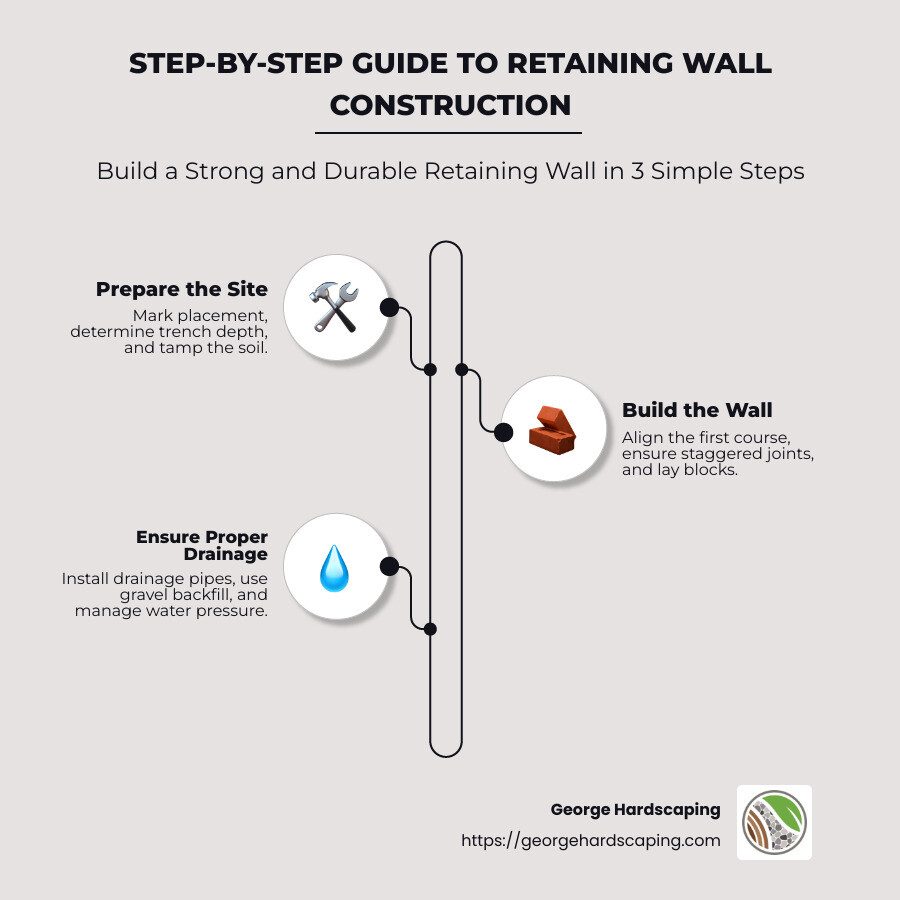
1. Marking Placement
Start by marking the exact location where your wall will go. Use wooden stakes and string to outline the area. This helps visualize the wall’s path and ensures straight lines. If your wall will curve, mark the shape with paint.
2. Trench Digging
Dig a trench along the marked line. The trench should be about eight inches deep and slightly wider than your blocks. This depth allows the first row of blocks to be partially underground, anchoring the wall and adding stability.
3. Soil Tamping
After digging, tamp down the soil in the trench. This creates a solid base for the wall. Use a soil tamper to compact the soil until it’s firm.
4. Leveling
Place a layer of sharp gravel in the trench, about four inches deep. Use a level to make sure the gravel is even. This ensures your wall starts on a flat, stable surface.
Building the Wall
1. First Course
Begin laying the first course of blocks. Start at the most visible end or where the wall meets another structure. Check each block with a level to ensure it’s even from front to back and side to side.
2. Block Alignment
As you lay each block, make sure they align properly. Blocks should fit snugly together, with no gaps. This provides a strong foundation for the rest of the wall.
3. Staggered Joints
For added strength, stagger the joints of each row. This means the end of one block should sit above the middle of the block below it. This pattern helps distribute weight evenly and reduces the risk of the wall tipping.
Ensuring Proper Drainage
1. Drainage Pipe Installation
Once the first course is set, install a drainage pipe behind the wall. This pipe should have a sleeve to prevent clogging and be placed at the base to direct water away from the wall.
2. Gravel Backfill
Backfill behind the wall with gravel. This material allows water to flow easily to the drainage pipe, reducing hydrostatic pressure that can push against the wall.
3. Managing Hydrostatic Pressure
To prevent water pressure from damaging the wall, ensure the drainage system is effective. Hydrostatic pressure—the force exerted by standing water—can cause walls to fail if not properly managed. The combination of drainage pipe and gravel backfill helps mitigate this risk.
With these steps, you’re well on your way to a sturdy and beautiful retaining wall. Up next, we’ll discuss common mistakes to avoid during construction to ensure your wall stands strong for years to come.
Common Mistakes and How to Avoid Them
When it comes to Retaining Wall Construction, even small mistakes can lead to big problems. Let’s look at some common pitfalls and how to sidestep them.
Uneven Surfaces
One of the most frequent mistakes is starting with an uneven surface. If your base isn’t level, the entire wall will be off-balance. This not only looks bad but also weakens the wall’s structure.
How to Avoid:
– Use a 4-foot carpenter’s level to check the surface.
– Ensure the gravel base is compacted and even before laying the first course of blocks.
– Adjust the gravel or soil until it’s perfectly level.
Inadequate Drainage
Water is your wall’s worst enemy. Without proper drainage, water can build up behind the wall, increasing pressure and risking collapse.
How to Avoid:
– Install a drainage pipe at the base of the wall.
– Use gravel as backfill to allow water to flow freely to the drainage pipe.
– Ensure the drainage system directs water away from the wall to prevent hydrostatic pressure.
Improper Backfill
Using the wrong backfill material or not compacting it properly can cause the wall to shift or settle unevenly over time.
How to Avoid:
– Use gravel or a well-draining soil mix for backfill.
– Fill in layers, compacting each one with a soil tamper to avoid loose spots.
– Leave space at the top for a layer of topsoil, which will cover the gravel and backfill.
By steering clear of these common errors, you’ll ensure your retaining wall is not only attractive but also durable. Next, we’ll tackle some frequently asked questions about retaining wall construction to further improve your building knowledge.
Frequently Asked Questions about Retaining Wall Construction
Do I need a permit for my retaining wall?
When it comes to Retaining Wall Construction, understanding local building codes is crucial. In many areas, if your wall is over three to four feet tall, a permit may be required.
Why a Permit?
– Safety: Taller walls need more structural support. A permit ensures your wall is safe and meets local regulations.
– Inspections: Some regions require inspections to verify the wall is built to code.
How to Check:
– Contact your local building department.
– Check if your homeowners association has additional rules.
How important is drainage for retaining walls?
Proper drainage is essential for maintaining wall stability. Without it, water pressure can build up behind the wall, leading to potential failure.
Why Drainage Matters:
– Water Pressure: Hydrostatic pressure can push against the wall, causing it to lean or collapse.
– Soil Erosion: Proper drainage prevents water from washing away the soil behind the wall.
Drainage Tips:
– Install a drainage pipe at the base.
– Use gravel backfill to help water escape.
– Ensure water is directed away from the wall.
What is the cheapest material for building a retaining wall?
Choosing cost-effective materials can save you money without sacrificing quality.
Material Comparison:
– Concrete Blocks: Durable and widely available. They offer good value for their longevity.
– Interlocking Blocks: Easier to install and often cheaper in terms of labor.
– Timber: Generally less expensive upfront, but may require more maintenance over time.
Considerations:
– Balance initial cost with long-term durability.
– Think about maintenance needs and potential replacements.
By understanding these aspects, you’ll be better prepared for your Retaining Wall Construction project. Up next, we’ll wrap up with insights on quality craftsmanship and local expertise in Essex County, MA.
Conclusion
At George Hardscaping, we take pride in changing landscapes across Essex County, MA, with our expertise in Retaining Wall Construction. Our commitment to quality craftsmanship ensures that every project not only meets but exceeds expectations.
Why Choose George Hardscaping?
- Local Expertise: We understand the unique challenges and opportunities of working in Essex County. Our team knows the local terrain, climate, and building codes, ensuring your retaining wall is built to last.
- Craftsmanship: With years of experience, our skilled craftsmen use the best materials and techniques. Whether it’s a simple garden wall or a complex multi-tiered structure, we deliver precision and attention to detail.
- Aesthetic and Functional Design: We believe in creating retaining walls that are as beautiful as they are functional. Our designs improve the natural beauty of your landscape while effectively managing soil erosion and water drainage.
Our Promise to You
When you choose George Hardscaping, you’re choosing a partner dedicated to bringing your outdoor vision to life. From the initial consultation to the final touches, we work closely with you to ensure your retaining wall is a perfect fit for your space.
Whether you’re in Beverly, Gloucester, or any of the surrounding towns, we’re here to provide the quality and service you deserve. Let’s build something great together. Reach out to us today to start your next project!
