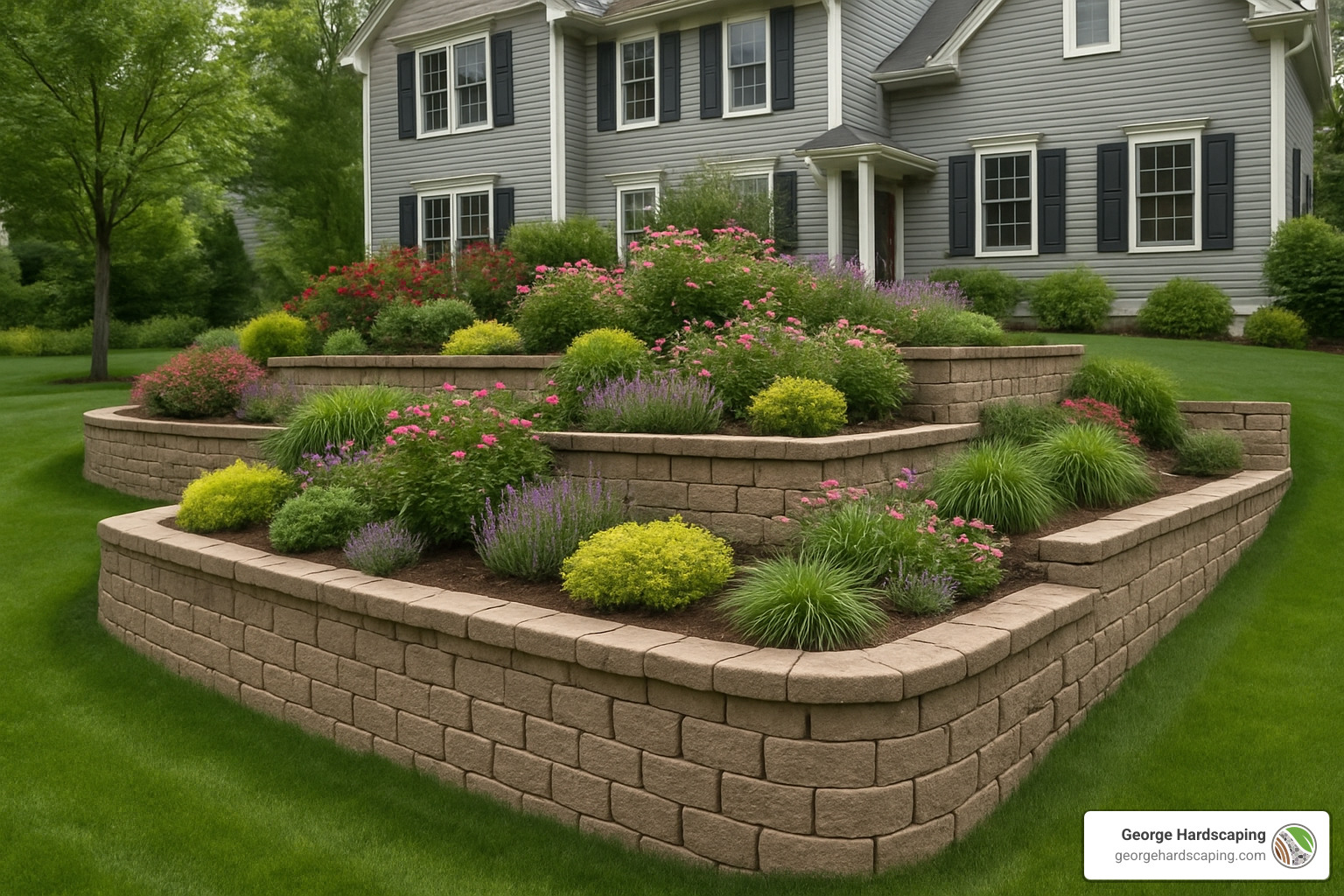
Retaining Wall Builder: 7 Powerful Reasons to Avoid Costly Mistakes
Why Your Property Needs a Professional Retaining Wall Builder
Looking for a Retaining Wall Builder? Here’s what you need to know:
- Purpose: Retaining walls hold back soil, prevent erosion, and create usable space on sloped properties
- Cost: National average $114-$173 per linear foot ($6,826-$10,353 for a 60-foot wall)
- Professional vs DIY: Walls over 4 feet typically require engineer-designed plans and permits
- Builder Qualifications: Look for licensed contractors with retaining wall certification and positive reviews
- Types: Gravity, MSE (Mechanically Stabilized Earth), segmental block, natural stone, timber
A Retaining Wall Builder is a specialized contractor who designs and constructs walls that hold back soil and create level areas on sloped properties. These essential landscape features do more than just look good—they solve drainage problems, prevent erosion, and can dramatically increase your usable outdoor space.
“One of the nice things about living in the North Shore is that your outdoor relaxation and entertainment space can serve as a natural extension of your house,” notes a local contractor with over 20 years of experience. But when your property has slopes or elevation changes, a professionally built retaining wall becomes crucial.
The national average cost for a 60-foot retaining wall ranges from $6,826 to $10,353, including materials and labor. This investment can transform previously unusable land into functional terraces for gardens, patios, or play areas.
Why hire a professional? Retaining walls face constant pressure from soil and water. Walls over 4 feet tall must be designed by a registered professional according to the International Building Code. Proper drainage is critical—without it, hydrostatic pressure builds up and can cause wall failure.
An experienced retaining wall builder brings crucial knowledge about local soil conditions, drainage requirements, and building codes. They’ll help you steer permits, select appropriate materials, and ensure your wall stands the test of time.
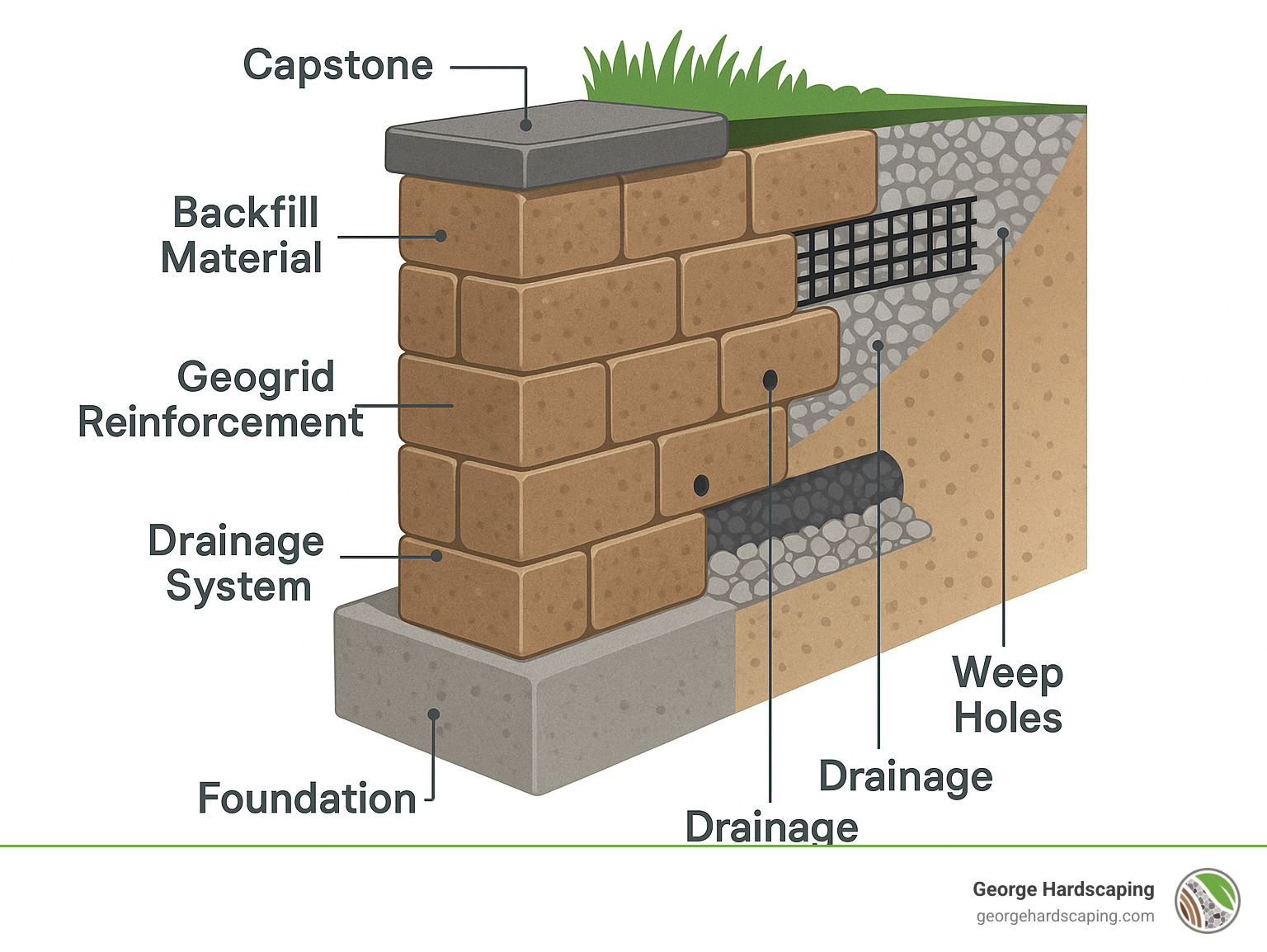
Related content about Retaining Wall Builder:
– retaining wall design
– retaining wall construction detail
– retaining wall landscaping
Retaining Wall Builder 101: Why Walls Matter
If you’ve ever admired the terraced gardens of the North Shore or wondered how homes on hillsides manage to have level yards, you’re seeing the magic of retaining walls at work. These hardworking structures do far more than just look pretty in your landscape photos.
Erosion control is perhaps their most crucial function, especially here in Essex County where our New England weather can be unforgiving. Those heavy spring downpours and winter melts would gradually wash away hillsides without properly built walls to hold soil in place. Your landscape investment stays put, and your neighbors don’t end up with your topsoil in their yard.
Creating usable space is another game-changer. That sloped backyard that’s impossible to mow or enjoy? A well-designed retaining wall system can transform it into level terraces perfect for gardens, patios, or a play area for the kids. I’ve seen properties where retaining walls have literally doubled the usable outdoor living space.
“Many of our North Shore clients are surprised by how much more they use their yards after we install retaining walls,” shares a George Hardscaping team member. “That previously unusable slope becomes their favorite outdoor gathering spot.”
Property value improvement is the happy financial bonus. A thoughtfully designed retaining wall improves both functionality and curb appeal. When built with quality materials that complement your home’s architecture, these walls can offer one of the best returns on investment for outdoor improvements.
Improved drainage is the unsung hero benefit. A properly constructed retaining wall includes carefully engineered drainage systems that channel water away from your home’s foundation and prevent the soil saturation that leads to wall failure. This hidden feature often saves homeowners thousands in potential water damage repairs.
Building codes take retaining walls very seriously, and for good reason. The International Building Code has specific requirements, particularly for walls exceeding certain heights. Here in Massachusetts, most North Shore communities follow similar guidelines:
| Wall Height | Typical Permit Requirements in Essex County |
|---|---|
| Under 2 feet | Usually no permit required |
| 2-4 feet | May require basic permit depending on location |
| Over 4 feet | Engineer-stamped drawings, full permit application |
| Any height near wetlands | Conservation Commission approval |
Ignoring these requirements can be costly. Even if your wall stands strong for years, building without required permits can mean fines, forced removal, and headaches when selling your property. A professional Retaining Wall Builder knows these regulations inside and out.
What Exactly Is a Retaining Wall?
Simply put, a retaining wall is an engineered structure that holds back soil when you want to change ground elevations beyond what the soil can naturally support. Think of it as creating a vertical barrier where the earth would naturally want to slope.
The science gets fascinating (and complex) when you dig deeper. Soil creates tremendous lateral pressure against walls—essentially pushing horizontally with surprising force. This pressure increases with height, varies by soil type (clay pushes harder than sand), multiplies when wet, and grows even stronger when additional weight like driveways or structures sit above the wall.
Different wall types handle these forces in different ways:
Gravity walls are the workhorses that rely on their sheer mass to resist pressure. Those beautiful natural stone walls you see throughout the North Shore? Most are gravity walls, using their substantial weight to stand strong against the soil.
Cantilever walls are clever engineering solutions that use a reinforced concrete base extending under the retained soil. They essentially use the weight of the soil itself as an anchor—nature helping to hold itself back.
Segmental block walls represent modern innovation with their interlocking concrete units. These systems often incorporate geogrid—a synthetic mesh material that extends into the soil behind the wall, creating a reinforced soil mass that acts as part of the wall system.
Behind any good wall is quality backfill—usually clean gravel or crushed stone that provides essential drainage and reduces pressure on the structure. This seemingly simple detail can make the difference between a wall that lasts decades and one that fails prematurely.
Why You Need a Professional Retaining Wall Builder
While that YouTube tutorial might make wall-building look straightforward, there’s a reason retaining walls are one of the most common DIY failures in landscaping.
Engineering know-how is absolutely essential. A professional Retaining Wall Builder understands the complex physics at play. They can calculate soil pressure, determine proper dimensions, and design drainage systems that keep your wall standing strong for decades. Without this expertise, walls can bulge, crack, or collapse—sometimes catastrophically and without warning.
“Walls of 4 ft (1.2 m) in height or more are required by the International Building Code to be designed by a registered design professional,” notes industry documentation. But even lower walls benefit from professional design when built in challenging soil conditions or wet areas.
Heavy equipment access is another practical consideration. Building even a modest retaining wall involves moving substantial amounts of earth and materials. Professionals have excavators, skid steers, and proper compaction equipment that make the job safer, faster, and more precise than what’s possible with shovels and rented tampers.
Liability protection matters more than you might think. If your DIY wall fails and damages neighboring property, you could be personally liable for repairs. Professional Retaining Wall Builders carry insurance specifically for such contingencies, protecting you from potential financial disaster.
Warranty coverage provides peace of mind. When George Hardscaping builds your retaining wall, it comes with a warranty—something no DIY project can offer. This protection ensures your investment stands the test of time.
Safety standards aren’t just for the professionals. Proper wall building involves deep excavation, heavy materials, and sometimes challenging terrain. Professional builders understand and implement safety protocols that protect both workers and your property during construction.
Key Permits & Codes Every Retaining Wall Builder Steers
Navigating the permit maze can be one of the most challenging aspects of retaining wall construction for homeowners. Here’s what you should know:
The 4-foot rule is consistent throughout most Massachusetts communities, including those across the North Shore. Walls exceeding 4 feet in height (measured from the bottom of the footing to the top of the wall) typically require building permits. This isn’t arbitrary—it’s the height where engineering becomes critically important for safety.
Engineer-stamped drawings become necessary for permitted walls. These documents detail the wall design, drainage provisions, and reinforcement specifications. They’re your blueprint for success and the inspector’s guide for verification.
Inspection requirements vary by municipality but typically include checkpoints after excavation but before footing placement, after drainage systems are installed but before backfilling, and upon project completion. These inspections ensure your wall is built to last.
Zoning considerations can sometimes surprise homeowners. Setback requirements may limit how close to property lines you can build. In some cases, variance applications become necessary before construction can begin.
Conservation Commission approval adds another layer when building near environmentally sensitive areas. Walls near wetlands or water bodies typically require additional approvals regardless of height—a process a professional Retaining Wall Builder can help steer.
Material restrictions have evolved with environmental awareness. For instance, research on creosote safety has led many towns to discourage or prohibit railroad ties in landscaping due to environmental concerns.
At George Hardscaping, we handle these permitting processes regularly and can steer them efficiently, saving you time and preventing costly mistakes. Our familiarity with local requirements across Essex County means your project starts right—with all necessary approvals in place.
Types & Materials: Choosing the Right Wall for Your Yard
Selecting the perfect retaining wall for your North Shore property isn’t just about looks—it’s about finding the right match for your specific conditions. Soil type, wall height, your personal style, budget considerations, and long-term maintenance all play crucial roles in this decision. Let’s explore the options that could transform your sloped yard into a beautiful, functional space.
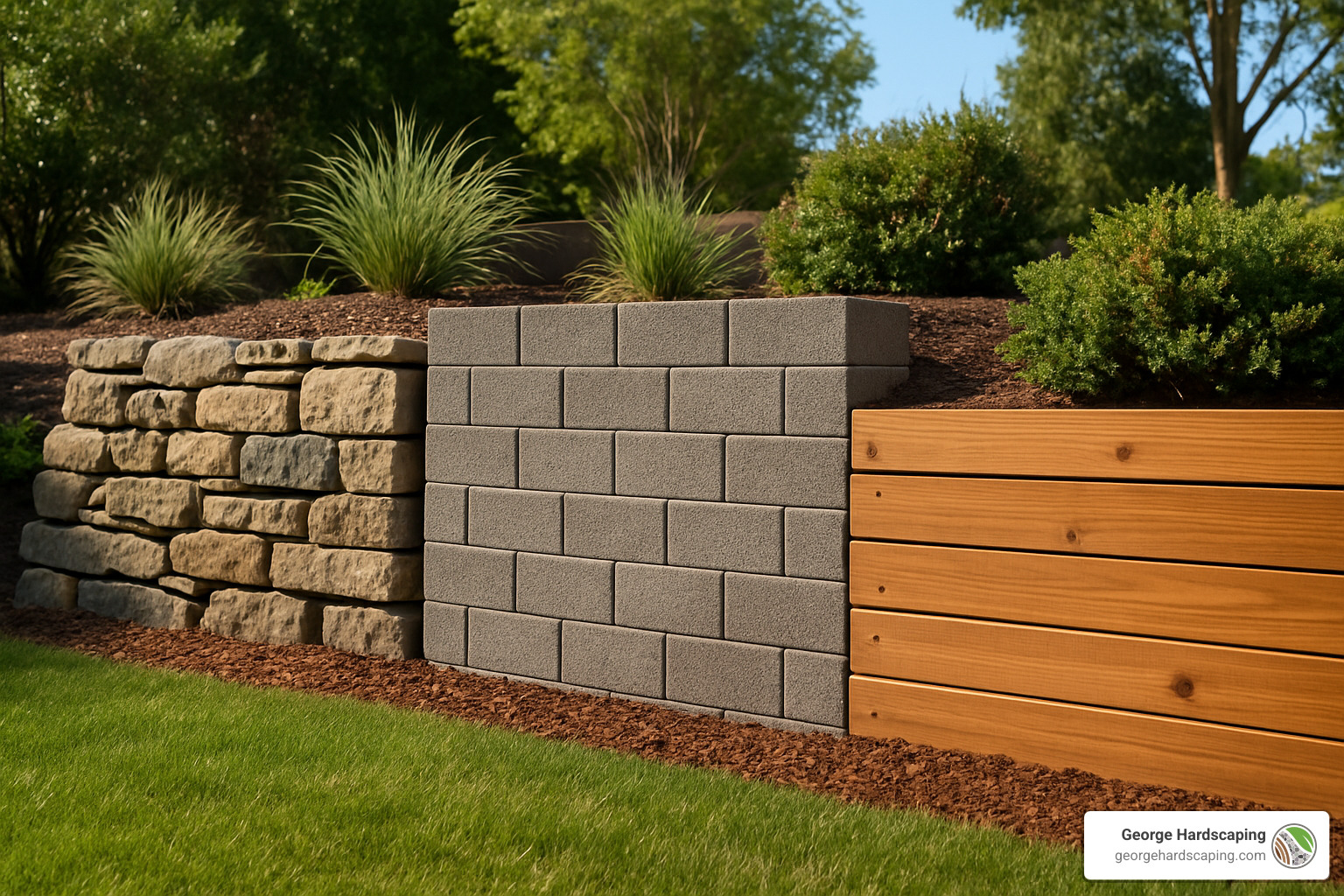
Wall Types by Structure
When it comes to holding back earth, not all walls are created equal. Gravity walls are the workhorses of the retaining wall world, using their substantial weight to resist soil pressure. These walls work beautifully for heights under 4 feet and can be built from stacked natural stone, large concrete blocks, or even wire gabion baskets filled with stone.
For taller projects, MSE (Mechanically Stabilized Earth) walls offer impressive strength by incorporating geogrid reinforcement—synthetic mesh layers that extend backward into the soil behind the wall. This creates a reinforced soil mass that works together with the wall face, typically built from interlocking concrete blocks or precast panels.
When space is tight or heights are substantial, anchored walls provide a solution by using cables or other anchors driven deep into the soil behind the wall. These anchors create the resistance needed to hold back significant earth pressure in challenging situations.
Materials: Aesthetic and Functional Considerations
The material you choose for your retaining wall makes a statement about your home while determining how it performs over decades. Concrete block systems offer consistency and variety, with numerous colors and textures available. They install relatively easily and last 25-50 years, though they sometimes lack the character of natural materials.
Natural stone brings timeless elegance that perfectly complements historic North Shore properties. While the upfront investment is higher, these walls often last 100+ years and actually increase in value over time—something few landscape features can claim.
For a more casual, natural look, boulder walls provide excellent drainage and quick installation, though they’re limited in height and formality. Meanwhile, timber walls offer warm aesthetics at a lower price point, but their 7-15 year lifespan means they’re more of a medium-term solution.
Those considering railroad ties should know that while they create a rustic look relatively inexpensively, environmental concerns about creosote leaching have led some municipalities to ban them outright. Their shorter lifespan also means more frequent replacement.
For a contemporary industrial look with superb drainage, gabion walls—essentially wire cages filled with stone—provide an interesting alternative, though they typically require engineering for anything beyond modest heights.
At George Hardscaping, we offer a wide selection of Retaining Wall Stones to match any vision or requirement for your property.
Block vs Stone vs Timber—Pros, Cons & Costs
Let’s compare the three most popular choices to help you find your perfect match:
Concrete Block Systems balance practicality with aesthetics. At $100-$150 per linear foot for standard blocks (or $150-$300 for premium options), they represent a middle-ground investment. With proper installation, you’ll enjoy 25-50 years of service with minimal maintenance—just occasional cleaning and checks for shifted blocks. They’re particularly well-suited for modern landscapes and DIY-friendly projects where precise dimensions matter.
Natural Stone speaks of permanence and craftsmanship. Though costs range from $150-$450 per linear foot depending on stone type and construction method, these walls become heirlooms that last centuries with proper building techniques. Maintenance requirements are minimal, making them perfect for traditional New England landscapes and historic properties where timeless appeal matters.
Timber/Wood walls bring natural warmth at a cost of $100-$300 per linear foot for pressure-treated lumber. Their 7-15 year lifespan (or just 3-5 years for untreated wood) means they’re better suited as medium-term solutions for rustic settings and lower-height applications. They’ll require regular inspection for rot, insect damage, and warping.
These are average costs based on internet data, not actual costs for George Hardscaping. For high-end finishes or challenging sites, costs can easily reach 3× these averages.
Innovative Trends in Retaining Wall Construction
The world of retaining walls continues to evolve with exciting innovations that blend function with style:
Big-Block Systems have revolutionized larger projects. These massive concrete units—some weighing over 1,000 pounds each—create impressive gravity walls without reinforcement, making them perfect for substantial residential projects across Essex County.
Green Living Walls incorporate planting pockets directly into the wall face, allowing vegetation to soften hard edges while adding environmental benefits. These living systems have become particularly popular among environmentally conscious North Shore homeowners looking to blend structure with nature.
Recycled Materials are making their way into wall systems, with some newer products incorporating recycled plastic or glass into concrete blocks. This reduces environmental impact while maintaining structural integrity—a win-win for sustainability-minded homeowners.
Smart Drainage Solutions have advanced significantly beyond the traditional gravel backfill. Advanced drainage composites and collection systems now manage water more effectively, extending wall life dramatically in our wet New England climate.
LED Cap-Lighting transforms walls from daytime features to nighttime focal points. These integrated lighting systems improve safety while creating dramatic effects that extend your outdoor living hours well into the evening.
At George Hardscaping, we accept these innovations while honoring time-tested techniques that have proven their worth through countless New England seasons. Our expertise helps you steer these options to find the perfect solution for your unique property.
Professional vs DIY: Crunching the Numbers
Thinking about building a retaining wall on your North Shore property? One of the biggest decisions you’ll face is whether to hire a professional retaining wall builder or roll up your sleeves for a DIY weekend (or several weekends). Let’s break down the real costs of both approaches to help you make an informed decision.
Professional Installation Costs
When you hire a pro, you’re looking at a national average cost of $114-$173 per linear foot. For perspective, a typical 60-foot wall would run between $6,826 and $10,353, covering both labor and materials.
About half to 60% of that total goes toward labor. Most landscape professionals charge $25 to $50 per person per hour, which typically works out to $50 to $100 hourly for a standard two-person crew.
What exactly are you paying for beyond just the physical wall? Peace of mind, for starters. Professional retaining wall builders bring expertise that ensures your wall stands the test of time. They have access to specialized equipment like excavators and plate compactors that would be expensive to rent. They understand which materials perform best in Essex County’s unique soil conditions. Most reputable builders also offer warranties, handle all permit requirements, and carry liability insurance that protects you if something goes wrong.
“The difference between a professional wall and a DIY wall often isn’t visible on day one,” explains a veteran builder. “It’s what you see—or don’t see—five years later that tells the real story.”
For more detailed information about what goes into professional costs, visit our page on Retaining Wall Construction Cost.
DIY Costs: Beyond Materials
The DIY approach might seem like a bargain at first glance. After all, you’re saving on labor costs, right? Not so fast. The hidden costs of DIY can quickly turn your budget-friendly project into a money pit.
Equipment rental alone can add $500-$1,000 to your project. A plate compactor will set you back $75-$100 per day, while a mini-excavator runs $250-$400 daily. Need those for a week? Do the math.
Then there’s material delivery ($100-$300 per drop), soil disposal ($150-$500), and the value of your time—DIY projects typically take 3-4 times longer than professional installation. And let’s be honest: building a retaining wall is physically demanding work that can lead to injuries or time away from your regular job.
Perhaps the costliest potential expense is rework. If your wall fails due to improper installation (and many DIY walls do), you’re looking at the cost of demolition plus a complete rebuild. There’s also the impact on resale value—unpermitted or improperly built walls may need to be disclosed when selling your home, potentially affecting what buyers are willing to pay.
Cost Breakdown for Hiring a Retaining Wall Builder
When you receive an estimate from a professional retaining wall builder, here’s what’s typically included:
Materials make up about 40-50% of the total cost. This covers not just the visible elements like wall blocks or stone and cap stones, but also the crucial hidden components: gravel for the base and drainage, landscape fabric, drainage pipe, and geogrid reinforcement for taller walls.
Labor accounts for the remaining 50-60%. This includes site preparation and excavation, base installation and compaction, wall construction, drainage system installation, backfilling and compaction, and cleanup.
Additional costs might include design fees (sometimes included, sometimes separate), permit fees ($100-$500 depending on your town), engineering plans for walls over 4 feet ($500-$1,500), and site access challenges, which can add 10-30% for properties with difficult access.
At George Hardscaping, we provide detailed, transparent estimates that clearly break down all costs involved in your specific project. We believe you deserve to know exactly what you’re paying for.
Hidden Costs of DIY Walls
Beyond the obvious expenses of materials and equipment rental, DIY retaining wall projects often come with surprise costs that can blow your budget:
Tool purchases add up quickly. Beyond heavy equipment, you’ll need levels, tampers, shovels, wheelbarrows, and other tools that can add $200-$500 to your project cost.
Understanding your soil is crucial for proper wall design. Professional soil testing can cost $100-$300, but skipping this step can lead to a wall that fails prematurely.
First-time builders face a steep learning curve. Without expert knowledge, you might purchase the wrong type or amount of materials, leading to waste or insufficient quantities. You’ll also make mistakes that professionals have learned to avoid through years of experience.
Perhaps most importantly, DIY walls often lack proper drainage or foundation work, which leads to costly repairs down the road. What seems like a money-saving project now could become an expensive headache in just a few years.
For most homeowners in Essex County, the investment in professional installation pays dividends through longer wall life, proper performance, and peace of mind. As one client told us after comparing quotes: “When I factored in the equipment rentals, time off work, and the risk of having to redo it if I messed up, the professional installation actually seemed like the better value.”
How to Choose the Right Retaining Wall Builder
Selecting the right retaining wall builder for your North Shore property isn’t just about finding someone who can stack stones—it’s about finding a partner who’ll transform your sloped yard into a beautiful, functional space that lasts for decades. Here’s how to make sure you’re hiring the best:
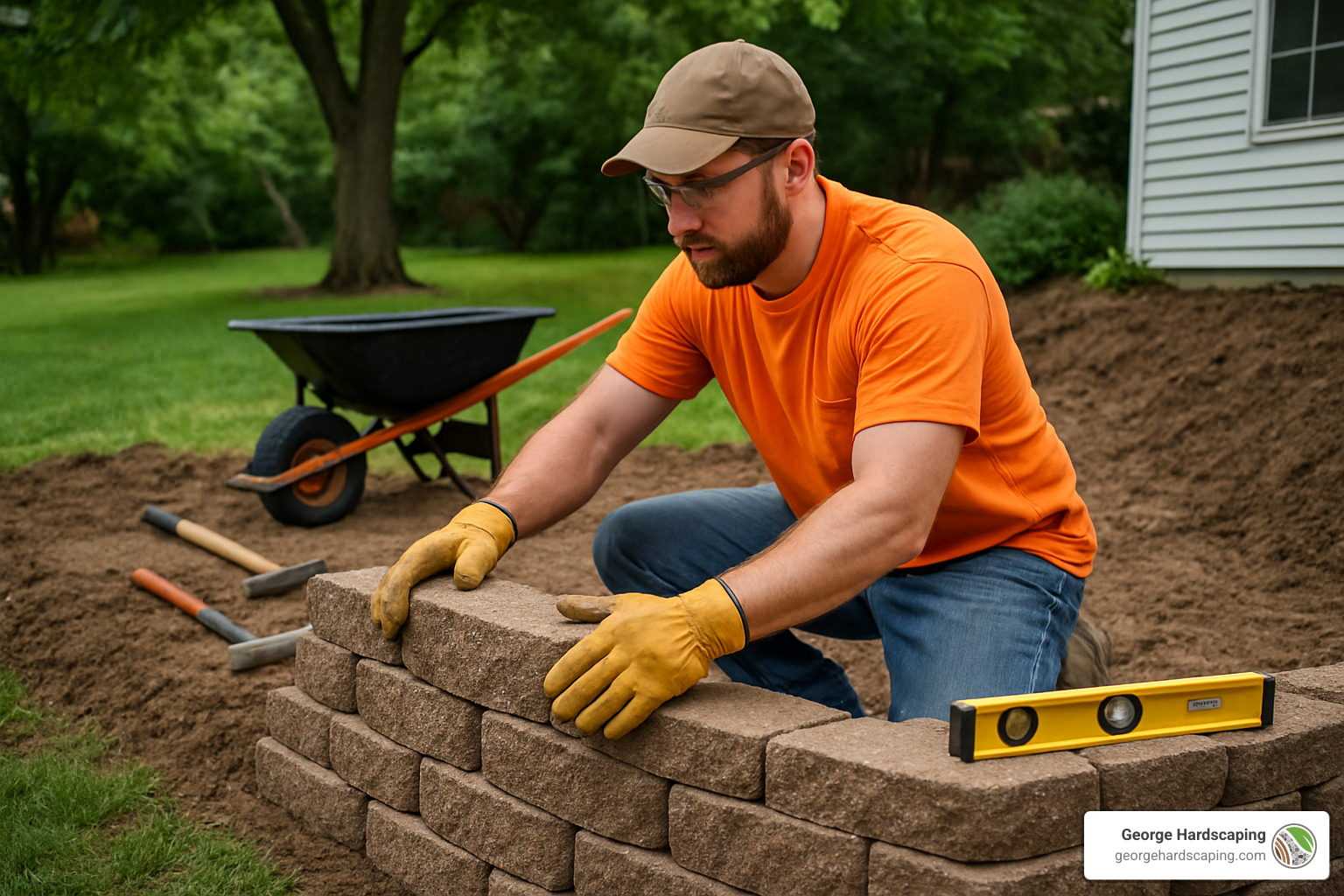
Essential Qualifications
When you’re inviting someone to reshape your landscape, you want to make sure they have the right credentials. Massachusetts requires Home Improvement Contractor (HIC) registration for anyone working on your property, and larger retaining wall projects often require a Construction Supervisor License (CSL) as well. Don’t be shy about asking for these numbers—legitimate professionals are proud to share them.
Industry certifications speak volumes about a builder’s commitment to quality. The Allan Block Contractor Certification, for example, shows that your builder has invested in specialized training specifically for retaining walls. As industry research confirms, “The Allan Block Contractor Certification Program has helped thousands of professionals receive installation training and technical support.”
Insurance coverage is non-negotiable. Your retaining wall builder should carry both liability insurance and workers’ compensation. This protects you from potential headaches if someone gets injured on your property or if something goes wrong during construction.
Local experience matters tremendously when it comes to retaining walls. A builder who knows Essex County’s clay-heavy soils, understands local drainage patterns, and has steerd Beverly, Danvers, or Salem’s permit processes will save you time and prevent costly mistakes.
Before signing anything, ask to see a portfolio of completed projects similar to yours. Pay special attention to walls that have stood the test of time—a retaining wall that looks great on day one but fails in year three isn’t much of a bargain.
Finally, check references thoroughly. The best indicator of future performance is past satisfaction. Ask previous clients specifically about the builder’s communication style, cleanliness, and how well they handled any unexpected challenges that arose during construction.
For examples of quality retaining wall projects in your neighborhood, visit our page on Retaining Wall Construction Near Me.
Must-Ask Questions for Your Retaining Wall Builder
The interview process is your opportunity to separate the true professionals from those who might cut corners. When you sit down with potential builders, make these questions part of your conversation:
“What drainage system do you recommend for my specific site conditions?” Listen carefully to this answer—proper drainage is absolutely crucial for wall longevity. A knowledgeable retaining wall builder won’t offer a one-size-fits-all solution but will consider your soil type, slope angle, and water patterns.
“Will you conduct soil testing before designing the wall?” Understanding what’s beneath the surface is essential for proper design. Some soils expand when wet, others are prone to erosion, and a builder who skips this step is building on shaky ground—literally.
“For walls requiring geogrid reinforcement, how do you determine appropriate length and placement?” This technical question helps reveal whether they truly understand structural engineering principles or are just stacking blocks.
“What is your process for obtaining permits, and is that included in your quote?” Permit navigation should be part of their service, not an afterthought that leaves you scrambling with local officials.
“What type of warranty do you offer, and what exactly does it cover?” Look for warranties of at least 3-5 years that specifically address structural issues, not just cosmetic concerns.
“What’s your typical timeline from contract to completion?” This helps set realistic expectations and reveals their level of organization. A vague answer might indicate poor planning.
“How will you protect my existing landscape during construction?” Their answer reveals their attention to detail and respect for your property as a whole.
“What is your payment schedule, and is it tied to project milestones?” Avoid contractors who require large upfront payments with no clear connection to completed work.
Red Flags When Vetting a Retaining Wall Builder
Your radar should ping loudly if you encounter any of these warning signs during your search:
No license or insurance verification. This is an absolute deal-breaker. A legitimate professional will readily provide proof of both.
Suspiciously low estimates that lack specific line items might indicate corner-cutting or the likelihood of “surprise” charges later. If the price seems too good to be true, it probably is.
Dismissive attitudes toward drainage should send you running. Any builder who downplays the importance of proper water management doesn’t understand the fundamental physics of retaining walls.
Reluctance to involve an engineer for walls over 4 feet tall isn’t just unprofessional—it’s potentially dangerous and definitely against code requirements.
Poor or non-existent online reviews in today’s digital age should raise questions. Reputable builders typically have at least some customer feedback available online.
Demands for large cash deposits without clear project milestones might indicate financial instability or worse. Professional builders have established payment schedules that protect both parties.
No written contract detailing materials, timeline, payment schedule, and warranty terms is a red flag. Verbal agreements leave too much room for misunderstanding and disappointment.
High-pressure sales tactics suggesting you need to “sign today” to get a special price rarely lead to quality outcomes. Good builders are busy enough that they don’t need to pressure clients.
At George Hardscaping, we believe in transparency at every step of the retaining wall construction process. We provide detailed estimates, clear timelines, and comprehensive warranties on all our work throughout Essex County. We want you to feel confident in your choice long before the first stone is placed.
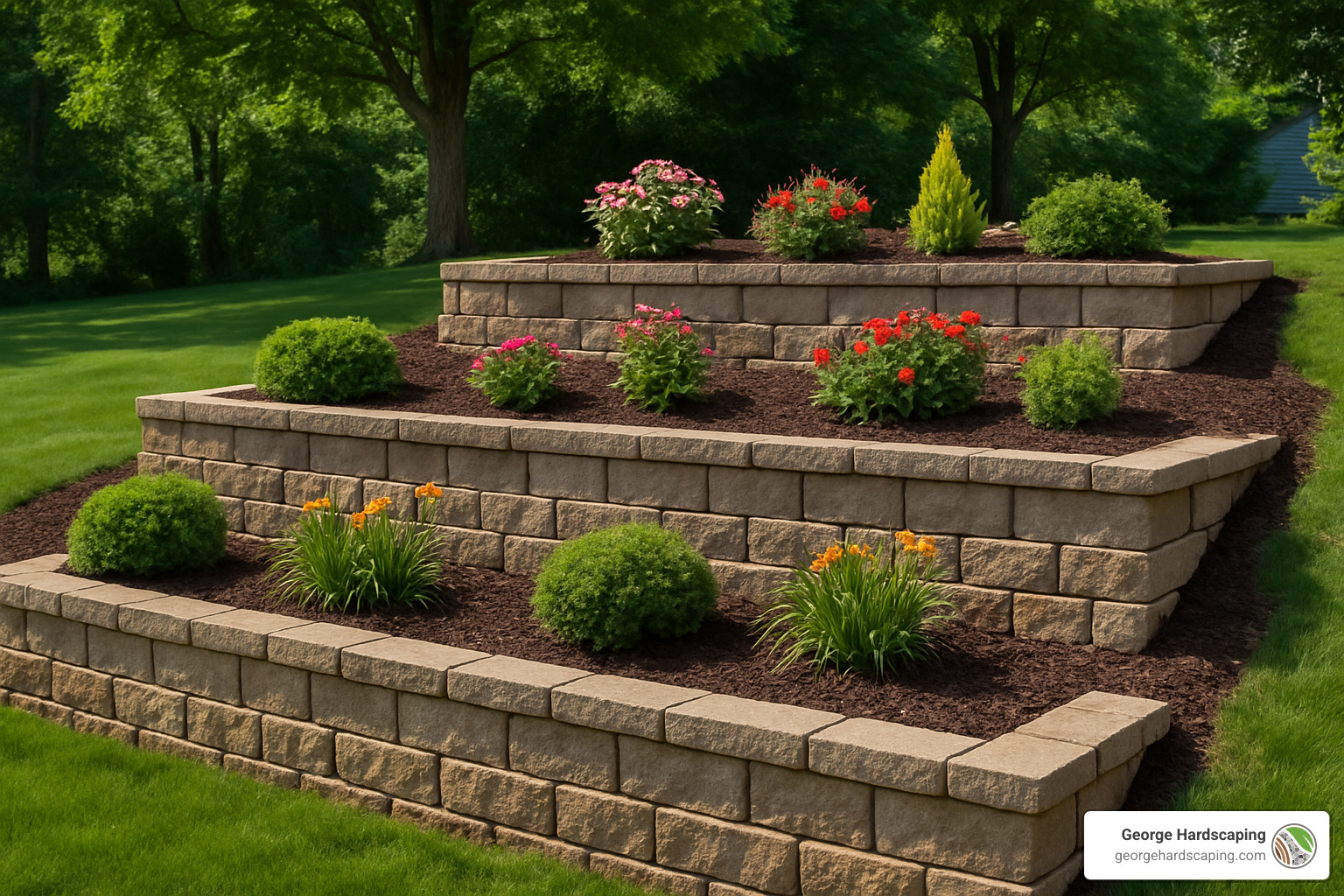
Frequently Asked Questions about Retaining Wall Builders
How much does a retaining wall cost?
“What’s this going to cost me?” It’s probably the question we hear most often, and for good reason. Your outdoor investment matters, and you want to know what you’re getting into.
Based on internet data (not actual costs for George Hardscaping), the national average for retaining walls typically runs between $114-$173 per linear foot. For perspective, a standard 60-foot wall would cost approximately $6,826-$10,353 including both labor and materials.
That said, several factors can dramatically shift these numbers:
Wall height makes a huge difference – taller walls need deeper foundations and often engineering plans, pushing costs upward. Material choice creates another significant variable, with natural stone walls typically running $150-$450 per linear foot, while concrete block systems range from $100-$300 per linear foot.
Don’t forget about site conditions – if your property has steep slopes, tricky access points, or challenging soil, costs can jump by 20-50%. And those drainage requirements aren’t just optional features – proper systems add $10-$30 per linear foot but save thousands in potential repairs.
For walls over 4 feet tall, you’ll need to factor in permit and engineering costs – typically $500-$1,500 for proper plans. And remember, for high-end materials or particularly challenging sites, costs can easily reach $300-$600 per linear foot or more – up to 3× the average pricing.
When we provide estimates at George Hardscaping, we break down these factors specifically for your unique project, ensuring transparency from start to finish.
How long does the build take?
Building a retaining wall isn’t an overnight project, but the timeline is probably more manageable than you might expect. Here’s the typical journey:
The design phase generally takes 1-2 weeks. This includes our initial consultation, a thorough site evaluation, developing the perfect design for your property, and selecting materials that balance beauty with function.
Permitting follows, typically lasting 1-4 weeks depending on your town’s efficiency. We handle preparing the permit applications, securing engineering plans when required, working through the municipal review process, and navigating Conservation Commission review if your property is near wetlands.
The actual construction phase usually runs 2-10 days, depending on your wall’s size and complexity. We start with site preparation (1-2 days), followed by base installation (1 day), the actual wall construction (1-5 days), drainage system installation (1 day), and finish with backfilling and finishing touches (1-2 days).
New England weather can certainly throw a wrench in the smoothest timeline. Rain delays are common since certain phases require dry conditions. And sometimes we encounter unexpected site issues – hidden rocks, problematic soil conditions, or unmarked underground utilities that need addressing.
Material availability occasionally extends timelines, especially for specialty stone or custom pieces. And don’t forget that municipal inspection schedules may add waiting periods between construction phases.
At George Hardscaping, we’ve learned to build realistic timelines based on decades of North Shore experience, and we keep you informed throughout the process.
What maintenance is required?
One of the beauties of a properly built retaining wall is how little maintenance it requires over its lifetime. That said, a little attention goes a long way toward maximizing your investment.
We recommend an annual inspection – preferably in spring after the frost has left the ground. Look for any bulging or leaning sections, cracked blocks or stones, erosion behind the wall, or clogged drainage outlets. Catching small issues early prevents bigger headaches later.
Drainage maintenance is probably the most important ongoing task. Clear those weep holes and drainage outlets of leaves and debris, ensure water flows away from (not toward) your wall, and check that downspouts don’t discharge directly behind the wall, which can create excessive pressure.
For structural maintenance, promptly replace any cracked cap stones, re-secure loose blocks, and address soil settlement behind the wall before it creates problems. Most walls need very little structural attention if they’re built correctly in the first place.
Vegetation control matters more than many homeowners realize. Remove deep-rooting plants growing too close to the wall, trim back overhanging branches, and control those persistent New England vines that seem determined to reclaim every man-made structure!
During our notorious Massachusetts winters, avoid using de-icing salts near concrete retaining walls, clear heavy snow accumulation from the top of the wall (especially if it’s leaning toward the wall face), and check for frost heave when spring arrives.
Different materials have their own specific needs – concrete block walls benefit from sealing every 3-5 years, natural stone walls might need occasional mortar joint repointing, and timber walls require more vigilant inspection for rot or insect damage.
With proper construction and reasonable maintenance, a well-built retaining wall should serve your property beautifully for decades. When we complete a project at George Hardscaping, we provide detailed maintenance guidelines specific to your wall type and materials, ensuring you have the knowledge to protect your investment.
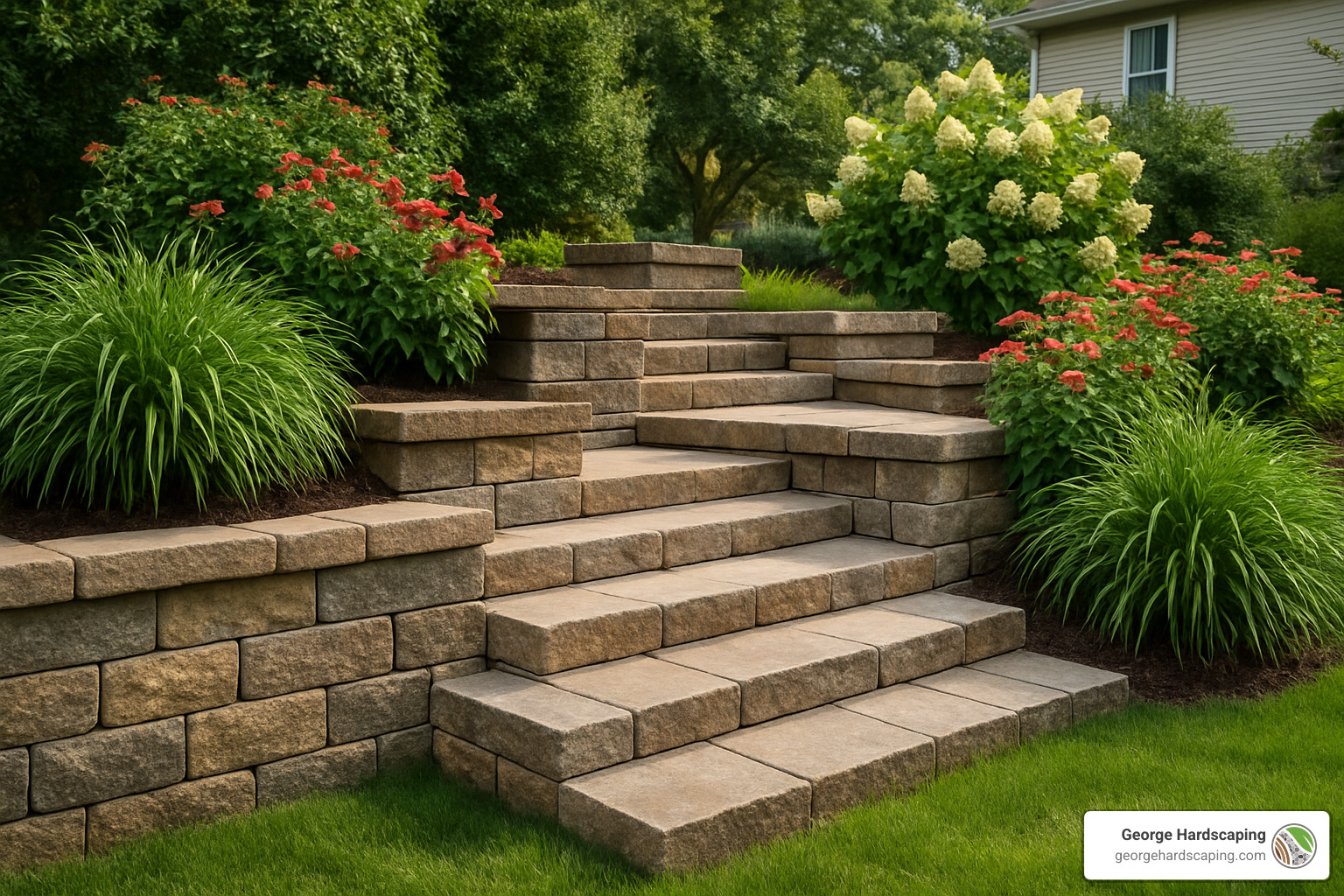
Conclusion
A well-designed and properly constructed retaining wall does far more than simply hold back soil—it transforms your property in ways both practical and beautiful. From creating usable outdoor space on sloped land to enhancing your home’s curb appeal, the right retaining wall can be a game-changer for North Shore properties.
Throughout this guide, we’ve explored the complex engineering principles, material considerations, and regulatory requirements that make professional installation the wisest choice for most homeowners. When you consider the potential consequences of a failed wall—property damage, safety hazards, and costly repairs—the value of expert construction becomes crystal clear.
At George Hardscaping, we bring over two decades of experience to every retaining wall project across Essex County. We understand the unique challenges of New England soil conditions, the distinctive architectural styles of North Shore homes, and the specific municipal requirements from Beverly to Newburyport and Salem to Gloucester.
What sets us apart is our comprehensive approach. We’re not just builders—we’re your partners in creating beautiful, functional, and lasting outdoor spaces. Our one-stop design-build solution handles every aspect of your retaining wall project with care and expertise.
We start with thoughtful design that addresses your specific site challenges while complementing your home’s architecture. Whether you’re drawn to classic New England fieldstone that echoes the region’s historic character or prefer the clean lines of modern concrete block systems, we’ll help you select materials that match your aesthetic vision, practical needs, and budget constraints.
The permit process can be daunting for homeowners, but our team steers these waters daily. We handle all necessary paperwork, engineering plans, and approvals, sparing you the headaches of municipal red tape.
When construction begins, our skilled masons and landscape professionals build with an eye toward longevity. Proper foundations, effective drainage systems, and structural integrity aren’t just items on a checklist—they’re our commitment to quality that stands the test of time.
Don’t risk your property and investment with DIY solutions or inexperienced contractors. The peace of mind that comes from professional installation is invaluable, especially when you consider that a properly built retaining wall should last for decades with minimal maintenance.
Contact George Hardscaping today for a free on-site consultation to discuss your retaining wall project. Our team proudly serves the entire North Shore region, including Beverly, Danvers, Gloucester, Ipswich, Marblehead, Newburyport, Salem, and all surrounding communities.
For more information about our approach to landscape retaining walls, visit our dedicated page: More info about landscape retaining walls
When it comes to Retaining Wall Builder services, proper construction isn’t just about creating something beautiful—it’s about safety, longevity, and protecting your investment for generations to come.