
From Wobbly Hazard to Sturdy Welcome

Repairing loose stone steps is both a safety imperative and a curb-appeal upgrade. A single wobbly tread can turn an everyday entry into a trip hazard, especially in wet or icy conditions common across Essex County and the North Shore. The usual culprits are predictable—water infiltration, freeze–thaw cycles, and age-related mortar deterioration—but the fixes are dependable too when you follow best-practice masonry methods.
For homeowners in places like Beverly, Ipswich, Salem, Danvers, and across the coast, our climate magnifies minor masonry issues. Moisture moves through porous stone and mortar; then winter turns that moisture into expanding ice that forces joints apart. Over time, the bond between tread and riser weakens until a stone rocks or lifts.
This comprehensive guide shows you exactly how to diagnose the problem, select the right mortar, and reset the stone so it stays put. You’ll also learn how to match mortar color and profile, manage curing in New England weather, and prevent repeat failures. If you decide the job’s larger than a DIY afternoon, we’ll point you toward the right professional help and what to expect.
Quick Answer: How to Repair Loose Stone Steps
- Remove the loose stone using a hammer and cold chisel.
- Clean out old mortar from the base and joints completely.
- Apply a bonding agent to prevent moisture loss from new mortar.
- Mix Type N or Type S mortar to an oatmeal-like consistency.
- Set a fresh mortar bed and furrow it for better adhesion.
- Reset the stone with a slight forward pitch for drainage.
- Pack and finish joints with matching mortar.
- Allow 24–48 hours for initial set, then 28 days for a full cure.
Expect a moderately easy DIY project taking about a day of hands-on work and typically costing under $50 in materials if you already own basic tools. The process is straightforward: remove deteriorated mortar, prepare a clean base, and reset the stone with fresh mortar and correct pitch. When done well, the repair blends in visually and stands up to years of foot traffic and weather.
Prefer a done-for-you solution? Book a safety-focused inspection and get a same-week plan for a lasting fix with our custom steps and stairs services. For a fast start, request your free estimate now—our team can often reset one or two treads in a single visit while ensuring long-term stability.
- Explore our custom steps and stairs services for precision stone resetting, tread replacement, and durable, code-conscious installations.
- Ready today? Request your free estimate to secure your entry and prevent injuries before the next freeze–thaw cycle sets in.
Why Stone Steps Loosen: Identifying the Root Cause
Before diving into repair, confirm why the stone is loose. Fixing the symptom without addressing the source nearly guarantees you’ll repeat the process next season. In New England, moisture and temperature swings are the main drivers, but site conditions and installation quality matter just as much.
Understanding Environmental Factors
- Water infiltration and freeze-thaw cycles: Moisture finds its way into hairline cracks and porous joints. When temperatures drop below freezing, trapped water expands by about 9%, prying stones apart and breaking down mortar. For deeper insight, review the Portland Cement Association’s explanation of freeze-thaw damage in concrete and masonry.
- Capillary action: Old mortar and many stones are porous, drawing in water from wet soil or wind-driven rain. Repeated wetting and drying accelerates salt migration and surface scaling.
- De-icing chemicals: Chloride-based deicers increase saturation and contribute to surface scaling. Use gentler options like calcium magnesium acetate near masonry.
- Soil erosion and ground movement: Poor subgrade compaction or long-term washout beneath a stoop can cause differential settlement, stressing joints and loosening bonds.
- Drainage issues: Downspouts dumping near steps and areas that stay wet after storms increase water exposure and magnify freeze-thaw damage.
- Tree root growth: Roots exert surprising force and can lift individual treads or create voids beneath risers.
Assessing Installation and Age-Related Issues
- Deteriorated mortar: Decades of exposure weaken the binder and aggregate bond. Crumbling, sanded-out joints are common signs.
- Mortar type mismatch: Using overly hard mortar with softer stone can concentrate stresses at the stone interface.
- Thin bedding: A skimpy mortar bed reduces contact area, concentrating loads and encouraging rocking.
- Lack of bonding: Resetting without a bonding agent can result in weak adhesion as water is pulled out too quickly.
- Heavy foot traffic: Main entries see daily use. Repeated point loads at tread edges accelerate bond failure when bedding is thin.
Signs You’re Dealing With More Than a Simple Reset
- Multiple adjacent treads are loose or the entire flight shifts as one unit
- Visible separation between step assembly and foundation
- Noticeable lean, settlement, or step height variations
- Standing water at step landings after rain
If any of the above apply, your repair plan should address underlying support and drainage. For complex cases, schedule a professional assessment through our masonry repair near me services to identify hidden issues before resetting stones.
Local Climate Context: Essex County’s coastal climate means frequent freeze-thaw cycles from late fall through early spring. Find and fix the moisture pathway and support issues as part of your repair, or the looseness will return.
Pre-Repair Prep: Assessing Damage and Gathering Supplies
Preparation determines outcome. A careful assessment helps you decide whether you’re resetting one tread or planning a phased repair of a whole flight.
How to Assess Damage to Loose Stone Steps
- Test for movement: Step on each tread near the front edge and center. Rocking or sponginess indicates a failed bond.
- Probe the joints: Use a screwdriver to probe mortar joints. If the tool sinks easily, plan to replace that mortar.
- Check bedding depth: Where visible, look for voids or thin bedding. You’ll want at least 3/4 inch of sound mortar.
- Identify moisture sources: Note downspouts, roof drips, and low spots holding water.
- Inspect adjacent work: Multiple loose treads or wide cracks suggest foundation concerns.
- Mark loose stones: Use chalk or painter’s tape to track all problem areas.
- Safety review: Confirm the steps can be safely steerd during repair.
Safety First
- Eye protection: Chiseling masonry throws chips—wear safety glasses or a face shield
- Dust control: Use a dust mask and vacuum debris instead of sweeping
- Hand protection: Heavy gloves protect from sharp stone edges
- Stable footing: Work on level ground; avoid ladders on uneven soils
Essential Tools and Materials for the Job
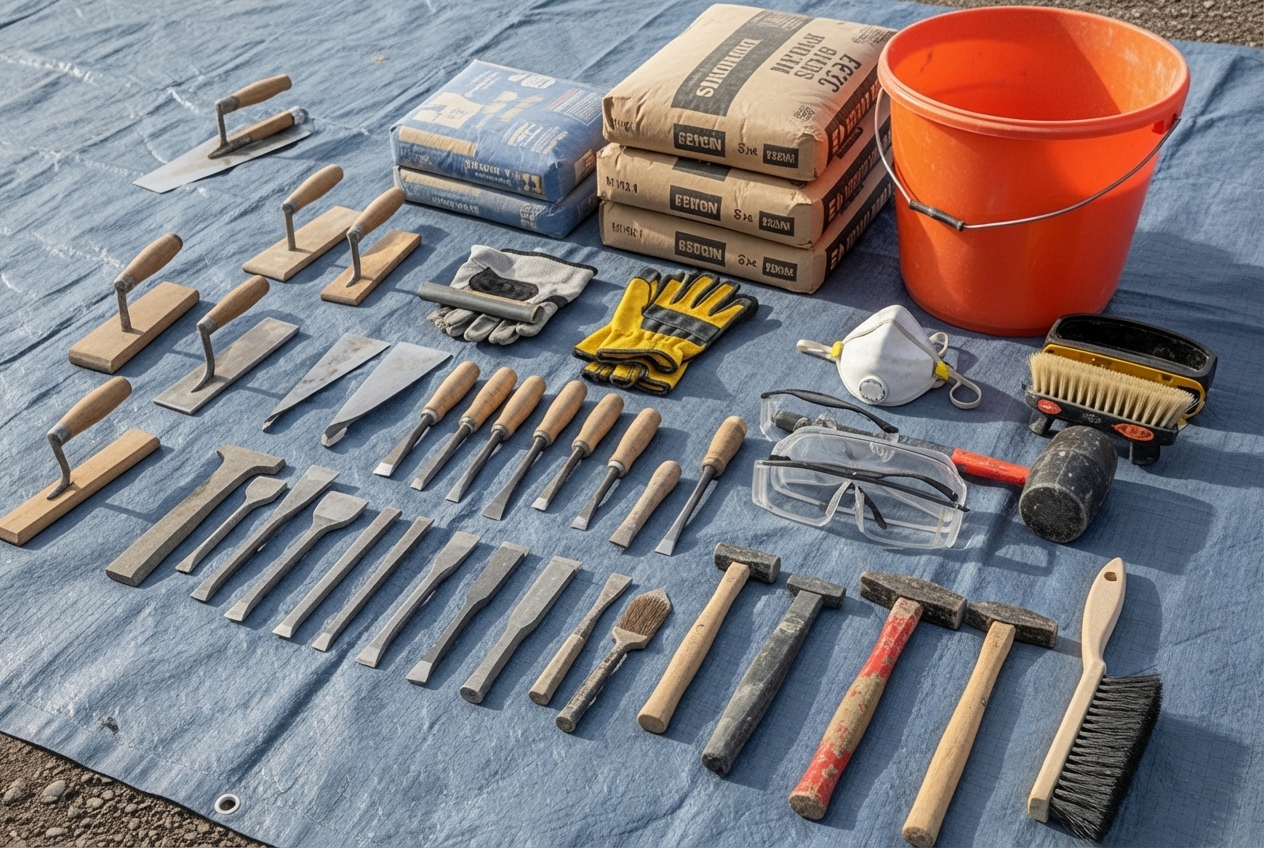
Safety Gear
- Safety glasses or face shield
- Work gloves
- Dust mask or respirator
Tools
- Masonry hammer and cold chisel for removing old mortar
- Wire brush for cleaning debris
- Margin trowel and brick trowel for applying mortar
- Jointer (concave or V-joint) for finishing joints
- Rubber mallet for gentle adjustment
- 24-inch level for checking pitch
- Buckets, sponge, and shop vac
Materials
- Mortar mix: Type S for exterior durability; Type N for softer stone
- Bonding agent for improved adhesion
- Clean water for mixing
- Optional: Silane/siloxane breathable masonry sealer
Skill Level, Time, and Cost
- Difficulty: Easy to moderate (2 of 5) for single-tread resets
- Time: One day including prep, plus 24-48 hours for initial set
- Cost: Often under $50 in materials for one or two treads
Need a pro to evaluate shifting stoops or widespread joint failure? Our masonry repair near me team can diagnose structural issues and deliver a warrantied fix.
Strong CTA: Prefer to skip the learning curve? Request your free estimate now. We’ll assess moisture, structure, and safety, then reset your loose stone steps to last.
The Ultimate Guide to Repair Loose Stone Steps
This step-by-step process transforms a wobbly tread into a solid, safe part of your entry. Plan your work for dry weather with daytime temperatures between 45°F and 80°F.
Step 1: Carefully Remove the Loose Stone and Old Mortar
- Loosen the tread: If the stone lifts by hand, great. If not, work a cold chisel into the joints with controlled taps to break the mortar bond.
- Protect edges: Use wood shims as buffers if levering to avoid marring the tread.
- Clean the bed: Chip away all loose or hollow-sounding mortar from the base and surrounding joints. Aim for at least 3/4 inch depth.
- Clean thoroughly: Use a wire brush and shop vac to remove dust. Dusty surfaces undermine bonding.
Pro tip: If you find extensive voids or crumbling substrate, stop and reassess. You may need to rebuild a riser or address drainage first.
Step 2: Mix the Mortar and Prepare the Surface
- Choose the right mortar: Type S is preferred for exterior steps in our climate due to higher compressive strength. For softer historic stone, Type N may be more compatible. The ASTM C270 standard provides detailed mortar type specifications.
- Mix correctly: Add clean water per manufacturer’s instructions. Aim for oatmeal-like consistency—stiff enough to hold shape, soft enough to trowel.
- Surface prep: Lightly dampen receiving surfaces. Apply bonding agent where new mortar meets old masonry to prevent premature drying.
Step 3: The Step-by-Step Process for Re-securing Loose Stone Steps
- Butter and bed: Trowel generous mortar onto the base. Create light furrows for mechanical keying. Back-butter the tread’s underside for 100% contact.
- Set and seat: Lower the tread into place. Wiggle gently to collapse furrows and remove air pockets. Don’t slide the stone—this reduces bond.
- Level and pitch: Check side-to-side level and set a slight forward pitch (1/8 to 1/4 inch drop) so water sheds away from the house. Use a rubber mallet to tap into position.
- Pack the joints: Press fresh mortar firmly into surrounding joints to prevent hidden voids.
Common mistakes to avoid:
- Overly wet mortar weakens the cured bond
- No bonding agent on thirsty substrates starves the mortar of water
- Flat or backward pitch causes standing water
- Rushing cleanup can leave permanent mortar haze
Step 4: Finishing the Joints for a Professional Look
- Initial strike: When mortar firms up (fingerprint firm), use a concave jointer to compress and shape joints.
- Clean edges: Scrape stray mortar from edges before it hardens.
- Final wipe-down: Use a barely damp sponge to remove haze from stone faces.
Quality checkpoints:
- Joint profile matches adjacent work
- Consistent forward pitch on all treads
- No visible voids at joint faces
When a DIY reset becomes a bigger project: If you’re resetting more than two treads or risers also show deterioration, our custom steps and stairs services cover comprehensive repairs and drainage improvements.
Timing and Weather Considerations
- Cool weather (40-50°F): Mortar sets slowly. Protect from freezing with insulating blankets.
- Hot/dry weather (>80°F): Shade the area and mist occasionally after initial set to prevent shrinkage cracks.
Note: Mortar strength develops through hydration—a chemical reaction—not just drying. Protecting moisture balance in the first 48 hours is crucial.
Pro-Level Finishing Touches and Best Practices
A successful repair looks seamless and lasts. Focus on color/texture matching, uniform pitch, and long-term moisture control.
How to Match New Mortar to Existing Work
- Color comes from sand: Mortar hue is primarily driven by the sand. Bring a dry sample of existing mortar to a masonry supplier to match sand color.
- Test batches: Mix small trial batches and let them dry completely; mortar cures lighter than it looks wet.
- Pigments: Use masonry-grade oxide pigments sparingly—too much affects performance.
- Historic sensitivity: For older steps, prioritize compatibility over strength. The National Park Service’s preservation brief on repointing explains why compatible mortar matters.
Best Practices for Leveling and Pitching Uneven Steps
- Uniform pitch: Establish a slight forward pitch—about 1/8 to 1/4 inch across the tread depth—to shed water.
- Consistent rise and run: Keep riser heights and tread depths uniform for safety and code compliance.
- Drainage coordination: If water collects on landings, improve grading or add discreet channels.
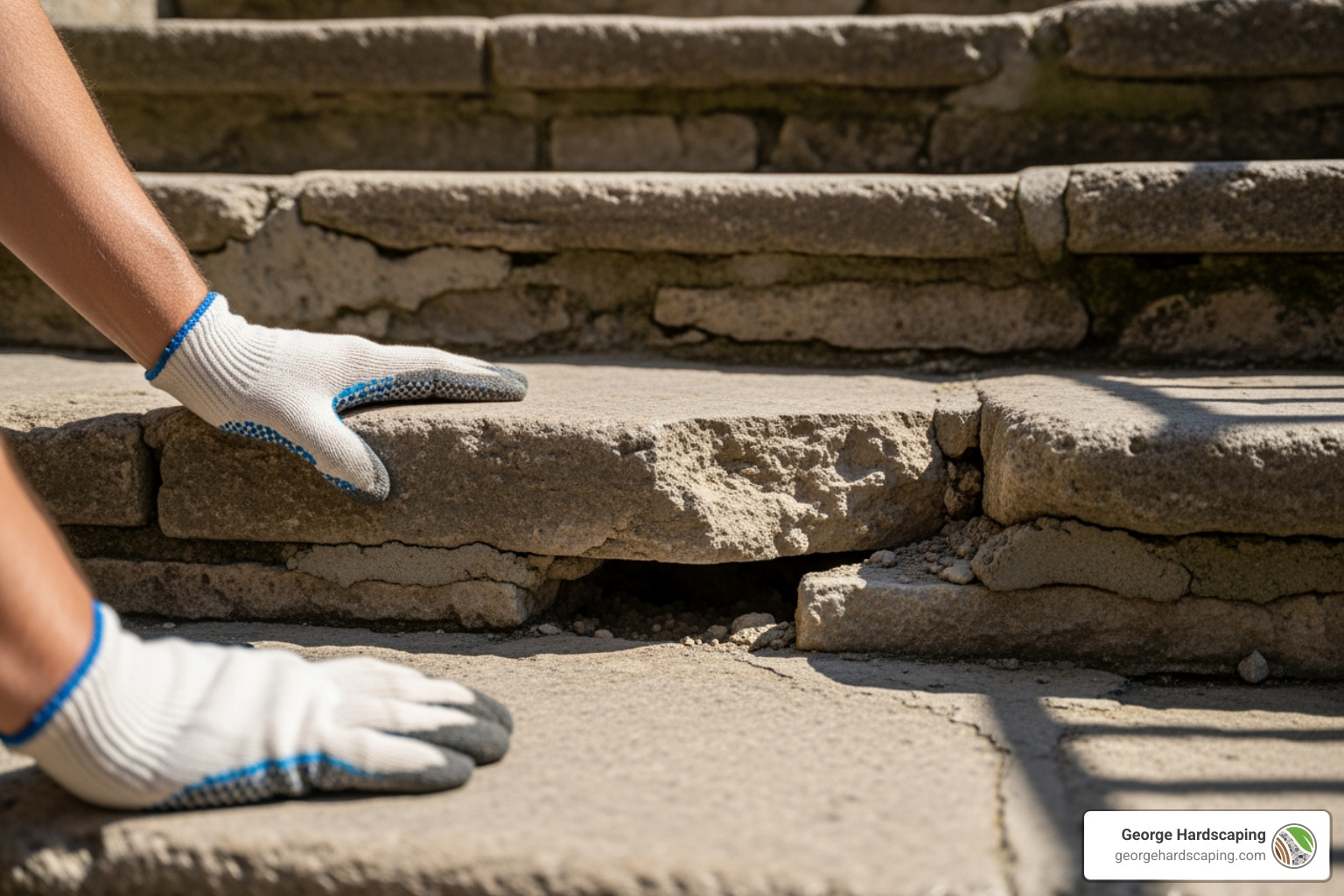
Repairing Stone Steps in Different Weather Conditions
- Cold weather: Below 40°F and falling, postpone if possible. If necessary, use cold-weather admixtures and protect from freezing with insulating blankets.
- Hot, dry conditions: Rapid evaporation causes weak cures. Shade the work, pre-dampen substrates, and lightly mist after initial set.
Sealants and Breathability
- Breathable water repellents: After curing, use silane/siloxane breathable masonry sealers that allow vapor to escape while repelling bulk water.
- Avoid film-forming sealers: Non-breathable coatings trap moisture in freeze-thaw climates and lead to spalling.
If you’re unsure about materials or timing, our walkways and stairs specialists can evaluate site conditions and recommend a repair-and-protect plan custom to your property.
After the Repair: Curing, Prevention, and When to Call an Expert
Curing Time and Protecting the Repair
- Initial set: Most mortars reach an initial set in 24–48 hours. Keep all traffic off the tread during this period.
- Full cure: Expect about 28 days for full strength development. This is hydration, not just drying—avoid heavy impacts and de-icing salts during this period.
- Moisture management: In hot/dry weather, lightly mist the joints after initial set for a day or two to avoid premature drying. In cold conditions, protect from freezing with insulated covers.
Post-Repair Preventative Maintenance
- Seal selectively and thoughtfully: After 28 days, apply a high-quality silane/siloxane breathable masonry sealer if your steps are routinely exposed to driving rain or splash-back. Reapply every 3–5 years per manufacturer guidance.
- Manage water: Extend downspouts, adjust splash blocks, and improve grading to move water away from the steps.
- Gentle winter care: Use non-chloride de-icers such as calcium magnesium acetate near masonry when necessary, and avoid aggressive chipping of ice.
- Seasonal checkups: Each spring and fall, inspect joints for hairline cracks and touch up with compatible mortar or masonry sealant before water finds its way in.
- Clean smart: Avoid pressure washers that can erode mortar edges; use a soft brush and mild detergent as needed.
When to Call a Professional for Stone Step Repair
- Widespread movement or failure: More than one or two loose treads, shifting risers, or movement of the stoop/foundation.
- Structural red flags: Visible foundation cracks beneath the steps, significant settling, or steps leaning away from the house.
- Complex assemblies: Intricate patterns, curved steps, or heritage materials that require specialized mortar matching and tooling.
- Drainage corrections: Persistent pooling that needs grading, channel drains, or other water-management solutions.
- Peace of mind and warranty: Critical entryways benefit from pro-level resets backed by workmanship guarantees.
For any significant masonry repair project in Essex County, our team brings years of experience in diagnosing root causes and delivering durable, beautiful results. If you’d like a pro to handle it end-to-end, request your free estimate today. Prefer a larger upgrade or redesign? Explore our custom steps and stairs services for a cohesive, code-compliant, and long-lasting solution.
Strong CTA: Don’t risk another season of freeze–thaw damage. Request your free estimate now for a fast, warrantied repair that restores safety and curb appeal before winter returns.
Frequently Asked Questions about Stone Step Repair
Can Stone Steps Be Repaired Without Removing Them Entirely?
Yes—for minor issues. If a tread only rocks slightly and the gap is small, a construction adhesive formulated for masonry can sometimes stabilize it. For hairline joint cracks, a flexible masonry sealant can prevent further moisture intrusion. However, if the tread lifts easily or movement is noticeable underfoot, removing the stone and resetting it on a proper mortar bed is the durable solution.
How Long Does It Take for Repaired Stone Steps to Set?
Most mortars achieve an initial set within 24 to 48 hours. Avoid traffic during this time. Full cure typically takes about 28 days, during which strength and durability increase steadily. Plan any sealing or heavy use after this full cure period.
What Is the Average Cost to Repair Loose Stone Steps?
A DIY reset of one or two treads often runs under $50 in materials. Professional resets vary with stone type, access, damage extent, and whether drainage or subgrade work is needed; typical ranges for a simple reset can be $200–$600 per tread, with broader restoration priced accordingly. We provide clear, written estimates tailored to your site conditions and goals.
Which Mortar Type Is Best for Exterior Stone Steps?
Type S mortar is commonly recommended for exterior applications in freeze–thaw climates due to higher compressive strength and durability. That said, compatibility with the stone matters—softer historic stone or brick often benefits from a more flexible Type N mortar. ASTM C270 outlines performance and proportion standards to guide selection.
Do I Need a Bonding Agent?
While you can reset without one, a bonding agent improves adhesion, especially where the substrate is very dry or porous. Pre-dampen substrates and follow the bonding agent manufacturer’s instructions for best results.
How Do I Handle Cold-Weather Repairs?
If temperatures are below 40°F and falling, postpone if possible. If you must proceed, use a compatible cold-weather admixture and protect the work from freezing with insulating blankets until the mortar reaches initial set. Freezing during early curing can permanently weaken the bond.
Should I Seal My Stone Steps After a Repair?
If your steps see frequent wetting, wind-driven rain, or splash-back, a breathable silane/siloxane sealer can help reduce water absorption. Avoid film-forming sealers that trap moisture. Apply only after the 28-day cure, and follow the manufacturer’s reapplication schedule.
How Do I Match the Old Mortar Color?
Color matching starts with sand: bring a dry sample of your existing mortar to a masonry supplier to match sand color and gradation. Make test batches, allow them to dry fully, and adjust with masonry pigments if needed. The National Park Service guidance on repointing mortar joints offers practical advice for matching composition, texture, and tooling.
What Maintenance Extends the Life of My Repair?
Direct water away from the steps; use gentle de-icers; inspect and touch up small cracks promptly; and consider periodic re-sealing with a breathable water repellent. Good drainage and gentle cleaning pay long-term dividends.
How Can I Tell if I Have a Structural Problem?
Warning signs include multiple treads loosening at once, a stoop separating from the house, visible settlement or leaning, or repeated failures soon after previous repairs. These conditions warrant professional evaluation to address underlying causes before resetting more stones.
Is This a DIY Job or Should I Call a Pro?
Resetting a single loose tread with sound support is a reasonable DIY project for careful homeowners. If the work involves multiple treads, riser rebuilds, drainage corrections, or historic materials, bringing in a professional often yields a stronger, longer-lasting outcome with a clean visual finish. If you’re unsure, our masonry repair near me service can assess and advise on the best path forward.
Are De-icing Salts Safe for Repaired Steps?
Aggressive chloride-based de-icers can exacerbate moisture absorption and scaling. Consider alternatives like calcium magnesium acetate for areas near masonry, and prioritize mechanical removal of snow/ice. The Federal Highway Administration provides background on deicing chemicals and performance considerations.
What If My Stone Keeps Coming Loose Every Year?
Repeat failures point to underlying issues—voids under the tread, inadequate bedding, trapped moisture, or poor drainage. Long-term fixes may include rebuilding risers, adding weeps or drip edges, or improving grading. A professional assessment can target the root cause so you repair once, not annually.
Conclusion: Secure Your Steps, Secure Your Home
Repairing loose stone steps is more than a cosmetic touch-up—it’s a safety upgrade and an investment in your home’s longevity. By diagnosing the root cause, choosing the right mortar, and following a disciplined reset process with correct pitch and joint finishing, you can transform a wobbly hazard into a solid, welcoming entry. Manage moisture through smart drainage and seasonal maintenance, and your repair will stand up to New England’s freeze–thaw cycles for years.
If time is tight, the damage is widespread, or you want the added assurance of a warranty and pro-level finish, we’re ready to help. Our custom steps and stairs services deliver precise tread resets, riser rebuilds, and drainage solutions tailored to your property. Prefer a quick plan and price? Request your free estimate today and get a clear, actionable proposal—often with scheduling available as early as next week.
- Make your entry safer and stronger with our custom steps and stairs solutions.
- Ready to move forward? Request your free estimate now and put loose steps behind you for good.
Finally, remember the two keys to long-term success: shed water and maintain joints. Keep those front steps dry and tight—and they’ll keep your family and guests safe, season after season.
