
Why Understanding Paver Driveways Cost Matters Before You Build
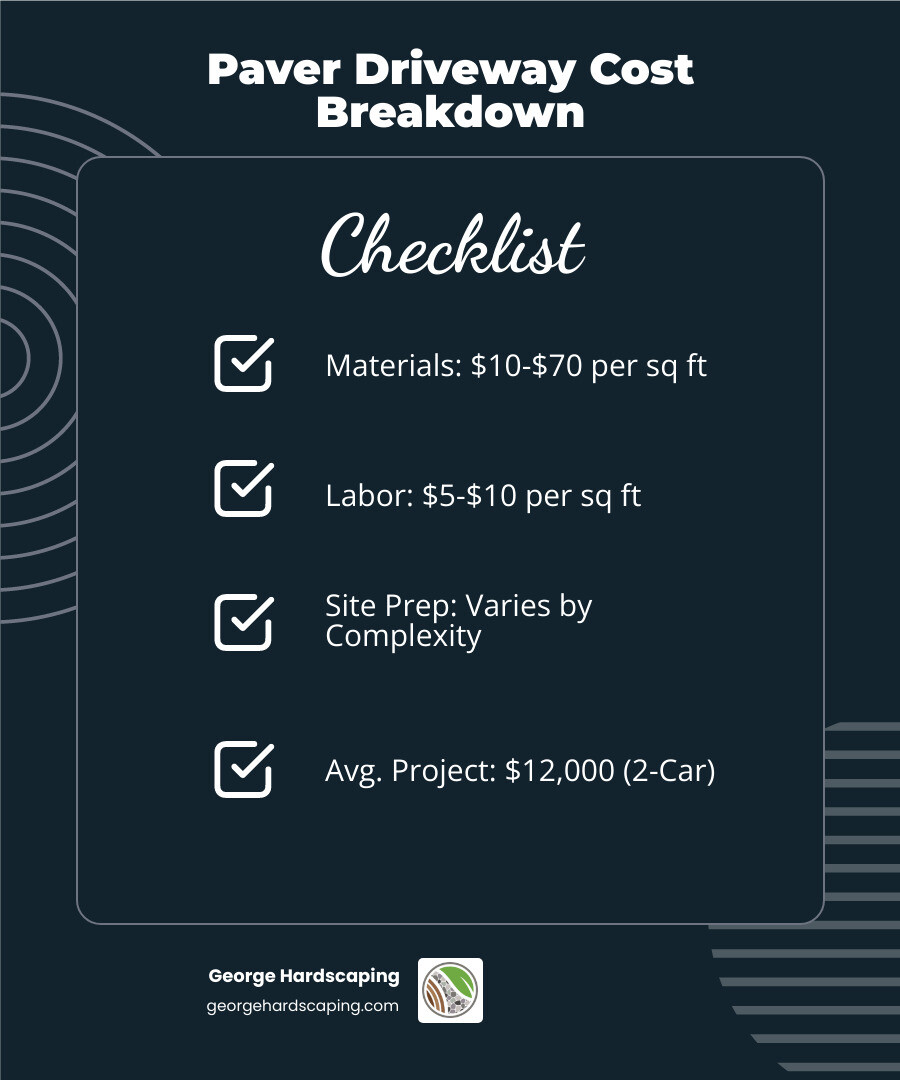
Paver driveways cost between $10 and $70 per square foot, with most homeowners spending an average of $12,000 for a standard two-car driveway. The final price depends on your choice of material, driveway size, local labor rates, and site preparation needs.
Quick Cost Overview:
- National Average: $12,000 (for a standard two-car driveway)
- Typical Range: $6,000–$18,000
- Low End: $1,200 (small, one-car grass paver driveway)
- High End: $75,600 (large, three-car cobblestone driveway with complex design)
- Cost Per Square Foot: $10–$70, depending on material
| Paver Type | Cost Per Sq Ft | Best For |
|---|---|---|
| Concrete | $10–$25 | Budget-conscious projects |
| Brick | $10–$45 | Classic aesthetic |
| Stone | $15–$60 | Premium appearance |
| Cobblestone | $18–$50 | High-end luxury |
| Permeable | $10–$70 | Drainage solutions |
| Grass Pavers | $10–$20 | Eco-friendly designs |
For homeowners in Essex County, MA, a paver driveway is a premier upgrade that boosts curb appeal, offers decades of durability, and provides endless design options. However, it’s also a significant investment, with an upfront cost that can be 50–80% higher than standard concrete.
Understanding where your money goes makes the decision easier. When you know what drives the paver driveways cost—materials, labor, and site prep—you can make informed choices that align with your budget without sacrificing quality.
The National Association of Home Builders notes that well-designed hardscaping can meaningfully increase perceived home value and buyer appeal. This guide breaks down every cost factor, from material prices per square foot to how project complexity affects your total. We’ll walk through how paver driveways are built, how long they last in New England’s freeze–thaw climate, and which design choices push your project toward the low or high end of the range.
We’ll also compare the upfront investment to long-term value using guidance from resources like the Interlocking Concrete Pavement Institute and This Old House driveway planning advice so you can see how pavers stack up against poured concrete and asphalt.
Many Essex County homeowners pair a new driveway with complementary features such as walkways, front steps, and patios. If you’re thinking about a complete exterior refresh, exploring George Hardscaping’s full range of hardscaping and masonry services will give you a sense of what’s possible on your property.
Whether you’re replacing an old driveway or building new, you’ll finish this article with a clear understanding of what to expect. For homeowners seeking expert hardscaping and masonry services in the North Shore area, this knowledge is the first step toward a beautiful driveway that will last for 30–50+ years. Use George Hardscaping’s simple online form to request your free driveway cost estimate and get clear, local pricing for your project.
Understanding the Average Paver Driveways Cost
When discussing the cost of paver driveways, it’s important to recognize the wide price spectrum. A project’s final bill varies significantly based on materials, size, and complexity. On average, U.S. homeowners can expect to pay around $12,000 for a paver driveway, with a typical range falling between $6,000 and $18,000.
The overall cost is often calculated per square foot, which for paver driveways typically ranges from $10 to $70. This accounts for everything from basic concrete pavers to high-end natural stone.
Estimated Average Paver Driveway Costs by Size
| Driveway Type | Approximate Square Footage | Average Cost Range (National) |
|---|---|---|
| 1-Car Driveway | 200–400 sq ft | $2,000 – $28,000 |
| 2-Car Driveway | 400–800 sq ft | $4,000 – $56,000 |
| 3-Car Driveway | 800–1200+ sq ft | $8,000 – $84,000+ |
Note: These are national average costs. Local prices in Essex County, MA, may vary due to specific labor rates, material availability, and project complexity.
To illustrate the range, a small, one-car grass paver driveway could cost as little as $1,200. Conversely, a large, winding three-car driveway made of premium cobblestone with a complex pattern could exceed $75,000.
Where your project ultimately falls depends not only on surface material and layout, but also on sub-surface work such as excavation depth, base materials, and drainage improvements. As the Interlocking Concrete Pavement Institute driveway guide emphasizes, a well-engineered base is critical to long-term performance.
Local Considerations for Essex County, MA
In Essex County and the broader North Shore region, several regional factors can affect your paver driveways cost:
- Freeze–thaw cycles: Winters in Massachusetts subject driveways to repeated freezing and thawing, which can stress materials and sub-bases. Pavers installed over a well-compacted, properly drained base handle this far better than monolithic concrete.
- Soil conditions: Some neighborhoods have sandy, well-draining soils, while others contend with dense clay or ledge. Poorly draining or unstable soils often require deeper excavation or upgraded base materials.
- Access and staging: Tight urban lots, steep drives, or limited access for equipment can increase labor time.
- Municipal regulations: Local towns may limit the amount of impervious surface on a lot or require specific setbacks.
When budgeting for your project in Essex County, MA, it’s crucial to consider all expenses, including materials, labor, site preparation, and permits. If you’re thinking about coordinating your driveway with front walkways, entry steps, or a new outdoor living area, combining them into one project can sometimes create efficiencies. Reviewing George Hardscaping’s full suite of hardscaping and masonry services will help you see where it might make sense to tackle multiple upgrades at once.
Studies and guidance from organizations such as the National Association of Realtors show that attractive, functional outdoor spaces and strong curb appeal rank high with buyers, which can translate into a higher resale price when you eventually list your home.
Key Factors That Influence Your Final Price
Understanding what influences the final price of your paver driveway is key to effective budgeting. It’s not just about the pavers; a successful project involves many elements working together. From materials to property specifics, each detail helps determine the overall paver driveways cost.
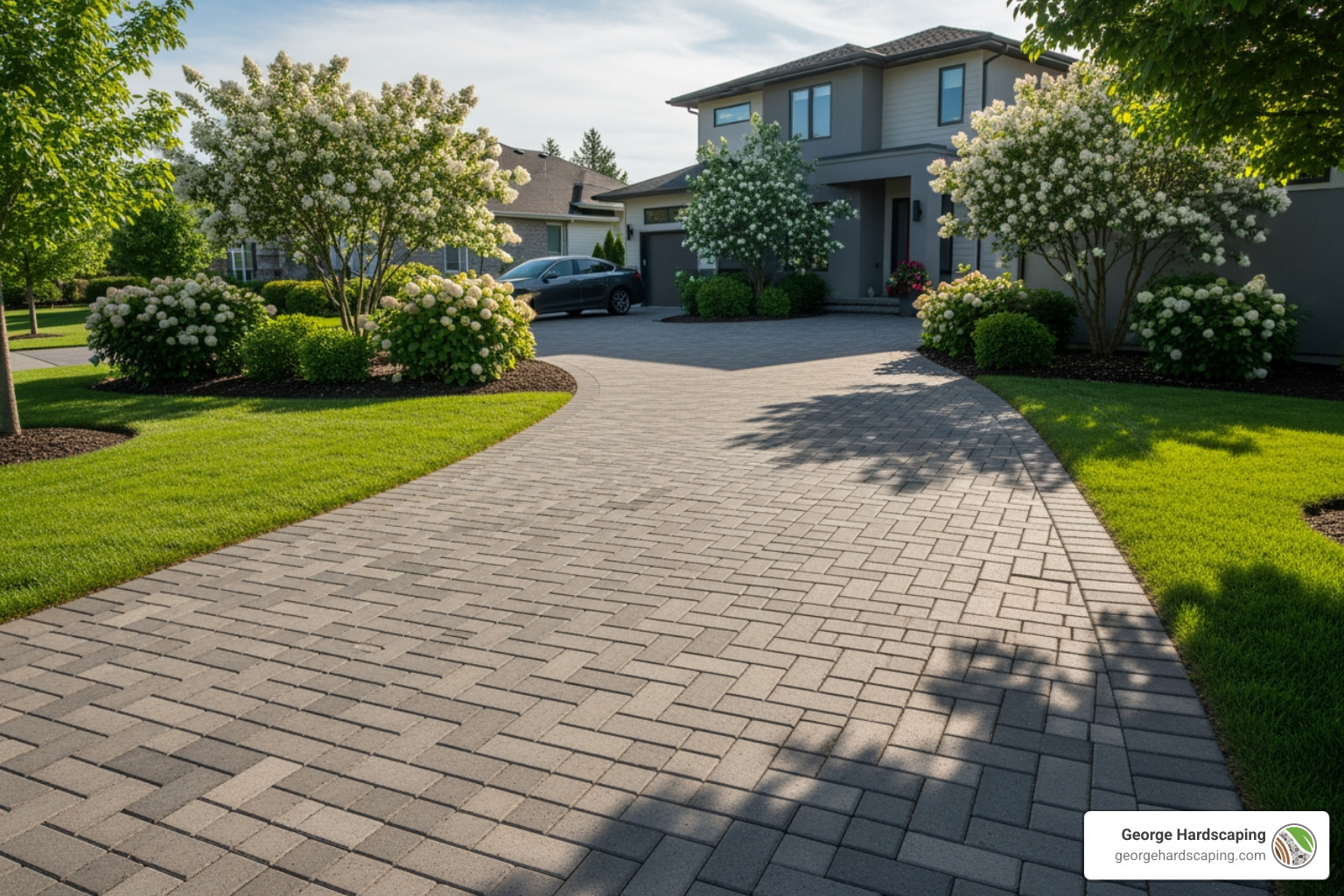
The main cost drivers include project scope, material quality, labor rates, and site conditions. Local market conditions in Essex County, MA, will also influence costs. We invite you to explore our gallery of completed hardscaping projects for inspiration.
Paver Material Selection: The Biggest Cost Driver
The type of paver you choose is the most significant factor influencing your project’s cost. Each material offers a unique look, durability, and price.
- Concrete Pavers ($10–$25/sq ft): A popular, versatile, and budget-friendly choice. They are engineered for strength and come in a vast array of shapes, sizes, and colors, convincingly mimicking natural stone or classic brick.
- Brick Pavers ($10–$45/sq ft): Offer a classic, timeless look that complements traditional architecture. Made from fired clay, they are incredibly durable, hold their color for decades, and resist fading.
- Natural Stone Pavers ($15–$60/sq ft): Includes options like granite, bluestone, or travertine. These high-end pavers offer unparalleled natural beauty, with unique textures and color variations in every piece, ensuring a one-of-a-kind driveway.
- Cobblestone ($18–$50/sq ft): A premium choice known for its old-world charm and impressive durability. These rugged, naturally rounded stones can last up to 75 years, creating a truly luxurious and enduring surface.
- Permeable Pavers ($10–$70/sq ft): An environmentally conscious option designed to allow rainwater to filter through gaps into a specialized base below, reducing runoff and replenishing groundwater. Their cost varies widely based on the material and system complexity.
- Grass Pavers ($10–$20/sq ft): These plastic or concrete grids allow grass to grow through, creating a drivable surface that maintains a green, natural look. They are ideal for minimizing impervious surfaces but do require ongoing lawn maintenance.
If you are considering permeable systems to help manage stormwater, resources like the U.S. Environmental Protection Agency’s green infrastructure overview provide helpful background on how permeable pavements contribute to better drainage and reduced runoff. George Hardscaping can then translate those principles into a specific design for your property.
We can help you select the best paver type for your design vision, functional needs, and budget for your Essex County, MA, property.
Driveway Size and Design Complexity
Beyond material, the size of your driveway and the intricacy of its design significantly impact the total paver driveways cost. More square footage means more materials and labor.
Standard driveways are often simple rectangles, but many designs include curves, slopes, and complex patterns that increase labor time and material waste. A visually stunning herringbone pattern, for example, requires more precise cutting and fitting than a simple running bond, increasing labor costs. Custom borders, inlays, or banding using different paver colors also add complexity and expense. We excel at these detailed designs, creating unique driveways that stand out in any Essex County neighborhood.
When planning your layout, it is also worth considering how the driveway connects with other hardscape elements. You might want matching or complementary materials for front walkways, entry steps, or even a backyard patio. Coordinating your driveway with a new outdoor living space designed through our dedicated patio design services can give your property a cohesive, high-end appearance.
Labor, Site Prep, and Additional Paver Driveways Cost Factors
A substantial portion of your paver driveways cost comes from labor and extensive site preparation. This is a multi-step process requiring expertise and specialized equipment.
- Labor Cost: Generally accounts for $5 to $10 per square foot. This covers the skilled team’s time for excavation, base preparation, precise paver laying, and jointing.
- Site Preparation: This is the unseen foundation of a durable driveway. It includes excavating the area to the proper depth, then laying and compacting multiple layers of gravel to form a 10–12 inch base. This is topped with a layer of bedding sand. This robust foundation is critical to prevent settling and shifting over time.
- Edge Restraints: Installed along the perimeter, these plastic, concrete, or metal strips are vital for holding pavers in place and preventing lateral movement under vehicle loads.
- Demolition: If you’re replacing an old driveway, the cost to demolish and haul away the existing concrete ($550 – $1,700) or asphalt ($1,000 – $3,000) must be factored in.
- Grading and Drainage: Proper grading ensures water drains away from your home’s foundation. In some cases, additional solutions like French drains, catch basins, or culverts ($1,500 – $5,000) may be needed, a crucial consideration for properties in Essex County.
- Permit Fees: Most municipalities in Massachusetts require permits for driveway work to ensure compliance with local codes, typically costing $50 to $200.
When evaluating quotes, make sure you are comparing similar scopes of work. A lower bid that skimps on base depth, drainage improvements, or edge restraints can appear attractive at first but may lead to heaving, rutting, or shifting within a few winters. Resources like the HomeAdvisor driveway cost breakdown can help you understand typical line items, but a local expert is best positioned to tailor those numbers to your specific property.
If you are planning a broader landscape upgrade that includes features such as retaining walls, walkways, or outdoor steps, talk with us about combining them with your driveway project. Our full range of hardscaping and masonry services allows us to design an integrated plan that can be more efficient and visually cohesive than tackling each feature separately.
Paver Driveways: Long-Term Value and Maintenance
While the upfront paver driveways cost is higher than alternatives like asphalt or concrete, it’s crucial to look beyond the initial bill and consider the long-term value. A paver driveway is a lasting improvement that delivers significant return on investment over its lifespan.
Upfront Cost vs. Lifetime Value
Paver driveways generally cost $10 to $70 per square foot, making them about 50–80% more expensive upfront than plain concrete. However, this initial investment opens up distinct advantages:
- Pros of Paver Driveways:
- Exceptional Durability: Pavers withstand heavy loads and resist cracking from freeze–thaw cycles common in Essex County, MA
- Superior Aesthetics: Endless variety of colors, shapes, and patterns for custom designs
- Easy Repairs: Individual pavers can be removed and replaced seamlessly
- Longevity: Properly installed paver driveways last 30 to 50 years; cobblestone can last 75+ years
- Cons of Paver Driveways:
- Higher Upfront Cost: The primary drawback for many homeowners
- Longer Installation Time: Multi-step installation process takes more time
- Maintenance Needs: Weeds can grow in joints; joint sand may need periodic replenishment
When you factor in resurfacing or full replacement of asphalt over 30–40 years, a durable paver driveway can be competitive—or even less expensive—over its lifetime. The National Ready Mixed Concrete Association’s pavement resources highlight how maintenance and replacement affect true lifecycle costs of different surfaces.
Long-Term Maintenance and Repairability
The true value of a paver driveway shines through its longevity and ease of maintenance. With a lifespan of 30–50+ years, it significantly outlasts asphalt (15–20 years) and often concrete (25–30 years).
Repairability is a key benefit. If a paver cracks, shifts, or becomes stained, we can simply lift out the affected units and replace them. This localized repair is far less costly than addressing damage in a monolithic surface.
Ongoing maintenance is straightforward. Annual cleaning with a pressure washer and periodic sweeping of polymeric sand into the joints will deter weeds and keep the surface stable. Applying sealant every few years can improve color, protect against stains, and further stabilize joint sand.
How Paver Driveways Fit into Overall Curb Appeal
A driveway occupies a large share of your front yard’s visual real estate. Thoughtful design can turn it from a purely functional surface into an asset that frames your home. The American Society of Landscape Architects stresses the importance of integrating circulation areas with plantings, lighting, and gathering spaces to create a cohesive exterior.
If you’re planning to update walkways, front steps, or an entry patio, weaving those elements into a single design plan allows for consistent materials and patterns. George Hardscaping’s patio design services and broader hardscaping and masonry services help you think holistically about your property.
A well-executed paver driveway can also support practical features such as clearly defined parking bays, integrated pathways to the front door, subtle grading that directs water away from the foundation, and transitions to backyard spaces. Planning these elements up front can reduce total cost and create a more polished result.
DIY vs. Hiring a Professional: A Cost-Benefit Analysis
When planning a paver driveway, many homeowners wonder whether to DIY or hire a professional. While saving on labor costs ($5 to $10 per square foot) is tempting, it’s crucial to weigh those savings against the risks and long-term costs of a DIY approach.
DIY Paver Driveway Installation
A DIY installation is an extremely labor-intensive project requiring specialized rental equipment like plate compactors and wet saws. The biggest risk is improper installation. A paver driveway’s longevity depends entirely on a correctly prepared and compacted base. Common DIY mistakes include:
- Poor drainage, leading to water damage and ice hazards.
- Uneven settling, creating an unsafe and unsightly surface.
- Paver shifting and structural failure.
Fixing these issues can cost more than hiring a professional from the start, negating any initial savings.
Before committing to a DIY approach, it is wise to research best practices from reputable, non-commercial sources. For example, This Old House’s paver installation tutorials and similar guides can give you a sense of the tools, materials, and steps involved. Many homeowners, after understanding the complexity, decide that their time is better spent on design decisions while a qualified contractor handles the heavy work.
Hiring a Professional
Investing in a professional ensures the job is done right. The benefits include:
- Expertise: Experienced hardscapers understand soil conditions, drainage, and proper installation techniques. Professionals adhere to industry best practices, such as those outlined by the Interlocking Concrete Pavement Institute (ICPI), to guarantee a stable and long-lasting result.
- Efficiency and Quality: A professional team has the skills and equipment to complete the project efficiently and to a high standard.
- Warranties: Reputable contractors offer warranties on their workmanship, protecting your investment.
- Safety: Professionals are trained to safely manage the heavy machinery and materials involved.
For Essex County homeowners, partnering with a local, specialized contractor like George Hardscaping provides an additional advantage: we know the towns, permitting requirements, and typical soil and drainage conditions throughout the North Shore. Our team can help you align your driveway project with any related plans you may have for patios, walkways, or outdoor living areas using our comprehensive hardscaping and masonry services.
For a project this significant, we strongly recommend hiring a trusted contractor. The investment in professional installation guarantees structural integrity and longevity. You can learn about our professional driveway paver installation process to see the meticulous care we put into every project.
If you are ready to move from research to action, do not wait until the busy season makes scheduling harder. Take the next step and request your free driveway cost estimate today so we can review your goals, answer your questions, and reserve a spot on our installation calendar.
Your Paver Driveway Project: FAQs and Next Steps
Investing in a paver driveway generates many questions. Here are answers to some common inquiries from homeowners in Essex County, MA.
Is a paver driveway worth the investment?
Yes, a paver driveway is a worthwhile investment. While the initial paver driveways cost is higher, the long-term benefits are significant:
- Increased Property Value: Pavers dramatically improve curb appeal and can increase your home’s market value.
- Durability and Longevity: A properly installed paver driveway lasts 30 to 50 years, making it a generational asset.
- Low Maintenance and Easy Repairs: Replacing individual pavers is simple and cost-effective compared to overhauling other surfaces.
- Custom Aesthetics: The design flexibility allows for a unique look that complements your home.
National housing and remodeling groups, including the National Association of Realtors, consistently rank exterior improvements and curb appeal among the top factors influencing buyer interest. A clean, attractive paver driveway can help your home stand out in listing photos and in person.
How can I save money on a paver driveway?
There are several ways to manage the paver driveways cost without sacrificing quality:
- Choose Cost-Effective Materials: Concrete pavers offer excellent durability and style at a lower price point than natural stone.
- Opt for Simpler Designs: Intricate patterns increase labor and material costs. A classic running bond or basketweave pattern is more budget-friendly.
- Invest in Site Prep: Thorough site preparation prevents costly repairs from settling or water damage down the road.
- Get Multiple Quotes: Obtain detailed estimates from several reputable contractors to compare pricing and scope.
You can also consider phasing your projects. For instance, you might start with the driveway and then add a front walkway or backyard patio later with our dedicated patio design services, using the same or complementary pavers to maintain a cohesive look.
What are the main disadvantages of a paver driveway?
Homeowners should be aware of a few considerations:
- Higher Initial Cost: The upfront investment is greater than for asphalt or standard concrete.
- Potential for Weeds: Weeds can grow in joints if they are not properly filled and maintained with polymeric sand.
- Risk of Shifting: Improper installation can lead to pavers shifting or settling over time, highlighting the need for an experienced professional.
- Joint Sand Maintenance: Joint sand may erode over time and need to be replenished to maintain stability.
These drawbacks can be substantially minimized by working with a qualified contractor who follows best practices in base preparation, edge restraint installation, and joint stabilization—as outlined by groups like the Interlocking Concrete Pavement Institute.
How do paver driveways compare with other materials?
When evaluating paver driveways cost, it helps to compare them with asphalt and poured concrete in terms of price, durability, and appearance:
- Asphalt: Typically has the lowest upfront cost but requires regular sealcoating and has a shorter lifespan. It offers minimal design flexibility and can soften or rut in extreme heat.
- Poured Concrete: Generally costs more than asphalt but less than most paver systems. It can be stamped or colored, but repairs are more visible, and cracking is common in freeze–thaw climates.
- Pavers: Highest upfront investment in many cases, but with superior repairability, aesthetics, and often the longest service life when properly installed.
Independent resources such as HomeAdvisor’s driveway material comparisons can provide additional context, but localized knowledge from a North Shore contractor is essential to apply that information correctly to our climate.
Conclusion: Investing in a Driveway That Lasts
Choosing a paver driveway is a decision that balances upfront investment with long-term value, durability, and aesthetic appeal. Understanding the factors that influence the paver driveways cost—from materials and design to site preparation—empowers you to make an informed choice for your Essex County, MA, home.
The true value of a paver driveway lies in its enduring strength, ease of repair, and ability to withstand decades of use and weather. It is a smart investment that improves your property’s value and provides years of reliable service.
For homeowners in Essex County, MA, seeking expert hardscaping and masonry services that prioritize quality craftsmanship, George Hardscaping delivers exceptional solutions. We are committed to installing paver driveways that meet your aesthetic goals and exceed your expectations for performance.
If you are ready to move forward, do not put off planning until another winter has taken its toll on your existing driveway. Request your free estimate today to start planning your project and find how we can transform your outdoor space with a beautiful, long-lasting paver driveway.
If you are still exploring options and want to see what is possible, take a few minutes to review our gallery of completed driveway paver projects. Then, when you are inspired and ready to talk details, reach out so we can turn those ideas into a tailored design and detailed quote for your home.
