
Natural Stone Pavers: 7 Stunning Picks for a Gorgeous 2025 Patio
Why Natural Stone Pavers Transform Your Outdoor Space
Natural stone pavers are quarried stone pieces cut into uniform shapes for outdoor paving projects. They offer superior durability, natural beauty, and can be up to 10 times stronger than concrete pavers according to industry testing.
Top Natural Stone Paver Types:
– Sandstone – Warm colors, slip-resistant cleft finish
– Granite – Maximum strength for driveways and high-traffic areas
– Limestone – Classic appeal with excellent freeze-thaw resistance
– Basalt – Modern dark tones, naturally slip-resistant
– Bluestone – Traditional choice for New England homes
– Travertine – Cool to touch, perfect for pool decks
If you’re planning a patio upgrade in Essex County, you’re looking at a material that’s been proven for centuries. As one Texas homeowner finded with their backyard entertainment area, natural stone flagstones created the perfect foundation for an outdoor kitchen that still looks stunning years later.
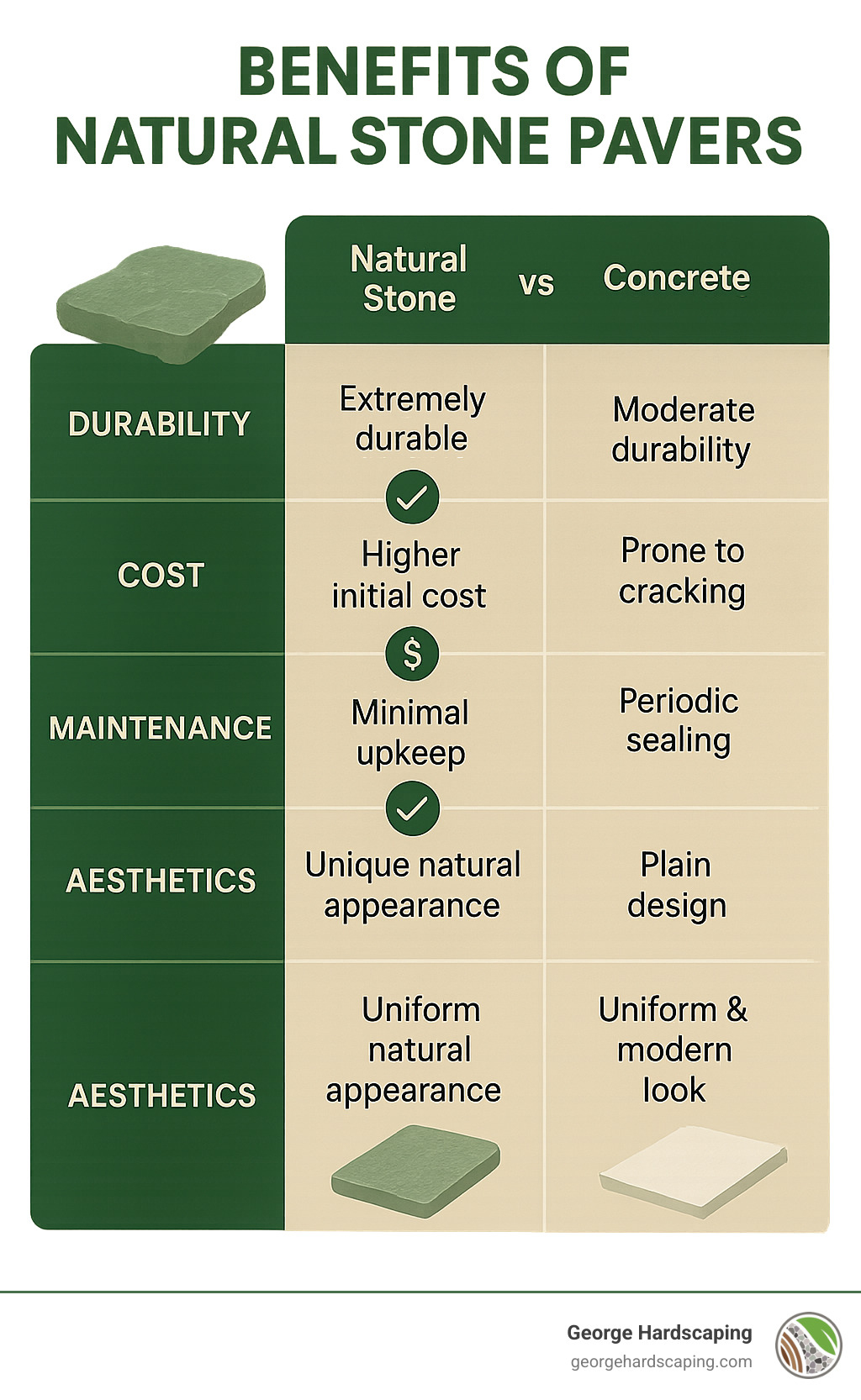
Natural stone pavers excel in New England’s harsh freeze-thaw cycles because they have low water absorption rates and are naturally frost-resistant. Unlike concrete that can crack and expose ugly aggregate over time, natural stone maintains its color and character while requiring minimal maintenance.
The key advantage? Durability meets beauty. These pavers are tested to ASTM standards for compressive strength, absorption rate, and slip resistance – critical factors for Massachusetts weather conditions.
Why Choose Natural Stone Pavers for Your Patio
Picture this: you’re hosting a backyard barbecue in July, and while your neighbor’s concrete patio is hot enough to fry an egg, your guests are comfortably walking barefoot on your natural stone pavers. That’s just one of the many reasons homeowners across the North Shore are making the switch.
When we talk with families in Salem, Marblehead, and throughout Essex County, they’re often surprised to learn that natural stone pavers aren’t just about looks – they’re engineered by nature to handle whatever New England throws at them. These stones undergo rigorous testing per ASTM C140-15 standards, measuring everything from compressive strength to how much water they absorb.
Durability is where natural stone really shines. We’ve seen concrete patios crack and crumble after just a few harsh winters, but natural stone? It’s been handling freeze-thaw cycles for millions of years. The secret lies in their low water absorption rates – when water can’t get in, it can’t freeze and cause damage.
Slip resistance is another game-changer, especially for families with kids or anyone who’s ever worried about wet surfaces. The natural texture of stone, particularly those gorgeous cleft finishes, provides excellent grip even when wet. No more tiptoeing around the pool deck after a summer rain.
Here’s something that might surprise you: natural stone pavers are completely recyclable. When future generations decide to redesign your outdoor space, these stones can be reused rather than heading to a landfill. It’s a beautiful material that keeps on giving.
The timeless aesthetics speak for themselves. While trendy materials come and go, natural stone has been the gold standard for centuries. Plus, with proper installation, maintenance is refreshingly simple – no special treatments or constant repairs.
Scientific research on slip resistance
Key Outdoor Advantages
The real magic happens when you compare natural stone pavers to other materials. Natural stone can be up to 10 times stronger than concrete pavers – that’s not marketing speak, that’s geological fact. Under normal residential use, they’re virtually indestructible.
Heat reflectivity makes summer entertaining so much more enjoyable. While dark concrete and asphalt turn into hot plates under the summer sun, natural stone stays cool enough for bare feet. Your pool deck becomes an actual place to relax, not a surface to sprint across.
Permeability is the unsung hero of patio materials. When installed with proper joint spacing, natural stone allows rainwater to filter through naturally. This means less pooling water, reduced runoff, and better drainage around your patio area – a real blessing during those infamous New England downpours.
The strength advantage over concrete isn’t just impressive on paper – it translates to real-world peace of mind. Whether you’re moving patio furniture, hosting large gatherings, or dealing with the occasional delivery truck, natural stone handles it all without breaking a sweat.
Natural Stone Pavers: Top Picks by Material
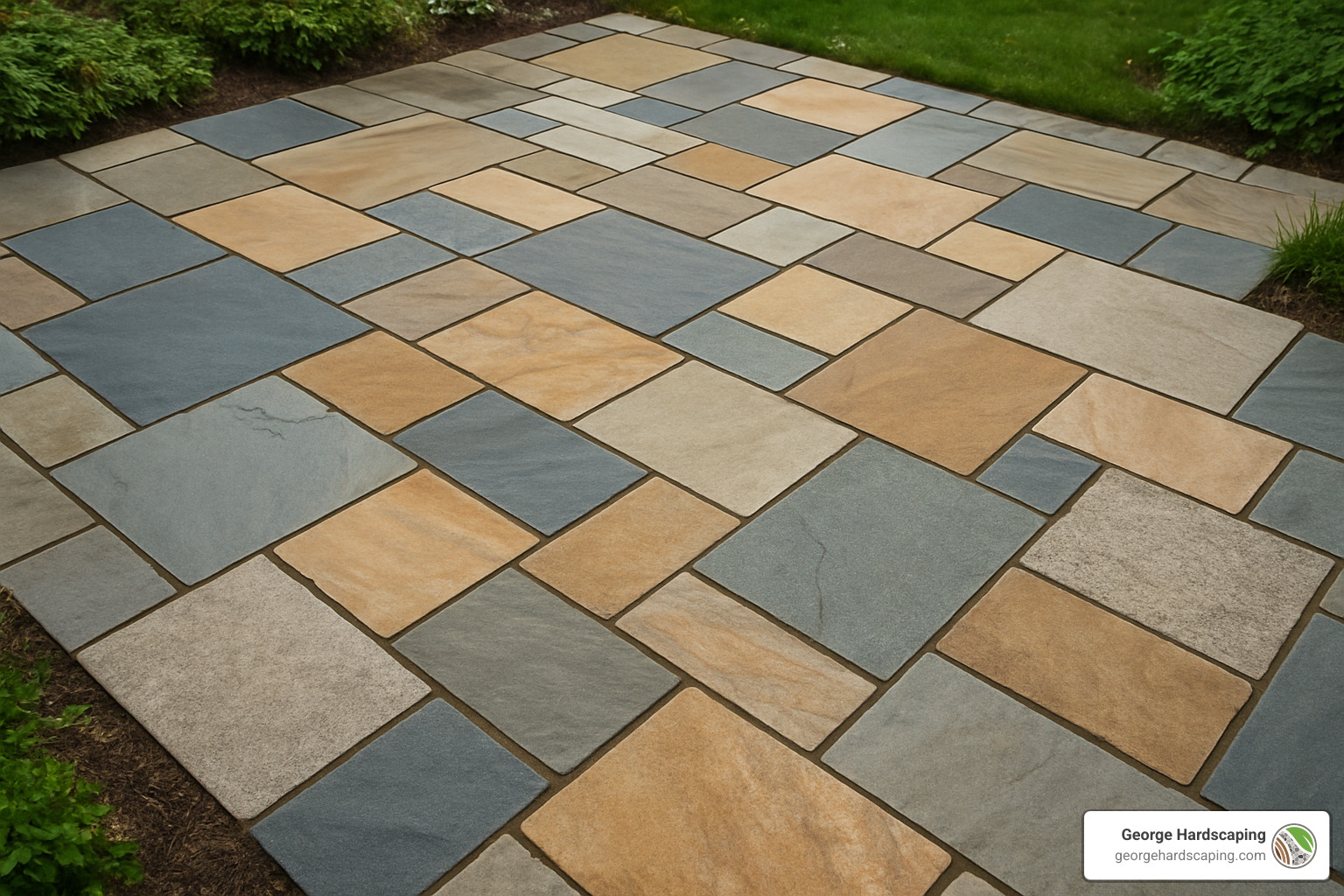
Walking through a stone yard can feel overwhelming with all the options. But after years of installing patios across Essex County, we’ve learned that each type of natural stone pavers has its own personality and perfect application. Let’s break down the top performers that work beautifully in our New England climate.
Sandstone Standouts
Sandstone pavers are like that reliable friend who always shows up when you need them. These warm-toned beauties come in colors that make you think of autumn afternoons – honey gold, deep rust, and everything in between.
What makes sandstone special is its cleft finish. This natural texture isn’t just pretty to look at – it provides excellent grip underfoot, even when wet. We’ve installed sandstone patios in Newburyport that still look stunning after decades of harsh winters and humid summers.
The standard 1-inch thickness makes sandstone perfect for patios and walkways where people will be walking and gathering. Popular choices include Harvest with its warm golden tones, Golden Fossil in rich amber, and Steel Blue for those wanting something more sophisticated.
Granite Workhorses
When clients need something that can handle serious abuse, we recommend granite pavers. These are the tough guys of the natural stone world – strong enough for driveways but neat enough for entertaining areas.
Granite’s tight grain structure means spills from your outdoor kitchen won’t leave permanent stains. Whether you choose a polished finish for a sleek modern look or honed for something more subtle, granite delivers both beauty and bulletproof durability.
The exceptional compressive strength means your investment will literally last generations. We’ve seen granite installations that look as good as new after twenty years of New England weather.
Basalt & Bluestone Beauties
For homeowners who love clean, modern lines, basalt and bluestone pavers offer that sophisticated dark palette that makes everything else pop. Basalt, formed from volcanic activity, brings a naturally slip-resistant texture that’s both safe and striking.
Bluestone has been a North Shore favorite for generations, and once you see it, you’ll understand why. That natural blue-gray color complements everything from colonial homes to contemporary designs. It’s particularly stunning for walkways and steps.
Both materials excel in our freeze-thaw conditions, and here’s a bonus – those dark colors actually help melt snow faster by absorbing heat from winter sun. Pretty smart for a rock, right?
Travertine Natural Stone Pavers That Stay Cool
Travertine pavers are the barefoot-friendly champions of the stone world. While other materials can become scorching hot in summer sun, travertine stays comfortable to walk on thanks to its light colors and porous structure.
The natural non-slip surface comes from travertine’s unique formation in mineral springs. This makes it incredibly safe around pools and spas, even when wet. Available in cream, ivory, and light gray tones, travertine brings that resort-like feel to your backyard.
Whether you want it smooth for formal areas or textured for rustic charm, travertine adapts to your vision while keeping everyone comfortable.
Porphyry Natural Stone Pavers for Historic Charm
Porphyry pavers are like having a piece of history in your backyard. This volcanic stone has been paving roads since Roman times – and some of those ancient roads are still intact today. Talk about a track record!
The hand-crafted appearance of porphyry creates that authentic old-world character while meeting today’s safety standards. For homeowners in historic areas like Salem or Marblehead, porphyry offers the perfect blend of authentic period looks with contemporary performance.
This material can handle heavy traffic while maintaining its character, making it ideal for both driveways and gathering spaces where you want that timeless European feel.
Design Options: Finishes, Shapes & Sizes
The versatility of natural stone pavers really shines when you explore the incredible range of finishes, shapes, and sizes available. After years of installing patios across the North Shore, we’ve seen how these design choices can completely transform a space from ordinary to extraordinary.
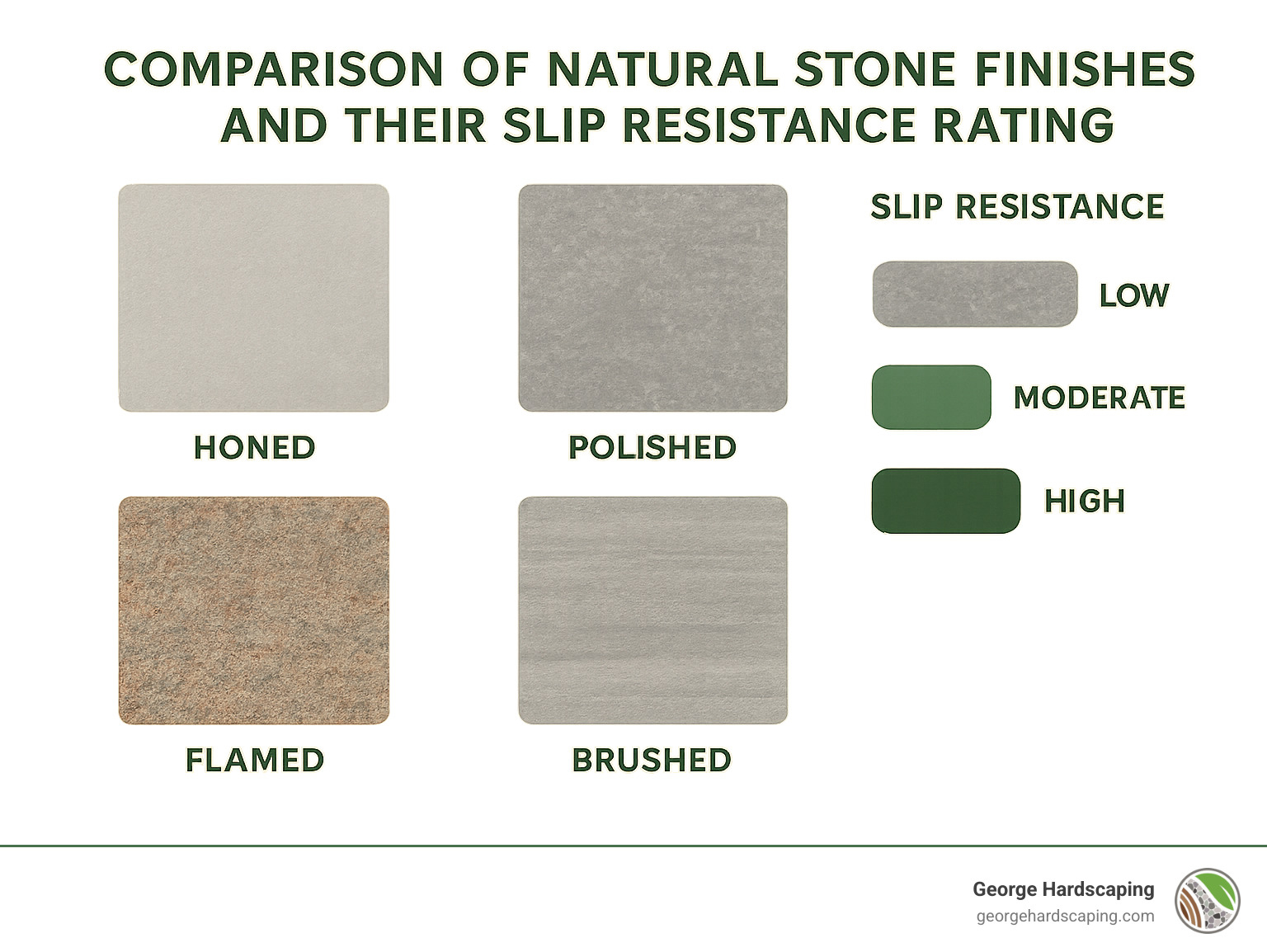
Finish selection makes a huge difference in both appearance and performance. The cleft finish remains our most popular choice – it’s the natural split surface that happens when stone is quarried, creating excellent slip resistance and authentic texture. For homeowners wanting a more contemporary look, the honed finish provides a smooth, matte surface that feels sophisticated without being slippery.
The tumbled finish creates that weathered, old-world charm that works beautifully with colonial homes. The edges are naturally rounded, giving the appearance of stone that’s been walked on for decades. Meanwhile, the sawn finish offers clean, precise edges perfect for formal installations where crisp lines matter.
Shape variety has exploded beyond the traditional rectangle. Circle kits create stunning focal points – we love using them for fire pit surrounds or as medallions in larger patio designs. Modular packs contain multiple sizes that work together in random patterns, creating that organic, natural look that avoids the repetitive appearance of single-size installations.
Custom cuts open up unlimited possibilities. Whether you need specific sizes to fit around existing landscape features or want to create unique geometric patterns, most quality suppliers can accommodate special requests.
Standard natural stone pavers typically come in dimension sets that work together beautifully. The most common sizes include 11.81″ × 23.62″, 17.72″ × 23.62″, 23.62″ × 23.62″, and 23.62″ × 35.43″. These aren’t random measurements – they’re designed to create patterns like Running Bond and the popular 4 Piece Random layout.
The 4 Piece Random pattern uses 25% small rectangles, 30% medium rectangles, 25% large rectangles, and 20% squares. This creates that natural, organic appearance that makes patios look like they’ve always belonged in the landscape.
| Feature | Natural Stone | Concrete | Porcelain |
|---|---|---|---|
| Durability | Up to 10x stronger | Standard strength | High strength |
| Maintenance | Minimal, periodic sealing | Regular cleaning/sealing | Virtually maintenance-free |
| Slip Resistance | Naturally slip-resistant | Variable, depends on finish | Can be slippery when wet |
| Heat Retention | Stays cool | Can get very hot | Moderate heat retention |
| Color Stability | Natural variation, no fading | May fade, expose aggregate | Consistent, fade-resistant |
| Cost | $10-$90+ per sq ft | $3-$15 per sq ft | $8-$25 per sq ft |
The finish you choose directly impacts traction and safety. Natural cleft surfaces provide the best slip resistance, while honed finishes require more careful consideration around pools and wet areas. This relationship between beauty and function is why we always discuss your specific needs before recommending finishes.
Scientific research on freeze-thaw durability
Installation & Maintenance Best Practices
Getting natural stone pavers installed correctly is like building a house – everything depends on a solid foundation. We’ve seen gorgeous stone projects fail because someone skipped steps or cut corners during installation. The good news? With proper technique, your patio can last generations.
The magic happens underground, where most people never look. Excavation depth typically runs 8-10 inches for patios and walkways, but driveways need 12+ inches to handle vehicle weight. Think of it as creating a sandwich – each layer has a specific job.
Your gravel base acts like a shock absorber, spreading weight evenly while allowing water to drain away. We compact this in 2-3 inch lifts because trying to compact 6 inches at once leaves soft spots that cause settling later. The bedding sand layer comes next, providing the smooth surface that lets us make fine adjustments as we lay each stone.
Jointing might seem like a small detail, but it’s crucial for long-term performance. Polymeric sand locks everything together while still allowing natural movement during our harsh Massachusetts freeze-thaw cycles. It also keeps weeds from sprouting between your beautiful stones.
More info about Stone Patio Installation
More info about Paver Walkways Installer
Step-by-Step Install of Natural Stone Pavers
Site preparation starts with calling Dig Safe – nobody wants to hit a gas line while creating their dream patio. We excavate to the proper depth based on your project’s needs, then install edge restraints to keep everything from spreading over time.
Creating the right slope for drainage prevents water from pooling on your patio. We aim for about 1/4 inch of fall per foot – enough to shed water but not enough to notice when you’re grilling burgers.
The compaction process can’t be rushed. We install and compact the gravel base in lifts, checking our work as we go. Skipping this step leads to settling and uneven surfaces later – something that’s expensive and frustrating to fix.
When we start laying patterns, we work from established reference lines to keep everything square and true. Consistent joint spacing of 1/8″ to 1/4″ gives the best appearance and performance. We cut edge pieces with wet saws and diamond blades for clean, precise fits.
The final step involves sweeping polymeric sand into all joints, removing excess from stone surfaces, then activating it with light water misting. This creates the strong, flexible joint that keeps your natural stone pavers looking perfect year after year.
Long-Term Care Tips
Here’s the best part about natural stone pavers – they’re remarkably low-maintenance once properly installed. A little attention goes a long way toward keeping them beautiful for decades.
Gentle cleaning with water and mild detergent handles most situations. Skip the harsh chemicals and high-pressure washing, which can damage joint sand and potentially etch certain stone types. Think of it like washing a nice car – gentle but thorough works best.
Re-sealing schedules depend on your stone type and how much weather exposure it gets. Most installations benefit from fresh sealer every 2-3 years, though dense stones like granite often go longer. The test is simple – when water soaks in instead of beading up, it’s time to reseal.
Stain prevention beats stain removal every time. Clean spills quickly, especially acidic stuff like wine or lemon juice that can etch limestone and travertine. A few seconds of attention prevents hours of restoration work later.
Winter care in Massachusetts requires some thought. While natural stone pavers handle freeze-thaw cycles beautifully, avoid deicing salts when possible. Sand provides excellent traction without any risk of chemical damage to your investment.
Cost & Sourcing Guide
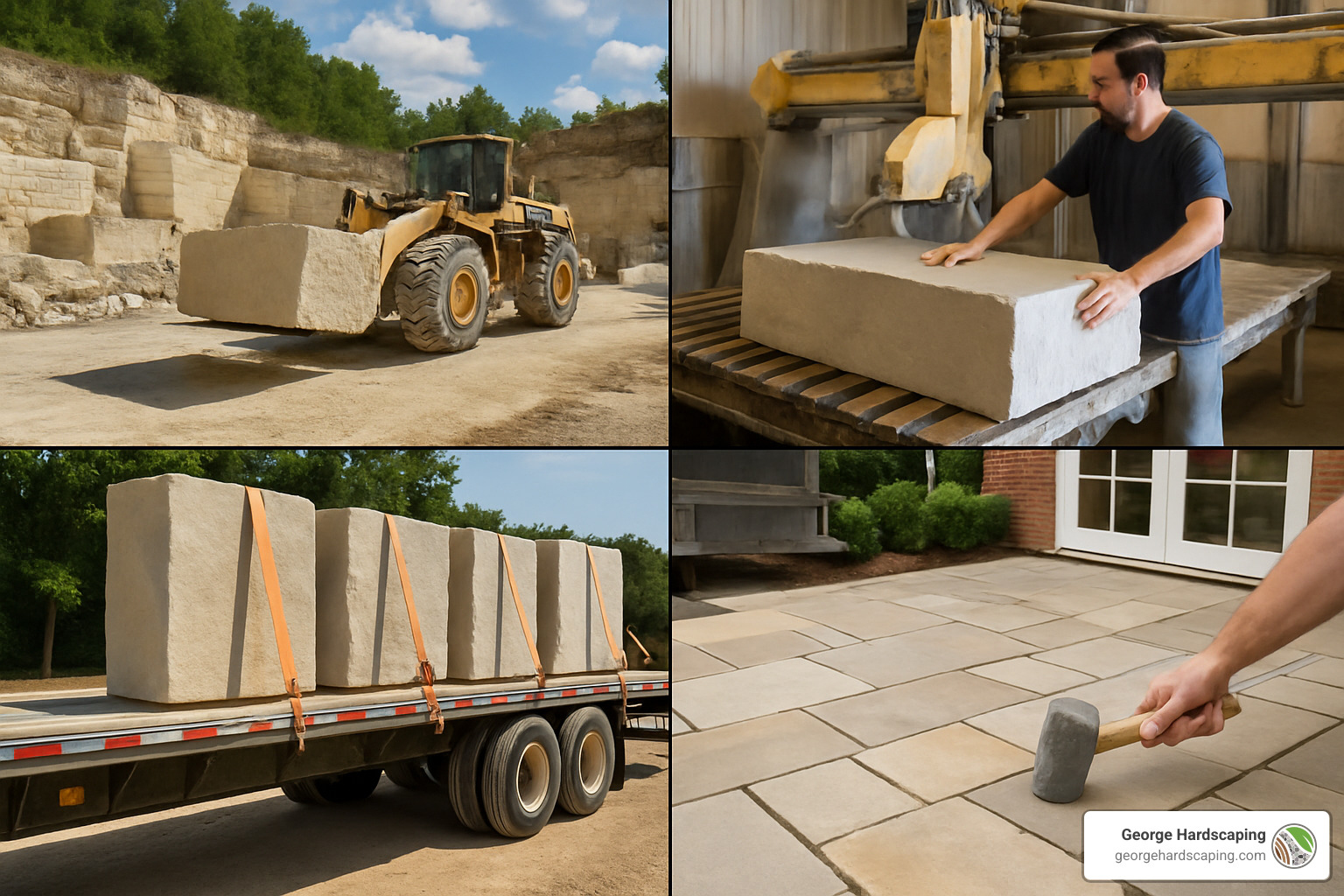
Let’s talk money – because we know that’s what everyone’s wondering about when they’re dreaming of their perfect patio. Natural stone pavers represent a significant investment, but understanding the cost factors helps you plan realistically and avoid sticker shock.
Based on internet data (not George Hardscaping’s specific pricing), you’re looking at average costs from $10-$40 per square foot for standard materials. Premium stones and specialty finishes can reach $90+ per square foot. That’s quite a range, and there’s good reason for it.
Stone type makes the biggest difference in price. Beautiful sandstone pavers sit at the lower end of the range, while exotic granites and hand-finished materials command premium pricing. Thickness matters too – thicker pavers cost more upfront but handle heavier loads and last longer.
The quarry location affects your final cost more than you might expect. Stone from local quarries costs less to transport than materials shipped across the country. Quantity works in your favor on larger projects, as bulk pricing often applies.
Don’t forget about installation costs, which vary based on project complexity, site access, and design intricacy. Simple rectangular patterns cost less to install than elaborate designs requiring extensive cutting and fitting.
More info about Hardscaping Services
Buying Checklist for Homeowners
Before you fall in love with a particular stone (and trust us, it happens), make sure it’s right for your specific situation. Climate compatibility tops our list – you need stone with good freeze-thaw ratings for Massachusetts winters and low absorption rates to prevent cracking.
Traffic load requirements determine thickness needs. Pedestrian areas typically need 1-inch thickness, while driveways require 1.5-2 inches for long-term durability. Don’t try to save money by going thinner – it’ll cost more in repairs later.
Color matching can be tricky with natural materials. Always order samples and view them in your actual lighting conditions. Natural stone varies more than manufactured materials, so what looks perfect in the showroom might not work at your home.
Budget planning should include a 5-10% waste factor for cutting and breakage, plus a 10-15% contingency fund for unexpected site conditions. It’s better to plan for these costs upfront than scramble for extra funds mid-project.
Finding Reputable Suppliers & Installers
Quality suppliers make all the difference in your final result. Look for suppliers who provide ASTM certification documentation and can verify ethical sourcing practices. This isn’t just feel-good marketing – certified materials meet specific performance standards crucial for our New England climate.
Local suppliers who stock materials have advantages over those who drop-ship. They offer better quality control, immediate availability for repairs, and understanding of regional requirements. Plus, you can actually see and touch the stone before committing.
When choosing installers, verify licensing and insurance first. Then check local references and ask to see recent projects. Experienced installers understand Massachusetts building codes and climate requirements that affect long-term performance.
The best suppliers and installers work together as a team. They communicate about your project needs, coordinate delivery timing, and ensure materials arrive in perfect condition when needed. This coordination makes your project run smoother and often saves money through efficient scheduling.
Frequently Asked Questions about Natural Stone Pavers
Homeowners often have questions about natural stone pavers before making their investment. After years of installing patios across the North Shore, we’ve heard just about every question imaginable. Here are the answers to the most common ones.
What makes natural stone pavers different from concrete?
The difference comes down to origin and performance. Natural stone pavers are quarried directly from solid rock formations that took millions of years to form, while concrete pavers are manufactured in factories using cement, sand, and aggregates mixed together.
This fundamental difference shows up in strength – natural stone can be up to 10 times stronger than concrete pavers. When we install a granite patio, we’re working with material that’s incredibly dense and durable.
The aesthetic differences are just as important. Natural stone offers unique color variations that occur naturally in the stone formation process. No two pieces are exactly alike, creating character that manufactured products simply can’t match. Even better, these natural colors won’t fade over time like some concrete pavers can.
Here’s something we see often: concrete pavers can crack and expose the aggregate underneath, creating an ugly, rough surface. Natural stone pavers maintain their appearance indefinitely when properly installed and cared for.
Do natural stone pavers need sealing?
The sealing question depends on what type of stone you choose. Dense stones like granite have such tight grain structure that they may not need sealing at all. We’ve seen granite patios that look perfect after years without any sealing.
More porous stones like sandstone and limestone benefit from sealing every 2-3 years. The sealing helps prevent stains and makes cleaning much easier, especially around outdoor kitchens or entertaining areas where spills happen.
Think of sealing as insurance for your investment. It’s not always necessary for the stone’s structural integrity, but it definitely makes maintenance easier. A properly sealed patio sheds water and resists staining, which means less worry during your summer barbecues.
Can I use natural stone pavers indoors?
Natural stone pavers work beautifully indoors! We’ve helped homeowners create stunning entryways, kitchen floors, and even bathroom installations using natural stone.
Indoor applications typically use thinner materials – usually 3/8″ to 3/4″ thick instead of the 1″ or thicker we use outdoors. The installation methods are different too, often involving adhesive rather than sand bedding.
The same durability and natural beauty that makes these stones perfect for Massachusetts patios translates wonderfully to interior spaces. Plus, you get the added benefit of easier maintenance indoors since there’s no weather exposure or freeze-thaw cycles to worry about.
Conclusion
After years of installing natural stone pavers throughout Essex County, we’ve watched countless homeowners fall in love with their transformed outdoor spaces. There’s something magical about watching a family gather around their new travertine patio for the first time, or seeing kids play barefoot on cool sandstone that would be scorching if it were concrete.
Natural stone pavers aren’t just another hardscaping material – they’re an investment in your home’s future. While that initial cost might seem higher than alternatives, the math works out beautifully over time. No cracking concrete to replace, no fading colors to refresh, no constant repairs from freeze-thaw damage. Just decades of reliable beauty that actually improves with age.
We’ve installed granite driveways in Marblehead that still look pristine after twenty years of New England winters. We’ve created limestone patios in Salem that have hosted countless family gatherings without showing their age. That’s the natural stone paver difference – performance that matches the promise.
Every project teaches us something new about how different stones work in our unique North Shore climate. The bluestone walkway that perfectly complements a historic Newburyport home. The basalt patio that gives a contemporary Beverly Hills residence its modern edge. The sandstone entertainment area that turns a basic backyard into the neighborhood gathering spot.
When you choose natural stone pavers, you’re not just upgrading your patio – you’re creating a legacy. These stones will outlast multiple generations of your family, getting more beautiful and valuable with each passing year. That’s something you simply can’t say about manufactured alternatives.
Ready to find what natural stone pavers can do for your North Shore home? We’d love to help you explore the possibilities and create an outdoor space that truly reflects your style while standing up to everything Massachusetts weather can throw at it.
More info about Patio Design and Installation
