
Natural Gas Fire Pit: Ultimate 2025 Guide
Introduction: The Allure of an Instant, Endless Flame
A natural gas fire pit transforms your outdoor space into a year-round gathering place with the simple push of a button. If you’re considering adding one to your Essex County or North Shore property, it offers a blend of luxury, convenience, and ambiance that other options can’t match.
Quick Answer: Best Natural Gas Fire Pits for 2025
- For Convenience: Look for electronic ignition systems (no matches needed).
- For Heat Output: Choose 50,000-65,000 BTU models for optimal warmth.
- For Durability: GFRC (Glass Fiber Reinforced Cement) or stainless steel construction.
- For Safety: CSA-certified models with thermocouple shut-off valves.
- Average Cost Range: $500-$6,000+ depending on size, materials, and features.
- Installation: Always requires a certified professional gas plumber ($1,500-$5,000+ for gas line installation).
Unlike wood-burning pits that require constant tending and cleanup, or propane units that run out mid-party, natural gas fire pits provide instant warmth and ambiance whenever you want it. Connected directly to your home’s gas line, you have an endless fuel supply. This makes it the most convenient option for frequent use, eliminating the need to haul propane tanks or deal with smoke irritating your guests.
Beyond convenience, natural gas burns cleaner than wood, producing fewer emissions and no messy ash or soot. It’s also generally less expensive than propane per BTU, making it a cost-effective choice for regular enjoyment. A professionally installed fire pit becomes a permanent, integrated feature that can boost your property value, turning your patio into a true extension of your home.
This guide covers everything you need to know: comparing fuel types, understanding key features, choosing materials and designs, ensuring safe installation, and maintaining your investment for years of enjoyment.
Why Natural Gas? The Clear Choice for Convenience and Ambiance
Imagine a crisp October evening in Essex County. With a natural gas fire pit, you simply press a button, and within seconds, a beautiful, dancing flame is ready to welcome your guests. This is the core advantage of natural gas: it’s always ready, never runs out, and requires virtually no preparation. For homeowners who want to enjoy their outdoor space rather than work on it, natural gas is the clear winner.
The convenience is unparalleled. A direct connection to your home’s gas supply means uninterrupted fuel for as long as you want. No more swapping propane tanks mid-gathering or starting a wood fire an hour before guests arrive. Your fire pit operates like any other home appliance—on when you want it, off when you’re done. This seamless integration, with gas lines hidden underground, creates a polished, permanent feature in your outdoor living space, which is essential for high-quality hardscaping and masonry services.
Beyond convenience, natural gas burns remarkably clean. It produces minimal emissions and zero ash or soot, unlike wood fires that fill the air with smoke and leave a mess. This means your guests can gather comfortably, and you won’t spend the next morning shoveling ashes or cleaning soot stains off your patio. This cleaner burn is also more environmentally friendly, with a smaller carbon footprint than wood and even less CO2 than propane.
While the upfront cost for professional gas line installation is higher, the ongoing fuel costs are typically lower than propane. In Massachusetts, natural gas can cost as little as one-third to one-half the price of propane for the same amount of heat (measured in BTUs). For a 60,000 BTU fire pit used for four hours a week, this can translate into hundreds of dollars in savings each year.
For frequent users, these savings can offset the installation cost within a few seasons. Furthermore, a professionally installed natural gas fire pit integrated into a beautiful patio design is a permanent improvement that appeals to future buyers. It’s seen as a luxury amenity that enhances curb appeal and usability, potentially boosting property value by creating a highly desirable outdoor living room.
Comparing Fuel Sources: Natural Gas vs. Propane and Wood
To understand why natural gas shines for a permanent installation, it helps to compare it to the alternatives.
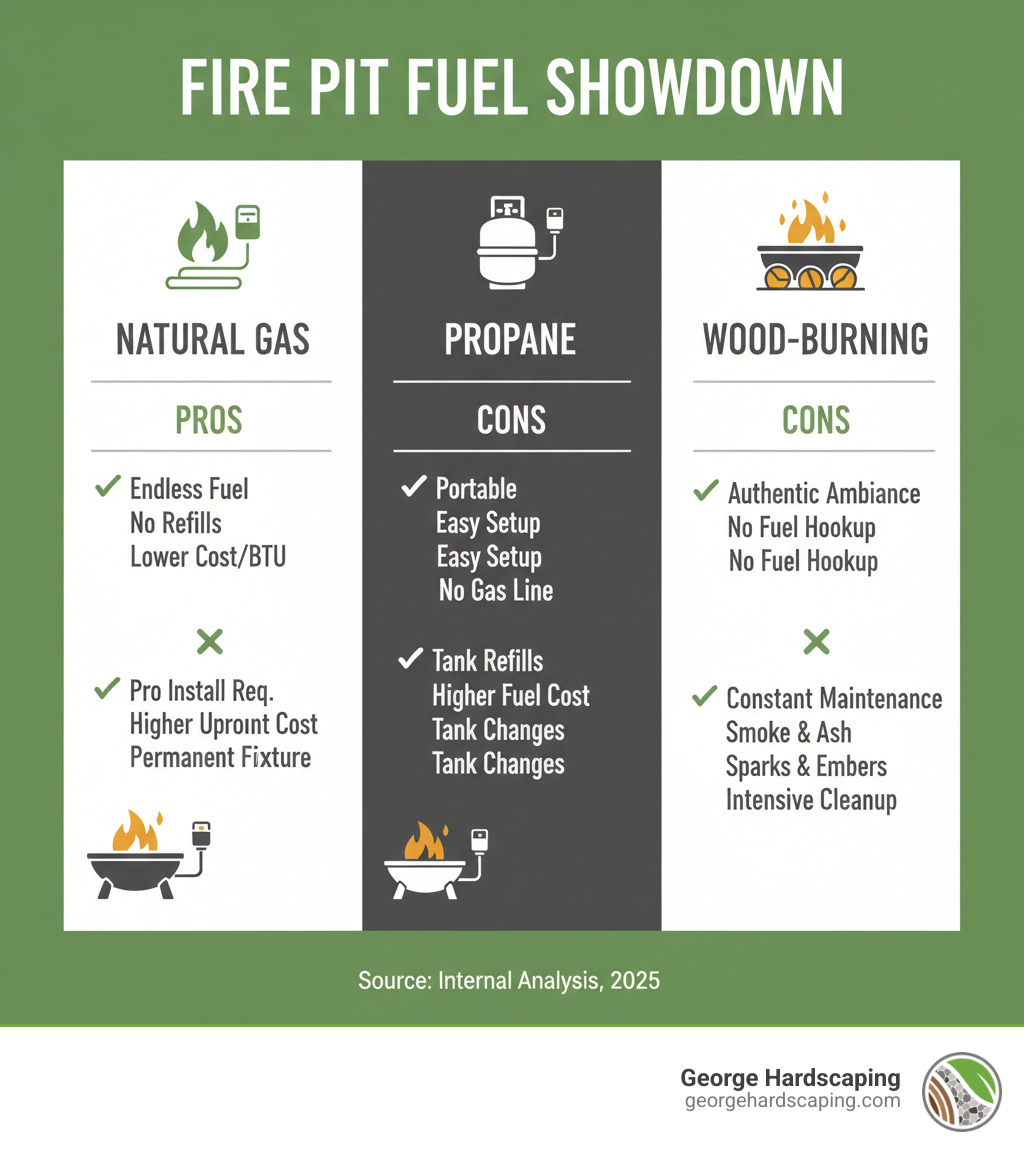
Propane fire pits offer portability, but this comes with the constant hassle of managing tanks. Refilling or exchanging them is an ongoing chore, and they often run out at the worst times. Wood-burning fire pits deliver an authentic campfire experience but are high-maintenance, requiring you to source wood, build the fire, manage smoke, and clean up ash. They also pose a greater risk from sparks and embers.
Here’s how the three options stack up:
| Feature | Natural Gas Fire Pit | Propane Fire Pit | Wood-Burning Fire Pit |
|---|---|---|---|
| Ongoing Fuel Cost | Generally lower per BTU | Higher (tank refills add up) | Variable (depends on wood source) |
| Installation Cost | Higher (requires professional gas line) | Lower (no permanent hookup) | Lowest (basic setup only) |
| Convenience | Highest (instant on/off, never runs out) | Moderate (portable but needs tank swaps) | Lowest (building, tending, cleanup) |
| Heat Output | Excellent and consistent (50,000-90,000+ BTUs) | Excellent and consistent | Variable (depends on wood and skill) |
| Maintenance | Low (occasional burner cleaning) | Low (occasional burner cleaning) | High (constant ash removal and cleaning) |
| Environmental Impact | Cleaner burn, fewer emissions | Clean burn, but still produces CO2 | Highest emissions (smoke, particulates, ash) |
For a permanent, hassle-free feature that becomes the heart of your outdoor living space, natural gas is hard to beat. The convenience and cleanliness mean you’ll use it more often, getting far more value from your investment. Ready to explore how a natural gas fire pit could transform your North Shore property? Contact us today to request an estimate and let’s discuss the possibilities.
Your Ultimate Buyer’s Guide to the Perfect Natural Gas Fire Pit
Choosing the right natural gas fire pit is about balancing function, aesthetics, and your lifestyle. It’s an investment in countless evenings of warmth and conversation. Let’s walk through the key factors to consider.
Key Features to Look For
Understanding the core components will help you select a high-quality unit.
- BTU Output: This measures heat production. For most backyards, a fire pit in the 50,000 to 65,000 BTU range provides ample warmth for 4-8 people within a 5-10 foot radius. Much lower, and it’s more for looks than heat; much higher, and you’re likely paying for unused fuel. Consider your climate and primary use: a chilly coastal evening in Marblehead may call for a higher BTU output than a sheltered patio in Andover.
- Ignition System: This defines your user experience. Match-lit is the most basic, reliable, and cost-effective option, requiring you to turn on the gas with a key valve and light it with a long lighter. Push-button spark ignition (piezo) is a step up, using a battery-powered sparker similar to a gas grill. The premium choice is electronic ignition, offering one-touch lighting via a switch, remote, or even a smartphone app. These systems include a critical safety feature: a thermocouple or flame sensor that automatically shuts off the gas if the flame extinguishes, preventing dangerous gas buildup. While more expensive, the convenience and safety of electronic ignition are unmatched for frequent use.
- Adjustable Flame Height: This feature allows you to control the ambiance and warmth, from a low flicker for conversation to a roaring blaze for maximum heat, making your fire pit versatile for any occasion.
- Safety Certifications: Always choose fire pits that are CSA (Canadian Standards Association) or UL (Underwriters Laboratories) certified. This ensures they have been rigorously tested for safety and include essential features like automatic shut-off valves (thermocouples) that prevent gas leaks if the flame goes out.
Choosing the Right Material and Shape
The material and shape define your fire pit’s durability, style, and how it fits your space.
- Materials: GFRC (Glass Fiber Reinforced Cement) offers the modern look of concrete but is 50% lighter and highly durable against cracking. Stainless steel is essential for burners (look for 304-grade for rust resistance) and offers a sleek look for the entire unit. Corten steel (or weathering steel) provides a rustic, industrial look, developing a stable, rust-like patina over time that protects it from further corrosion. For a fully integrated look, stone veneer and masonry allow your fire pit to perfectly match your existing patio and home exterior. This is where George Hardscaping’s expertise in hardscaping and masonry services creates a truly custom result that can withstand New England’s freeze-thaw cycles.
- Shape: Round fire pits are classic for social gatherings, encouraging conversation as everyone can face each other. Square pits offer a contemporary feel and fit well in structured layouts with modern patio furniture. Rectangular and linear models are dramatic centerpieces for larger seating areas or along the edge of a patio, defining the space. Fire pit tables add functionality with surface space for drinks and plates, making them a dual-purpose hub. Fire bowls are sculptural, artistic focal points that can be either modern or rustic.
When you’re ready to explore options, we can help you design custom fire pits that perfectly match your vision. Our gallery of custom projects shows the range of possibilities.

Design and Aesthetic Considerations for your natural gas fire pit
Your natural gas fire pit should feel like a natural extension of your home. Match its style to your home’s architecture—sleek concrete for modern homes, or rugged fieldstone for traditional New England colonials. Position it as a focal point in your outdoor room, considering sightlines from inside the house. Ensure the fire pit integrates with your patio design, allowing for comfortable traffic flow and seating.
Practical accessories improve function and safety. A wind guard is a must-have, protecting the flame from gusts, ensuring consistent heat, and adding a layer of safety. A protective cover is essential in our climate to shield your investment from rain, snow, and debris. Finally, customize your flame’s look with fire media. Lava rock is porous and provides a rustic, traditional look. Fire glass comes in countless colors, creating a modern, shimmering effect that reflects the flame beautifully and radiates heat well. Ceramic logs or stones offer the most realistic wood-fire appearance without the mess.
We love helping homeowners from Georgetown to Marblehead bring their outdoor vision to life. Let us help you explore custom fire pit ideas that transform your backyard. Ready to start planning? Contact us today to discuss your project.
Safe and Sound: Installation and Best Practices
Proper installation is the single most important factor for a safe and reliable natural gas fire pit. This is not a DIY project. Connecting a flame-producing appliance to your home’s gas supply requires certified expertise to avoid serious risks.
The Installation Process: DIY vs. Professional
When installing a natural gas fire pit, hiring certified professionals is the only safe choice. While you might build the enclosure, a certified and licensed gas plumber must install the gas line. They have the expertise to correctly size the line for your fire pit’s BTU output, trench and bury it to the proper depth (typically 18-24 inches in Massachusetts), and make leak-free connections.
A professional installation process involves several key steps:
- Site Assessment: The plumber and hardscape contractor will evaluate the proposed location to ensure it meets all clearance requirements and identify the best route for the gas line from the meter or an existing line.
- Permitting: A licensed professional will handle the permitting process with your local town, ensuring your installation is fully compliant with building codes and regulations, like the Ipswich Fire Pit Guidelines.
- Trenching & Line Installation: The gas line is run through a trench. The plumber will carefully lay the pipe, ensuring it’s at the correct depth and properly bedded to prevent damage.
- Connection & Testing: The line is connected to the main gas supply and the fire pit unit. The entire line is then pressure-tested to guarantee there are absolutely no leaks.
- Final Inspection: The installation is inspected by the local building inspector to certify that it meets all code requirements.
The risks of improper installation are severe, including gas leaks, explosions, and carbon monoxide poisoning. It also voids manufacturer warranties and can create legal liability. As your custom fire pit installer, George Hardscaping designs and builds the beautiful masonry enclosure and coordinates with certified plumbers to ensure the entire project is seamless, stunning, and above all, safe. Your family’s safety is worth the professional investment.
Best Practices for Using Your Natural Gas Fire Pit
Once professionally installed, operating your fire pit safely is straightforward. Follow these common-sense practices to protect your family and your investment.
- Maintain Clearances: Keep your fire pit at least 10 feet away from combustible structures (house, shed, fences) and ensure 7 feet of overhead clearance from branches, umbrellas, or overhangs. The area around the pit should be free of leaves, furniture, and other flammable items.
- Supervise Children and Pets: The surfaces of a fire pit, including the enclosure and fire media, get extremely hot and stay hot long after the flame is off. Always supervise children and pets, and teach them to maintain a safe distance.
- Perform Regular Checks: At the start of each season, check for gas leaks by applying soapy water to all connections and valves. If you see bubbles forming, turn off the gas immediately and call a professional. Also, inspect the burner ports for blockages from insects or debris.
- Understand Safety Features: Your fire pit’s thermocouple is a critical device that automatically shuts off the gas if the flame is extinguished by wind. This prevents dangerous gas buildup. Test this feature periodically (as per manufacturer instructions) to ensure it’s working.
- Use a Wind Guard: In exposed or windy locations, a glass wind guard is highly recommended. It keeps the flame stable, prevents it from blowing out, contains the heat for better efficiency, and acts as an extra barrier.
- Follow Proper Shutdown Procedure: After turning off the flame at the control panel, always turn off the gas at the local shut-off valve near the unit. This provides a secondary layer of safety and is a best practice for any gas appliance.
- Never Leave it Unattended: While convenient, a fire pit is still an open flame. Stay present and aware whenever it is in use. For more safety tips on outdoor gas appliances, refer to guidelines from authorities like the National Fire Protection Association (NFPA).
Long-Term Value: Understanding Costs and Maintenance
A natural gas fire pit is an investment in your lifestyle and property. While the initial cost is higher than other options, you’re paying for a permanent, convenient feature that offers lower ongoing costs and significant enjoyment. Let’s break down the expected costs and simple maintenance required to protect your investment.
These are average costs based on industry data and not specific quotes from George Hardscaping. Our custom projects are priced based on your unique design and site conditions.
What is the typical price for a natural gas fire pit?
Budgeting for a natural gas fire pit involves two main costs: the unit itself and the gas line installation.
- The Fire Pit Unit: Prices vary widely based on quality, materials, and features.
- Entry-Level ($500 – $1,500): Basic models from big-box stores, often with match-lit ignition and simpler construction (e.g., powder-coated steel).
- Mid-Range ($1,500 – $4,500): The sweet spot for most homeowners. These feature durable GFRC or steel construction, electronic ignition, and better design from reputable brands.
- High-End & Custom ($4,500 – $15,000+): This includes custom-built masonry fire pits, premium materials like cast stone, smart ignition systems, and unique designs fully integrated into your landscape. A custom project by George Hardscaping falls into this category, creating a one-of-a-kind feature.
- Gas Line Installation: Expect to budget $1,500 to $5,000+ for a certified plumber to run the gas line. The cost depends heavily on factors like the distance from the gas supply to the fire pit, the complexity of the trenching (e.g., navigating around patios, tree roots, or rocky soil), local labor rates, and permit fees in your specific town.
Though the upfront cost is significant, a professionally installed natural gas fire pit is a valuable home improvement. It improves your outdoor living space and can increase property value, making it a sound long-term investment. To see examples of high-quality installations, view our outdoor fire pits in Andover, MA.
Essential Maintenance for Longevity
The beauty of a natural gas fire pit is its low maintenance. A structured approach will keep it performing flawlessly for 15-20 years or more.
Spring Start-Up Checklist
- Remove the protective cover and clean any accumulated debris from the unit.
- Inspect the burner and pan for insects, spider webs, or debris. Use a soft brush to gently clean the burner ports.
- Perform a leak test: Apply a 50/50 solution of dish soap and water to all gas connections. Turn on the gas and look for bubbles. If you see any, turn the gas off immediately and call a professional.
- Test the ignition system and ensure a strong, even flame.
- Rinse your fire media (lava rock or fire glass) to remove dust and restore its appearance.
Ongoing Seasonal Maintenance
- Routine Cleaning: Periodically, brush debris from the burner area. Clean the exterior of the fire pit with mild soap and water, using cleaners appropriate for the material (GFRC, stone, etc.).
- Use a Protective Cover: A weatherproof cover is your best defense against rain, snow, and debris. Always cover the fire pit when not in use, but only after it has completely cooled.
Winterization Checklist
- Shut off the gas supply at the local valve.
- Give the unit a thorough cleaning, ensuring it is completely dry.
- For electronic ignition systems, you may need to remove the control box and store it indoors.
- Cover the unit securely with its weatherproof cover for the winter.
- Ensure drainage holes in the fire pit pan are clear to prevent water from pooling, freezing, and causing cracks.
Frequently Asked questions about Natural Gas Fire Pits
Homeowners across Essex County often have similar questions when considering a natural gas fire pit. Here are answers to some of the most common inquiries.
How much heat does a natural gas fire pit produce?
A typical residential natural gas fire pit produces between 40,000 and 90,000 BTUs (British Thermal Units). For most situations, a model in the 50,000 to 65,000 BTU range is ideal, providing enough warmth to keep 4-8 people comfortable in a 5-10 foot radius. The actual heat you feel will also depend on factors like wind, which is why a wind guard is a useful accessory. This level of output is perfect for taking the chill off cool Massachusetts evenings.
Can you cook on a natural gas fire pit?
While you can roast marshmallows or hot dogs on a stick, natural gas fire pits are not designed for cooking or grilling. Dripping grease and food particles can clog the burner ports, damage the ignition system, and create unpleasant odors. This can lead to costly repairs and may void your warranty. For any serious outdoor cooking, a dedicated grill is the proper and safer choice. We can help you design an outdoor space that includes both a beautiful fire pit for ambiance and a separate, functional cooking area.
Can I convert my propane fire pit to natural gas?
Yes, it is often possible, but it is a job that absolutely requires a professional. You cannot simply connect a natural gas line to a propane fire pit. Natural gas and propane operate at different pressures and have different energy densities. Attempting to use the wrong fuel can result in poor performance, damage to the unit, or a dangerous fire hazard.
The conversion process involves:
- Purchasing a Conversion Kit: You must use a conversion kit specifically designed by the manufacturer for your fire pit model. This kit typically includes a new orifice with a larger opening for the lower-pressure natural gas, a new regulator, and any necessary fittings.
- Hiring a Certified Gas Plumber: A professional must run the permanent gas line to the fire pit’s location. They will then install the conversion kit, ensuring the orifice is changed correctly and all connections are secure and leak-free. They will also adjust the air shutter to ensure a clean, blue-based yellow flame.
Never attempt this conversion yourself. The cost of professional installation is a small price to pay for the safety of your home and family.
Is a natural gas fire pit safe for a covered patio or deck?
Yes, but only with strict adherence to safety codes and professional installation. A fire pit under a covered structure requires adequate ventilation—the space must typically be open on at least two sides to prevent the buildup of carbon monoxide and other exhaust gases. Specific clearances from the ceiling, walls, and other combustible materials are mandatory and vary by the fire pit model and local codes.
Regulations in Lynnfield, MA may differ from those in Danvers, MA, so you must consult your local building department. At George Hardscaping, we work with certified professionals to ensure any installation in a covered area is 100% compliant and safe for your family.
Conclusion: Create Your Perfect Outdoor Oasis
A natural gas fire pit is a fantastic investment, offering unparalleled convenience, clean ambiance, and year-round enjoyment. By choosing the right features, materials, and ensuring professional installation, you create a stunning focal point for making memories. From the instant, endless flame to the low maintenance and cost-effectiveness, natural gas provides a superior outdoor experience.
At George Hardscaping, we specialize in creating custom outdoor fire pits for homeowners throughout Essex County and the North Shore. We seamlessly integrate them into beautiful and functional hardscape designs, changing your backyard into a destination you and your loved ones will cherish for years to come. Whether you envision a cozy stone fire pit or a sleek, modern fire table, our team brings quality craftsmanship to every project.
Ready to transform your backyard into the outdoor oasis you’ve always dreamed of? Don’t let another season pass. Contact us today to request an estimate and let’s start building your dream outdoor retreat.
