
Masonry Work: 10 Powerful Benefits for 2025 Success
The Art and Science of Masonry Work
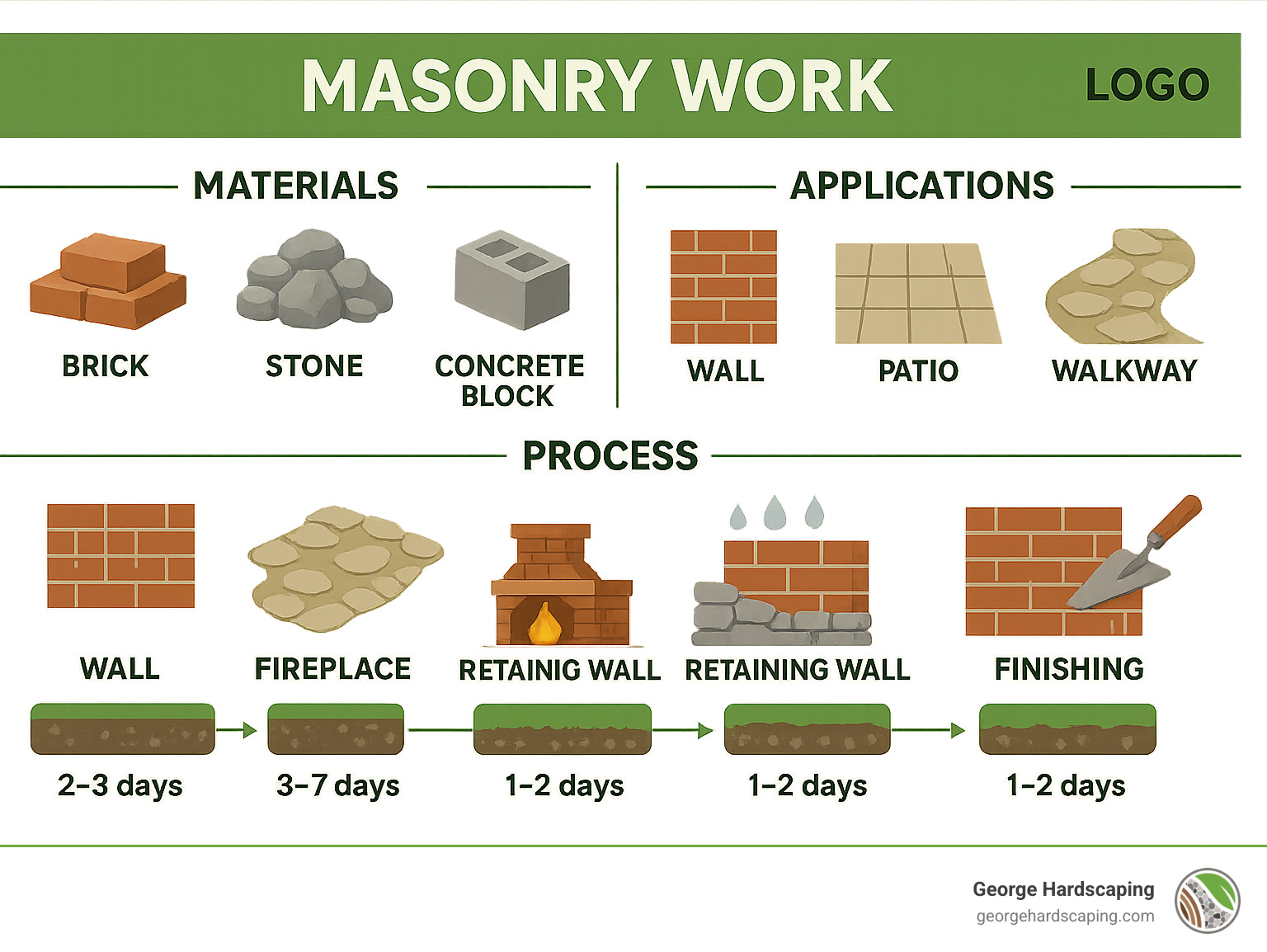
Masonry work is the craft of building structures using individual units like brick, stone, or concrete blocks bound together with mortar. If you’re searching for masonry services, here’s what you need to know:
- Definition: Construction with brick, stone, or concrete blocks using mortar
- Common Applications: Walls, patios, walkways, fireplaces, foundations, retaining walls
- Materials Used: Brick, natural stone, concrete blocks, glass blocks
- Average Cost: $15-150 per square foot depending on material and complexity
- Typical Timeline: 1-4 weeks for residential projects
Masonry is one of the oldest and most enduring construction methods in human history. From the ancient pyramids of Egypt to modern brick homes, the fundamental techniques have remained surprisingly consistent over thousands of years.
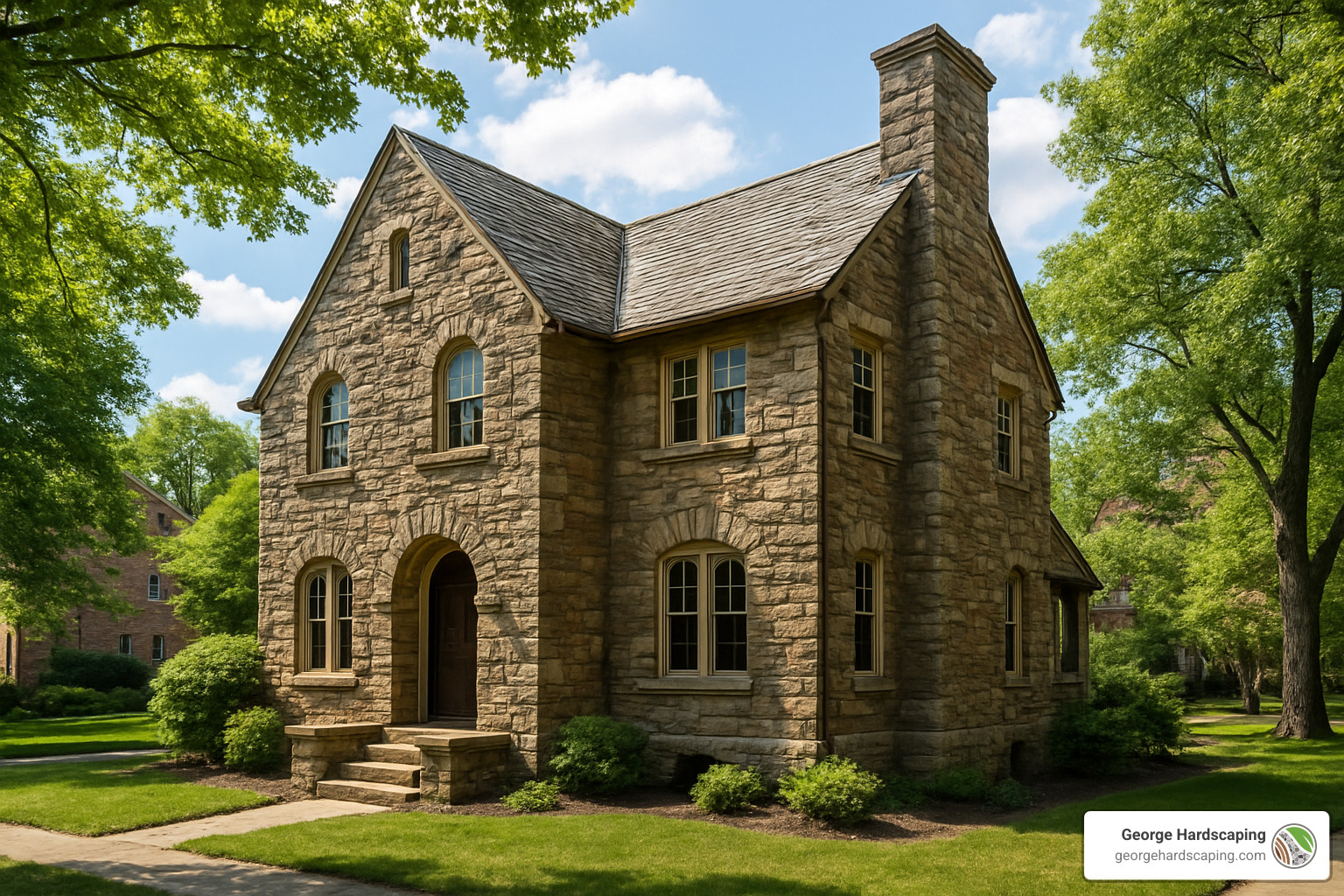
When you look at an old stone house or a classic brick fireplace, you’re appreciating not just the aesthetic appeal but the incredible durability of masonry construction. These structures often outlast their wooden counterparts by centuries, standing firm against fire, weather, and time.
The mason’s craft combines precise technical knowledge with artistic skill. A skilled mason understands how different materials interact, how mortar sets and cures, and how to create structures that are both beautiful and structurally sound.
At George Hardscaping, we’ve seen how quality masonry work transforms properties across Essex County and the North Shore. Whether managing soil erosion with a sturdy retaining wall or creating an inviting outdoor living space with a custom stone patio, masonry provides solutions that are as practical as they are beautiful.
“Old world craftsmanship is not dead,” as one master mason put it, and the evidence is all around us in structures that have stood for generations.
Handy masonry work terms:
– masonry contractor
– masonry services
– stone masonry services
Masonry Work 101: Definition, Uses, & Job Outlook
The story of masonry work is as old as civilization itself. When the ancient builders of Jericho stacked sun-dried mud bricks to form walls around 7000 B.C., they were pioneering techniques that would shape human settlements for millennia to come. From the towering pyramids of Egypt to the neat columns of Greece and the ambitious arches of Rome, masonry has evolved while maintaining its fundamental principles.
What makes these ancient structures so remarkable? Many still stand today, offering us a tangible connection to our ancestors and a powerful testament to masonry’s extraordinary durability.
What is Masonry Work?
At its heart, masonry work is beautifully simple—it’s the art and science of building by laying individual units and binding them together with mortar. Think of brick, stone, or concrete blocks carefully positioned and joined to create something greater than the sum of its parts.
The mortar isn’t just glue—it’s a critical component that fills gaps, creates weather resistance, and improves structural integrity. When properly applied, it transforms those individual pieces into a unified whole.
What truly sets masonry apart is its impressive compressive strength. A well-built masonry wall can support tremendous weight from above, making it perfect for load-bearing applications. As one seasoned mason once told me with a wink, “These walls aren’t just standing around looking pretty—they’re working hard!”
The craft aspect cannot be overlooked. “Only a skilled mason can fit diverse stone pieces together effectively,” as the saying goes. This blend of technical knowledge and artistic sensibility is what transforms mere construction into craftsmanship.
Applications of Masonry Work
The versatility of masonry work makes it a go-to solution for countless projects, both practical and beautiful:
Foundations provide the literal groundwork for everything above them, with concrete block foundations creating stable platforms for structures of all sizes. Walls, both load-bearing and decorative, define our spaces and provide security and privacy.
Fireplaces and chimneys showcase masonry’s natural fire resistance, creating both warmth and focal points in homes. Patios and walkways transform outdoor spaces into inviting extensions of our living areas.
Here in Essex County, we at George Hardscaping frequently build stone retaining walls that tame the region’s challenging terrain while adding visual interest. These walls don’t just hold back soil—they create usable space and improve property values.
Arches and columns allow masonry to soar, creating dramatic visual elements that have captivated us since Roman times. Facades and veneers let us add the beauty of stone or brick to existing structures, while outdoor kitchens bring durability and style to al fresco dining.
Our New England clients particularly appreciate how properly constructed masonry work stands strong through harsh freeze-thaw cycles, year after year, while wood alternatives might warp, rot, or require frequent maintenance.
Career & Outlook in Masonry Work
For those with skilled hands and an eye for detail, masonry offers a rewarding career path with solid financial prospects. The median annual wage for masonry workers was $53,010 in 2023, with brickmasons and blockmasons earning a particularly healthy median of $59,640. Stonemasons weren’t far behind at $51,830.
The field is substantial, with roughly 298,300 masonry workers employed across the United States in 2023. Looking ahead, about 21,800 openings are projected annually through 2033, primarily to replace retiring craftspeople.
Most masonry professionals learn through apprenticeship programs that combine classroom learning with hands-on experience. This earn-while-you-learn approach means new masons can avoid student debt while mastering a valuable trade.
The career ladder offers plenty of rungs to climb. Many start as helpers or apprentices, advance to journeyman status, and eventually become foremen or estimators. Some even launch their own businesses, as many successful contractors began by simply mixing mortar and carrying materials.
“There’s something deeply satisfying about building something that will outlast you,” as one veteran mason put it. In a world of disposable products and temporary solutions, masonry stands—quite literally—as a craft that creates lasting value.
While employment growth projections are modest, the steady retirement of experienced masons ensures ongoing opportunities for those willing to learn this ancient but ever-relevant trade.
Types, Materials & Mortar Basics
Masonry work is a diverse craft with several distinct approaches, each bringing its own charm and practical benefits to your outdoor space. Let’s explore the materials that make masonry so versatile and enduring.
Brick Masonry
There’s something timeless about the warm, earthy appeal of brick. These manufactured clay units create some of the most recognizable and beloved structures in New England.
Brick offers wonderful consistency that makes installation more predictable. You’ll find them in a rainbow of reds, oranges, and even blues, allowing for creative patterns like running bond (the classic offset pattern you probably picture when thinking of brick walls), English bond, or the more decorative Flemish bond.
“Brick is forgiving for beginners but offers endless possibilities for experts,” as one of our masons likes to say. It strikes that perfect balance between affordability and character, while providing excellent fire resistance and thermal benefits that can actually help moderate your home’s temperature.
Stone Masonry
When it comes to pure natural beauty and longevity, nothing quite compares to stone masonry. Each piece of granite, limestone, or fieldstone brings its own unique color variations, textures, and character to your project.
Stone masonry comes in several styles. Ashlar masonry uses precisely cut rectangular stones with thin, nearly invisible mortar joints for a refined look. Rubble masonry accepts the irregular shapes of natural stone, creating a more rustic, organic feel. Slipform masonry combines concrete with stone facing for easier construction while maintaining that beautiful stone appearance.
Here in Essex County, we’re fortunate to have access to beautiful local stone that has adorned buildings for centuries. These materials weather gracefully, actually gaining character over time rather than deteriorating.
Concrete Block Masonry
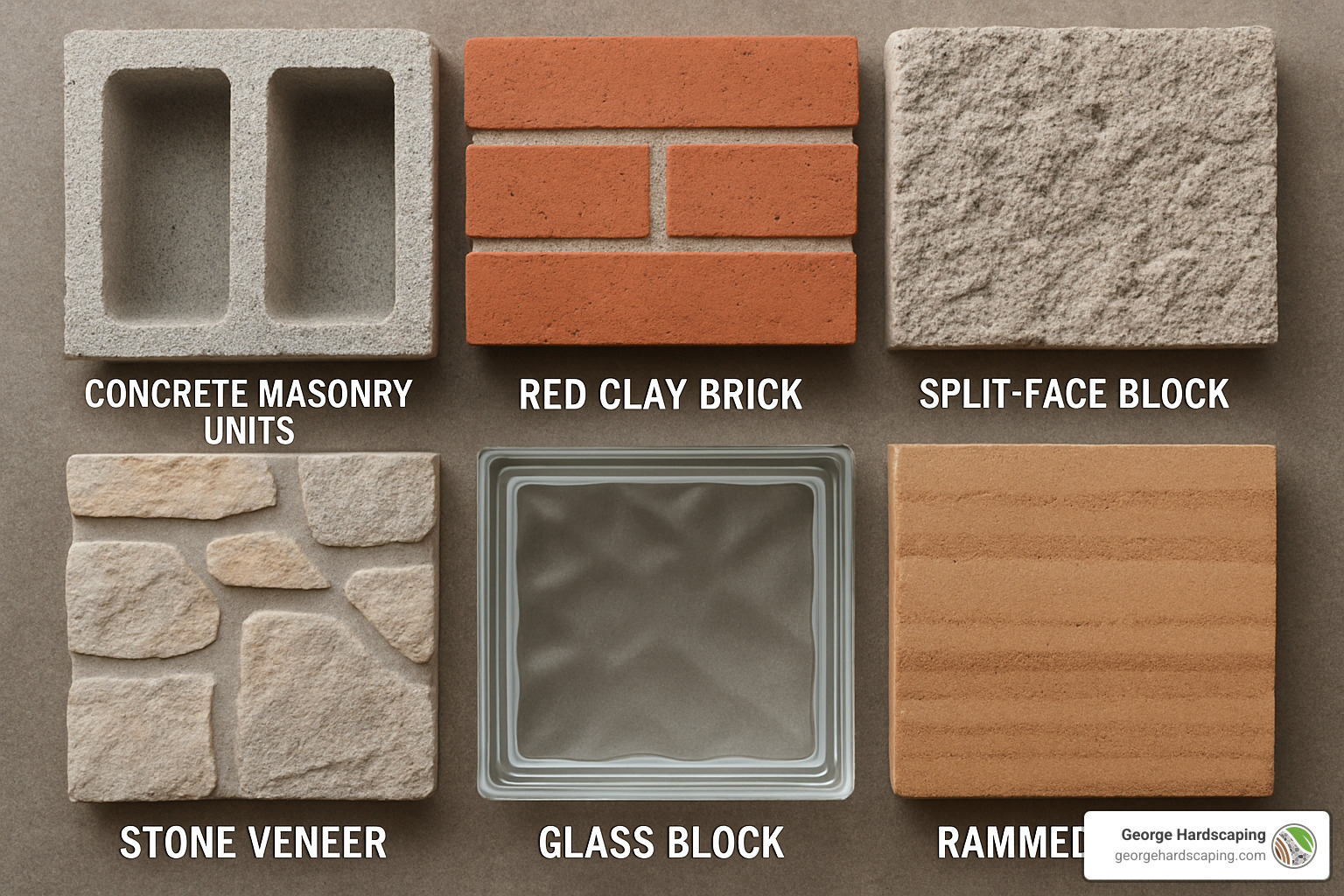
Don’t let the utilitarian reputation fool you – today’s concrete masonry units (CMUs) offer remarkable versatility and value. These manufactured blocks provide excellent structural integrity, especially when reinforced with rebar and filled cores.
Modern CMUs have evolved far beyond the plain gray blocks you might remember. Split-face blocks feature textured surfaces that mimic natural stone, while architectural blocks come in various colors and profiles designed for visual appeal as well as function.
For budget-conscious projects that don’t sacrifice durability, concrete blocks deliver exceptional value. They’re also champions of sound insulation, making them perfect for creating privacy barriers between outdoor spaces.
Veneer Masonry
When you want the beauty of masonry without the structural requirements, veneer masonry offers the perfect solution. These thin layers of brick, stone, or manufactured stone attach to existing structures, bringing instant character and curb appeal.
Veneer masonry weighs significantly less than full-thickness masonry, making it suitable for a wider range of applications, including upper floors where weight might be a concern. It’s also generally more affordable while still delivering that authentic masonry look.
Proper installation is crucial with veneers. We always ensure proper moisture management with air gaps, weep holes, and flashing to prevent potential water damage over time.
Specialized Masonry Types
Beyond the classics, several innovative masonry approaches offer unique benefits:
Glass block provides light transmission while maintaining privacy – perfect for garden walls or shower enclosures. Gabion baskets (wire cages filled with stone) create permeable retaining walls ideal for managing water flow on sloped properties. For the environmentally conscious, options like rammed earth (compressed soil mixtures) and hempcrete (a bio-composite material) offer sustainable alternatives with excellent insulation properties.
Choosing the Right Masonry Materials
Selecting the perfect materials for your masonry work doesn’t have to be overwhelming. We guide our clients through several key considerations:
First, think about durability in relation to your local environment. Here on the North Shore, we recommend salt-resistant materials for coastal properties in Gloucester or Marblehead that face harsh marine conditions. For inland areas like North Andover, you have more flexibility.
Consider the function of your project. Retaining walls need structural strength that concrete blocks or natural stone provide beautifully. For walkways and patios, we choose materials that remain safe when wet, especially important during our snowy winters. Fireplaces require excellent heat resistance – something brick and certain stones handle with ease.
Your home’s architectural style should inform your aesthetic choices. A Colonial in Salem might call for traditional brick that honors its historic character, while a contemporary home in Lynnfield might shine with sleek concrete pavers or architectural stone. We love helping homeowners find that perfect match that feels like it was always meant to be there.
Of course, budget matters too. Concrete blocks typically offer the most economical starting point. Standard brick falls in the middle range, while natural stone (especially hand-cut varieties) represents the premium end of the spectrum. We’re happy to work within your budget to find creative solutions that deliver lasting beauty.
Don’t forget about maintenance requirements. Some materials need occasional resealing, while others might require periodic cleaning or repointing of mortar joints every couple of decades. We’ll help you understand what to expect long-term from your investment.
For more information about our exceptional stone masonry services, visit our Stone Masonry Services page. If you’re specifically interested in retaining walls, check out our detailed guide to retaining walls masonry work.
Mortar & Binding Agents
The unsung hero of masonry work is undoubtedly the mortar – that crucial binding element that transforms individual units into a cohesive structure. Choosing the right mortar makes all the difference in your project’s longevity.
Type N mortar is our go-to for most residential projects. With a medium strength of about 750 psi, it’s perfect for exterior walls, chimneys, and most above-grade applications. It strikes that ideal balance between strength and flexibility that works so well in New England’s seasonal temperature swings.
For below-grade applications like foundations and retaining walls, we typically recommend Type S mortar. At around 1,800 psi, it offers excellent resistance to soil pressure and moisture – crucial for structures that need to stand up to ground contact.
When extreme strength is required, Type M mortar (2,500 psi) handles heavy load-bearing structures and severe weather conditions. Conversely, Type O mortar (350 psi) works well for repointing and interior applications where structural demands are minimal.
Modern mortars often incorporate specialized additives that improve workability, water retention, and bond strength. Polymer-modified mortars offer improved flexibility and adhesion for certain applications – particularly valuable in our freeze-thaw climate.
Proper curing is essential – concrete takes about 28 days to fully develop its strength, though it typically becomes walkable within 12-24 hours. Maintaining proper moisture during this period is crucial for developing full strength and durability.
Masonry Work Considerations for DIYers
While we love creating custom masonry for our clients, we understand that some homeowners enjoy tackling projects themselves. If you’re considering a DIY approach, here are some honest insights:
Simple projects like basic walkways, patios on crushed stone bases, or decorative fire pits can be satisfying weekend projects for dedicated DIYers. Repointing deteriorated mortar joints is another task within reach of careful homeowners with the right tools and patience.
The key to success? Proper preparation. In Essex County, footings must extend below the local frost line (typically 4 feet) to prevent frost heave that can damage your structure. A well-prepared crushed-stone base provides essential drainage and accommodates slight movement during temperature changes.
You’ll need some specialized tools – quality trowels, levels, mixing equipment, and appropriate safety gear are non-negotiable. And timing matters too – avoid working in freezing temperatures or heavy rain, which can compromise mortar setting and strength.
For structural elements or projects requiring precise cutting and fitting, we recommend consulting with professional masons. The investment in professional masonry work typically pays dividends in both longevity and appearance. After all, these structures often last for generations – sometimes a project is worth doing once, right.
For more information about professional masonry services, you might want to explore our masonry brickwork page for inspiration and guidance.
Benefits, Limitations & Cost Considerations
Masonry work has stood the test of time for good reason. When you see a centuries-old stone building still standing proud, you’re witnessing the remarkable durability that makes masonry so special. But like any construction method, it comes with both strengths and challenges worth considering before you start your project.
Advantages of Masonry Construction
The enduring popularity of masonry work comes from its impressive list of benefits. A well-built stone wall or brick patio isn’t just beautiful—it’s practical in ways that might surprise you.
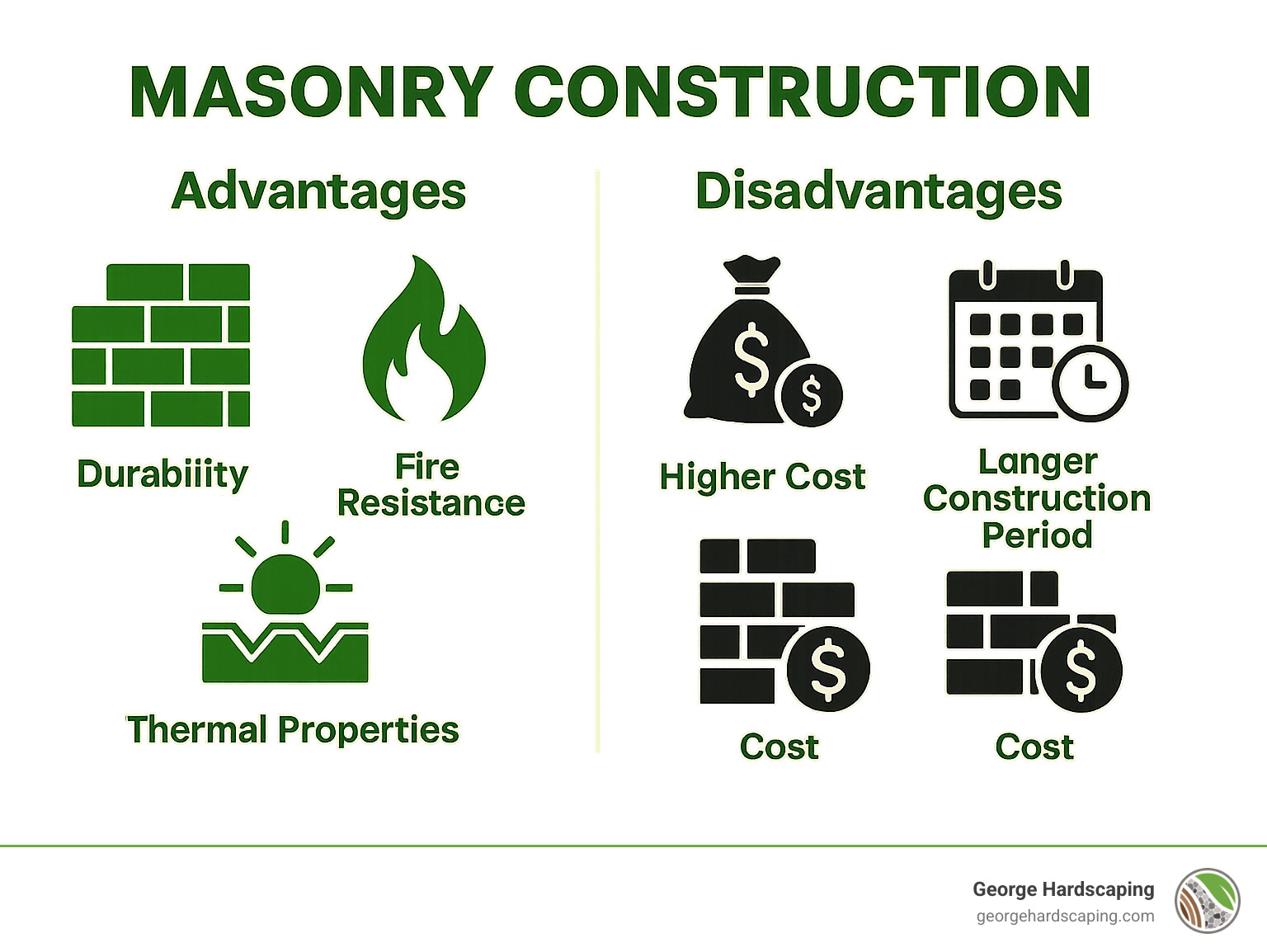
Masonry structures can literally last for generations with minimal care. This exceptional durability translates to excellent long-term value, even if the initial investment is higher than other materials. Many homeowners on Essex County’s North Shore choose masonry specifically for this lasting quality.
Fire safety is another compelling advantage. Brick, stone, and concrete simply don’t burn. Industry data shows that masonry materials can withstand direct fire exposure up to 1,000°F for up to four hours, containing fires 93% of the time. For family homes, that’s peace of mind you can’t put a price on.
When New England weather turns fierce, masonry work stands strong. From nor’easters to summer storms, properly constructed masonry resists wind-driven debris, heavy rain, snow, and ice. After particularly severe weather, we often hear from grateful clients whose masonry features remained undamaged while other materials needed replacement.
The thermal mass benefits of masonry are particularly valuable in our variable climate. The density of stone and brick allows them to absorb heat during the day and release it slowly at night, helping to naturally moderate temperature swings inside your home. This passive solar effect can reduce energy costs year-round.
If you’ve ever lived in a home with thin walls, you’ll appreciate masonry’s excellent sound insulation properties. The substantial mass of brick and stone walls significantly reduces noise transmission—a blessing in busy neighborhoods or multi-family settings.
Quality masonry work also boosts property values. Real estate professionals consistently note that stone patios, brick facades, and other masonry features attract buyers and justify higher asking prices. The timeless appeal of natural materials creates curb appeal that more temporary materials simply can’t match.
Perhaps most appealing for busy homeowners is masonry’s low maintenance requirements. Unlike wood decks that need regular staining or vinyl that can crack, masonry typically needs only occasional inspection and minor repairs over decades of service.
From design perspective, few building materials offer the versatility of masonry. Whether you prefer the rustic charm of fieldstone, the traditional elegance of brick, or the clean lines of contemporary concrete, there’s a masonry solution to complement any architectural style.
Limitations of Masonry Construction
Despite its many advantages, masonry work isn’t the perfect solution for every situation. Understanding its limitations helps you make informed decisions about your project.
The higher initial cost is often the first consideration for homeowners. Both materials and skilled labor for masonry typically cost more upfront than wood-frame alternatives. However, when you factor in longevity and reduced maintenance, masonry often proves more economical over time.
Patience is essential with masonry projects. The construction process simply takes longer than other methods. Each course must be laid with precision, and mortar needs time to set properly before work can continue. As we often remind our clients, “You can have it fast, or you can have it right—and with masonry, right is the only option worth choosing.”
Weather constraints can affect project timelines, especially in New England. Mortar shouldn’t be applied during freezing temperatures or heavy rain, which can lead to delays during our unpredictable seasons. At George Hardscaping, we carefully plan projects around seasonal weather patterns to minimize disruptions.
The substantial weight of masonry materials creates both challenges and benefits. This weight requires proper foundations and structural support, which can increase complexity and cost. However, that same mass provides the stability and durability that makes masonry so desirable.
Quality masonry work demands skilled craftspeople with specific training and experience. While DIY enthusiasts can tackle simple projects, achieving professional-grade results requires knowledge that typically comes only with years of practice. The artistry in properly fitting stones or creating consistent mortar joints isn’t easily replicated without experience.
Traditional unreinforced masonry has limitations in seismic zones. However, modern techniques incorporate reinforcement and flexible connections to address this vulnerability, making today’s masonry structures significantly more earthquake-resistant than their historical counterparts.
When repairs eventually become necessary, they often require skilled labor and can be more involved than repairs to other building systems. The good news is that these repairs are typically needed far less frequently than with other materials.
Cost Considerations for Masonry Projects
When budgeting for masonry work, understanding the range of potential costs helps set realistic expectations. Prices vary significantly based on materials, design complexity, site conditions, and regional labor rates.
Here are some general price ranges based on internet data (not actual George Hardscaping pricing):
For brick masonry, expect basic walls to run between $15-75 per square foot, while decorative features might range from $25-150 per square foot. Brick veneer typically falls between $12-45 per square foot.
Stone masonry generally commands premium pricing, with fieldstone walls ranging from $25-80 per square foot. Cut stone installation might cost between $35-150 per square foot, while stone veneer typically runs $20-75 per square foot.
Concrete block masonry offers more economical options, with standard CMU walls costing approximately $10-30 per square foot. Architectural blocks and split-face blocks increase the price to $15-60 and $12-45 per square foot, respectively.
For outdoor living spaces, concrete pavers typically cost $15-45 per square foot installed, brick pavers range from $18-60, and natural stone pavers can run $25-90 per square foot.
Retaining walls, which must withstand soil pressure, generally start at $20-60 per square foot for concrete block, while natural stone versions might range from $30-120 per square foot. Brick retaining walls typically fall between $25-75 per square foot.
Custom features like outdoor fireplaces ($5,000-30,000), stone fire pits ($1,500-15,000), and outdoor kitchens with masonry elements ($8,000-50,000) represent significant investments that add both functionality and visual appeal.
These are average ranges based on internet data, and high-end custom work can easily cost 3x the average. For accurate pricing specific to your project in Essex County, we recommend contacting us for a personalized consultation.
Masonry vs Wood & Steel
When weighing construction options, masonry work offers distinct differences compared to wood and steel framing that are worth considering.
In terms of durability, masonry stands alone. While quality wood construction might last 30-100 years depending on species and maintenance, and steel can exceed 100 years with proper corrosion protection, well-built masonry can literally last for centuries. For homes along Essex County’s coast, masonry’s resistance to salt air provides a significant advantage over materials that deteriorate more quickly in marine environments.
Fire safety is another area where masonry excels. Unlike wood, which is combustible, and steel, which can lose structural integrity at high temperatures, masonry remains stable and won’t burn or produce toxic smoke during a fire.
Energy efficiency presents interesting tradeoffs. Wood offers better insulation value per inch but minimal thermal mass. Steel performs poorly thermally without additional insulation. Masonry’s high thermal mass moderates temperature swings naturally, creating more stable indoor environments.
Construction speed often favors wood and steel. Masonry’s course-by-course construction and mortar curing time simply takes longer than rapid framing with pre-cut lumber or pre-fabricated steel components. However, this slower process contributes to masonry’s exceptional quality and longevity.
Environmental considerations vary by material. While masonry production is energy-intensive, the extremely long service life offsets this initial impact. Wood is renewable if sustainably harvested. Steel has high embodied energy but is highly recyclable. Each has different environmental strengths and weaknesses.
Aesthetically, masonry offers virtually limitless textures, colors, and patterns. Wood provides natural warmth but is limited by available species. Steel is often concealed in residential construction, limiting its visual contribution.
Maintenance requirements strongly favor masonry. While wood needs regular painting or staining and inspection for rot and pests, and steel requires protection from moisture to prevent corrosion, masonry typically needs only occasional repointing of mortar joints over many decades.
For scientific research on the thermal mass benefits of masonry, the National Park Service provides valuable information about masonry properties and performance.
Project Lifecycle & Maintenance: Plan, Build, Preserve
The journey of a masonry work project unfolds like a well-crafted story – with thoughtful beginnings, skilled execution, and ongoing care that ensures your investment stands the test of time. Understanding this lifecycle helps you make informed decisions about your outdoor spaces and preserve their beauty for generations.
Planning Phase
Creating beautiful masonry work starts long before the first brick is laid. The planning phase sets the foundation for success, both literally and figuratively.
When we sit down with homeowners in Essex County, we start by exploring their vision. What will this space be used for? Are you looking for a cozy fire pit area for family gatherings, a retaining wall to tame a sloping yard, or perhaps a grand patio for entertaining? Your functional needs drive the initial design concepts.
The aesthetics matter just as much as function. A formal bluestone patio might perfectly complement a colonial home in Newburyport, while a rustic fieldstone wall might better suit a woodland setting in Boxford. We consider how your new masonry elements will harmonize with your existing landscape and architecture.
Material selection comes next, and it’s critical to choose options suited to our unique New England climate. Those freeze-thaw cycles we experience each winter can be brutal on the wrong materials! For coastal properties in Marblehead or Gloucester, we’re particularly careful about selecting salt-resistant options that won’t deteriorate with ocean spray.
Before any digging begins, we thoroughly evaluate your site. We check soil conditions, drainage patterns, utility locations, and access points. In Essex County’s varied landscape, each property presents unique challenges – from rocky terrain to wetland considerations.
Finally, we steer the permitting process. Many towns along the North Shore have specific requirements, especially for structural walls or projects in historic districts like Salem. Getting this right from the start prevents headaches down the road.
Construction Phase
With plans approved and permits in hand, the change begins. This is where craftsmanship and technical knowledge truly shine.
Proper site preparation is the unsung hero of lasting masonry work. We excavate to the appropriate depth, install necessary drainage systems, and carefully compact base materials. In Essex County, where frost penetration is significant, this foundation work is absolutely critical.
For structural elements, we construct footings that extend below the frost line – typically 4 feet deep in our region. These foundations must be perfectly level and allowed to cure fully before construction proceeds. Rushing this stage is a recipe for future problems.
The careful choreography of material delivery and staging might seem mundane, but it dramatically affects efficiency. We strategically place materials to minimize carrying distance, protect them from weather and debris, and organize them for easy access during construction.
When the actual masonry installation begins, our craftsmen bring generations of knowledge to your project. They mix mortar to precise consistency, maintain proper alignment and level throughout, and follow established bond patterns that ensure structural integrity. Each unit is placed with intention, creating both beauty and durability.
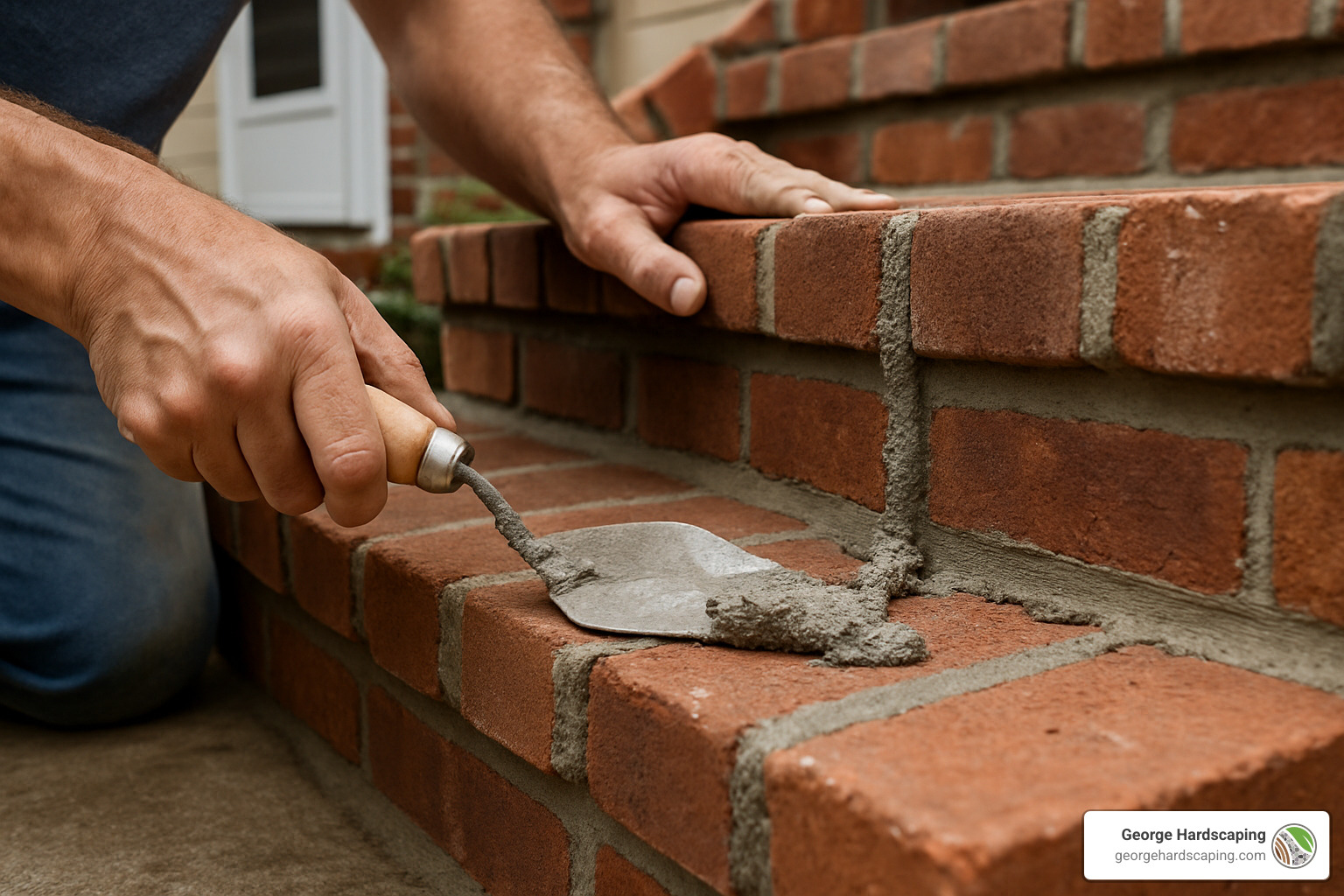
The finishing touches make all the difference. Joint finishing isn’t just about aesthetics – the profile of the mortar joint affects how water sheds from the surface. A properly tooled concave joint, for instance, helps direct water away from the wall. These small details have big implications for longevity.
Before we consider a project complete, we carefully clean the masonry surfaces, install any necessary caps or copings, and ensure every detail meets our exacting standards. The result? Masonry work that’s as beautiful as it is enduring.
Maintenance and Preservation
Even the most beautifully constructed masonry needs some care to reach its full potential lifespan. Think of maintenance not as a burden but as preserving your investment.
We recommend inspecting your masonry work annually, ideally in spring after winter’s freeze-thaw cycles have done their worst. Look for any cracked mortar, displaced units, or signs of water infiltration. After severe weather events like nor’easters, a quick check can catch small issues before they become big problems.
Routine maintenance is typically simple but important. Keep your masonry clean using appropriate methods – gentle detergent and soft brushing for most applications. Be wary of pressure washing, especially on older masonry, as it can damage mortar joints and accelerate deterioration.
Repointing – the process of renewing mortar joints – is perhaps the most important maintenance task for aging masonry. When done correctly, it breathes new life into your structures. The process involves carefully removing deteriorated mortar, cleaning the joints, and installing fresh mortar that matches the original in strength, color, and texture. It’s a skilled job that, when done well, can extend the life of your masonry by decades.
New England’s seasonal extremes present unique challenges for masonry care. In winter, promptly remove snow from horizontal surfaces, and avoid using de-icing chemicals that can damage the material. During summer, check that irrigation systems aren’t spraying directly onto masonry walls, as constant wetting and drying cycles accelerate deterioration.
For historic properties – of which Essex County has many – preservation requires special consideration. Using compatible materials for repairs is essential, as modern materials can sometimes do more harm than good when applied to historic masonry. When in doubt, consult preservation specialists who understand traditional techniques.
DIY vs Professional Masonry Work
The popularity of home improvement shows has inspired many homeowners to try their hand at masonry work, and certain projects can indeed be satisfying DIY endeavors. Simple paver patios on well-prepared bases, decorative brick planters, or basic repointing of accessible joints can be reasonable undertakings for dedicated DIYers with proper research and preparation.
However, many masonry projects benefit tremendously from professional expertise. Structural elements like retaining walls over 4 feet tall, anything involving chimneys or fireplaces (where safety is paramount), and projects requiring significant stone cutting or shaping are best left to experienced masons. The specialized tools alone – professional-grade wet saws, mixers, and lifting equipment – represent a significant investment.
We’ve often been called to rescue DIY projects gone awry, and unfortunately, these repairs typically cost more than having the work done professionally from the start. The most common issues we see are improper foundation preparation and incorrect mortar mixing – fundamental aspects that affect the entire project’s integrity.
Common Challenges & Fixes
Even well-built masonry can develop issues over time. Understanding these common problems helps you address them promptly:
Cracking often signals underlying issues like settlement, freeze-thaw damage, or excessive loading. The key is determining and addressing the root cause, not just patching the visible symptom. Proper repairs match the original materials and address any drainage or structural issues contributing to the problem.
Efflorescence – those white, powdery deposits that sometimes appear on masonry – occurs when water-soluble salts migrate to the surface. While mostly an aesthetic issue, it signals moisture movement through the masonry that could lead to more serious problems. Dry brushing often removes light efflorescence, but preventing water infiltration is the long-term solution.
Spalling, where the face of brick or stone flakes off, typically results from moisture penetration followed by freezing. In coastal areas like Marblehead, salt exposure can accelerate this deterioration. Damaged units may need replacement, and improving drainage and applying appropriate sealers can prevent further damage.
Mortar deterioration happens gradually over decades as weather, pollution, and time take their toll. Repointing with compatible mortar restores both appearance and function. For historic properties in Salem or Newburyport, matching the original mortar composition is particularly important.
Leaning or bulging walls represent structural concerns that need prompt attention. Causes range from inadequate foundations to soil pressure or water damage. Solutions might include structural reinforcement, rebuilding affected sections, or improving drainage behind retaining walls.
You can find more information about addressing these and other masonry issues in our Masonry Repair Near Me guide.
Frequently Asked Questions about Masonry Work
What is the role of mortar in masonry construction?
Mortar is much more than just “glue” for bricks and stones. It bonds individual units together while distributing weight evenly across the structure. It seals joints against water infiltration, accommodates slight movement without cracking, and contributes significantly to the overall appearance. The right mortar makes the difference between masonry that lasts decades and masonry that lasts centuries.
Can masonry work be done in winter?
While technically possible with special precautions, winter masonry in New England presents significant challenges. Mortar shouldn’t freeze before curing (typically 24-48 hours), which often necessitates heated enclosures and special additives. The additional costs and complications generally make winter work less ideal unless absolutely necessary. We typically recommend planning masonry projects for the warmer months when possible.
How long does concrete take to cure?
Concrete curing is a gradual process that happens in stages. You’ll see initial setting within 1-2 hours (though this varies with temperature and mix design). Most residential applications become walkable within 12-24 hours, but don’t be fooled by this early hardening! Driveways typically need 7-10 days before supporting vehicles, and full strength development takes approximately 28 days under proper conditions. Patience during this curing process pays dividends in durability.
How do I choose between brick, stone, and concrete for my project?
This choice depends on several factors. Budget considerations often favor concrete as the most economical option, with natural stone typically representing the premium end. Aesthetic preferences matter tremendously – each material offers distinct visual characteristics that can complement different architectural styles. Durability needs should factor in, though all masonry materials are generally long-lasting with proper installation. Installation complexity varies too, with brick and block offering uniformity that’s more forgiving for installation, while stone requires more skill to fit pieces together beautifully.
How do I find a qualified mason for my project?
Look for experience with projects similar to yours, a portfolio of completed work you can actually visit, proper licensing and insurance, and references from past clients. Knowledge of local building codes is essential, particularly in Essex County’s historic districts. A qualified mason will provide clear, detailed proposals that outline exactly what to expect. While it might be tempting to choose the lowest bid, quality masonry work is an investment that should last decades.
How long will my masonry project take?
Project timelines vary based on size, complexity, weather conditions, material availability, and crew size. Small residential projects like walkways or patios typically take 1-2 weeks from start to finish, while more elaborate outdoor living spaces might require 3-4 weeks or more. At George Hardscaping, we provide realistic timelines during the consultation process, so you’ll know exactly what to expect.
For more information about our masonry services, including brickwork and stone applications, visit our masonry Brickwork link or learn about our expertise with retaining walls Masonry work.
Conclusion
Masonry work stands as one of humanity’s most enduring construction methods, blending ancient wisdom with modern techniques to create structures that truly stand the test of time. From the historic cobblestone streets of Salem to the sturdy granite seawalls protecting Gloucester’s harbor, masonry defines much of Essex County’s distinctive character and charm.
Here at George Hardscaping, we take immense pride in continuing this tradition of craftsmanship across Massachusetts’ North Shore. When we build a classic brick walkway in Newburyport, design a natural stone retaining wall in Manchester-by-the-Sea, or craft a custom fire pit for a family in Danvers, we’re not just completing a project—we’re helping create spaces where memories will be made for generations.
The value of quality masonry work extends far beyond its undeniable beauty. A professionally built masonry structure adds significant value to your property, dramatically reduces long-term maintenance headaches, and creates outdoor spaces that can be enjoyed by your children and grandchildren. As one of our veteran masons often reminds us, “When you build with stone and brick, you’re not just building for today—you’re leaving a legacy.”
Every property in Essex County presents its own unique landscape challenges. Coastal homes in Marblehead and Swampscott face salt spray and maritime conditions, while properties in Topsfield and Boxford contend with different soil types and drainage considerations. Our deep local knowledge ensures that whatever masonry features we create for you will not only withstand New England’s demanding four-season climate but will perfectly complement your home’s architectural style.
Whether you’re dreaming of a simple garden path or envisioning a complete outdoor living space with a kitchen, fireplace, and seating walls, we invite you to find the difference that professional masonry work can make. The combination of durability and beauty that masonry provides simply can’t be matched by other building methods.
We’d love to sit down with you, understand your vision, and show you how we can transform your outdoor space with the timeless appeal of expertly crafted masonry. Your home deserves nothing less than the best, and that’s exactly what we deliver—one stone, one brick at a time.
More info about hardscaping & masonry services
